No region in Nigeria is a self-sufficient archipelago. None is more fortunate in human and material assets than the other. Each region has its unique quality and contributes a consequential substance to Nigeria. None is greater than the other. We are like geopolitical sextuplets sharing one umbilical cord – nourished and oxygenated by mother Nigeria.
It is delusive to assume any of the regions solely underpins the Nigeria infrastructure. The north feeds the nation, and the south contributes in commerce and revenue generation. We are one concentric circle, holding each other at delicate arcs. Nigeria has a unified entity can stand as an island because its component parts are already flourishing archipelagos.
We should not take this ‘’symbiosis’’ for granted. Our interdependence makes us a viable concern. It is asinine to keep latching on the trope that the ‘’north produces nothing’’. This bromide is a fallacy. The north is Nigeria’s food hamper. The insecurity in the region which has affected farming, and the concomitant increase in food prices should make us reflect on the pivotal place of the north – beyond politics.
When there is a crisis (natural and otherwise) in the north, food production is affected, and the prices of foodstuff hit the stratosphere. The flooding of 2020 which affected rice farms and drove the price of the commodity further is noteworthy. Every region brings something to the table. All the regions are equal shareholders – in asset and liability – in the Nigerian partnership.
But I am afraid to say that a menacing spectacle is being enacted by those who do not take the shared interest of Nigeria with gravitas. The prices of foodstuff are said to be soaring to the heavens in some states in the south. Rivers, Imo, Ekiti, Ogun, Ondo, Edo, and Akwa Ibom are reported to be among the worst hit.
The reason for this contrived price hike? The food blockade of the south by some groups in the north. A group, the Amalgamated Union of Food and Cattle Dealers of Nigeria (AUFCDN) is demanding N4.7 billion from the government as compensation for its loss in the Shasha market crisis in Oyo and in the #EndSARS violence.
Also, the Miyetti Allah Cattle Breeders Association has threatened to sustain the food besiegement until the safety of its members in the south is guaranteed. According to Aliyu Mohammed, coordinator of the Kwara state chapter of Miyetti Allah, the beleaguerment is a ‘’warning shot’’ to safeguard their business interest.
“Except those who may decide to take other routes to get to the state or those who may act in defiance to the directive, the traders would not come from the north and those who come may be stopped or sanctioned,” Mohammed was reported to have said.
In addition, media reports at the weekend said the north is diverting food items to Niger Republic and Cameroon, and that trade routes to the south have been besieged. Trucks containing food items were occluded from moving south at Jebba in Niger state by some irate youths though the Nigerian Defence Headquarters said the military intervened and cleared the path.
For the sake of clarity, here are the words of Abdullahi Aliu, national president of the Northern Consensus Movement, confirming the diversion of food items from the north to neighbouring countries as reported by The Nigerian Tribune.
“As I speak to you, my people are already shipping their goods, onions, tomatoes and what have you to Niger (Republic), Cameroon, and other neighbouring countries through Illela border. Already, we have diversified. Our people have already found a way of not wasting their goods. They will not be wasted. They will be sold just like the way they were being moved to the south-west, south-east or south-south. So, my people will end up not losing anything.’’
What does this portend for Nigeria? Citizens diverting food items needed by fellow citizens to foreign countries? Are foreigners from Niger Republic and Cameroon now substitutes to Nigerians? This is sadism. And it is really troubling.
What if some groups, who have threatened to obstruct oil supply to the north, put action to their threat? Where does that leave all of us? We should not cut off our nose to spite our face. Nobody wins in this friction of attrition.
To break the ice, I think the government (federal and state) needs to step up to soothe frayed nerves. Investments and lives were lost in the crisis effectuated by the activities of some criminal herders in the south. Northern traders have also been victims of targeted attacks – losing much of their investments. It will be apropos for the government to attenuate the impact of these losses – on both sides – particularly in the case of the Shasha market clash. The government must deliberately intervene before the situation snowballs into an inter-regional tit-for-tat.
The civil authorities must go beyond platitudes and commit themselves to keeping the peace by ensuring victims of violence (farmer-herder crisis and sundry clashes) are compensated and criminals punished. Why there are often reprisal attacks is because justice is not done to the victims. A cycle of violence continues when justice is undone.
Vice President Yemi Osinbajo has charged policy makers in Nigeria to stop the usual beautiful talks on government projects and evolve practical results.
Professor Osinbajo, who was inaugurating the Senior Executive Course 43 of the National Institute for Policy and Strategic Studies (NIPSS) today, March 1, tasked participants in Course 43 to unlock the mystery of failed or poorly implemented policies and projects, but promote a practical, nitty-gritty guide to implementing projects and policies.
Speaking on the theme of the Course 43 programme titled: “Getting Things Done: Strategies for the Implementation of Policies and Programmes in Nigeria”, the Vice President said: “this year’s theme goes to the heart of what is generally considered the bane of development in Nigeria, poor implementation.
“The proverbial gap between intention and results; between policy and stated outcomes; delivering on campaign promises or even just doing what the well-articulated policy papers say. For many serious-minded policymakers, the frustration is the same, yes we know all about think-tanks what we need now are do-tanks.“
Osinbajo acknowledged that NIPSS had contributed immensely to critical national issues through policy briefs, policy advice and other strategic interventions, even as he assured staff, participants and management of the Federal Government’s continued support to the institution especially in the upgrade of facilities but tasked the NIPSS management to be innovative in addressing its problems.
“While Government will continue to do its best to support the National Institute, I should stress that budgetary provisions alone will always be limited given competing needs and responsibilities of government. It is therefore imperative for NIPSS to be even more pro-active and creative in seeking alternative sources of funding.”
He commiserated with the management and staff of NIPSS on the demise of its Director-General, the late Prof. Habu Galadima, recalling the late DG’s hard work and dedication, particularly to the growth of the institute.
Participants of Senior Executive Course 43 are drawn from the private sector, the public service, including paramilitary organizations and the armed forces.
A veteran journalist and author, Michael Owhoko, has been awarded a Doctor of Philosophy (Ph.D) in Political Science by the Selinus University.
Owhoko, whose thesis was entitled, The Future of Nigeria,’ was awarded the Ph.D after a successful defence of his dissertation.
His supervisor, Professor Salvatore Fava, had remarked: “I am fortunate to be able to appreciate your work, a very stimulating topic that you have done with skill. At the same time, I am happy to have met an exemplary student, cultured and precious like you, so capable and inclined to the academic effort towards discovering new dimensions of knowledge, many congratulations.”
Commenting on the development, Michael Owhoko he preferred as thesis Political Science as against the popular expectation of Mass Media and Communications because of his desire to fulfill “academic destination” by having his Bachelor’s Degree, Master’s Degree and now Doctorate degrees in the same discipline.
Owhoko had previously obtained a B.Sc (Political Science) from the University of Ilorin, M.Sc (Political Science) from the University of Lagos, and also a PGD in Mass Communications also from the University of Lagos.
He has over 30 years’ experience in media and communications, spanning the newsroom and corporate world, including the banking and oil and gas industries.
An author of several books, Owhoko is a media and communications consultant to several organizations, and currently, Chairman, Public Relations Committee, Rotary Club of Ikoyi (District 9110).
Owhoko was a former Energy Editor of the Business Times (Daily Times Group), former Publicity Secretary, Nigerian Gas Association (NGA) and member, Nigerian Institute of Public Relations (NIPR).
The Zamfara State Governor, Bello Matawalle, has said that he already knows the identity of those behind the attack on and Kidnapping of students of Government Girls Secondary School, Jangebe. The Governor, who addressed 17 Emirs in the state that paid him a sympathy visit over the abduction of 317 girls from the school, said that Nigerians would be shocked to know those behind the abduction. “As we await the arrival of the released kidnapped students of GSSS, Jangebe at the Government House today (Sunday), I want to inform you that there are many revelations in relation to the abduction of these students. “Many people will be surprised to hear those people behind the abduction of these innocent children. “They are not comfortable with the progress I am getting as a result of my peace initiative and they want to do all they can to sabotage my efforts. “I will insha Allah succeed at the end of the day and they will bury their faces in shame.”
The Nigerian National Petroleum Corporation (NNPC) has ruled out any increment in the ex-depot price of petrol in March, 2021, warning against hoarding of the product and panic buying.
A statement by the Group General Manager, Group Public Affairs Division of the Corporate, Dr. Kennie Obateru, said that the Corporation is not contemplating any rise in the price of petrol in March in order not to jeopardize ongoing engagements with organized labour and other stakeholders on an acceptable framework that will not expose the ordinary Nigerian to any hardship.
It cautioned petroleum products marketers not to engage in arbitrary price increase or hoarding of petrol in order not to create artificial scarcity and unnecessary hardship for Nigerians.
The Corporation said that it has enough stock of petrol to keep the nation well supplied for over 40 days and urged motorists to avoid panic buying.
It called on relevant regulatory authorities to step up monitoring of the activities of marketers with a view to sanctioning those involved in products hoarding or arbitrary increase of pump price.
Scarcity of fuel has brought about long queues in most of the filling stations in the Federal Capital Territory (FCT), even as the Independent Petroleum Marketers Association of Nigeria (IPMAN) assured that the situation will soon be normalize for regular supply of the product.
The National Public Relations Officer of IPMAN, Alhaji Suleiman Yakubu, in an interview with the News Agency of Nigeria (NAN) today, February 28 in Abuja attributed the scarcity to the price of crude oil that had gone up and had therefore affected the price of products.
He assured Nigerians that normal supply of petroleum products would soon be restored since loading have commenced at various deports.
“We want to assure the buyers that government and marketers are doing everything possible to ensure that the products are available in every filling station within a few days starting from today.”
Meanwhile, some motorists in the nation’s capital have expressed disappointment over the development and called on filling stations that have fuel to sell.
Former President Olusegun Obasanjo has paid a solidarity visit on the Kogi State Governor, Alhaji Yahaya Bello against the background of the governor’s Presidential ambition for the 2023 election, advising him (the governor) to “continue to be an advocate for youth involvement in governance.”
Ex-President Obasanjo, who had a closed-door meeting with the governor today in Abuja, according to a statement by the governor’s Chief Press Secretary, Mohammed Onogwu, advised the governor to continue to sustain his efforts in providing security in his state, realizing that Kogi is central to the nation’s peace and development.
“Former President Obasanjo noted that the fight against insecurity should have everybody on board, stressing that governors should involve everyone to ensure insecurity is curtailed in Nigeria.”
This was even as Governor Yahaya Bello appreciated Obasanjo for his statesman’s role, fatherly disposition, and wealth of wisdom which the young leaders are privileged to tap from.
He assured Obasanjo that he will not rest in the fight to ensure total safety for his people and will continue to do his best to ensure his electoral promises are fulfilled.
The Aso Rock Presidential information strategist, Sir Attah Stephen, who retires from the Federal Service tomorrow, March 1, after attaining the 60-year statutory age of retirement, has been described by the Permanent Secretary, Tijjani Umar as an unassuming and noiseless performer.
At a well-attended send-off ceremony organized on his behalf by the State House management at the weekend, Permanent Secretary said that for the 25 years Attah worked in the Presidential Villa, he was very formidable, helping the Media Department to make appreciable progress and transformation under several administrations.
”Mr. Attah started his civil service career here in the State House and is also ending it here after spending almost a quarter of a century. He was an extremely good officer and a team player,” he said.
This is even as the Special Adviser to the President, Media and Publicity, Femi Adesina and Senior Special Assistant to the President, Garba Shehu spoke glowingly about the good performances of the retiring State House Deputy Director of Information.
Sir Attah, a Knight of John Wesley (KJW) in the Methodist Church Nigeria, will disengage from the Civil Service tomorrow, March 1, 2021.
In a momentous career that spanned 25 years in the Presidential Villa, he served nine Chief Press Secretaries, Special Assistants, Senior Special Assistants and Special Advisers on Media and Publicity to six Heads of State and Presidents.
Speaking on behalf of State House Press Corps, Sunday Odeh of Peoples Daily Newspaper, commended Attah’s personal qualities of humility and kindness.
”He had utmost respect for the press corps and will always attend to your complaints. The press corps will always celebrate him and we thank God that he is retiring in good health.”
Responding, Attah thanked God for the honour of being recognized, specially by the State House management as a retiree.
”I want to specially thank the Permanent Secretary for this special honour and privilege.
”I want to thank the first Director of Information, Mr Aduwak and his wife for honouring the invitation. You laid a very good foundation in the department and we thank God we are keeping the flag flying.
”It is unfortunate and sad that your successor Mr OJ Abuah is not alive and I pray that God will grant him peace in eternity.
”I want to appreciate my colleagues in the office and staff of the State House.
”I want to also specially appreciate my wife and family for bearing with me. Let me say that in almost the 25 years I served here, this is the first time my wife is stepping into the State House.
”My daughter was very little when she came here during the tenure of President Obasanjo when the First Lady hosted a Christmas Day party for children at the forecourt of the Presidential Villa.
”I thank my family for recognising and understanding that in our work, we don’t always have time for ourselves as we can be called upon anytime to respond to national emergencies and issues.
”I also appreciate the Methodist Church Nigeria for upholding me in prayers and for understanding that my absence from some church events was as a result of the exigencies of work and office.
”I want to thank you all for your prayers because it is one thing to join the service and another to retire in good health, and I want to thank God for his mercies upon my life,” he said.
Kano State Government has announced the immediate closure of four tertiary institutions in the state in addition to 12 boarding secondary schools that were shut down yesterday, following the latest spate of mass kidnapping of students in some Northern states.
The state commissioner of education, Mariya Bunkure, said in a statement today, February 27, that the government took the decision after observing the current situation of attacks on schools in neighbouring states.
Affected Institutions listed by Mariya Bunkere are RMK college of Advanced and Remedial Studies Tudun Wada; School of Environmental Studies, Gwarzo; School of Rural Technology and Entrepreneurship Development, ( SORTED), Rano, and ABCOAD, Dambatta.
The state government Gazette similarly listed the affected boarding secondary schools as Secondary School Ajingi; Government Girls boarding School Sumaila; Government Girls boarding School Jogana, and Government Girls boarding School Gezawa.
Others include Government Boys boarding School Kafin Maiyaki; Maitama Sule boarding School Gaya; Government Girls boarding School Kachako.
One of the just released students of Kagara Government Science College in Rafi Local Government of Niger State, Abubakar Sindi, has narrated how their captors, (the bandits), made them to trek from 2.30pm to 7pm far into a thick forest without food to eat and water to drink
In an interview shortly after meeting with the state Governor, Alhaji Abubakar Sani Bello today, February 28, the 20 years old student said: “the day we were kidnapped, we walked through the forest from 2:30pm till around 7pm.
“Unfortunately, all through our trekking, there was no time for us to rest, drank water or even eat anything because they tortured us to move fast or they will kill us. I was scared because the forest was thick. All through this time, we didn’t eat until they stopped us and asked us to sit on the ground.
”They gave us beans to eat after which they grouped us and asked that if any of us have parents who are either police or military; that was how they flogged us mercilessly so much that I thought I was going to die.
“In fact, I am not sure I can ever see any bush or forest and not remember this incident. I was so scared.”
Asked if he will still want to return to the school, he simply replied: ”I am not sure, I wi
Another student, 18 years old Suleiman Lawal said: “we suffered so much in the hands of the kidnappers. I have never experienced such in my life.
“In fact, I thought I was dreaming because the torture was too much for us. I am happy now that we have been freed. They fed us with beans once daily and they gave all of us five sachets of water to drink and that made us very weak. I don’t think I will like to go to that school anymore except there is enough security.”
Also a 18 years old Abubakar Adamu said: ”we suffered a lot. No food, no water and even when we were served water, it’s three persons to one sachet of water.”
Meanwhile, the state Commissioner for Education, Hanatu Saliu has expressing happiness over the safe return of the victims.
“Honestly, when they came it was not a good situation. For you to see them like this, we had to take really good care of them. They really suffered in the hands of the kidnappers.”
We use cookies on our website to give you the most relevant experience by remembering your preferences and repeat visits. By clicking “Accept”, you consent to the use of ALL the cookies.
This website uses cookies to improve your experience while you navigate through the website. Out of these, the cookies that are categorized as necessary are stored on your browser as they are essential for the working of basic functionalities of the website. We also use third-party cookies that help us analyze and understand how you use this website. These cookies will be stored in your browser only with your consent. You also have the option to opt-out of these cookies. But opting out of some of these cookies may affect your browsing experience.
Necessary cookies are absolutely essential for the website to function properly. This category only includes cookies that ensures basic functionalities and security features of the website. These cookies do not store any personal information.
Any cookies that may not be particularly necessary for the website to function and is used specifically to collect user personal data via analytics, ads, other embedded contents are termed as non-necessary cookies. It is mandatory to procure user consent prior to running these cookies on your website.





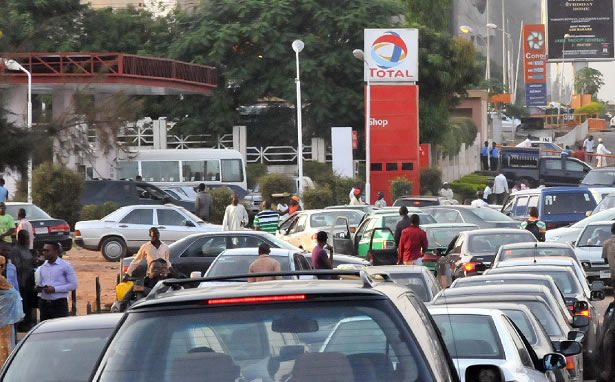 Scarcity of fuel has brought about long queues in most of the filling stations in the Federal Capital Territory (FCT), even as the Independent Petroleum Marketers Association of Nigeria (IPMAN) assured that the situation will soon be normalize for regular supply of the product.
 Former President Olusegun Obasanjo has paid a solidarity visit on the Kogi State Governor, Alhaji Yahaya Bello against the background of the governor’s Presidential ambition for the 2023 election, advising him (the governor) to “continue to be an advocate for youth involvement in governance.”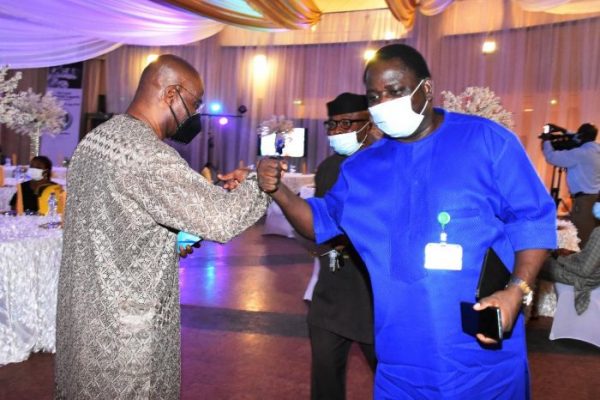




Food Blockade By North To South Not In Nigeria’s Best Interest, By Fredrick Nwabufo
It is delusive to assume any of the regions solely underpins the Nigeria infrastructure. The north feeds the nation, and the south contributes in commerce and revenue generation. We are one concentric circle, holding each other at delicate arcs. Nigeria has a unified entity can stand as an island because its component parts are already flourishing archipelagos.
We should not take this ‘’symbiosis’’ for granted. Our interdependence makes us a viable concern. It is asinine to keep latching on the trope that the ‘’north produces nothing’’. This bromide is a fallacy. The north is Nigeria’s food hamper. The insecurity in the region which has affected farming, and the concomitant increase in food prices should make us reflect on the pivotal place of the north – beyond politics.
When there is a crisis (natural and otherwise) in the north, food production is affected, and the prices of foodstuff hit the stratosphere. The flooding of 2020 which affected rice farms and drove the price of the commodity further is noteworthy. Every region brings something to the table. All the regions are equal shareholders – in asset and liability – in the Nigerian partnership.
But I am afraid to say that a menacing spectacle is being enacted by those who do not take the shared interest of Nigeria with gravitas. The prices of foodstuff are said to be soaring to the heavens in some states in the south. Rivers, Imo, Ekiti, Ogun, Ondo, Edo, and Akwa Ibom are reported to be among the worst hit.
The reason for this contrived price hike? The food blockade of the south by some groups in the north. A group, the Amalgamated Union of Food and Cattle Dealers of Nigeria (AUFCDN) is demanding N4.7 billion from the government as compensation for its loss in the Shasha market crisis in Oyo and in the #EndSARS violence.
Also, the Miyetti Allah Cattle Breeders Association has threatened to sustain the food besiegement until the safety of its members in the south is guaranteed. According to Aliyu Mohammed, coordinator of the Kwara state chapter of Miyetti Allah, the beleaguerment is a ‘’warning shot’’ to safeguard their business interest.
“Except those who may decide to take other routes to get to the state or those who may act in defiance to the directive, the traders would not come from the north and those who come may be stopped or sanctioned,” Mohammed was reported to have said.
In addition, media reports at the weekend said the north is diverting food items to Niger Republic and Cameroon, and that trade routes to the south have been besieged. Trucks containing food items were occluded from moving south at Jebba in Niger state by some irate youths though the Nigerian Defence Headquarters said the military intervened and cleared the path.
For the sake of clarity, here are the words of Abdullahi Aliu, national president of the Northern Consensus Movement, confirming the diversion of food items from the north to neighbouring countries as reported by The Nigerian Tribune.
“As I speak to you, my people are already shipping their goods, onions, tomatoes and what have you to Niger (Republic), Cameroon, and other neighbouring countries through Illela border. Already, we have diversified. Our people have already found a way of not wasting their goods. They will not be wasted. They will be sold just like the way they were being moved to the south-west, south-east or south-south. So, my people will end up not losing anything.’’
What does this portend for Nigeria? Citizens diverting food items needed by fellow citizens to foreign countries? Are foreigners from Niger Republic and Cameroon now substitutes to Nigerians? This is sadism. And it is really troubling.
What if some groups, who have threatened to obstruct oil supply to the north, put action to their threat? Where does that leave all of us? We should not cut off our nose to spite our face. Nobody wins in this friction of attrition.
To break the ice, I think the government (federal and state) needs to step up to soothe frayed nerves. Investments and lives were lost in the crisis effectuated by the activities of some criminal herders in the south. Northern traders have also been victims of targeted attacks – losing much of their investments. It will be apropos for the government to attenuate the impact of these losses – on both sides – particularly in the case of the Shasha market clash. The government must deliberately intervene before the situation snowballs into an inter-regional tit-for-tat.
The civil authorities must go beyond platitudes and commit themselves to keeping the peace by ensuring victims of violence (farmer-herder crisis and sundry clashes) are compensated and criminals punished. Why there are often reprisal attacks is because justice is not done to the victims. A cycle of violence continues when justice is undone.
Let wisdom prevail.
Fredrick Nwabufo is a writer and journalist.
Twitter @FredrickNwabufo