Home Blog Page 712

Buhari and The New Service Chiefs, By Reuben Abati

Many Nigerians were understandably shocked, surprised, if not alarmed last week, when they suddenly heard the news that the President of Nigeria, Muhammadu Buhari had finally decided to relieve the service chiefs appointed in 2015 of their appointments. The popular response was couched in such phrases as “oh… at last… finally”, “better late than never” – general expressions of relief about a security team that many Nigerians concluded could not deliver on the President’s promise to make Nigeria a safer and better place for all or at best, tackle the menace of insurgency, terrorism and banditry. The Service Chiefs led by General Abayomi Olonisakin (Chief of Defence Staff) – Lt. General Tukur Ibrahim as Chief of Army Staff, Chief of Naval Staff, Vice Admiral Ibok Ekwe Ibas and Chief of Air Staff, Air Marshal Sadique Abubakar were generally considered inefficient and incompetent by many Nigerians. This has to be put in context.

When President Muhammadu Buhari assumed office in 2015, and  during the Presidential elections that preceded his emergence, his managers sold him to the Nigerian electorate as a man who would put an end to Nigeria’s security woes especially in the North Eastern corridor where the Boko Haram and the Islamic State held sway. Buhari had been an Army General, a civil war veteran, a soldier.  He talked about fighting corruption and fixing the economy, but his unique and strongest selling point was the proposition that he would address the country’s security challenges. Even his most ardent critics had great expectations in that regard. He appointed Olonisakin and co. and gave them the assignment of stamping out terrorism and insurgency.  But this would soon turn out to be a major source of frustration for Nigerians. Rather than abate, insecurity worsened.

It became cancerous. Every measure that was introduced only brought more problems, and the cancer of terrorism assumed new forms, mestasizing, mutating like corona virus, from terrorism to banditry, worsening insurgency, kidnapping, communal strife, and open madness on the part of criminals who were determined to sabotage the country. The government and the service chiefs adopted the strategy of telling Nigerians that the Boko Haram had been “technically defeated”. Later, the narrative was that they had been “degraded” or “decimated”. This was sustained by unending public perception management schemes that amounted to nothing more than motion without movement, empty rhetoric and  the overt politicization of military strategy. More military operations were launched in the last five years than at any other time in Nigerian history, including the Nigerian civil war: These include Operation Lafiya Dole, Operation Crocodile Smile I and II, Operation Python Dance I and II, Operation Sharan Daji, Operation Harbin Kunama I and II, Operation Dokaji, Operation Egwu Eke, Operation Karamin Goro, Operation Ayem Akpatuma, Operation Last Hold, Operation Ugwu Eke, I – III, Operation Cat Race, Operation Positive Identification,  Operation Atilogwu, Operation Rattle Snake, Operation Ruwan Wuta I- III… In all, there were over 40 such Operations under the watch of General Abayomi Gabriel Olonisakin and his team. Whoever was in charge of the naming of the Operations enjoyed himself so much, there was nearly no animal in the forest that he didn’t blackmail as part of the government’s attempt to find a solution to the crisis of insurgency in the country. I must say this though: they cleverly managed to avoid naming an Operation after the Tortoise! The Nigerian military even set up what it called “Super Camps”. The truth is that there was nothing “Super” about those camps.

Nigerians saw through it all. They saw images of killings and insecurity, and waste and wanton destruction. They saw Governors like Professor Babagana Zulum of Borno State openly challenging the Nigerian Army for adding to the people’s woes. In the Middle Belt, the Governors cried out for help. In other parts of the country, herdsmen wreaked havoc as they destroyed farms, lives and livelihoods. In the South East, the Nigerian Army was labelled an army of terrorists. Within the military itself, the stories were sordid. In the course of five years, many soldiers deserted the war-front. In one famous case, a soldier said he was tired of service and he would rather go and take up a traditional rulership position! At the war front, soldiers reportedly fled in the face of superior Boko Haram fire-power. Generals complained about the realization that terrorists fighting the Nigerian state had better equipment and appeared more motivated than Nigerian troops. The rank and file recorded videos in which they abused their Commanders and Generals. In another notable video, a General was recorded complaining about the weakness of the Nigerian Army. Nobody is even sure how many soldiers Nigeria has.

For five years, the same Nigerian military that had issues at the battle-front, was very vocal on social media. At a point, I was tempted to think that the Nigerian military was more of a social media army rather than  a critical force on the battle-field. You only needed to make a critical comment and their trolls would descend on you, with lies and blackmail. As a form of military strategy, that was a terrible demonstration of sloppiness and I hope the first thing that the new Army Chiefs would do is to get rid of the loafers in charge of military communications who have reduced anti-insurgency operations to Twitter tittle-tattle. The Nigerian Army’s comeuppance came with the #EndSARS protest of October 2020, and the abduction of the Kankara Boys. Before then, Nigerians, stupefied, overwhelmed, and bewildered, had called on President Muhammadu Buhari to change his security team. From the groundnut seller by the roadside, to leaders of socio-political and cultural groups, and the two Houses of the National Assembly, Nigerians demanded that the security chiefs should be sacked. The people wanted new ideas. They talked about a new security architecture – in fact that phrase became a cliché as every Nigerian became a security sector bricklayer. It was up to the President to listen and act. He alone has the power to hire and fire. The Constitution gives him broad powers to choose his own team as Commander-in-Chief of the Armed Forces. Now and then, the President would invite the Security Chiefs and give them “marching orders”. Now and then, the Presidency assured Nigerians of the determination of the government to put an end to terrorism and impunity.  The statements were so frequent, so formulaic, the people no longer thought anything of them. I have been accused of putting in place a Rapid Response, automatic answer Robot in the Presidency when I led the Presidency’s Communications team. My critics say so. I plead not guilty.

And so, in the statement announcing the exit of General Olonisakin as Chief of Defence Staff along with other Service Chiefs, we were told that the President had accepted their offer of resignation and retirement. Truth is they were fired. Sacked! As recently as November 2020, the President had expressed confidence in their abilities. For 5 years, he kept them beyond their retirement, exit date.  And he didn’t disgrace them out of office though. He talked about their “overwhelming achievements”. “Overwhelming” is a two-sided word. It can be positive or negative. Was the President “overwhelmed” by the performance of the service chiefs in a positive sense? Were the people of Nigeria, overwhelmed by their under-performance? We have it on record that during the handing-over ceremonies last week, former Chief of Defence Staff, Abayomi Gabriel Olonisakin said that under his watch, the Nigerian military rescued 20 out of 26 Local Governments that had been taken over by the Boko Haram. The then Chief of Army Staff, Lt. Gen. Tukur Buratai was also quoted as saying he transformed military operations and improved professionalism in the military. I think the former Service Chiefs are in a hurry to assess themselves and control the narrative. They should relax. They should  learn to enjoy their retirement. They have been to the war-front and back. Many who started the journey with them died at the battle-field, but they got to the very top and have been pulled out of service alive. They are going home in one piece. Not every soldier enjoys such grace. Concerning their performance, they should leave that to us, the Nigerian people, history and posterity to judge.

They have the option of writing their memoirs, of course, when public service rules permit, and they can tell us all the stories on earth, including that undisclosed story about how Lt. Gen. Tukur Buratai was almost sacked by President Olusegun Obasanjo 21 years ago, when he was just a Major in the Army. Buratai made it to the very top, spent 40 years in the Army, but as he handed over the flag to his successor – Major Gen. Ibrahim Attahiru, the true irony of the moment was lost on him. He talked about Obasanjo. He missed the irony of the moment.  In 2017, he had also tried to push Major General Ibrahim Attahiru out of the Nigerian Army. The guy survived. He took the flag from him. How truly ironic!

But it is not enough to move the flag from one pair of hands to another. Nigerians have very strong expectations. They expect that the change of personnel will bring new dynamism and better results. There is now a new team in place: Maj. Gen. Lucky Irabor as Chief of Defence Staff, Maj. Gen. Ibrahim Attahiru as Chief of Army Staff,  Rear Admiral Awwal Gambo as Chief of Navy Staff,  and Air Vice Marshal Isiaka Amao as Chief of Air Staff. I am told that some rigour went into the selection of this new team. Okay. I am also told they are tested hands within the system. We can all see that. They are also friends who may not have any problem working together. I hope so.  When they met with the President last week, Lucky Irabor was reported as having said that he and his team are determined to “add value”.

And as it happened, on Sunday, January 31, Irabor and his team went on a visit to Borno State and they engaged with stakeholder-communities. Irabor must have been watching Western movies, and what it means to “hit the ground running”. Good James Bond move! Except that in this matter, Nigerians are not looking for actors and movie addicts. They want action and real performance. This  is an  important assignment  and I assume we do not need to give Irabor and co a tutorial on the politics of power seeing that they have paid their own dues in their chosen line of work. President Buhari says they must pay attention to the welfare of the rank and file. We have seen videos of Navy and Army rank and file celebrating the exit of former Service Chiefs. Those videos may have been isolated, sponsored, video-shopped attempts at blackmail. But the new Service Chiefs must be attentive to their environment. They cannot make any difference if they are leading a demoralized, trigger-happy, undisciplined and unprofessional  military that is likely to take to its heels in the face of Boko Haram only to escape to the nearest pepper-soup joint or short-time joint! Nigeria deserves a disciplined military, that is well-motivated, well equipped and energized to deliver on its constitutional mandate.

The public perception of the Nigerian Army has been created by the Army itself: Do you expect anyone to respect soldiers who discredit their own institution? Soldiers who lie openly to the people? Generals who run away from the war-front? Military commands that spend more time on twitter, wasting resources on mentally challenged trolls, fighting ghost enemies? Major-General Irabor needs to change the orientation of the Nigerian Army. We also need to know the actual capability of the Nigerian military? If we were to put up a fighting machine tomorrow to confront any form of external aggression, do we have the wherewithal? Irabor and his team must start with a very honest audit.

The military must also  withdraw from police work. This was a shameful legacy from the recent past. It got so bad Nigerian soldiers joined the police at checkpoints to extort money and oppress citizens, especially vulnerable women. If the Nigerian Police is weak, and yes it is, the Nigerian government must address that challenge and make the institution more credible and useful. For General Irabor and his team, there is  also the unresolved matter of the military’s refusal to appear henceforth before the judicial panel of inquiry on the #EndSARS protests in Lagos. Justice Doris Okuwobi, Chairperson of the panel, has given the Nigerian Army a new date of February 27 to respond to already served summons.  Maj. Gen. Irabor should look into that and make it clear that the Nigerian military is not above the laws of Nigeria!  Finally, President Muhammadu Buhari has one more Service Chief to appoint: the Inspector General of Police as the incumbent IGP Muhammed Adamu ended his tenure on Monday, February 1. He must choose wisely. We wait. We watch.

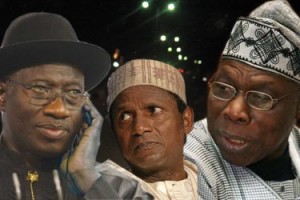
I Thought I Knew Buhari, But I’m Not Sure Now – Obasanjo

Chief Olusegun Obasanjo and President Muhammadu Buhari

Former Nigerian President, Chief Olusegun Obasanjo has said that he thought that he knew the personality of President Muhammadu Buhari having worked with him, but that he now believed that he never really knew him.

The ex-president, who spoke in a virtual interview with academic and historian, Toyin Falola, on January 31, said: “I thought I knew President Buhari because he worked with me. But I used to ask people that is it that I have not read him well or read him adequately or is it that he has changed from the Buhari that I used to know?

“I am not subscribing to the people who say we have a new Buhari from Sudan and all that nonsense.

“I know what I believed was his limitations and I have written about it –he wasn’t strong in economics, not all of us are strong in anything but you need to have sufficient knowledge of it for you to direct the affairs.

“He wasn’t particularly too strong in foreign affairs but I thought he was strong enough in the military.

“From his performance in his first outing as head of state, I thought he would also do well in fighting corruption. I did not know the nepotistic tendencies of President Buhari maybe because he was not exposed to that sort of situation when he worked with me.

“But with what I have seen now, I believe that maybe he will be thinking of a legacy. Maybe he will also learn from what has happened in recent times.

“If you are the commander-in-chief and banditry is taking place in your backyard, then you have to wake up.”

Obasanjo, speaking on the new service chiefs appointed recently by President Buhari, said that it is nothing to be cheery about, adding that the success or failure of the new commanders would be known in the next six months.

He said: “recently, the president changed his service chiefs after they have been there for more than five years without any perceptible improvement and some people started jubilating.

“Somebody spoke to me and said, ‘Oh, you are not enthused’, and I said, ‘I am not’. The person said, ‘Why?’ And I said I don’t know any of those people that have been appointed as service chiefs but you will hear my comments three to six months from now because within that period, we should be able to show what they can do. And if they cannot bring about any perceptible change or improvement then you can write them off as failures.”

Obasanjo also advised the Buhari regime to better equip the security forces and provide them with the right motivation for them to succeed.

I Knew Late Yar’Adua Was Ill Before I Put Him Forward, Obasanjo Confesses

“Let me tell you the story of Umaru Yar’Adua. I knew he was ill and before I put him forward, I asked for his medical report which he sent to me and I sent it to one of the best doctors of our time and a good friend of mine who died only last year, Professor Akinkugbe.
“I said look at it because it’s confidential and he said to me that from this report, this man has had a kidney transplant and it’s successful, he’s no longer under dialysis.
“And if you have a kidney transplant and it’s successful, it’s as good as if you didn’t have a kidney transplant at all. I accepted that and Umaru Yar’Adua contested within the party and he contested within the country and came up.
“In the process of the campaign, I remembered that he had to go for a medical checkup abroad and he was not around for a campaign here in Abeokuta.”
These the narrations of the former Nigerian President, Chief Olusegun Obasanjo, in a virtual interview with academic and historian, Toyin Falola.
Obasanjo went on: “I called him because the rumour was that he had died. I called him on my telephone and put it on speaker. I said, ‘Umaru, are you dead or alive?’ and he said, ‘I’m not dead, I’m alive’.
“Within a couple of days, he came back and reported that he was checked up and he was well. That was the position of Umaru Yar’Adua. And if anybody in his right sense will think that what I’ve done in that position was not right, I leave him in the hands of God.”
Speaking on former President Jonathan, Obasanjo said after Yar’Adua’s emergence as candidate, the party was left with two choices: between Jonathan and Peter Odili.
He, however, said Jonathan was picked over Odili, who, had an alleged corruption case with the EFCC.
Obasanjo admitted that Jonathan was not a strong character compared to Odili.
“Goodluck Jonathan had all that was working for him. He was not a strong character as Peter Odili. I would admit that, but he was not a pushover.”

Thinking About Governor Yahaya Bello As Nigeria’s President, By Ebira Youth Congress

Kogi State Governor, Alhaji Yahaya Bello

In truth, Nigeria of today is in a dire need of a leadership that is not just embraced by all but has equally exuded unshaken capacity to take responsibility very doggedly in all ramifications.

And in fairness to the reviewed opinion poll and exigencies of the Nigerian system, His Excellency, Governor Yahaya Bello of Kogi State is endowed with the fitted head into crown.

Kogi state as superintended by Governor Bello is bordered by multiple states and has kept the smooth link over the years. This is implied from His Excellency’s dedicated strides on security and interethnic correlation. The bitter reality on the Covid-19 and the attendant economic effect was finally felt by Africans and now corroborated by world leaders and medical experts, all for vindicating and appreciating the governor’s foresight.

The second phase of the End-Sars protest which could have been far worse was apparently nipped in the bud by the governor’s World Press Conference of December 2020. The governor’s vibrancy and proactiveness saved the nation from a serious mess, and so, he has indeed saved the entire Africa from grave brouhaha and instability because Nigeria is her giant.

Governor Yahaya, a detribalized leader does well in the area of health, education and basic infrastructure that could transform this country if entrusted with her leadership.

As a Congress, we resolve unequivocally that Governor Yahaya Bello is our best bet for the job as President of the Federal Republic of Nigeria being the only candidate with the leadership passion, commitment to aspiration, youth and grassroot acceptance, and background antecedents of a true servant-leader of the masses.

Obiyo Ateiza Aliyu is President-General of Ebira Youth Congress and can be reached on 08065338700, 08078096809.

Settling $500 Million Eurobond Loan By Buhari Signals Good Governance, By Musa Ilallah

It is always said that Government business in the developed and developing countries is a continuous enterprise in the life span of any country. Nigeria is not an exception to this practice.
Indeed, it is work in progress that is ideally and morally transferable from an out going to an in coming administration regardless of party difference.
However, the administration of President Muhammadu Buhari since assuming leadership of the country in 2015 had deliberately embarked on a policy of completing infrastructural development projects undertaken but abandoned by previous governments that have direct relevance to the socio economic well being of Nigerians and Nigeria.
The slogan “doing more with less” aptly describes how the PMB administration has so far been able to do much for the country with less money in it’s vault in comparison to previous governments, brought about by low oil price, economic recession and Covid 19 challenges among others.
Such projects include but not limited to  Roads, Railway Power, Steel, Airports and bridges among others. Notable among them include  Abuja-Kaduna-Kano expressway, Lagos-Ibadan, Eastern expressways, Abuja-Kaduna rail line, Lagos-Ibadan-Kano rail line; Sapele-Aladja-Abuja rail line; Mambila hydro electric project, Kashimbila power project; Ajaokuta steel rolling mill; Lagos, Abuja, Port Harcourt, Enugu, Kano Airports; and the 2nd Niger Bridge at Onistha among hundreds of other projects in the educational, agricultural, water resources,  security services and health services spread across all parts of the country.
President Buhari’s large heart driven by nationalism, patriotism and sincere love for Nigeria has not stopped at completing abandoned projects but also embarked on a conscious effort to reduce the debt burden hanging on the neck of the country by paying off inherited debts.
Just recently, the government of President Buhari repayed the $500m Eurobond loan of 6.7% and cleared part of our debt. The President had also paid $96m as part of the $500m loan taken in 2012 for Abuja–Kaduna Railway which the President Jonathan Good luck administration started and handed over to PMB in 2015 as one of the country’s key infrastructure project.
The $500m Eurobond loan was taken in 2011. It is on record and legally in order and government had the option of a roll over but PMB insisted on not doing so but pay off the debt.
Compared to our economic circumstances since 2015, the country had no need collecting $500m Eurobond loan in 2011.
Simply put, our crude oil benchmark Brent averaged $111 per barrel and production was above 2.3 million barrels a day in 2011. The economy was literily awash with petro-dollar.
Regrettably, the government then approached the international capital market, ICM because of a need to diversify govt revenue sources. The government at the time argued that the aim of the 10-year bond was to set a benchmark in the global market for Nigeria rather than to raise funds.
The question to my mind is what particular funding purposes did that first $500m Eurobond serve? Definitely not for capital spend.
That PMB determinedly paid down the debt, to time, at maturity, at a time of challenged foreign exchange earnings, is from all indications a mark of honour and establishing Nigeria as a responsible credit worthy entity.
Obviously this has multiple implications for the Nigerian economy inclusive of players in the private sector that had at different times also approached the ICM for fund raising.
Our National Assembly must do the needful by legislating on making it compulsory for the Executive arm of government to ensure continuity of projects by governments. This will go a  long way in reducing the number of  abandoned projects littering our towns and cities.

Police Deployed To Enforce President’s Coronavirus Protection Regulations Law

Photo Credit | BusinessDay

The Inspector General of Police, Mohammed Adamu has ordered officers across the 36 States of Nigeria, and Federal Capital Territory (FCT) to carry out full enforcement of the Coronavirus Disease Health Protection Regulations 2021, which was signed into law by President Muhammadu Buhari on January 26.

A statement today, February 1, by the Force Spokesman, Frank Mba said that the Assistant Inspectors General of Police in the 17 zonal commands and their constituent Commissioners of Police in the 36 States of the Federation and the Federal Capital Territory (FCT), Abuja, are to ensure full compliance with the Regulations in their respective areas of responsibilities.

The police boss reminded Nigerians that the Coronavirus Disease Health Protection Regulations 2021 mandates the Nigeria Police Force and other agencies of Government mentioned therein to ensure full enforcement of the regulations in public places.

Such public places, the statement said, include places of worship, workplace and schools, banks, public transport vehicles, hostels, boarding houses, detention centres, etc – “and general restrictions on gatherings as well as the use of face mask.

“The IGP, while noting that the uncertainty and risks engendered by the advent of the COVID-19 pandemic have placed additional responsibilities on the general public, calls on citizens to voluntarily comply with the provisions of the Regulations for the safety of all. The IGP further cautions officers enforcing the Regulations to show tact, compassion and empathy with the citizens.

“He reiterates that the officers must be firm and professional and at the same time remain polite, civil and respect the fundamental rights of the citizens.”

How Veteran Journalist, Tony Momoh Died In Abuja

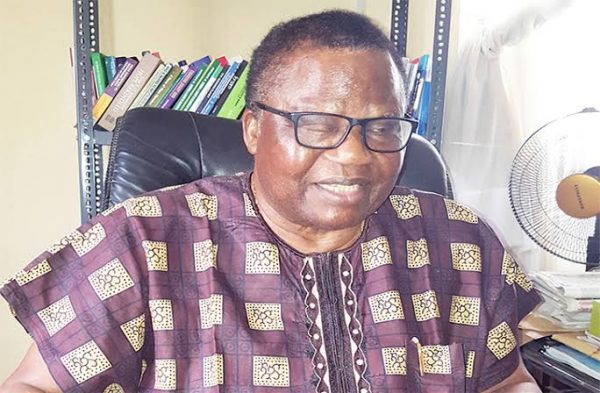
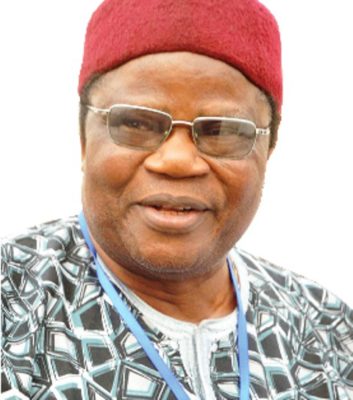
Tony Momoh

Veteran journalist and former information and culture Minister under the Ibrahim Babangida regime, Prince Tony Momoh, died today in Abuja, the nation’s capital at the age of 81.

Tony Momoh was reported to have died at about 5pm peacefully in his home in Abuja without any form of illness, according to sources close to the development.

Until his death, he was the Yerima of Auchi Sacred Kingdom.

Tony Momoh was an exemplary journalist, engaging columnist, lawyer and politician. He was reputed for his very serious “Letter to my countrymen”.

He was national chairman of Congress for Progressive Change (CPC) and was also instrumental to the formation of the legacy All Progressives Congress (APC).

Nigeria, Morocco Determined To Develop Gas Pipeline, Fertilizer Plant

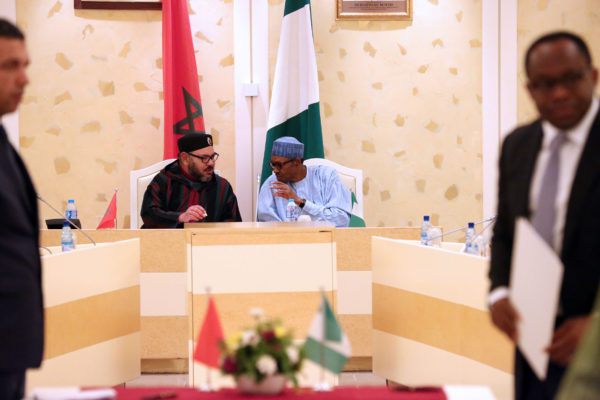
File photo of  President Muhammadu Buhari Chats with King of Morocco, His Majesty Mohammed VI during the signing 17 trade agreements on investment, Air Transportation, agriculture and other cooperation at the Presidential Villa Abuja. PHOTO; SUNDAY AGHAEZE. DEC 3 2016.

Nigeria and Morocco have resolved to go ahead with the full development of Gas Pipeline and a fertilizer production plant as part of the strategic development project.

In a telephone conversation with the Moroccan leader, King Mohammed IV yesterday, January 31, President Muhammadu Buhari appreciated the positive and dynamic bilateral relations in all fields between the two nations since the King’s visit to Nigeria in December 2016, and President Buhari’s visit to Morocco in June 2018.

President Buhari and King Mohammed expressed determination to carry out, as soon as possible, the Nigeria-Morocco Gas Pipeline and construction of a fertilizer production plant in Nigeria.

President Buhari, who spoke with His Majesty, the King of Morocco, from his country home in Daura, thanked the leader for support in the fight against terrorism and violent extremism.

He also expressed appreciation for the Kingdom’s support in education through scholarships and training.

I’ll Greatly Miss Tony Momoh, President Buhari Mourns

President Muhammadu Buhari has expressed grief at the passing of his longtime ally, friend, political loyalist and former Minister of Information and Culture, Prince Tony Momoh.

Reacting to the passage, President Buhari said Prince Momoh stood with him through thick and thin, adding: “his brand of loyalty is very rare in the politics of today. I will greatly miss him.”

The President recalled that as chairman, Media and Publicity of the All Nigeria People’s Party (ANPP) Campaign Organisation in the 2003 and 2007 elections as well as Chairman of the Congress for Progressive Change (CPC), the late Auchi Prince contributed in no small measure to the growth and strengthening of the organizations, leading to the eventual formation of the All Progressives Congress (APC).

President Buhari commiserated with the media industry on the loss of a veteran who put in a lot to raise the bar of the profession in various ways as editor, manager, administrator, President and Trustee of the Guild of Editors, advising them to sustain his legacies.

While also condoling with the Auchi Kingdom, the government and people of Edo State on this great loss, the President prayed that God will grant the departed eternal rest and comfort family, friends and political associates in this period of grief.

Infighting Rocks ISWAP: Group Overthrows Abba-Gana, Appoints Abu Dawud

Infighting has divided the Islamic State’s West Africa Province (ISWAP), with Shura (consultation) Council staging a coup d’etat which overthrew Amir Abba-Gana at Tumbum Kayowa and appointing Abu Dawud as its new leader.

Abba-Gana assumed the position after the execution of Ba’a Idirisa on February 9, 2019. The deceased succeeded Abu-Mossad Albarnawee after infighting. Idirisa and Albarnawee are biological children of the late Boko Haram founder, Mohammed Yusuf.

Abba-Gana was removed for the “biased” installation of Aliyu Chakkar as the new “Governor of Lake Chad”. Chakkar replaced Goni Maina, a former ISWAP commander.

The disagreement led to a bloody battle between supporters of the factional “Governors”. Dozens of insurgents died on both sides, PRNigeria reports.

Before the decision on Abu Dawud’s elevation was reached, Goni Mustapha acted as ISWAP Shura Leader and Chief Imam for three weeks.

The council was also not comfortable that lately under Abba-Gana’s leadership, some territories were lost after sequential attacks by the Nigerian military and Multinational Joint Task Force (MNJTF) troops.

Operation Tura Takai Bango, the first offensive in 2021, has eliminated many Boko Haram and ISWAP commanders and fighters in Borno and in the Lake Chad region.

Among the top terrorists killed were Ali Bor and Mluem Modu.

Advertisement ADVERTORIAL
WP2Social Auto Publish Powered By : XYZScripts.com