Apparently referring to the current attack on Fulani in parts of Oyo State by indigenes, led by one Sunday Igboho, the Olubadan of Ibadanland, Oba Saliu Adetunji, has cautioned against blaming and attacking a particular ethnic group for the security challenges in any part of the country.
The monarch, who spoke today, January 23, at the Royal Festival of Praise organized by the Holy Ghost Royal House of Restoration Church in Ibadan, emphasized that blaming a particular ethnic group for insecurity in the country would only further breed disunity in the country and should not be allowed.
Olubadan, who was represented by Mogaji Okiti-Aresa, Chief Adeshina Olatunji, appealed to farmers and herders in Ibarapa and Nigeria, in general, to live in peace.
He also called on Nigerians to support the security agencies in the country in tackling criminal activities and refrain from taking laws into their own hands.
Olubadan counselled religious leaders and traditional leaders to complement the government’s efforts by preaching unity in their domains.
”As leaders, it does not mean we are above God, traditional rulers, religious leaders should know that they are not God and we must lead our people in a Godly manner.”
The chairman of the Nigerian in Diaspora Commission (NIDCOM), Abike Dabiri-Erewa has said that the federal government will soon evacuate 600 Nigerians who have been stranded in Saudi Arabia for more than seven months.
In a series of tweets, Abike Dabiri-Erewa said: “Nigerian irregular migrants in Saudi Arabia are due to be evacuated on the 28th and 29th of January, pending any unforeseen issues.
“The evacuation is expected to be carried out in two batches of 400 and 200 by the Ministry of Foreign Affairs.”
She said that their evacuation was delayed due to issues relating to Covid-19, even as she appealed to Nigerians to resist travelling abroad without proper documents.
“It’s become very dangerous and more difficult.”
Dabiri-Erewa’s tweet appeared to confirm the scenes in the viral video, which showed bodies – wrapped in black polythene bags lying on the floor in a packed room.
“We are here more than three months, six months, seven months ago, without any action, no better information on transport to Nigeria,” the male narrator in the video said.
“According to the rules and regulations of this location, we are not supposed to be here for more than two weeks.
“Most nationals of other countries have been flown back to their countries. Only we Nigerians don’t have any source or way of getting back.
“I’m here on behalf of others to seek your assistance to get us back to our country.”
A Twitter user with the handle @KsaApc said some of the affected persons were not able to renew their residencies in the Muslim country.
“I spoke with one of the brothers and he told me that his brother was among the detainees,” the tweet said. “Part of them have ended their stays and do not have the ability to renew and the other does not have regular residencies.”
The Southwest, represented by a Pan-Yoruba socio-political group, Afenifere, has made it clear to the Northern Nigeria, represented by the Arewa Consultative Forum that they were ready for war, against the background of an attack carried out on the Fulani settlement in Ibarapaland, Oyo State by one Sunday Igboho and his supporters.
Afenifere, in a statement today, January 23 by its National Publicity Secretary, Yinka Odumakin, said that the people of Yorubaland are not scared of war as insinuated in the statement by ACF, signed by its spokesman, Emmanuel Yawe.
Odumakin, who said that the the people of Yorubaland will not instigate war, said it was surprising that the ACF that had kept quiet while the Fulanis were attacking Yoruba sons and daughters now found it convenient to complain on the step taken by Igboho.
Odumakin said the steps taken by Igboho was not backed by Afenifere.
Afenifere, in the statement, said: “The attention of Afenifere has been drawn to the hypocritical tears of Arewa Consultative Forum(ACF) over clashes in Ibarapa Local Government Area of Oyo state occasioned by the inimical activities of Fulani herdsmen against indigenous Yoruba people.
“While we have gone to a great length to sue for peace and have appealed to our pained people to be law abiding even with the daily provocations of the Fulani and harassment of our people, we frown at the very arrogant and insulting ACF statement, especially their reference to the event of 1966.
“We must make it clear to them that they cannot threaten us with a war at this stage as we will not provoke war but never are we going to run for anybody on our land.
“We are miffed that a body like ACF that has never shown any remorse over the killing of our people can open their mouths anyhow now because there are consequences for the irresponsible actions of their people.
“We advise them to call their criminals to order and not expect our people to sheepishly wait to be killed by those who value cow lives more than human beings.
“We do not want a repeat of 1966 event but if there are people plotting such event again, the rain will be over their heads.”
The North, represented by a sociocultural group, Arewa Consultative Forum (ACF), has warned that civil war is imminent, with the attack on Fulani people, largely from the North, by Yoruba group led by one Sunday Igboho in Oyo state yesterday, January 22.
In a statement today, January 23, the ACF condemned the attack on Fulani in the southwest, warning that the country may go up in flames unless something is done urgently.
The national publicity secretary of the ACF, Emmanuel Yawe, in a statement entitled: “STOP THE DRIFT IN THE SOUTHWEST” accused the security agents of complicity in the attacks which saw the house and cars of the Sarki Fulani in Oyo State being burnt and members of his household chased away.
The statement reads: “This morning, we received reports of an attack by Yoruba Youths on Alhaji Saliu Abdulkadir, the Serki Fulani in Oyo State.
“In the reports, he was attacked and driven out of his house, eleven cars and his house burnt with his family members now living in the bush.
“There are allegations that one Sunday Igboho an agitator for the Oodua Republic and who issued an ultimatum giving Fulani people seven days to leave Yorubaland is the instigator of the attack.
“The most disturbing aspect of the attack is the allegation that the security agents who were earlier warned about its imminence stood by helplessly as the attack was carried out.“
The ACF is worried about this trend and calls on the Federal and State Governments in the South West to move quickly to avert a social upheaval that may destabilize the whole country.
“We recall that the civil war in the 60’s started with attacks and counter-attacks like this.”
“The governments must be proactive and stop history from repeating itself. Those who carried out these attacks must be apprehended and the due process of the law allowed to take its course.”
“If this is not done there maybe counter attacks in the north and the country will be up in flames. The authorities must act. The ACF is very worried and calls on them to act fast.”
Last week, more than 70 bus passengers travelling from Kano to Aba were abducted in Kogi State. The victims included 27 Kano traders on a business trip to purchase shoes and textiles. The traders were released on Sunday following the payment of N25 million ransom to their abductors. Since the traders were small-scale, with capital of only around N300,000, their friends had to mobilise donations from family, friends and business associates in the market to raise the ransom, for which the negotiations were reported by news outlets.
This case isn’t isolated. It’s just the latest example of how transparent the ransom industry is in Nigeria. Our government no longer even pretends to be ashamed of its brazen failure; our security forces and intelligence agencies know very well when ransoms are negotiated; victims’ families know that it is the only way to secure the release of their loved ones; and Nigerians are no longer outraged because we have grown so desensitised. Not only do security and intelligence agents turn a blind eye when ransoms are negotiated, they are reported on occasions to have advised families to pay them. But perhaps that isn’t surprising when even police officers seized on duty have to pay ransom themselves.
Ransom payment has over the last few years been so normalised and institutionalised that it now bears some of the hallmarks of a legal enterprise except that it is more lucrative. Even in the best of times, very few businesses in Nigeria make N25 million in a matter of days. In any case, kidnappers don’t pay taxes, nor are they subject to the repressive regime of bank charges. But despite this, so long as they only target ordinary Nigerians, they hardly have to worry about paying for their crimes.
When they get arrested, they use a portion of their loot to bribe their way out. When they get tired of killing, kidnapping, robbing and raping, all they need to do is to claim they’ve repented; desperate governors will receive them with a grin in the government houses, pose for photos and hand them some additional cash to add to their hoards. Hardly surprising then that kidnapping has emerged as one of our fasting growing industries. Not a week passes without criminals extorting millions. Desperate families are forced to sell off everything they have or incur huge debts to save loved ones. Some crowd-fund offline and online to raise ransoms.
At this speed, I worry that we might soon begin to lead the world in the kidnapping economy. Our country has already become so crime-friendly that we’ve started to attract felons from neighbouring countries. Last Monday, the Katsina State government announced that it has returned nine Nigeriens kidnapped from their country and transported to the state. The government said the perpetrators were also Nigeriens, meaning these criminals believed that they were more likely to get away with their crimes if they hide in Nigeria.
In this situation, it is easy to forget that things haven’t always been like this. A little over five years ago, kidnap-for-ransom was alien to Northern Nigeria. It was something northerners heard of in the South and scratched our heads over. The North had struggled with armed robbers for decades, but those only blocked the highway, mostly at night, and were quick to flee at the slightest hint of police. Today, kidnappers confidently face soldiers and kidnap police officers moving in a group.
We are already in a terrible place, but it can get even worse. It will get worse if we continue to pay off criminals. The thing with kidnap-for-ransom is that the more you pay, the more and longer you keep paying; because with every payment, they build more capacity to aim for a higher target. With every operation, kidnappers glean more experience and get more sophisticated. The longer they survive, the more time and resources it would take to tackle them. In this way, criminals become more powerful than governments and begin to control territories where their laws, or rather lawlessness, reign supreme. We must work to stop this scenario from playing out or escalating and we’ve got to be decisive.
The government is the main player, but all Nigerians have a role. In addition to cooperating with security agents, communities have got to decide to stop paying ransoms and stand their ground no matter what. This is the toughest of decisions when the lives of your friends, family or neighbours are on the line, but I am afraid that it is the only way. The more we pay to save one of us, the more we embolden and empower our enemies, putting not only other families in a graver danger, but ours too. And if we keep paying off criminals while we default taxes, it’s only natural that offenders will keep getting more powerful than our security forces.
I firmly believe starving kidnappers of money is the best way for communities to take the wind out of their brutal sail. But one doesn’t need a crystal ball to know that many families can’t withstand the urge to save someone they love even if that means imperilling the whole world. We, therefore, need a federal law expressly criminalising and severely punishing not only those collecting ransom, but also paying it or aiding its payment. But such a law will only have moral authority if the security services start taking the fight to the terrorists and the criminals plaguing our country.
The bottom line is that we must resolve collectively that we shan’t pay ransom to anyone, no matter what. No ifs, no buts, no equivocation. This will temporarily distress some of us, but it will starve criminals of funds to purchase ammunition and even food, thereby ultimately making kidnapping unviable and saving us all. Conversely, if we keep paying, our danger will only escalate. The situation is a classic example of the Prisoner’s Dilemma. While our individual interest seems to suggest payment, our collective interest demands resilience – and if we all pursue our individual interest, we will all lose.
Oyo State Governor, Seyi Makinde, has said that he would not allow anyone hiding under the guise of protecting Yoruba interests to cause ethnic tension and perpetrate crisis in the state, vowing to deal with such person or persons.
The governor, who had already ordered the Police to arrest Sunday Igboho and others that have been causing tension in the state, stressed that the war Oyo and security agencies need to wage is not against any particular ethnic group but against criminal elements, irrespective of their tribes, religions, or creed.
The governor said that his administration would not allow anyone to threaten the peace of the state by acting unlawfully and saying things that are alien to the Nigerian constitution.
He told the new Commissioner of Police, Ngozi Onadeko, that his administration would continue to synergise with law enforcement organs fight criminals, hoodlums and bandits irrespective of their tribe or religion.
“For people stoking ethnic tension, they are criminals and once you get them, they should be arrested and treated like common criminals.
“I am sure that since you came in, you must have heard about some things happening at Ibarapa axis of the state. I will still say it here that we are not after Hausa-Fulani. We are after criminals.”
Only today, January 22, the wanted Igboho went to Igangan, a community in Ibarapa North Local Government Area of Oyo State to restate his ultimatum to Fulanis to leave the state, after accusing them of perpetrating murders and kidnappings.
Fitch Rating Agency has warned Muhammadu Buhari led federal government to halt the constant borrowing from the Central Bank of Nigeria (CBN) to finance the economy to avoid what it called “far reaching economic consequences” to the country.
In a statement today, January 22, Fitch said that the constant running to the apex bank to get funds “could raise risks to macroeconomic stability.”
Fitch said it “views the Nigerian government’s fiscal revenue and expenditure projections for 2021 as broadly realistic, which should preclude further significant borrowing by the sovereign from the CBN facility this year.
“The government may nonetheless use the facility more extensively if the deficit proves wider than forecast or if external financing falls short of planned amounts.
“Monetary financing of the fiscal deficit raises challenges to monetary policy implementation, as tight management of domestic liquidity is a key tool under the CBN’s policy of prioritizing the stability of the Naira. It could also complicate official efforts to bring inflation back under control.”
It said that unlike the government, “we include this balance in our metrics for Nigeria’s government debt. Borrowing from the facility accounted for 30 per cent of the FGN’s debt at end-2019, on our estimates.”
The rating agency warned Nigeria to reduce its use of the facility in 2021 because of its weaknesses in public finance management and the current weak institutional safeguards, adding that normally, the limit for the use of the Ways and Means Financing facility by the government should be five per cent of the previous year’s fiscal revenues.
It said however that the recent borrowing from the CBN has repeatedly exceeded that limit in recent years, and reached around 80 per cent of the FGN’s 2019 revenues in 2020.
Already inflation rate has risen to above 15 per cent as prices of goods and services have hit the roof top of recent.
Vice President Yemi Osinbajo has described Nigeria’s public and private healthcare specialists and workers as the unseen heroes of the current coronavirus pandemic.
He said that they have been on duty day and night to ensure the safety, cure and prevention of majority of Nigerians from coronavirus, “sometimes under extremely challenging circumstances. “Thousands of health professionals have been working tirelessly on Nigeria’s COVID-19 public health response. From the people across sample collection sites and laboratories ensuring testing, and our dedicated physicians, nurses and other health workers in treatment centres providing care to the sick, to our medical scientists that are conducting research on various aspects of this plague. We also have State Public Health Teams working hard to ensure data reporting and analysis, contact tracing, risk communications and so much more. “Within this period, you have all worked extremely hard to activate testing in all states of our country, you have increased our knowledge of this disease, grown our capacity to swiftly identify those infected by the plague and render aid to them. “I know that the work you do can often seem thankless and the long hours you put in unnoticed and unappreciated. Often it happens in the background and in the shadows, away from public attention and it will not often grab the headlines. But it only seems this way. In truth, this is the sort of work that builds nations and saves lives. “When the record of our response to this unprecedented threat to our public health is written, the efforts of our healthcare professionals will occupy a significant place with the thanks of a grateful nation.” Professor Osinbajo spoke today, January 22 at the Nigeria Centre for Disease Control (NCDC) Reference Laboratory, Gaduwa, Abuja, where he underwent a facility tour, accompanied by the Minister of Health, Dr. Osagie Ehanire; Minister of State for Health, Dr. Adeleke Olorunnimbe Mamora and the Director-General, Nigeria Centre for Disease Control (NCDC), Dr. Chikwe Ihekweazu. The Vice-President also gave special commendation to NCDC, saying: “the excellent work I have witnessed today at the NCDC Reference Laboratory, is one of the best examples of how this pandemic has produced at least one silver lining, a showcasing of the remarkable skills and talents of our public health experts, here at NCDC and across the health sector. “It is fair to say that the staff of the NCDC and all those engaged in Nigeria’s COVID-19 public health response, represent public service at its very best in Nigeria, and are an example of the type of public sector that we all want. “So, to all staff of the NCDC and Public Health Teams across the states, thank you for the excellent work that you do. I want you all to know that your country is extremely proud of you. Incredible as it may sound, you are indeed making history every single day.” The Vice President spoke on the ground-breaking research of several Nigerians towards creating a cure for the COVID-19 virus, saying: “last week I was in briefing meetings, listening to the landmark research of a team of Professors from LUTH who are investigating the efficacy” of some of the drugs in the therapeutic management of Covid-19 and are researching its prophylactic use. “A few days later I was listening to Professor Christian Happi and his team who have produced a ground-breaking COVID-19 rapid test, but more remarkably, are developing a Nigerian anti Covid-19 vaccine.” The Vice-President advised Nigerians to continue to comply with COVID-19 non-pharmaceutical measures, urging all Nigerians to comply with the advice of the scientists and healthcare professionals and to continue to take every measure to keep themselves and their loved ones safe. Osinbajo assured that as a nation and people, “we will come through this period of our history as we have come through all previous seasons of adversity – by working together, protecting each other, believing in each other and committing to seeing better days ahead for our nation.” The Vice President was taken round the laboratories and also interacted with a select group of staff even as he paid tribute to the memory of the late NCDC staff, Uche Njoku, who died in the course of service.
Polaris Bank has announced the introduction of a cash flow lending product to Small and Medium Enterprises (SMEs) tagged; Polaris Business Loan.
In statement today, January 22, the band said that the loan facility offers both existing and new SME customers of the Bank the opportunity to access quick loans for stock replacement, equipment finance, working capital and business expansion to sustain and scale up in the business.
“This forms part of the lender’s continuous efforts to support the growth of small and medium scale businesses.
The loans, according to the statement, can be used for a wide range of purposes such as stock replacement and purchase of raw materials, renovation and expansion, Asset acquisition etc.
It said that those who take the SMEs business loans are also eligible to access free tailor-made capacity building trainings which is offered periodically by the Polaris Business Advisory Academy.
The statement quoted the Bank’s Group Head, Products & Market Development, Mrs. Adebimpe Ihekuna, as saying: “the difficulty which used to characterize one of the challenges faced by SMEs in accessing funding for their business is now a thing of the past, adding that the Bank do not only offer loans but financial advisory; as well as empowerment programs on business intelligence.”
The statement directed both the existing and new customers of the Bank to visit any Polaris Bank branch to complete the loan application process or send an email to smebusiness@polarisbanklimited.com for assistance.
Nigerian universities are back in the news again after 10 months of closure as a result of nationwide strike by the Academic Staff Union of Universities (ASUU). This time, the Joint Action Committee (JAC) of Non- Academic Staff of Educational and Associated Institutions (NASU) and the Senior Staff Association of Nigerian Universities (SSANU), threatening to go on an “indefinite, comprehensive and total strike,” with effect from Friday, 5th February 2021.
The proposed strike is coming about a month after ASUU called off its strike, which paralyzed all academic activities in the university system for over 10 months.
Speaking to news men today, January 22 in Abuja, the leadership of the unions, warned that if the government failed to address all the issues in contention, the strike would commence from the midnight of February 5.
The General Secretary of NASU, Comrade Peters Adeyemi, who spoke on behalf of JAC leadership said the decision to declared the strike was based on the resolutions of the congress held across the branches.
Giving details of the congress resolution, Comrade Adeyemi explained that 90 per cent of NASU members in all its branches across the country were in support of strike; while only 10 per cent were against strike.
Equally, he explained that 83 per cent of SSANU members were clearly in support of strike, while 11 per cent were against strike, and 6 per cent indifferent.
“It is in line with the resolution of our members nationwide, that the leadership of the Joint Action Committee of NASU and SSANU hereby resolve as follows: That members of NASU and SSANU shall embark on an indefinite, comprehensive and total strike with effect from midnight of Friday, 5th February 2021.
“That two weeks’ notice effective from today, Friday 22nd January 2021, is hereby given to Government and relevant stakeholders of this development.”
He explained that JAC of NASU and SSANU reached an understanding with the Federal Government and signed a Memorandum of Understanding (MoU) on Tuesday 20 October, last year on all the contentious issues affecting the university system and the welfare of their members.
The issues involved are: Inconsistencies in IPPIS payment; Non- payment of Earned Allowances; Non- payment of arrears of National Minimum Wage; Delay in renegotiation of FGN/ NASU and SSANU 2009 Agreements.
They also include Non- payment of Retirement benefits of outgone members; Teaching staff usurping Headship of Non-Teaching units in clear violation of Conditions of Service and Establishment procedures; Neglect and poor funding of state universities; and Non-constitution of Visitation Panels for Universities.
He regretted that out of the items upon which agreements were reached, only one item- constitution of Visitation Panels has been implemented.
“Our friends in the media, having painstakingly taken you through all the issues as agreed upon in the October 2020 Memorandum of Understanding with Government, it should be easy for you to deduce that out of the seven items upon which agreements were reached, only one item- constitution of Visitation Panels has been implemented. Even that item was not implemented within the time-line as agreed upon and is still only partially implemented.
“It was against this background that the national protests were embarked on the January 12 to 14, 2021, with a view to drawing the attention of necessary stakeholders to the issues and seeking redress as appropriate. Sadly, till date, no response has been gotten and it would seem that the government played deaf to our protests and lamentations.
“As stated earlier, the Joint Action Committee of NASU and SSANU had been very circumspect about embarking on strike action. It has never been our style to undertake strike actions at the drop of a hat. Sadly, it would appear that our non-belligerent modes of engagement have been taken for weakness and our belief in civil engagement and dialogue has been taken for granted.
“It is against this backdrop and in a democratic spirit that the leadership of the Joint Action Committee (JAC) of NASU and SSANU threw back the decision after the three- day protests to the various memberships across branches on the way forward and the resolutions have been overwhelming.
“The resolutions across the Branches have been overwhelming and convey the disenchantment of members over the sorry state of affairs.”
We use cookies on our website to give you the most relevant experience by remembering your preferences and repeat visits. By clicking “Accept”, you consent to the use of ALL the cookies.
This website uses cookies to improve your experience while you navigate through the website. Out of these, the cookies that are categorized as necessary are stored on your browser as they are essential for the working of basic functionalities of the website. We also use third-party cookies that help us analyze and understand how you use this website. These cookies will be stored in your browser only with your consent. You also have the option to opt-out of these cookies. But opting out of some of these cookies may affect your browsing experience.
Necessary cookies are absolutely essential for the website to function properly. This category only includes cookies that ensures basic functionalities and security features of the website. These cookies do not store any personal information.
Any cookies that may not be particularly necessary for the website to function and is used specifically to collect user personal data via analytics, ads, other embedded contents are termed as non-necessary cookies. It is mandatory to procure user consent prior to running these cookies on your website.



 The North, represented by a sociocultural group, Arewa Consultative Forum (ACF), has warned that civil war is imminent, with the attack on Fulani people, largely from the North, by Yoruba group led by one Sunday Igboho in Oyo state yesterday, January 22.
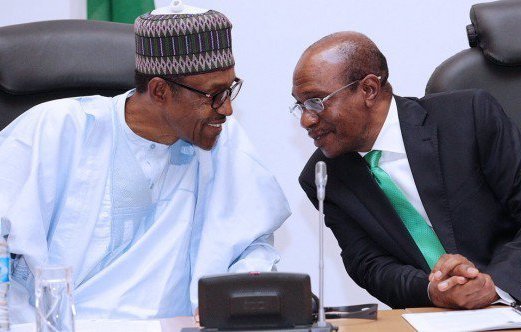 Fitch Rating Agency has warned Muhammadu Buhari led federal government to halt the constant borrowing from the Central Bank of Nigeria (CBN) to finance the economy to avoid what it called “far reaching economic consequences” to the country.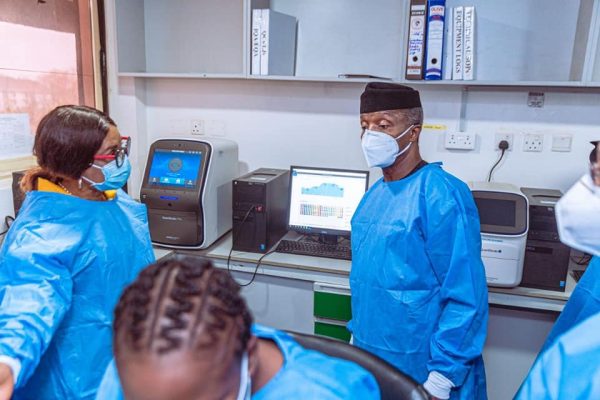
 Polaris Bank has announced the introduction of a cash flow lending product to Small and Medium Enterprises (SMEs) tagged; Polaris Business Loan.


How Kidnapping Becomes The Fastest Lucrative Industry In Nigeria, By Bulama Bukarti
This case isn’t isolated. It’s just the latest example of how transparent the ransom industry is in Nigeria. Our government no longer even pretends to be ashamed of its brazen failure; our security forces and intelligence agencies know very well when ransoms are negotiated; victims’ families know that it is the only way to secure the release of their loved ones; and Nigerians are no longer outraged because we have grown so desensitised. Not only do security and intelligence agents turn a blind eye when ransoms are negotiated, they are reported on occasions to have advised families to pay them. But perhaps that isn’t surprising when even police officers seized on duty have to pay ransom themselves.
Ransom payment has over the last few years been so normalised and institutionalised that it now bears some of the hallmarks of a legal enterprise except that it is more lucrative. Even in the best of times, very few businesses in Nigeria make N25 million in a matter of days. In any case, kidnappers don’t pay taxes, nor are they subject to the repressive regime of bank charges. But despite this, so long as they only target ordinary Nigerians, they hardly have to worry about paying for their crimes.
When they get arrested, they use a portion of their loot to bribe their way out. When they get tired of killing, kidnapping, robbing and raping, all they need to do is to claim they’ve repented; desperate governors will receive them with a grin in the government houses, pose for photos and hand them some additional cash to add to their hoards. Hardly surprising then that kidnapping has emerged as one of our fasting growing industries. Not a week passes without criminals extorting millions. Desperate families are forced to sell off everything they have or incur huge debts to save loved ones. Some crowd-fund offline and online to raise ransoms.
At this speed, I worry that we might soon begin to lead the world in the kidnapping economy. Our country has already become so crime-friendly that we’ve started to attract felons from neighbouring countries. Last Monday, the Katsina State government announced that it has returned nine Nigeriens kidnapped from their country and transported to the state. The government said the perpetrators were also Nigeriens, meaning these criminals believed that they were more likely to get away with their crimes if they hide in Nigeria.
In this situation, it is easy to forget that things haven’t always been like this. A little over five years ago, kidnap-for-ransom was alien to Northern Nigeria. It was something northerners heard of in the South and scratched our heads over. The North had struggled with armed robbers for decades, but those only blocked the highway, mostly at night, and were quick to flee at the slightest hint of police. Today, kidnappers confidently face soldiers and kidnap police officers moving in a group.
We are already in a terrible place, but it can get even worse. It will get worse if we continue to pay off criminals. The thing with kidnap-for-ransom is that the more you pay, the more and longer you keep paying; because with every payment, they build more capacity to aim for a higher target. With every operation, kidnappers glean more experience and get more sophisticated. The longer they survive, the more time and resources it would take to tackle them. In this way, criminals become more powerful than governments and begin to control territories where their laws, or rather lawlessness, reign supreme. We must work to stop this scenario from playing out or escalating and we’ve got to be decisive.
The government is the main player, but all Nigerians have a role. In addition to cooperating with security agents, communities have got to decide to stop paying ransoms and stand their ground no matter what. This is the toughest of decisions when the lives of your friends, family or neighbours are on the line, but I am afraid that it is the only way. The more we pay to save one of us, the more we embolden and empower our enemies, putting not only other families in a graver danger, but ours too. And if we keep paying off criminals while we default taxes, it’s only natural that offenders will keep getting more powerful than our security forces.
I firmly believe starving kidnappers of money is the best way for communities to take the wind out of their brutal sail. But one doesn’t need a crystal ball to know that many families can’t withstand the urge to save someone they love even if that means imperilling the whole world. We, therefore, need a federal law expressly criminalising and severely punishing not only those collecting ransom, but also paying it or aiding its payment. But such a law will only have moral authority if the security services start taking the fight to the terrorists and the criminals plaguing our country.
The bottom line is that we must resolve collectively that we shan’t pay ransom to anyone, no matter what. No ifs, no buts, no equivocation. This will temporarily distress some of us, but it will starve criminals of funds to purchase ammunition and even food, thereby ultimately making kidnapping unviable and saving us all. Conversely, if we keep paying, our danger will only escalate. The situation is a classic example of the Prisoner’s Dilemma. While our individual interest seems to suggest payment, our collective interest demands resilience – and if we all pursue our individual interest, we will all lose.