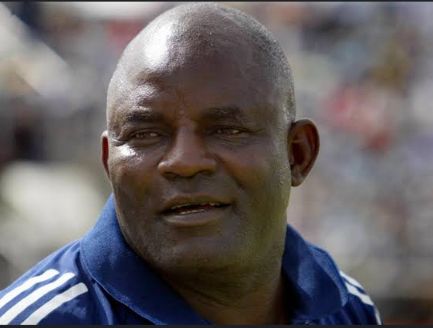
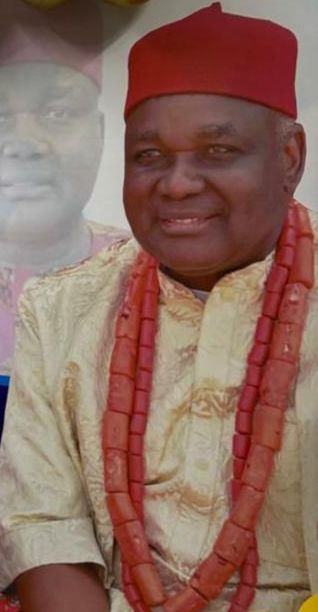
Former Green Eagles Captain who later became the coach, “chairman” Christian Chukwu is dead. He died earlier today, aged 74. Details of his death are yet to be made public. Christian Chukwu captained the national team to their first-ever Africa Cup of Nations (AFCON) title in 1980 and later led the Super Eagles as head coach in the early 2000s. His glorious playing career started with Rangers of Enugu which he also led to win local and international trophies. Christian Chukwu was nicknamed Chairmen for his superb leadership of both teams. He was also a remarkable player as a central defender in both Rangers International and Nigeria’s Green Eagles. He was in the Nigerian squads that won the Africa Nations’ Cup in 1980 and finished runners’ up in 1976 and 1978. He was the first Nigerian captain to lift the African Nations Cup trophy after a 3–0 victory over Algeria in the final of the 1980 tournament. In October 1998 he was appointed coach of the Kenya national team. Later, from 2003 to 2005, he coached Nigeria, leading them to reach semifinals at the 2004 African Cup of Nations. Chukwu coached Enugu Rangers to 6th place in the 2008–2009 edition of the Nigeria Premier League. He was later made Rangers General Manager and Chief Executive Officer (CEO), before he finally retired from football administration.
The recent press release by the Federal Capital Territory Administration (FCTA) announcing sweeping reforms in land administration under the direction of the FCT Minister, Barrister Ezenwo Nyesom Wike, raises deep concerns about the long-term implications for the integrity of the Abuja Master Plan, equitable land access, and environmental sustainability. While cloaked in the language of urban development, investor confidence, and administrative efficiency, the new policy directives – particularly the non-extendable 21-day window for payment, and the two-year development deadline – appear to be more of a legal smokescreen to facilitate massive land dispossession and reward cronies under the pretext of reforms. Key concerns include: Elitist exclusion: The 21-day window to pay prescribed fees and submit Letters of Acceptance is grossly unrealistic for the average Nigerian allottee, many of whom are civil servants or informal workers without access to immediate liquidity. This will inevitably disenfranchise thousands of legitimate landholders, paving the way for politically connected individuals and entities to hijack abandoned or “forfeited” lands. Weaponization of development timeline: Mandating that allottees must develop their plots within two years ignores the economic reality of inflation, exchange rate instability, and building material shortages. This is not about development, but about creating artificial breaches to enable revocation and reallocation of land under ministerial discretion. Distortion of Mass Housing intent: While the promise to title mass housing estates and sectional interests sounds progressive, there is no clear framework to protect the original subscribers, many of whom have long suffered under failed developer agreements and government inertia. This new policy may just legalize what has been a systematic stripping of housing rights from low- and middle-income residents. Regularization as a mirage: With over 261,000 Area Council documents submitted for regularization, and only 2,358 titles issued since 2006 (just 0.9%), the FCTA’s track record raises doubt about its sincerity. How can Nigerians trust a system that has failed for almost two decades to suddenly become transparent overnight, especially under a Minister with a controversial governance style? Abuja’s green spaces, low-density zones, and residential neighborhoods are being sacrificed on the altar of short-term revenue and political patronage, undermining both the letter and spirit of the Abuja Master Plan. This is therefore a call to action. President Bola Ahmed Tinubu should immediately order an independent review of the FCT Land Reform Framework, institute a moratorium on revocations pending stakeholder consultation. He should also protect the Abuja Master Plan from further desecration under the guise of “reform.” The National Assembly should also investigate the operational motives behind these new land policies and ensure they are not used to legalize land grabbing. The United Nations Human Settlements Programme (UN-Habitat), the World Bank, AfDB, and other development partners, on its part, should monitor and assess the environmental and social consequences of these new policies. These bodies should also support civic voices and organizations working to preserve Abuja as a planned, inclusive and environmentally responsible capital city. Abuja does not belong to any Minister, cabal or speculator. It is the collective inheritance of all Nigerians, and we must defend it with truth and courage. Shehu Nuhu wrote from Asokoro, Abuja.
Another notorious bandit commander, known as Malam Gwaska, has been eliminated along with over 100 others by the fighting soldiers In Katsina. The killing of Gwaska followed military operations against criminals in the North-Western state. According to the Katsina State Commissioner for Internal Security and Home Affairs, Dr. Nasir Mua’zu, the operations were crucial component of a broader strategy by security stakeholders to reclaim stability in the State and Northwest Region. He said that during the operations, the forces recovered and subsequently destroyed two machine guns, locally fabricated shotguns, and other weapons to prevent their reuse by criminal elements. He said that the Nigerian Army’s 17th Brigade and 213 Forward Operating Base (FOB) of the Air Component of the Nigerian Air Force on April 10, 2025, executed a coordinated strike on bandit strongholds in Mununu Bakai, Zango, Jeka Arera, Malali, and Ruwan Godiya areas spanning Kankara and Faskari LGAs. “The precision operation, based on actionable intelligence, eliminated a high-value target identified as Gwaska, who served as second-in-command to an ISWAP-linked leader,” he stated. “Intelligence reports confirm that Gwaska had recently relocated from Danmusa Local Government to Munumu Forest. “It is expedient to state that this successful mission has significantly disrupted the criminal networks that have long terrorized communities across Faskari, Kankara, Bakori, Malumfashi, and Kafur LGAs.” Similarly, security forces conducted another operation in the early hours of April 10, 2025, targeting bandit routes at Dutsen Wori by Dandume-Kandamba Road, located at the outskirts of Dandume town at the border with Faskari and Sabuwa Local Government Areas. The operation, executed at about 3:45 am, resulted in the elimination of six bandits, including their commander, while several other bandits escaped with various degrees of bullet wounds. The forces were said to have successfully intercepted and recovered seven motorcycles, while four others escaped into the forest. The bandits were tracked from their base at Maigora/Doroyi camp in Faskari Local Government Area.
Minister of the Federal Capital Territory (FCT), Nyesom Wike has introduced key reforms in land administration in the FCT, effective from April 21, 2025. The reforms, according to the minister’s Director of Press, Anthony Ogunleye in a statement today, April 11, are meant to foster sustainable urban development, boost investor confidence, and ensure that property owners have secure and legally recognized land titles. He quoted the Director, Land Administration, FCTA, Chijioke Nwankwoeze as saying at a press briefing that the reforms encompass critical aspects of land administration, including the conditions for granting Statutory Rights of Occupancy, the content of these titles and Letters of Acceptance, the titling of Mass Housing and the regularization of land documents issued by Area Councils. Chijioke Nwankwoeze said that a strict and non-extendable payment deadline of 21 days has been introduced for land allottees to make full payment of all prescribed bills, fees, rents and charges for statutory rights of occupancy. He said that a duly completed Letter of Acceptance and evidence of payment must be submitted within the timeframe, “failing which the offer shall be withdrawn. “Any payments made after the 21-day period will be considered invalid. “Additionally, a defined timeframe of two years has also been introduced for allottees to develop their land, commencing from the date of the Statutory Right of Occupancy.” The Director said that the move is aimed at addressing revenue delays for the FCTA, and to encourage infrastructure development and reduce land speculation and racketeering among others. On the regularisation of Area Council Land Documents, the Director, said that Allottees with successfully vetted and confirmed Area Council land documents will be granted 60 days to make full payment of all prescribed bills, fees, rents, and charges to receive statutory titles, in line with the provision of the law. “Failure to comply within this period will render the offers invalid.” The Director recalled that the FCT Administration, in a bid to ensure that all land allocated by the FCT Area Councils are regularized, as provided by the law, directed the Zonal Land, Planning and Survey offices of the six Area Councils to submit all Area Council allocation lists, layout, files and registers to the Abuja Geographic Information System (AGIS)/Lands Department which was done by the Area Councils. According to him, while the FCT Area Councils submitted 261,914 land documents for regularization between 2006 and 2023, only a mere 3.2% amounting to 8,287 were vetted, with just 2,358 regularized. On the issuance of titles to mass housing projects and sectional interests, the Director said holders and occupiers of properties within Mass Housing Estates in the FCT will now have a clear pathway to obtain their titles. He said subscribers and Developers are required to submit applications for titling to the Department of Land Administration for processing, commencing on April 21, 2025. “In recognition of the urgent need to issue titles to the beneficiaries of Mass Housing and Sectional Interests, all applications for titling are to be made by the Subscribers/Developers to the Department of Land Administration for processing. Processing of titles for Mass Housing and Sectional Interests shall commence on April 21, 2025, in line with the new operational framework”. He expressed confidence that these significant reforms will streamline processes, enhance revenue generation, curb land speculation, and ensure timely development of allocated lands, as well as provide titles to beneficiaries of Mass Housing schemes and regularise Area Council land allocations.
Opposition political leader, Atiku Abubakar of the People’s Democratic Party (PDP); the immediate past Governor of Kaduna State, Malam Nasiru el-Rufai and other political leaders were in Kaduna today, on a post-Sallah visit to the immediate past President of Nigeria, Muhammadu Buhari. Buhari ruled Nigeria from 2015 to 2023 on the platform of the All Progressives Congress (APC).
Others on the team of the visitors to ex President Buhari were the former Governor of Sokoto State, Senator Aminu Waziri Tambuwal, former Governor of Adamawa State and Senator Bindow Jibrilla.
Others were former Governor of Benue State, Senator Gabriel Suswan, former Governor of Imo State, Chief Achike Udenwa, Senator Idris Umar, Hon Mohammed Kumalia, Captain Yahaya Abubakar, Alhaji Musa Halilu (Dujima Adamawa) and Alhaji Salisu Makarfi. The visitors later joined former President Buhari to observe Friday Juma’ah prayer in Kaduna.
Reuben Muoka, the widely respected Director of Public Affairs at the Nigerian Communications Commission (NCC), has officially retired, marking the end of a remarkable career that spanned journalism, corporate communications, and strategic public engagement.
For those who have followed Nigeria’s telecommunications evolution, the name Reuben Muoka resonates deeply. His journey reflects a full-circle narrative—from a passionate ICT reporter at Vanguard Newspaper, to a corporate player at MTS First Wireless, and ultimately, a top-tier public relations practitioner at the NCC. With his retirement, the Nigerian communications landscape says farewell to one of its most articulate and impactful voices. A flashback to his beginnings reveals a young journalist with a sharp eye for details and an uncommon grasp of technology reporting. Muoka rose through the editorial ranks to become Communications Editor at Vanguard, where he shaped public discourse on ICT before the boom of mobile telephony in Nigeria. His reportage was instrumental in educating the public and policy makers alike about the transformative potential of technology. His journey took a strategic turn when he joined Nigeria’s first mobile telephone operator, MTS First Wireless, as Deputy General Manager. There, he brought his journalistic acumen into the corporate world, blending storytelling with strategic positioning to promote one of the nation’s pioneering telecom efforts. In another bold leap in his career journey, Muoka joined the Nigerian Communications Commission (NCC), where he would go on to leave his most enduring legacy. Starting as a junior staff member, he rose through the ranks to become the Director of Public Affairs, ultimately becoming the voice and bridge between the Commission and the public. His tenure at the NCC was marked by professionalism, empathy, and excellence in public relations. Muoka brought a unique warmth to corporate communication—blending policy with people, and strategy with sincerity. Known for his humility, friendship, and understanding, Mr. Muoka exemplified professionalism in public communication. His contributions to the image and credibility of the NCC are not only outstanding but deeply exemplary. He brought clarity to policy communications, tact to stakeholder engagements, and integrity to every word that left his desk. Reflecting on his journey, Muoka said: “When I started out as a young ICT reporter, I couldn’t have imagined the path my career would take. But I have been truly blessed—to tell Nigeria’s tech story from the newsroom, to promote innovation from the boardroom, and to engage the public from a national platform. It’s been a rewarding cycle, and I’m deeply grateful.” As he steps into a new chapter, tributes from colleagues, journalists, regulators, and industry players continue to pour in. They speak not just of his professional achievements, but of his character—steady, thoughtful, collaborative, and always ready to listen. Reuben Muoka’s story is more than a career chronicle; it is a blueprint for meaningful service. He didn’t just occupy offices—he built bridges, nurtured relationships, and set standards. We at The Ameh News join countless voices in wishing Mr. Muoka all the best in every circumstance and situation ahead. His journey may be transitioning, but his impact will continue to inspire.
The Chairman of the Independent National Electoral Commission (INEC), Professor Mahmood Yakubu has confirmed that his tenure as the head of Nigeria’s electoral body will come to an end later this year. Professor Mahmoud, told his colleagues at the Extraordinary General Assembly of the ECOWAS Network of Electoral Commissions (ECONEC) in Banjul, Gambia, today, April 10, that this would be his last appearance at an ECONEC meeting as Nigeria’s electoral body chairman. Professor Mahmoud, who has served as INEC chairman since November 9, 2015, was appointed by former President Muhammadu Buhari for an initial five-year term (2015-2020), and was renewed for another five years (2020-2025). He oversaw the controversial 2019 and 2023 general elections. The INEC boss expressed his gratitude for the support and collaboration of his ECOWAS counterparts, emphasizing the importance of maintaining electoral integrity and fostering regional unity. He also called for continued cooperation among election management bodies (EMBs) in West Africa to strengthen democracy across the region. Professor Mahmoud reflected on the achievements and challenges of his tenure with ECONEC even as he praised the contributions of past members of the network, which has worked to strengthen democratic institutions in West Africa. He expressed concerns about the current state of democracy in the region, saying that four countries have recently fallen from democratic rule. Professor Mahmoud however, remained hopeful that these nations would soon return to democratic governance. The INEC address was supported by fellow EMB heads, who recognized ECONEC’s vital role in sustaining democratic practices across the region. The assembly brought together chairpersons and vice-chairpersons from countries, including Benin, Cape Verde, Côte d’Ivoire, The Gambia, Ghana, Guinea-Bissau, Liberia, Nigeria, Senegal, Sierra Leone, and Togo.
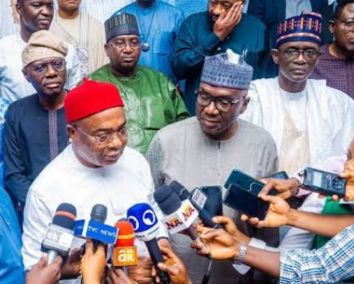
“We are especially gratified, only a few weeks ago, to hear your public affirmation that the APC remains your party of choice. That declaration could not have come at a better time.” These were the words of the governors elected on the platform of the ruling All Progressives Congress (APC) when they paid Sallah homage to the immediate past President, Muhammadu Buhari at his residence in Kaduna. The Governors, speaking through the Chairman of the Progressive Governors’Forum (PGF), and Imo state Governor, Hope Uzodinma, expressed gratitude and enduring respect for the immense contributions of Buhari to Nigeria’s democracy and strengthening of the APC. “Many of us recall with pride the principled role you played in the founding of the APC. “That legacy continues to shape our party’s identity direction. The Governors said that such great role reaffirmed Buhari as a pillar of the movement and provided reassurance to members of the party. “Mr. President, you are pan-Nigerian. “Your Excellency, your legacy in Nigerian history is secured. “You remain the only opposition candidate in our nation’s history to have defeated an incumbent. You did not only win power, you governed with calm resolve and handed over, with honour, to another APC president. For this, we are extremely grateful.
“Your administration gave expression to our party’s core principles through your focus on security, economic recovery, and anti-corruption. Your efforts reclaimed territory from insurgents, extended social investment programs like the Conditional Cash Transfer and School Feeding Program, and ushered in the road and rail revolution that is still bearing fruit. Programs such as the Anchor Borrowers Scheme directly impacted food security. “You taught us to produce what we eat and eat what we produce. You brought dignity to governance and deepened the progressive ethos of our party. “Today, APC is being renewed and repositioned under your worthy successor, President Bola Ahmed Tinubu, GCFR. His leadership is bold, reform -driven, and unshakably committed to progress. Your public endorsement of him in your recent birthday message was a powerful symbol of continuity and humility. “Your Excellency, today we honour you, not just for your past service but for the enduring values you represent. We ask you to continue to support and guide us as we take the next steps to deepen progressive politics across the nation and ensure that APC continues to be in power for a more prosperous Nigeria.” Responding, ex President Buhari advised the Governors to adopt a citizen-centric approach. He reminded them that leadership presents both a challenge and opportunity, and that the ability to balance the two would significantly advance national progress. Buhari expressed confidence in the progress being made by the governors elected on the platform of the APC, and reiterated his call for continued dedication to the nation’s progress. He advised leaders to accord importance to the welfare of the people and not themselves. He cited his personal example of leaving office with the same physical assets he had before his presidency. He thanked President Bola Tinubu administration for renovating his home in Kaduna, explaining that while the building looked very much the same externally, so much improvement has been made inside. He thanked the governors for the visit, saying that while he had worked with several of them, some others were new to him.
Governor Ademola Adeleke has asked investors in the United Kingdom to rush to his Osun state with investments in many fields. Speaking today, April 9, at the House of Common in London, the governor stressed the need for the United Kingdom government to focus on subnational investment in Nigeria with emphasis on Osun state which he called the heartland of South Western Nigeria. A statement today by the governor’s spokesperson, Mallam Olawale Rasheed, said that the Governor spoke at an investment working visit hosted by the UK Prime Minister’s Envoy to Nigeria on Trade and Investment, Florence Eshalomi. It was attended by the management team of ESG Management Services UK Ltd and other private sector representatives. Governor Adeleke said that opportunities in Nigeria, especially in Osun state “are too much to be ignored.” The Governor stressed that Osun presents a rare opportunity for strong economic partnership, saying that with a population of about five million people, the state is the heartland of Yoruba people. “South West comprises six states, but Osun state is at the core. “We have huge potential for investment in mining, agriculture, digital economy, free trade zone, creative economy, and others. We have a well trained labor force and a commendable investment environment. “Osun boasts of being the most peaceful state in the country with a high rating in the ease of doing business. Our investment environment is boosted by a 45 window for processing of Certificate of Occupancy, elimination of multiple taxation through a unified tax system, and operation of a one-stop shop for investment processes. “Above all, we have a strict system for the protection of investment and investors. An added advantage is our well-developed business community organised under the Osun State Chamber of Commerce and Industry.” The Governor, who led a team of businessmen and technocrats, said that the Osun government has reduced the state infrastructure deficit by over 50 percent, promising that by the 2025 intervention plans, the deficit reduction is targeted to be over 70 percent. Responding, the UK Prime Minister’s Envoy expressed delight at the progress so far recorded by the Osun state government in the areas of attracting foreign direct investment. She said that the current global uncertainty provides incentive for new investment focus, identifying key positive indices that drive investment as noted in the Governor’s address. Eshalomi said that she has the mandate of the UK Prime Minister to forge closer links for investment between UK and Nigeria businesses, expressing happiness that Osun state Chamber of Commerce was represented at the meeting. She acknowledged that Osun has done the spade work in the area of regulatory environment, ease of doing business, investment protection and reliable investment partners, pledging to ensure positive outcome on the engagement between Osun and the UK government. The major highlight of the meeting was the signing of a Memorandum of Understanding (MoU) for investment facilitation between the Osun State Government and a UK investment facilitation firm, ESG Management Services UK Limited. The purpose of this MoU is to establish a collaborative framework through which ESGMS will assist the Osun State Government in sourcing and facilitating investment opportunities from UK-based companies in the sectors of agriculture, manufacturing, solid minerals, and other strategic areas. ESGMS will work to identify, manage, and position Osun State’s public assets to be investment-ready for UK trade and business interest. The MOU was signed on behalf of Osun state government by the Secretary to the State Government, Hon Teslim Igbalaye while Francisco Toju Da-Silva signed for the ESG team. Members of the Osun State government who accompanied the Governor include the Commissioner for Budget and Economic Planning. Prof Moruf Adeleke; Commissioner for Commerce and Industry, Rev Bunmi Jenyo; Commissioner for Agriculture and Food Security, Hon Tola Faseru; Special Adviser to the Governor on SDG, Hon Bamikole Omishore; Permanent Secretary, Ministry of Budget and Economic Planning, Mrs Yetunde Esan; Vice President, Osun State Chamber of Commerce and Industry, Mallam Olawale Rasheed.
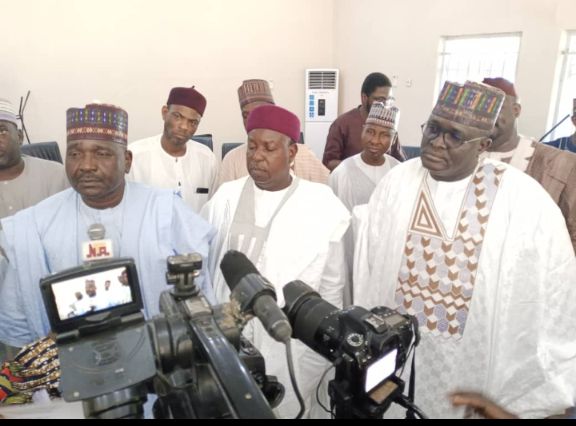
Alhaji Musa Tumsa, assumed duty today, April 8, as the new Managing Director of the Chad Basin Development Authority (CBDA), with a vow to confront the challenges facing the Authority. “We understand the challenges facing the Chad Basin, and we are ready to confront them head-on.” Tumsa, who spoke on assumption of office in the CBDA headquarters in Maiduguri, said that the new management team under his leadership would develop a comprehensive action plan aimed at addressing the institution’s challenges and unlocking its full potential. He called on CBDA staff and stakeholders for their cooperation and support, emphasizing the importance of collective efforts in achieving the Authority’s objectives. “With unity and commitment, we can turn the Chad Basin into a hub of agricultural and environmental development.” The Managing Director expressed gratitude to President Bola Ahmed Tinubu for appointing him, assuring Nigerians that he and his team would work diligently to justify the trust and confidence reposed in them. This came even as Barrister Bashir Bukar Ba’ale also resumed as the Executive Director, Finance and Administration, for the Authority. The new appointments have been welcomed with optimism, with many expressing hope that the management will chart a new course for the Authority and contribute significantly to the livelihoods of the region’s people. Observers and stakeholders have noted the potential for the Chad Basin to play a pivotal role in food security, environmental sustainability, and economic development under its new leadership.
We use cookies on our website to give you the most relevant experience by remembering your preferences and repeat visits. By clicking “Accept”, you consent to the use of ALL the cookies.
This website uses cookies to improve your experience while you navigate through the website. Out of these, the cookies that are categorized as necessary are stored on your browser as they are essential for the working of basic functionalities of the website. We also use third-party cookies that help us analyze and understand how you use this website. These cookies will be stored in your browser only with your consent. You also have the option to opt-out of these cookies. But opting out of some of these cookies may affect your browsing experience.
Necessary cookies are absolutely essential for the website to function properly. This category only includes cookies that ensures basic functionalities and security features of the website. These cookies do not store any personal information.
Any cookies that may not be particularly necessary for the website to function and is used specifically to collect user personal data via analytics, ads, other embedded contents are termed as non-necessary cookies. It is mandatory to procure user consent prior to running these cookies on your website.





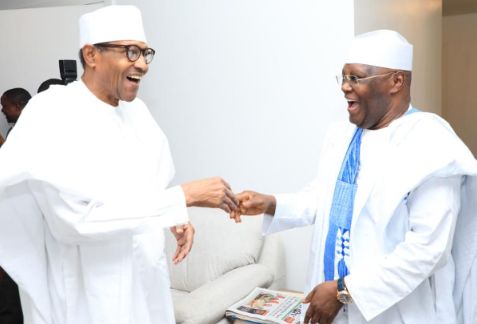
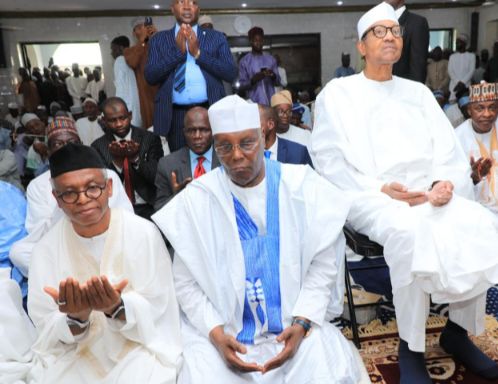 Others on the team of the visitors to ex President Buhari were the former Governor of Sokoto State, Senator Aminu Waziri Tambuwal, former Governor of Adamawa State and Senator Bindow Jibrilla.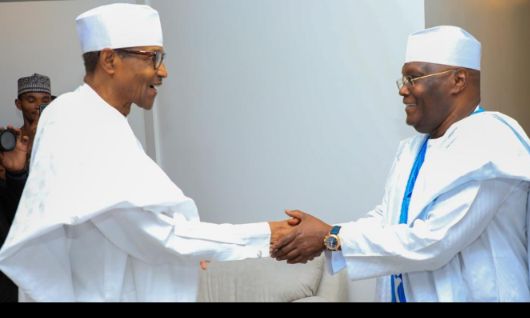

 “Your administration gave expression to our party’s core principles through your focus on security, economic recovery, and anti-corruption. Your efforts reclaimed territory from insurgents, extended social investment programs like the Conditional Cash Transfer and School Feeding Program, and ushered in the road and rail revolution that is still bearing fruit. Programs such as the Anchor Borrowers Scheme directly impacted food security.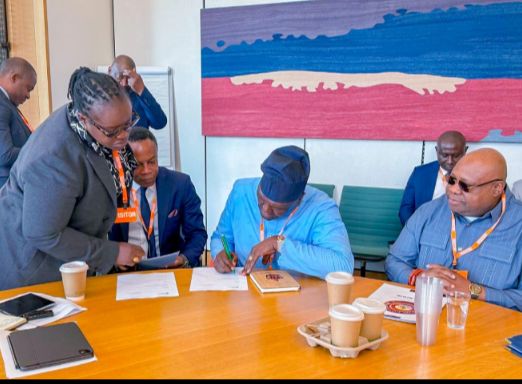



FCT Land Reforms: Guise For Land Grabbing? By Shehu Nuhu
The recent press release by the Federal Capital Territory Administration (FCTA) announcing sweeping reforms in land administration under the direction of the FCT Minister, Barrister Ezenwo Nyesom Wike, raises deep concerns about the long-term implications for the integrity of the Abuja Master Plan, equitable land access, and environmental sustainability.
While cloaked in the language of urban development, investor confidence, and administrative efficiency, the new policy directives – particularly the non-extendable 21-day window for payment, and the two-year development deadline – appear to be more of a legal smokescreen to facilitate massive land dispossession and reward cronies under the pretext of reforms.
Key concerns include:
Elitist exclusion: The 21-day window to pay prescribed fees and submit Letters of Acceptance is grossly unrealistic for the average Nigerian allottee, many of whom are civil servants or informal workers without access to immediate liquidity. This will inevitably disenfranchise thousands of legitimate landholders, paving the way for politically connected individuals and entities to hijack abandoned or “forfeited” lands.
Weaponization of development timeline: Mandating that allottees must develop their plots within two years ignores the economic reality of inflation, exchange rate instability, and building material shortages. This is not about development, but about creating artificial breaches to enable revocation and reallocation of land under ministerial discretion.
Distortion of Mass Housing intent: While the promise to title mass housing estates and sectional interests sounds progressive, there is no clear framework to protect the original subscribers, many of whom have long suffered under failed developer agreements and government inertia. This new policy may just legalize what has been a systematic stripping of housing rights from low- and middle-income residents.
Regularization as a mirage: With over 261,000 Area Council documents submitted for regularization, and only 2,358 titles issued since 2006 (just 0.9%), the FCTA’s track record raises doubt about its sincerity. How can Nigerians trust a system that has failed for almost two decades to suddenly become transparent overnight, especially under a Minister with a controversial governance style?
Abuja’s green spaces, low-density zones, and residential neighborhoods are being sacrificed on the altar of short-term revenue and political patronage, undermining both the letter and spirit of the Abuja Master Plan.
This is therefore a call to action. President Bola Ahmed Tinubu should immediately order an independent review of the FCT Land Reform Framework, institute a moratorium on revocations pending stakeholder consultation.
He should also protect the Abuja Master Plan from further desecration under the guise of “reform.”
The National Assembly should also investigate the operational motives behind these new land policies and ensure they are not used to legalize land grabbing.
The United Nations Human Settlements Programme (UN-Habitat), the World Bank, AfDB, and other development partners, on its part, should monitor and assess the environmental and social consequences of these new policies.
These bodies should also support civic voices and organizations working to preserve Abuja as a planned, inclusive and environmentally responsible capital city.
Abuja does not belong to any Minister, cabal or speculator. It is the collective inheritance of all Nigerians, and we must defend it with truth and courage.
Shehu Nuhu wrote from Asokoro, Abuja.