The Nigerian Defence Academy (NDA) has cautioned Nigerians against falling prey to some fake social media accounts, particularly on Facebook, which claim to be the official accounts of the Commandant, Major General Jamil Sarham.
The Defence Academy said such fraudulent social media accounts have been spuriously claiming that they could assist prospective applicants to get admission into NDA for a fee.
In a statement today, July 1, by the spokesman, Major Abubakar Abdullahi, the NDA said: “we wish to state clearly that these accounts are fake and the works of fraudsters. “The NDA has no part in the establishment or operations of these fraudulent social media accounts. Invariably, we wish to warn the general public to be wary of these accounts and that anyone conducting any business with them does so at their own peril.
“For the purpose of clarity, the Commandant, Maj Gen Jamil Sarham, does not have any official social media handle for conducting official NDA matters. All NDA activities are transmitted via our official website: www.nda.edu.ng, and on our Facebook and Twitter handles @DefenceAcademyNG and @HQ_NDA respectively.
“The general public is hereby notified and forwarned about these fake social media accounts.”
Delta State Governor, Ifeanyi Okowa, and his wife, Edith, have tested positive for coronavirus (COVID-19). The governor announced this today, July 1st via Twitter. He said however that they are well. He wrote: “My wife and I have tested positive for COVID-19. We are well and continuing with our isolation/medication. We thank you all for your continued prayers for us and our daughter.” This is coming days after the governor’s daughter tested positive for the virus.
The Kogi State governor, Alhaji Yahaya Bello, has insisted that the late Chief Judge of Kogi State, Justice Nasiru Ajanah did not die of coronavirus even as he asked the people in the state not to give in to fear of the virus.
The governor, who spoke today, June 30 in Lokoja during the 3rd day Fidau prayer for the repose of the late Chief Judge, stressed that coronavirus was imported into the country and forced on the people.
He said that late Justice Ajanah died a natural death, and urged the people not to attribute his death to anything other than natural.
Yahaya Bello condemned the insinuations being peddled which he said were for political and mischief purposes.
According to him, coronavirus is artificial which has been unfortunately marketed and sold to Nigerians.
He described the virus as worst than banditry, Boko Haram and genocide.
Governor Yahaya Bello advised citizens not to give in to fear and evil of the issues of coronavirus , stressing that it has been imported, propagated and forced on the people for no just cause.
“Nothing kills faster like fear. People should not accept cut and paste. COVID-19 is only out to create fear, panic, pandemic. It is a disease orchestrated to reduce and shorten the lifespan of the people.
“Whether Medical experts and Scientist, believe it or not, COVID-19 is out to shorten the lifestyle of the people. It is a disease propagated by force for Nigerians to accept”.
The governor described the late jurist as a brain, jurist per excellence and a lover of peace and prayed Almighty Allah to grant him Aljanah Firdausi.
Except something else occurs that grabs the headlines and dominates Nigerian social media, the big news of the past week would probably be the death of Senator Abiola Ajimobi and the political drama that it has generated. Senator Ajimobi served as a Senator between 2003 -2007. He was Governor of Oyo State between 2011 – 2015, 2015- 2019. He achieved the distinction of being the first Governor in that state to be elected for a second term in office. He broke the jinx. His tenure as Governor was quite controversial with mixed results and divided opinions. He was a very frank and outspoken Governor who was also very conscious of his social status and the powers attached to his office. He was also quite audacious. He engaged the Olubadan in an open battle when he chose in one instance to transform some high chiefs of the Olubadan-in-council into beaded kings.
There was also his infamous confrontation with students of the Ladoke Akintola University of Technology (LAUTECH) who had stormed Government House to protest the prolonged closure of their school. Ajimobi hushed the students up and told them harshly that they should remember that they were in the presence of “the Constituted Authority” of Oyo State. The Oyo State Government under his watch owed arrears of salaries. By the general election of 2019, his party, the All Progressives Congress (APC) stood no chance in the elections. It was generally believed that the “Constituted Authority” had alienated the people he governed so much they were bound to reject the country’s ruling party in the state. As expected, the APC lost the Gubernatorial election to the rival, People’s Democratic Party (PDP) whose flag-bearer Engr. Seyi Makinde is the incumbent Governor of the state.
In 2019, Ajimobi also sought election into the Senate. Nigeria’s Upper Chamber is increasingly an old people’s home for retired Governors. But he lost the Oyo South Senatorial bid to the candidate, again, of the PDP. He took his case to the Election Petition Tribunal. He lost again. In the face of this rejection, the APC consoled itself with the conclusion that the performance of their party in Oyo state did not amount to a rejection of the APC by the people, but a rejection of Ajimobi’s politics! The same party would later reward Ajimobi with the position of Deputy National Chairman, South West. His admirers insist that he was a hero, a bridge-builder, and an illustrious Ibadan son and politician who made his own contributions to the development of his state and country. His style may just have been a bit brash, they admit.
Man lives. He dies. It is in the nature of all living things to die. Human experiences like love, achievements, social status can bring an individual much fulfilment, but death is the biggest event of our lives. It defines our mortality. It is arbitrary and tragic, because it marks the end of everything. It is not a form of completion, because nobody ever completes life, even a man of 100 still nurses hope, but with death, everything is finished. Death does not grant the dead a say in what happens to him or her: but there is a form of survival to it. The dead survive in social contexts: in the memory of those who love or hate them, and each recollection is absolutely beyond the control of the dead. The dead exist only as social identities. Culturally, we are expected to respect and honour them. This is seen as a moral obligation. We are also likely to feel offended if the people besmirch their memory.
But what we often see is that this moral obligation is merely socially constructed. It cannot be imposed. It is determined by context and relationships. We have seen this at play with two recent high profile deaths: that of former Presidential Chief of Staff, Malam Abba Kyari, whose death generated so much emotion that it has now formed the substance of a book titled: Abba Kyari –Portrait of a Loyalist: The Good, The Bad and the Ugly Sides of Public Service in Nigeria edited by Magnus Onyibe. And now: the death, at 70, of Senator Abiola Ajimobi. Both men died as a result of COVID-19 related complications. Both died in the same hospital: First Cardiology Consultants in Lagos. But if anyone thought Kyari’s death was controversial, that of Senator Ajimobi would seem to be even more so.
At the centre of the latter is the ugly and totally avoidable conflict between Mrs Florence Ajimobi and the Seyi Makinde administration in Oyo State. During a condolence visit to the Ajimobis led by the Chairman of the Nigeria Governors’ Forum, Dr. Kayode Fayemi, Mrs Ajimobi turned on the Deputy Governor of Oyo State, and accused the Governor, Seyi Makinde of “playing politics” with her husband’s death. She said: “…He didn’t call me. Even if he had called me, I never had his number. He should have sent text messages for record purposes. The Governor of Oyo State never called me. He never signed a condolence message. Never called even when my husband was on sick bed for one month. What politics are you playing please..?”
The outburst was recorded in a video that has gone viral. The Oyo State Government and the Governor have responded almost in equal measure. The revelations have been unpalatable. It turned out that there was some disagreement over where the former Governor should be buried. The Government says the preferred location by the family in Agodi GRA is a land that is under litigation. The permit that was eventually granted to allow Ajimobi to be buried in his Oluyole GRA home, we are told, was even in violation of an existing law. Really? Governor Makinde’s administration should not form the bad habit of breaking the law, no matter what! It was further established that the Governor issued a signed condolence statement and had also made efforts to reach out to Mrs. Ajimobi. He also ordered that the flag should be flown at half-mast in honour of the deceased.
When Mrs Ajimobi watches that video again in the future, she may regret speaking too hastily. She only needs to do a review of the reactions to her outburst by the public. She has been accused of having “a sense of entitlement”. “Who does she think she is?”, some asked. The Agodi GRA property where she wanted her husband buried has also become a subject of many uncomplimentary remarks about her husband’s integrity. She has even been told that if she loved her husband that much, why didn’t she shut down her own shop the day her husband was buried? Ordinary Nigerians are not always nice to political leaders dead or alive. Social media has given them such voice and freedom that has turned them into a “Constituted Authority” of their own. But the Oyo State Government should sheathe its sword and not add to Mrs Ajimobi’s grief. Elisabeth Kubler-Ross in a book titled “On Death and Dying” wrote about the “Five Stages of Grief,” and although the emotions of grief are not scientifically chronological, anger is one of them. When people lose loved ones, they tend to be angry for various reasons, until they come to terms with reality. Mrs Ajimobi deserves support, not abuse at this time.
More people will probably still disappoint her, but if she must be angry, I believe that the people she needs to be angry with are members of the APC National Working Committee who used her husband as a means to their own political ends. By June 16 when Senator Ajimobi was named Acting Chairman of the party as the in-fighting between factions raged, Ajimobi was said to be on life support. Didn’t they know that? Party spokespersons lied that he was recuperating. By June 18, Fisayo Soyombo, an award-winning journalist had gone on twitter to announce that the Senator was dead. He was challenged. He stood by his story. He said his source has never failed him. On June 25, the National Executive Committee of the APC dissolved the party’s NWC and set up a Caretaker Committee. The same day, Ajimobi’s death was announced. What manner of men are these who will do political 419 with dying and death and turn a man they claim they love into a pawn? Fisayo Soyombo has been vindicated. A journalist is as good as his or her source. He deserves another award for his investigative journalism. And may God, the only “Constituted Authority”, over and above all things, grant Senator Ajimobi, peaceful repose.
II. To Save LAWM
For more than a week, the refuse bins across the streets were filled to the brim, surrounded by bulging refuse packs. Garbage collectors who are contractors of the Lagos State Waste Management Authority (LAWMA), under a PSP arrangement, were said to be on strike over the non-payment of their salaries for three months! Street sweepers, with their ubiquitous orange overalls, helping to keep Lagos clean were also nowhere to be seen. In the middle of a global public health crisis like COVID-19, and with hygiene as one of the recommended safety responses, I thought Lagos had a big problem on its hand. Waste managers going on strike, in a state that is the epicenter of the pandemic in Nigeria? Many Lagos residents were outraged. Why won’t LAWMA pay waste managers?
Before long the media focused on the story. The facts as reported in summary are as follows: In May, Governor Babajide Sanwoolu, as part of efforts to reposition LAWMA, was said to have ordered an audit of the agency. The auditors reportedly stumbled on damning irregularities, wastages and leakages within the system. These include the discovery of sharp practices by PSP contractors, the middle men who interface between LAWMA and street sweepers/refuse collectors. LAWMA has 652 of such operators who in turn engage 15, 498 workers, who manage 600 routes across the state. The contractors were accused of padding their bills, and passing their cost to the state government. In LAWMA’s record, a sweeper is paid N25, 000 per month as salary, while a supervisor is paid N40, 000 per month. In reality, the contractors don’t even pay their staff up to this amount. As the agency’s wage bill rose from N540 million per month to N1 billion, the Governor asked the former MD to step aside and insisted on an audit. Many of the contractors were found guilty, with the most notorious among them identified as “The Iron Lady”. As part of the reform process, the state government appointed a new Managing Director to oversee the changes that needed to be made.
It was at this point that hell broke loose. Contracts were terminated including that of the “Iron Lady” who alone managed 66 routes. There were attacks on the new management of LAWMA by street sweepers who publicly discarded their orange overalls, and took their case to the social media. They had my sympathy. Not to pay these hapless workers, who risk their lives every day for mere pittance didn’t look good. But it soon became clear that this was not about LAWMA but some powerful contractors and middle men who were determined to resist and frustrate the proposed reform, insisting that they are untouchable.
Anyone who is familiar with the waste management process in Lagos will attest to the fact that this is one of the major areas reserved for the purposes of political patronage. The contractors are not necessarily independent. They are either party stalwarts, or their representatives, being rewarded for their contribution to election victory. They have behind them Godfathers who also report to Godfathers. Governor Sanwoolu is right to have ordered an audit, and to have asked the former Managing Director to step aside. But the audit must be fair and it certainly can’t go on endlessly. Yesterday, I saw a few street sweepers back at work. There must be some honest contractors whose staff do not deserve to be out of work and whose salaries must be paid. But there must also be a strong monitoring mechanism in place. No contractor should be paid for work not done or be allowed to pad bills. The new man at LAWMA, that is the Acting MD, will need the personal support of the Governor and that of the Commissioner for Environment, Tunji Bello under whose Ministry LAWMA falls. Both Sanwoolu and Bello have been long enough within the system to know where the corpses are buried.
The Governor should be firm and tread carefully though. One of the reasons adduced for the humiliation of his predecessor, Akinwunmi Ambode was that he too tried to change things at LAWMA. In so doing, he stepped on very powerful toes and burnt bridges. The contractors and Godfathers that he displaced never forgave him. They blackmailed him. In the course of the current face-off, I have noticed garbage being dumped, seemingly deliberately, on the streets of Lagos. Governor Sanwoolu should be watchful. Nobody, Iron Lady, or Caterpillar Man, should be allowed to play politics with public health and hygiene in Lagos.
President Muhammadu Buhari has said that his government had chosen to toe a difficult path of infrastructure development in Nigeria as a way of preparing the citizens for what the great opportunities the future hold.
“As the world evolves, we owe our people the responsibility to prepare them for what the future holds. We, therefore, must be bold and fearless and can no longer be incremental in our approach.
“Time is short, and our people’s zeal is strong and palpable. Infrastructure development although long, tedious and complex, remains a cardinal objective of our Administration’s drive towards ensuring a stable, sustainable and more prosperous future for our citizenry.”
President Buhari, who spoke today, June 30, at the virtual flag-off ceremony of the Ajaokuta-Kaduna-Kano Pipeline project at the Ajaokuta, Kogi State and Rigachikun, Kaduna State camp sites simultaneously, remarked: “today marks an important chapter in the history of our great Nation. It marks the day when our domestic natural gas pipeline networks; from Obiafu in Rivers State, Escravos in Delta State and Lekki in Lagos State, are being connected through Kaduna to Kano States thereby enhancing national energy security, creating balanced development, and further integrating our nation.”
The President affirmed his government’s commitment to ensure timely delivery of the landmark pipeline project within budgetary allocation and specifications, stressing that the project is very dear to the people of Nigeria and must succeed.
He directed the NNPC and partners to remain focused, even as he said that the AKK project is part of the delivery of his administration’s Next Level Agenda for sustainable development, enhancement of economic prosperity and increase of the country’s infrastructure assets.
“We promised the Nation that we will expand the critical gas infrastructure in the country to promote the use of gas in the domestic market.
‘‘These include the Escravos to Lagos Pipeline System – 2 (ELPS-2), Obiafu to Obrikom (OB3) pipeline and AKK.
‘‘These projects are fundamental to our desire to industrialize and energize the entrepreneurial spirit that is ever present in our population.’’
Enumerating the benefits of the project, billed to be completed in two years, the President said it will provide gas for generation of power and for gas-based industries which would facilitate the development of new industries.
It will also ensure the revival of moribund industries along transit towns in Kogi State, Abuja (FCT), Niger State, Kaduna State and Kano State, he said, adding that the cascading effect and impact of the AKK, when operational, will be immeasurable.
“It has significant job creation potential both direct and indirect, while fostering the development and utilization of local skills and manpower, technology transfer and promotion of local manufacturing.’’
President Buhari said that Nigeria had learnt invaluable lessons from the global COVID-19 pandemic and some oil rich countries that have used their crude as a pathway to economic and industrial diversification.
On COVID-19, the President said the pandemic had further underscored the drive of his administration for export substitution initiatives and projects that promote local manufacturing.
On diversification, the President said: ‘‘Gulf countries that have similar levels of gas reserves as Nigeria, have a strategy centered around gas-industrialization as their foundation towards export diversification. This has to be our guiding principle as we seek to attract investment and create opportunities for our people.’’
The President also used the occasion to challenge the private sector to lead the charge in maximising the nation’s gas resources.
According to him the private sector can create a petrochemical hub that will resurrect the manufacturing industry and put the nation on the path to increased self-sufficiency.
The President commended the Government of the People’s Republic of China; the financiers the Bank of China and SINOSURE; and the two EPC Contractors (Brentex/China Petroleum Pipeline Bureau-CPP Consortia and Oilserve/China First Highway Engineering Company-CFHEC Consortia) for their support to deliver the important project.
He also congratulated the Ministry of Petroleum Resources, NNPC and all relevant stakeholders on the historic and epoch-making occasion, commending the resilience of the team to deliver on the project despite the COVID-19 pandemic.
The President appealed to Governors of Kogi, Niger, Kaduna and Kano States as well as the Minister of the Federal Capital Territory to provide the enabling environment and support for the project.
In his remarks, Mallam Mele Kyari, Group Managing Director, NNPC, explained that the AKK gas pipeline project, which is part of the Trans-Nigeria gas pipeline project, involves the establishment of a connecting gas pipeline network that will integrate the Northern region of the country with the Niger Delta, Eastern and Western regions of the Country.
He said the EPC contract for the 614km AKK gas pipeline project was awarded at a total contract sum of US$2.592 billion to Messrs. Oilserv Plc/China First Highway Engineering Company (Oilserv/CFHEC Consortium) for the first segment covering 303km.
According to the GMD, NNPC, Messrs. Brentex Petroleum Services/China Petroleum Pipeline Bureau (Brentex/CPP Consortium) got the contract for the second segment covering 311km under a debt-equity financing model with loan from Bank of China and SINOSURE, to be repaid through the pipeline transmission tariff and supported by a sovereign guarantee.
‘‘We are confident that the EPC contractors will deliver the project on time, within budget and to quality/specifications,’’ he said.
Kyari added that upon completion, the project would enable the injection of 2.2bscf/d of gas into the domestic market and facilitate additional power generation capacity of 3,600MW.
Governors Yahaya Bello of Kogi State and Nasir El-Rufai of Kaduna physically flagged off the commencement of works at Ajaokuta and Rigachikun sites, while the President watched remotely via video-conference from the Council Chamber in Abuja.
Something good is already happening. Something marvelous is in store, as Federal Government kickstarts the $2.8 billion Ajaokuta-Kaduna-Kano (AKK) National Gas Pipeline Project next Tuesday. It’s another humongous signature milestone by President Muhammadu Buhari, which will leave his footprints inexorably on the sands of time.
Roads. Bridges. Rail. Airports. Social Investment. And many others. Buhari is doing great things, which will pedestal him in the pantheon of great Nigerian leaders. And now, he has struck again. He is kicking off the AKK pipeline project, which will carry gas between the southern and northern parts of the country. The project will eventually extend to North Africa.
The Nigerian National Petroleum Corporation (NNPC) initially announced tenders for the project in July 2013. A project proposal was submitted to the Infrastructure Concession Regulatory Commission in June 2017, and the Federal Executive Council granted approval in December 2017. I tell you, this President Buhari has the heart of a lion.
If the intention was to continue to run the NNPC as an automated teller machine (ATM), as we have seen before in this country, will such staggering project ever be approved, not to talk of taking off? And some people are still asking for Change, when it is right before their very eyes.
The 614 kilometers-long national gas pipeline is Phase One of the Trans-Nigeria Gas Pipeline (TNGP) project, to be done on build and transfer public-private-partnership. It will transport 3,500 million metric standard cubic feet per day of dehydrated gas from several gas gathering projects located in southern Nigeria.
The project will be in three phases. Phase One is 200 kilometers-long, between Ajaokuta and Abuja, at a projected cost of $855 million.
Phase Two is 193 kilometers-long, between Abuja and Kaduna, to cost an estimated $835 million, while Phase Three is 221 kilometers-long, between Kaduna and Kano, at an approximate cost of $1.2 billion.
The project will eventually reach North Africa in subsequent phases.
What will AKK pipeline project do for Nigeria? Great and wonderful things. It will create steady and guaranteed gas supply network between the North and South, and will enhance power generation capacity. The industrial sector will be strengthened, local usage of gas will be promoted and increased, and the country’s revenue generation boosted through export of natural gas.
Nigeria is ranked the 7th most endowed natural gas country in the world. She sits on about 180 trillion cubic feet of natural gas deposits, which can be utilized as gas to power, gas to petrochemicals, liquefied natural gas (LNG), liquefied petroleum gas (LPG), compressed natural gas (CNG), among others.
Over the years, Nigeria has exploited its oil resources more, to the detriment of gas, which incidentally fetches more revenue, but is also more expensive to prospect.
One big advantage the average Nigerian can look forward to is the evolvement of compressed natural gas (CNG), which is still at pilot stage in the country.
While presenting his performance report to the Federal Executive Council recently, Minister of State for Petroleum, Timipre Sylva, spoke extensively about CNG, and what it can do for Nigeria as an alternative to petrol.
He listed the challenges of the oil and gas sector to include; under-recovery, crude theft, insecurity, high cost of production, very low LPG penetration, refineries shutdown, long contracting cycle, among others.
Sylva stressed that the oil and gas sector remains critical to the Nigerian economy, even as we strive to diversify. He identified CNG and LPG penetration as priority.
Said the Minister: “The switch to CNG will help reduce the burden of petrol subsidy on the finances of the country, and government should encourage Nigerians to use CNG as fuel for transportation.”
CNG began as a pilot project in the country in 2006, but target for conversion workshops was not met till 2015. About 4,000 vehicles run on CNG in Benin, Edo State, and it’s about 50% cheaper than petrol.
Vehicles running on CNG, statistics show, save about N1,143 daily, compared with petrol. This amounts to over N30, 000 monthly. The cost of converting the car can thus be recovered within six months.
Gas is cleaner energy, cheaper than petrol, and more friendly to the environment. Global warming will, therefore, be slowed down.
More than 175,000 vehicles run on CNG in America today, and 23 million worldwide. Nigeria will join the number, and boost productivity.
The Buhari signature projects will remain landmarks in Nigeria. Help me count them: Roads, rail, bridges, airports, agriculture, AKK… and many more.
Surely, we will always remember this President for good.
*Adesina is Special Adviser to President Buhari on Media and Publicity.
Minister of State for Labour and Employment, Festus Keyamo has made it clear to members of the National Assembly that he would not allow them to intimidate him.
“All my life, I have fought for good governance and constitutional democracy. I will not come into government and be intimidated to abandon those principles. I will rather leave this assignment, if Mr. President so directs than compromise the jobs meant for ordinary Nigerians who have no Godfathers or who are not affiliated to any political party.”
Keyamo, who was stating his own side of the altercation he had with members of the Joint Committees on Labour of both the Senate and the House of Representatives today, June 30, asked state coordinators of jobs for less privileged Nigerians in the 774 local governments of the country not to listen to the suspension of the programme.
He submitted that during the meeting, the Senators and members of the House of Representatives in the committee sought to be briefed on the implementation of the Special Public Works Programme so far.
He said that along the line, there was a misunderstanding between the two of them when they questioned why he did not privately submit the program to them for vetting before taking certain steps. “They suggested that they ought to have an input on how the programme should be implemented. In other words, they sought to control the programme as to who gets what, where and how.
However, I insisted that I could not surrender the programme to their control since their powers under the constitution does not extend to that. They insisted on a closed door session.
“At this point, I remarked that it was only fair for me to respond to their position before the press, since their own position was also made public. In any case, I remarked that the Nigerian people deserve to know the details of the execution of this all-important programme.
“I was then asked to apologize for insisting on a public interaction and I said there was nothing to apologize about, because their powers to expose corruption provided for in section 88 of the Constitution cannot be exercised in private. As such, there was no need to apologize by insisting on a Constitutional provision. Even their Rules that may provide for private hearings on public matters cannot override the provisions of the Constitution. I was then permitted to leave. I took a bow and left. I NEVER walked out on the respected Committees as they may want to bend the narrative.
“After I left, I understand that the Joint Committees purportedly suspended the work of the Selection Committees nationwide until they decide how the programme should be run and who should be in those Committees. My opinion is that it is tantamount to challenging the powers of Mr. President.
“I regret to say that their powers under section 88 of the 1999 Constitution is only limited to investigations, but NOT TO GIVE ANY DIRECTIVE TO THE EXECUTIVE.
“A Committee or Committees of both Houses do not even have powers to pass binding Resolutions. They can only make recommendations to Plenary. In this case, even Plenary CANNOT give DIRECTIVES to the Executive.”
The minister insisted and directed all the Committees set up nationwide made up of CAN, NSCIA, NURTW, Market Women, CSOS, Youth Organisations, respected traditional rulers, etc to proceed with their work unhindered, adding that it is only the President that can stop their work.
The Federal Government has moved to recover a backlog of unremitted revenues accruing to it through the Stamp Duty Tax in the last six years.
The government disclosed this on Tuesday at the official inauguration of the Inter-Ministerial Committee on Audit and Recovery of Back Years Stamp Duties and the Launch of the FIRS Adhesive Stamp held at the Transcorp Hilton Hotel, Abuja.
At the event, Secretary to the Government of the Federation (SGF), Mr. Boss Mustapha, who represented President Muhammadu Buhari, noted that there was “assurance that the collection from stamp duty will be second to oil revenue, as it has the potential to yield up to a trillion naira if properly harnessed.”
Consequently, the President also directed that all institutions of government and related stakeholders should support the Inter-Ministerial Committee on Audit and Recovery of Back Years Stamp Duties to enable it succeed on its assignment.
Executive Chairman of FIRS, Muhammad Nami, disclosed that the Service has grown revenues from Stamp Duties by over 1,000 percent, totalling N66 billion in the first five months of 2020 alone, compared with N6 billion naira collected from January to May 2019.
Nami attributed this increase to the dynamism triggered by Finance Act 2019, sums warehoused by the CBN in respect of prior years, and the deployment of technology and stakeholders’ collaboration.
“The introduction of the FIRS Stamp Duties Adhesive Stamp will, among other things, plug the revenue sink-hole; enable proper accountability and transparency; simplify administration of Stamp Duties; and reduce disputes.”
Top government functionaries at the event who included the Senate President, Ahmed Lawan, Speaker of the House of Representatives, Femi Gbajabiamila, Attorney-General of the Federation and Minister of Justice, Abubakar Malami, Minister of Finance, Budget and National Planning, Zainab Ahmed, among others stressed the importance of diversification of government’s revenue sources.
“In the face of dwindling oil revenue, and the global shift away from oil dependent technological products, it is even more compelling now to begin to think out of the box in order to safeguard the future of our country. Therefore, this administration has resolved to widen the revenue base by activating stamp duties revenue collection which has been neglected for more than 20 years.
“I hereby also direct and request that all relevant MDAs, particularly the Central Bank of Nigeria, NIBBS, MDBs, FIRS, NIPOST should give maximum cooperation to the Committee in the discharge of its mandate.”
In order to ensure transparency and accountability in the recovery of back year stamp duty, the President further directed that all recoveries made by the Committee be remitted to appropriate stamp duty account maintained by FGN with the Central Bank of Nigeria.
In his remarks, Senate President, Ahmed Lawan, who launched the adhesive stamp officially, said that FIRS deserved commendation for its impressive revenue collection, and promised that the National Assembly would continue to acknowledge, encourage, and support the initiatives and efforts of revenue generating agencies of government.
His words: “The Senate and the National Assembly will continue to provide the necessary legislative backings and oversight functions that will help maximise the revenue of government and ensure that government is better positioned to deliver its mandate.’
Speaker of the Federal House of Representatives, Hon. Femi Gbjabiamila, acknowledged the close collaboration that exists between the FIRS and the House of Representatives, and reassured the Executive Chairman of the commitment of House of Representatives to supporting the FIRS especially in legislative interventions to help the Service deliver its mandate successfully.
In her remarks at the event, the Honourable Minister of Finance, Budget, and National Planning, Zainab Shamsuna Ahmed, highlighted the importance of Stamp Duty as a tax type, noting that it opens untapped revenue sources for increased revenue collection, while also acknowledging the role of the adhesive stamps in enhancing voluntary compliance by taxpayers.
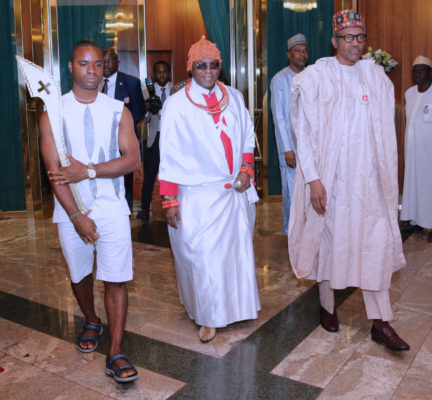
The Oba of Benin in Edo State, His Royal Majesty, Omo N’Oba N’Edo, Uku Akpolokpolo, Oba Ewuare Il, has vehemently denied video clips trending in social media that authorised anybody to throw insults and invectives on President Muhammadu Buhari and other personalities.
He said that he and members of his Council were taken aback by such video clips, stressing that if anything, his love for President Buhari is unparalleled because of many reasons.
A statement today, June 29, by the Secretary of Benin Traditional Council, Frank Irabor said: “our love for Mr. President is unparalleled as the relationship shared dates back to the days of His Royal Majesty, Oba Erediauwa (of blessed memory), the immediate past Oba of Benin.”
The statement is reproduced below:
“The attention of the Palace of the Oba of Benin has been drawn to a recent video trending on social media anchored by one Eranomigho Edegbe stating that he has the authority of His Royal Majesty, Omo N’Oba N’Edo, Uku Akpolokpolo, Oba Ewuare Il, Oba of Benin, to hurl invectives and insults at His Excellency, the President of the Federal Republic of Nigeria, President Muhammadu Buhari, GCFR, and few other respected members of the society.
“For the purposes of clarification, and to set the records straight, His Royal Majesty, Omo N’Oba N’Edo, Uku Akpolokpolo, Oba Ewuare ll, Oba of Benin, wish to make it categorically and irrevocably clear that the said video and the contents therein were not commissioned nor was it encouraged by His Royal Majesty, Omo N’Oba N’Edo, Uku Akpolokpolo, Oba Ewuare ll, Oba of Benin.
“We condemn in the strongest terms the malicious attacks on the integrity of His Excellency, the President and Commander-in-Chief of the Armed Forces of the Federal Republic of Nigeria, Muhammadu Buhari, GCFR, and all other persons whom the video seek to malign.
“We wish to state unequivocally that our love for Mr. President is unparalleled as the relationship shared dates back to the days of His Royal Majeof sty, Oba Erediauwa (of blessed memory), the immediate past Oba of Benin. This relationship was further strengthened when Mr. President headed the Petroleum Trust Fund (PTF).
“His Excellency was always very nice, warm, respectful and accommodating to our father HIS ROYAL MAJESTY OBA EREDIAUWA Mr. President has extended same to HIS ROYAL MAJESTY, OMO N’OBA NE-DO, UKU AKPOLOKPOLO, EWUARE Il, OBA OF BENIN.
“In our avowed stance of non-partisanship, we are in constant prayers that His Excellency’s desires are fully manifest in Edo State for the benefit of the Benin Royal Family, Edo people and, the nation as a whole. Thus, our prayers and support for Mr. President is enormous.
“We also wish to state that Comrade Adams Oshiomhole has always respected not just the traditional institutions in Edo State, but also the Palace of the Oba of Benin. His affection for our father who adopted the Comrade as a son is well known. This relationship was also reinforced during his tenure as Executive Governor of Edo State. We were happy to convene a send-forth for him upon the expiration of his two-terms, where HIS ROYAL MAJESTY used the Ada of the ancestors to pray for his protection, a thing quite rare in Benin custom; we are glad that the prayers said on him continue to be efficacious in all his endeavours.
“Captain Hosa Okunbor is an illustrious son of the Palace of the Oba of Benin, who at all times has worked in support of the Palace as a son of the Oba of Benin, thus, there can be nothing but goodwill and positive prayers for this distinguished son of Benin Kingdom. These utterances and behaviour of Eranomigho and his cohorts show that they are not happy and comfortable with the cordial relationship between the Palace of the Oba of Benin and the Presidency.
“Furthermore, it shows that some disgruntled elements like Eranomigho have deep animosity against Comrade Adams Oshiomhole and Captain Hosa Okunbo.
“The video under reference, and all such made in similar vein should be seen for what they really are, as they seek to propagate ‘fake news’, misinformation, disaffection, and misrepresentation for their own selfish and mischievous intentions. The recent fake news is akin to an audio one that claimed HIS ROYAL MAJESTY has directed all Bini people not to sweep their homes for three days in order to avoid the corona virus pandemic which they knew very well was contrary to keeping everywhere disinfected as well as hand washing, using hand sanitizers and practicing social distancing protocols, all part of the NCDC PANDEMIC PREVENTION MEASURES. we also had to rebut that immediately.
“The antecedents of social media rats and their roguish antics and activities are a global malaise, and should not be taken seriously by rational, reasonable and responsible members of society as their action is driven by their quest to satisfy their hunger and their desperation to scrounge for a means of livelihood. We wish to reassure His Excellency, the President of the Federal Republic of Nigeria, and all mentioned in the video that they enjoy the confidence and goodwill of His Royal Majesty, Omo N’Oba N’Edo Uku Akpolokpolo, Oba Ewuare Il, Oba of Benin.
“We use this medium to sound a note of caution to members of the public to totally disregard and discountenance the statements made in the said video and to further warn that this attempt and similar attempts to bring the Palace of the Oba of Benin and the revered institution of the Benin monarchy into disrepute shall be met stiffly within the parameters of the laws of the Federal Republic of Nigeria and the traditional processes of the Benin Kingdom.”
“Eranomigho and his cohorts are hereby reminded that there is an ancestral curse on anyone who attempts to tarnish the image of the Oba of Benin and the ancient Throne of Benin Kingdom. The Benin Traditional Council hereby demands an unreserved apology from Eranomigho in other to avert the consequences.
God bless Edo State, God bless the Federal Republic of Nigeria Oba gha to kpere, Ise.”
President of the Senate of the Federal Republic of Nigeria, Ahmed Lawan has announced the intervention of the National Assembly in the planned hike in the electricity tariff, which is billed to begin from July 1st, 2020 by stopping the plan even as it is deferred to next year 2021.
In his verified Facebook page today, June 29, the Senate President said that as a result of the intervention of the National Assembly: “planned increase in electricity tariff which was earlier billed to take off from July 1st, 2020 has now been deferred to the first quarter of 2021.
“Earlier today, I led the leadership of the National Assembly to a meeting with the Chief Executive of government electricity regulatory body and electricity Distribution Companies across the country, the outcome of which is the halt in the planned increase in electricity tariffs.”
Senator Lawan, who promised to lead the same leadership of the National Assembly on the same issue meet with President Muhammadu Buhari later, said that they made it clear to Distribution Companies at the meeting that the timing of the planned hike was wrong even “though we had not much issue with the need to introduce a cost reflective tariffs for the power sector to attract the much needed investment.
“The agreement is that there is not going to be any increase in the tariffs on July 1st. While we are in agreement here that there is no question on the justification of the increase but the time is simply not right and appropriate measures need to be put in place.
“There is too much stress in the lives of Nigerians today and indeed across the world because of the challenges imposed by COVID-19 pandemic and even before then, we had issues that would always make it tough for our people to effectively pay the tariffs.
“So between now and the first quarter of next year, our task will be to work together with the Discos to ensure that we put those blocks in place to support the eventual increase in tariffs.
“The government has been doing a lot as part of its obligations to provide some form of Intervention. I’m quite aware that for this year, probably starting from last year, over N600 billion was earmarked for this sector to improve.”
We use cookies on our website to give you the most relevant experience by remembering your preferences and repeat visits. By clicking “Accept”, you consent to the use of ALL the cookies.
This website uses cookies to improve your experience while you navigate through the website. Out of these, the cookies that are categorized as necessary are stored on your browser as they are essential for the working of basic functionalities of the website. We also use third-party cookies that help us analyze and understand how you use this website. These cookies will be stored in your browser only with your consent. You also have the option to opt-out of these cookies. But opting out of some of these cookies may affect your browsing experience.
Necessary cookies are absolutely essential for the website to function properly. This category only includes cookies that ensures basic functionalities and security features of the website. These cookies do not store any personal information.
Any cookies that may not be particularly necessary for the website to function and is used specifically to collect user personal data via analytics, ads, other embedded contents are termed as non-necessary cookies. It is mandatory to procure user consent prior to running these cookies on your website.


 The Nigerian Defence Academy (NDA) has cautioned Nigerians against falling prey to some fake social media accounts, particularly on Facebook, which claim to be the official accounts of the Commandant, Major General Jamil Sarham.

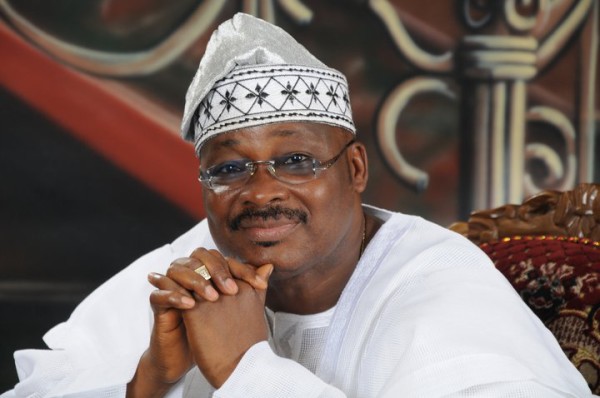 Except something else occurs that grabs the headlines and dominates Nigerian social media, the big news of the past week would probably be the death of Senator Abiola Ajimobi and the political drama that it has generated. Senator Ajimobi served as a Senator between 2003 -2007. He was Governor of Oyo State between 2011 – 2015, 2015- 2019. He achieved the distinction of being the first Governor in that state to be elected for a second term in office. He broke the jinx. His tenure as Governor was quite controversial with mixed results and divided opinions. He was a very frank and outspoken Governor who was also very conscious of his social status and the powers attached to his office. He was also quite audacious. He engaged the Olubadan in an open battle when he chose in one instance to transform some high chiefs of the Olubadan-in-council into beaded kings.
 President Muhammadu Buhari has said that his government had chosen to toe a difficult path of infrastructure development in Nigeria as a way of preparing the citizens for what the great opportunities the future hold.

 President of the Senate of the Federal Republic of Nigeria, Ahmed Lawan has announced the intervention of the National Assembly in the planned hike in the electricity tariff, which is billed to begin from July 1st, 2020 by stopping the plan even as it is deferred to next year 2021.

$2.8 Billion Ajaokuta-Kaduna-Kano Pipeline Project: Buhari Strikes Again!, By Femi Adesina
Roads. Bridges. Rail. Airports. Social Investment. And many others. Buhari is doing great things, which will pedestal him in the pantheon of great Nigerian leaders. And now, he has struck again. He is kicking off the AKK pipeline project, which will carry gas between the southern and northern parts of the country. The project will eventually extend to North Africa.
The Nigerian National Petroleum Corporation (NNPC) initially announced tenders for the project in July 2013. A project proposal was submitted to the Infrastructure Concession Regulatory Commission in June 2017, and the Federal Executive Council granted approval in December 2017. I tell you, this President Buhari has the heart of a lion.
If the intention was to continue to run the NNPC as an automated teller machine (ATM), as we have seen before in this country, will such staggering project ever be approved, not to talk of taking off? And some people are still asking for Change, when it is right before their very eyes.
The 614 kilometers-long national gas pipeline is Phase One of the Trans-Nigeria Gas Pipeline (TNGP) project, to be done on build and transfer public-private-partnership. It will transport 3,500 million metric standard cubic feet per day of dehydrated gas from several gas gathering projects located in southern Nigeria.
The project will be in three phases. Phase One is 200 kilometers-long, between Ajaokuta and Abuja, at a projected cost of $855 million.
Phase Two is 193 kilometers-long, between Abuja and Kaduna, to cost an estimated $835 million, while Phase Three is 221 kilometers-long, between Kaduna and Kano, at an approximate cost of $1.2 billion.
The project will eventually reach North Africa in subsequent phases.
What will AKK pipeline project do for Nigeria? Great and wonderful things. It will create steady and guaranteed gas supply network between the North and South, and will enhance power generation capacity. The industrial sector will be strengthened, local usage of gas will be promoted and increased, and the country’s revenue generation boosted through export of natural gas.
Nigeria is ranked the 7th most endowed natural gas country in the world. She sits on about 180 trillion cubic feet of natural gas deposits, which can be utilized as gas to power, gas to petrochemicals, liquefied natural gas (LNG), liquefied petroleum gas (LPG), compressed natural gas (CNG), among others.
Over the years, Nigeria has exploited its oil resources more, to the detriment of gas, which incidentally fetches more revenue, but is also more expensive to prospect.
One big advantage the average Nigerian can look forward to is the evolvement of compressed natural gas (CNG), which is still at pilot stage in the country.
While presenting his performance report to the Federal Executive Council recently, Minister of State for Petroleum, Timipre Sylva, spoke extensively about CNG, and what it can do for Nigeria as an alternative to petrol.
He listed the challenges of the oil and gas sector to include; under-recovery, crude theft, insecurity, high cost of production, very low LPG penetration, refineries shutdown, long contracting cycle, among others.
Sylva stressed that the oil and gas sector remains critical to the Nigerian economy, even as we strive to diversify. He identified CNG and LPG penetration as priority.
Said the Minister: “The switch to CNG will help reduce the burden of petrol subsidy on the finances of the country, and government should encourage Nigerians to use CNG as fuel for transportation.”
CNG began as a pilot project in the country in 2006, but target for conversion workshops was not met till 2015. About 4,000 vehicles run on CNG in Benin, Edo State, and it’s about 50% cheaper than petrol.
Vehicles running on CNG, statistics show, save about N1,143 daily, compared with petrol. This amounts to over N30, 000 monthly. The cost of converting the car can thus be recovered within six months.
Gas is cleaner energy, cheaper than petrol, and more friendly to the environment. Global warming will, therefore, be slowed down.
More than 175,000 vehicles run on CNG in America today, and 23 million worldwide. Nigeria will join the number, and boost productivity.
The Buhari signature projects will remain landmarks in Nigeria. Help me count them: Roads, rail, bridges, airports, agriculture, AKK… and many more.
Surely, we will always remember this President for good.
*Adesina is Special Adviser to President Buhari on Media and Publicity.