The National President of Tomato Out Growers Association of Nigeria (TOGAN), Abdulahi Ringim, has lamented the resurfacing of pest called Tuta Absoluta, which is invading their farms across the country.
According to him, Tuta absoluta, one of the most devastating pests, had so far spread to Kaduna and Katsina states.
President of the African Development Bank (AfDB), Akinwumi Adesina, is in trouble with the government of the United States of America as it called for an independent probe into several allegations against him.
Some of the allegations, contained in a petition by some staffers of the bank include “unethical conduct, private gain, an impediment to efficiency, preferential treatment, and involvement in political activities”
On May 5, the ethics committee of the continental bank, headed by Takuji Yano, said in its report that Adesina was not guilty on all counts.
But in a letter by US Treasury Secretary, Stephen Mnuchin, dated 22nd May and addressed to Niale Kaba, chair of AfDB’s board of governors, rejected the findings by the ethics committee of the bank that “totally exonerated” Adesina.
The involvement of the US Treasury, which owns the largest non-African stake in the bank, is coming a fortnight after the ethics committee claimed it found no proof to back accusations of favouritism against the AfDB President.
Adesina, who has consistently denied the allegations, is the sole contender for the election into the AfDB’s presidency timed to hold at its annual general meeting this August.
“We have deep reservations about the integrity of the committee’s process. Instead, we urge you to initiate an in-depth investigation of the allegations using the services of an independent outside investigator of high professional standing,” Mnuchin said.
The US has a 6.5 per cent stake in the lender, the largest shareholding after Nigeria as of November 2019, according to the AfDB’s website.
US criticism of the bank’s internal processes follows comments by World Bank President, David Malpass, in February that multilateral lenders including the AfDB tend to provide loans too quickly, and, in the process, add to African nations’ debt problems.
The bank rebutted the statements as “inaccurate and not fact-based.”
President Muhammadu Buhari has warned that Nigeria has no money to import food, saying that the savin grace against the nation being thrown into hunger is for the farmers to take up the challenge of embarking on massive production of food.
The President, who spoke today, May 24 shortly after observing this year’s Eid prayer alongside members of his family and few presidential aides at the presidential villa, Abuja, said: “I hope the raining season would be bountiful, so that we get a lot of food.
“I wish the farmers will go to farms and save the lives so that we can produce what we need in sufficient quantity so that we don’t have to import food.
“In any case, we don’t have any money to import food. So we must produce what we are going to eat.’’
President Buhari advised Nigerians to strictly adhere to guidelines and measures put in place against the spread of coronavirus in the country.
According to him, the pandemic had reduced both developed and developing nations to the same level, even as he advised Nigerians to always be careful so as to avoid infections.
“Nigerians can see that the COVID-19 has reduced us, both the developing and developed countries, to the same level. In fact, we have least casualties than they we have.
“So, it’s a very frightening development and I advised Nigerians to be very careful and take the advice of the Ministry of Health. Ministers of Health have been doing very well, speaking and educating the citizens on the deadly virus.
“So Nigeria, we should be very careful.’’
The First Lady, Hajiya Aisha Buhari, who also observed the Eid prayer with the president, thanked almighty Allah for sparing the lives of Muslim ummah throughout the Ramadan period.
Aisha, who enjoined the Nigerian women to continue to be in the forefront in the fight the Coronavirus pandemic across the country, prayed that Allah would forgive the sins of those who lost their lives as a result of the virus, and grant them Aljanah Firdausi.
“We must thank the almighty Allah for the successful completion of the holy Month of Ramadan, despite the current difficult circumstances we found ourselves.
“I wish to thank the Federal Ministry of Health and also the NCDC for their efforts in combating the pandemic.”
President Muhammadu Buhari poses with Aisha (his wife) and children in happy mood, after observing Eid prayer with them in the vicinity of the Presidential villa, Abuja, today, May 24 (1st of Shawwal), marking the end of the 30-day Fasting.
The announcement by the Nigerian Supreme Council for Islamic Affairs (NSCIA) that no moon was sighted on Friday evening, and that Ramadan would complete 30 days was met with mixed reactions. The truth is that before anyone goes westwards to sight the moon, such a person must arm himself with some basic facts. The person must know the sunset and moonset times for that day. He must know if the moon will set before or after sunset . If possible he or she should know the exact time for the Conjunction (literally, birth of the new moon) The young crescent that is sighted in the west must have stayed at least several hours (sometimes may be up to 23 hrs) from it’s birth. A newly born moon (which is invisible to anything you can think of) is what is called the Astronomical new moon. The exact time of the moon birth can now be calculated based on some formulas/algorithms and these calculations are accurate to the nearest minute! A young crescent is usually sighted after sunset usually several hours after the newly born invisible moon. It can’t be seen before sunset, the sunlight will obscure it. One of today’s sighting claim (from Zamfara) was said to have been rejected because the person said he saw a crescent at a time that was some minutes before sunset! When a moon is born, it must meet some criteria before it is visible to the eye or even a telescope. The moon must be separated from the sun by angle of at least 8⁰ for it to reflect adequate sunlight before it can be sighted on earth. Secondly the moon must be at least 5⁰ above the horizon (above the sun) before it’s visible. The above criteria coincided with a moon age of at least 15 hrs after birth. Mind you even a 21 hr old moon may not be visible if the elongation is less than 8⁰! The record for the youngest Moon ever seen with optical aid was 11hours 40mins goes to Mohsen G. Mirsaeed of Tehran who saw it on September 7, 2002. The youngest crescent ever seen by the naked eye was 15hours 32mins from it’s birth observed by Stephen James O’Meara in may 1990. In Nigeria, the moon of Shawwal was ‘born’ at 6:36pm Kano time (ie time of Conjunction) and this same moon was to set at 6:40. This is about 4 mins before sunset. How can anyone claim he saw a 6 mins old moon that was going to set before sunset? Even the most powerful telescope cannot achieve this talkless of human naked eyes. There’s nowhere in the world where visibility criteria were met. This made sighting difficult. For today’s sighting claims, It could be one of the so many things people mistakenly think as the moon. In our times, there are numerous man-made flying objects, helicopters, air-planes, and satellites, that sometimes reflect sun light in such a way that people take it as a moon. A piece of c-shaped thin streak of cloud, a jet-smoke, or even a small piece of hair stuck to eye-glasses has been considered the Hilal by many sincere Muslims. Sometimes, the zeal of sighting, brings shear imagination that the person thinks (s)he has seen the moon. And finally Nigeria’s criteria for declaration of the beginning or end of lunar months is based mainly on sighting except for month of Dhulhijja when we rely on Saudi. Let us examine the conjunction (in Makkah) as a possible basis of starting a month. Remember, the conjunction can occur at any time between 24 hours. Suppose the conjunction occurs at 11pm GMT (Sunday), then at that moment Makkah time is 2am (Monday). Should England start the month on Monday and Saudi Arabia start the month on Tuesday? Now, if someone says that let us make Makkah as our basis and whatever day in Makkah, the conjunction occurs the next day the new month starts. The problem with this is that if conjunction occurs at 0:01am (Monday) of Makkah time then at that moment it is 2:01pm (Sunday) in Hawaii. Should Hawaii start the month on Monday and Saudi Arabia start the month on Tuesday? Look at another case: Suppose the conjunction occurs at 11:59pm (Sunday) Makkah time then at that moment it is 5:59am (Monday) in Tokyo. Should Japan start the month on Tuesday and Saudi Arabia start the month on Monday? If someone says, ignore what time it is in other locations of the world, just go by Makkah time, then why do we have different prayer times for every city? Why not adopt Makkah Prayer Time all over the world. In essence Nigeria is not ‘following’ Saudi in this case. It just happens that the moon cannot be sighted in Saudi or Nigeria. We can call it a coincidence of fate!
“This year’s Eid event is an occasion for sober reflection rather than celebration because of the long shadows of gloom that the coronavirus has cast on people’s lives.” In his Sallah message to Nigerian Muslims in particular, and Nigerians in general, President Buhari advised Muslims to keep their spirits up in spite of the coronavirus pandemic, which caught the world off guard.
He said that he pandemic had put a damper on what would otherwise have been a time of celebration for the Muslim faithful to mark the end of the Ramadan fasting period.”
For the first time in recent years, the COVID-19 pandemic has taken a heavy toll on the people’s spiritual, social and economic lives. “This year’s fasting period was particularly challenging for Muslims because they had to forgo many important aspects of their daily worship, including the routine congregations for prayer and the recitation and interpretation of the Holy Qur’an as well as traveling for the lesser pilgrimage to Makkah. “It is not easy to give up many of these important duties and activities, but it became imperative to do so in order to control or limit the spread of this deadly disease.”Let me use this opportunity to commend the sacrifices of both Muslims and Christians for their cooperation in the enforcement of the social distancing guidelines.
I am well aware of the inconveniences these tough measures have brought on the lives of Nigerians, including limiting religious activities and gatherings in large numbers,” the President noted, adding that “No government would intentionally impose these tough and demanding measures on its citizens if it had a choice.
“President Buhari appealed to other Nigerians whose businesses and means of livelihoods were badly affected by the prolonged lockdown measures for their understanding and cooperation.
He assured Nigerians that the lockdown measures would not go on longer than necessary because they would be reviewed from time to time to ease the increasing hardships on the people.
He also exhorted people with means to continue helping their neighbours and the less well-to-do so that “we can all come out of this pandemic stronger and more united.”
He prayed to Allah to ease the hardship among the people as they struggle hard to flatten the curve, while wishing all Nigerians Eid Mubarak.
The Kogi State Governorship Election Petition Tribunal has upheld the election of Governor Yahaya Bello of Kogi State.
The majority judgment, delivered today, May 23 by Justice Kashim Kaigama, upheld Yahaya Bello’s election on the grounds that the petitioners failed to prove allegations of rigging and other malpractices in the November 16, 2019 governorship election.
Justice Kaigama, accordingly, dismissed the petition filed by the Peoples Democratic Party (PDP) and its governorship candidate, Engineer Musa Wada, with a cost of N500,000 each in favour of the respondents.
However, in a dissenting judgment, Justice Ohimai Obviagele held that there were evidence of massive fraud in seven local government areas and subsequently ordered for a rerun in the seven local government areas.
President Muhammadu Buhari has signed into law, an Executive Order number 10 of 2020 for the implementation of Financial Autonomy of State Legislature and StateJudiciary Order, 2020.
This is contained in a statement by Dr Umar Jibrilu Gwandu, Special Assistant on Media and Public Relations in the Office of the Attorney-General of the Federation and made available to newsmen in Abuja today, May 22.
The statement said that a Presidential Implementation Committee was constituted to fashion out strategies and modalities for the implementation of financial autonomy for the State Legislature and State Judiciary in compliance with section 121(3) of the Constitution of the Federal Republic of Nigeria, 1999 (as Amended); taking intoconsiderations all other applicable laws, instruments, conventions and regulations, which provides for financial autonomy at the State tierof Government.
According to the statement, the implementation of financial autonomy of the State Legislature and State Judiciary will strengthen the institutions at the State tier of Government and make them more independent and accountable in line with the tenets of democracy asenshrined by the Constitution of the Federal Republic of Nigeria 1999(as Amended).
The President signed the Executive Order number 10 into law based on the power vested in him as the President of the Federal Republic of Nigeria under Section 5 of the Constitution of the Federal Republic ofNigeria 1999 (as Amended), which extends to the execution and maintenance of the Constitution, laws made by the National Assembly (including but not limited to Section 121(3) of the 1999 Constitution(as Amended), which guarantee financial autonomy of the StateLegislature and State Judiciary.
The Order Provides that “The Accountant-General of the Federation shall by this Order and such any other Orders, Regulations orGuidelines as may be issued by the Attorney-General of the Federation and Minister of Justice, authorise the deduction from source in the course of Federation Accounts Allocation from the money allocated to any State of the Federation that fails to release allocation meant forthe State Legislature and State Judiciary in line with the financial autonomy guaranteed by Section 121(3) of the Constitution of the Federal Republic of Nigeria 1999 (as Amended)”.
Based on the Executive Order at the commencement of this Order for implementation of financial autonomy for State Legislature and State Judiciary in line with section 121(3) of the 1999 Constitution of the Federal Republic of Nigeria (as Amended), all States of the Federation shall include the allocations of the two Arms of Government in theirAppropriation Laws.
Article 6 (1) provides that “notwithstanding the provisions of thisExecutive Order, in the first three years of its implementation, thereshall be special extraordinary capital allocations for the Judiciaryto undertake capital development of State Judiciary Complexes, HighCourt Complexes, Sharia Court of Appeal, Customary Court of Appeal andCourt Complexes of other Courts befitting the status of a Courts.”
A None Governmental Organization (NGO), De Club 10 Nigeria, has commended President Muhammadu Buhari for the recent inauguration of Ajaokuta Presidential Project Implementation Committee (APPIC), which it described as the positive first major move to revive the long abandoned steel project.
The Club, in separate open letters, also congratulated Governor Yahaya Bello of Kogi State over the presidential move, which it said, had confirmed the efforts of the governor in the same direction.
The letters, signed by the group’s President, Alhaji Saidu Yusuf, recalled the long drawn politics that had dogged the Ajaokuta steel project, both locally and internationally, and expressed happiness that President Buhari had been able to “meandered through such political manoeuvres.”
De Club 10 suggested to the President, however, to consider including in the presidential committee, one or two persons from the local communities, such as Okene, Adavi, Ihina and others, “for better and effective representation.”
De Club 10, which said that it’s members had all along, remained committed to the revival of the Ajaokuta Steel project, the same way Governor Yahaya Bello had been, said: “it is quite imaginable and refreshing to be alive to witness the positive move by President Buhari to actualize the dream and prayer of ours, and that of communities, within and without
“We have no doubt that this national pride and great revenue source will take off and flourish before you honourably bow out after your glorious second tenure as “the doing president” of our time.
“We, as a Club, had been steadfast in support of the move by your Excellency and the government you head to move this country to positive next level, and are determined, with this move to revive Ajaokuta Steel complex, to even offer unqualified support to the government as time evolves.”
President Muhammadu Buhari has made it clear that he will not be receiving visitors on Sallah Homage during and after the Sunday Eid-el-Fitr, marking the end of the Muslim 30-day Fasting.
A statement today, May 22, by the presidential spokesman, Malam Garba Shehu, quoted Buhari as saying that the cancellation of the Sallah homage is to stem the spread of coronavirus.
“The President, who has traditionally shared the joyous moment with top government officials, political leaders, community heads, Muslim and Christian religious leaders and children, will not be receiving these homages in a bid to stop the coronavirus from further spreading.”
The statement said that President Buhari will be conducting his Eid prayers with his family at his villa residence.
“This is in observance of the lockdown measures in the Federal Capital Territory, Abuja, put in place to save lives and protect people from all dangers.
“This is also in line with the directive of the Sultan of Sokoto and President General of the Jama’atu Nasril Islam (JNI), Alhaji Sa’ad Abubakar III suspending Eid congregational prayers across the country as well as the protocol against mass gathering issued by the Presidential Task Force on COVID-19.”
We use cookies on our website to give you the most relevant experience by remembering your preferences and repeat visits. By clicking “Accept”, you consent to the use of ALL the cookies.
This website uses cookies to improve your experience while you navigate through the website. Out of these, the cookies that are categorized as necessary are stored on your browser as they are essential for the working of basic functionalities of the website. We also use third-party cookies that help us analyze and understand how you use this website. These cookies will be stored in your browser only with your consent. You also have the option to opt-out of these cookies. But opting out of some of these cookies may affect your browsing experience.
Necessary cookies are absolutely essential for the website to function properly. This category only includes cookies that ensures basic functionalities and security features of the website. These cookies do not store any personal information.
Any cookies that may not be particularly necessary for the website to function and is used specifically to collect user personal data via analytics, ads, other embedded contents are termed as non-necessary cookies. It is mandatory to procure user consent prior to running these cookies on your website.



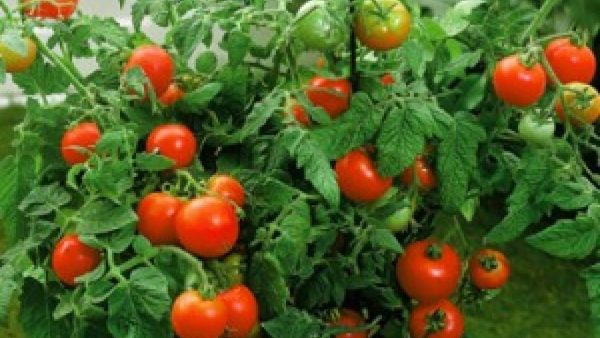 The National President of Tomato Out Growers Association of Nigeria (TOGAN), Abdulahi Ringim, has lamented the resurfacing of pest called Tuta Absoluta, which is invading their farms across the country.


 A None Governmental Organization (NGO), De Club 10 Nigeria, has commended President Muhammadu Buhari for the recent inauguration of Ajaokuta Presidential Project Implementation Committee (APPIC), which it described as the positive first major move to revive the long abandoned steel project.


New Moon: It’s Excitement, Imagination, Not Real, By Tijjani Umara
The truth is that before anyone goes westwards to sight the moon, such a person must arm himself with some basic facts.
The person must know the sunset and moonset times for that day. He must know if the moon will set before or after sunset . If possible he or she should know the exact time for the Conjunction (literally, birth of the new moon)
The young crescent that is sighted in the west must have stayed at least several hours (sometimes may be up to 23 hrs) from it’s birth. A newly born moon (which is invisible to anything you can think of) is what is called the Astronomical new moon. The exact time of the moon birth can now be calculated based on some formulas/algorithms and these calculations are accurate to the nearest minute!
A young crescent is usually sighted after sunset usually several hours after the newly born invisible moon. It can’t be seen before sunset, the sunlight will obscure it. One of today’s sighting claim (from Zamfara) was said to have been rejected because the person said he saw a crescent at a time that was some minutes before sunset!
When a moon is born, it must meet some criteria before it is visible to the eye or even a telescope. The moon must be separated from the sun by angle of at least 8⁰ for it to reflect adequate sunlight before it can be sighted on earth.
Secondly the moon must be at least 5⁰ above the horizon (above the sun) before it’s visible.
The above criteria coincided with a moon age of at least 15 hrs after birth. Mind you even a 21 hr old moon may not be visible if the elongation is less than 8⁰!
The record for the youngest Moon ever seen with optical aid was 11hours 40mins goes to Mohsen G. Mirsaeed of Tehran who saw it on September 7, 2002.
The youngest crescent ever seen by the naked eye was 15hours 32mins from it’s birth observed by Stephen James O’Meara in may 1990.
In Nigeria, the moon of Shawwal was ‘born’ at 6:36pm Kano time (ie time of Conjunction) and this same moon was to set at 6:40. This is about 4 mins before sunset.
How can anyone claim he saw a 6 mins old moon that was going to set before sunset? Even the most powerful telescope cannot achieve this talkless of human naked eyes. There’s nowhere in the world where visibility criteria were met. This made sighting difficult.
For today’s sighting claims, It could be one of the so many things people mistakenly think as the moon. In our times, there are numerous man-made flying objects, helicopters, air-planes, and satellites, that sometimes reflect sun light in such a way that people take it as a moon. A piece of c-shaped thin streak of cloud, a jet-smoke, or even a small piece of hair stuck to eye-glasses has been considered the Hilal by many sincere Muslims. Sometimes, the zeal of sighting, brings shear imagination that the person thinks (s)he has seen the moon.
And finally Nigeria’s criteria for declaration of the beginning or end of lunar months is based mainly on sighting except for month of Dhulhijja when we rely on Saudi.
Let us examine the conjunction (in Makkah) as a possible basis of starting a month. Remember, the conjunction can occur at any time between 24 hours. Suppose the conjunction occurs at 11pm GMT (Sunday), then at that moment Makkah time is 2am (Monday). Should England start the month on Monday and Saudi Arabia start the month on Tuesday?
Now, if someone says that let us make Makkah as our basis and whatever day in Makkah, the conjunction occurs the next day the new month starts. The problem with this is that if conjunction occurs at 0:01am (Monday) of Makkah time then at that moment it is 2:01pm (Sunday) in Hawaii. Should Hawaii start the month on Monday and Saudi Arabia start the month on Tuesday?
Look at another case: Suppose the conjunction occurs at 11:59pm (Sunday) Makkah time then at that moment it is 5:59am (Monday) in Tokyo. Should Japan start the month on Tuesday and Saudi Arabia start the month on Monday?
If someone says, ignore what time it is in other locations of the world, just go by Makkah time, then why do we have different prayer times for every city? Why not adopt Makkah Prayer Time all over the world. In essence Nigeria is not ‘following’ Saudi in this case. It just happens that the moon cannot be sighted in Saudi or Nigeria.
We can call it a coincidence of fate!
Dr. Umara wrote in from Abuja.