Home Blog Page 940

Battle Against Houthi Militia: Saudi Arabia Signs Deal With Yemen

Yemen’s deputy prime minister Ahmed Saeed al-Khanbashi (R) and the Southern Transitional Council representative Nasser al-Habci shake hands during a the signing ceremony. Photograph: Anadolu Agency/Anadolu Agency via Getty Images

Saudi Arabia has formally signed as a power-sharing agreement with Yemen to end the lingering crisis in the region.

Announcing the agreement today, November 5 in Riyadh, Saudi Arabian federal capital, Crown Prince, Muhammed bin Salman, explained that the deal of power-sharing is between Yemeni government and the Southern Transitional Council.
According to a statement from Riyadh,  the agreement was jointly signed in the presence of Crown Prince Mohammed bin Salman, Sheikh Mohamed bin Zayed, Crown Prince of Abu Dhabi and Deputy Supreme Commander of the Armed Forces, Yemeni President Abdrabu Mansur Hadi and General Aidrous Al Zoubaidi, the leader of the Southern Transitional Council, Nizar Haitham.
The spokesman of the Southern Transition Council (STC), who issued the statement said: “signing the agreement, which is the fruit of long and relentless efforts exerted by our brothers in Saudi Arabia and the UAE, will be a turning point in the battle against the Houthi militia and a new stage towards strengthening relations between the Arab Coalition and the STC.”
The UN special envoy for Yemen, Martin Griffiths, congratulated both countries on the deal, saying: “the  signing of this agreement is an important step for our collective efforts to advance a peaceful settlement to the conflict in Yemen.”
A communique emanating from the meeting goes thus:
Under the auspices of the Custodian of the Two Holy Mosques, King Salman bin Abdul-Aziz Al-Saud, and in the presence of His Royal Highness, the Crown Prince of the Kingdom of Saudi Arabia, Prince Muhammad bin Salman, and His Royal Highness, the Crown Prince of Abu Dhabi, Sheikh Mohammad bin Zayed, and the Yemeni President, Abd Rabbo Mansour Hadi, and members of the Southern  Transitional Council, the Riyadh Agreement was signed today.
Salient points of the Riyadh Agreement:
● The patronage of the custodian of the two holly mosques king Salman bin Abdul Aziz and HRH crown prince to
Riyadh Agreement reflects the Saudi leadership Keenness to safeguard the strategic interest of Yamen and stability and sovereignty of yamen ..
– The presence of the
YAMANI president Abdu Rabu Hadi and both government and transitional Council   Delegates who is  going to sign the Riyadh is the guarantee to implement the  this agreement fully ..
– the participantion of Shiekh Muhammad Bin Zaid is an evidence of the solidarity unification and solidarity of the Arabian alliance to restore the  Yamni legitimacy and the Keenness of  UAE to fully support the  Riyadh agreement and restoring peace stability and national unity of yamen and also rejection of the Iranian sectarian agenda in Yamen
– The Riyadh  Agreement emphasizes strict measures to manage the country’s financial resources in order to achieve economic stability and raise the efficiency of expenditure,, and activating the role of parliament in the fields of evaluation and control.
● The Riyadh agreement stresses joining efforts to restore security stability and sovereignty in Yemen, and combat terrorism. This will be achieved by reorganizing and training counter-terrorism special forces, consistent with the Coalition’s objectives to establish regional and international security, and its keenness to maintain security, reject all forms of extremism, and expose its sources.
● The Kingdom is a key player  to any solution in Yemen and the region, and has managed this dispute with wisdom that prevented bloodshed among Yemenis, and led to a peaceful, consensus-based solution built on key principles and reference points.
● The Arabic Coalition to restore the legitimate government appreciates the response and cooperation of all parties in reaching a peaceful solution to the crisis and an agreement that prioritises Yemen’s strategic interests and contributes to its security and stability.
● The Kingdom supports a peaceful political solution to the Yemeni issue. The Riyadh agreement calls for optimism that a solution to all crises in Yemen can be found if there are honest intentions on all sides to reach such a solution.
● The Riyadh agreement reaffirmed commitment to the three terms of reference: the Gulf Initiative and its executive mechanism, the outcomes of the comprehensive national dialogue, and UN Security Council Resolution 2216.
● The Riyadh agreement included mechanisms and arrangements for activating the roles of all Yemeni state authorities and institutions, and reorganizing the military and security forces under the leadership of the Ministries of Defense and Interior.
● The  Riyadh agreement affirmed commitment to full civil rights for all Yemeni people, renouncing regional and sectarian discrimination and divisions, and halting all kinds of negative media campaigns among all parties.
● Yemen is on the verge of a new developmental phase, led by a government of politically competent individuals, and comprised of no more than 24 ministers with established competency, integrity, and expertise. The National unity government will work  in full harmony under Yemeni President Abd-Rabbu Mansour Hadi, with a mission to unify the nation and activate state institutions to serve all Yemeni citizens and meet their living needs.
● The appointment of leaders, governors, and officials must be based on competence, integrity, and expertise. None of the appointees shall be individuals who participated in the fighting in Aden.
● The new developmental phase focuses on the transparent management of state resources, combating corruption through activating accountability and monitoring bodies, and forming the Supreme Economic Council and fortifying it with persons of experience and integrity.
● The military and security forces in the southern provinces will play a role in enhancing security and stability, and maintaining the security of state institutions, after being reorganized under the leadership of the Ministries of Defense and Interior
● The return of the prime minister to Aden will allow him to activate state institutions and to start paying the salaries of military personnel and civil servants, and to form the new government.
● The  Riydh agreement respects the demands of all Yemeni sides, including those related to the southern issue, through political dialogue and action, maintaining security, and economic growth.
● The Kingdom respects all the components of the Yemeni people and respects what they agree on in the future. Its role is to support Yemen and its people to achieve security and stability.
● The Kingdom has supported Yemen politically, militarily, developmentally and in the provision of aid in all provinces to restore the state, end Iranian interference, and combat terrorism.
● The Kingdom values the role played by the UAE to reach this agreement, which prioritises the strategic interests of Yemen and contributes to its security, stability, and unity.

How Politicians, Oil Companies Shortchanged Nigeria, Buhari Laments

President Muhammadu Buhari has lamented over a combination of economic sabotage by some politicians and oil companies to shortchange Nigeria in the last 25 years.
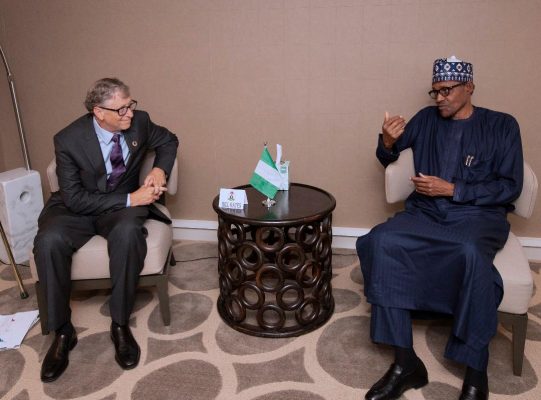
“A combination of complicity by Nigerian politicians and feet-dragging by oil companies has, for more than a quarter-century, conspired to keep taxes to the barest minimum above $20 per barrel – even as now the price is some three times the value.”

The President, who assented to the amended deep offshore Act in London where he is on private visit, said: “today, this changes.

“Today is an important day for all Nigerians – but particularly the young generation.

“Today I signed into law the amended Deep Offshore Act. Nigeria will now receive its fair, rightful and equitable share of income from our own natural resources for the first time since 2003.

“In that year oil prices began a steep increase to double – and at times – triple over the following decade.

“All this time Nigeria has failed to secure its equitable share of the proceeds of oil production, for all attempts to amend the law on the distribution of income have failed. That is, until today.

“Rapid reductions in the cost of exploration, extraction and maintenance of oil fields had occurred over these 25 years, at the same time as sales prices have risen.”

President Buhari said that for the first time under our amended law, “200 million Nigerians will start to receive a fair return on the surfeit of resources of our lands. Increased income will allow for new hospitals, schools, infrastructure and jobs.

“Today marks a new and beneficial relationship with our oil company partners: one that benefits all – starting with the Nigerian people.”

The Chief of Staff to the President, Malam Abba Kyari, was with him when he signed the Act.

Towards A New Deal For Nigeria, By Abba Kyari

Abba Kyari, Chief of Staff to President Muhammadu Buhari presenting a Bill for the president in his London resting resident.

The decision by the National Assembly to amend the Deep Offshore (and inland basin production sharing contract) Act is a huge victory for Nigeria. The articles and clauses of complex legislation may not appear to be the stuff to set pulses racing. But there should be no doubt: this is a watershed moment for our economy, our
As a result of this amendment, Nigeria could earn an extra billion dollars a year from our oil. These are funds that will help restore our schools and hospitals, repair our roads and infrastructure and give our armed forces the support they need to keep us safe. That is a big win. But it is about more than just the money.
There is no doubt that the Deep Offshore Act had to change. The original law that provided for the operation of oil licences in deep water was introduced by the military regime back in 1993. New techniques in drilling and computer modelling were then beginning to emerge, allowing for the exploitation of oil in water depths that had previously been impossible. Fiscal terms were based on the industry’s long-term outlook for oil prices of around USD18-20/ barrel, above which profits were hardly taxed at all.
Crucially, the 1993 contract provided only for a review of terms. Oil passed USD20 barrel in 2003 but companies could, and did, refuse to accept any changes. The ‘business as usual’ lobby made sure that every attempt until now to amend the law ended in failure. But more than 25 years on, advances in technology have substantially reduced costs to industry and oil has consistently traded way above that anticipated range. For international oil companies, this has been a regulatory bonanza. A better balance between reasonable profits and a fair tax regime would years ago have delivered the billions we need to invest in Nigeria’s future.
The amendment calls time on this contractual anachronism. But it should not be seen in isolation, or as a ‘one off’. President Muhammadu Buhari pushed for the amendment as part of an ambitious programme to overhaul a corruption-saddled and under-performing oil and gas sector.
This is the key to the delivery of a more diverse and productive economy that will provide the jobs and sustainable growth we need in the coming decades to end poverty and raise living standards. Headline increases in our GDP will be matched by policies that ensure growth is inclusive and evenly shared, and provide protection and opportunity for the most vulnerable.
The President has worked with the 9th National Assembly, its leadership and members, to deliver this amendment. This is the kind of partnership that we have seen all too rarely since the restoration of democracy in 1999. We have shown how national institutions, the executive and legislature, can come together to work for the common good and the National Interest.
A sense of patriotism and the drive to deliver reform is replacing the sterile self-interest that has for too long dominated public administration. The passage of the amendment shows that the 9th National Assembly has the ambition and commitment to help make the real changes Nigeria needs if we are to move forward. The Senate and House of Representatives have shown that we can replace exploitation of the system by the few for the benefit of the few with a new spirit of co-operation – to build a fairer, more efficient system for the benefit of rich and poor alike.
Our vision is for an oil and gas industry that is attractive to investors and competitive in a crowded international market. Operations should be driven by commercial principles, transparent and free from political interference. We will deliver a new deal for host communities and proper guarantees for environmental standards.
The Collins English dictionary defines a free-for-all as “a situation in which several people or groups are trying to get something for themselves and there are no controls on how they do it.” We need an oil industry that is fair for all its stakeholders, to move towards a new partnership that ends the adversarial dysfunction and searching for loopholes that has become the norm.
The amendment is important for three reasons: it brings our laws and taxes into the 21st century; it shows that our institutions are effective and resolute in support of the National Interest; and that President Buhari means business. As Britain’s wartime prime minister Winston Churchill once said, ‘This is not the end. It is not even the beginning of the end.’ We have a lot of work to do. But this amendment shows where we are going – and that now, within our grasp, is a Nigeria that works for us all.

  • Kyari is the Chief of Staff to the President

Benue Governor Identifies Herdsmen Allegedly Attacking Farmers

Gov Samuel Ortomnue

Governor Samuel Ortom of Benue State has identified members of Miyetti Allah Kautal Hore as allegedly being responsible for the lingering attacks on farmers, especially in the North Central part of the country.
The governor, who was reacting to a statement by the National President of the group, Abdullahi Bodejo, Allegedly threatening state governments that fail to provide land for the establishment of RUGA settlemens, called for the arrest of the leader.
The governor’s statement, issued by his Chief Press Secretary, Terver Akase, recalled Bodejo’s alleged threat to disrupt the peace of any state that fails to establish cattle colonies also known as Ruga settlements.
He quoted Miyetti Allah leader as saying: “…you are a governor and you want to enjoy peace in your state, you don’t need any long meeting, just create a particular area for the Fulani and equip them with modern amenities.”
Governor Ortom described the purported comment of Bodejo as inciting and direct invitation to anarchy.
”The Miyetti Allah Kautal Hore’s outing has confirmed the fact that the group is not only responsible for attacks on farming communities in parts of the country but is also determined to reject any method of animal husbandry that does not agree with nomadic cattle breeding and are poised to sponsor violence in states not willing to donate land for open grazing.
“Utterances such as those of Bodejo are inciting and direct invitation for anarchy. No group should be above the law to be dictating to states on how to accord preference to it at the expense of other Nigerians.
“We call for the arrest and prosecution of the Miyetti Allah Kautal Hore President for persistently making statements capable of stirring crises in the country.”
Benue state House of Assembly passed the anti-open grazing bill last year following the incessant clash between farmers and herdsmen in the state.

Buhari’s Active Diplomacy Is A Big Plus, Not A Problem, By Garba Shehu

About three years ago, President Muhammadu Buhari visited the Kingdom of Morocco. He asked King Mohammed VI to give Nigeria from their rich phosphate mineral so that fertilizer can be produced here at home for the teeming farming population. Agreement reached, President Buhari set up a Presidential Fertiliser Initiative in his office.

Three years down the road, 24 moribund blending plans are now working, providing 100,000 direct and indirect new jobs to Nigerians. The cost of fertilizer is down by more than 50 percent. Nigeria makes a saving of USD 200 million used for its annual import and a further N60 billion in budgeted annual subsidy.

Nigeria wanted to build a power plant at Mambilla in the Northeast. The plant design had been made in 1959, a year before independence. We have dreams of modernizing our railway system because, without power and railroad, National development will continue to be a pipe dream.

In planning for his trip to Beijing for a meeting with President Xi Jinping, President Buhari rightfully chose to prioritize his requests, put Lagos-Kano railway and Mambilla power plant on top: President Xi’s word is the silver bullet. Today, China is giving these projects together with the finance and many more.

On the recent trip to Russia, President Buhari had a wish list that included railways, power projects and military procurements. He had a wish to get the Russians who own the Aluminum smelter plant, built at a whopping USD 4 billion to operationalize it; Ajaokuta Steel plant built at a similar cost, with 20,000 engineers trained to operate it, many of whom are now dead from hunger and lack of engagement is another 40 year – old problem. To these and others, President Putin held the keys to the solutions. President Buhari asked, and he was given. It will take volumes of books to document the achievements of these trips.

When I go through the media, including today’s edition of the Daily Trust, the social media blogs and those jokes, through funny cartoons, there is a mistaken sense that active diplomacy is the cause of some kind of governance deficit, assuming there is any. Channels Television, last night confronted me with a litany of countries the President visited this year and the number of days he spent abroad. The mistaken opinion among many is that the President spends too much time abroad and this is affecting his domestic responsibilities.

The reality is very different. The success of the visits to Morocco, China and Russia reported here represent just a fraction of the achievements recorded. Many countries and major corporations have listened to our leaders and agreed to come here and put their money in the economy in win-win deals.

In the last few years, global giants like Siemens, Toyota, Hyundai, General Electric (GE), among others are talking to Nigeria about their commitment to investing billions of dollars through manufacturing and other forms of Foreign Direct Investment. Add these to the many Chinese companies that are involved with us in the construction of railways, roads, airports and power plants. These Chinese engagements are coming, complete with succession plans in which thousands of Nigerians are being trained over there, to ultimately manage the new projects.

Other global giants are talking to the government at the centre and the States, with declared interests in projects like highways, metro rail networks, roads, railways and investment in the clusters of manufacturing hubs, the Special Economic Zones, in each of the geopolitical zones. In the coming years, the Qatari and Saudi sovereign wealth funds, the Russians and the Americans amongst the world’s richest are working with Nigeria towards investments in oil and gas and other infrastructure.

President Buhari’s strategy of selling Nigeria’s infrastructure priorities to countries with economic clout is paying off handsomely is in reality, doing Nigeria proud by tackling the gaps in infrastructure deficit.

The records of some of his predecessors in office bespeak a greedy trail, when they go abroad they first ask: what is in it for me? What is there for my family? President Buhari is different. Understood correctly, he is an opportunity manager who knows the worth of person to person contact in a working relationship.

Given the possibilities of economic development and jobs creation, no sensible critic will ever say that there is anything wrong with this government’s efforts at attracting foreign investment

The problem many of the critics have is that they are more interested in scoring cheap headlines and generating a gossip on social media. Many in the opposition are a frustrated lot. We understand that when they express their frustrations, they become happy.

For one thing, President Buhari’s travels have not been excessive by the standards of this country’s past leaders and those of his counterparts in other countries. Given advances in modern travel and technology, a leader can maintain communication and govern from the air, on the road or at the sea. Given the advances made with satellite feeds, a leader needs not to be tied to his desk to make important decisions. The days of frequent travel by leaders is the new norm, it is not something that will go away no matter the volume of crocodile tears shed by a critical opposition.

In today’s interconnected world, international engagements of nations are calendared in specified times of the year. No nation will fail to take advantage of the important international gatherings to make their views known and express their concerns. Not many leaders will ignore invitations to the meeting of the United Nations General Assembly, the Commonwealth, the African Union or that of Economic Community of West African States (ECOWAS). The attendance at these meetings is not mandatory. But it is an established norm, the absence from which, by an important country like Nigeria, will obviously be an issue of its own.

Finally, to all those who say these visits must bring quick, tangible returns. Yes, quick returns are possible as we have with fertilizer. The breaking of the age long fertilizer jinx by the Buhari administration has brought good fortune to the farmers who now produce about all that is needed to feed the nation. The achievement by the Buhari administration on food self-sufficiency is the real independence after flag independence. So too for the President, who handsomely won the February 23 election with a margin of four million votes, most of it cast in his favour by farmers in full appreciation of his policies. This is clear evidence that facts and results, not social media following convince voters when it comes to making choices.

But it is equally important that Nigerians accept the fact that, although active diplomacy as pursued by President Buhari fetches instant results, there are many instances where results take months, sometimes years to manifest.

  • Garba Shehu is the Senior Special Assistant to the President on Media and Publicity.

PDP May Float Gov Nyeson Wike As Its Presidential Candidate In 2023

The People’s Democratic Party (PDP) has given an early indication that it will float the current governor of Rivers State, Nyeson Wike, serving his second and last tenure as governor as its Presidential Candidate for the 2023 election.
A statement today, November 3, the opposition party’s spokesman, Kola Ologbondiyan, alluded to the fact that though the party has not decided who will be its Presidential Candidate In 2023, but that governor Wike’s rising profile is not contestable.
“Moreover, it is also imperative to counsel, without any equivocation, that enemies of our party, who feel threatened by the rising profile of Governor Nyesom Wike, should have a rethink on their incessant attacks on the governor.
“The PDP appreciates the contribution of Governor Wike, as well as all our governors, to the growth of our party and urge all members and supporters to ignore those seeking to cause disaffection in our ranks.
“The PDP states categorically that our governors are not divided along any lines of ambition towards 2023, neither is there any plot to stop the ambition of any of our members.
“For the avoidance of doubt, our party is yet to discuss the 2023 presidential election, overtly or covertly, at any time whatsoever.
“If anything, the PDP is currently working with Nigerians on how to win its elections in Kogi and Bayelsa states and will not be distracted by individuals who found themselves operating in the highest offices of the land but failing in governance.
“As a party, we are also working with our respective state governors and legislators across the country as they work hard, in line with the manifesto of our party, to improve on the welfare and development of Nigerians.”

Buhari Celebrates Dr. Akinwunmi Adesina Over AfDB Excellent Performance

 President Muhammadu Buhari has congratulated the President of African Development Bank (AfDB), Dr Akinwunmi Adesina, Board of Governors and members of staff on historic increase of its capital from $93 billion to $208 billion, placing the multilateral institution on a stronger pedestal to drive growth and development on the continent.

A statement today,  November 3 by the senior special assistant to the President on media and publicity, Malam Garba shehu quoted the President as celebrating the feat, which he said, clearly demonstrated the quality of leadership at the helm of affairs, and the technical expertise that has been steadily pushing reforms for a smart and nimble institution focused on alleviating poverty.

The President felicitated with the leadership of the Bank for numerous reforms undertaken to reposition the institution for current global realities and the peculiar needs of the African continent, commending the visionary policies that have started yielding results in providing electricity, financing and modernizing agriculture, encouraging industrialization, integrating Africa and improving the livelihoods of many.

With the historic approval of $115 billion by the Board of Governors, which will buoy the Bank’s operations and reach, the President extols Dr Adesina for brilliantly and diligently taking the AfDB to new heights of achievements, and inspiring confidence that, indeed, the Sustainable Development Goals (SDGs) and the African Union Agenda 2063 are realisable

Major Takeaways From President Buhari’s Visit To Saudi Arabia, By Garba Shehu

President Muhammadu Buhari’s four-day visit to the Kingdom of Saudi Arabia came to an end on Saturday. The President participated in the Future Investment Initiative, which was christened “Davos in the Desert”. Apart from attending the summit, which had a debating format for global leaders, investors and innovators to  compare notes and share ideas, President Buhari held extensive talks with the Kingdom’s rulers, King Salman bin Abdulaziz and his son, the powerful Crown Prince Mohammed bin Salman, MBS. The Presidents meetings with the two prominent rulers marked an important upswing in relations between Nigeria and the Kingdom of Saudi Arabia.

As part of his engagements at the FII, President Buhari joined Presidents Mahamadou Issoufou of Niger Republic and Uhuru Kenyatta of Kenya in a plenary session to discuss the topic: ‘‘What’s Next for Africa? How will Investment and Trade Transform the Continent into the Next Great Economic Success Story?’’.  In his arguments, President Buhari said the vigorous implementation of key reforms by his administration in oil and gas, farming and agriculture as well as the country’s vast human resources, made mostly of “young men, women and able-bodied persons” and the country’s rich land and mineral resources eminently positions her for substantial capital inflows. He said the economy holds great promise of win-win for investors.

The President highlighted some key achievements of his administration and expressed a strong determination to use agriculture and ICT as vehicles to attain the target of lifting 100 million Nigerians out of poverty in the next ten years.

On the sidelines of the conference, President Buhari held strategic meetings with the leadership of Saudi Oil and Gas group, the country’s Sovereign Wealth Fund and Public Investment Fund, PIF. On the directive of the King, who had a meeting with the Nigerian leader to discuss friendly and strategic relations between both countries, the world’s largest oil operating company, ARAMCO came to ask the President and his team a simple question: “What can we do for you?’’

In response, President Buhari requested ARAMCO to visit Nigeria and carry out a diagnostic assessment of the Nigeria National Petroleum Corporation’s (NNPC) refineries, pipelines and other infrastructure. He wanted ARAMCO to deploy its technical expertise “to improve the efficiency of the oil and gas industry in Nigeria.” The company’s Chairman, Yassir Al-Rumayyan, who doubles as the head of the PIF, expressed the company’s determination to promote business investment through the use of modern technology across the energy sector in Nigeria. For those who know, the head of the Saudi PIF has the capacity to invest five billion dollars in a country within a month.

The President instructed the Minister of State, Petroleum Resources, Timipre Sylver, Minister of Industry, Trade and Investment, Niyi Adebayo and GMD of NNPC, Mele Kyari to work with the Saudi Arabian investment company to expedite action on modalities for collaboration and actualization of the aspirations of the leaders.

Another meeting of great significance, which was almost missed due to scheduling difficulties, but eventually took place because of  strong interest on both sides was between the United States team to the FII and President Buhari. The American Treasury Secretary, Steven Mnuchin, who was accompanied by Brent Macintosh, Under Secretary of the Treasury for International Affairs and Marshall Billingslea, Assistant Secretary for Terrorist Financing in the United States Treasury Department, were on their way to the airport but they had explored an opportunity to meet with President Buhari no matter how short. They turned back to meet with the President when a space was found in his schedule, albeit late evening.
At an hour when most members of his delegation had retired to their accommodations after a long day of meetings, President Buhari hosted the U S team, with the Minister of State, Petroleum  and GMD of NNPC.

Mnuchin briefed President Buhari on ongoing efforts to return looted funds including the USD 300million (N108 billion) traced to former Head of State, Gen. Sani Abacha. The Treasury Secretary also raised possibility of the U S investing in Nigeria under the new United States International Development Finance Corporation (USIDFC), which provides $60 billion for investments in developing nations.

Whether this is a response to the Russia-Africa summit in Sochi, as argued by some critics matters less to President Buhari. For him, anyone who has money and shows a willingness to help Nigeria overcome her infrastructure deficit is welcome. The President told the Americans that Nigeria will leverage on the U.S facility to address current challenges confronting her power sector as well as general upgrade of infrastructure. President Buhari thanked the U.S government for supporting Nigeria’s anti-terrorism efforts.

For the Nigerian President and his delegation, the game changer in all of the engagements was the iconic meeting with the Crown Prince, Prince Mohammed Ibn Salman who, in a special gesture and company of two others, entered the President’s suite in Ritz Carton. The Prince had offered to visit the President, instead of receiving him.

He had the same question as ARAMCO, “Your Excellency, what can we do to assist Nigeria?’’  Prince Mohammed Ibn Salman said Nigeria was already destined to be one of the top 20 economies of the world. “Saudi Arabia is eager to support Nigeria and we want to be a part of Nigeria’s journey to the top 20 economies of the world,’’ he added.

The Kingdom of Saudi Arabia, which had last month announced its interest to invest USD 100 billion in India, revealed that it had so far invested 40 billion dollars in India, 10 billion dollars in Pakistan and 20 billion dollars in Indonesia. According to Prince Mohammed Ibn Salman: “We are willing to do the same in Nigeria, given the favourable business environment.” President Buhari gave an instant and firm commitment for the partnership.

Both leaders reviewed the historically strong and friendly relations between the two countries and looked at ways through which it can be formalized. President Buhari and Prince Mohammed Ibn Salman, also known as MBS, agreed to set up a joint Saudi-Nigeria Strategic Council. This Council will be made up of government officials and businessmen from both countries and the areas of focus are: economic growth and development, investments in oil and non-oil sectors, and security cooperation. The Saudi-Nigeria Strategic Council will hold meetings twice every year. The leaders of both nations will meet at least once a year to examine progress made on decisions reached by the joint council, and take decisions on strategically important issues.

President Buhari and Prince Mohammed Ibn Salman instructed that the first assignment for the council, which is to be in place within two months, will be to establish a legal and operational framework that will facilitate investments. They also discussed regional and international developments, and in particular issues in oil and gas, and challenges of international terrorism. On oil and OPEC, Prince Mohammed Ibn Salman requested that Nigeria should stay within the quota in production.

President Buhari and the Crown Prince shared the view that with the collapse of ISIS in Iraq and Syria, the next frontier for terrorism is the Sahel region, with both leaders agreeing that the problem had grown beyond the region, and needed global leaders to come together and deal with it. Prince Mohammed Ibn Salman said he was ready to lead a global awareness campaign on the issue.

At the end of the meeting, the Crown Prince, who needed to be fully assured of the commitment from Nigeria asked another question: “Should we tell the public?’’ To which President Buhari answered, “Yes!”

Members of the Nigerian delegation, made up of the Governors of Borno, Prof. Babagana Umara Zulum, Katsina, Aminu Bello Masari and Kebbi State, Atiku Abubakar Bagudu and Ministers of Communication and Digital Economy, Isa Alli Pantami, Minister of State, Petroleum, Timipre Sylva, Minister of Foreign Affairs, Geoffrey Onyeama and Minister of Industry, Trade And Investment, Adeniyi Adebayo engaged business leaders with varied interests and pulled off, in many instances, potentially important deals.
Adebayo’s engagement with various Investment Funds including Asma Capital funded by Saudi Pension Fund, Saudi Investment Agency as well as Sultan of Brunei and Kingdom of Bahrain are among prospective and noteworthy ones.

President Buhari’s trip has ushered in a new age of strategic cooperation between Nigeria and Saudi Arabia, pushing relations to an upward trajectory that promotes cooperation in investment, trade, security and Intelligence and counter terrorism.

  • Garba Shehu is the Senior Special Assistant to the President on Media and Publicity

How Northern Governors Frustrate Almajiri Education – Ex UBEC Scribe

Former Executive Secretary of Universal Basic Education (UBEC), Professor Ahmed Modibbo, has accused the governors of 19 Northern States of frustrating the integration of Almajiri schools into the basic education system.

Speaking today, November 3, at a lecture with the theme “Before the ban on the Almajiri system of education in Nigeria” organised
by the Centre for Historical Documentation and Research of the Ahmadu Bello University, Zaria, Kaduna State, Professor Modibbo alleged that the projects were abandoned by state governments because they wanted to be given cash to construct the schools.
“The state governors left the schools unoccupied, abandoned and vandalised because most state governments refused to even take them over, not to talk of fulfilling their own obligations contained in the Memorandum of Understanding (MoU) with the federal government.
“The state governments were not happy with the decision of the federal government to undertake the project through UBEC and the Eduction Tax Fund (ETF), as they wanted the money to be given to them so that they could nominate contractors for the project.
“That episode was the last in the history of woeful failures to address the challenge of mainstreaming the Islamic system of education thereby catering for the multitude of mainly children of the poor in the Northern region who often migrate far from their homes following their itinerant malams and surviving on charity.”
Recalling the genesis of the Almajiri phenomenon in the north, Modibbo, a professor of history, said it was an off-shoot of the quest for Islamic education from the 8th century which continued to flourish through numerous Qur’anic schools.
He said Qur’anic teachers of that time were sustained by “Zakat” and other forms of taxes, managed by the religious authority, such that by 1900, there was an estimated 250,000 pupils in 20,000 schools in the region.
He said the system witnessed a “final blow” when the colonial administration halted support to Islamic education in 1922 following the establishment of the first teacher training college in Katsina.
“Since then, there were several initiatives to address the challenges of the Islamic system of education, beginning with the 1962 special committee set up by the Premier of Northern Nigeria, Sir Ahmadu Bello, who visited Egypt, Sudan and Libya to study their models and submitted recommendations in a report, but was short-lived, denied of government funding in the turmoil of 1966-68.
“Unfortunately, we missed an opportunity to establish a system that would provide not only manpower but scholars of high standing comparable to those in other parts of the world where the system worked well. “Today they stand shoulders high in producing scholars through such systems. Ours was subverted, truncated, left to rot, to decay and bastardised.” Modibbo said.
He lamented that northern political leaders, with the exception of those eliminated in the tragic military coup of 1966, “are squarely responsible for the failure to have a fully integrated Qur’anic system of education with basic education.”
He however expressed the hope that with the comprehensive blueprint and draft plan of action, introduced by UBEC in 2017, the implementation of the Almajiri Quranic education project would succeed.
Modibbo also called for the full and strict implementation of the UBE Act, introduction of School Time Marshals and catering for welfare of the children.
He further advocated that the National Financial Intelligence Unit (NFIU), be allowed to monitor the utilisation of federal funds released to states and other agencies of government for the implementation of basic education.
The event which was chaired by Mallam Adamu Fika, Chairman Board of Trustees (BoT) of the Arewa Consultative Forum (ACF), was attended by representatives of some of the governors.
The administration of former President Goodluck Jonathan had in an attempt to address the problems of the Almajiris in the region, spent billions for construction of more than 100 model schools purposely for the integration of the system with basic education.
However the schools are said to be rotting away and unused since they were constructed years ago.

Anambra Gov Begs Church To Remove Lingering Evil Spirits From Govt House With Prayers

Governor Willie Obiano

Governor of Anambra State, Chief Willie Obiano has solicited the fervent prayers of the church in the state to cast off what he called’evil spirit’ in the government House he occupies that had regarded the progress of the state.

Governor Obiano, who spoke today, November 2 at the Province of the Niger, Anglican Prayer Rally of Anambra State (APRAS) 2019, with the theme “The Righteous shall Flourish like Palm Tree”, at the Dr. Alex Ekwueme Square, Awka Anambra State, said: “in the government House, the evil spirits come and go. “We urged the church to pray hard to let them leave the government for good.”
Represented by the secretary to the State Government, Professor Solo Chukwubelu, the governor emphasized the need for the church to embark on serious prayers to cast off the evil spirits to enable the government provide quality services to the people.
The governor was reacting to the ministration of Bishop of Ogbaru, Rt. Rev. Prosper Amah, who said there were evil spirits in the society.
The Archbishop, Province of Niger and Bishop, Dioceses of Awka, the Most Rev. Alexander Ibezim, said that the evil spirits in the government house were human beings and urged the governor to deal decisively with them to leave the state house.
“The government should fight evil spirits themselves in the state house, while the church will fight those outside the government house.”
He advised Christians to be prayerful to be able to subdue Satan and its agents looking for who to destroy.
Advertisement ADVERTORIAL
WP2Social Auto Publish Powered By : XYZScripts.com
