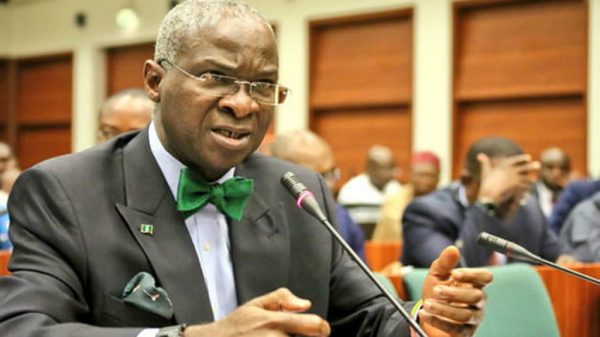
Federal Government has resolved to backdate the new minimum wage of N30,000 to April 18, 2019 even as Vice-President Yemi Osinbajo directed the Minister of Finance, Zainab Ahmed, to effect payment of the Arreers on or before 31st December, 2019. The Minister of Labour, Chris Ngige, made this known to news men today, October 23 shortly after the end of the weekly Federal Executive Council (FEC) meeting at the Presidential villa, Abuja, presided over by the Vice President. Also briefing the news men, the Minister of Aviation, Hadi Sirika, said that N1.7 billion was approved by FEC for procurement and installation of communication equipment for airport towers in Zaria and Katsina. He said that the equipment would ensure safety and efficiency at the airports, adding that the completion period for the contract is eight months. This was even as the Minister of Science and Technology, Ogbonnaya Onu, said that the FEC approved the use of methanol in the Nigerian economy. The Minister said that methanol “is derivable from gas that accompanies crude oil,” saying that it had been profitable for oil companies to flare the gas, which has posed great environmental problems in the country. According to him, FEC approved methanol to be used as transportation fuel, cooking and that it is cheap and safe.
The Nigeria Customs Service has announced the arrest of a syndicate of 15 people who allegedly re-bag foreign rice as local rice for sale to unsuspecting consumers. The Comptroller of Customs in Adamawa and Taraba States Command, Kamardeen Olumoh, disclosed this on Tuesday when he led Journalists to the scene of the crime at a warehouse in Yola, the Adamawa State capital. According to him, the suspects were found with 900 bags of rice with duty paid value of N14.5 million. Olumoh explained that operatives of the command busted the warehouse in conjunction with others from the Federal Operation Units and Strike Force, as part of efforts towards sustaining the fight against smuggling in the country. He said that 15 people, including the manager and labourers at the warehouse, were rounded up by the security operatives while carrying out their nefarious act. The comptroller who took reporters to the Customs Headquarters in Yola where it has seized a truckload of grains intercepted by operatives along the Mubi-Yola Road, said that investigation revealed that the truck was also carrying foreign rice re-bagged as local rice concealed under bags of beans with a duty paid value of N10.3 million. Three suspects were also arrested in the process and all the arrested suspects would be prosecuted, Olumoh added. While the Nigerian Government has since closed its borders with neighbouring countries, the comptroller described the activities of smugglers as sabotage. He warned smugglers that Adamawa and Taraba States remain no go areas for them as the Command would soon embark on raiding markets in search of smuggled foreign rice. Olumoh also appealed to market heads to caution their members against the sale of foreign rice as a way of supporting local farmers who have the capacity of feeding the nation.
The governor of Kano state, Dr Abdullahi Umar Ganduje of the All Progressives Congress (APC), has sent goodwill message to his predecessor, ex governor Rabi’u Musa Kwankwaso of the Peoples Democratic Party (PDP) on his 63rd birthday anniversary. In a sponsored advertisement on page 41 of Daily Trust of today, October 22, governor Ganduje prayed that the Almighty Allah grants his predecessor good health and prosperity. “I, Dr Abdullahi Umar Ganduje, on behalf of myself, the government and the good people of Kano state, wish to congratulate our former Governor and Senator Rabi’u Musa Kwankwaso on his 63rd year anniversary. “While wishing him more returns in future, I pray that Allah Almighty grants him good health and prosperity.”
Top notchers of the ruling Peoples Democratic Party (PDP), including kinsmen of former President Goodluck Jonathan, Chief Robert Enogha and Chief Claudius Enegesi have dumped the party for the All Progressives Congress (APC) ahead of the November 16 governorship election in Bayelsa State. Prior to his defection, Enogha was the Chairman, Bayelsa Environmental Sanitation Authority and former two-time member of the Bayelsa House of Assembly. Enogha, who was until his defection one of the restoration leaders in Ogbia, was also a former Commissioner for Environment. Enegesi, one of the political associates of Jonathan, was a Speaker in the old Rivers State when Ada George was the governor. The party stalwart, who was the pioneer Chairman of the PDP in Bayelsa when the party was formed in 1998, was a former national executive member of the party and a former caucus chairman of PDP, Ogbia chapter. Also In Nembe, Chief Bright Erewari-Igbeta, a former House of Assembly member and presently Special Adviser to the Governor on Environment resigned his appointment from the government and also from the party. In the same council, Chief James Jephthah, aka Octopus after series of meeting with leaders and supporters of PDP under the Octopus Umbrella said he and his political associates had decided to withdraw their membership of the PDP. But Enigha, while joining the APC, cited dictatorial tendencies in PDP as a reason for his decision to leave the party. He said: “I write to formally inform you of my withdrawal of membership from the Peoples Democratic Party(PDP). I am doing this with so much pain as a founding member of the party which was truly democratic as at then. “I must acknowledge the immense benefit and experience I have gathered over the years through service as a loyal and faithful member. However I have lost confidence in the party’s ability to accept where the opinion of majority counts, hence my resignation”. Also in Brass, Chief Beimo Spiff the coordinator of the PDP governorship campaign council in Brass Local Government Area and brother to Senator Inatimi Rufus Spiff, Chairman of the PDP reconciliation committee, dumped the party for the APC. Spiff and his supporters were received by the Secretary of the party, Alabo Martins. Beimo- Spiff in his letter of resignation addressed to the Chairman of the party said he was resigning from the party due to some “despicable injustices in the party.”
General Yakubu Gowon, Nigeria’s military Head of State from 1966 -1975, turned 85 on Saturday, October 19, 2019. In a congratulatory message, President Muhammadu Buhari described him as a living legend and a symbol of national unity. The statement from the Presidency gushed with phrases such as “visionary leadership style, wisdom, disciplined outlook…elder statesman, simplicity and humility, good governance… sacrifices, wide respect….”. There were other tributes: The Senate President, Ahmed Lawan praised Gowon for defending and preserving the unity and territorial integrity of Nigeria. Asiwaju Bola Tinubu, chieftain of the All Progressives Congress, described Gowon as a “statesman and national icon who contributed enormously to Nigeria’s unity and development.” Nigeria, he adds “owes Gowon a debt of gratitude”. Governors of the 36 states of Nigeria also concurred that “General Gowon is a rare gift to the state, Nigeria, and the world”. On Friday, October 18, The Institute for Governance and Leadership Studies in Africa organized a birthday dinner in Gowon’s honour where everyone got a chance to say something about his place and legacy in Nigerian history. I attended General Gowon’s 80th birthday church service in 2014 – I still have the gift item- a towel, distributed by his wife’s family as evidence- and I recall that the tributes were effusive then. They are even more so now, indeed, more saccharine.
But the only man who seems to differ is Femi Fani-Kayode. Femi Fani-Kayode’s father, the historic and inimitable man who was popularly known as Fani-Power was one of the key figures in pre-independence and post-independence Nigerian politics, and significantly a miraculous survivor of the July 1966 imbroglio. In many ways, Femi Fani-Kayode, known also as FFK, has followed in his father’s footsteps. He doesn’t take hostages. He is bold and assertive. On the question of Gowon’s anniversary at 85, he is the only one who has said publicly, that he does not think Gowon is a hero. He provides an explanation: he says Gowon as Head of State presided over a war situation where over 3 million Igbos were massacred, and that such war crime does not qualify Gowon to be celebrated as a war hero or an icon of national unity. Indeed, during the civil war, one million Igbo children suffered, many died, others ended up in Gabon and Equitorial Guinea, others died of kwashiorkor, many Igbos perished. The world at a point began to sympathize with Biafra because the war began to look like genocide. Fani-Kayode’s point as I understand it, is that while we celebrate General Yakubu Gowon, we should not forget what he sees as the humanitarian disasters that occurred in this country under his watch. Ironically, Gowon saved his own father’s life!
I note therefore, that in the past, Fani-Kayode had cause to praise General Gowon. So, I do not want to think that he despises him. But on the occasion of Gowon’s 85th birthday, Fani-Kayode brings up an issue that may continue to impinge on the Gowon legacy. The lazy, intellectual definition of the problem would be to say that Fani-Kayode is raising the issue of the civil war and Gowon’s role because he wants to suck up to Igbos, and defend his access to privileges in the other room, his wife being Igbo, thus romantically embedded as he is in Igbo matters. I consider such thinking absolutely lazy and mischievous. I argue that with or without Femi Fani-Kayode’s intervention, Gowon’s management of Nigeria’s civil war would always be part of the conversation around and about his place in Nigerian history.
Whatever we know about this subject is available in bits and pieces in the extant bibliography on the Nigerian civil war, and that is quite a large, cross-border, multi-disciplinary and inter-generational bibliography. It is unfortunate that General Gowon himself, has chosen to remain silent. He has not written an autobiography. He has left his place in history at the mercy of the definition of others, the most authoritative book on his tenure in office being Isawa Elaigwu’s Gowon: The Biography of a Soldier Statesman (1986). Other books include Yakubu Gowon: Faith in United Nigeria by John Digby Clarke (1987); General Yakubu Gowon: The Supreme Commander by Olufemi Ogunsanwo (2009) and thousands of commentaries in academic journals and periodicals. Gowon owes us an autobiography. The import of Femi Fani-Kayode’s intervention is how he draws our attention to the fact that long after Gowon would have become an ancestor, his handling of the civil war would still form the epicentre of his legacy. So, why don’t we start the debate right now in the General’s presence, at a time when he can speak up for himself and enjoy the right of reply? Those who do not know Nigerian history can dust up their books and let’s have a conversation. Is Gowon a hero or a villain? Did he preside over a genocide? And is that what defines his place in Nigerian history?
Let no one be in any doubt about it: the civil war, 1966-1970, will always be a big question at the heart of Nigerian politics and inter-ethnic relations. In many ways, there is indeed clear evidence that the war against Igbos has not ended. Nigeria nurses a huge, deep-seated prejudice against the Igbo man. It is the reason why there is so much dithering over whether an Igbo President should one day emerge or not. It explains why a Yoruba landlord is reluctant to lease his property to an Igbo man in Lagos, even if he ends up doing so in spite of himself, for economic reasons. Psychologically, he thinks the Igbo man will spread like cancer and over-populate the property with his kinsmen or probably take the property from him. It is also why the Hausa-Fulani believes that the Hausa-Fulani-Igbo rivalry will never end and that an Igbo Presidency would amount to an admission of defeat more than three decades after the war. The divisive tendencies in the country at this time take us back in history to the spirit of that same season of anomie. Nigeria’s civil war is all about the being-ness of Nigeria, whether indeed a mistake was made in 1914 by the colonialists or not. This is the Nigerian problem. We cannot run away from it. Yakubu Gowon was not the cause of the war, however. He helped to manage it as the man in the saddle at the time it erupted. Nigerians complain about Hausa-Fulani hegemony and the threat it poses. Gowon is even of Angas ethnic extraction from Plateau State. It is facile to argue that he was an agent of the Hausa-Fulani hegemonists. But those who cling to that should remember that after the January 1966 coup led by Nzeogwu and others, the Ironsi “interregnum”, and the July 1966 counter-coup, it was circumstances rather than design that threw up an Angas man as Nigeria’s Head of State.
When the civil war broke out, it was Gowon’s duty and responsibility to keep Nigeria together. We have a country today because he refused to shirk his responsibility. His training and office required him to defend Nigeria’s sovereignty and integrity. We owe the survival of Nigeria to Gowon’s determination. If he had dropped the ball, Nigeria would have long broken up. Those who refer to him as the “father of modern Nigeria” are in order to say so. Every believer in the idea of Nigeria must give credit to Gowon for the heavy burden of 1966-1970, and how his team of young men kept this country together in the face of the first major test it faced after independence. I use the word, team advisedly, because Gowon was not alone. Nigeria survived because he had around him and there were in circulation at the time, men and women who believed in the Gowonian ideology that keeping Nigeria One was a task that must be done. But there is another side to this viewpoint. The Igbos showed great valour in the battle-field. They demonstrated skills in engineering and warfare which if sustained and assimilated could have made Nigeria an industrial nation today. But Nigeria has failed to focus on the strength and qualities of the people. We focus instead on blame-games, and thus, Igbos may never forgive Gowon over the Aburi accord, the loss of their properties in Port Harcourt and the North, the failed 20-pounds policy and the killing of their people.
In this regard, in case the comment by Femi Fani-Kayode represents a mind-set, shared by a group or by others, I submit that it should be subjected to further interrogation to understand it properly. Fani-Kayode says, for record purposes, inter alia: “When the real history of the country is written, the role of Gowon and the other Nigerian commanders during the civil war will be put in proper perspective…The slaughter of 3 million Biafran civilians in that war is the greatest act of black on black genocide in human history. I cannot celebrate the birth of a man who presided over such carnage and neither can I describe him as a hero. Nigeria cannot make much progress or truly prosper until she apologises to the Igbos and Biafrans for the great evil that we visited on them during the civil war.”
It is right and proper to protest about genocide. Any form of humanitarian abuse is unacceptable be it in Northern Syria or Afghanistan or Biafra, Darfur or Srebenica. But General Yakubu Gowon does not deserve characterization as a war criminal. He is in every true sense a statesman of the first rank, for keeping Nigeria together in line with his professional mandate and for the steps he took subsequently to build a united nation. As soon as the war ended, he declared that there was “no victor, no vanquished.” Latter-day successors in a democratic dispensation probably need to learn something here. For them, every national issue is either “do-or-die”, and winner-takes-it-all with no in-betweens. Gowon introduced the concepts – the 3 Rs: Reconciliation, Reconstruction and Rehabilitation. Decades later, Nigeria has not succeeded with Reconciliation. Nigeria remains a divided country as seen in the various cases of violence in the country and the prevalent politics of division and distrust. It is the reason Igbos will not accept any apology. They are convinced that Nigeria is a country of insincere people. So much progress was made with Reconstruction. Gowon rebuilt Nigeria. The oil boom made that possible even if his critics also claim that the Gowon administration laid the foundation for the culture of waste, profligacy and corruption that turned Nigeria adrift. The Gowon administration simply went on a spending spree as oil money poured in, they say. Gowon even reportedly boasted that Nigeria’s problem was not money but how to spend it.
At the time he became Head of State in 1966, Gowon was just 32. He was the first and the only Nigerian Head of State to date to marry in office. He exchanged vows with a certain Ms. Victoria Zakari at the Cathedral Church of Christ, Marina, Lagos in 1969, meaning he ruled Nigeria initially as a young bachelor! It was nothing unusual at the time– many of his colleagues and others in other professions who were the leading lights of colonial and post-colonial Nigeria were all young men. Today’s youths in Nigeria have been unable to start at the top as early as their fathers and grandfathers did. Many blame Gowon for this: Rather than diversify the economy, he squandered Nigeria’s riches. He was allegedly too obsessed with how to spend money, he failed to prepare Nigeria properly for the future.
But there was Rehabilitation. Under Gowon, a lot was done to move beyond the civil war. Igbos were given an opportunity to re-integrate into Nigeria. he was instrumental to the formation of the Economic Community of West African States (ECOWAS). He built new universities. He established the National Youth Service Corps to promote national unity. However, his critics allege that although he did so much after the civil war, much of it was anti-Igbo, he also saw too much money and he began to over-enjoy his stay in office. He had planned to leave office in 1976, but he changed his mind, and that led to his being pushed out of office by his own boys in a bloodless coup in 1975. Gowon made the mistake of getting too comfortable in power. That is his hubris. He was even accused of involvement in the February 13, 1976 coup that led to the death of his successor, General Murtala Muhammed. He had to remain in exile in the United Kingdom until President Shehu Shagari granted him state pardon in 1981. He returned to Nigeria in 1983.
Nonetheless, in his years out of office, General Yakubu Gowon has remained a stabilizing force in Nigerian politics and society. He is the main spirit and influence behind the “Nigeria Prays” movement, a spiritual, inter-denominational movement that believes that a country can be made wholesome through spirituality. Gowon is the prototypical father-figure in the public space. He supports every government. He attends every state event that he can. He stays away from every kind of public combat or disagreement. He has tried to make up with those who disagree with his civil war policies including Professor Wole Soyinka who was detained under his watch. Gowon, the strong military dictator, has mellowed into a gentle old man who prays for Nigeria. He is also the first former military Head of State to develop himself educationally after office. He obtained a Ph.D in Political Science from the University of Warwick (1983). At 85, he can look back on Nigeria’s progress through the years, and reflect on the role he played, but whatever he thinks of the rot that has overtaken the country he keeps that information very closely to himself, perhaps out of guilt or hope or regret. The best tribute that Nigerians can pay in his honour is to rediscover the ideals of the three Rs and ensure that Nigeria never experiences another civil war. Gowon will be remembered as the Nigerian leader who fought a civil war and became an “apologetic” advocate for peace and reconciliation. But he must tell his story: what exactly happened in Aburi?
Nnewi Chief Magistrates’ Court has ordered the closure of a church in Nnewi, Anambra State, over noise pollution.
Director of Environmental Health Services, Nnewi, and the Nnewi North Local Government Area for public nuisance had instituted the charge.
They filed two-count charges against the church under the Public Health Laws of Anambra State, accusing it of mounting an amplifier and five loudspeakers in front of its premises and tuning same at a higher pitch, leading to noise pollution in the neighbourhood. The alleged offence, the prosecution said, was contrary to Section 21 of the Public Health Laws of Anambra State 2006.The prosecution also accused the church of failing to comply with the terms and requisition of abatement notice referenced No: 00000896 served on it.
This, it said, was punishable under Sections 8(1,4b) and 9(1,2) of the Public Health Laws of Anambra State.
The witnesses presented by the prosecution told the court that the church’s activities, even during its vigils, disturbed the community’s peace.
However, President-General of the community, who appeared as a witness for the defendant, disproved the claim of the prosecution.
The Nigerian Electricity Regulatory Commission (NERC) has threatened to fine customers who engage in unauthorised access to electricity, tampering and by-passing of meters between N50,000 and N115,000. The Commission explained that such fine will take care of administrative charges, reconnection charges and loss of revenue charges. The Commissioner for Consumer Affairs in the NERC, Dr Moses Arigu, who spoke today, October 21, at a Discos and Customers Care Forum in Lagos, directed Distribution Companies (DISCOs) and Meter Assets Providers (MAPs) to intensify effort in supplying meters to electricity consumers within their operational areas. Dr. Arigu said that the goal of NERC was to ensure that all electricity consumers in the country are metered to curb arbitrary estimated billings by the Discos, and also increase revenue of the electricity value chain. He said that electricity customers across the country could either pay fully for their meters or pay in instalments for a period of 10 years. “It is the Discos that introduced MAPs to the regulatory authority; hence the effectiveness of the MAPs remains their responsibility. “A customer does not have contract with the MAPs, it is the responsibility of the Disco to ensure that all customers are metered. “Payment for the meter is either through upfront payment or installment payment of up to 10 years.” Dr. Arigu said that the forum was initiated to hear complaints from customers regarding the MAPs and how they could be addressed, toward fast-tracking the metering processes. Two of the customers, Alhaji Bola Awosika, on the Ikeja Electric Distribution Company network, and Mr Uche Ejide, on the Eko Electric Distribution Company network, said they had paid for their meters for months but were still waiting for installation. They urged NERC to compel the Discos and MAPs to expedite action on the process due to the outrageous monthly bills being given to consumers. Also, Adeola Samuel-Ilori, National Coordinator, Electricity Consumer Protection Forum, expressed concern about the E-billing introduced by the Discos, stressing that it violates the provisions of the Electric Power Sector Reform Act.
Access Bank Plc has joined other organisations to launch the first-ever United Nations Global Compact (UNGC) sustainability compendium in Nigeria.
The compendium, which was launched recently at the UNGC Breakfast Dialogue, documents some of the stellar efforts of the Bank, its sustainability journey and its strategic collaborations to facilitate socio-economic development.
Launching the compendium, the former Group Managing Director, Access Bank Plc., Aigboje Aig-Imoukhuede urged corporate organisations and SMEs to invest in and practice sustainability. Highlighting this as the primary solution to achieving the SDGs in view of the critical issues around health and poverty that have plagued Africa.
“The collective will and desire for action amongst organisations has taken a giant leap from where it was few years ago. However, compared to other nations, the statistics of malaria, poverty and deaths in Nigeria paints a very gory picture. Hence, it is the responsibility of every corporate organisation, SME and individual to get involved in activities that will aid the achievement of the SDGs come 2030,” he said.
Over the years, Access Bank has facilitated a growing number of sustainability activities, including the Malaria-to-Zero initiative, issued the first ever CBI-certified Green Bond, and also funded various not-for-profit organisations and programs across all 36 states in the country’s six geo-political zones, among others.
The Head, Sustainability, Access Bank Plc., Omobolanle Victor-Laniyan, assured Nigerians that Access Bank will not relent in its contributions to the achievement of the SDGs saying, “We have entrenched sustainability into every part of our business operations and activities, in addition to aligning the implementation of our sustainability strategy with the achievement of the SDGs.”
“To this end, we have made good progress in driving social, environmental and economic development locally and globally. Despite these, we will not relent, rather, we will continue to invest our time, resources and work with relevant stakeholders to provide innovative solutions to local and global challenges,” she added.
The Bank’s sustainability efforts have been recognized by several prestigious local and international bodies, becoming a four-time consecutive winner of the Outstanding Business Sustainability Award by Karlsruhe Sustainable Finance Awards; 9-time winner of the Most Sustainable Bank in Nigeria Award by World Finance Awards; two-time consecutive winner of Most Sustainable Company in Africa by the Sustainability, Enterprise and Reporting Awards; 2-time consecutive winner of the Central Bank of Nigeria Sustainability Awards in all categories including Most Sustainable Bank in Nigeria; 2019 Gender Leader of the Year Award by Africa CEO Forum Awards, among others.
The World Bank has approved a $3 billion loan for Nigeria to expand its electricity transmission and distribution infrastructure. Minister of Finance, Budget and National Planning, Mrs Zainab Ahmed, disclosed this during a press briefing at the just concluded World Bank/ IMF annual meetings in Washington DC. She explained that the loan would be used to finance transmission, distribution and offset pending obligations to the sector, adding that it would also facilitate an end to the subsidy regime in the power sector. According to her, the loan would be disbursed in four tranches of $750m each beginning from April 2020. “We put a request for financing of the power sector at a range of $1.5 billion dollars to $4billion.”
Vice President Yemi Osinbajo has challenged regulatory institutions in the Nigerian banking sector to spend more time and resources on researching the nature, management of new risks facing the industry. Such risks, Professor Osinbajo said, when he spoke today, October 21 at a function by the Nigerian Deposit Insurance Corporation (NDIC) In Abuja are the speed of transactions, cross border transactions, money laundering concerns and data privacy as well as security issues. He stressed the urgent need for training to meet the required compliance capacity which he said is crucial. Vice President Osinbajo also identified challenges associated with the move towards financial inclusion. “In the past four years the Federal Government launched the Social Investment Programme, and in particular the micro-credit programme covering over two million informal traders, and then our Conditional Cash Transfer scheme meant to cover over a million of the poorest in our communities. “All of these have formalized to a certain extent services to millions of individuals who were outside the banking system. And with our commitment (and the President has already stated that), we intend to lift 10 million persons annually from extreme poverty for the next ten years. “So, we are looking at a much more phenomenally larger customer base for the banks and of course, with all of the implications that this will have for regulations. “With the signing of the African Continental Free Trade Area agreements, we are also bound to see even greater opportunities for our banks whose footprints are already firmly all over Africa. Again these opportunities plus technology present their own issues both for the NDIC, domestic deposit insurers in sister African countries and the regional deposit insurance bodies. “So, the future is without a doubt exciting, but I dare say, will also call for a proactive, nimble and savvy NDIC as well as all other institutions constituting our financial safety net. “And we must note this especially when those who should know like Mr. AIG Imoukhuede say without blinking that the regulatory infrastructure today belongs to yesterday, and we may not be prepared for the future. And that is as frightening as one could possibly have the facts, so there is a lot of work to be done.”
We use cookies on our website to give you the most relevant experience by remembering your preferences and repeat visits. By clicking “Accept”, you consent to the use of ALL the cookies.
This website uses cookies to improve your experience while you navigate through the website. Out of these, the cookies that are categorized as necessary are stored on your browser as they are essential for the working of basic functionalities of the website. We also use third-party cookies that help us analyze and understand how you use this website. These cookies will be stored in your browser only with your consent. You also have the option to opt-out of these cookies. But opting out of some of these cookies may affect your browsing experience.
Necessary cookies are absolutely essential for the website to function properly. This category only includes cookies that ensures basic functionalities and security features of the website. These cookies do not store any personal information.
Any cookies that may not be particularly necessary for the website to function and is used specifically to collect user personal data via analytics, ads, other embedded contents are termed as non-necessary cookies. It is mandatory to procure user consent prior to running these cookies on your website.
Gowon At 85 And Fani-Kayode, By Reuben Abati
But the only man who seems to differ is Femi Fani-Kayode. Femi Fani-Kayode’s father, the historic and inimitable man who was popularly known as Fani-Power was one of the key figures in pre-independence and post-independence Nigerian politics, and significantly a miraculous survivor of the July 1966 imbroglio. In many ways, Femi Fani-Kayode, known also as FFK, has followed in his father’s footsteps. He doesn’t take hostages. He is bold and assertive. On the question of Gowon’s anniversary at 85, he is the only one who has said publicly, that he does not think Gowon is a hero. He provides an explanation: he says Gowon as Head of State presided over a war situation where over 3 million Igbos were massacred, and that such war crime does not qualify Gowon to be celebrated as a war hero or an icon of national unity. Indeed, during the civil war, one million Igbo children suffered, many died, others ended up in Gabon and Equitorial Guinea, others died of kwashiorkor, many Igbos perished. The world at a point began to sympathize with Biafra because the war began to look like genocide. Fani-Kayode’s point as I understand it, is that while we celebrate General Yakubu Gowon, we should not forget what he sees as the humanitarian disasters that occurred in this country under his watch. Ironically, Gowon saved his own father’s life!
I note therefore, that in the past, Fani-Kayode had cause to praise General Gowon. So, I do not want to think that he despises him. But on the occasion of Gowon’s 85th birthday, Fani-Kayode brings up an issue that may continue to impinge on the Gowon legacy. The lazy, intellectual definition of the problem would be to say that Fani-Kayode is raising the issue of the civil war and Gowon’s role because he wants to suck up to Igbos, and defend his access to privileges in the other room, his wife being Igbo, thus romantically embedded as he is in Igbo matters. I consider such thinking absolutely lazy and mischievous. I argue that with or without Femi Fani-Kayode’s intervention, Gowon’s management of Nigeria’s civil war would always be part of the conversation around and about his place in Nigerian history.
Whatever we know about this subject is available in bits and pieces in the extant bibliography on the Nigerian civil war, and that is quite a large, cross-border, multi-disciplinary and inter-generational bibliography. It is unfortunate that General Gowon himself, has chosen to remain silent. He has not written an autobiography. He has left his place in history at the mercy of the definition of others, the most authoritative book on his tenure in office being Isawa Elaigwu’s Gowon: The Biography of a Soldier Statesman (1986). Other books include Yakubu Gowon: Faith in United Nigeria by John Digby Clarke (1987); General Yakubu Gowon: The Supreme Commander by Olufemi Ogunsanwo (2009) and thousands of commentaries in academic journals and periodicals. Gowon owes us an autobiography. The import of Femi Fani-Kayode’s intervention is how he draws our attention to the fact that long after Gowon would have become an ancestor, his handling of the civil war would still form the epicentre of his legacy. So, why don’t we start the debate right now in the General’s presence, at a time when he can speak up for himself and enjoy the right of reply? Those who do not know Nigerian history can dust up their books and let’s have a conversation. Is Gowon a hero or a villain? Did he preside over a genocide? And is that what defines his place in Nigerian history?
Let no one be in any doubt about it: the civil war, 1966-1970, will always be a big question at the heart of Nigerian politics and inter-ethnic relations. In many ways, there is indeed clear evidence that the war against Igbos has not ended. Nigeria nurses a huge, deep-seated prejudice against the Igbo man. It is the reason why there is so much dithering over whether an Igbo President should one day emerge or not. It explains why a Yoruba landlord is reluctant to lease his property to an Igbo man in Lagos, even if he ends up doing so in spite of himself, for economic reasons. Psychologically, he thinks the Igbo man will spread like cancer and over-populate the property with his kinsmen or probably take the property from him. It is also why the Hausa-Fulani believes that the Hausa-Fulani-Igbo rivalry will never end and that an Igbo Presidency would amount to an admission of defeat more than three decades after the war. The divisive tendencies in the country at this time take us back in history to the spirit of that same season of anomie. Nigeria’s civil war is all about the being-ness of Nigeria, whether indeed a mistake was made in 1914 by the colonialists or not. This is the Nigerian problem. We cannot run away from it. Yakubu Gowon was not the cause of the war, however. He helped to manage it as the man in the saddle at the time it erupted. Nigerians complain about Hausa-Fulani hegemony and the threat it poses. Gowon is even of Angas ethnic extraction from Plateau State. It is facile to argue that he was an agent of the Hausa-Fulani hegemonists. But those who cling to that should remember that after the January 1966 coup led by Nzeogwu and others, the Ironsi “interregnum”, and the July 1966 counter-coup, it was circumstances rather than design that threw up an Angas man as Nigeria’s Head of State.
When the civil war broke out, it was Gowon’s duty and responsibility to keep Nigeria together. We have a country today because he refused to shirk his responsibility. His training and office required him to defend Nigeria’s sovereignty and integrity. We owe the survival of Nigeria to Gowon’s determination. If he had dropped the ball, Nigeria would have long broken up. Those who refer to him as the “father of modern Nigeria” are in order to say so. Every believer in the idea of Nigeria must give credit to Gowon for the heavy burden of 1966-1970, and how his team of young men kept this country together in the face of the first major test it faced after independence. I use the word, team advisedly, because Gowon was not alone. Nigeria survived because he had around him and there were in circulation at the time, men and women who believed in the Gowonian ideology that keeping Nigeria One was a task that must be done. But there is another side to this viewpoint. The Igbos showed great valour in the battle-field. They demonstrated skills in engineering and warfare which if sustained and assimilated could have made Nigeria an industrial nation today. But Nigeria has failed to focus on the strength and qualities of the people. We focus instead on blame-games, and thus, Igbos may never forgive Gowon over the Aburi accord, the loss of their properties in Port Harcourt and the North, the failed 20-pounds policy and the killing of their people.
In this regard, in case the comment by Femi Fani-Kayode represents a mind-set, shared by a group or by others, I submit that it should be subjected to further interrogation to understand it properly. Fani-Kayode says, for record purposes, inter alia: “When the real history of the country is written, the role of Gowon and the other Nigerian commanders during the civil war will be put in proper perspective…The slaughter of 3 million Biafran civilians in that war is the greatest act of black on black genocide in human history. I cannot celebrate the birth of a man who presided over such carnage and neither can I describe him as a hero. Nigeria cannot make much progress or truly prosper until she apologises to the Igbos and Biafrans for the great evil that we visited on them during the civil war.”
It is right and proper to protest about genocide. Any form of humanitarian abuse is unacceptable be it in Northern Syria or Afghanistan or Biafra, Darfur or Srebenica. But General Yakubu Gowon does not deserve characterization as a war criminal. He is in every true sense a statesman of the first rank, for keeping Nigeria together in line with his professional mandate and for the steps he took subsequently to build a united nation. As soon as the war ended, he declared that there was “no victor, no vanquished.” Latter-day successors in a democratic dispensation probably need to learn something here. For them, every national issue is either “do-or-die”, and winner-takes-it-all with no in-betweens. Gowon introduced the concepts – the 3 Rs: Reconciliation, Reconstruction and Rehabilitation. Decades later, Nigeria has not succeeded with Reconciliation. Nigeria remains a divided country as seen in the various cases of violence in the country and the prevalent politics of division and distrust. It is the reason Igbos will not accept any apology. They are convinced that Nigeria is a country of insincere people. So much progress was made with Reconstruction. Gowon rebuilt Nigeria. The oil boom made that possible even if his critics also claim that the Gowon administration laid the foundation for the culture of waste, profligacy and corruption that turned Nigeria adrift. The Gowon administration simply went on a spending spree as oil money poured in, they say. Gowon even reportedly boasted that Nigeria’s problem was not money but how to spend it.
At the time he became Head of State in 1966, Gowon was just 32. He was the first and the only Nigerian Head of State to date to marry in office. He exchanged vows with a certain Ms. Victoria Zakari at the Cathedral Church of Christ, Marina, Lagos in 1969, meaning he ruled Nigeria initially as a young bachelor! It was nothing unusual at the time– many of his colleagues and others in other professions who were the leading lights of colonial and post-colonial Nigeria were all young men. Today’s youths in Nigeria have been unable to start at the top as early as their fathers and grandfathers did. Many blame Gowon for this: Rather than diversify the economy, he squandered Nigeria’s riches. He was allegedly too obsessed with how to spend money, he failed to prepare Nigeria properly for the future.
But there was Rehabilitation. Under Gowon, a lot was done to move beyond the civil war. Igbos were given an opportunity to re-integrate into Nigeria. he was instrumental to the formation of the Economic Community of West African States (ECOWAS). He built new universities. He established the National Youth Service Corps to promote national unity. However, his critics allege that although he did so much after the civil war, much of it was anti-Igbo, he also saw too much money and he began to over-enjoy his stay in office. He had planned to leave office in 1976, but he changed his mind, and that led to his being pushed out of office by his own boys in a bloodless coup in 1975. Gowon made the mistake of getting too comfortable in power. That is his hubris. He was even accused of involvement in the February 13, 1976 coup that led to the death of his successor, General Murtala Muhammed. He had to remain in exile in the United Kingdom until President Shehu Shagari granted him state pardon in 1981. He returned to Nigeria in 1983.
Nonetheless, in his years out of office, General Yakubu Gowon has remained a stabilizing force in Nigerian politics and society. He is the main spirit and influence behind the “Nigeria Prays” movement, a spiritual, inter-denominational movement that believes that a country can be made wholesome through spirituality. Gowon is the prototypical father-figure in the public space. He supports every government. He attends every state event that he can. He stays away from every kind of public combat or disagreement. He has tried to make up with those who disagree with his civil war policies including Professor Wole Soyinka who was detained under his watch. Gowon, the strong military dictator, has mellowed into a gentle old man who prays for Nigeria. He is also the first former military Head of State to develop himself educationally after office. He obtained a Ph.D in Political Science from the University of Warwick (1983). At 85, he can look back on Nigeria’s progress through the years, and reflect on the role he played, but whatever he thinks of the rot that has overtaken the country he keeps that information very closely to himself, perhaps out of guilt or hope or regret. The best tribute that Nigerians can pay in his honour is to rediscover the ideals of the three Rs and ensure that Nigeria never experiences another civil war. Gowon will be remembered as the Nigerian leader who fought a civil war and became an “apologetic” advocate for peace and reconciliation. But he must tell his story: what exactly happened in Aburi?