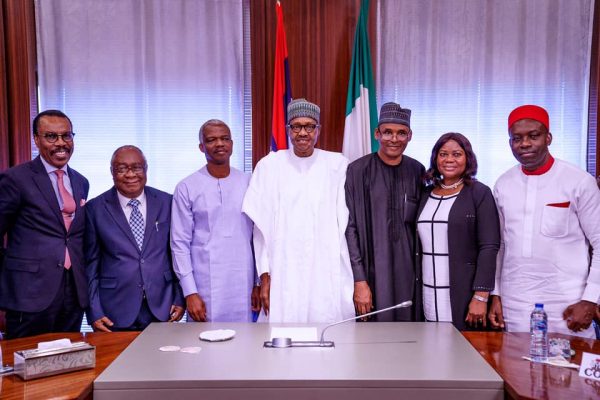
The Tor Tiv of Tiv land in Benue State, Professor James Ayatse, has described the recent triumph of President Muhammadu Buhari at the Presidential Election Petition Tribunal as God-given victory.
He said that the mandate is to enable the President reconstruct, rebuild and unify the country and take it to the Next Level of socio-economic development.
The Tor Tiv who led a delegation of Benue State Council of Traditional Rulers on a courtesy visit to the President, pledge the support of the Council to the President.
“We are here to encourage your administration to carry on with its laudable programmes.”
This was even as the President called for better appreciation of the historical relationships among various communities in order to sustain the nation’s unity.
He recalled that the ties between the Tiv and his own ethnic Fulani stock predated him and the current generation, adding that such ties had helped in ensuring peaceful and harmonious co-existence among the people.
The President expressed optimism that such cordial bonds will continue to endure among various groups and serve as a strong unifying force in the country.
Buhari decried the misunderstanding of internal conflicts by many people at home and abroad, citing the farmer-herders clashes which in several places had been misconstrued as religious, when in fact they arose from social and cultural factors.
He restated his appeal for better understanding of the nation’s diverse cultures in order to engender a healthier co-existence among the people, while fortifying and strengthening the unity of the country.
Responding to the narration of the Tor Tiv on the plight of Internally Displaced Persons (IDPs) from the recent conflicts in the State, the President said he was aware of that, and all that obtains in the Northeast, the Northwest and the South-South.
He noted that it is in realisation of the foregoing and the urgent need to ameliorate the plight of the IDPs that he created the new Ministry of Humanitarian Affairs, Disaster Management and Social Development, “so that we have a ministry that coordinates their demands, and we avoid duplication of resources.”
President Buhari expressed delight with the leadership of the Tor Tiv and other traditional rulers in their various communities as well as for their strong support for his administration.
He promised to look into the “long list” of the delegation’s demands, and thanked the royal fathers for showing appreciation for what his administration has done in the State in terms of projects and appointments.
President Muhammadu Buhari has set an agenda for the Economic Advisory Council (PEAC), after administering the oath of office on the eight member Council, headed by Professor Doyin Salami today, October 9.
President Buhari charged them to focus on developing reliable data that will properly reflect what is happening in the country.
The President who called the task before the PEAC ‘‘most important national assignment’’, said:
‘‘As you develop your baseline study, I would like you to focus on primary data collection.
‘‘Today, most of the statistics quoted about Nigeria are developed abroad by the World Bank, IMF and other foreign bodies.
‘‘Some of the statistics we get relating to Nigeria are wild estimates and bear little relation to the facts on the ground.
‘‘This is disturbing as it implies we are not fully aware of what is happening in our own country.
‘‘We can only plan realistically when we have reliable data. As you are aware, as a government, we prioritised agriculture as a critical sector to create jobs and bring prosperity to our rural communities.
‘‘Our programs covered the entire agricultural value chain from seed to fertiliser to grains and ultimately, our dishes.
‘‘As you travel in some rural communities, you can clearly see the impact. However, the absence of reliable data is hindering our ability to upgrade these programmes and assure their sustainability.”
The President used the occasion to set agenda and expectations from the Council, constituted on September 16, 2019, to replace the Economic Management Team (EMT).
On the Social Investment Programmes (SIPs), the President told members that his administration was working to measure the impact of the programme targeted at improving the well-being of millions of poor and vulnerable citizens.
As such, the President said he had directed the new Minister for Humanitarian Affairs to commence a comprehensive data-gathering exercise in all Internally Displaced Persons (IDP) camps in the North East.
‘‘Today, we hear international organisations claiming to spend hundreds of millions of dollars on IDPs in the North East. But when you visit the camps, you rarely see the impact.
‘‘In 2017, when the National Emergency Management Agency took over the feeding of some IDPs in Borno, Yobe and Adamawa, the amount we spent was significantly lower than the claims made by these international organisations.
‘‘Therefore, actionable data is critical to implement effective strategies to address pressing problems such as these humanitarian issues.
‘‘I, therefore, look forward to receiving your baseline study as this will help us shape ideas for a sustainable and prosperous future.”
The President advised the Council members to proffer solutions on how to move the country and economy forward.
He also directed the Council to coordinate and synthesize ideas and efforts on how to lift 100 million Nigerians out of poverty in 10 years, working in collaboration with various employment generating agencies of government.
”I am told you worked throughout last weekend in preparation for this meeting.
”I have listened attentively to findings and ideas on how to move the country and the economy forward.
”Yes, Nigeria has exited the recession. But our reported growth rate is still not fast enough to create the jobs we need to meet our national ambition of collective prosperity.
”Reason being we had to tread carefully in view of the mess we inherited.
”Many of the ideas we developed in the last four years were targeted at returning Nigeria back to the path of growth.
”I am sure you will also appreciate that during that time, our country was also facing serious challenges especially in the areas of insecurity and massive corruption.
”Therefore, I will be the first to admit that our plans were conservative. We had to avoid reckless and not well thought out policies.
”However, it was very clear to me after we exited the recession that we needed to re-energise our economic growth plans. This is what I expect from you.”
President Buhari assured the Council that the Federal Government will ensure that all their needs and requests were met before the next technical sessions in November.
He said all key ministries, departments and agencies will be available to meet and discuss with them on how to collectively build a new Nigeria that caters for all.
”Now, no one person or a group of persons has a monopoly of knowledge or wisdom or patriotism.
”In the circumstances, you may feel free to co-opt, consult and defer to any knowledgeable person if in your opinion such a move enriches your deliberations and add to the quality of your decisions.”
Chairman of Council, Professor Salami, said the mandate was about “Nigeria first, Nigeria second, and Nigeria always,” adding that it is about Nigerians, not as numbers, but as people.
“Our goal is that the economy grows in a manner that is rapid, inclusive, sustained and sustainable, so that Nigerians will feel the impact.”
Budget of Sustaining Growth and Job Creation Delivered By His Excellency, Muhammadu Buhari, President, Federal Republic of Nigeria, At the Joint Session of the National Assembly, Abuja
Tuesday, October 8, 2019
PROTOCOLS
1. I will start by asking you to pardon my voice. As you can hear, I have a cold as a result of working hard to meet your deadline!
2. I am delighted to present the 2020 Federal Budget Proposals to this Joint Session of the National Assembly, being my first budget presentation to this 9th National Assembly.
3. Before presenting the Budget, let me thank all of you Distinguished and Honourable Members of the National Assembly, for your avowed commitment to cooperate with the Executive to accelerate the pace of our socio-economic development and enhance the welfare of our people.
4. I will also once again thank all Nigerians, who have demonstrated confidence in our ability to deliver on our socio-economic development agenda, by re-electing this Administration with a mandate to Continue the Change. We remain resolutely committed to the actualization of our vision of a bright and prosperous future for all Nigerians.
5. During this address, I will present highlights of our budget proposals for the next fiscal year. The Honourable Minister of Finance, Budget and National Planning will provide full details of these proposals, subsequently.
OVERVIEW OF ECONOMIC DEVELOPMENTS IN 2019
6. The economic environment remains very challenging, globally. The International Monetary Fund expects global economic recovery to slow down from 3.6 percent in 2018 to 3.5 percent in 2020. This reflects uncertainties arising from security and trade tensions with attendant implications on commodity price volatility.
7. Nearer to home, however, Sub-Saharan Africa is projected to continue to grow from 3.1 percent in 2018 to 3.6 percent in 2020. This is driven by investor confidence, oil production recovery in key exporting countries, sustained strong agricultural production as well as public investment in non-dependent economies.
8. Mr. Senate President; Right Honourable Speaker; I am pleased to report that the Nigerian economy thus far has recorded nine consecutive quarters of GDP growth. Annual growth increased from 0.82 percent in 2017 to 1.93 percent in 2018, and 2.02 percent in the first half of 2019. The continuous recovery reflects our economy’s resilience and gives credence to the effectiveness of our economic policies thus far.
9. We also succeeded in significantly reducing inflation from a peak of 18.72 percent in January 2017, to 11.02 percent by August 2019. This was achieved through effective fiscal and monetary policy coordination, exchange rate stability and sensible management of our foreign exchange.
10. We have sustained accretion to our external reserves, which have risen from US$23 billion in October 2016 to about US$42.5 billion by August 2019. The increase is largely due to favourable prices of crude oil in the international market, minimal disruption of crude oil production given the stable security situation in the Niger Delta region and our import substitution drive, especially in key commodities.
11. The foreign exchange market has also remained stable due to the effective implementation of the Central Bank’s interventions to restore liquidity, improve access and discourage currency speculation. Special windows were created that enabled small businesses, investors and importers in priority economic sectors to have timely access to foreign exchange.
12. Furthermore, as a sign of increased investor confidence in our economy, there were remarkable inflows of foreign capital in the second quarter of 2019. The total value of capital imported into Nigeria increased from US$12 billion in the first half year of 2018 to US$14 billion for the same period in 2019.
PERFORMANCE OF THE 2019 BUDGET
13. Distinguished and Honourable Members of the National Assembly, you will recall that the 2019 ‘Budget of Continuity’ was based on a benchmark oil price of US$60 per barrel, oil production of 2.3 mbpd, and an exchange rate of N305 to the United States Dollar. Based on these parameters, we projected a deficit of N1.918 trillion or 1.37 percent of Gross Domestic Product.
14. As at June 2019, Federal Government’s actual aggregate revenue (excluding Government-Owned Enterprises) was N2.04 trillion. This revenue performance is only 58 percent of the 2019 Budget’s target due to the underperformance of both oil and non-oil revenue sources. Specifically, oil revenues were below target by 49 percent as at June 2019. This reflects the lower-than-projected oil production, deductions for cost under-recovery on supply of premium motor spirit (PMS), as well as higher expenditures on pipeline security/maintenance and Frontier exploration.
15. Daily oil production averaged 1.86 mbpd as at June 2019, as against the estimated 2.3 mbpd that was assumed. This shortfall was partly offset as the market price of Bonny Light crude oil averaged US$67.20 per barrel which was higher than the benchmark price of US$60.
16. Additionally, revenue projections from restructuring of Joint Venture Oil and Gas assets and enactment of new fiscal terms for Production Sharing Contracts did not materialize, as the enabling legislation for these reforms is yet to be passed into law.
17. The performance of non-oil taxes and independent revenues such as internally generated revenues were N614.57 billion and N217.84 billion, respectively.
18. Receipts from Value Added Tax were below expectations due to lower levels of activities in certain economic sectors, in the aftermath of national elections. Corporate taxes were affected by the seasonality of collections, which tend to peak in the second half of the calendar year.
19. On the expenditure side, 2019 Budget implementation was also hindered by the combination of delay in its approval and the underperformance of revenue collections. As such, only recurrent expenditure items have been implemented substantially. Of the prorated expenditure of N4.46 trillion budgeted, N3.39 trillion had been spent by June 30, 2019.
20. In compliance with the provisions of the 2018 Appropriation Act, we implemented the 2018 capital budget till June 2019. Capital releases under the 2019 Budget commenced in the third quarter. As at 30th September 2019, a total of about N294.63 billion had been released for capital projects. I have directed the Ministry of Finance, Budget and National Planning to release an additional N600 billion of the 2019 capital budget by the end of the year.
21. Despite the delay in capital releases, a deficit of N1.35 trillion was recorded at end of June 2019. This represents 70 percent of the budgeted deficit for the full year.
22. Despite these anomalies, I am happy to report that we met our debt service obligations, we are current on staff salaries and overhead costs have also been largely covered.
2020 BUDGET PRIORITIES
23. Distinguished Senators, Honourable Members, let me now turn to the 2020 Appropriation, which is designed to be a budget of:
a. Fiscal consolidation, to strengthen our macroeconomic environment;
b. Investing in critical infrastructure, human capital development and enabling institutions, especially in key job creating sectors;
c. Incentivising private sector investment essential to complement the Government’s development plans, policies and programmes; and
d. Enhancing our social investment programs to further deepen their impact on those marginalised and most vulnerable Nigerians.
PARAMETERS & FISCAL ASSUMPTIONS UNDERPINNING THE APPROPRIATION BILL AND THE FINANCE BILL
24. Distinguished and Honourable Members of the National Assembly, the 2020-2022 Medium Term Expenditure Framework (MTEF) and Fiscal Strategy Paper (FSP) set out the parameters for the 2020 Budget. We have adopted a conservative oil price benchmark of US$57 per barrel, daily oil production estimate of 2.18 mbpd and an exchange rate of N305 per US Dollar for 2020.
25. We expect enhanced real GDP growth of 2.93% in 2020, driven largely by non-oil output, as economic diversification accelerates, and the enabling business environment improves. However, inflation is expected to remain slightly above single digits in 2020.
26. Accompanying the 2020 Budget Proposal is a Finance Bill for your kind consideration and passage into law. This Finance Bill has five strategic objectives, in terms of achieving incremental, but necessary, changes to our fiscal laws. These objectives are:
a. Promoting fiscal equity by mitigating instances of regressive taxation;
b. Reforming domestic tax laws to align with global best practices;
c. Introducing tax incentives for investments in infrastructure and capital markets;
d. Supporting Micro, Small and Medium-sized businesses in line with our Ease of Doing Business Reforms; and
e. Raising Revenues for Government.
27. The draft Finance Bill proposes an increase of the VAT rate from 5% to 7.5%. As such, the 2020 Appropriation Bill is based on this new VAT rate. The additional revenues will be used to fund health, education and infrastructure programmes. As the States and Local Governments are allocated 85% of all VAT revenues, we expect to see greater quality and efficiency in their spending in these areas as well.
28. The VAT Act already exempts pharmaceuticals, educational items, and basic commodities, which exemptions we are expanding under the Finance Bill, 2019. Specifically, Section 46 of the Finance Bill, 2019 expands the exempt items to include the following:
a. Brown and white bread;
b. Cereals including maize, rice, wheat, millet, barley and sorghum;
c. Fish of all kinds;
d. Flour and starch meals;
e. Fruits, nuts, pulses and vegetables of various kinds;
f. Roots such as yam, cocoyam, sweet and Irish potatoes;
g. Meat and poultry products including eggs;
h. Milk;
i. Salt and herbs of various kinds; and
j. Natural water and table water.
29. Additionally, our proposals also raise the threshold for VAT registration to N25 million in turnover per annum, such that the revenue authorities can focus their compliance efforts on larger businesses thereby bringing relief for our Micro, Small and Medium-sized businesses.
30. It is absolutely essential to intensify our revenue generation efforts. That said, this Administration remains committed to ensuring that the inconvenience associated with any fiscal policy adjustments, is moderated, such that the poor and the vulnerable, who are most at risk, do not bear the brunt of these reforms.
FEDERAL GOVERNMENT REVENUE ESTIMATES
31. The sum of N8.155 trillion is estimated as the total Federal Government revenue in 2020 and comprises oil revenue N2.64 trillion, non-oil tax revenues of N1.81 trillion and other revenues of N3.7 trillion. This is 7 percent higher than the 2019 comparative estimate of N7.594 trillion inclusive of the Government Owned Enterprises.
32. The increasing share of non-oil revenues underscores our confidence in our revenue diversification strategies, going forward. Furthermore, in our efforts to enhance transparency and accountability, we shall continue our strict implementation of Treasury Single Account (TSA) to capture the domiciliary accounts in our foreign missions and those linked to Government Owned Enterprises.
PLANNED 2020 EXPENDITURE
33. An aggregate expenditure of N10.33 trillion is proposed for the Federal Government in 2020. The expenditure estimate includes statutory transfers of N556.7 billion, non-debt recurrent expenditure of N4.88 trillion and N2.14 trillion of capital expenditure (excluding the capital component of statutory transfers). Debt service is estimated at N2.45 trillion, and provision for Sinking Fund to retire maturing bonds issued to local contractors is N296 billion.
STATUTORY TRANSFERS
34. The sum of N556.7 billion is provided for Statutory Transfers in the 2020 Budget and includes:
a. N125 billion for the National Assembly;
b. N110 billion for the Judiciary;
c. N37.83 billion for the North East Development Commission (NEDC);
d. N44.5 billion for the Basic Health Care Provision Fund (BHCPF);
e. N111.79 billion for the Universal Basic Education Commission (UBEC); and
f. N80.88 billion for the Niger Delta Development Commission (NDDC), which is now supervised by the Ministry of Niger Delta Affairs.
35. We have increased the budgetary allocation to the National Human Rights Commission from N1.5 billion to N2.5 billion. This 67 percent increase in funding is done to enable the Commission to perform its functions more effectively.
RECURRENT EXPENDITURE
36. The non-debt recurrent expenditure includes N3.6 trillion for personnel and pension costs, an increase of N620.28 billion over 2019. This increase reflects the new minimum wage as well as our proposals to improve remuneration and welfare of our Police and Armed Forces. You will all agree that Good Governance, Inclusive Growth and Collective Prosperity can only be sustained in an environment of peace and security.
37. Our fiscal reforms shall introduce new performance management frameworks to regulate the cost to revenue ratios for Government Owned Enterprises, which shall come under significant scrutiny. We will reward exceptional revenue and cost management performance, while severe consequences will attend failures to achieve agreed revenue targets.
38. We shall also sustain our efforts in managing personnel costs. Accordingly, I have directed the stoppage of the salary of any Federal Government staff that is not captured on the Integrated Payroll and Personnel Information System (IPPIS) platform by the end of October 2019. All agencies must obtain the necessary approvals before embarking on any fresh recruitment and any contraventions of these directives shall attract severe sanctions.
39. Overhead costs are projected at N426.6 billion in 2020. Additional provisions were made only for the newly created Ministries. I am confident that the benefits of these new Ministries as it relates to efficient and effective service delivery to our citizens significantly outweighs their budgeted costs.
40. That said, the respective Heads of MDAs must ensure strict adherence to government regulations regarding expenditure control measures. The proliferation of Zonal, State and Liaison Offices by Federal Ministries, Departments and Agencies (‘MDAs’), with attendant avoidable increase in public expenditure, will no longer be tolerated.
CAPITAL EXPENDITURE
41. As I mentioned earlier, investing in critical infrastructure is a key component of our fiscal strategy under the 2020 Budget Proposals. Accordingly, an aggregate sum of N2.46 trillion (inclusive of N318.06 billion in statutory transfers) is proposed for capital projects in 2020.
42. Although the 2020 capital budget is N721.33 billion (or 23 percent) lower than the 2019 budget provision of N3.18 trillion, it is still higher than the actual and projected capital expenditure outturns for both the 2018 and 2019 fiscal years, respectively. However, at 24 percent of aggregate projected expenditure, the 2020 provision falls significantly short of the 30 percent target in the Economic Recovery and Growth Plan (ERGP) 2017-2020.
43. The main emphasis will be the completion of as many ongoing projects as possible, rather than commencing new ones. MDAs have not been allowed to admit new projects into their capital budget for 2020, unless adequate provision has been made for the completion of ALL ongoing projects.
44. Accordingly, we have rolled over capital projects that are not likely to be fully funded by the end of 2019 into the 2020 Budget. We are aware that the National Assembly shares our view that these projects should be prioritised and given adequate funding in the 2020 Appropriation Act.
45. Therefore, I will once again commend the 9th National Assembly’s firm commitment to stop the unnecessary cycle of delayed annual budgets. I am confident that with our renewed partnership, the deliberations on the 2020 Budget shall be completed before the end of 2019 so that the Appropriation Act will come into effect by the 1st of January.
46. Some of the key capital spending allocations in the 2020 Budget include:
a. Works and Housing: N262 billion;
b. Power: N127 billion;
c. Transportation: N123 billion;
d. Universal Basic Education Commission: N112 billion;
e. Defence: N100 billion;
f. Zonal Intervention Projects: N100 billion;
g. Agriculture and Rural Development: N83 billion;
h. Water Resources: N82 billion;
i. Niger Delta Development Commission: N81 billion;
j. Education: N48 billion;
k. Health: N46 billion;
l. Industry, Trade and Investment: N40 billion;
m. North East Development Commission: N38 billion;
n. Interior: N35 billion;
o. Social Investment Programmes: N30 billion;
p. Federal Capital Territory: N28 billion; and
q. Niger Delta Affairs Ministry: N24 billion.
47. Although Government’s actual spending has reduced, our plans to leverage private sector funding through our tax credit schemes will ensure our capital programmes are sustained.
48. For example, we launched the Road Infrastructure Tax Credit Scheme, pursuant to which I have approved the construction and rehabilitation of 19 Nigerian roads and bridges of 794.4km across 11 States. Indeed, the Scheme has attracted private investment of over N205 billion and the first set of tax credits are being processed by the Federal Ministry of Finance, Budget and National Planning.
49. As I mentioned during my Independence Day Speech, under the Presidential Power Initiative, we will modernise the National Grid in 3 phases; starting from 5 Gigawatts to 7 Gigawatts, then to 11 Gigawatts by 2023, and finally 25 Gigawatts afterwards in collaboration with the German Government and Siemens.
BUDGET DEFICIT
50. Budget deficit is projected to be N2.18 trillion in 2020. This includes drawdowns on project-tied loans and the related capital expenditure.
51. This represents 1.52 percent of estimated GDP, well below the 3 percent threshold set by the Fiscal Responsibility Act of 2007, and in line with the ERGP target of 1.96 percent.
52. The deficit will be financed by new foreign and domestic borrowings, Privatization Proceeds, signature bonuses and drawdowns on the loans secured for specific development projects.
DEBT SERVICE
53. Nigeria remains committed to meeting its debt service obligations. Accordingly, we provided the sum of N2.45 trillion for debt service. Of this amount, 71 percent is to service domestic debt which accounts for about 68 percent of the total debt. The sum of N296 billion is provided for the Sinking Fund to retire maturing bonds issued to local contractors.
54. I am confident that our aggressive and re-energised revenue drive will maintain debt-revenue ratio at acceptable and manageable levels. We will also continue to be innovative in our borrowings by using instruments such as Sukuk, Green Bonds and Diaspora Bonds.
SOCIAL INVESTMENT PROGRAMME
55. Our government remains committed to ensuring the equitable sharing of economic prosperity. Our focus on inclusive growth and shared prosperity underscores our keen interest in catering for the poor and most vulnerable. Accordingly, we are revamping and improving the implementation of the National Social Investment Programme through the newly created Ministry of Humanitarian Affairs, Disaster Management and Social Development.
56. The National Social Investment Programme is already creating jobs and economic opportunity for local farmers and cooks, providing funding to artisans, traders, youths, and supporting small businesses with business education and mentoring.
57. The provision of N65 billion for the Presidential Amnesty Programme has been retained in the 2020 Budget. Furthermore, to fast track the rebuilding efforts in the North East region, a provision of N37.83 billion has been made for the North East Development Commission.
OTHER STRATEGIC PRIORITIES IN 2020
58. The 2020 Budget is expected to accelerate the pace of our economic recovery, promote economic diversification, enhance competitiveness and ensure social inclusion. We are optimistic of attaining higher and more inclusive GDP growth in order to achieve our objective of massive job creation and lifting many of our citizens out of poverty.
59. The efficiency of port operations will also be enhanced by implementing a single customs window, speeding up vessel and cargo handling and issuing more licenses to build modern terminals in existing ports, especially outside Lagos.
60. Furthermore, completing the reforms to the governance and fiscal terms of the Petroleum Industry will provide certainty and attract further investments into the sector. A consequence of this will be increase in jobs and in government’s take. I therefore seek your support in passing into law two Petroleum Industry Executive Bills I will be forwarding to you shortly.
61. In addition, we need to quickly review the fiscal terms for deep offshore oil fields to reflect the current realities and for more revenue to accrue to the government. The Deep Offshore and Inland Basin Production Sharing Contract (Amendment) Bill 2018, was submitted to the 8th National Assembly in June 2018 but was unfortunately not passed into law.
62. I will be re-forwarding the Bill to this Assembly very shortly and therefore urge you to pass it. We estimate that this effort can generate at least 500 million US dollars additional revenue for the Federal Government in 2020, and over one billion dollars from 2021.
63. Whilst the Budget is our principal fiscal tool to achieve these socio-economic development targets, we remain committed to prudently planning for our future economic prosperity. In this regard, I have directed the reconstituted Ministry of Finance, Budget and National Planning to commence preparations towards the development of successor medium – and long-term economic development plans, particularly as the Nigeria Vision 20-2020 and the ERGP expire next year.
CONCLUSION
64. Mr. Senate President, Mr. Speaker, Distinguished and Honourable Members of the National Assembly, this speech would be incomplete without, once again, commending the patriotic resolve of the 9th National Assembly to collaborate with the Executive in the effort to deliver inclusive growth and enhance the welfare our people. I assure you of the strong commitment of the Executive to deepen the relationship with the National Assembly.
65. As you review the 2020-2022 Medium Term Expenditure Framework (MTEF) and Fiscal Strategy Paper (FSP), as well as the 2020 Budget estimates, we believe that the legislative process will be quick, so as to restore the country to the January-December financial year.
66. It is with great pleasure therefore, that I lay before this Distinguished Joint Session of the National Assembly, the 2020 Budget Proposals of the Federal Government of Nigeria.
67. I thank you most sincerely for your attention.
68. May God bless the Federal Republic of Nigeria.
The President said that the 2020 Appropriation Bill is based on this new VAT rate.
The Federal Government has formally increased Value Added Tax (VAT) from 5 percent to 7.5 percent only for big investors in the country’s economy.
In the draft bill on VAT which President Muhammadu Buhari presented today, October 8, along with the 2020 national budget, the threshold for VAT registration was raised to N25 million in turnover per annum, “such that the revenue authorities can focus their compliance efforts on larger businesses thereby bringing relief for our Micro, Small and Medium-sized businesses.
The President said that the 2020 Appropriation Bill is based on this new VAT rate.
“The additional revenues will be used to fund health, education and infrastructure programmes. As the States and Local Governments are allocated 85% of all VAT revenues, we expect to see greater quality and efficiency in their spending in these areas as well.”
The President assured that VAT Act had already exempted pharmaceuticals, educational items, and basic commodities, “which exemptions we are expanding under the Finance Bill, 2019. Specifically, Section 46 of the Finance Bill, 2019 expands the exempt items to include brown and white bread; Cereals including maize, rice, wheat, millet, barley and sorghum; Fish of all kinds; Flour and starch meals; Fruits, nuts, pulses and vegetables of various kinds; Roots such as yam, cocoyam, sweet and Irish potatoes; Meat and poultry products including eggs; Milk; Salt and herbs of various kinds; and Natural water and table water.
“It is absolutely essential to intensify our revenue generation efforts. That said, this Administration remains committed to ensuring that the inconvenience associated with any fiscal policy adjustments, is moderated, such that the poor and the vulnerable, who are most at risk, do not bear the brunt of these reforms.”
No one is in any doubt that terrorism poses one of the gravest threats to humanity in today’s world. Here in Nigeria, within a decade and a little, unconscionable acts of violence by persons pursuing heinous ideological, religious, and political objectives have resulted in wanton destruction of lives and property, making Nigeria one of the most difficult places to be in the world, especially in the North Eastern part of the country where a notorious group known as Boko Haram holds sway as a local terror group and as a wing of al-Qaeda and the Islamic State of the West African Province (ISWAP). The Nigerian government has since adopted a military option to stop the Boko Haram in its tracks and to prevent it from seizing Nigerian territory. Boko Haram has indeed proven to be a threat to the sovereignty of Nigeria and the integrity of the state itself. The Nigerian Government argues that it has been able to “defeat” the group “technically” or “degrade” it but all of that is no more than mere rhetoric. The reality is different and that includes the Boko Haram attacking an Emir’s palace in broad daylight reprisal attack. It includes brazen assault on Nigerian military camps, with Nigerian soldiers, ill-equipped, poorly motivated, war-weary troops, taking to their heels or putting up feeble resistance. Since the crisis began, more than 2, 000 lives have been lost and it has been more than 2,000 days since 276 girls were abducted from a secondary school in Chibok, Borno state.
Terrorism being an asymmetrical war, not even the smartest Generals know when or how any war against terror will end. What we know is that Nigeria has a terrible task on its hands, it is like fighting the Devil, in an unknown space, where there are no rules, and the enemy wears a mask. The worst part is the creeping mutation of the security crisis in the country: the crisis keeps spreading like cancer as if the terrorists have engaged independent contractors of their own: bandits in Zamfara, kidnappers in Kaduna, pipeline vandals in the South South, killer-herdsmen from the Middle Belt to Osun and Eastern Nigeria, ritualists, rapists, yahoo yahoo boys in the South West and everywhere else… in one word, we live in a country where the population of rogues appears to be rising and the unusual has become the norm. No serious government will fold its arms and allow a country such as we have to collapse. To that extent, I am in total agreement with our compatriots who argue that the government must adopt multiple approaches in dealing with the country’s security challenge. It may be true after all that intractable problems require desperate solutions, but what is now of interest, in my view, is the latest recourse to a spiritual solution to terrorism and the seriousness with which some highly placed persons are promoting that metaphysical option.
It all started with Nigeria’s Chief of Army Staff, Lt. Gen. Tukur Buratai who around September 30, 2019 said at a seminar in Abuja, that clerics within the Nigerian military and religious leaders across the country would need to help the military win the war against terror with the aid of spiritual warfare. The Seminar organized by the Nigeria Army Resource Centre was reportedly titled: “Countering Insurgency and Violent Extremism in Nigeria through spiritual warfare.” Buratai said:“It is easier to defeat Boko Haram and ISWAP terrorists than their ideology because while we degrade the terrorists and their havens, the ideology grows the group. Therefore, communities, families, and groups should join in the fight and narratives to reject and prevent the ideologies of the terrorists and extremist groups. Religious bodies and organizations in particular who interface regularly with the grassroots should be at the forefront of the spiritual battle and fashion out ways of stepping up their roles. The fight against terrorism, Boko Haram and ISWAP as well as other security threats, cannot be left to the troops in the battle field alone.”
This statement drew all kinds of interpretations with the general public wondering why the military would be asking for spiritual warfare. Does it mean that the Nigerian military with all the weapons at their disposal now want to fight terrorists with anointing oil and holy water and amulets and charms? Is Buratai suggesting that we should withdraw military Generals from the frontlines and send the likes of Pastor Enoch Adeboye, Pastor David Oyedepo, Pastor Tunde Bakare, Apostle Johnson Suleiman, Pastor Chris Okotie, Guru Maharaji and all the big Islamic clerics that we can deploy from Agege to Kano to Mali and Senegal? One lawyer has since said Buratai was misinterpreted in what I consider a needless revision. It will be recalled that the same Chief of Army Staff was reported as having said at the commissioning of a remodeled All Saints Military Church at the Maxwell Khobe Cantonment, Rukuba Barracks, near Jos in June, that the military also have spiritual needs! I suspect very strongly that if Buratai were not a soldier, he would probably be a cleric, given the consistency with which he apparently draws attention to the spiritual side of warfare. In a superstitious country such as Nigeria, I do not imagine that there will be too many who will disagree with his views, and it should not be surprising that his focus on spirituality resonates with the people. Nigerians in the 21st Century are basically still living in the Medieval era. Their worldview is dominated by a daily conception of saints and enemies who are trying to do harm, evil spirits lurking in the air, and animism as the sole explanation for natural phenomena. When the head of the country’s military tells them that a particular war is beyond the capacity of his men and that spiritual warfare will be required, what comes to their mind is the kind of warfare that their ancestors fought, or the type that Christian and Islamic evangelicals introduced, resulting in a syncretic religious order in colonial and post-colonial Africa.
Buratai, Nigeria’s Chief of Army Staff is obviously frustrated, tired and exasperated. He used the words: spiritual and ideology. Boko Haram is a spiritual and ideological force. Its soldiers seek to create an Islamic State and impose a Sharia orthodoxy on Nigeria. Boko Haram is not just a religious war; it is a spiritual violation of Nigeria. Boko Haram adherents do not believe in Western civilization. They regard it as sin. That is an ideological war. To mobilise recruits and sustain the battle, Boko Haram leaders indoctrinate young people. They attack their minds. They get them to buy into an ideology of hate and violence. Every revolution starts in the mind of men. Buratai is certainly right when he says the war against terror cannot be won by the military alone, or that it should be a collaborative effort. Is there a role for religious groups in the matter? The Nigerian military is more or less giving up, so, I think, yes. The religious mind in Nigeria is stronger than the political mind, even if there is a gap between private and public attitudes. Nigerians troop to churches, mosques and shrines, some do so every day, claiming to know the mind of God, but when it comes to public attitudes, they act differently.
Buratai in calling for a religious solution may have heard a little about the concept of the psychology of terrorism. Terrorists are first and foremost human beings and there is a science to their behavior as is the case with every other human being. Is there a way in which religion can moderate that behavior? Can our priests and alfas use the pulpit to change the behavior of persons and communities? Can ritualists and shamanists call on the elements to turn Sambisa forest into a place of value rather than a forest of evil? Can the clerics use holy water, fasting, days of prayer to turn the eyes of the Evil One away from Nigeria and bring peace and happiness? In seeking such meta-solutions, the religious-minded is apparently proclaiming the failure of the state, but with state officials themselves saying the war against terror requires a metaphysical approach, this may well be a subject for further interrogation. A failed state yes, but may be not yet.
What is required is a translation of the proposal into a strategy, with proper co-ordination and management. What kind of spiritual warfare is the Nigerian military asking for? How can we deploy all the spiritual resources, agents and organizations in the country to achieve results and defeat Boko Haram? In the absence of proper strategy and co-ordination, we could have all kinds of persons doing their own thing in their own corner. Already, perhaps in response to the call by the Chief of Army Staff, a spiritual warfare against Boko Haram has begun in Borno State, where the Governor, Babagana Zulum, a Professor of Engineering, has chosen to recruit 1, 000 traditional hunters to face the Boko Haram terrorists. These hunters we are told, have supernatural powers. They can resist gun shots. They can appear and disappear at will. They can kill thousands in a minute. The hunters have been reportedly provided with dane guns, and swords, and they have sworn to an oath to defeat Boko Haram. In addition, Governor Zulum has engaged 30 prayer warriors for daily supplication around the Ka’aba to pray for peace in Borno state. He has thus recruited a group to report Boko Haram directly to God, in Mecca, the holy land.
The Nigerian military cannot afford to have every state Governor running with their own script of spiritual warfare. To save Nigeria from Boko Haram, we must all work and pray together. This is why I recommend strategy and synergy. The Chief of Army Staff should appoint a Boko Haram Counter-Spiritual Warfare Co-Ordinator or Adviser. The person should be a very senior statesman, preferably an old, retired soldier, who once upon a time in his life understood the value and application of the “Juju option” to military warfare/international diplomacy and who at the same time is very knowledgeable in Christian theology, and has a good relationship with Muslims and Nigerians across ethnic, religious and geographical boundaries. He must have enough influence and gravitas to be able to reach out to the spiritual leaders of Nigeria, across various persuasions. He must be an elderly man whose only interest is the survival of Nigeria as a sovereign entity. He will not be paid for the assignment. He should have a military background. His team should be treated like a battalion of the Nigerian Army to be known as the Spiritual Counter-Insurgency Rapid Response Division.
No member of this proposed team will receive any form of compensation. But whatever they may need for their purpose should be provided directly by the Presidency. The team should be organized as follows: all Muslim clerics should work together as one division. They should all storm Sambisa forest and hold prayers there non-stop for 40 days and 40 nights to exorcise the spirit of evil from the forest. Leaders of white garment churches should lead another division. They should be deployed to every part of the country to cleanse Nigeria with prayers, anointed oil, lit candles, and holy water. They should fast and pray and call on the Lord of Hosts, the I am that I am, Jehovah Jireh. Sat Guru Maharaji, the Living Master, should lead all children of Light in prayer. Nigeria needs the touch of all all Masters, Living and Ethereal, to envelope Nigeria with Light and banish darkness. Leaders of the Pentecostal Churches led by GO Enoch Adeboye can organize a 100-day Marathon prayer and fasting session to take this country’s case to God, to plead for Divine Favor and forgiveness.
Animists should not be left out. Every ethnic nationality should be asked to visit every shrine or grove in every community in Nigeria and place curses on anybody who commits any evil on the soil that is known as Nigeria. In calling for national spiritual warfare, Buratai may have heard of what happened in the city of Benin not too long ago. When criminals began to seize control of that city, the Oba of Benin called out his priests and in broad daylight, all the priests wearing blazing and frightening red colour cursed the criminals and warned them to stop or face the wrath of the gods of Benin. There has been peace and security in Benin since then. The same criminals who do not respect Nigerian Police and Army or the Nigerian Constitution have been very careful with the gods and ancestors! There must be something that the Benin palace knows that the Nigerian military probably needs. How about asking the Oba of Benin to co-ordinate an anti-Boko Haram operation?
There is also the recent case of Oke Owa community in Ondo state. Some Fulani cattle herders took their cows to a sacred hill in that community in defiance of the community’s traditions and rules. The cows, 36 of them were struck dead mysteriously by lightning and thunder. The traditional ruler of the Oke Owa community usually spends a night alone in the sacred grove where that incident occurred. He should be taken by the Federal Government to Sambisa forest. Let him spend a night there and summon whatever spirits are protecting his village on a sabbatical in the North West and North East of Nigeria. The Governor of Borno State has mobilized some hunters who we are told have bullet-proof bodies. The Are Ona Kakanfo of Yorubaland, Iba Ganiyu Adams should also be recruited to lead the Yoruba Agbekoya to support the Nigerian military in the war against terror. The Egbesu of the Niger Delta should also come to the rescue of the Nigerian military.
I commend the Chief of Army Staff for his humility. It is not easy for a General to admit that what he and his men are facing at the war-front is rather daunting and that they need spiritual help. It is not easy to accept DEFEAT. Where are all those pastors who claim that they can make the lame walk and the blind see? Nigeria needs HELP right now! If we defeat the Boko Haram through spiritual warfare, Nigeria would have made a very original contribution to the science of modern warfare.
President Buhari presenting the 2020 appropriation bill to the National Assembly | NAN
President Muhammadu Buhari has confessed that he has been afflicted with cold and catarrh as a result of the heat on him over the 2020 federal budget.
The President, who presented the budget today, October 8 before the joint session of the National Assembly said: “I will start by asking you to pardon my voice.
“As you can hear, I have a cold as a result of working hard to meet your deadline!”
In the budget tagged “budget of Sustaining Growth and Job Creation” the President acknowledged that the economic environment had remained very challenging, globally.
“The International Monetary Fund expects global economic recovery to slow down from 3.6 percent in 2018 to 3.5 percent in 2020. This reflects uncertainties arising from security and trade tensions with attendant implications on commodity price volatility.”
Saudi Arabia is set to hold special sport festivals in different regions of the Kingdom between November 22 and December 21 as a way of promoting tourism.
According to a statement from the Kingdom, the season will see international stars in action in four different disciplines which include car racing, tennis, equestrian and boxing.
It said that the initiative, under the aegis of Crown Prince Muhammad Bin Salman, is led and planned by different interrelated Saudi authorities, including the Ministry of Culture, General Entertainment Authority, General Sport Authority and Saudi Commission for Tourism and National Heritage (SCTH).
The statement emphasized that one of the aims of the initiative is to pave the way towards Saudi efforts to achieve high standard tourism activities in the Kingdom while opening up seasonal jobs to many young Saudis.
Speaking on the sport festivals, chairman of General Sports Authority (GSA), Prince Abdulaziz Bin Turki Al-Faisal, recalled the success of last year’s Diriyah Formula.
“The huge success of last year’s Diriyah Formula E encouraged us to take Diriyah to a different level during this Diriyah Season.
“Where else in the world can you find this epic blend of the past, present and future? Our arms are open and our welcome has never been warmer. Come witness history in the making.”
The prince also announced that the Diriyah Tennis Cup from December 12 to 14 will feature eight of the best tennis players in the world, as a “source of inspiration for the youth to exercise more and play tennis.”
Prince Abdulaziz revealed that the FIA Formula E race weekend would be on Nov. 22-23, with two showpiece races over the weekend.
With cars — with Mercedes and Porsche taking part for the first time — and drivers going head-to-head in the Formula E event, people are in for a treat as another year of electrifying motorsport begins in Diriyah.
Prince Abdulaziz said, “Today, a year after organizing Formula E in Saudi Arabia, our ambitions have become bigger as well as our dreams.”
Meanwhile, the Chief Executive Officer of CBX, Carlo Boutagi, has said that the popularity of motorsports and Formula E is getting higher year by year in Saudi Arabia.
“We expect to see three historical nights of Formula E during Diriyah Season.”
Porsche driver, André Lotterer said that he was looking forward to race again in this historical site.
“It’s really great to be back in Diriyah, last year’s race was impressive, all the drivers enjoyed racing here and we look forward to this year’s race.”
With Saudi Arabia recently launching the tourist e-visas, sports aficionados will likely be attending the international sports events at a UNESCO heritage site.
The boxing event will see the maiden heavyweight title clash in the Kingdom on Dec. 7. The boxers, Andy Ruiz and Anthony Joshua, will fight for the unified heavyweight title — WBC, WBA, IBO, WBO.
The tennis event will see a galaxy of stars with Russian Daniel Medvedev, Belgian David Goffin, Frenchman Lucas Pouille, Italian Fabio Fognini already confirming their participation.
The equestrian event will see 150 men and women riders participating. Saudi stars will be testing their mettle against international stars during Dec. 12-14 and Dec. 19-21.
The winners will earn qualification points in their quest to compete in the Olympics in Tokyo. The equestrian ground can accommodate 15,000 fans.
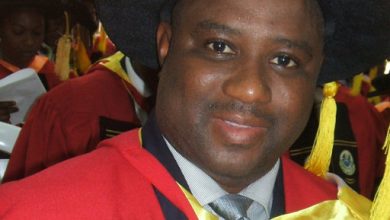
Dr. Boniface Igbeneghu has been suspended as a lecturer at the University of Lagos and as a presiding pastor of the Foursquare Gospel Church in Nigeria over an alleged sex-for-marks scandal.
Dr. Boniface had earlier been identified in a #SexForGrades undercover video, released by the British Broadcasting Corporation (BBC) today, October 7. Undercover journalist, Kiki Mordi, had disguised as a 17-year-old admission seeker in the video.
The Chancellor of the University of Lagos, Oluwatoyin Ogundipe, confirmed that Boniface has been suspended indefinitely, adding that a panel will be set up to investigate the matter.
This was even as the Foursquare Gospel Church in Nigeria announced that Dr. Boniface Igbeneghu had been asked to step down from all ministerial assignments.
In a statement today, October 7, National Secretary of the church, Rev. Ikechukwu Ugbaja, said that the Church had dissociated itself from alleged conduct of Dr. Boniface, even as he promised that the matter would be investigated.
The church reminded everyone that it is a “holiness and Bible-believing Church,” and that it does not condone such “heinous and unscriptural act” among its ministers.
President Buhari declares Open the 25th Nigerian Economic Summit in Abuja on 7th Oct 2019 | State House
President Muhammadu Buhari has commended the presidential candidate of opposition Peoples Democratic Party (PDP), Atiku Abubakar and candidates of other parties who have taken their grievances over the 2019 elections to various electoral tribunals.
The President, who described actions of the grieving candidates as clear signs of maturing democracy, said that Nigeria has shown the world that it is capable of electing leaders in a peaceful and orderly manner.
‘‘The elections have come and gone. Our country, once again, has shown the world that we can choose our leaders in a peaceful and orderly manner.
‘‘Apart from a few pockets of unrest, majority of voters exercised their civic rights without hindrance.
‘‘Furthermore, we also saw an increase in the number of aggrieved candidates, and supporters, who took their concerns and grievances to the courts as opposed to the streets. This is how it should be.
‘‘Ladies and Gentlemen, what this clearly shows is that our democracy is maturing.”
President Buhari spoke today, October 7 at the opening of the 2-day Summit of the 25th Nigerian Economic Summit (NES25) in Abuja.
Reflecting on the manifesto of the All Progressives Congress (APC) party, the President noted that his administration’s economic policies in the last four years focused on the need to uplift the poor and the disadvantaged and encourage inclusivity.
‘‘During the elections, almost all candidates proposed their vision for the economy and for the country.
‘‘Our party, the APC, put before the country policies that focus on delivering prosperity to all Nigerians through enhancing security; eliminating corrupt practices in public service; supporting sectors that will create jobs; and promoting socially focused interventions to support the poorest and most vulnerable among us.
‘‘These areas are all interconnected and are equally important in creating a prosperous society for all,’’ he said.
Underscoring the importance of collective prosperity, President Buhari asserted that a prosperous society is one where majority of its citizens have an acceptable standard of living.
‘‘Today, many mistake prosperity with wealth. They are not necessarily the same.
‘‘Experts and analysts explain economic trends by making references to indicators of wealth.
‘‘Wealth, however, in its simplistic form, is money or other assets. In recent years, global events have shown that when a society and its leaders are driven and motivated by these alone, the ultimate outcome is a divided state of severe inequalities.
‘‘But a prosperous society is one where majority of its citizens have an acceptable standard of living and a decent quality of life,’’ he said.
The President also used the occasion to affirm that in addressing population growth, security and corruption matters in developing economies, policies and programmes must focus on promoting inclusivity and collective prosperity.
‘‘Nigeria is a country with close to 200 million people living in 36 states and the FCT.
‘‘A significant proportion of Nigeria’s prosperity today is concentrated in the hands of a few people living primarily in 4 or 5 States and the FCT. Some of the most prosperous Nigerians are here in this room.
‘‘This leaves the remaining 31 States with close to 150 million people in a state of expectancy and hope for better opportunity to thrive. This, in the most basic form, drives the migratory and security trends we are seeing today both in Nigeria and across the region.
‘‘In the recent weeks, I have been to Niger Republic to attend the ECOWAS summit; Japan with fellow African leaders to attend the Tokyo International Conference on African Development; the United Nations General Assembly in New York and South Africa on a State visit to exchange ideas on the common themes we share as the two largest economies in Africa.
‘‘What was very clear at these meetings, and numerous others I have been privileged to attend over the years is the increased consensus by leaders that to address population growth, security and corruption matters in developing economies, our policies and programmes must focus on promoting inclusivity and collective prosperity.
‘‘This shift implies that the concept of having competitive free markets that focus on wealth creation alone will be replaced by those that propagate the creation of inclusive markets which provide citizens with opportunities that will lead to peaceful and prosperous lives,’’ he said.
On the focus of this year’s economic summit which is discussing what Nigeria would be in the year 2050 when many studies estimate the country’s population will rise to over 400 million people, the President said:
‘‘As a government, our view is to equip our citizens with the means to seize any opportunities that may arise.
‘‘This means we continue investments in education, health care, infrastructure, security and strengthen and entrench the rule of law.’’
While wishing the 25th NES fruitful, robust and productive deliberations, the President praised the organizers and stakeholders of the Summit for sustaining the platform established since 1993 to deliberate on key issues on national development.
We use cookies on our website to give you the most relevant experience by remembering your preferences and repeat visits. By clicking “Accept”, you consent to the use of ALL the cookies.
This website uses cookies to improve your experience while you navigate through the website. Out of these, the cookies that are categorized as necessary are stored on your browser as they are essential for the working of basic functionalities of the website. We also use third-party cookies that help us analyze and understand how you use this website. These cookies will be stored in your browser only with your consent. You also have the option to opt-out of these cookies. But opting out of some of these cookies may affect your browsing experience.
Necessary cookies are absolutely essential for the website to function properly. This category only includes cookies that ensures basic functionalities and security features of the website. These cookies do not store any personal information.
Any cookies that may not be particularly necessary for the website to function and is used specifically to collect user personal data via analytics, ads, other embedded contents are termed as non-necessary cookies. It is mandatory to procure user consent prior to running these cookies on your website.


 The Tor Tiv of Tiv land in Benue State, Professor James Ayatse, has described the recent triumph of President Muhammadu Buhari at the Presidential Election Petition Tribunal as God-given victory.
 President Muhammadu Buhari has set an agenda for the Economic Advisory Council (PEAC), after administering the oath of office on the eight member Council, headed by Professor Doyin Salami today, October 9.
 Budget of Sustaining Growth and Job Creation Delivered By His Excellency, Muhammadu Buhari, President, Federal Republic of Nigeria, At the Joint Session of the National Assembly, Abuja
 Works & Housing – N262bn
 No one is in any doubt that terrorism poses one of the gravest threats to humanity in today’s world. Here in Nigeria, within a decade and a little, unconscionable acts of violence by persons pursuing heinous ideological, religious, and political objectives have resulted in wanton destruction of lives and property, making Nigeria one of the most difficult places to be in the world, especially in the North Eastern part of the country where a notorious group known as Boko Haram holds sway as a local terror group and as a wing of al-Qaeda and the Islamic State of the West African Province (ISWAP). The Nigerian government has since adopted a military option to stop the Boko Haram in its tracks and to prevent it from seizing Nigerian territory. Boko Haram has indeed proven to be a threat to the sovereignty of Nigeria and the integrity of the state itself. The Nigerian Government argues that it has been able to “defeat” the group “technically” or “degrade” it but all of that is no more than mere rhetoric. The reality is different and that includes the Boko Haram attacking an Emir’s palace in broad daylight reprisal attack. It includes brazen assault on Nigerian military camps, with Nigerian soldiers, ill-equipped, poorly motivated, war-weary troops, taking to their heels or putting up feeble resistance. Since the crisis began, more than 2, 000 lives have been lost and it has been more than 2,000 days since 276 girls were abducted from a secondary school in Chibok, Borno state.

 Dr. Boniface Igbeneghu has been suspended as a lecturer at the University of Lagos and as a presiding pastor of the Foursquare Gospel Church in Nigeria over an alleged sex-for-marks scandal.

