Minister of the Federal Capital Territory (FCT) , Malam Muhammad Musa Bello has directed police operatives to fish out those who lynched, through burning to death, of three suspected traffic robbers popularly known as ‘One Chance’ in Abuja yesterday, September 30.
The three suspected ‘one chance’ robbers were yesterday set ablaze by a mob at Dutsen Alhaji junction on Kubwa- Zuba highway in Abuja.
Reacting to the incident in a statement by his spokesman, Abubakar Sani, the minister said that while his Administration is determined to wipe out criminal activities in the nation’s capital city, he would not condone any form of mob action.
Muhammad Bello made it clear that the killing of the three robbers was an act of lawlessness which the FCT Administration strongly condemns.
“No group or individual has the right to take anybody’s life the way these young men were burnt to death. I have directed the Police to carry out a thorough investigation and bring the parpetrators to book.
“The FCT Administration is not leaving any stone unturned to ensure that the entire territory is free of criminality and criminal elements. That is why we are working round the clock with the security agencies to maintain a twenty-four hour surveillance round the city and its environs.
“To a very large extent, we are happy with what the security agencies are doing to keep the territory safe and arrest all criminal elements particularly traffic robbers, kidnappers and other lawbreakers where ever they may be.”
The Minister called on residents to remain law abiding, even as he warned that any individual or group found taking the laws into their hands or resorting to self help would be dealt with in accordance with the relevant laws.
He appealed to Traditional, community and religious leaders to step up engagements with their subjects by emphasising the need for obedience to the laws of the land and refraining from acts capable of causing the breakdown of law and order.
President Muhammadu Buhari is scheduled to go on a three-day State Visit to the Republic of South Africa to, among other things, comfort Nigerians who were subjects of attacks by their hosts.
A statement today, October 1 by the special adviser to the President on media and publicity, Femi Adesina said that Buhari’s visit was on the invitation of the South African President, Cyril Ramaphosa.
The statement said that the visit is also aimed at enabling the two leaders to discuss the welfare of Nigerians and find common grounds for building harmonious relations with their hosts.
The statement said that while in South Africa, the Nigerian leader will hold a town hall meeting with Nigerians living in the country, with a view to sharing in their experiences and reassuring them of Nigerian government’s commitment to working for the protection of their lives and property and promoting peaceful co-existence.
It said that President Buhari and his host will preside over the South Africa/Nigeria Bi-National Commission, during which a progress report will be presented. At the end of the meeting, both leaders will sign a joint communiqué.
The statement said that the President and his delegation including Nigerian business representatives will also participate at a South Africa-Nigeria Business Forum with their host counterparts.
Buhari will be accompanied by Governor Abdullahi Umar Ganduje of Kano State, Governor Simon Lalong of Plateau State and Governor David Umahi of Ebonyi State.
Others are Minister of Foreign Affairs, Geoffrey Onyeama; Minister of Defence, retired Major Geneneral Bashir Magashi; Minister of Power, Engineer Saleh Mamman; Minister of Interior, Rauf Aregbesola; Minister of Mines and Steel Development, Arc. Olamilekan Adegbite; Minister of Police Affairs, Maigari Dingyadi and Minister of State, Industry, Trade and Investment, Ambassador Mariam Katagum.
Also on the trip are National Security Adviser, retired Major Geneneral Babagana Monguno; Director-General, National Intelligence Agency, Ambassador Ahmed Rufai Abubakar and Chairman/CEO Nigeria Diaspora Commission, Hon. Abike Dabiri-Erewa.
The statement said that the President will return to Nigeria on Friday.
The Custodian of the Two Holy Mosques King Salman bin Abdulaziz Al Saud has sent congratulations message to President Muhammadu Buhari of Nigeria on the anniversary of the country’s Independence Day. In the message sent via cable, the King wished the President constant good health and happiness and the Government and people of Nigeria steady progress and prosperity.
Gov-Seriake-DicksonGovernor Seriake Dickson of Bayelsa State will be the Chief Guest of Honour at the 3rd annual conference of the Guild of Corporate Online Publishers (GOCOP) holding at Sheraton Hotel, Ikeja, Lagos State on October 4.
A statement today, October 1 by GOCOP Publicity Secretary, Olumide Iyanda, said the theme of the conference is “Economy, Security and National Development: The Way Forward.”
According to Iyanda, the event will examine online publishers’ roles in the ever-changing Nigerian society.
Catholic Bishop of Sokoto, Most Rev Dr. Matthew Kukah, will deliver a keynote speech on the conference theme.
Former Director-General of the West African Institute for Financial and Economic Management (WAIFEM), Professor Akpan Ekpo, and a former Director with the Department of State Services (DSS), Mr. Mike Ejiofor, shall be the discussants.
Chairman of the occasion is Managing Director of The News Group, Mr Bayo Onanuga.
Special Adviser to the President on Media and Publicity, Mr Femi Adesina, will represent the Presidency.
The GOCOP conference will bring together policymakers in the private and public sectors.
A business forum between GOCOP members and representatives of the Nigerian Institute of Public Relations (NIPR), Public Relations Consultants Association of Nigeria (PRCAN), Association of Corporate Affairs Managers of Banks (ACAMB), Advertisers Association of Nigeria (ADVAN) and Media Independent Practitioners Association of Nigeria (MIPAN) shall hold at Sheraton Hotel on Thursday, October 3.
Today marks the 59th anniversary of Nigeria’s independence from British colonial rule. On Saturday, October 1, 1960, Nigerians gathered at the Race Course (now Tafawa Balewa Square) in Lagos as Princess Alexandra, the representative of Her Majesty the Queen of England handed over the instruments and symbols of independence to Prime Minister Tafawa Balewa. It was 12.01 am as the Nigerian flag of green white green was hoisted. It was a high moment for Nigeria. It was a major turning point since the amalgamation of 1914. It marked Nigeria’s exit from colonial, imperial rule. It was the birth of a new, independent nation. In his famed golden voice and clear, crisp diction, Balewa told the audience:
“When this day in October 1960 was chosen for our Independence, it seemed that we were destined to move with quiet dignity to our place on the world stage. Recent events have changed the scene beyond recognition, so that we found ourselves today being tested to the utmost. We are called upon immediately to show that our claims to responsible government are well-founded, and having been accepted as an independent state, we must at once play an active part in maintaining the peace of the world and in preserving civilization. I promise you, we shall not fail for want of determination. And we come to this task better-equipped than many.”
Hope, determination, readiness to partner with the rest of the world and confidence about the future were key elements in Balewa’s speech. The people were joyous, there was dancing in the streets. But 59 years later, do we still feel the same way? Would Nigerians dance on the streets on the occasion of the anniversary of their independence, one year to the diamond jubilee? Can any Nigerian leader today connect with the people as Balewa did on October 1, 1960? Nigerians had great expectations in 1960, and that was why three years later, when an attempt was made to sign an Anglo-Nigerian Defence Agreement, the people rebelled. They wanted Nigeria to be truly free, and not be tied in any way whatsoever to the apron-strings of the British Empire. That same year, Nigeria became a Republic.
It is often said that Nigeria got its independence on a platter of gold, a reference to the fact that we did not have to organize guerilla warfare against the British as was the case in East and Central Africa, or against apartheid as in South Africa but while that may be true, Nigerian history is full of reports of resistance to British colonial domination from the 19th century exploits of the likes of Ovonramwen Nogbaisi to King Jaja of Opobo, to King Kosoko of Lagos, all through the early 20th century with the protests over water tax in Lagos led by Oba Eshugbayi Eleko (1908), the nationalist press in Lagos, Aba women’s riots (1929), Abeokuta Women’s Revolt (1946), the Enugu coal miners’ strike (1949), the cultural protests by the likes of Hubert Ogunde, the nationalism of Herbert Macaulay and others including Labour Union leader Michael Imoudu, all leading to the various conferences, 1953 -1957. Independence in Nigeria was a product of struggle, no doubt. October 1, 1960 was therefore as much a tribute to the efforts of the then living contemporaries as it was to the valour of heroes past.
When Tafawa Balewa said “we found ourselves today being tested to the utmost”, he probably was referring to the tensions that surfaced even as Nigerian political leaders negotiated the country’s independence. The British had amalgamated not just the Northern and Southern Protectorates and the Lagos colony to form a country called Nigeria, they had brought together more than 400 ethnic nationalities each with its own distinct culture and language or peculiarities or inter-ethnic affinities. And yet out of all these nations, three groups became dominant: the Hausa-Fulani (yet another curious amalgam of ethnicity and language) led by Sir Ahmadu Bello, the Yoruba led by Chief Obafemi Awolowo, and Igbos led by Dr. Nnamdi Azikiwe. In the negotiations, all the groups were united by the idea of independence, but they could not reach a consensus on when and how. By 1957, the minorities were beginning to feel left out. The effect of their protest was the setting up of the Willinks Commission (1957/1958) to address the minority question in Nigeria. Even as Nigeria celebrated independence on October 1, 1960, the foundation on which it sat already had so many cracks: religious, ethnic, geographical and ideological. The British have been accused of laying a weak foundation for the new Nigeria, with their divide and rule colonial administration policy, and the many booby traps they placed on the path of the newly independent nation, but let the point be made, the new leaders who inherited Nigeria from the British and on whose laps fell the mantle of leadership did not really see themselves as Nigerians. They were leaders of their own ethnic groups, doing business, on their people’s behalf, with an enterprise called Nigeria.
I do not intend to write a short summary of Nigerian history. It is rather unfortunate that history was removed from the Nigerian school curriculum for many years only to be returned later as an optional subject. What kind of country plays with its own history, and deliberately grooms a generation of citizens without memory?
Six years after independence, the tensions came to a head, and the country broke out into a civil war. It turned out that Balewa under-estimated the challenge of “being tested to the utmost” which he alluded to on October 1, 1960. Nigeria has not yet recovered from the blow-out that followed, from 1966 – 1970. There are persons who believe and we need not blame them that the Nigerian civil war has not yet ended, instead it has gotten worse over the years, and assumed new forms. But despite the war and the subsequent domination of Nigerian politics and space by the military, Nigeria once upon a time, looked different. The discovery of oil and the oil boom of the 70s turned Nigeria into a centre of growth and development. When the war ended, the Yakubu Gowon administration embarked on a programme of rehabilitation, reconciliation and reconstruction. The effect was far-reaching. Chinua Achebe has written that “There Was A Country.” Indeed, there was a country.
Nigeria was so prosperous at a time that the Naira was as strong if not stronger than the pounds sterling. Nigerians went to London as if they were going from Ikeja to Ibadan. Every weekend, they trooped to London to shop or have a party and returned to Lagos on Monday morning. They didn’t have to travel on any foreign airline. There was a national carrier known as Nigeria Airways. It had a big fleet and boasted of international standards and some of the best pilots and crew in the world. There was even a London office of the Nigeria Airways. Each time Nigerians showed up in London, the shops either shut down or the Nigerian got assigned a special attendant. We were the big spenders in every cosmopolitan centre of the world. Africans looked up to us. And we lived it up. In 1960, Nigeria’s population was about 35 million. Prosperity made Nigerians more fertile. Men acquired more wives and procreated recklessly. Our population figure shot up. Even if we could never conduct an accurate population census, it was obvious however that we were more populous than every other African country.
This wasn’t quite a problem because everything seemed to be going well. The military who had taken over from the civilians embarked on ambitious projects. There was construction everywhere. There was work to be done. I grew up to see a Nigeria that had a thriving manufacturing and construction sector. Every morning, staff buses ferried people to work in the Ikeja and Apapa industrial areas and to and fro the textile industries in Kaduna and other parts of the North. Nigeria moved from an agricultural phase to an industrial and manufacturing phase. There were car assembling plants in the country. Consumer goods flourished. There were super market stores all over the place: Leventis, Kingsway Stores, UAC. Nigeria was a mini-London of sorts and even much better.
We built state of the art hospitals and universities. Ailing persons used to be sent on referral from other parts of the world to the University College Hospital (UCH) in Ibadan because the teaching hospital had on its staff some of the best specialists in the world. The University of Ife (now Obafemi Awolowo University) had the most beautiful campus in Africa. It was a major tourist centre. The zoo at the University of Ibadan was one of the very best in the continent. There was a research laboratory in that same university that was regarded as a leading centre of knowledge. Scholars and students came to Nigeria to study, teach and learn. As an undergraduate, many of my teachers were expatriate scholars: from the United Kingdom, the United States and parts of Asia. Secondary schools also recruited teachers from India, Pakistan and Ghana, who earned their living in Nigeria and enjoyed excellent working conditions.
I saw a Nigeria that placed much premium on education. Secondary schools, even in the rural areas had libraries and good teachers. Education was practically free. The Naira had value then. You could get a university degree with less than N5, 000. I am not talking about Nigeria of the 60s. No, as recently as 1980, the standard of living in Nigeria was high and the cost was cheap. A flight ticket from Lagos to Calabar was as cheap as N50. Students were given rebates on flight tickets and so many other services. All you needed to show was your identity card. It was a great privilege to be a student in Nigeria. Things were so good, standards were so high, foreigners sent their children to school in Nigeria, in the same manner in which Nigerians now send their children to school abroad. University students were pampered. The Nigerian government gave us bursaries and scholarships. This country was so good teachers supported students with every talent and resource at their disposal. At a point, public hospitals dispensed prescription drugs free of charge.
Unemployment was not Nigeria’s problem during the season that I describe. Talent hunters used to storm university campuses to look for bright students. The same with National Youth Service Camps. Many students got jobs even before they enrolled for NYSC. National service was something we all looked forward to. It was a place to get a wife or a job. Nigeria was generally a happy country. Suicide was very rare. Nobody wanted to die. Nigerians travelled abroad but there was no massive brain drain. Travelling abroad was a matter of choice not because Nigeria was hellish. National security was not a problem. People could move about at night, go to the cinema and have fun. There was armed robbery, yes, but kidnapping was uncommon and for a while before the civil war, and a short while after, Nigerians worked hard to live together as one nation.
But everything has since changed. The current generation of Nigerians does not know the Nigeria that I have tried to describe. Nigeria used to be the Dubai of Africa. They don’t know that other Nigeria. In 1963, Nigerians rejected a defence agreement with Britain. In 2019, Nigeria is begging for defence agreements with any country that is willing to offer it. Nigeria once looked down on private schools, accusing owners of mission schools and private schools of compromising standards. Today, those who attended government schools at all levels will not send their own children to the same schools. All their children are either in private schools or somewhere overseas. We were proud of the Nigerian national anthem. Our own children can’t sing that anthem because they don’t know it. Our hospitals have collapsed. No serious member of the Nigerian middle class will patronize Nigerian hospitals except the ailment is mild, but there are many persons in that class who won’t even treat headache or malaria in a Nigerian hospital.
Nigerians once looked up to their leaders, now they look down on them as thieves and opportunists. The discovery, exploration and exploitation of crude oil once brought us so much prosperity, today, the mismanagement of that resource places Nigeria on a road to Venezuela. In the Nigeria that I knew, every civil servant could afford to buy newspapers every morning. Nurses bought a Lada vehicle or a Volkswagen Jetta shortly after leaving Nursing school. Food was in excess supply in the country. Today, Nigeria is the poverty capital of the world. Our population is so large we don’t even know how many we are. I talked about a well-kept zoo at the University of Ibadan. All the animals in that zoo have either been stolen or turned into pepper soup or bush meat for sale. On October 1, 1960, Balewa boasted that “we are better equipped than many.” We certainly can’t say that today.
We once blamed the military for Nigeria’s descent into the lower depths. We organized protests against the military and chased them out of power. But we have not fared better either after 20 years of civilian rule. Our civilian rulers have been very busy giving excuses. They blame others. Those who have tried to make a difference are demonized and blackmailed. My generation looked forward to Independence Day. We wore white and held the Nigerian flag and trooped to the stadium for a march past. Nigerians no longer celebrate Independence Day. In fact, they are afraid any form of celebration will only put more money in the pockets of corrupt state officials. They don’t think there is anything to celebrate. This is why every October 1 must be a day of sober reflection. What happened to us? When will Nigeria rise again and become a giant with the feet of steel?
President Muhammadu Buhari has said that his government is working hard to overcome the effects of population explosions that has remained highest in the world. Addressing the nation in an Independence Day broadcast today, October 1st, the President said that the rate of high population is posing a great challenge to the country but that his government would take the advantage of the opportunity it also poses. “Accordingly, we shall continue to invest in education, health, water and sanitation as well as food security to ensure that their basic needs are met, while providing them with every opportunity to live peaceful, prosperous and productive lives. ”
Full text of the broadcast is reproduced here:
INDEPENDENCE DAY SPEECH BY HIS EXCELLENCY, MUHAMMADU BUHARI, PRESIDENT OF THE FEDERAL REPUBLIC OF NIGERIA ON THE OCCASION OF THE 59TH INDEPENDENCE ANNIVERSARY 1st OCTOBER, 2019
Dear Compatriots,
1st October each year is an opportunity for us to reflect and thank God for his endless blessings on our country. It is also a time for us, collectively, to:
Remember the sacrifices made by our Founders and great leaders past; by soldiers, by distinguished public servants; by traditional leaders, by our workers —- sacrifices on which Nigeria has been built over the 59 years since Independence in 1960; and
Rededicate ourselves to attaining the goals which we have set for ourselves: a united, prosperous and purposeful nation in the face of 21st century opportunities and challenges.
In the past four years, the majority of Nigerians have committed to Change for the Better. Indeed, this Administration was re-elected by Nigerians on a mandate to deliver positive and enduring Change – through maintaining our National Security; restoring sustainable and inclusive Economic Growth and Development; and fighting Corruption against all internal and external threats.
This Change can only be delivered if we are united in purpose, as individuals and as a nation. We must all remain committed to achieving this positive and enduring Change. As I stated four years ago, “Change does not just happen… We must change our lawless habits, our attitude to public office and public trust… simply put, to bring about change, we must change ourselves by being law-abiding citizens.”
SECURITY:
Good Governance and Economic Development cannot be sustained without an enabling environment of peace and security. In the last four years, we have combatted the terrorist scourge of Boko Haram. We owe a debt of gratitude to our gallant men and women in arms, through whose efforts we have been able to achieve the present results. We are also grateful to our neighbours and allies – within the region and across the world – who have supported us on this front.
The capacity of our armed forces to defend our territorial integrity continues to be enhanced by the acquisition of military hardware as well as continued improvements in the working conditions of our service men and women.
The Ministry of Police Affairs has been resuscitated to oversee the development and implementation of strategies to enhance internal security. My recent assent to the Nigerian Police Trust Fund (Establishment) Act has created a legal framework to support our Police with increased fiscal resources to enhance their law enforcement capabilities.
These initiatives are being complemented by the ongoing recruitment of 10,000 constables into the Nigeria Police Force. This clearly demonstrates our commitment to arrest the incidence of armed robbery, kidnapping and other violent crimes across our nation.
We remain equally resolute in our efforts to combat militant attacks on our oil and gas facilities in the Niger Delta and accelerate the Ogoni Clean-up to address long-standing environmental challenges in that region.
The recent redeployment of the Niger Delta Development Commission from the Office of the Secretary to the Government of the Federation, to the Ministry of Niger Delta Affairs underscores our commitment to enhance the living standards of our communities in the Niger Delta, through coordinated and appropriate programmes.
Our attention is increasingly being focused on cyber-crimes and the abuse of technology through hate speech and other divisive material being propagated on social media. Whilst we uphold the Constitutional rights of our people to freedom of expression and association, where the purported exercise of these rights infringes on the rights of other citizens or threatens to undermine our National Security, we will take firm and decisive action.
In this regard, I reiterate my call for all to exercise restraint, tolerance and mutual respect in airing their grievances and frustrations. Whilst the ongoing national discourse on various political and religious issues is healthy and welcome, we must not forget the lessons of our past – lessons that are most relevant on a day such as this.
The path of hatred and distrust only leads to hostility and destruction. I believe that the vast majority of Nigerians would rather tread the path of peace and prosperity, as we continue to uphold and cherish our unity.
ACCELERATING SUSTAINABLE AND INCLUSIVE ECONOMY GROWTH
This Administration inherited a skewed economy, where the Oil Sector comprised only 8% of Gross Domestic Product but contributed 70% of government revenue and 90% foreign exchange earnings over the years. Past periods of relatively high economic growth were driven by our reliance on Oil Sector revenues to finance our demand for imported goods and services. Regrettably, previous governments abandoned the residual Investment-driven Non-Oil Sector, which constituted 40% of Gross Domestic Product and comprised agriculture, livestock, agro-processing, arts, entertainment, mining and manufacturing activities that provide millions of jobs for able-bodied Nigerians and utilize locally available raw materials and labour for production.
To address this imbalance, our commitment to achieving economic diversification has been at the heart of our economic strategies under the Economic Recovery and Growth Plan, which I launched on the 5th of April, 2017.
This medium-term development plan charted the trajectory for our economy to exit from recession and return to the path of sustainable, diversified and inclusive growth for Nigerians. Pursuant to these reforms, the economy has recovered and we have had 9 successive quarters of growth since our exit from recession. The exchange rate in the last 3 years has remained stable, with robust reserves of US$42.5 billion, up from US$23 billion in October 2016.
Learning from the mistakes of the past, this Administration is committed to responsibly managing our oil wealth endowments. We will continue to prudently save our oil income and invest more in the non-oil job-creating sectors.
In this regard, we are significantly increasing investments in critical infrastructure. Last year, capital releases only commenced with the approval of the Budget in June 2018. However, as at 20th June this year, up to N1.74 trillion had been released for capital projects in the 2018 fiscal year.
Implementation of the 2019 Capital Budget, which was only approved in June 2019, will be accelerated to ensure that critical priority projects are completed or substantially addressed. The Ministry of Finance, Budget and National Planning has been directed to release N600 billion for Capital Expenditure in the next 3 months.
To maximise impact, we shall continue to increasingly welcome and encourage private capital for infrastructural development through Public Private Partnerships. Through the Road Infrastructure Tax Credit Scheme, which I initiated in January this year, we are giving incentives to private sector inflow of over N205 billion in 19 Nigerian roads and bridges of 794.4km across in 11 States of the Federation.
As we push to diversify the economy, we still remain focused on optimizing the revenues generated from the oil and gas sector. We will, working with the Legislature, soon pass the Petroleum Industry Bill and amendments to the Deep Offshore Act and Inland Basin Production Sharing Contracts Act into law, to ensure Government obtains a fair share of oil revenues, whilst encouraging private sector investment.
We will also continue our fight against illegal bunkering of crude oil and the smuggling of refined petroleum products across our borders, including the diligent prosecution and conviction of offenders found guilty of these acts. Whilst Nigeria remains committed to free and fair continental and international trade, we will not hesitate to take all necessary steps to tackle illegal smuggling, transshipment and other predatory trade practices that destroy jobs in our country.
We are resolute in reforming the power sector. In August this year, we launched the Presidential Power Initiative to modernize the National Grid in 3 phases: starting from 5 Gigawatts to 7 Gigawatts, then to 11 Gigawatts by 2023, and finally 25 Gigawatts afterwards. This programme, in partnership with the German Government and Siemens, will provide end-to-end electrification solutions that will resolve our transmission and distribution challenges.
The programme will also look to localize the development and assembly of smart meters as well as the operations and maintenance capabilities of transmission and distribution infrastructure.
I am pleased with the improved inter-agency collaboration between the Ministry of Power and the regulators in the banking and power sectors to ensure that electricity sales, billings and collections are automated and become cashless.
These initiatives are important to ensure that the technical and collection losses in the sector are substantially reduced. I remain confident that Nigerians will have affordable and uninterrupted electricity supply in the not too distant future.
Our efforts to improve the power sector will complement other infrastructure investments projects under the Presidential Infrastructure Development Fund, which is investing in the Mambilla Power Plant project, as well as key economic road infrastructure such as the Lagos-Ibadan Expressway, Second Niger Bridge and Abuja-Kano Expressway. The first set of these projects remain on track to be completed by 2022.
Our journey to food security and self-sufficiency is well underway. We have made remarkable progress in almost all segments of the agriculture value chain, from fertilizers to rice, to animal feed production. We shall sustain these policies to ensure additional investments are channeled, thereby creating more jobs in the sector. We must not go back to the days of importing food and thereby exporting jobs.
Our commitment to achieving macroeconomic stability and economic diversification, has been underscored by the merger of the Ministry of Finance with the Ministry of Budget and National Planning.
This combined Ministry has the important mandate to enhance the management of domestic and global fiscal risks; coordinate policies with the trade and monetary authorities; raise and deploy revenues to fund budgeted expenditure; and integrate annual budgets and medium-term fiscal strategies.
With this, our revenue-generating and reporting agencies will come under much greater scrutiny, going forward, as the new performance management framework will reward exceptional revenue performance, while severe consequences will attend failures to achieve agreed revenue targets.
I recently constituted an Economic Advisory Council to advise me on inclusive and sustainable macroeconomic, fiscal and monetary policies. This independent body will work with relevant Cabinet members and the heads of key monetary, fiscal and trade agencies to ensure we remain on track as we strive for collective prosperity. However, we are also committed to ensure that the inconvenience associated with any painful policy adjustments, is moderated, such that the poor and the vulnerable, who are most at risk, do not bear the brunt.
Our ongoing N500 billion Special Intervention Programme continues to target these vulnerable groups, through the Home-grown School Feeding Programme, Government Economic Empowerment Programme, N-Power Job Creation Programme, loans for traders and artisans, Conditional Cash Transfers to the poorest families and social housing scheme.
To institutionalize these impactful programmes, we created the Ministry for Humanitarian Affairs, Disaster Management and Social Development which shall consolidate and build on our achievements to date. To the beneficiaries of these programmes, I want to reassure you that our commitment to social inclusion will only increase.
Our population growth rate remains amongst the highest in the world, presenting both challenges as well as opportunities. It is our collective responsibility to ensure that we provide adequate resources to meet the basic needs of our teeming youth.
Accordingly, we shall continue to invest in education, health, water and sanitation, as well as food security, to ensure that their basic needs are met, while providing them with every opportunity to live peaceful, prosperous and productive lives.
FIGHTING CORRUPTION AND RESTORING GOOD GOVERNANCE:
On fighting corruption, our institutional reforms to enforce the Treasury Single Account policy, introduce the Whistle-blowers’ Initiative, expand the coverage of the Integrated Payroll Personnel and Information System as well as the Government Integrated Management Information System have saved billions of Naira over the last four years, and deterred the rampant theft and mismanagement of public funds that have plagued our public service.
The Ministry of Justice, the Independent Corrupt Practices Commission, and the Economic and Financial Crimes Commission will continue to address this menace. We are determined to ensure that transparency and good governance are institutionalized in public service.
We must commit to installing a culture of Good Governance in all we do. This Administration has fought against corruption, by investigating and prosecuting those accused of embezzlement and the misuse of public resources. We have empowered teams of prosecutors, assembled detailed databases of evidence, traced the proceeds of crimes and accelerated the recovery of stolen funds.
Furthermore, we partnered with our friends abroad to combat tax evasion, smuggling, terrorism and illicit financial flows. In June 2018, I assented to the Mutual Assistance in Criminal Matters Act, to provide a domestic legal framework for obtaining international assistance in criminal matters.
This measure has already strengthened our law enforcement agencies in obtaining evidence, investigating suspects and facilitating the recovery, forfeiture and confiscation of property implicated as proceeds of crime.
An example is the US$300 million recently identified as part of the Abacha money-laundering case, working closely with the Government of the United States of America. The Federal Ministry of Justice is working with the US Department of Justice to conclude a Memorandum of Understanding to expedite the repatriation of these funds.
The P & ID Arbitral Award has underscored the manner in which significant economic damage has been caused by the past activities of a few corrupt and unpatriotic Nigerians.
The policies that we are putting in place today are to ensure such criminal and unpatriotic acts do not go without consequences. Our renewed partnership with the 9th National Assembly will facilitate the swift passage of enabling laws that will institutionalize these anti-corruption efforts in our criminal justice system.
In this connection, I call upon our States to intensify their own efforts to instill greater fiscal transparency and accountability. And to ensure greater fiscal efficiency and optimum use of our very scarce resources.
The blight of Corruption is fighting back. Nevertheless, this is a battle that we shall see through and this is a war, which we shall win by the Grace of God.
I will also call upon all Nigerians, from every walk of life, to combat Corruption at every turn. By choosing to question and confront corrupt practices, by reporting unethical practices or through whistleblowing. Together, we can overcome corruption and will no longer be a country defined by corruption.
Fellow Nigerians, let me reiterate my call for unity across our dear nation.
Nigeria will emerge from our present challenges stronger and more resilient than ever – but only if all of us join hands to entrench Good Governance, foster Inclusive Economic Development, and defend and protect our Nation from all those who would wish us ill.
I thank you most sincerely and wish you a Happy Independence Anniversary.
May God bless you all, and may He continue to bless the Federal Republic of Nigeria.
President Muhammadu Buhari has expressed worry over hate speech that is still dominating the social media in the country.
“Our attention is increasingly being focused on cyber-crimes and the abuse of technology through hate speech and other divisive material being propagated on social media.
“Whilst we uphold the Constitutional rights of our people to freedom of expression and association, where the purported exercise of these rights infringes on the rights of other citizens or threatens to undermine our National Security, we will take firm and decisive action.”
President Buhari, in a nationwide broadcast today, October 1 to commemorate the nation’s 59th Independence Anniversary, reiterated his call for all to exercise restraint, tolerance and mutual respect in airing their grievances and frustrations.
He said that whilst the ongoing national discourse on various political and religious issues is healthy and welcome, Nigerians should not forget the lessons of their past, which are lessons that are most relevant on a day such as this.
“The path of hatred and distrust only leads to hostility and destruction. I believe that the vast majority of Nigerians would rather tread the path of peace and prosperity, as we continue to uphold and cherish our unity.”
Confusion ensued at the Bayelsa State House of today, September 30 when irate youths numbering over hundreds stormed the complex shooting sporadically into the air.
Reports reaching us said that the confusion and gunshots came as a result of an alleged attempt by a faction of the house to impeach the Speaker, Tonye Isenah who was expected to resign following pressure mounted on him by some Peoples Democratic Party (PDP) leaders to quit his position ahead of the November 16th governorship election.
But Tonye Isenah has dismissed the report of his impeachment, insisting that he remained the speaker of the assembly on Monday in Yenagoa.
Despite that Isenah abruptly adjourned the session indefinitely for the house to proceed on recess, some members sat back reportedly resumed sitting and allegedly impeached the speaker in absentia and without the mace.
A lawmaker said that there was tension around the assembly complex in the build-up to the sitting where the speaker was expected to resign today.
The assemblyman also said that the leadership of Peoples Democratic Party had advised Isenah to resign.
But Isenah insisted that his resignation was premature and could only happen after the election.
“I did not resign, neither was I impeached. I presided over the house and I did not preside as an impeached speaker, so as we speak the house is on recess and anything done by anyone is a nullity.
“The speculation that there was an understanding that I will resign is false. I challenge anyone canvassing that position to come up with a proof.”
Meanwhile, Monday Obolo has been elected by the faction of the House as new speaker.
File Photo: President Trump Welcomes President Buhari In Washington, last Year during UN meeting
President of the United States, Donald Trump has reassured his Nigerian counterpart, President Muhammadu Buhari that his country will help Nigeria to “dismantle” the infamous Boko Haram terrorists.
In a letter to President Buhari in solidarity over the 59th Independence anniversary celebration which comes up tomorrow, October 1st, President Trump described Nigeria as among the America’s strongest partners in Africa.
“On behalf of the American people, I extend our warmest greetings and congratulate you on the 59th anniversary of Nigeria’s independence,” the Trump said.
“We are allies in the global battle against terrorism, and we want to see Boko Haram and ISIS-West Africa driven out of the region and other insurgencies like them dismantled,” he wrote.
“The United States welcomes efforts by your administration to diversify opportunities for your talented, creative, and hardworking people to the benefit of both our countries, Africa, and the world.”
Police detectives from Isheri in Osun State Police Station have raided a factory at the Ikotun area of Lagos where new babies are sold after they were born by mothers who were allegedly tricked into Lagos from various parts of the country. The babies are sold between N300,000 and N500,000 depending on the sex. Boys are sold for N500,000 and girls for N300,000.
The police operatives stormed the building at No. 14 Adisa Street Ayanwale area of Ikotun and arrested two of the traffickers, while one fled.
Led by the Divisional Police Officer, the Divisional Police Officer, CSP Chike Ibe, the operatives rescued 19 pregnant girls, aged between 15 and 28 years, as well as four of the trafficked kids.
The operatives rescued the kids from four different locations- No 32 Owosho Street, Governor Road, Ikotun ; No 29 Olugbeyohun Street, Olakunle Bus Stop Abaranja; No 4/6 Anomo Street, Abaranja and the address mentioned above.
Preliminary investigation revealed that the pregnant women were brought to Lagos from Rivers, Cross River, Akwa Ibom, Anambra, Abia and Imo States.
According to police, the suspects who were identified as 40-year-old Happiness Ukwuoma and 54-year-old Sherifat Ipeya, did not receive formal medical training but operate as nurses.
The state police Public Relations Officer, DSP Elkana Bala, who confirmed the arrests said the command has launched a manhunt of the principal suspect Madam Oluchi, a mother of five from Mbano, Imo State.
Elkana Bala said that the young women were mostly abducted by the suspects for the purpose of getting them pregnant and selling the babies to potential buyers.
“The girls were tricked with employment as domestic staff in Lagos.
“The command is working with other agencies and stakeholders in rehabilitating and resettling the pregnant girls and the babies. Investigation is ongoing and the suspects will be charged to court.”
We use cookies on our website to give you the most relevant experience by remembering your preferences and repeat visits. By clicking “Accept”, you consent to the use of ALL the cookies.
This website uses cookies to improve your experience while you navigate through the website. Out of these, the cookies that are categorized as necessary are stored on your browser as they are essential for the working of basic functionalities of the website. We also use third-party cookies that help us analyze and understand how you use this website. These cookies will be stored in your browser only with your consent. You also have the option to opt-out of these cookies. But opting out of some of these cookies may affect your browsing experience.
Necessary cookies are absolutely essential for the website to function properly. This category only includes cookies that ensures basic functionalities and security features of the website. These cookies do not store any personal information.
Any cookies that may not be particularly necessary for the website to function and is used specifically to collect user personal data via analytics, ads, other embedded contents are termed as non-necessary cookies. It is mandatory to procure user consent prior to running these cookies on your website.



 President Muhammadu Buhari is scheduled to go on a three-day State Visit to the Republic of South Africa to, among other things, comfort Nigerians who were subjects of attacks by their hosts.


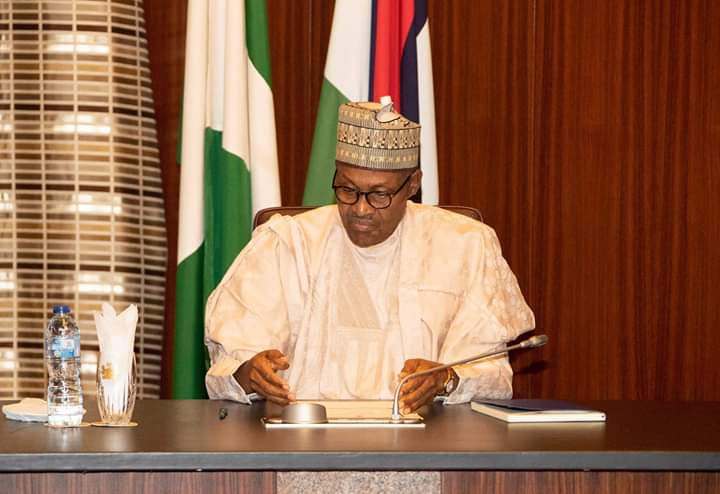 President Muhammadu Buhari has expressed worry over hate speech that is still dominating the social media in the country.
 Confusion ensued at the Bayelsa State House of today, September 30 when irate youths numbering over hundreds stormed the complex shooting sporadically into the air.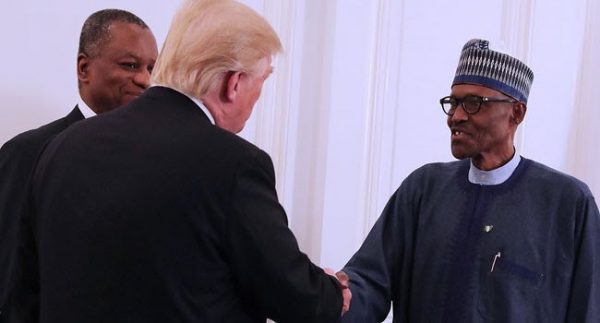
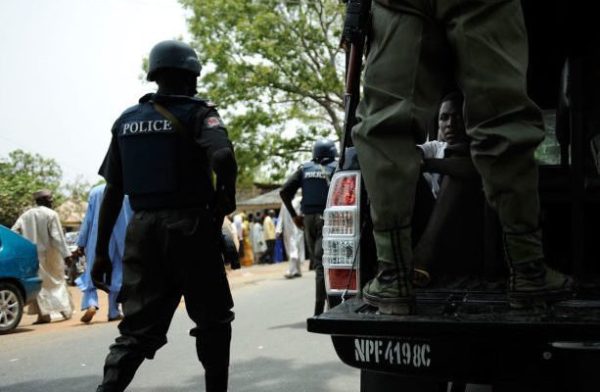 Police detectives from Isheri in Osun State Police Station have raided a factory at the Ikotun area of Lagos where new babies are sold after they were born by mothers who were allegedly tricked into Lagos from various parts of the country. The babies are sold between N300,000 and N500,000 depending on the sex. Boys are sold for N500,000 and girls for N300,000.
Oct 1: The Journey So Far, By Reuben Abati
“When this day in October 1960 was chosen for our Independence, it seemed that we were destined to move with quiet dignity to our place on the world stage. Recent events have changed the scene beyond recognition, so that we found ourselves today being tested to the utmost. We are called upon immediately to show that our claims to responsible government are well-founded, and having been accepted as an independent state, we must at once play an active part in maintaining the peace of the world and in preserving civilization. I promise you, we shall not fail for want of determination. And we come to this task better-equipped than many.”
Hope, determination, readiness to partner with the rest of the world and confidence about the future were key elements in Balewa’s speech. The people were joyous, there was dancing in the streets. But 59 years later, do we still feel the same way? Would Nigerians dance on the streets on the occasion of the anniversary of their independence, one year to the diamond jubilee? Can any Nigerian leader today connect with the people as Balewa did on October 1, 1960? Nigerians had great expectations in 1960, and that was why three years later, when an attempt was made to sign an Anglo-Nigerian Defence Agreement, the people rebelled. They wanted Nigeria to be truly free, and not be tied in any way whatsoever to the apron-strings of the British Empire. That same year, Nigeria became a Republic.
It is often said that Nigeria got its independence on a platter of gold, a reference to the fact that we did not have to organize guerilla warfare against the British as was the case in East and Central Africa, or against apartheid as in South Africa but while that may be true, Nigerian history is full of reports of resistance to British colonial domination from the 19th century exploits of the likes of Ovonramwen Nogbaisi to King Jaja of Opobo, to King Kosoko of Lagos, all through the early 20th century with the protests over water tax in Lagos led by Oba Eshugbayi Eleko (1908), the nationalist press in Lagos, Aba women’s riots (1929), Abeokuta Women’s Revolt (1946), the Enugu coal miners’ strike (1949), the cultural protests by the likes of Hubert Ogunde, the nationalism of Herbert Macaulay and others including Labour Union leader Michael Imoudu, all leading to the various conferences, 1953 -1957. Independence in Nigeria was a product of struggle, no doubt. October 1, 1960 was therefore as much a tribute to the efforts of the then living contemporaries as it was to the valour of heroes past.
When Tafawa Balewa said “we found ourselves today being tested to the utmost”, he probably was referring to the tensions that surfaced even as Nigerian political leaders negotiated the country’s independence. The British had amalgamated not just the Northern and Southern Protectorates and the Lagos colony to form a country called Nigeria, they had brought together more than 400 ethnic nationalities each with its own distinct culture and language or peculiarities or inter-ethnic affinities. And yet out of all these nations, three groups became dominant: the Hausa-Fulani (yet another curious amalgam of ethnicity and language) led by Sir Ahmadu Bello, the Yoruba led by Chief Obafemi Awolowo, and Igbos led by Dr. Nnamdi Azikiwe. In the negotiations, all the groups were united by the idea of independence, but they could not reach a consensus on when and how. By 1957, the minorities were beginning to feel left out. The effect of their protest was the setting up of the Willinks Commission (1957/1958) to address the minority question in Nigeria. Even as Nigeria celebrated independence on October 1, 1960, the foundation on which it sat already had so many cracks: religious, ethnic, geographical and ideological. The British have been accused of laying a weak foundation for the new Nigeria, with their divide and rule colonial administration policy, and the many booby traps they placed on the path of the newly independent nation, but let the point be made, the new leaders who inherited Nigeria from the British and on whose laps fell the mantle of leadership did not really see themselves as Nigerians. They were leaders of their own ethnic groups, doing business, on their people’s behalf, with an enterprise called Nigeria.
I do not intend to write a short summary of Nigerian history. It is rather unfortunate that history was removed from the Nigerian school curriculum for many years only to be returned later as an optional subject. What kind of country plays with its own history, and deliberately grooms a generation of citizens without memory?
Six years after independence, the tensions came to a head, and the country broke out into a civil war. It turned out that Balewa under-estimated the challenge of “being tested to the utmost” which he alluded to on October 1, 1960. Nigeria has not yet recovered from the blow-out that followed, from 1966 – 1970. There are persons who believe and we need not blame them that the Nigerian civil war has not yet ended, instead it has gotten worse over the years, and assumed new forms. But despite the war and the subsequent domination of Nigerian politics and space by the military, Nigeria once upon a time, looked different. The discovery of oil and the oil boom of the 70s turned Nigeria into a centre of growth and development. When the war ended, the Yakubu Gowon administration embarked on a programme of rehabilitation, reconciliation and reconstruction. The effect was far-reaching. Chinua Achebe has written that “There Was A Country.” Indeed, there was a country.
Nigeria was so prosperous at a time that the Naira was as strong if not stronger than the pounds sterling. Nigerians went to London as if they were going from Ikeja to Ibadan. Every weekend, they trooped to London to shop or have a party and returned to Lagos on Monday morning. They didn’t have to travel on any foreign airline. There was a national carrier known as Nigeria Airways. It had a big fleet and boasted of international standards and some of the best pilots and crew in the world. There was even a London office of the Nigeria Airways. Each time Nigerians showed up in London, the shops either shut down or the Nigerian got assigned a special attendant. We were the big spenders in every cosmopolitan centre of the world. Africans looked up to us. And we lived it up. In 1960, Nigeria’s population was about 35 million. Prosperity made Nigerians more fertile. Men acquired more wives and procreated recklessly. Our population figure shot up. Even if we could never conduct an accurate population census, it was obvious however that we were more populous than every other African country.
This wasn’t quite a problem because everything seemed to be going well. The military who had taken over from the civilians embarked on ambitious projects. There was construction everywhere. There was work to be done. I grew up to see a Nigeria that had a thriving manufacturing and construction sector. Every morning, staff buses ferried people to work in the Ikeja and Apapa industrial areas and to and fro the textile industries in Kaduna and other parts of the North. Nigeria moved from an agricultural phase to an industrial and manufacturing phase. There were car assembling plants in the country. Consumer goods flourished. There were super market stores all over the place: Leventis, Kingsway Stores, UAC. Nigeria was a mini-London of sorts and even much better.
We built state of the art hospitals and universities. Ailing persons used to be sent on referral from other parts of the world to the University College Hospital (UCH) in Ibadan because the teaching hospital had on its staff some of the best specialists in the world. The University of Ife (now Obafemi Awolowo University) had the most beautiful campus in Africa. It was a major tourist centre. The zoo at the University of Ibadan was one of the very best in the continent. There was a research laboratory in that same university that was regarded as a leading centre of knowledge. Scholars and students came to Nigeria to study, teach and learn. As an undergraduate, many of my teachers were expatriate scholars: from the United Kingdom, the United States and parts of Asia. Secondary schools also recruited teachers from India, Pakistan and Ghana, who earned their living in Nigeria and enjoyed excellent working conditions.
I saw a Nigeria that placed much premium on education. Secondary schools, even in the rural areas had libraries and good teachers. Education was practically free. The Naira had value then. You could get a university degree with less than N5, 000. I am not talking about Nigeria of the 60s. No, as recently as 1980, the standard of living in Nigeria was high and the cost was cheap. A flight ticket from Lagos to Calabar was as cheap as N50. Students were given rebates on flight tickets and so many other services. All you needed to show was your identity card. It was a great privilege to be a student in Nigeria. Things were so good, standards were so high, foreigners sent their children to school in Nigeria, in the same manner in which Nigerians now send their children to school abroad. University students were pampered. The Nigerian government gave us bursaries and scholarships. This country was so good teachers supported students with every talent and resource at their disposal. At a point, public hospitals dispensed prescription drugs free of charge.
Unemployment was not Nigeria’s problem during the season that I describe. Talent hunters used to storm university campuses to look for bright students. The same with National Youth Service Camps. Many students got jobs even before they enrolled for NYSC. National service was something we all looked forward to. It was a place to get a wife or a job. Nigeria was generally a happy country. Suicide was very rare. Nobody wanted to die. Nigerians travelled abroad but there was no massive brain drain. Travelling abroad was a matter of choice not because Nigeria was hellish. National security was not a problem. People could move about at night, go to the cinema and have fun. There was armed robbery, yes, but kidnapping was uncommon and for a while before the civil war, and a short while after, Nigerians worked hard to live together as one nation.
But everything has since changed. The current generation of Nigerians does not know the Nigeria that I have tried to describe. Nigeria used to be the Dubai of Africa. They don’t know that other Nigeria. In 1963, Nigerians rejected a defence agreement with Britain. In 2019, Nigeria is begging for defence agreements with any country that is willing to offer it. Nigeria once looked down on private schools, accusing owners of mission schools and private schools of compromising standards. Today, those who attended government schools at all levels will not send their own children to the same schools. All their children are either in private schools or somewhere overseas. We were proud of the Nigerian national anthem. Our own children can’t sing that anthem because they don’t know it. Our hospitals have collapsed. No serious member of the Nigerian middle class will patronize Nigerian hospitals except the ailment is mild, but there are many persons in that class who won’t even treat headache or malaria in a Nigerian hospital.
Nigerians once looked up to their leaders, now they look down on them as thieves and opportunists. The discovery, exploration and exploitation of crude oil once brought us so much prosperity, today, the mismanagement of that resource places Nigeria on a road to Venezuela. In the Nigeria that I knew, every civil servant could afford to buy newspapers every morning. Nurses bought a Lada vehicle or a Volkswagen Jetta shortly after leaving Nursing school. Food was in excess supply in the country. Today, Nigeria is the poverty capital of the world. Our population is so large we don’t even know how many we are. I talked about a well-kept zoo at the University of Ibadan. All the animals in that zoo have either been stolen or turned into pepper soup or bush meat for sale. On October 1, 1960, Balewa boasted that “we are better equipped than many.” We certainly can’t say that today.
We once blamed the military for Nigeria’s descent into the lower depths. We organized protests against the military and chased them out of power. But we have not fared better either after 20 years of civilian rule. Our civilian rulers have been very busy giving excuses. They blame others. Those who have tried to make a difference are demonized and blackmailed. My generation looked forward to Independence Day. We wore white and held the Nigerian flag and trooped to the stadium for a march past. Nigerians no longer celebrate Independence Day. In fact, they are afraid any form of celebration will only put more money in the pockets of corrupt state officials. They don’t think there is anything to celebrate. This is why every October 1 must be a day of sober reflection. What happened to us? When will Nigeria rise again and become a giant with the feet of steel?