Former Nigeria military President, Ibrahim Badamosi Babangida has asked Igbo people to remain steadfast in promoting the oneness of Nigeria the same way they are promoting their businesses across the length and breadth of the country.
Speaking to Igbo Delegates Assembly (IDA), from the 19 Northern states and Abuja, who visited him today, September 22, to celebrate his recent 78th birthday, Babangida said: “an indivisible Nigeria is very necessary and we must do everything possible to remain as one family, though we differ in tribe and tongue.
“You should use the same spirit of enterprise to promote peaceful co-existence among Nigerians, in all that you are doing.
“You have done well to keep Nigeria together. The Igbos are known to have the potentials of travelling far and wide, exploring new frontiers and business opportunities.”
He stressed the need for them to ensure that Nigerians continue to feel their positive impact, saying that this is important due to their tenacity in business enterprises which spans the length and breadth of the country and beyond.
“You should continue to allow your positive impacts to be felt among host ethnic nationalities in the country, as you explore business opportunities available.
“Nigerians, Igbos inclusive, should ensure they uphold the ideals of Nigeria’s founding fathers.
The delegation was led by the IDA President, Chief Chikezie Okezie and the Eze Igbo of Minna, Eze Pampas Wahiwe.
Former chairman of the Pensions Reform Task Team, Abdulrasheed Maina, has dragged Reno Omokri, media aide to former President Goodluck Jonathan, to court over allegations of corruption recently made against him in a national newspaper.
In the suit filed before a High Court of the Federal Capital Territory (FCT), Maina is asking the court to award the sum of N4 billion compensation against Omokri for the alleged defamatory publication.
Sued along Omokri was the Vanguard Media Limited publisher of the Vanguard newspaper, wherein the said defamatory publication was made.
Maina, in the suit, prayed the court to declare that the comments contained in Omokri’s right of reply titled, “General Buhari’s Cambridge Certificate is as nonexistent as Louis Odion’s self esteem”, published in the Vanguard newspaper on September 12, 2019 as defamatory and libelous.
The claimant, in the suit filed by his counsel, Edwin Inegedu, wants the court to order the publication of apology, retraction and rebuttal of the libelous materials in the Vanguard newspaper and two other national dailies within seven days.
He prayed for an order of perpetual injunction restraining the defendants from further publishing or disseminating the libelous materials against him.
According to Maina, Omokri, in his right of reply published in the Vanguard classified him as one of the highlights of alleged corruption, which he noted was a libelous publication.
The claimant further averred that the 1st defendant, by his right of reply made the following libelous publication about him.
“Who is super corrupt between Atiku, who is the most investigated politician in Nigeria, without anything being found against him, and a General Buhari, who loaded his cabinet with corruption gold medalist?
“If Mr. Louis Odion says General Buhari has integrity, then I have the following question for him
“Why was Goje’s N25 billion corruption dropped, who owns Ikoyi apartment billions, when will #AishaMBuhari”s ADC be tried and who reinstated and double-promoted Maina?
The claimant averred that Omokri maliciously and in extreme bad faith made the said publication in an adventurous attempt to score a point in his quarrel with one Mr. Louis Ofion.
By that libelous publication, Maina said he was being portrayed as corrupt and unworthy of being entrusted with public funds, that he was a beneficiary of corruption and was corruptly reinstated into the civil service, had no integrity to be reinstated, among others.
He said the libelous materials were false, untrue, baseless and was orchestrated to ridicule, malign and smear his reputation, adding that he was not double promoted by the president or issued with any letter of double promotion.
That he had never been tried and convicted for corruption by any court in Nigeria and further added that the publication had damaged his image, character, reputation and that he had suffered considerable distress and embarrassment and had been put into public scandal, odium and contempt.
No date has been fixed for the hearing of the suit which was filed last Friday.
If there is anything that has endeared Kogi State Governor, Alhaji Yahaya Adoza Bello to the people of Kogi state and beyond, it is his pragmatic leadership disposition in restoring peace and security in the hitherto restive state in the central part of Nigeria. This is even more commendable, considering the increasing wave of insecurity across the country in recent times, with the central region as the hotbed of these vicious circle of violent conflicts, armed robbery, and kidnapping. There is no doubt, that the 44-year-old chartered accountant has brought to bear, an exceptional leadership quality that requires every Nigerian to pay serious attention to without prejudice.
Of course, for some of us who have been diligently following his administration’s footsteps identified unique technique he has deployed in governing the state that has so far witnessed tremendous achievements in the last about four years of his stewardship as governor. It’s noteworthy that while some state governors relinquished some of their responsibilities and ran to Abuja for helps as a result of the increasing cases of insecurity across the country, Governor Yahaya Bello, however, confronted the challenge with grip despite several distractions within the state.
On assumption of office in January 2016, Governor Yahaya Bello identified security as a priority in achieving any meaningful development. He quickly put in place security architecture, ranging from equipping security agents to empowering traditional institution and personally led a team to dislodge perceived criminals’ hideouts across the state.
Governor Bello’s proactive response to security breaches in any part of the state was complemented with his undisputable inclusive leadership style, by giving equal opportunities to all sections of the state. As a matter of fact, this is the first-time such exceptional leadership disposition is exhibited since the creation of the state in 1991.
While a short piece of this nature cannot sufficiently enumerate the Governor’s landmark achievements, it’s however, germane to mention some few of them dotted across the state. These include construction of township roads across the three senatorial districts; revitalizing the state health care centers (including renovation of state’s school of nursing and midwifery); building from scratch, the largest rice processing plant in the whole of northern Nigeria; revival of the dearth rural water supply; building and equipping of army operational forward base and outposts; construction of about three hundred classrooms for schools; building and renovation of several religious worship centers; construction and renovation of several state government buildings, including traditional rulers’ palaces amongst other numerous achievements.
There is no doubt that Governor Yahaya Adoza Bello’s exceptional leadership has won him not only local commendations but also international recognition. Just recently, President Buhari was reported to have enjoined other governors with security challenges to learn from Kogi state on how the state was able to draw the curtain against the criminals and achieved peace and security in the state. It’s also on record that several international organizations including the United Nations have recognized Yahaya Bello and his government to the extent of inviting the state to the 72nd UN General Assembly to make a presentation. On several occasions, the National Hajj Commission and some Civil Society organizations have commended and awarded Kogi State Hajj commission for its excellent performance in the management of the commission.
Furthermore, it is gratifying to note that, Kogi state which was classified by the U.S government among the high risk states up to 2015, was at a time during new direction government of Yahaya Bello, hailed as the 2nd most peaceful states in the country. Indeed, these and among others several examples are clear testimonies of the giant strides of the state government in the last three and half years.
However, no human is perfect and Bello is not an exception as he has personally acknowledged to do better if given another opportunity. Of course, there are some decisions or actions he might have taken that may be considered wrong. Indeed, that is his human side and that is where every sincere and committed stakeholder of the state is expected to render supports by advising him and praying to God to guide him, not by derogating and abusive statements on his personality. After all, government is not a one-man business. As such, when a government failed, it is attributed to the entire people that made up that government. His ability to identify and appoint some good hands in his government no doubt has helped him to record the landmark achievements we celebrate today. By and large, when compared to the situation of the state before he assumed office in 2016, he has done excellently well and surpassed all his predecessors that had governed the state.
Without mincing words, as Kogites heading for another important election in the next few weeks from now, we must, with the utmost sense of responsibility ensure that, a man who has mustered the courage to weather the storm and navigated the hazardous political terrain to restore peace and security, launched infrastructural revolution across the state and exhibited exceptional leadership quality cum political will, be compensated by voting him en-masse to continue his developmental strides, in not only repositioning the state to an enviable height but also solidify the bond he has erected among all divides in the state which will, in turn, guarantee a more united, prosperous Kogi State for generation to come.
May Almighty Allah guide, protect and elevate him to do more good things in our dear state and Nigeria at large. Amin.
Abdulrahman is a concerned Kogi citizen wrote in from Okene. He can be reached via: abufudeil50@gmail.com
The Central Bank of Nigeria Football Club has won the 2019 All Financial Institutions Football Club (AFIFC) competition, beating the Unity Bank Football Club by a lone goal at the game played at the Abakaliki Township Stadium. The only goal of the match was scored by Lazarus Ijale, via a spot kick in the 63rd minute of the game.
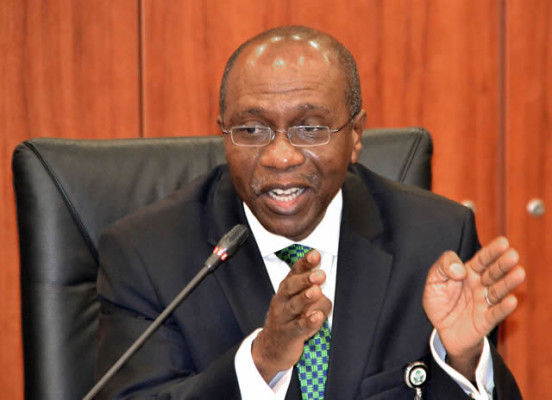
Speaking at the event, which was graced by ex-super Eagles star, Victor Ikpeba, the CBN Governor, Godwin Emefiele, commended all the teams that participated in the competition, and stressed that the tournament was one of the Bank’s foremost and oldest Corporate Social Responsibility (CSR) functions.
Emefiele, was represented by the Deputy Director in the Corporate Communications Department of the Bank and Head of the Public Relations Division, Mrs. Veronica Aqua, noted that the Bank remained committed to contributing to the promotion and development of football in the country, in addition to its contributions in golf and tennis.
He said that the AFIFC had become a very significant tournament among financial institutions in Nigeria, particularly as it created an opportunity for social interaction among financial institutions and regulators as well as facilitated the promotion of harmony in Nigeria’s financial system.
The CBN Governor assured that the Bank would sustain its sponsorship of the event, even as he urged financial institutions to continue to uphold the spirit of sportsmanship.
He thanked the Ebonyi State Government for making the stadium available, and the Nigeria Football Federation (NFF) for mobilizing financial institutions as well as ensuring a hitch-free competition.
He further acknowledged the contribution of the media and all the football fans for their excellent conduct during the competition.
Also speaking, Victor Ikpeba lauded the CBN for leading the way in promoting the game of football and other sporting activities as part of its Corporate Social Responsibility.
Ikpeba stressed the importance of sponsorship to the development of sports in the country, noting that the government or a single corporate entity could not do it all. He also urged other corporate bodies to emulate the CBN in supporting sports for the overall good of the society.
Meanwhile, in the third-place play-off that preceded the final match, last year’s losing finalist, the Securities and Exchange Commission (SEC) Football Club of Abuja piped Amju Unique Microfinance Bank, Delta State to win the bronze medal.
Governor of the Central Bank of Nigeria (CBN), Godwin Emefiele has explained that the newly introduced cashless policy is aimed at positioning Nigerian as a safe and credible destination for financial transaction across the world.
He added that the new policy has been strategically timed in view of the visit, Monday, September 23, of the members of the Inter-Governmental Action Group against Money Laundering in West Africa (GIABA) to assess the country’s anti-money laundry and CFT regime.
“GIABA will be in Nigeria to assess the rate at which Nigeria has embraced anti-money laundry and CFT regime.
“It is important that we display and show to them that Nigeria is indeed in conformity with their practices as enshrined in their anti-money laundry and CFA laws.
“If we do not do what we are doing today, if they pass us negative, even your so-called cards that you carry abroad, you will not be able to use them.
“It is in our own best interest that we are seen to be working in line with best global practices so that we can have a comfortable and convenient life in future.”
The CBN Governor, who however, sympathized with Nigerians for the inconvenience caused by the introduction of the policy, said that “currency management cost have continued to increase year-on-year at an average annual growth rate of 33%. Notwithstanding, electronic transactions have increased within the economy. We have provided alternative channels and people have embraced it.
“Today, SMEs have various options and channels available to them for collecting legitimate payment for goods and services like bank transfers, using the POS or mobile cash, USSD codes and QR codes.
“Indeed, it is in the public interest to promote an efficient payment system via the cashless policy which helps to reduce the punitive cost of cash processing often passed on to bank customers by our Deposit Money Banks.
“Fees on excess cash withdrawal are not new. They have been there since 2012. We need to actually embrace best practices by actually saying that we should go cashless in Nigeria.”
Emefiele spoke at the end of the Monetary Policy Committee (MPC) meeting in Abuja when he was asked of his reaction to the pushback from Nigerians over the return of charges on deposits and withdrawals beyond certain threshold.
Kogi State Commissioner for Environment and Natural Resources, Sanusi Yahaya, has said that over 150 communities have been submerged following flood in nine Local Government Areas of the State.
Sanusi Yahaya, who spoke to newsmen today, September 21 after a stakeholders meeting at the state emergency operation centre in Lokoja, the state capital,said that the centre had been activated as the state is already experiencing flood emergency.
The commissioner, who is also the State Coordinator of the Emergency Operation Centre (EOC), said that out of the nine local government areas located along the banks of River Niger and Benue, seven of them are severely affected.
He said the local governments that are severely affected are Ibaji, Kogi Koton Karfe, Lokoja, Ofu, Ajaokuta, Omala and Idah, saying over 90 per cent of Ibaji communities have been submerged.
”Particularly, majority of communities at Ibaji are under water, and many households have been affected and displaced.
“As we speak, the water level has risen very high to about 10.60m on Saturday in Lokoja from the report of the Nigerian Hydrological Services Agency (NIHSA).
“In the last few days, many communities, settlements have been displaced as a result of flooding.”
He said that over 20 camps had been opened by the government to accommodate flood victims, which were spread across the nine affected LGAs.
Yahaya advised residents of flood-prone areas and affected communities to relocate to safer places or move to the nearest camps opened by the state and local governments, to avoid loss of lives and property.
He said that with the activation of the state emergency centre, the state was collaborating with all the relevant stakeholders to ensure timely and appropriate responses.
The Bayelsa State Police Command has arrested 15 persons over theft of N.3 billion worth of jewelry and property belonging to former first lady, Dame Patience Jonathan.
The accused arraigned before a Yenagoa High Court are also facing charges bordering on attempt to kill and rob Mrs. Jonathan.
The charge sheet indicated that the 15 accused persons are facing 17 charges bordering on conspiracy to commit murder, conspiracy to commit Felony with armed robbery, malicious injury to property, conspiracy to commit a felony with stealing and burglary.
The charge sheet listed the accused as 40 year old Golden Vivian, 45 year old Erama Deborah, 20 year old Precious Kingsley, 28 year old Vincent Olabiyi, 25 Ebuka Cosmos, 29 year old Williams Alamo, 32 year old Tamunokuro Abaku and 42 and Boma Oba.
Others are 42 year old Emmanuel Aginwa, 33 year old Emeka Benson, 30 year old Tamunosiki Achese Frisberesima, 28 year old Wariboko Salome, 35 year old Sahabi Lima, 20 year old Reginald Sunday and 39 and John Dashe.
Count one of the charges signed by S. A. Ofoegbu, O.C. Legal, State Criminal Investigation Department, Yenagoa, Bayelsa State, accused the arraigned persons of conspiring to commit murder, an offence punishable under section 252 of the Criminal Code Law cap. C14 laws of Bayelsa State.
The charge reads in part: All the accused and some at large, sometime in the month of June, 2019 at Otuoke community in Ogbia local government within the Ogbia Judicial Division of the state high court did conspire to kill Her Excellency, Dame Patience Jonathan, former first lady, therefore committed an offence.
The Federal Government has finally filed seven counts of treasonable felony and money laundering against the publisher of SaharaReporters and one of the Presidential contestants in the February 23 election in Nigeria, Omoyele Sowore.
Sowore, who initiated #RevolutionNow protest a couple of weeks ago, was charged today, September 20 along with Olawale Bakare, also known as Mandate.
The charges were signed on behalf of the Attorney-General of the Federation and Minister of Justice, Abubakar Malami (SAN), by Aminu Alilu, a Chief State Counsel in the Department of Public Prosecutions of the Federation, the Federal Ministry of Justice.
The charges were filed a day before the expiration of the detention order of the Federal High Court in Abuja permitting the Department of State Service to keep the activist for 45 days. The detention order elapses on September 21.
In the charges instituted against the defendants, the prosecution accused Sowore and his co-defendant of committing conspiracy to commit treasonable felony in breach of section 516 of the Criminal Code Act by allegedly staging “a revolution campaign on September 5, 2019 aimed at removing the President and Commander-in-Chief of the Armed Forces of the Federal Republic of Nigeria.”
The prosecution also accused them of committing the actual offence of reasonable felony in breach of section, 4(1)(c) of the Criminal Code Act, by using the platform of Coalition for Revolution, in August 2019 in Abuja, Lagos and other parts of Nigeria, to stage the #RevolutionNow protest allegedly aimed at removing the President.
It also accused Sowore of cybercrime offences in violation of section 24(1)(b) of the Cybercrimes (Prohibition, Prevention) Act, by “knowingly” sending “messages by means of press interview granted on Arise Television network which you knew to be false for the purpose of causing insult, enmity, hatred and ill-will on the person of the President of the Federal Republic of Nigeria.”
It also accused Sowore of money laundering offences in breach of section 15(1) of the Money Laundering (Prohibition) Act, 2011.
Celebrated blogger and socialite, Linda Ikeji, celebrated her 39th birthday yesterday, September 19 in Dubai with friends and family even as a controversial journalist, Kemi Olunloyo said Linda was telling lie about her real age, arguing that she is 43 not 39.
Olunloyo, who wished Linda Ikeji a happy birthday, challenged the blogger to dispute him.
“Happy 43rd birthday to Linda Ikeji. Fans, Wikipedia age is 39th birthday,” she wrote.
The mother of one, who recently celebrated her son’s first birthday, took to her Instagram page to announce this is going to be her last year in her thirties and also to show appreciation to God for her journey and her many blessings.
“My last year as a 30 something year old but I am so grateful for how far God has brought me. For all the blessings I don’t take for granted; for my son, parents, siblings, great friends, and loyal fans, everyone who has followed my journey and to you reading this. Happy birthday to me! Thank you so much for all the well wishes. God bless you and yours,” she wrote.
The Central Bank of Nigeria’s Monetary Policy Committee (MPC) has expressed concern that persistence of policy uncertainties, financial vulnerabilities and rising geo-political tensions have been threatening economic medium-term outlook.
It said that such threat is evidenced by the sustained weakening of global growth across regions, amplified by the persisting trade tensions between the US and its major trading partners, rising corporate and public debt levels.
The Monetary Police Committee, in a communiqué after its monthly meeting today, September 20, said however that the output for Nigeria’s domestic economy in 2019 was predicted by the IMF to peak at 2.1 per cent while World Bank put it at 2.2 per cent even as CBN put it at 2.27 per cent.
“These forecasts remain underpinned by expectations of favourable oil prices which would lead to higher external reserves, stable exchange rate, moderate inflationary pressure as government increases capital expenditure, including enhanced flow of credit to the private sector to stimulate investment, sustained CBN interventions in the real sector, effective implementation of the Economic Recovery Growth Plan (ERGP), build-up of fiscal buffers, as well as improved security in the country.”
The full report is reproduced here:
Monetary Policy Committee (MPC) met on the 19thand 20thofSeptember2019,in the light of softening global growth andweaker-than-anticipateddomestic output recovery. The Committee evaluated developments in the global and domestic economiesandexamined the outlook for the rest of the year. It noted the build-up of vulnerabilities in major Advanced Economies and itsspill-over to the Emerging Markets and Developing Economies (EMDEs). Nine (9) out of the eleven members of the Committee were present at the meeting.
Global Economic Developments
Output growth across major advanced economies remained subdued, confronted by legacy headwinds, including the subsistingtradewar between the US and China, regional hostilities in the Middle-East, rising debt levels, growing uncertainties around BREXITand increasing political tensions between the US and Iran, including fragilities in the financial markets. In the EMDEs, output growth remainedbroadly mixed with some economies performing stronger than others.
Consequently, the International Monetary Fund (IMF) revised its projected global growth forecast to 3.2 per cent in 2019 from 3.6 per cent.
Price developmentscontinued to soften acrossthe majoradvanced and EMDEs as aggregate demand continually weaken, resulting in softening monetary policy by major central banks to address downward trending prices and to strengthen aggregate demand.
Domestic Economic Developments
Data from the National Bureau of Statistics (NBS) showed that real Gross Domestic Product (GDP) grew by 1.94 per cent in the second quarter of 2019, compared with 2.10and 1.50 per cent in the preceding and corresponding quarters, respectively.This mediocre growth, we believe, is consistent with global trends of dampening output growth and was driven mainly by the oil sector, which grew by 5.15 per cent while the non-oil sector grew by 1.64 per cent. At 57.7 and 58.0 index points, the Manufacturing and Non-Manufacturing Purchasing Managers’ Indices (PMI) grew moderately for the 30thand 29th consecutive months, respectively, in September 2019.Staff projections indicate that real GDP inQ3 and Q4 2019 would average 2.11 and 2.34 per cent, respectively, driven primarily by the non-oil sector. This optimism in growth prospects is anchored on the new momentum of rising credit to the private sector.However, the headwinds to the growth prospects remainhigh unemployment, risingpublic debt and heightening insecurity across the country.
The Committeenoted the continued moderation in headline inflation (year-on-year) to 11.02 per cent in August 2019from 11.08 per cent in July 2019, driven by decline in the food and core components to 13.17 and 8.68 per cent in August 2019from 13.39 and 8.80 per cent in July 2019, respectively. The development in the food and core components of inflation was partly due to improved agricultural production in the current harvest season,supported by the Bank’s sustained intervention in the agricultural sector as well as the continued stability in the foreign exchange market. The Committee, however, noted the upward pressure imposed on prices due to rising insecurity in the food producing areas of the country, increased liquidity injection from FAAC disbursements and late budget cycles. It also highlighted the imperative to address the economy’s infrastructural deficits, such as power supply, upgrade of transport and production infrastructure as a means of reducing cost-push inflation.
The Committee observed that broad money supply (M3) grew by5.65 per cent in August 2019, compared with the level at end-December 2018,annualized to8.48 per cent, butremaining below the2019 indicative benchmark of 16.08 per cent. The growth was largely drivenby the increase inNet Domestic Credit (NDC), which grew by 24.36 per cent in August 2019from the level at end-December 2018. The growth in NDC was accounted for by the significant increase in credit to Government, which grew by 94.33 per cent while credit to the private sector grew by 9.36 per cent in August 2019.The Committee urged the Management of the Bank to explore new initiatives to further improve lending to the private sector, while calling on Government to adopt other ways of funding its operations outside the banking sector.
In the review period, money market rates oscillated within the standing facilities corridor due to prevailing liquidity conditions in the banking system. The monthly weighted average Inter-bank Call and Open Buyback (OBB) ratesincreasedto 8.00 and 13.37 per cent in August 2019 from6.52 and 11.01 per cent in July 2019, respectively.
The Committee observed the continued bearish trend in the equities market, while noting the increased activity in the sovereign bonds market, reflecting global trends and investor preference for fixed income securities.In the light of this development, the All-Share Index (ASI) declined by 11.62 per cent to 27,779.00 index points on September13, 2019, from 31,430.50 index points at end-December 2018. Market Capitalization (MC),however, grew by 15.37 per cent to N13.62 trillion on September 13, 2019, from N11.72 trillion at end-December 2018.This increase in market capitalisation was attributed to the listing of 2.75 billion ordinary shares by Airtel Africa in July 2019.
The MPC noted the improved performance and resilience of the banking sector, evidenced by the continued moderation in the ratio of Non-Performing Loans (NPLs) from 11.2 to 9.4 per centin May and August2019, respectively. While noting that this was still above the prudential benchmark of 5.0 per cent, the Committee called on the Management of the Bank to drive this ratio below the prudential benchmark.
Outlook
The persistence of policy uncertainties,financial vulnerabilities and rising geo-political tensions continued to cloud the medium-term outlook. This is evidenced by the sustainedweakeningof global growth across regions, amplified by the persisting trade tensions between the US and its major trading partners, rising corporate and public debt levels.
On the domestic economy, output growth in 2019 is expected to peak at 2.1 per cent (IMF), 2.2 per cent (World Bank) and 2.27 per cent (CBN). These forecastsremain underpinned by expectations offavourable oil priceswhich would lead to higher external reserves, stable exchange rate, moderate inflationary pressure as government increases capital expenditure, including enhanced flow of credit to the private sector to stimulateinvestment, sustained CBN interventions in the real sector, effective implementation of the Economic Recovery Growth Plan (ERGP), build-up of fiscal buffers, as well as improved security in the country.
Committee’s Considerations
The Committee noted the decline inoutput growth in the second quarter of 2019, partly attributable to the delay in implementation of the 2019 budget. It however, observed that this was an improvement over the corresponding quarter of 2018. In addition, it noted the broad slowdown across key economies and the response of major central banks to revise their policy rates downwards.
On price developments, the Committee commended the progressive moderation in consumer prices and urged the Bank to sustain its intervention in the real sector of the economy to reduce the output gap.
The MPC noted the improvements in the financial soundness indicators and urged the Management of the Bank to sustain its regulatory surveillance to ensure continued financial system stability. The Committee particularly noted the growth in the size of industry loans from N15.4 trillion in June to N16.23 trillion in September 2019. On the recent directives to deposit money banks to increase theirLoan-to-Deposit Ratio (LDR), the Committee underscored the need to grow consumer, mortgage and corporate credit to drive aggregate demand and ensure a reduction in unemployment and increase in output growth. Consequently, the Committee urged the Management of the Bank to fast-track the development of the credit scoring system, to promote increased. In addition, the Committee commended the introduction of the Global Standing Instruction (GSI) initiative aimed at de-risking credit in the industry by committing bank customers to repay their loans to banks. The MPC further noted the increased supply of micro credit to key Micro Small and Medium Enterprises (MSMEs) and efforts through the Nigeria Incentive-Based Risk Sharing System for Agricultural Lending (NIRSAL) Microfinance Bank to extend the reach of its credit facilities across the country. The MPC however, observed that the growth in credit to the private sector remained significantly low, relative to the absorptive capacity of the economy.
The MPC further underscored the linkage between high unemployment and heightened insecurity, emphasizing the critical need for urgent steps towards more jobsand wealth creation in the country.As an interim solution, the Committee called on Government at all levels to ratchet up public works programmes aimed at easing the threat of rising unemployment in the country. This, the Committee argued, would be achieved through efficiency in public spending. The MPC also noted the Government’s current drive to increase Value Added Tax (VAT), adding that this will improve fiscal revenue to support expenditure and reduce the budget deficit as well as Government borrowing when implemented. The Committee, however, noted that this was too little to close the gap in Government finances. Consequently, the MPC called on the Government to, as a matter of urgency, adopt what it termed a BIG BANG approach towards building fiscal buffers by purposefully freeing-up redundant public assets through an efficient, effective and transparentprivatization process. This would raise significant revenue for Government and resuscitate the redundant assets to generate employment and contribute effectively to national economic growth. The MPC noted the unstable oil prices, its implications onaccretion to external reserves and its persistent call on the Government to build fiscal buffers.Consequently, the Committee called on the National Assembly to exercise restraint from increasing the oil price budget benchmark to avoid budgetary overruns at the implementation stage of the budget. Projections from the oil futures market, indicate that oil prices will remain tight around the budget oil price benchmark in the medium term.
The Committee’s Decision
In its considerations regarding the policy options to adopt, the MPC as usual, felt compelled to review the options of whether to tighten, hold or loosen.
The Committee noted the positive moderation in inflation, though slowly from 11.08 per cent in July to 11.02 per cent in August 2019. Given that this was still above the target range of 6-9 per cent, and considering the pressure on reserve accretion caused by the relatively weak crude oil price, the MPC felt the imperative to tighten. On the contrary, the Committee was of the view that doing so in the midst of a fragile growth outlook would increase the cost of credit, and further contract investment and constrain output growth.
On loosening, the Committee felt that this would result in increased system liquidity and hence, heighten inflationary tendencies in the economy. In particular, the MPC was of the view that loosening would drive growth in consumer credit but without a corresponding adjustment in real sector output. The Committee was also convinced that increased liquidity and interest rate moderation would result in exchange rate pressures as money supply rises.
As regards the option to hold, the MPC opined that the option requires a clear understanding of the quantum and timing of liquidity injections into the economy, before deciding on possible adjustments to the stance of monetary policy. The Committee was also of the opinion that retaining the current position of policy offers pathways to appraising the effects of the suit of heterodox monetary policy to encourage credit delivery to the real sector, especially in the light of the subsisting implementation of the Loan-to-Deposit Ratio policy.
In view of the foregoing, the Committee decided by a unanimous vote to retain the Monetary Policy Rate (MPR) at 13.5 per cent and to hold all other policy parameters constant.
In summary, the MPC voted to:
I. Retain the MPR at 13.5 per cent;
II. Retain the asymmetric corridor of +200/-500 basis points around the MPR;
We use cookies on our website to give you the most relevant experience by remembering your preferences and repeat visits. By clicking “Accept”, you consent to the use of ALL the cookies.
This website uses cookies to improve your experience while you navigate through the website. Out of these, the cookies that are categorized as necessary are stored on your browser as they are essential for the working of basic functionalities of the website. We also use third-party cookies that help us analyze and understand how you use this website. These cookies will be stored in your browser only with your consent. You also have the option to opt-out of these cookies. But opting out of some of these cookies may affect your browsing experience.
Necessary cookies are absolutely essential for the website to function properly. This category only includes cookies that ensures basic functionalities and security features of the website. These cookies do not store any personal information.
Any cookies that may not be particularly necessary for the website to function and is used specifically to collect user personal data via analytics, ads, other embedded contents are termed as non-necessary cookies. It is mandatory to procure user consent prior to running these cookies on your website.




 The Bayelsa State Police Command has arrested 15 persons over theft of N.3 billion worth of jewelry and property belonging to former first lady, Dame Patience Jonathan.
 Celebrated blogger and socialite, Linda Ikeji, celebrated her 39th birthday yesterday, September 19 in Dubai with friends and family even as a controversial journalist, Kemi Olunloyo said Linda was telling lie about her real age, arguing that she is 43 not 39.

Reasons Why Gov Yahaya Bello Should Be Re-Elected, By Abdulrahman Yakubu
If there is anything that has endeared Kogi State Governor, Alhaji Yahaya Adoza Bello to the people of Kogi state and beyond, it is his pragmatic leadership disposition in restoring peace and security in the hitherto restive state in the central part of Nigeria. This is even more commendable, considering the increasing wave of insecurity across the country in recent times, with the central region as the hotbed of these vicious circle of violent conflicts, armed robbery, and kidnapping. There is no doubt, that the 44-year-old chartered accountant has brought to bear, an exceptional leadership quality that requires every Nigerian to pay serious attention to without prejudice.
Of course, for some of us who have been diligently following his administration’s footsteps identified unique technique he has deployed in governing the state that has so far witnessed tremendous achievements in the last about four years of his stewardship as governor. It’s noteworthy that while some state governors relinquished some of their responsibilities and ran to Abuja for helps as a result of the increasing cases of insecurity across the country, Governor Yahaya Bello, however, confronted the challenge with grip despite several distractions within the state.
On assumption of office in January 2016, Governor Yahaya Bello identified security as a priority in achieving any meaningful development. He quickly put in place security architecture, ranging from equipping security agents to empowering traditional institution and personally led a team to dislodge perceived criminals’ hideouts across the state.
Governor Bello’s proactive response to security breaches in any part of the state was complemented with his undisputable inclusive leadership style, by giving equal opportunities to all sections of the state. As a matter of fact, this is the first-time such exceptional leadership disposition is exhibited since the creation of the state in 1991.
While a short piece of this nature cannot sufficiently enumerate the Governor’s landmark achievements, it’s however, germane to mention some few of them dotted across the state. These include construction of township roads across the three senatorial districts; revitalizing the state health care centers (including renovation of state’s school of nursing and midwifery); building from scratch, the largest rice processing plant in the whole of northern Nigeria; revival of the dearth rural water supply; building and equipping of army operational forward base and outposts; construction of about three hundred classrooms for schools; building and renovation of several religious worship centers; construction and renovation of several state government buildings, including traditional rulers’ palaces amongst other numerous achievements.
There is no doubt that Governor Yahaya Adoza Bello’s exceptional leadership has won him not only local commendations but also international recognition. Just recently, President Buhari was reported to have enjoined other governors with security challenges to learn from Kogi state on how the state was able to draw the curtain against the criminals and achieved peace and security in the state. It’s also on record that several international organizations including the United Nations have recognized Yahaya Bello and his government to the extent of inviting the state to the 72nd UN General Assembly to make a presentation. On several occasions, the National Hajj Commission and some Civil Society organizations have commended and awarded Kogi State Hajj commission for its excellent performance in the management of the commission.
Furthermore, it is gratifying to note that, Kogi state which was classified by the U.S government among the high risk states up to 2015, was at a time during new direction government of Yahaya Bello, hailed as the 2nd most peaceful states in the country. Indeed, these and among others several examples are clear testimonies of the giant strides of the state government in the last three and half years.
However, no human is perfect and Bello is not an exception as he has personally acknowledged to do better if given another opportunity. Of course, there are some decisions or actions he might have taken that may be considered wrong. Indeed, that is his human side and that is where every sincere and committed stakeholder of the state is expected to render supports by advising him and praying to God to guide him, not by derogating and abusive statements on his personality. After all, government is not a one-man business. As such, when a government failed, it is attributed to the entire people that made up that government. His ability to identify and appoint some good hands in his government no doubt has helped him to record the landmark achievements we celebrate today. By and large, when compared to the situation of the state before he assumed office in 2016, he has done excellently well and surpassed all his predecessors that had governed the state.
Without mincing words, as Kogites heading for another important election in the next few weeks from now, we must, with the utmost sense of responsibility ensure that, a man who has mustered the courage to weather the storm and navigated the hazardous political terrain to restore peace and security, launched infrastructural revolution across the state and exhibited exceptional leadership quality cum political will, be compensated by voting him en-masse to continue his developmental strides, in not only repositioning the state to an enviable height but also solidify the bond he has erected among all divides in the state which will, in turn, guarantee a more united, prosperous Kogi State for generation to come.
May Almighty Allah guide, protect and elevate him to do more good things in our dear state and Nigeria at large. Amin.