The Presidency had launch a strong protest over press reports of the UN rapporteur on violence in Nigeria, which it said scratched the surface while glossing over the main issues just for the purpose of blaming the government of President Muhammadu Buhari.
A statement today, September 20, by the senior special assistant to the President on media and publicity, Malam Garba Shehu said that while the Presidency agreed that the violence in Nigeria, or in any country, is a major concern with a rippling effect, “we are disappointed that the rapporteur was silent on intra-group violence.
“In Benue, Taraba, Cross River States and many parts of the country, most of the casualties result from intra-group, inter-group and community violence. Many of the displaced persons across the nation are also victims of these conflicts.
“There is absolutely no doubt that violence between farmers and herders, which has a long history in our country spiked in recent years but the effectiveness with which the Federal and State authorities responded made a big difference. Calm has virtually returned to all parts affected by the peculiar violence.
“Therefore, we are saddened that the rapporteur did not address intra-ethnic conflicts and cattle rustling as key elements in herder/farmer conflicts. In Benue State for instance, the Tiv/Jukun conflict and kidnapping is a major problem. We are glad that local communities have fully realized this, and scholars with a strong motivation for peace and stability in their communities and the nation are trying to address the problem.
“Ignoring the salient issues will not help to solve the problem. If you are going to address violence and the general insecurity in Nigeria, incidents everywhere should be part of the narrative. Not addressing this might make it easier to blame the Federal Government, but national peace and security is community based and a collective responsibility.
“Arrests, prosecution and locking people up are only small parts of National Security and Safety strategy.
“In Benue State as cited earlier, the work of a US scholar of Tiv extraction, Professor Dick Adzenge deserves special mention for attempting to get aspects of violence addressed. The expectation that arresting and putting people in prison is the only credible response to violence is a mistake. Professor Adzenge and a few others like him are working with young people, traditional rulers and communities to seek peaceful resolution of conflicts and encourage peaceful co-existence.
“The sort of effort we are talking about here has so far revealed interesting facts about the problem in Benue State that cannot be ignored.
“And it is the sort of support we seek from the UN rapporteur in reporting, not the report that scratches the surface of the subject then ends up blaming the government under the able leadership of President Muhammadu Buhari. The UN representative needs to be truthful and even-handed in her assignment.”
President Muhammadu Buhari has said that it was not just enough to lead Nigeria into the Africa Continental Trade Agreement, but that his government wants quality products for trading between Nigeria and participating countries.
The President, who said that he was aware of abuse of trade and commercial activities both in Nigeria and between Nigeria and other African countries, said that substandard and illegal items were being smuggled through the land borders to Nigeria, leading to the temporary closure of such borders.
Speaking to a delegation from the Nigerian Association for Chamber of Commerce, Industry Mines and Agriculture (NACCIMA), Federation of West African Chambers of Commerce and Industry (FEWACCI) and representatives of the Organized Private Sector (OPS) who visited him today, September 20, at the Presidential Villa, Abuja, Buhari said that his government had insisted that “the African Continental Free Trade Agreement (AfCFTA) must not only promote free trade, but legal trade of quality made in Africa goods and services.”
The President stressed that his administration will continue to solicit the support of the organized private sector, both in Nigeria and across West Africa, to bring an end to the dumping of substandard items even as he called on the association.
He asked members of the association to continue their positive and patriotic contribution towards achieving a free trade area that employs Africans to produce quality made in Africa products.
“We will soon finalize the National Action Committee on the implementation of the African Continental Free Trade Area. Your Association is a member of this committee.
“I expect you to continue your positive and patriotic contribution to support us in achieving a free trade area that employs Africans to produce quality made in Africa products.”
In her remarks, the President FEWACCI, NACCIMA and OPS, Hajiya Saratu Aliyu, commended the President on his recent decision to constitute a new economic team to steer the Nigerian economy on the path of sustainable growth.
“NACCIMA, FEWACCI and indeed the OPS are full of hope that a new era is on the horizon with the calibre of persons on the team which reassures us at the OPS that Government is ready to turn around the story of Nigeria.”
Hajiya Saratu Aliyu also hailed significant accomplishments recorded in all sectors of the economy, including but not limited to reduced corruption, foreign exchange stability, bottom of the pyramid programmes, increased ease of doing business, increased capital expenditures, among others.
The president of NACCIMA appealed for the kind intervention of President Buhari in the provision of property within Abuja for the location of FEWACCI headquarters.
She briefed the President on the 21-point NACCIMA programme, tagged ‘‘Unleash the Giant’’, adding that theassociation intends to engage the Federal Government on 16 of those stated points with the goal of ensuring business growth and socioeconomic advancement through public and private sector collaboration.
The Kingdom of Saudi Arabia has joined the International Coalition for the Safety and Protection of Maritime Navigation and aimed at guaranteeing the Safety of Maritime Corridors.
According to the official source of the Ministry of Defense of the Kingdom, the operations areas will cover the Strait of Hormuz, Bab al-Mandab, the Sea of Oman and the Arabian Gulf.
A statement by the Saudi Press Agency today, September 20, said that Kingdom’s joining of the International Coalition body will aim at supporting the regional and international efforts in order to deter and counter threats to international navigation and international trade.
It is also aimed at to guaranteeing international energy security and continuation of energy supplies to the international economy and to contribute to maintaining international peace and security.
The International Coalition aims at protecting commercial vessels by providing safe navigation in order to guarantee the freedom of sea navigation and international trade, and to protect the interests of the coalition countries in terms of enhancing security and safety of commercial vessels that sail through these corridors.
Presidential candidate of the opposition Peoples Democratic Party (PDP), Alhaji Atiku Abubakar has pleaded with his supporters to keep the hope alive in the face of the judicial process to reclaim his mandate.
In a personal letter, issued today, September 20, Atiku said: “even if there is little or nothing you can do to ensure that justice is done in Nigeria, just believe that it will happen. Let us never underestimate the effect of our belief in Nigeria.”
According to him, it is for patriotic reasons, that he is pursuing the judicial route to ensure that the votes of Nigerians count and are counted.
The PDP flag bearer said that those who do not want this as Nigeria’s reality, will use every trick in the book to undermine, discourage, misinform and mislead, “but with God’s help and the support of Nigerians, we will ensure that Nigeria makes a course correction away from tyranny and towards democracy.
“We must return to being Africa’s bastion of democracy, where the rights to Freedom of Speech and Freedom after the Speech, are guaranteed. We must stand together to pursue this just cause all the way, so that our judiciary are not afraid to do their jobs and have to be wary of blackmail, intimidation, and victimisation.”
He asked all Nigerians to continue their support for the recourse to constitutional order via the courts even as reminded everyone “that we will all die and give account of our lives to our Creator.”
The House of Representatives has directed Central Bank of Nigeria (CBN) to suspend the implementation of the cashless policy on deposits and withdrawals above N500,000 by individuals and N3 million for corporate organizations.
The resolution followed the adoption of a motion sponsored by the chairman, House Committee on Media and Public Affairs, Benjamin Kalu, titled “Need to suspend the implementation of the cashless policy on deposits by the Central Bank of Nigeria, CBN.”
The House mandated the Committee on Banking and Currency to interface with the CBN to ascertain the propriety, relevance and the actual need for the implementation of that aspect of the cashless policy at this time considering the prevailing economic situation of the country.
The Committee is except to report back to the House within four weeks for further legislative action.
While leading debate on the motion, Hon Kalu said that the Central Bank of Nigeria (CBN) introduced a policy on cash-based transactions which imposed a cash handling charge on daily cash withdrawals that exceed N1,500,000 for individuals and $18,000,000 for corporate bodies in 2012.
He said that he was “aware that the policy on cash-based transactions (withdrawals) in banks, was aimed at reducing and not eliminating the amount of physical cash (coins and notes) circulating in the economy, and encouraging more electronic-based transactions (payments for goods, services, transfers, etc)”
He noted that the cash policy was introduced for a number of key reasons including the need to drive development and modernization of our payment system in line with Nigeria’ 5 vision 2020 goal of being amongst the top 20 economies by the year 2020, to reduce the cost of banking services (including cost of credit) and drive financial inclusion by providing more efficient transaction options and greater reach, inter alia.
The interviews granted by a former governor of Edo State and National Chair of the All Progressives Congress (APC), Comrade Adams Oshiomhole, to select Television stations, on Friday, September 6, 2019, were historic because they enabled him respond to sundry questions and to counter the series of complex narratives woven round the Edo House of Assembly crisis by the other party.
Oshiomhole’s counter-narratives were downright frank, expansive – and he threw down the gauntlet, which Obaseki has yet to take up. He brought clarity to his actions. His grouse about Obaseki and his governance style was weighty and certainly, the weight of evidence is on Oshiomohle’s side. His claims against Obaseki and the supporting evidence have yet to be rebutted by the governor.
Obaseki’s silence is not golden and his dodgy directive to administration officials not to respond to Oshiomnhole’s claims doesn’t equate virtue in silence. It is clearly indicative of his inability to fault Oshiomhole’s claims and counter narratives to the earlier narrative spun by him and his officials that political leaders in the state wanted him to share the state’s funds to them.
That was the scurrilous narrative marketed within and outside the state. It could only have taken a perceptive politician and marathoner to hold back for long before electing to dismantle the self-imposed culture of silence or to shed the self-restraining garb. The specific challenge to Obaseki by Oshiomhole couldn’t be simpler: name the political leaders pressurising you to share the state’s funds to them.
Media professionals had attempted to insinuate Oshiomhole into the subject of the allegation, but in a riposte, he had clarified that Obaseki did not refer to a political leader; therefore, his generic reference to political leaders could not be construed to refer to him (Oshiomhole) as a leader. Oshiomhole also countered the narrative that he was controlling the governor, asserting that he nominated only a commissioner to the cabinet the governor dissolved in the wake of the crisis over the nocturnal and controversial inauguration of the state legislature.
Interestingly, Oshiomhole clarified that Frank Okiye, purportedly elected Speaker of the House, was not validly elected to the position. Pressure continues to mount on Obaseki to issue a fresh proclamation for the proper inauguration of the State Assembly. The governor chose a desperate course, after failing to produce many of his unpopular aspirants, as candidates in the 2019 national and state legislative elections.
Those who secured the tickets of the party through direct primary election were the popular aspirants that served in the administration of Oshiomhole with Obaseki and whom he related with as Oshiomhole’s boys. Oshiomhole had kept mum for so long. Many had said his quietude was not in pari-materia with his existential, essential activism and public space disposition. The expressive Iyamho-born politician, who deployed the singularity of his oratorical prowess in driving the electioneering of Obaseki in 2016, bided his time unlike Obaseki whose reactions had always been impulsively aggravating.
Left to Obaseki, he would circumvent leaders and members of the APC political family in the scheme of things. That was the philosophy that undergirded his quotidian disposition and perception of APC’s leaders in the state as being interested only in having government funds shared to them.
The quixotic demonisation of the APC leaders was Obaseki’s most ludicrous faux pas. How could the governor, who is the leader of the party in the state, fail so abysmally to understand the imperative of managing successes and expectations of members of his political family to consolidate on the structure? Before his current predilection, Obaseki’s original plot was to retire a good number of the old political warhorses and build his own structure of budding politicians. And, that was his howler: having inherited them, it behoves him to harvest their electoral assets and their nuisance values, going forward.
Nothing could have been simpler than that. Oshiomhole had already cut out Obaseki’s job for him by harnessing the potentialities of the politics and praxis of gladiators whom he galvanized behind his governorship candidature in 2016. But the governor has complicated an otherwise simple relationship because of self-interest. In fact, Obaseki had created the impression that he was not interested in politics but he is now so enamoured of governorship power, a disposition that is tantamount to the Chichidodo bird in Ayi Kwei Armah’s “The Beautiful Ones Are Not Yet Born”. The Chichidodo bird hates feces, but loves the maggots therein.
Obaseki has been deploying the governorship power in its vast flourish to unsettle the APC family and raise the political temperature in the state. After his gambit to supplant the political structure in the APC collapsed, he is pathetically progressing in egregious blunders. To be sure, Obaseki had his own plans and calculations cleverly scripted and laid-out for implementation. But what he did not factor into his plan was the emergence of Oshiomhole as national chair of the APC. Had that not happened, Obaseki’s plan was to rout Oshiomhole and his political structure.
Before the 2019 general election, Obaseki had, at the level of governance, desecrated the philosophy of continuity on which Oshiomhole premised and rationalised his choice as a successor. He had curiously upended projects and programmes that he inherited from the Oshiomhole administration in which he played a strategic part as Chair of the Economic and Strategy Team. Two critical legacy projects: the five-star Central Hospital in Benin and the Edo Storm Water project- were unconscionably abandoned.
Blacklisting these two projects, among others, gifted opposition parties in the state grounds to continue to vilify Oshiomhole and disparage his administration. It was Obaseki’s plot to turn the people against Oshiomhole so that he could create a new popularity momentum around himself. Whereas, what he needed to do was to facilitate the completion of the outstanding 25 percent component of the hospital project; he never did so. Secondly, whereas, what he needed to do to maximize the functionality of the Storm Water Project was to de-silt the drainages so that flood water can flow through them seamlessly, he never did. Whereas, that is the essence of continuity in government, Obaseki scorned the philosophy in furtherance of his blinkered agenda.
Oshiomhole addressed these and other ancillary issues in his media interviews. First he said there was nothing personal about his disagreement with Obaseki as they remain friends – Comrade and Goddy – as the duo address each other. But the issues remain Obaseki’s constitutional infractions, lack of fidelity to the philosophy of continuity of Oshiomhole administration’s legacy projects and failure to constitute boards in order to empower party members and leaders across the 192 wards in the state – about a year to the end of the administration to validate the APC and the governor’s re-election.
These claims are very weighty and define the contention in the party? The weight and precision of the claims were such that Obaseki could not logically and reasonably discount them through the instrumentality of “a further and better affidavit”. By heaping the coal of fire on Obaseki’s head, Oshiomhole had perceptibly redefined the shape, texture, context and content of the complex politicking and political narratives around the executive-induced APC crisis in Edo.
Obaseki’s decision to ignore Oshiomhole’s claims had largely reinforced the truth in them; otherwise, the governor could have addressed the claims so that the Edo people would be able to make their inferences. But obviously overwhelmed by the magnitude of Oshiomhole’s claims, Obaseki would appear to have lost the little gravitas he hitherto had and has now continued to accentuate his clumsiness through a rash of discourteous acts towards Oshiomhole at public functions.
Some pictures have been trending on the social media showing how during exchanges of pleasantries, Obaseki would sit somewhat comfortably in his chair to respond to Oshiomhole’s greetings. In another of such pictures, where he acted the same way, his condescension was made more glaring by his Deputy, Philip Shaibu, who stood up right beside him, to pump hands with Oshiomhole. Such disrespect only serves to confirm that all is not well between Comrade and Goddy. This is the essential weight of the matter.
The federal government and governors of the 36 states of the federation, including the Federal Capital Territory Administration have finally agreed to create a National Livestock Transformation Plan (NLTP) and not RUGA which President Muhammadu Buhari earlier suspended as a result of the controversies it generated.
The governors and federal government under the aegis of National Economic Council (NEC), said that the National Livestock Transformation Plan will be optional and will also include as a member, the federal ministry of agriculture and natural resources.
The decision was taken today, September 19, after the chairman of the sub-committee on herders/farmers crisis and governor of Ebonyi State, David Umahi briefed NEC at its monthly meeting at the Presidential Villa, Abuja. The meeting was presided over by Vice President Yemi Osinbanjo.
“NEC adopted the National Livestock Transformation Plan (NLTP) January 18, 2019 and it is a creation of National Economic Council, of course, in liaison with the federal government.
“States will determine whether or not to participate. Federal government did not impose this plan. Participation remains voluntary. What we are talking about is National Livestock Transformation Plan (NLTP) is a product of NEC in liaison with federal government.”
The committee said that the National Livestock Transformation Plan is not targeted only on cows but a holistic strategy to address animal husbandry.
“The plan has six pillars through which it aims to transform the livestock production system in Nigeria along market oriented value chain while ensuring an atmosphere of peace and justice.
“The six key pillars include: economic develop (investment), conflict resolution, justice and peace, humanitarian relief and early recovery (to IDPs), human capital development and cross-cutting issues such as gender, youth, research and information and strategic communication.”
The committee proposed implementation guidelines to guide federal government and states.
“N100 billion budget was proposed to support the project. Federal government is to contribute 80 percent in grant to support the project while states will contribute land, project implementation structure, personnel and 20 percent cost of the project.
“Council resolved today that there is need to look at the trans-human West African protocol. You cannot allow such movement of cattle without registration and monitoring; Council emphasized the need to continue to establish that the National Livestock Transformation Plan (NLTP) is a creation of NEC and state governors and of course minister of agriculture is also a member of this committee. The minister of interior is also a member, and it is entirely distinct from Ruga.”
The governor of Edo State, Godwin Obaseki has painted a sordid picture of how Nigerian National Petroleum Corporation (NNPC) lost a total of22.64 million barrel of crude oil valued at US Dollar 1.35 billion to oil thieves in Niger Delta area of the country.
He gave the rundown of the losses, at the National Economic Council (NEC) meeting today, September 19, at the Presidential Villa, Abuja as 9.2 million barrels at Nembe Creek Trunk Line (NCTL); 8.6 million barrels at Trans Niger Pipeline (TNP); 3.96 million barrels at Trans and 877,000 barrels at Trans Escravos Pipeline (TSEP). Forcados Pipeline (TFP) He attributed the thefts to the absence of governance structure for the pipeline such that no one is held accountable whenever there is a breach on the lines, slow and inadequate prosecution of oil thieves, despite numerous arrests and seizures, absence of petroleum products filling stations in most of its oil producing Communities that make them resort to illegal bunkering and refineries.
He also identified huge internal and external markets of stolen crude oil which include Ghana as well as some neighboring countries as part of the factors facilitating and encouraging theft of the crude oil.
The governor, who headed a 13 member Ad-Hoc Committee, recommended to the Council the need to restructure the maintenance of all pipelines as a way of tackling the perpetrators of oil theft and creating a legal framework that will ensure every criminal is duly prosecuted, imprisoned and all assets confiscated. The committee also recommended the setting up of Special Courts to try offenders, set-up of Legal Task Force to coordinate the prosecution of arrested offenders as well as train special judges to handle cases of oil theft and that NNPC should engage the National Intelligence Agency (NIA) to identify markets for the stolen products. “Governors of the oil producing states to step up actions to develop their communities with their 13% derivation allocation as well as implement programmes that will be impactful to make life easy for the people. They should also create employment opportunities for the youths in these regions. “Propose a funding arrangement to be jointly funded by the Federal, State Governments and oil companies.” NEC then resolved that the committee’s recommendations would be presented to the President who is also the Minister of Petroleum for the final decision and implementation even as Vice President Yemi Osnibajo, who chaired the Council was mandated to asked NNPC to make a presentation to the Council on the state of PMS and smuggling across the borders.
The Inspector General of Police (IGP), Mohammed Adamu has said that the issue of dialogue and amnesty for the bandits and cattle rustlers operating in parts of the North cannot be ruled out.
“When we are talking about peace initiative, there are a lot of things that we take into consideration. You give out something to get something. And this peace initiative has not started with the bandits in the North Western part of this country. If you remember, some years back, we were having issues in the Niger Delta and those issues kinetic actions could not solve the problem until amnesty and peace initiative came up and what we had had in Niger Delta had gone.
“So, I think part of strategy to deal with challenges in terms of either security or war, there is peaceful negotiation too. So it is not that you are a bandit and on the course of the banditry you committed crime you must be punished when there is peace initiative going on. If you refuse to accept the peace initiative of course you have to face the consequences.”
The Inspector General of Police spoke to news men today, September 19 after a security meeting with President Muhammadu Buhari at the Presidential Villa, Abuja.
He said that as part of the peace initiative and the dialogues had been organized security summit at the Northwestern zone where his officers sat with the traditional rulers and all the governors and the leadership of Miyetti Allah to identify some of the challenges that are fuelling kidnapping and banditry.
“Those challenges were looked into to the extent that the bandits and kidnappers have decided to release their captives and surrender their arms. That has contributed and also those that have refused to accept the peace initiative, we have been able to identify their camps, especially on Abuja Kaduna road and along Birnin Gwari, Niger State axis and we went to the camps of these kidnappers and we dislodged some of the camps. In fact, in the security briefing, we gave specific numbers of the camps that we have destroyed and the casualties the bandits recorded as a result of that. So that has also made them to surrender and some of them relocated and we are following those that have relocated to know the new location and also engage them.”
Mohammed Adamu said that recently, there have been series of peace initiatives, especially the Tiv/Jukun crisis, adding that the federal government came up with initiatives by bringing the leadership of the two states and their traditional rulers.
“We have been asked to support that initiative and see to it that dialogue succeeds and that there is peace between the Jukun and Tivs.”
He said that President Buhari insisted that the security people bring about zero crime society in the whole of the country, adding that he also charged them to do more than what they have been doing across the country.
“We have also been charged to increase security along the pipelines to make sure that crude oil theft is stopped completely because the loss that the country is facing in that area is not tolerated. “So, we have changed to increase our security activities in that direction to make sure that crude oil theft is stopped completely.
Kingdom of Saudi Arabia has called on international community to take drastic action against the perpetrators of the September 14 drone attack on the crude oil facilities in the Kingdom.
In a statement today, September 19, the Kingdom expressed appreciation for the positions taken by the international community that have condemned and denounced this act.
“The kingdom calls upon the International community to assume its responsibility in condemning those that stand behind this act, and to take a firm and clear position against this reckless behavior that threatens the global economy.”
It promised that as the investigations are ongoing, the Kingdom will invite UN and International experts to view the situation on the ground and to participate in the investigations.
“The Kingdom will take the appropriate measures based on the results of the investigation, to ensure its security and stability. The Kingdom affirms that it has the capability and resolve to defend its land and people, and to forcefully respond to these aggressions.”
It recalled what it called “an unprecedented act of aggression and sabotage on petroleum facilities in the Kingdom that are vital for global energy supplies which were subjected to an attack, resulting in suspension of approximately 50 percent of Saudi Aramco’s production.
The Kingdom said that initial investigations have indicated that weapons used in the attack were Iranian weapons, adding that Investigations are still ongoing to determine the source of attack.
“The Kingdom condemns this egregious crime, which threatens international peace and security, and affirms that primary target of this attack is global energy supplies, as this attack is in line with the previous attacks against Saudi Aramco pumping stations using Iranian weapons.”
We use cookies on our website to give you the most relevant experience by remembering your preferences and repeat visits. By clicking “Accept”, you consent to the use of ALL the cookies.
This website uses cookies to improve your experience while you navigate through the website. Out of these, the cookies that are categorized as necessary are stored on your browser as they are essential for the working of basic functionalities of the website. We also use third-party cookies that help us analyze and understand how you use this website. These cookies will be stored in your browser only with your consent. You also have the option to opt-out of these cookies. But opting out of some of these cookies may affect your browsing experience.
Necessary cookies are absolutely essential for the website to function properly. This category only includes cookies that ensures basic functionalities and security features of the website. These cookies do not store any personal information.
Any cookies that may not be particularly necessary for the website to function and is used specifically to collect user personal data via analytics, ads, other embedded contents are termed as non-necessary cookies. It is mandatory to procure user consent prior to running these cookies on your website.



 President Muhammadu Buhari has said that it was not just enough to lead Nigeria into the Africa Continental Trade Agreement, but that his government wants quality products for trading between Nigeria and participating countries.
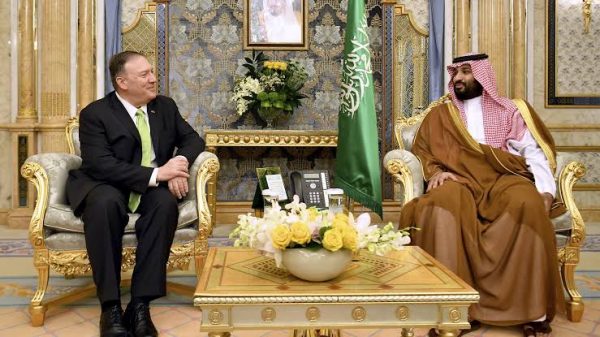 The Kingdom of Saudi Arabia has joined the International Coalition for the Safety and Protection of Maritime Navigation and aimed at guaranteeing the Safety of Maritime Corridors.
 The House of Representatives has directed Central Bank of Nigeria (CBN) to suspend the implementation of the cashless policy on deposits and withdrawals above N500,000 by individuals and N3 million for corporate organizations.
 The interviews granted by a former governor of Edo State and National Chair of the All Progressives Congress (APC), Comrade Adams Oshiomhole, to select Television stations, on Friday, September 6, 2019, were historic because they enabled him respond to sundry questions and to counter the series of complex narratives woven round the Edo House of Assembly crisis by the other party.
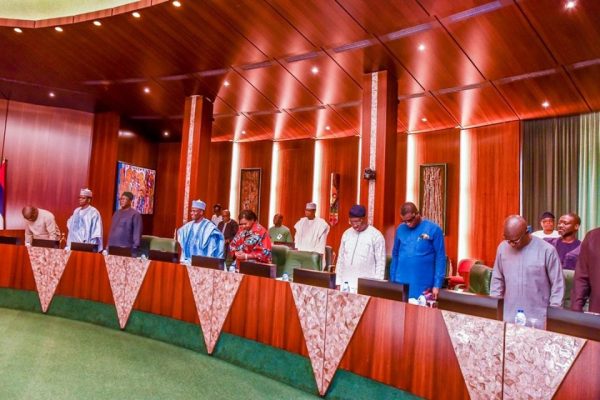
 The governor of Edo State, Godwin Obaseki has painted a sordid picture of how Nigerian National Petroleum Corporation (NNPC) lost a total of 22.64 million barrel of crude oil valued at US Dollar 1.35 billion to oil thieves in Niger Delta area of the country.
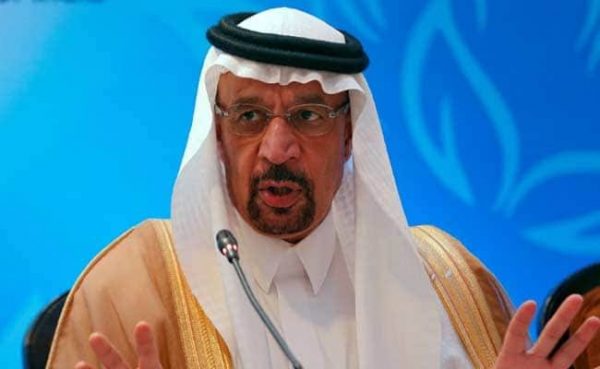 Kingdom of Saudi Arabia has called on international community to take drastic action against the perpetrators of the September 14 drone attack on the crude oil facilities in the Kingdom.
