Home Blog Page 972

Kwara House Of Assembly Wants Ex Senate President’s Land In Ilorin Revoked

The Kwara State House of Assembly has called on the state Governor, Abdulrahman Abdulrasaq to revoke a land, popularly known as Ïle Arugbo” and declare as void, the acquisition, appropriation and conversion of residence of the late Dr. Olusola Saraki.

The property with Survey No KWG927 and LAN/G-2071 is situated on Ilofa Road, GRA, Ilorin.

The Assembly made the call after considering the report of its Committee on Land, Housing and Urban Development on the property. The report was presented by the chairman of the committee, Mr. Felix Awodiji (APC-Ifelodun)

The Speaker, Danladi Yakubu-Salihu, who read the resolution of the Assembly, said that the property belongs to the state government and should be revoked.

The resolution also called for revocation of the land for development of the state and use for the purpose it was originally meant.

News Agency of Nigeria recalls that the Assembly made a similar call on July 23 to revoke government chalet sold to the former Senate President, Dr. Bukola Saraki, in GRA in llorin.

Buhari Was Not In Japan For Buying And Selling, Presidency Reminds PDP

Femi Adesina

The Presidency has hit back at the Peoples Democratic Party (PDP) which tagged President Muhammadu Buhari’s trip to Japan as a poor and disgraceful outing, reminding the party that the President was not in that country for buying and selling.

Responding to a statement by the PDP, after Buhari returned from Japan where he attended the 7th Tokyo International Conference on African Development (TICAD7), that the President’s trip was a fruitless one, special adviser to the President on media and publicity, Femi Adesina said: “Wadata House must now be Hammer House of Horror, and anybody operating from there simply talks gibberish. Did they think it was a buying and selling session?”

Femi Adesina said that on his Twitter handle: “in PDP’s hallucinations, TICAD7 was not a success for Nigeria, since PMB came back with only ‘promissory notes’.”

PDP had said in a statement immediately President Buhari returned: “it is lamentable that while President Buhari and his party, the All Progressives Congress (APC) are reducing our nation by celebrating a mere pledge of $300,000 (N108 million) from the Japanese Prime Minister and a promissory note for 50 million euros from an EU Commissioner, his Ghanaian counterpart, Nana Akufo-Ado had sealed a deal with automobile giant, Toyota, to immediately establish a Toyota and Suzuki manufacturing plant in Ghana with a determined timeline of August 2020 for production.

“The multinational had also signed a deal to establish a similar plant in neighboring Ivory Coast with a Memorandum of Understanding to that effect already signed last Thursday.

“It is instructive to note that Toyota announced that it preferred to cite the plant in Ghana because of the favourable economic climate prevailing in the country; a climate, which has taken flight from Nigeria under President Buhari and worsened since the rigging of the presidential election.

“It is saddening that because of President Buhari, our nation, which, under the PDP had excelled to become one of the world’s fastest growing economies and a hub for Foreign Direct Investments, is now descending into a pariah and beggarly nation with no hope in sight.”

ICPC Discovers Lady Judge Who Opened N870 Million Account With Name Of Her Maid

Mrs. Margaret Igbeta.

The Independent Corrupt Practices and Other Related Offences Commission (ICPC) has discovered N840 million traced to a retired President of the Benue State Customary Court of Appeal, Mrs. Margaret Igbeta.

The anti-graft agency, has therefore asked a federal high court in Abuja, in an ex parte motion, to order the interim forfeiture of the said amount. It said that the order would prevent Igbeta from accessing the money alleged to have been obtained fraudulently in the course of her official duties.

Mrs. Igbeta was accused of operating a proxy fixed deposit account in the name of her maid, Theodora Atsu, with Ecobank Plc, where she accumulated N870,321,492.15 between 2008 and 2019.

She was said to have opened the account with her passport and the name of Atsu on March 5 2008, with an initial deposit of N8 million.

She subsequently made several other deposits, including N123,745, 925.57 and N5 million, in the months of March and May 2008.

The ICPC said that the money was far above her legitimate earnings both as a judge and the president of the customary court of appeal within the period that the account was operated.

Nigerians Launch Reprisal Attacks On South Africa’s Shoprite In Lagos

Nigerians have started reprisal attacks on South African establishment in Nigeria against the backdrop of the attacks and killing of Nigerians by the citizens of South Africa in that country.

Report reaching us indicated that Shoprite mall, a big South African business concern situated at Osapa in Lekki area of Lagos was the target of destruction today, September 3, by unidentified Nigerians.

It was not however clear the extent of the destruction and whether anyone was hurt in the reprisal attack.

Details later.

Killing Of Nigerians In South Africa Absolutely Unacceptable, Unconscionable – Osinbajo

Vice President, Prof. Yemi Osinbajo

Nigeria’s Vice President, Professor Yemi Osinbajo has described the resumption of attacks and killing of Nigerians by South Africans as absolutely and unconscionable.

Answering reporters’ questions in Kano, today, September 3 said that the recent attacks are condemnable.
“It is very sad and very unfortunate that the lives and livelihoods of Nigerians living in South Africa are once again being destroyed with such wantonness and with such carelessness and recklessness.
“It is unfortunate because Nigeria and Nigerians invested a great deal in the pulling down of apartheid. Besides, these acts of bigotry are entirely contrary to the very ideals that all the great South African leaders, including the present President fought for, and for which many gave their lives.
“Mr President has already spoken about this; and obviously we are very concerned and certainly intend to take this up with the authorities in South Africa in order to ensure that this sort of thing does not repeat itself. This is absolutely unacceptable and unconscionable.”

Nigeria To Deploy Security Operatives To South Africa – Foreing Affairs  Minister

Minister of Foreign Affairs, Geoffrey Onyeama has said that Nigeria will soon deploy its security operatives to South Africa to take part in controlling and stopping the indiscriminate attacks and killing of Nigerians and looting of their properties in that country.
The minister, who was answering questions from newsmen after a private audience with President Muhammadu Buhari today, September 3 at the presidential Villa, Abuja said: “we have put forward to the South African government what we think will make a big difference. One of it is with regard to compensation for those who have suffered loss and most importantly, a security proposal that we believe will safeguard the security of Nigerians in the future.
“We are hoping to see the possibility of sending some security agents, deploying them initially in the Nigerian High commission to work closely with the South African police force. We believe that would be a very important process to address and preempt this kind of attacks and possibly for them to also be embedded within the police force of south Africa. So we will have some certain number of Nigeria security people trying to work with the South African police force.”
Onyeama pleaded with Nigerians not to embark on reprisal attacks of South Africans in Nigeria, saying that two wrongs cannot make a right.
“I think in terms of revenge on those kind of attack is not what we are looking forward to. The South African government has assured us that they are doing everything possible to address the situation, that they are equally exasperated by the whole event.
“We believe that with that goodwill, we may be able to work together to put in place these mechanisms that would make a difference.
He said that the special Presidential envoys sent to that country by President Muhammadu Buhari will be leaving for South African will address two key issues: the compensation payment and what security mechanism should be put in place to make sure that these kind of attacks do not recur.
“We need to have a viable mechanism in place. Like I have said, one of the possibilities that we are proposing is to have some Nigerian security operatives working with the South African police and attached to the Nigerian High Commission in south Africa.”

Killing Of Nigerians In South Africa: Buhari Angry, Queries Envoy, Sends Special Envoy

President Muhammadu Buhari has expressed anger and “deep concern,” over the reported attacks and killing of Nigerian citizens and property in South Africa since August 29 this year and has ordered that the country’s High Commissioner to Nigeria be queried.

The directive for the query was issued by the President to the Minister of Foreign Affairs, Geoffrey Onyeama.

According to a statement today,  September 3, by a presidential spokesman, Femi Adesina, the minister was instructed by the President  to summon the South African High Commissioner to Nigeria and get a brief on the situation.

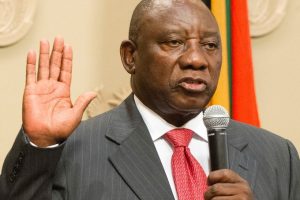
President Buhari who expressed Nigeria’s displeasure over the treatment of her citizens, promptly sent a Special Envoy to convey to President Cyril Ramaphosa his concerns and also interact with his South African counterpart on the situation.

Members of the Special Envoy, whose identities were not made known,  is expected to arrive in Pretoria latest Thursday, September 5.

Buhari wanted a firm assurance of the safety of the lives and property of Nigerians in that country.

Saudi Arabian Ambassador Announces Annual Scholarships To 424 Nigerians

Ambassador of the Kingdom of Saudi Arabia to Nigeria, Adnan Ibn Mahmoud Bostaji has announced an annual scholarships to 424 Nigerians into any university in the kingdom.
Ambassador Adnan Bostaji, who spoke today, September 3 at the Free and compulsory education programme in Kano, pronounced: “In this occasion, I have the pleasure to announce that the Government of the Kingdom of Saudi Arabia offers Four Hundred and Twenty-Four (424) university scholarship slots to Nigerian students every year, from different states of the federation and in various academic fields, for undergraduate and graduate students.”
The Ambassador commended the Kano State Government’s initiative of re-modelling the traditional Almajiri education system and congratulated it “for this great work.”
He described the conference as necessary and important as it will have a positive impact, not only on the people of Kano State, also on all the people of Nigeria.
“It will help in putting an end to the negative behavior that comes from youth in the society because of lack of education.”
The conference on the Free and Compulsory Education program to the completion of High School, was organized by the state Governor, Dr. Abdullahi Umar Ganduje.

Issues Of Islamic Banking In Nigeria, By Suleman A, Afikpo

Islamic Banking is predominantly a banking system that is based on the principles of profit and loss sharing, and significantly the prohibition of the collection and payment of interest. It is a true partnership between the bank and its customers where risks and profits are shared on mutual agreement. The principal means of Islamic finance are based on trading, so banks and financial institutions will trade in shari’a-compliant commodities with the money deposited by customers, sharing the risks and the profits between them. In a nutshell, Islamic banks gain profit from the buying and selling of approved goods and services. These profits are deemed to be a reward for the risks the bank is taking. They make profits from utilizing some shari’a compliant banking products and financing services at their disposal.

Islamic banking in Nigeria dates back to 1991. The enactment of the Banks and Other Financial Institutions Decree that recognizes banks based on profit and loss sharing opened the window for investors to start applying for licences. By 1993 applications from investors for Islamic banking licence in Nigeria were granted. From 1996, Habib Bank Plc and some other banks opened a non‐interest banking window, offering a limited number of Shari’a‐compliant products. Due to the country’s lack of regulatory framework to that effect, the initiative was tactically put to halt and the experience did not register any significant success or growth. In January 2011, the regulatory Framework and supervision of Non-interest banking guidelines were finally released by the Central bank of Nigeria, CBN. the then Governor of CBN – Sanusi Lamido Sanusi, state that the regulatory guideline is modeled after the success story of the industry in Malaysia.

The licensing of Jaiz bank plc in 2011, to operate full-fledge Islamic banking system, with numerous Islamic window operators, cleared the way for other future non-interest banking operatives to follow, e.g., Taj Bank Plc and so on. Relatively few in number, these Non-Interest Financial Institutions (NIFI) have successfully placed Nigeria on the global spot light, as Africa’s fastest growing consumer and corporate banking destination. With the current global visibility of Nigeria in the Islamic banking, in addition to the speedy success stories it is recording in Takaful and Sukuk – Islamic Bond, the future projection for Nigeria as regional hub for Islamic Finance in Africa is foreseeable.

Nigeria has the largest Muslim population in sub-Saharan Africa, with about half of its 200 million population ascribed members of the Islamic faith. It has numerous prospects as it concerns Islamic Banking and finance. But these prospects are marred by some irregularities that need urgent redress for best practices and professionalism in the industry. Some of the challenges brought to lime light in this article are:

Islamic banking and finance principles, terminologies and their operational products are such that you need to be an expert to get used to. The poor knowledge of these terms and uses are causing misunderstandings to both the supposed custodians and among non-Muslims. These terms and products ought to be made simpler or better still explained from point of familiarity. The result is that the growing interest is still not yielding expected dividend. Prospective customers simply stay away because they found the terms too difficult to learn. To melt down the terminologies into simpler meaning or translated into local dialects could be a way out.

Lack of awareness is the current state of affair. Nigeria populace has not been made to understand the difference between Islamic banks and their conventional equal. Particularly, the Islamic banks in Nigeria are not doing enough to sensitize the eventual customers or address the lack of basic products knowledge. The most frequent complaints about Jaiz banks for example are rigidity and traditionalism. high level of awareness from the banking institutions, and concerned government agencies are imperative.

There is vacuity in Islamic banking scholarship. Finding Islamic scholars knowledgeable in both Islamic and conventional banking modus operandi are lacking in Nigeria, which places severe constraints on the regulatory Shariah‐compliance machinery. With the introduction of Islamic banking system in Nigeria, there are no much efforts to train specialized Islamic scholars in the act of banking and finance or Islamic accounting versatility. The Islamic Banks should float some grants for willing students and researchers to embark on pedagogical studies to enable future development and informed regulatory decisions of the institution. Per contra, Islamic scholars should seize the opportunity by engaging in self upgrade and improve their human capacity for developmental adequacy.

In a conservative Islamic society like Nigeria, where every appointment opportunities follow a traditional institutions’ endorsement.’ Irrespective of the technicalities involved in the banking sector, the Muslim religious leaders will select their cronies and loyalists as reward for loyalty instead of appointing or employing qualified scholars. This has affected other Islamic institutions in Nigeria, causing stagnation, unprofessionalism and unemployment. The same traditional institutions are extending their grip on Islamic banking and finance sectors, appointing or recommending un-technical professionals for highly technical capacity positions. The skills and technicalities needed to regulate and supervise Islamic financial institutions in Nigeria are lacking. Its adverse consequences may hinder the growth and progress of the nascent financial institution in future. Nonetheless, independent Islamic scholars should constitute regulatory bodies that would independently supervise the activities and operations of these institutions and expose those who are caught in sharp practices in the name of Islamic banks, TakafulSukuk or even Halal products.

Islamic banking in Nigeria is completely reliant on the resultant experience of Malaysia. Such dependency may not be in favour of the country at the long run. Believing whatever works for the Malaysians works for Nigeria might be a wrong assumption. The two countries may have climatic semblance, but the cultural orientation and behaviourism are in some ways antithetical. Islamic banking in Nigeria will always be subject to the effect of their economic environment. Yes it may be a launching pad mechanism; to moderate the overly contested banking system in the country. Nigeria needs to start thinking beyond reliance and invest in large scale researches, if they believe Islamic banking and finance has come to stay. Presently, there is no evidence of any form of indigenous research to that effect. It goes beyond to identify that no Nigeria tertiary institution offers Islamic banking and finance specialized graduate degree. Any effort towards independence, gives credence to the country and confidence to the investors. It won’t be a bad idea for Nigeria to contribute in the development of products for the Islamic banking.

The instruments used by the Central Bank of Nigeria (CBN) for monetary policy operations and interbank market is interest based. There are no equivalent government securities or money market instruments designed for Shariah compliant products yet. These could hinder Islamic banks from investing their excess liquidity. Also lack of a Deposit Insurance Scheme for the protection of depositors of Islamic banks, are some of the needs for future competitive advantages of the Islamic banking sector that need to be resolved. It is then the duty of Islamic banks and other regulatory bodies to mount pressure on the federal government through CBN for remedy.

In few occasions of liquidity crises, the Central Bank of Nigeria provided intervention loans to conventional banks. Such loans are disbursed on interest basis and cannot legitimately benefit Islamic banks. Proactively recommending, should a situation of this nature occur in future, it is imperative the CBN mechanizes an interest‐free framework for such assistance.

Islamic financial institution begets accounting and auditing standards pertinent to it. The balance‐sheet structure of Islamic banking is unique. At present there is challenge of inadequate competent personnel to that regard. The need for these institutions to train accountants and auditors in the application of these standards are necessary. Collaborating and Partnering with organizations like ‘Accounting and Auditing Organisation for Islamic Financial Institutions (AAOIFI)’ on home grown capacity building and technical development is recommended.

Finally, there is no comprehensive legal framework developed to cater for arbitration of conflicts associated with Islamic financial contracts, products or individuals in Nigeria. A lack that needs some Islamic technical scholarship to fix, for in no distant time there will be need for arbitrations and jurisdiction of specialization, of which the shari’a court of appeal may not be suited to handle. On this juncture to recommend for the establishment of a specialist court for Islamic financial arbitration may not be wholly overboard. Alternatively, to create a branch of shari’a compliant section from the existing commercial legal system of Nigeria may suffice.

In conclusion, while the experience is unfolding and more opportunities witnessed, the few issues enumerated need urgent remedial amendments in this early phase of the Islamic institutions. In a highly competitive nation like Nigeria as far as banking and finance are concerned, reliance on sentiment as a marketing strategy is wrong indicator against sustainability of Islamic banking. Jaiz bank for instance, is systematically marketed on religious sentiment. It could be contested that 80% of the current success of the bank’s achievements are based on religiosity. Religious belief and commitment could be a driving force for the early success of any Islamic bank. However, phase of stagnation usually ushers in and when not properly managed could lead to negative balance sheet.

Ex Minister Dambazau Thanks President Buhari For Opportunity To Serve

The immediate past Minister of Interior, retired General Abdulrahman Damzau has expressed gratitude to President Muhammadu Buhari for the opportunity he afforded him to serve the country as minister.

At a grand reception held in his honour by the new minister, Ogbeni Rauf Aregbesola, in Abuja, General Dambadau said that he was able to learn a lot as a minister, apart from his training as military officer.

He dedicated his successes while in office to God, who elevated him to the peak of his career, both in the military and in academics, pledging his continued determination to serve the people.

This was even as his host, Ogbeni Aregbesola acknowledged that Damzau performed creditably well, particularly in the area of repositioning the services under the Ministry.

He said praised the former minister for providing the Ministry with a befitting office complex for the Minister, adding that all the reforms and policies that Dambazau initiated while in office were to ensure the provision of internal security for Nigerians.

Aregbesola said that the ministry would collaborate with relevant security agencies through the sharing of information with the view to arresting all forms of security threats, stressing that there is no meaningful development that would take place without adequate security.

“Therefore, Nigerians must begin to see security as everyone’s business if only the country is to move to the next level of socio-economic development.”

Advertisement ADVERTORIAL
WP2Social Auto Publish Powered By : XYZScripts.com