Minister of Foreign Affairs, Geoffrey Onyeama has said that Nigeria will soon deploy its security operatives to South Africa to take part in controlling and stopping the indiscriminate attacks and killing of Nigerians and looting of their properties in that country.
The minister, who was answering questions from newsmen after a private audience with President Muhammadu Buhari today, September 3 at the presidential Villa, Abuja said: “we have put forward to the South African government what we think will make a big difference. One of it is with regard to compensation for those who have suffered loss and most importantly, a security proposal that we believe will safeguard the security of Nigerians in the future.
“We are hoping to see the possibility of sending some security agents, deploying them initially in the Nigerian High commission to work closely with the South African police force. We believe that would be a very important process to address and preempt this kind of attacks and possibly for them to also be embedded within the police force of south Africa. So we will have some certain number of Nigeria security people trying to work with the South African police force.”
Onyeama pleaded with Nigerians not to embark on reprisal attacks of South Africans in Nigeria, saying that two wrongs cannot make a right.
“I think in terms of revenge on those kind of attack is not what we are looking forward to. The South African government has assured us that they are doing everything possible to address the situation, that they are equally exasperated by the whole event.
“We believe that with that goodwill, we may be able to work together to put in place these mechanisms that would make a difference.
He said that the special Presidential envoys sent to that country by President Muhammadu Buhari will be leaving for South African will address two key issues: the compensation payment and what security mechanism should be put in place to make sure that these kind of attacks do not recur.
“We need to have a viable mechanism in place. Like I have said, one of the possibilities that we are proposing is to have some Nigerian security operatives working with the South African police and attached to the Nigerian High Commission in south Africa.”
President Muhammadu Buhari has expressed anger and “deep concern,” over the reported attacks and killing of Nigerian citizens and property in South Africa since August 29 this year and has ordered that the country’s High Commissioner to Nigeria be queried.
The directive for the query was issued by the President to the Minister of Foreign Affairs, Geoffrey Onyeama.
According to a statement today, September 3, by a presidential spokesman, Femi Adesina, the minister was instructed by the President to summon the South African High Commissioner to Nigeria and get a brief on the situation.
President Buhari who expressed Nigeria’s displeasure over the treatment of her citizens, promptly sent a Special Envoy to convey to President Cyril Ramaphosa his concerns and also interact with his South African counterpart on the situation.
Members of the Special Envoy, whose identities were not made known, is expected to arrive in Pretoria latest Thursday, September 5.
Buhari wanted a firm assurance of the safety of the lives and property of Nigerians in that country.
Ambassador of the Kingdom of Saudi Arabia to Nigeria, Adnan Ibn Mahmoud Bostaji has announced an annual scholarships to 424 Nigerians into any university in the kingdom.
Ambassador Adnan Bostaji, who spoke today, September 3 at the Free and compulsory education programme in Kano, pronounced: “In this occasion, I have the pleasure to announce that the Government of the Kingdom of Saudi Arabia offers Four Hundred and Twenty-Four (424) university scholarship slots to Nigerian students every year, from different states of the federation and in various academic fields, for undergraduate and graduate students.”
The Ambassador commended the Kano State Government’s initiative of re-modelling the traditional Almajiri education system and congratulated it “for this great work.”
He described the conference as necessary and important as it will have a positive impact, not only on the people of Kano State, also on all the people of Nigeria.
“It will help in putting an end to the negative behavior that comes from youth in the society because of lack of education.”
The conference on the Free and Compulsory Education program to the completion of High School, was organized by the state Governor, Dr. Abdullahi Umar Ganduje.
Islamic Banking is predominantly a banking system that is based on the principles of profit and loss sharing, and significantly the prohibition of the collection and payment of interest. It is a true partnership between the bank and its customers where risks and profits are shared on mutual agreement. The principal means of Islamic finance are based on trading, so banks and financial institutions will trade in shari’a-compliant commodities with the money deposited by customers, sharing the risks and the profits between them. In a nutshell, Islamic banks gain profit from the buying and selling of approved goods and services. These profits are deemed to be a reward for the risks the bank is taking. They make profits from utilizing some shari’a compliant banking products and financing services at their disposal.
Islamic banking in Nigeria dates back to 1991. The enactment of the Banks and Other Financial Institutions Decree that recognizes banks based on profit and loss sharing opened the window for investors to start applying for licences. By 1993 applications from investors for Islamic banking licence in Nigeria were granted. From 1996, Habib Bank Plc and some other banks opened a non‐interest banking window, offering a limited number of Shari’a‐compliant products. Due to the country’s lack of regulatory framework to that effect, the initiative was tactically put to halt and the experience did not register any significant success or growth. In January 2011, the regulatory Framework and supervision of Non-interest banking guidelines were finally released by the Central bank of Nigeria, CBN. the then Governor of CBN – Sanusi Lamido Sanusi, state that the regulatory guideline is modeled after the success story of the industry in Malaysia.
The licensing of Jaiz bank plc in 2011, to operate full-fledge Islamic banking system, with numerous Islamic window operators, cleared the way for other future non-interest banking operatives to follow, e.g., Taj Bank Plc and so on. Relatively few in number, these Non-Interest Financial Institutions (NIFI) have successfully placed Nigeria on the global spot light, as Africa’s fastest growing consumer and corporate banking destination. With the current global visibility of Nigeria in the Islamic banking, in addition to the speedy success stories it is recording in Takaful and Sukuk – Islamic Bond, the future projection for Nigeria as regional hub for Islamic Finance in Africa is foreseeable.
Nigeria has the largest Muslim population in sub-Saharan Africa, with about half of its 200 million population ascribed members of the Islamic faith. It has numerous prospects as it concerns Islamic Banking and finance. But these prospects are marred by some irregularities that need urgent redress for best practices and professionalism in the industry. Some of the challenges brought to lime light in this article are:
Islamic banking and finance principles, terminologies and their operational products are such that you need to be an expert to get used to. The poor knowledge of these terms and uses are causing misunderstandings to both the supposed custodians and among non-Muslims. These terms and products ought to be made simpler or better still explained from point of familiarity. The result is that the growing interest is still not yielding expected dividend. Prospective customers simply stay away because they found the terms too difficult to learn. To melt down the terminologies into simpler meaning or translated into local dialects could be a way out.
Lack of awareness is the current state of affair. Nigeria populace has not been made to understand the difference between Islamic banks and their conventional equal. Particularly, the Islamic banks in Nigeria are not doing enough to sensitize the eventual customers or address the lack of basic products knowledge. The most frequent complaints about Jaiz banks for example are rigidity and traditionalism. high level of awareness from the banking institutions, and concerned government agencies are imperative.
There is vacuity in Islamic banking scholarship. Finding Islamic scholars knowledgeable in both Islamic and conventional banking modus operandi are lacking in Nigeria, which places severe constraints on the regulatory Shariah‐compliance machinery. With the introduction of Islamic banking system in Nigeria, there are no much efforts to train specialized Islamic scholars in the act of banking and finance or Islamic accounting versatility. The Islamic Banks should float some grants for willing students and researchers to embark on pedagogical studies to enable future development and informed regulatory decisions of the institution. Percontra, Islamic scholars should seize the opportunity by engaging in self upgrade and improve their human capacity for developmental adequacy.
In a conservative Islamic society like Nigeria, where every appointment opportunities follow a traditional institutions’ endorsement.’ Irrespective of the technicalities involved in the banking sector, the Muslim religious leaders will select their cronies and loyalists as reward for loyalty instead of appointing or employing qualified scholars. This has affected other Islamic institutions in Nigeria, causing stagnation, unprofessionalism and unemployment. The same traditional institutions are extending their grip on Islamic banking and finance sectors, appointing or recommending un-technical professionals for highly technical capacity positions. The skills and technicalities needed to regulate and supervise Islamic financial institutions in Nigeria are lacking. Its adverse consequences may hinder the growth and progress of the nascent financial institution in future. Nonetheless, independent Islamic scholars should constitute regulatory bodies that would independently supervise the activities and operations of these institutions and expose those who are caught in sharp practices in the name of Islamic banks, Takaful, Sukuk or even Halal products.
Islamic banking in Nigeria is completely reliant on the resultant experience of Malaysia. Such dependency may not be in favour of the country at the long run. Believing whatever works for the Malaysians works for Nigeria might be a wrong assumption. The two countries may have climatic semblance, but the cultural orientation and behaviourism are in some ways antithetical. Islamic banking in Nigeria will always besubject to the effect of their economic environment.Yes it may be a launching pad mechanism; to moderate the overly contested banking system in the country. Nigeria needs to start thinking beyond reliance and invest in large scale researches, if they believe Islamic banking and finance has come to stay. Presently, there is no evidence of any form of indigenous research to that effect. It goes beyond to identify that no Nigeria tertiary institution offers Islamic banking and finance specialized graduate degree. Any effort towards independence, gives credence to the country and confidence to the investors. It won’t be a bad idea for Nigeria to contribute in the development of products for the Islamic banking.
The instruments used by the Central Bank of Nigeria (CBN) for monetary policy operations and interbank market is interest based. There are no equivalent government securities or money market instruments designed for Shariah compliant products yet. These could hinder Islamic banks from investing their excess liquidity. Also lack of a Deposit Insurance Scheme for the protection of depositors of Islamic banks, are some of the needs for future competitive advantages of the Islamic banking sector that need to be resolved. It is then the duty of Islamic banks and other regulatory bodies to mount pressure on the federal government through CBN for remedy.
In few occasions of liquidity crises, the Central Bank of Nigeria provided intervention loans to conventional banks. Such loans are disbursed on interest basis and cannot legitimately benefit Islamic banks. Proactively recommending, should a situation of this nature occur in future, it is imperative the CBN mechanizes an interest‐free framework for such assistance.
Islamic financial institution begets accounting and auditing standards pertinent to it. The balance‐sheet structure of Islamic banking is unique. At present there is challenge of inadequate competent personnel to that regard. The need for these institutions to train accountants and auditors in the application of these standards are necessary. Collaborating and Partnering with organizations like ‘Accounting and Auditing Organisation for Islamic Financial Institutions (AAOIFI)’ on home grown capacity building and technical development is recommended.
Finally, there is no comprehensive legal framework developed to cater for arbitration of conflicts associated with Islamic financial contracts, products or individuals in Nigeria. A lack that needs some Islamic technical scholarship to fix, for in no distant time there will be need for arbitrations and jurisdiction of specialization, of which the shari’a court of appeal may not be suited to handle. On this juncture to recommend for the establishment of a specialist court for Islamic financial arbitration may not be wholly overboard. Alternatively, to create a branch of shari’a compliant section from the existing commercial legal system of Nigeria may suffice.
In conclusion, while the experience is unfolding and more opportunities witnessed, the few issues enumerated need urgent remedial amendments in this early phase of the Islamic institutions. In a highly competitive nation like Nigeria as far as banking and finance are concerned, reliance on sentiment as a marketing strategy is wrong indicator against sustainability of Islamic banking. Jaiz bank for instance, is systematically marketed on religious sentiment. It could be contested that 80% of the current success of the bank’s achievements are based on religiosity. Religious belief and commitment could be a driving force for the early success of any Islamic bank. However, phase of stagnation usually ushers in and when not properly managed could lead to negative balance sheet.
The immediate past Minister of Interior, retired General Abdulrahman Damzau has expressed gratitude to President Muhammadu Buhari for the opportunity he afforded him to serve the country as minister.
At a grand reception held in his honour by the new minister, Ogbeni Rauf Aregbesola, in Abuja, General Dambadau said that he was able to learn a lot as a minister, apart from his training as military officer.
He dedicated his successes while in office to God, who elevated him to the peak of his career, both in the military and in academics, pledging his continued determination to serve the people.
This was even as his host, Ogbeni Aregbesola acknowledged that Damzau performed creditably well, particularly in the area of repositioning the services under the Ministry.
He said praised the former minister for providing the Ministry with a befitting office complex for the Minister, adding that all the reforms and policies that Dambazau initiated while in office were to ensure the provision of internal security for Nigerians.
Aregbesola said that the ministry would collaborate with relevant security agencies through the sharing of information with the view to arresting all forms of security threats, stressing that there is no meaningful development that would take place without adequate security.
“Therefore, Nigerians must begin to see security as everyone’s business if only the country is to move to the next level of socio-economic development.”
The 28th World Economic Forum (WEF) on Africa, scheduled to hold in Cape Town, South Africa, between September 4 and 6, will focus attention oninclusive and sustainable growth at a time of rapid transformation in the Fourth Industrial Revolution.
A statement from the WEF Secretariat inJohannesburg said that about 1,100 leaders from government, business and civil society, including ten heads of state or government as well as those from academia, media and the arts will attend the meeting which has as its theme: Shaping Inclusive Growth and Shared Futures in the Fourth Industrial Revolution.
The statement said that the meeting will highlight among others, the issues of improving the funding and regulatory environments for start-ups, developing new partnerships for re-skilling and up-skilling workers, identifying opportunities for green growth such as the circular economy, scaling-up e-commerce for rapid business growth, especially in the SME sector; and how to leverage the new Africa Continental Free Trade Agreement to drive regional integration.
“Also high on the agenda are government policies and responsible business practices to provide a foundation for a more inclusive society. While globalization has driven economic growth, it is criticized for leading to unacceptable levels of income inequality. Tackling corruption, universal healthcare provision and protection of workers in the gig economy all have a role to play in building more equitable societies.
“The World Economic Forum brings top leaders together to create the conditions for socio-economic investment to happen. Africa, like all regions of the world, faces great challenges. For the region to prosper in an increasingly globalized world, it needs transparent governance, competitive economies and peaceful societies. This systemic change can only be achieved through multistakeholder collaboration,” said Elsie Kanza, Head of Africa at the Forum.”
The statement said that some of the new initiatives that will be launched at the meeting include Africa Growth Platform, a coalition of governments and investors aiming to fast-track development of the region’s most promising start-ups and SMEs; the Africa Risk Resilience Platform, which is a scheme aimed at helping governments prepare for, mitigate and prevent climate- and disease-related disasters with the support of the private sector and Africa E-Commerce Agenda, a partnership between governments, the international trade community and the development community to create three million jobs by 2025.”
Heads of state or government participating in the meeting include: South Africa’s President Cyril Ramaphosa; Mokgweetsi Masisi, President of Botswana; Azali Assoumani, President of the Union of the Comoros; Mandulo Ambrose Dlamini, Prime Minister of Eswatini; Sahle-Work Zewde, President of Ethiopia, Peter Mutharika, President of Malawi, Hage Geingob, President of Namibia, ProfYemi Osinbajo, Vice-President of Nigeria, Yoweri Museveni, President of Uganda, Danny Faure, President of Seychelles, Emmerson Mnangagwa, President of Zimbabwe.
Also to be attendance are representatives from international organizations are including Hajiya Amina Mohammed, Deputy Secretary-General, United Nations, New York; Ibrahim Assane Mayaki, Chief Executive Officer, AUDA-NEPAD Planning and Coordinating Agency, Johannesburg; Moussa Oumarou,Deputy Director-General for Field Operations and Partnerships, International Labour Organization (ILO), Geneva; Mukhisa Kituyi,Secretary-General, United Nations Conference on Trade and Development (UNCTAD), Geneva; Susanna Moorehead,Chair, Development Assistance Committee, Organisation for Economic Co-operation and Development (OECD), Paris;Valerie Guarnieri,Assistant Executive Director, Operations Services, United Nations World Food Programme (WFP), Rome; Vera Songwe,Executive Secretary, United Nations Economic Commission for Africa (UNECA), Addis Ababa; Vijay Iyer,Vice-President and Chief Operating Officer, Multilateral Investment Guarantee Agency (MIGA), Washington DC; and Yonov Frederick Agah,Deputy Director-General, World Trade Organization (WTO), Geneva.
“Generally-speaking, the security situation across the country has been stabilized. However, there are isolated cases of kidnapping and armed robbery in the South West, particularly, along Benin-Ore-Lagos Highway and across Ondo State.” This was the verdict of the nation’s Inspector General of Police (IGP), Mohammed Adamu today, September 2 at the ongoing Southwest geopolitical zone Security Summit in Ibadan, the Oyo State capital.
The IGP stressed that the current concerted operations of the Police and other security agencies across the country, particularly, along the Niger-Kogi-FCT-Kaduna-Katsina and Zamfara areas have engendered a dispersal and re-location of some of the criminals to new localities, including the South West. “In response to this emerging trend, we have been evaluating and re-evaluating our operational strategies while strengthening our institutional capacity in relation to the generation of actionable intelligence and the conduct of special operations directed at proactively responding to criminal situations across the country. I am delighted to note that ‘Operation Puff Adder’ which we launched as a strategy to stabilize the security profile in the country and other strategies that we have emplaced since January 2019 have so far been a success story. “In consequence, between January – August 2019, a total of 552 murder suspects were arrested with 66 such arrests effected in the South West. Similarly, 2,015 armed robbery suspects were arrested with 363 of the figure arrested in the South West, while 1,154 kidnapping suspects were also apprehended in various operations. 147 of these were arrested in the South West. Furthermore, 1,183 suspected cultists have also been arrested with 425 of this figure apprehended in the South Western States. “In relation to recoveries, 1,356 firearms of various calibre and descriptions were recovered in various intelligence-led operations by the Police with 277 of such recoveries made in the South Western part of the country. Similarly, 21,300 ammunition of various descriptions and calibre were recovered in various intelligence-led operations with the highest number of 5, 270 ammunition recovered from criminal syndicates in the South West including about 2,700 ammunition recovered in June, 2019 from a cross-border arms smuggling syndicate in Oyo State. “Furthermore, 1,541 stolen vehicles were recovered with 482 of such recoveries achieved in the South West while a total of 837 kidnapping victim were rescued with 106 of such rescues achieved in the South West. “The point being highlighted from these statistics is that the Nigeria Police in recent months have developed capacity and demonstrated the requisite professional zeal such that today, we can confidently say that we have the institutional capability not only for preventive actions, but for responding effectively to any crime situation or threat with a view to locating and apprehending the criminal elements and disrupting their criminal enterprises across the country. It is this process that we call on you as strategic security stakeholders in the South West to support us in strengthening and advancing in the interest of our communal and internal security. “Having succeeded in using ‘Operation Puff Adder’ as an operational vehicle to stabilize the public security space, we are currently moving to the next phase of our strategic policing plans which is woven around two key actions. First is the launch of the Community Policing Strategy and the second is the expansion and strengthening of ‘Operation Puff Adder’ with other complementary strategies. “Within this perspective and in relation to the South West Geopolitical Zone, we shall soon relaunch the ‘Safer Highway’ Motorised Patrol Scheme as well as the ‘Safer City’ Scheme. We have since purchased new fleet of patrol vans to be deployed across our highways and cities. This will also involve the deployment of cutting-edge CCTV technology for surveillance functions across the highways and vulnerable locations in our communities in the Zone and other parts of the country. “In addition, a special operation is underway across the South West geopolitical Zone. The operation will specifically address the threat of kidnapping and armed robbery on the highways and other locations. While for operational reasons, I would not offer the details into the operation, I am in this Summit with the Commissioner of Police who will command the special operation to complement the efforts of the Police Commissioners in the States within the Zone.”
The police boss said that in order to give full effect to the Community Policing Vision as a pathway towards bridging security gaps, the Force will soon commence the implementation of the strategy in the South West and other parts of the country.
“Hopefully, the breakdown of the Community Policing deployment plan will cover the recruitment of a total of forty thousand (40,000) Community Police Officers (CPOs) across the country.
“The CPOs will be recruited from within the communities where the prospective applicants reside and an average of fifty (50) CPOs are to be engaged in each of the 774 Local Government Areas. In addition, one thousand (1,300) CPOs will be drawn from professional bodies like the academics, Road Transport Unions, Artisans, Traders Associations, Religious Bodies, Women Unions, and Youth Organisations among others in order to ensure diverse representation.
“In relation to the South West, the CPOs shall be deployed to complement the Police in law enforcement functions within their localities by performing low-risk and non-sensitive policing functions. They will also act as liaisons between the Police and their communities. This policing architecture will free-up conventional police personnel that hitherto perform such functions and enhance our manpower profile in relation to deployment to frontline, operational duties in the South West and across the country.
“When fully implemented, the Community Policing Strategy will bridge the gap between the Police and the citizens in a manner that will enhance optimal, cost-effective, and sustainable law enforcement service delivery by the Police.
“It is anticipated that in the course of this Summit, your inputs, experiences, and opinions shall aid us to further perfect our operational plans. On our part, I can assure of our determination to continue to maximally deploy all our resources and unique capabilities towards mitigating crimes and addressing fear of crime across the South West. In this regard, however, I wish to appeal that we avoid analyzing the situation from a pedantic, narrow, and sentimental perspective.
“We should, avoid ethnic profiling and colouration of the situation as crime is not defined by ethnic background but by individual’s disposition and intents. Hence, we should appreciate that a crime is a threat to all groups and could be perpetrated by any individual or group.
“The key factor is that we should as a people, be determined to build a consensus and partner in condemning any act of criminality and resolving to work with the Police towards identifying, isolating and bringing the criminal elements within our communities to deserved justice regardless of their status, background, creed or gender. Doing otherwise will present a faulty and prejudiced foundation for us in correctly dissecting the trend and in evolving appropriate mitigating strategy.”
Immediate past governor of Zamfara, Alhaji Abdulaziz Yari has swore that he never stole funds while in government, throwing challenge to anyone to prove him wrong
The former governor, who spoke when he received leaders of state’s All Progressives Congress (APC) at his home in Talata Mafara, said: “I challenge anyone who says I personalized government property or funds within and outside the country while as governor to come forward and expose me.
“As a governor, my business was to spend money which is what I did, but that was in line with the development of the state and for the benefit of the good people of the state.
“We as true believers know that any action that comes for or against us is from Allah and those who think they can neutralize, break or bring us down cannot succeed.
“When we first won elections in 2011, we had no government at either federal, state or local government levels and we consolidated this with our second term in office, so l know that hope cannot be lost now that we have government at the center, at the local government and at the wards levels.
“I prayed to Allah in 2011 not to support me if my administration will not benefit my people, having served two successful terms means that Allah has been with us that is why l want to assure you that we shall come out stronger than before.”
The ex-governor returned to the state on Saturday after performing this year’s Hajj.
He was received at the Sokoto International Airport and escorted to Talata Mafara by a large crowd of party loyalists, local government council chairmen, APC leaders, including the state Chairman, Alhaji Lawal Liman and many admirers.
The new Minister of Youths and Sports Development, Sunday Dare, has welcome to Nigeria, Team Nigeria who finished second overall at the just-concluded 12th African Games in Rabat, Morocco.
Members of the team arrived yesterday, night of September 1st, at the Nnamdi Azikiwe International Airport, Abuja in a chartered flight.
The minister commended the contingent for representing the country well and promised them better welfare and preparations for future international competitions.
Team Nigeria capped a memorable outing in Morocco with a second place finish, behind defending champions Egypt. Egypt emerged tops on the medals table with 99 gold, 96 silver and 69 bronze medals, while Nigeria won a total of 121 medals.
South Africa, Algeria and hosts, Morocco completed the top five respectively, after 15 days of sport activities in the North African country.
The 12th African Games took place from August 19 to August 31.
Ghana is scheduled to host the next edition in 2023.
The disqualification of twenty-four leaders of the Peoples Democratic Party (PDP) who had indicated interest in the forthcoming local government election in Adamawa state is threatening to cause intra-party tension as a senator, representing Adamawa North Senatorial Zone, Ishaku Abbo accused the state governor, Ahmadu Fintiri of being behind it.
Senator Ishaku Abbo, on his social media platform, accused the governor of promoting a selfish agenda, anchored on ethnic nationalism and religious bigotry, which would end up destroying the party in the state if the trend was not reversed.
The Senator complained that the Chairman of the Screening Committee, Kwanmoti Laori, whom he described as a known ally of the governor, was deployed in disqualifying the twenty-four party leaders from contesting the forthcoming local government poll on baseless and frivolous grounds.
He said that aggrieved stakeholders of the party, including two serving senators including him, two members of the House of Representatives and six members of the State House of Assembly, whom he did not name, had perfected plans to dump the PDP in protest.
On his facebook wall and whatsapp, the Senator said: “24 PDP Leaders were disqualified from contesting the forthcoming LGA Election in Adamawa state. I learnt that the Screening committee was chaired by Hon. Kwanmoti Laori, a known ally of the Governor of Adamawa State, Rt. Hon. Ahmadu Fintiri.
“The disqualified aspirants, which included the Deputy State Chairman of the party and other state and Local Government executive committee members were disqualified on frivolous grounds and some on outright lies to avoid conducting a free and fair primary election for fear that their anointed candidates will lose.
“As one of the leaders of the party in Adamawa state and a major stakeholder, I want the PDP in Adamawa state to quickly reverse such devilish decisions so that the party will not be plunged into a crisis of no return. Can’t we manage success for once?
“Must we become dictators overnight even though we are beneficiaries of a free and fair election in Adamawa state in the 2019 general election as allowed by President Muhammadu Buhari? Why does the PDP want to blow the bridge that brought it to power? So the PDP in Adamawa state has not learnt any lesson from its 2015 dangerous primary election manipulations that sank the party into the gutter?
“Leaders, more especially elected ones in positions of trust, must live beyond personal interests arising from ego, religious or ethnic interests in the overall interests of the Nigerian people.
“While I believe that the appeal committee will do justice and reverse such self-serving, self-helping shame, I call on the party to immediately set up a committee to probe these enemies of our party and make their findings public.
“If we cannot learn from our 2015 Intra-party wrangling, let us learn from the APC Adamawa State Chapter’s pre -2019 intra-party election cold war that later became a full-blown political Tsunami. Today they are out of power.
“I have called the state Party Chairman and have written the National Chairman so that the PDP nn Adamawa state will be saved. For when (not if) it happens, don’t say I didn’t warn them. I will write you more.
“#SAYNOTODICTATORSHIP #SAVEADAMAWAPDP. Kindly save this post. You will remember it. I will soon address the press.
“I am Senator Ishaku Abbo – SIA (Adamawa North).”
When contacted yesterday, Senator Ishaku Abbo confirmed that his position on the development in Adamawa State chapter of the PDP over the forthcoming local government election was encapsulated in his social media posts.
However, there were suggestions yesterday in certain quarters that the lack of mutual trust among some stakeholders in the Adamwa PDP started over the choice of the Speaker of the State House of Assembly, which allegedly took a religious dimension.
The PDP produced 13 out of the 25-member House with APC’s 11 and ADC’s 1. There was said to be a mock election among the PDP legislators-elect, which was reportedly won by a Christian member-elect but the governor allegedly arm twisted stakeholders to vote for a Muslim Speaker and a Muslim Majority Leader.
The disqualification of prominent PDP leaders in the contest for the local government tickets, allegedly leaving Muslim aspirants unchallenged, has reportedly reopened the wound of political animus.
Prominent stakeholders argued that President Buhari appointed six senior ministers from the northwest zone to compensate the zone for the massive votes they gave to him in the 2019 presidential election and wondered why Governor Fintiri was working against the Christian population whose votes ensured his governorship victory.
We use cookies on our website to give you the most relevant experience by remembering your preferences and repeat visits. By clicking “Accept”, you consent to the use of ALL the cookies.
This website uses cookies to improve your experience while you navigate through the website. Out of these, the cookies that are categorized as necessary are stored on your browser as they are essential for the working of basic functionalities of the website. We also use third-party cookies that help us analyze and understand how you use this website. These cookies will be stored in your browser only with your consent. You also have the option to opt-out of these cookies. But opting out of some of these cookies may affect your browsing experience.
Necessary cookies are absolutely essential for the website to function properly. This category only includes cookies that ensures basic functionalities and security features of the website. These cookies do not store any personal information.
Any cookies that may not be particularly necessary for the website to function and is used specifically to collect user personal data via analytics, ads, other embedded contents are termed as non-necessary cookies. It is mandatory to procure user consent prior to running these cookies on your website.


 Minister of Foreign Affairs, Geoffrey Onyeama has said that Nigeria will soon deploy its security operatives to South Africa to take part in controlling and stopping the indiscriminate attacks and killing of Nigerians and looting of their properties in that country.
 President Muhammadu Buhari has expressed anger and “deep concern,” over the reported attacks and killing of Nigerian citizens and property in South Africa since August 29 this year and has ordered that the country’s High Commissioner to Nigeria be queried.
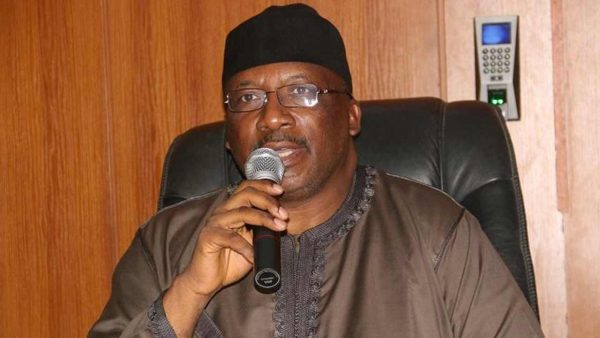 The immediate past Minister of Interior, retired General Abdulrahman Damzau has expressed gratitude to President Muhammadu Buhari for the opportunity he afforded him to serve the country as minister.
 The 28th World Economic Forum (WEF) on Africa, scheduled to hold in Cape Town, South Africa, between September 4 and 6, will focus attention on inclusive and sustainable growth at a time of rapid transformation in the Fourth Industrial Revolution.


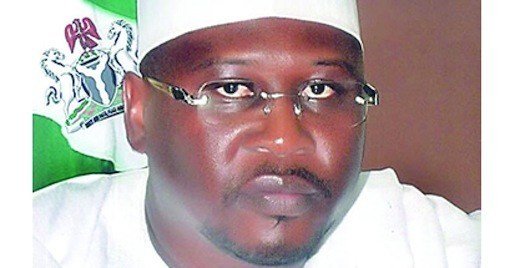 The disqualification of twenty-four leaders of the Peoples Democratic Party (PDP) who had indicated interest in the forthcoming local government election in Adamawa state is threatening to cause intra-party tension as a senator, representing Adamawa North Senatorial Zone, Ishaku Abbo accused the state governor, Ahmadu Fintiri of being behind it.

Issues Of Islamic Banking In Nigeria, By Suleman A, Afikpo
Islamic banking in Nigeria dates back to 1991. The enactment of the Banks and Other Financial Institutions Decree that recognizes banks based on profit and loss sharing opened the window for investors to start applying for licences. By 1993 applications from investors for Islamic banking licence in Nigeria were granted. From 1996, Habib Bank Plc and some other banks opened a non‐interest banking window, offering a limited number of Shari’a‐compliant products. Due to the country’s lack of regulatory framework to that effect, the initiative was tactically put to halt and the experience did not register any significant success or growth. In January 2011, the regulatory Framework and supervision of Non-interest banking guidelines were finally released by the Central bank of Nigeria, CBN. the then Governor of CBN – Sanusi Lamido Sanusi, state that the regulatory guideline is modeled after the success story of the industry in Malaysia.
The licensing of Jaiz bank plc in 2011, to operate full-fledge Islamic banking system, with numerous Islamic window operators, cleared the way for other future non-interest banking operatives to follow, e.g., Taj Bank Plc and so on. Relatively few in number, these Non-Interest Financial Institutions (NIFI) have successfully placed Nigeria on the global spot light, as Africa’s fastest growing consumer and corporate banking destination. With the current global visibility of Nigeria in the Islamic banking, in addition to the speedy success stories it is recording in Takaful and Sukuk – Islamic Bond, the future projection for Nigeria as regional hub for Islamic Finance in Africa is foreseeable.
Nigeria has the largest Muslim population in sub-Saharan Africa, with about half of its 200 million population ascribed members of the Islamic faith. It has numerous prospects as it concerns Islamic Banking and finance. But these prospects are marred by some irregularities that need urgent redress for best practices and professionalism in the industry. Some of the challenges brought to lime light in this article are:
Islamic banking and finance principles, terminologies and their operational products are such that you need to be an expert to get used to. The poor knowledge of these terms and uses are causing misunderstandings to both the supposed custodians and among non-Muslims. These terms and products ought to be made simpler or better still explained from point of familiarity. The result is that the growing interest is still not yielding expected dividend. Prospective customers simply stay away because they found the terms too difficult to learn. To melt down the terminologies into simpler meaning or translated into local dialects could be a way out.
Lack of awareness is the current state of affair. Nigeria populace has not been made to understand the difference between Islamic banks and their conventional equal. Particularly, the Islamic banks in Nigeria are not doing enough to sensitize the eventual customers or address the lack of basic products knowledge. The most frequent complaints about Jaiz banks for example are rigidity and traditionalism. high level of awareness from the banking institutions, and concerned government agencies are imperative.
There is vacuity in Islamic banking scholarship. Finding Islamic scholars knowledgeable in both Islamic and conventional banking modus operandi are lacking in Nigeria, which places severe constraints on the regulatory Shariah‐compliance machinery. With the introduction of Islamic banking system in Nigeria, there are no much efforts to train specialized Islamic scholars in the act of banking and finance or Islamic accounting versatility. The Islamic Banks should float some grants for willing students and researchers to embark on pedagogical studies to enable future development and informed regulatory decisions of the institution. Per contra, Islamic scholars should seize the opportunity by engaging in self upgrade and improve their human capacity for developmental adequacy.
In a conservative Islamic society like Nigeria, where every appointment opportunities follow a traditional institutions’ endorsement.’ Irrespective of the technicalities involved in the banking sector, the Muslim religious leaders will select their cronies and loyalists as reward for loyalty instead of appointing or employing qualified scholars. This has affected other Islamic institutions in Nigeria, causing stagnation, unprofessionalism and unemployment. The same traditional institutions are extending their grip on Islamic banking and finance sectors, appointing or recommending un-technical professionals for highly technical capacity positions. The skills and technicalities needed to regulate and supervise Islamic financial institutions in Nigeria are lacking. Its adverse consequences may hinder the growth and progress of the nascent financial institution in future. Nonetheless, independent Islamic scholars should constitute regulatory bodies that would independently supervise the activities and operations of these institutions and expose those who are caught in sharp practices in the name of Islamic banks, Takaful, Sukuk or even Halal products.
Islamic banking in Nigeria is completely reliant on the resultant experience of Malaysia. Such dependency may not be in favour of the country at the long run. Believing whatever works for the Malaysians works for Nigeria might be a wrong assumption. The two countries may have climatic semblance, but the cultural orientation and behaviourism are in some ways antithetical. Islamic banking in Nigeria will always be subject to the effect of their economic environment. Yes it may be a launching pad mechanism; to moderate the overly contested banking system in the country. Nigeria needs to start thinking beyond reliance and invest in large scale researches, if they believe Islamic banking and finance has come to stay. Presently, there is no evidence of any form of indigenous research to that effect. It goes beyond to identify that no Nigeria tertiary institution offers Islamic banking and finance specialized graduate degree. Any effort towards independence, gives credence to the country and confidence to the investors. It won’t be a bad idea for Nigeria to contribute in the development of products for the Islamic banking.
The instruments used by the Central Bank of Nigeria (CBN) for monetary policy operations and interbank market is interest based. There are no equivalent government securities or money market instruments designed for Shariah compliant products yet. These could hinder Islamic banks from investing their excess liquidity. Also lack of a Deposit Insurance Scheme for the protection of depositors of Islamic banks, are some of the needs for future competitive advantages of the Islamic banking sector that need to be resolved. It is then the duty of Islamic banks and other regulatory bodies to mount pressure on the federal government through CBN for remedy.
In few occasions of liquidity crises, the Central Bank of Nigeria provided intervention loans to conventional banks. Such loans are disbursed on interest basis and cannot legitimately benefit Islamic banks. Proactively recommending, should a situation of this nature occur in future, it is imperative the CBN mechanizes an interest‐free framework for such assistance.
Islamic financial institution begets accounting and auditing standards pertinent to it. The balance‐sheet structure of Islamic banking is unique. At present there is challenge of inadequate competent personnel to that regard. The need for these institutions to train accountants and auditors in the application of these standards are necessary. Collaborating and Partnering with organizations like ‘Accounting and Auditing Organisation for Islamic Financial Institutions (AAOIFI)’ on home grown capacity building and technical development is recommended.
Finally, there is no comprehensive legal framework developed to cater for arbitration of conflicts associated with Islamic financial contracts, products or individuals in Nigeria. A lack that needs some Islamic technical scholarship to fix, for in no distant time there will be need for arbitrations and jurisdiction of specialization, of which the shari’a court of appeal may not be suited to handle. On this juncture to recommend for the establishment of a specialist court for Islamic financial arbitration may not be wholly overboard. Alternatively, to create a branch of shari’a compliant section from the existing commercial legal system of Nigeria may suffice.
In conclusion, while the experience is unfolding and more opportunities witnessed, the few issues enumerated need urgent remedial amendments in this early phase of the Islamic institutions. In a highly competitive nation like Nigeria as far as banking and finance are concerned, reliance on sentiment as a marketing strategy is wrong indicator against sustainability of Islamic banking. Jaiz bank for instance, is systematically marketed on religious sentiment. It could be contested that 80% of the current success of the bank’s achievements are based on religiosity. Religious belief and commitment could be a driving force for the early success of any Islamic bank. However, phase of stagnation usually ushers in and when not properly managed could lead to negative balance sheet.