De Noble Club 10, Kogi Central has elected a retired manager at the Federal Airport Authority of Nigeria (FAAN), Alhaji Kayode Abdullahi Mamman as its President to serve for two years in the first term. Kayode Mamman, currently serving as a top aide to the Taraba State Governor, succeeded a Director at the Federal Capital Territory Administration (FCTA), Alhaji Abdulrazak Onivehu Leramoh, who served for two terms of two years each. The new President was returned unopposed at the Club’s Annual General Meeting in Okene, Kogi State on December 26, 2024.
…Ozi Usman The Club also elected other officers to form a new Executive Council, including the author of the Standard Ebira English Dictionary, Alhaji Yusuf Ozi-Usman as Vice President; Alhaji Isa Sule Dania as National Secretary and Abdulmajeed Yussuf as Assistant National Secretary.
.. Dania The post of National Treasurer went to Alhaji Salihu Anakobe Ibrahim; Engineer Jibrin Ibrahim as National Auditor, even as the post of Director of the Club’s Services went to Prince Emma O. Omadivi and that of Director of Community Services went to Alhaji Yakubu Lawal. Alhaji Kashim Merezu Ojirobe, Alhaji Sheidu O Yusuf and the immediate past President, Abdulrazak Onivehu Leramoh became Ex Officio members. In his acceptance speech, the President, Kayode Mamman promised to maintain the standard and improve on the achievements of his predecessor. He appealed to members for total support and cooperation in an open-door government he is set to run. De Noble Club 10 Kogi Central has established itself as a service oriented body and has been promoting education, through its popular Summer School programme, as well as enlightenment of the people through its popular phone-in programme, especially on the Jatto FM Radio in Ebira land, among other programmes and services.
{“capture_mode”:”AutoModule”,”faces”:[]}Former Vice Chancellor of the University of Abuja, Professor Nuhu Yaqub has unveiled the discovery of one of the Nigerian languages, Ebira in the Google Search Engine (GSE). Professor Yaqub, in a keynote address in Okene, Kogi State, at De Noble Club 10 Kogi Central annual lecture session titled: Salvaging Ebira Values And Language From Extinction…, said: “for a very long time, I have been intrigued by trying to find out which other ethnic groups throughout the entire world has a name similar to our ethnic group – Ebira. “I googled the search engine, the only apparent engine in the world at the moment that anything in the fortress of knowledge could be dugout and/or could easily be accessed. “My question to Google Search Engine (GSE) was posed thus: is there any ethnic community in the world that has its name and ‘identity mark’ and would thereby be called ‘Character,’ when the ethnic name is translated into the English language?” Professor Yaqub said that the answer he got was that there was no such ethnic Community but that when he reframed the question after additional information thus: “has there been a language/community whose identification name is “Character,” no matter the language it is translated into, as has been discovered among the Ebira people of Nigeria?” He said that the GSE responded by saying: “No, there isn’t information about a language (or a linguistic community) that has been translated (or identified) as a character after the Ebira language of Nigeria.” The Prof said that the GSE went on to give detail information about Ebira language, even as he quarreled with the terminology that places Ebira as an ethnic minority. “This marginalization costs us (Ebira) from enjoying any position, whether political, economic or infrastructural amenities that should have been due to us because of the numerous natural endowments nature has granted. “Yet, if or assuming that Ebira Ethnic Groups are not scattered, we are estimated to number not less than two million strong. Our settlement in one place and not being scattered in various places would have probably qualified for a state of our own.” Professor Yaqub explained that the lack of territorial contiguity among the various Ebira peoples who are now scattered and settled in Abaji, the Federal Capital Territory, Toto in Nasarawa State, in Koton Karfe, Kogi State; Akoko Edo in Edo State and several others, has robbed Ebira nation of its numerical strength, referencing en.wikipedia.org/wiki/Ebira_people. Professor Yaqub offered some suggestions on how to promote Ebira language, including the teaching of the language in schools, organising competition among the Ebira people, encouragement by the state government through policy formulation and funding and the urgent need to address and resolve the seeming controversies arising from the different dialects of the language, such as Egbura, Igbirra and Etuno, to determine which should be adopted as lingua Franca. The lecture session was attended by top academic scholars, traditional rulers and authors of Ebira language, including Dictionary of the language.
The Nigerian Communications Commission (NCC) has given the MTN Nigeria Communications Limited (MTN) five days to settle its indebtedness or face disconnection of its exchange telecommunication link. It said that after the five days, MTN will cease to transmit voice and data traffic through Exchange Telecommunications Limited (Exchange). In the notice issued today, December 27, through its Director of Public Affairs, Reuben Mouka, the Commission said that the decision followed a thorough review of MTN’s outstanding interconnect charges. According to the NCC, the MTN had failed to settle its debts despite being given the opportunity to respond to the application for disconnection. The commission said that its decision to disconnect the MTN is hinged on Section 100 of the Nigerian Communications Act, 2003. The Commission advised members of the public to take note of this development, as it may affect telecommunications services. It said that the disconnection will remain in effect until it determines otherwise.
For a man who doesn’t talk much, it is worth listening when he finally speaks out. Mai Mala Buni has been Governor of Yobe State for five and a half years, was previously a National Secretary of APC and for two years was in fact the ruling APC’s Caretaker National Chairman. In all those roles he was not known to be given to boasts and brags. His personal motto, apparently, is that action speaks louder than words and that it is empty drums that make the most noise. As the year 2024 is drawing to a close however, Governor Buni chose to speak out at a press briefing in his state capital, Damaturu. Most certainly he succumbed to the pressure of aides, who know that words travel farther when the boss utters them himself. At the briefing, Buni reflected on the seven big goals that his Administration scored within the year, all of them against the backdrop of insecurity threats in the state’s northern parts, including the blowing up of electricity towers by Boko Haram agents. Buni landed his first, first-minute in the match goal in the area of Humanitarian Support. Yobe State government under his leadership provided ₦3.9 billion in multi-purpose cash assistance to 52,000 households and over 200,000 individuals. Add to that 974,220 individuals who got food and non-food assistance items within the year. Buni’s second score, in the first half of the match, was an expert header into the net of Agriculture. He launched an agricultural empowerment programme and spent ₦15.3 billion to support 5,340 farmers across the state, in addition to ₦1.7 billion that YBSG spent this year to procure grains for strategic reserves. Buni’s third goal was a hat trick in Healthcare. Yobe State even won $500,000 in the North-East Primary Healthcare Leadership Challenge this year, because it recruited 311 healthcare workers, adjusted health workers’ salary scales, provided free dialysis programs, invested heavily in hospital renovations, supplied ample medical equipment and expanded contributory healthcare schemes. These solidified advancements in healthcare delivery netted the Leadership Prize for Yobe. Buni scored another goal, his fourth, this time with a bicycle-kick into the net of Infrastructure. His Administration completed and initiated numerous road projects across the state, including the 76km Gujba-Ngalda road and urban road networks in major towns. Solar-powered boreholes and streetlights were installed in rural and urban areas to improve water supply and energy access. Straight from a corner, Buni scored his fifth goal, this time in Education. Significant strides were made in basic and higher education, including teacher recruitment and training, infrastructure upgrades and enhanced student feeding programs. Buni spent ₦2 billion on tuition and exam fees for secondary school students in this year alone, a mighty fillip for a state that has been lumped among the educationally disadvantaged. Mai Mala Buni’s sixth score, from the penalty spot, was in Economic Empowerment. In 2024 his Administration unrolled programs that included cash grants to micro and small entrepreneurs, vocational training for youths and distribution of tools and equipment to beneficiaries. Modern markets and processing facilities are under construction to boost commerce and industry. Buni’s seventh goal was scored from a corner kick. This time, it was in Environmental Protection. Yobe is a Sahelian state with a fragile environment, and Governor Buni undertook major efforts to mitigate environmental challenges including erosion control projects, reforestation programs and provision of solar-powered cooking stoves, all within the year 2024. This affable gentleman did not arrogate all credits for the good deeds to himself. At the press briefing, he said civil servants, traditional rulers, military, police, local vigilantes, mass media and all other stakeholders played important roles in driving progress across multiple sectors. In other words, it was not him as the Center Forward’s efforts that scored all the goals. Other strikers, wingers, center half, defenders and the goal keeper all helped a lot. In the incoming year 2025, he said, YBSG would double down on service delivery towards consolidating on infrastructure and all other facets of socio-economic development. In other words, there will be a goal feast in Yobe in 2025.
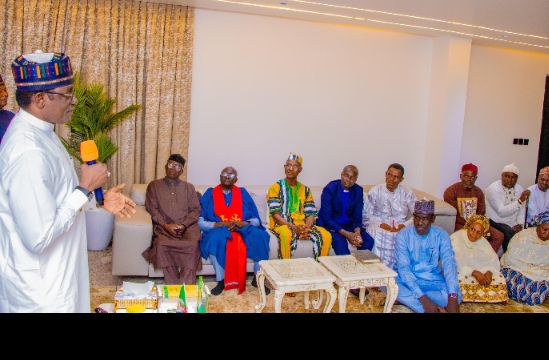
Yobe state Governor Mai Mala Buni hosted the leadership of the State’s Christian Association of Nigeria (CAN) in Damaturu, the state capital on Christmas Day yesterday. The governor, thanked God for the improved peace and security in the state, saying that people now move freely pursuing their legitimate businesses. “This calls for celebration and to appreciate God for making the state more secured and peaceful. He urged the faithful to use the occasion to pray for more peace, security, and prosperity of the state and country. “We should build and promote more peace and peaceful coexistence for the development of the state.” The governor urged religious leaders to preach peace, love, and justice. “We should spread the message of love because we are all created and loved by God. “All the scriptures preached and promoted peace. We should therefore be our brothers keeper.” Leader of the delegation, Professor John Onyema commended Governor Buni for the sense of belonging given to Christians and Nigerians from other states resident in Yobe. “You have demonstrated true leadership and supported everyone in the state without recourse to religious and ethnic backgrounds “We appreciate your developmental strides of providing services and projects enjoyed by everyone in the state. “As the 2025 new year sets in, we urge you to continue doing the good works for the benefit of all,” Prof. Onyema said. The governor was presented with an award of excellence in appreciation and for supporting the North East unity Carol.
Governor of Yobe State, Mai Mala Buni, has given a rundown of his government’s achievements in 2024 amidst Boko Haram challenges, even as he promised to double efforts in service delivery in 2025. At a news briefing in Damaturu, the State capital, Governor Buni appreciated the contributions of government employees, security personnel, traditional rulers and other stakeholders in driving progress across multiple sectors. His achievements, according to him, include: Humanitarian Support: He said the state government provided multi-purpose cash assistance amounting to ₦3.9 billion, reaching over 52,000 households and over 200,000 individuals. According to him, “food and non-food items were distributed to an additional 974,220 individuals.” Agriculture: Buni stated that “a historic agricultural empowerment programme was launched, spending ₦15.3 billion to support 5,340 farmers across the state. He said that the government also invested ₦1.7 billion in procuring grains for strategic reserves. Healthcare: According to him, “Yobe won $500,000 in the North-East Primary Healthcare Leadership Challenge.”
Key achievements, he said, included the recruitment of 311 healthcare workers, adjustments to salary scales, and free dialysis programs. Investments in hospital renovations, medical equipment, and expanded contributory healthcare schemes further solidified advancements in healthcare delivery. Infrastructure: The governor said that the administration completed and initiated numerous road projects across the state, including the 76km Gujba-Ngalda road and urban road networks in major towns. Solar-powered boreholes and streetlights were installed in rural and urban areas to improve water supply and energy access. Education: Read the governor further on other achievements: “Significant strides were made in basic and higher education, including teacher recruitment and training, infrastructure upgrades, and enhanced student feeding programs. Over ₦2 billion was spent on tuition and exam fees for secondary school students. Economic Empowerment: Programs included cash grants to micro and small entrepreneurs, vocational training for youths, and distribution of tools and equipment to beneficiaries. Modern markets and processing facilities are under construction to boost commerce and industry. Environmental Protection: “Efforts to mitigate environmental challenges included erosion control projects, reforestation programs, and the provision of solar-powered cooking stoves.” Governor Buni also highlighted ongoing efforts to strengthen security and commended the contributions of the military, police, and local vigilantes. He assured citizens that the administration remained committed to further improving living standards and fostering sustainable development in 2025 and beyond. “Through robust management and unwavering dedication, we have laid the groundwork for a brighter future. Together, we will continue to move Yobe State forward,” the governor said.
The Yobe State Contributory Healthcare Management Agency (YSCHMA), has enrolled a total of 275,358 people into the contributory healthcare scheme in the state. The State Governor, Mai Mala Buni, who spoke during his end of year media briefing in Damaturu, said that the enrolment was a reflection of the agency’s commitment to expanding healthcare coverage across the state. He said that in the area of contributory healthcare, the government had continued to provide support to 222 primary healthcare providers through capitation and 24 secondary healthcare facilities through fee-for-service arrangement under the YSCHMA. The governor acknowledged that 2024 was a significant year for the health and human services sector in the state, adding that the efforts by his Administration led Yobe to win US$500,000 in the primary healthcare leadership challenge for states in the North-East sub-region. He said that his administration had achieved 100% payment of hazard allowances and adjustment of CONMESS and CONHESS salary scales to healthcare workers, recruited 311 new members of staff, including doctors, nurses and other cadres, and ensured the continuation of the state’s free dialysis programme for kidney patients. “We have also embarked on the renovation and reconstruction work at the State Specialist Hospital, Damaturu; we have provided high-quality hospital mattresses and procured anti-bacterial curtain system at Maternal and Child Health Complex, Damaturu.” Governor Buni said that aside from the construction of a modern ICT Center to enhance social protection initiatives for the benefit of the people of the state, the Government has also built an ante-natal and VIP ward at Women and Children Hospital, Damaturu, constructed an Accident and Emergency complex and a one-storey building doctors’ quarters at State Specialist Hospital, Buni-Yadi. The governor announced the procurement and distribution of various state-of-the-art medical equipment across different healthcare facilities in the state and kept the momentum on the ongoing research on chronic kidney disease affecting some local government areas of the state. “We have also procured an important software for our MRI Machine at the Yobe State University Teaching Hospital (YSUTH), Damaturu – the PV VAR ASSAT Software.”
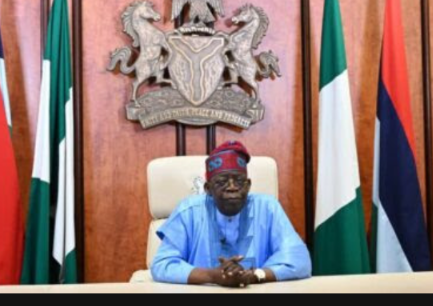
President Bola Tinubu has advised Nigerians to be mindful of those who are facing all types of difficulties around them. “As we celebrate this blessed season, let us be mindful of those facing difficulties. They are not far from us—our neighbours, family members, and the people we encounter daily, whether in places of worship, markets, offices, or boardrooms.” In his Christmas message today, December 24, Tinubu said: “may we all find comfort and solace in our faith, the support of loved ones, and the abiding presence of Jesus Christ. “Our compassionate and merciful God stands with the weak, the brokenhearted, and the sick.” The President observed that kindness transcends financial status, saying that those with modest means and those with abundance need a smile or a word of encouragement. “Christmas embodies the fulfilment of divine prophecy and symbolises the triumph of love, peace, and unity. It is a poignant reminder that light can emerge even in the darkest times, bringing solace and hope. This belief resonates with people of all faiths. Indeed, God is with us.” Tinubu asked Nigerians to honour the brave troops, who have been risking their lives to safeguard the nation. “They deserve our prayers and steadfast support. “Let us extend similar support and prayers to our nation’s leaders. With your backing, we can serve our country diligently and strive for prosperity.” According to President Tinubu, Nigeria is on a promising path of restoration and progress, with every indication pointing toward a bright future. “In the spirit of this season, let us renew our hope and belief in a prosperous Nigeria.” He said that his government is taking all necessary steps to ensure that the transportation routes are secure and convenient. “We also provide free train services and subsidized road transport costs on 144 routes nationwide to ease your travels.”
President Bola Tinubu has given reasons why he removed fuel Subsidy, one of which was the unceasing corruption that surrounded it. In his first media chat last night, December 23, the President said that Nigeria cannot continue to be Father Christmas to neighbouring countries. “I don’t have any regrets whatsoever in removing petrol subsidy. We are spending our future. We were just deceiving ourselves, that reform was necessary.” Tinubu said that the subsidy removal has increased competition within the petroleum sector and that the pump price of petrol has gradually crashed. “The market is being saturated. No monopoly, no oligopoly, a free market economy flowing.” The President said that he does not believe in price control. “I don’t believe in price control. We will work hard to supply the market.”
Survivors at the scene of the tragic stampede in Abuja, where several lives were lost as they sought food and basic necessities amidst Nigeria’s deepening economic crisis. | Photo Credit: ChannelsTV
When some patriotic Nigerians, including yours truly, rose in 2023 to defend and promote a man they believed would usher in a new era of good governance, restore national dignity, and unite the country with inclusive policies, they acted in the hope of salvaging the nation from decades of systemic leadership failure and pervasive poverty. The movement was fueled by a shared yearning for informed and transformative leadership that would not only bring prosperity, equity, and justice for all Nigerians but restore the battered social trust in governance.
Un-known to them, their burning quest to return the country to a glorious era blinded them to the true capacity, integrity, and mission of the individual they marketed to the masses. This grave misunderstanding led to a catastrophic miscalculation, plunging the nation into an unimaginable mess. The hope of a new dawn was dashed, no thanks to the Lagos headmaster’s misguided policies, which continue to reverberate across every facet of national life.
Since his swearing-in in May 2023, the country has not, for a single moment, breathed the fresh air symbolizing the so-called ‘renewed hope’ promised to Nigerians. Instead, his policies, actions, and inactions have suffocated the masses, driving them to the brink of despair. This reflects a stark disconnect between existential realities and the policies churned out thus far. The failure to promptly address critical issues affecting the populace, ranging from inflation to unemployment and general economic hardship, has left the masses drowning in a sea of hopelessness. Basic necessities such as food, medication, and transportation have become unaffordable for the average Nigerian, leaving the larger population on the brink of destitution—a global hallmark of a failed state.
While the administration continues to offer excuses for its acute leadership failure, available evidence suggests that the main reasons behind the regime’s progressive mess are a lack of preparedness for governance and a poor understanding of the country’s existential challenges. Ironically, this is striking for a man who had been within the corridors of power for over two decades and boasted of being one of the most informed leaders of our time, yet surprisingly appears uninformed about addressing the country’s challenges after ascending to lead Africa’s most populous country.
Recently, the International Monetary Fund (IMF) and the World Bank, which had previously encouraged the current administration to push on with subsidy removal and currency devaluation, acknowledged the doldrums resulting from these policies. The IMF specifically described the administration’s reforms as ‘not working,’ underscoring the depth of the crisis. This acknowledgment, coming from global financial institutions that are often reluctant to criticize governments publicly, highlights the magnitude of the current leadership failure.
It is baffling that a man who claimed to have inherited a collapsing economy with dwindling revenue would hastily set up the most expansive and extravagant cabinet in Nigeria’s history. In August, over ₦150 billion was reportedly spent to purchase a new presidential jet at a time when Nigerians were grappling with economic hardship and a high cost of living crisis. These moves, among others, not only contradict his rhetoric of fiscal prudence but also place an additional burden on the masses, who are now wallowing in extreme poverty. The disparity between leadership rhetoric and reality becomes more glaring as the government’s priorities seem skewed toward self-enrichment rather than public service.
Nearly two years into the regime, none of his policies have mitigated the disastrous effects of fuel subsidy removal and currency devaluation—policies that have catapulted the nation’s inflation rate to an all-time high, eroded the purchasing power of ordinary citizens, and impoverished millions of Nigerians. Every sluggishly implemented mitigating measure appears more like a scam, leaving the country teetering on the edge of economic collapse.
It is incontrovertible that economic reforms that have rendered over half of the country’s population destitute, driven thousands of multinational companies away, shut down thousands of local manufacturers, sacrificed 90% of the currency’s value, and degraded Nigeria’s economic standing on the global stage are nothing short of disastrous. These reforms, far from benefiting the masses, seem to serve the political elite exclusively, earning them the dubious distinction of being the scam of the century. The aftermath of these policies is visible in the growing number of unemployed youths, shuttered businesses, and the erosion of social trust in governance.
For those who still harbour hope for positive outcomes from the current administration, the question remains: how much longer can the nation endure these self-inflicted wounds? The evidence of policy failure is glaringly overwhelming, and the ripple effects are spreading far and wide.
Just a few days ago, several people, mostly children, lost their lives while searching for food for survival in three states, including the FCT. A few months earlier, some underage children who were forced onto the streets to protest against unbearable hunger and economic hardship were brutally arrested and subjected to inhumane treatment in detention by security agents. Their haggard footage in a courtroom, which later attracted global outrage, exposed the administration’s numbness. As a matter of fact, these embarrassing scenarios are unprecedented in the country’s history, not even under military rule.
It is becoming increasingly clear that the promised ‘renewed hope’ is a facade, masking a reality of incompetence and mismanagement. The disconnect between policy formulation and execution speaks volumes about the leadership’s lack of understanding of the socio-economic realities on the ground.
As Nigerians desperately yearn for a change in leadership, it must be recognized that neither Atiku nor Peter Obi possesses a silver bullet to solve the country’s socio-economic woes. Both figures come with their baggage and limitations, making them less-than-ideal saviors. However, to urgently safeguard the nation from being completely debased beyond repair by the current administration, anything other than the Lagos headmaster should be considered. The urgent task is to halt the downward spiral and chart a new course for national recovery.
The path forward requires more than just a change in leadership. It calls for a paradigm shift in governance, where policies are people-centered and driven by data and evidence. Nigeria’s challenges are multifaceted, ranging from economic restructuring to social cohesion and institutional reform. Addressing these issues demands leadership that is not only competent but also compassionate and inclusive.
The current administration’s failures should serve as a wake-up call for all Nigerians. It is a reminder that leadership goes beyond rhetoric and promises; it requires a deep understanding of the nation’s complexities and a genuine commitment to service. As the nation grapples with the consequences of poor leadership and bad policies, the call for accountability grows louder. Nigerians must demand better and refuse to settle for mediocrity in governance.
The journey ahead is daunting but not insurmountable. With the right leadership and collective effort, Nigeria can overcome its current challenges and emerge stronger. The lessons of the past two years must not be forgotten; they should guide the nation in making better choices for its future. The time to act is now, before the scars of today become the permanent wounds of tomorrow.
Adavize, a researcher and concerned Nigerian, writes in from Kogi and can be reached via: adavize4u@gmail.com
We use cookies on our website to give you the most relevant experience by remembering your preferences and repeat visits. By clicking “Accept”, you consent to the use of ALL the cookies.
This website uses cookies to improve your experience while you navigate through the website. Out of these, the cookies that are categorized as necessary are stored on your browser as they are essential for the working of basic functionalities of the website. We also use third-party cookies that help us analyze and understand how you use this website. These cookies will be stored in your browser only with your consent. You also have the option to opt-out of these cookies. But opting out of some of these cookies may affect your browsing experience.
Necessary cookies are absolutely essential for the website to function properly. This category only includes cookies that ensures basic functionalities and security features of the website. These cookies do not store any personal information.
Any cookies that may not be particularly necessary for the website to function and is used specifically to collect user personal data via analytics, ads, other embedded contents are termed as non-necessary cookies. It is mandatory to procure user consent prior to running these cookies on your website.




 .. Dania







7 Goals Scored By Gov Mala Buni Of Yobe, By Mahmud Jega
For a man who doesn’t talk much, it is worth listening when he finally speaks out. Mai Mala Buni has been Governor of Yobe State for five and a half years, was previously a National Secretary of APC and for two years was in fact the ruling APC’s Caretaker National Chairman. In all those roles he was not known to be given to boasts and brags. His personal motto, apparently, is that action speaks louder than words and that it is empty drums that make the most noise.
As the year 2024 is drawing to a close however, Governor Buni chose to speak out at a press briefing in his state capital, Damaturu. Most certainly he succumbed to the pressure of aides, who know that words travel farther when the boss utters them himself. At the briefing, Buni reflected on the seven big goals that his Administration scored within the year, all of them against the backdrop of insecurity threats in the state’s northern parts, including the blowing up of electricity towers by Boko Haram agents.
Buni landed his first, first-minute in the match goal in the area of Humanitarian Support. Yobe State government under his leadership provided ₦3.9 billion in multi-purpose cash assistance to 52,000 households and over 200,000 individuals. Add to that 974,220 individuals who got food and non-food assistance items within the year.
Buni’s second score, in the first half of the match, was an expert header into the net of Agriculture. He launched an agricultural empowerment programme and spent ₦15.3 billion to support 5,340 farmers across the state, in addition to ₦1.7 billion that YBSG spent this year to procure grains for strategic reserves.
Buni’s third goal was a hat trick in Healthcare. Yobe State even won $500,000 in the North-East Primary Healthcare Leadership Challenge this year, because it recruited 311 healthcare workers, adjusted health workers’ salary scales, provided free dialysis programs, invested heavily in hospital renovations, supplied ample medical equipment and expanded contributory healthcare schemes. These solidified advancements in healthcare delivery netted the Leadership Prize for Yobe.
Buni scored another goal, his fourth, this time with a bicycle-kick into the net of Infrastructure. His Administration completed and initiated numerous road projects across the state, including the 76km Gujba-Ngalda road and urban road networks in major towns. Solar-powered boreholes and streetlights were installed in rural and urban areas to improve water supply and energy access.
Straight from a corner, Buni scored his fifth goal, this time in Education. Significant strides were made in basic and higher education, including teacher recruitment and training, infrastructure upgrades and enhanced student feeding programs. Buni spent ₦2 billion on tuition and exam fees for secondary school students in this year alone, a mighty fillip for a state that has been lumped among the educationally disadvantaged.
Mai Mala Buni’s sixth score, from the penalty spot, was in Economic Empowerment. In 2024 his Administration unrolled programs that included cash grants to micro and small entrepreneurs, vocational training for youths and distribution of tools and equipment to beneficiaries. Modern markets and processing facilities are under construction to boost commerce and industry.
Buni’s seventh goal was scored from a corner kick. This time, it was in Environmental Protection. Yobe is a Sahelian state with a fragile environment, and Governor Buni undertook major efforts to mitigate environmental challenges including erosion control projects, reforestation programs and provision of solar-powered cooking stoves, all within the year 2024.
This affable gentleman did not arrogate all credits for the good deeds to himself. At the press briefing, he said civil servants, traditional rulers, military, police, local vigilantes, mass media and all other stakeholders played important roles in driving progress across multiple sectors. In other words, it was not him as the Center Forward’s efforts that scored all the goals. Other strikers, wingers, center half, defenders and the goal keeper all helped a lot. In the incoming year 2025, he said, YBSG would double down on service delivery towards consolidating on infrastructure and all other facets of socio-economic development. In other words, there will be a goal feast in Yobe in 2025.