The current Director-General of the NSA, Babagana Monguno
Department of State Services (DSS), Yusuf Bichi Magaji had earlier said:“our country is bedeviled by multifarious security challenges by which each agency must bring its wealth of experience and comparative advantage to compliment the effort of another.” He made the remarks in his keynote address, while hosting the meeting of the Forum of Spokespersons of Security and Response Agencies (FOSSRA) on April 24.
The Forum was established in 2013 by the Office of the National Security Adviser (ONSA) to enhance synergy and collaboration amongst critical institutions that deal with issues of security and its challenges in Nigeria.
As a sensitive security organ, the ONSA is statutorily empowered to coordinate the activities of military, security, intelligence and response agencies in combating terrorism, cybercrime and major issues affecting the wellbeing of the state in Nigeria. It is a known fact that during the previous administration, the ONSA hosted regular meetings of security and service chiefs in addressing issues that could create conflict in society.
While the meeting of the security chiefs was held almost every other week in ONSA, the meeting of FOSSRA was held rotationally among member-agencies every month until June 2015.
It is of utmost importance to highlight some instances when FOSSRA’s interventions doused tension and stabilised the polity within a climate of heightened agitations and security concerns in the country.
In June 2014, the then National Security Adviser, Sambo Dasuki officially tendered an apology to the Speaker of the House of Representatives, Honourable Aminu Tambuwal, who was allegedly harassed by joint-security operatives at an international summit on Farmer-Herder Crisis in Kaduna. Both the former NSA and the Speaker are from the same royal family within the Sokoto sultanate, even if it is of different statuses.
Similarly, in one of the Army-Shi’ite altercations in Zaria, also in July 2014, during which some members and children of Sheikh Ibrahim Zakzaky were killed by Nigerian soldiers, the Chairman of FOSSRA, who was then the Director of Defence Information, General Chris Olukolade, promptly issued an empathic statement, expressing regret over the incident and announcing that a panel would be constituted to unravel the remote causes of the fracas. The statement played a magical role in nipping the controversy in the bud.
The following month, the Commandant General of the Nigeria Security and Civil Defence Corps (NSCDC) and two operatives of the Corps were allegedly disrespected and manhandled on different occasions by the Police. As the media were feasting on the controversy, the then spokesperson of the Nigerian Customs Service, Wale Adeniyi hosted the monthly meeting of FOSSRA in September 2014, where the erstwhile Police spokesperson, Emmanuel Ojukwu walked to the NSCDC spokesperson, Emmanuel Okeh and issued a joint statement which doused the tension.
Meanwhile, since the appointment of Major General Babagana Monguno (Rtd) as the National Security Adviser (NSA) by President Muhammad Buhari in 2015, he has neither shown keen commitment to nor hosted the meeting of the FOSSRA to guard against inter-agency rivalry. The meeting of the Forum, which has become occasional, is now being hosted by the Centre for Crisis Communication (CCC) and other security agencies that value synergy and collaboration in information management.
If FOSSRA, which is domiciled under the ONSA, is very active, the current acrimony between the Nigerian Army and the police over the killing of the Police’s Intelligence Response Team (IRT) operatives by soldiers in Taraba State could have been averted. There would most likely have been an existing synergy and a more cordial relationship between these two prominent actors within the Nigerian security architecture and system.
It was alleged that soldiers of the 93 Battalion shot the IRT operatives – including Inspector Mark Ediale, Sergeant Usman Danzumi, and Sergeant Dahiru Musa – dead after they had arrested a notorious kidnap kingpin, Hamisu Bala Wadume, who is now on the run. The Army claims that the police officers were shot after being mistaken for “suspected kidnappers” and blames the attack on a communication gap.
The initial statement from the Police spokesperson, DCP Frank Mba and immediate response by the Army spokesperson, Colonel Sagir Musa, would have been needless if an effective mechanism of inter-agency collaboration, as exemplified by FOSSRA, had been adhered to.
There are trending videos, audios and sponsored stories on the fracas that need to be contained before they further exacerbate the present situation and persist as drivers of tension. It is quite unfortunate that many Nigerians on the social and mainstream media have continued to react to the incident through inciting, inflammatory and embarrassing innuendoes.
It may not be surprising if the two public relations officers of the security organs involved were actually taking orders from their principals, rather than abiding by the ethics of crisis communication management, which guide professionals on their temperament, conduct and how to shape their messages during periods of high volatility.
As spokespersons of security agencies, they are expected to be courteous, restrained and conscious of the need to show great human understanding and empathy in their public communications, at this sort of time when such really matters. It is also very important that their messages, like press releases, should be clear, concise, concrete, correct and complete, without allowing for any form of ambiguity in communication.
In all these, the absence of strategic leadership in dousing the tension, beyond the critical levels of the individual service chiefs, merely escalates the inter-agency antagonism and fuels the heated debates and fury pervading the media from visible and anonymous sources.
Is it not embarrassing that different panels were allegedly constituted to investigate this incident? While one is said to be chaired by a military officer in the rank of a major general, the other is noted as being headed by a security officer in the rank of an Assistant Inspector General of Police.
As the coordinating organ of government on security matters, ONSA should step in and manage this crisis, more professionally and with experience, especially in the absence of a federal cabinet, as the Ministers of Defence or that of Interior are yet to be sworn in. The NSA can advise the Army Chief Lt General Tukuru Buratai and Police Boss IG Mohammed Adamu on the need to urge their officers to exercise restraint. In the alternative, the Presidential Media Adviser should intervene by calling on the spokespersons of the agencies to sheath their swords in this attrition and highly unfortunate media war.
The Central Bank of Nigeria (CBN) has released guidelines for the disbursement of lower denominations of the naira through microfinance banks (MFBs) across the country.
A circular issued by the Director, Currency Operations Department of the Bank, Mrs. Patricia Eleje in Abuja today, August 15, indicated that all microfinance banks must have a composite risk rating (CRR) of above average in the most recent Risk Based Supervision (RBS) target examination before they are considered for the scheme. This, according to the CBN, is to ensure that only MFBs with good corporate governance practices take part.
It insisted that participating MFBs must be willing to accept a mixture of new and other banknotes, and that the MFBs shall give 20 percent of any withdrawal in lower denomination notes subject to a maximum of ₦50,000 and that where beneficiaries withdraw more than once in a day, disbursement will only apply to one transaction per day.
The circular said that the MFBs are allowed to exchange notes subject to a maximum of ₦50,000 for customers with bank accounts and ₦10,000 for customers without bank accounts. In that situation, the banks must not exchange for same beneficiaries more than once a week.
It said that MFBs are to maintain a register of amounts received from the CBN through their correspondent commercial banks. The MFB must also maintain another register of the beneficiaries of the lower denomination notes as well as ensure that withdrawal teller slips contain breakdown of the denomination of the currency to customers with accounts.
It, however, warned MFBs against howking, hoarding or using of funds obtained under the intervention for any other purpose. It also instructed the banks to put in place effective control measures that will ensure that banknotes disbursed to customers with or without accounts are not sold.
The circular directed the banks to render weekly and monthly disbursement return to CBN branches where the intervention would be monitored periodically, and appropriate sanctions applied to erring MFBs.
If anyone is looking for a perfect illustration and confirmation of the “coming anarchy” in Nigeria, that person needs not look farther than the on-going conflict and crisis of mutual distrust between the Nigeria Police and the Nigerian Army. Turn away, for a moment, from Boko Haram (Nigeria is still unable to find a solution to the menace of terrorism), turn away from bandits and kidnappers (it is sad that the state seems to be aiding and abetting criminality and impunity due to its incompetence, negligence, and impotence). But you can not turn away from the crazy drama being enacted by the Nigeria Police and the Nigeria Army, two strategic security institutions assigned the responsibility of safeguarding lives and property of Nigerians and the sovereignty of the country itself. Both institutions have been in conflict in recent times. I argue that this is disturbing.
It is as follows: Nigerians woke up the other day to hear the sordid tale of how in Jalingo, Taraba state, soldiers from the 93 Battalion in Takum, Taraba state killed three policemen and three civilians, who had gone to arrest a notorious kidnap kingpin, one Alhaji Hamisu Wadume. The three policemen were members of an elite police squad, the Intelligence Response Team (IRT), and they had been involved in many operations in which they distinguished themselves namely the arrest of 22 kidnappers involved in the abduction of Chibok girls, the arrest of Evans, the notorious Lagos-based kidnapper and the rescue of the Magajin Garin Daura, the traditional head of President Buhari’s village who was abducted earlier in the year. These same policemen and their colleagues had been working on the Wadume case. They had investigated him and tracked him down.
With the help of three civilians who volunteered as informants and guide, the police sent the crack team to go after Alhaji Wadume. When they got to Jalingo, the policemen reported at the police state headquarters and documented their mission. They then set out and arrested Alhaji Wadume and put him in handcuffs. The next step was to take him in and interrogate him in line with standard procedure. Mission accomplished? No. In Nigeria, the unexpected is known to happen, nothing is ever certain. Just as the police were busy tracking down the alleged notorious kidnapper, the Army in Taraba reportedly got a distress call reporting that kidnappers had abducted one Alhaji Wadume, and asking the military to come to the rescue. As it turned out, the 93 Battalion sent out a team to rescue Alhaji Wadume. The dispatched soldiers gave the police team the chase. The police version of the story at this point is that the police men identified themselves and told the soldiers that they were carrying out a legitimate duty, and that Alhaji Wadume who was in handcuffs was the suspect. But instead of the two teams to co-operate and work together, in line with the principle of “esprit de corps”, the soldiers opened fire on the policemen, at close range, killing three of them instantly. They also gunned down the three civilian-informants. By the time the dust settled, the arrested suspect, who had been put in silver ware, disappeared into thin air. The soldiers also vanished, leaving “blood on the grass.”
The police are rightly outraged. They have since issued statements and have gone on a twitter rage, to question the conduct of the Nigeria Army. They are angry that despite the police identification of the slain policemen as officers on lawful duty, the Nigerian Army chooses to refer to them as “suspected kidnappers”. The police are asking the army to hand over the soldiers who pulled the trigger, effectively marking them out as cop-killers. They have also raised five questions for the Army Headquarters to respond to viz: “Where is the notorious kidnapper, Alhaji Hamisu Bala Wadume “rescued by the soldiers”?, (2) How could a kidnap suspect properly restrained with handcuffs by the Police escape from the hands of his military rescuers? (3) Why were the Police Operatives shot at close range after they had identified themselves as Police Officers on legitimate duty as evident in the video now in circulation? (4) How and why was Alhaji Hamisu Bala Wadume released by the soldiers? (5) If Alhaji Wadume is a “victim of kidnap” as claimed, and properly rescued by soldiers why was he not taken to the Army base for documentation purposes and debriefing in line with the Standard Operating Procedures in the Nigerian Army?’ These questions are pertinent and there are many more that should be raised.
The Nigerian Army has not been able to respond to any of these questions; their only close-to-intelligent response has been the self-indicting explanation that the whole incident is due to lack of co-ordination and communication between the army and the police. It is sad to hear that. If there is rivalry, conflict, lack of co-ordination and communication among the various law enforcement and security agencies in Nigeria, then the average Nigerian is in serious trouble. The country itself is in danger. The utter vulnerability of the average Nigerian is show-cased by the fact that whereas the army and the police have been trading brick-bats in the Taraba matter, no mention has been made so far of the identity of the three civilians who were murdered by the soldiers. The police seem to be more concerned about their men. The Army are more concerned about protecting their men too. To compound the situation, whereas a joint investigating panel has been set up, the army and the police are at best working at cross-purposes.
What has happened is unacceptable. Those who argue that the police should not complain because it is Karma at work, the police having a notorious reputation for the kind of brutality that has been inflicted on their men by the Army, are simply unfair. No human being deserves to be killed in such brutal fashion. It is also unacceptable that the three civilian-informants who were murdered have not been part of the story. In the course of the fight against terror and crime in the country, both the President and the service chiefs have always advised that the battle can only be won if the people themselves assist the security agencies with information. The death of those three informants in the hands of the Nigeria Army will certainly discourage every future informant! In the past, the Nigerian military used to attribute every act of impunity committed by soldiers to a certain “unknown soldier”. Under military rule, particularly, the unknown soldier could do as he wished. The Nigerian soldier was above the laws of the land. But the times have since changed. The Nigeria Army certainly cannot claim not to know the soldiers who committed murder in Taraba State. As the police have demanded, those men and the officer who gave them unlawful orders, if that was the case, must be named and made to face the full wrath of the law. The six victims of that Taraba massacre and their families deserve justice. In a democracy, an army of occupation, a gun-totting military on the streets of the nation, turning its guns on innocent persons is an aberration, and a threat.
But this is the price Nigerians pay for giving the military police work to do. The military and the police have two completely different training manuals and operational orientation. The primary job of the police is to ensure peace and safety, and to protect and serve. Soldiers are trained by their drill sergeants to shoot and kill the enemy: “One shot, one kill”, at close range. The culture of restraint at the heart of police training is unknown to the military. This is why it is dangerous to involve soldiers in the kind of police work that they have been doing in Nigeria. In the 70s, Nigerian soldiers lived in the barracks, usually located out of town. When they came to town, they were rare sightings. But that was until soldiers began to mix with civilians and soon got involved in politics. Gradually, Nigerian soldiers began to behave like those they call “bloody civilians”. It was Alozie Ogbugbuaja, a police man who once drew attention to this when he complained that Nigerian soldiers had become “pepper soup drinking soldiers”. The metaphor was so apt; it drew the ire of the state. Ogbugbuaja was punished for his effrontery.
If anybody were to say the same thing today, however, I guess the person will be hailed for saying the truth. Soldiers are now so involved in “pepper soup” work it is terribly ridiculous. The other day, some soldiers assigned to escort money (N400m?) belonging to an officer were accused of having escaped with the money. The said soldiers are still at large. Whoever reported a case of kidnapping to the Army in Taraba, assuming that was true, had no business calling the Army. The call should have been directed to the police. When Governor Nyesom Wike wanted a notorious criminal called Bobrisky arrested in Rivers State, he didn’t call on the police. He called the Army. In Abia State recently, a soldier reportedly killed a motorcyclist who refused to give him bribe. Once upon a time in this country, nobody would dare offer a soldier a bribe, and no soldier will ask for it. Today, soldiers now mount check-points where they collect tolls like the police.
It is absurd. The excuse that Nigeria is under-policed and therefore the police need to be supported by the military overlooks the difference in the orientation of the two teams. The result is the disaster we are witnessing. During the recent general elections, the Nigerian military was accused of having perpetrated violence in parts of the country. The militarization of open spaces violates Nigeria’s democracy. In Zaria in 2015, Nigerian soldiers trying to clear the road for their boss gunned down about 348 members of the Shiite movement! Our military should concentrate on their professional duty of protecting Nigeria’s territorial integrity, while the police should focus strictly on their mandate. Isn’t it curious that in the light of the Taraba incident the military is now advising Nigerian soldiers, travelling on pass, to hide from the Police by wearing mufti? Is that the end of police/army collaboration? If the police are overwhelmed by the crisis in the country, and unable to function efficiently, the leadership elite should think more creatively beyond the current resort to hollow rhetoric and ad-hoc measures. More police men can be recruited. Better training and equipment should be provided. Police stations should be rebuilt and made to wear a human look. Bad eggs within the force should be identified and flushed out, honest and hardworking police men and women should be encouraged and supported.
Perhaps the time has come for Nigeria to consider the establishment of a National Guard, to serve as a bridge between the police and the army. Where there is any incident that is beyond the capacity of the police, the National Guard can be called in. In the United States, the National Guard is a cross between the police and the military; its members are basically civilians, but with enough training as both police and soldier. For a start, the proposed National Guard should not be a regime-protection mechanism, the type that was introduced briefly in 1993. It can be a merger of the National Civil Defence Corps and the vigilante groups in various states, trained differently and empowered. To set up a National Guard in Nigeria however, there must be a thought-driven review of context: who will control the National Guard? How will it be deployed? What kind of Nigeria can accommodate a National Guard: a truly federal system, a restructured Nigeria or a completely new Nigeria?
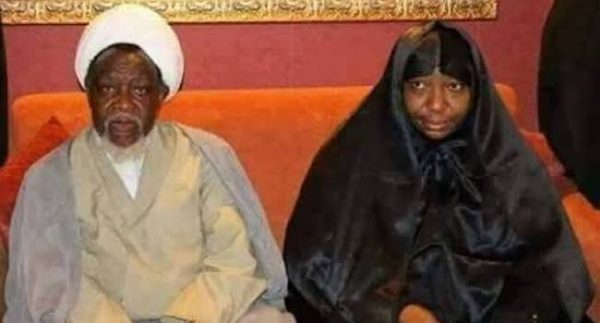
Nigerian Government has responded to claim by the leader of the Islamic Movement of Nigeria (IMN), known also as Shiites, Ibraheem El-Zakzaky that the government is hindering his treatment.
In a statement by the Permanent Secretary in the federal Ministry of Information and Culture, Grace Isu Gekpe, the government said that since El-Zakzaky got to Dubai and India, he has been displaying ulterior motives against laid down procedures.
The statement said that apart from the fact that El-Zakzaky refused to subject himself to preliminary medical checks, he was demanding for free movement and also access to visitors of all kinds as well as requested to be allowed to check into a 5-Star Hotel instead of being admitted in the hospital.
The statement reads: “The Court on 5th August, 2019 granted Sheikh Ibraheem EL-Zakzaky leave to travel to India for medical treatment. Consequently, the Government and its relevant agencies took steps to comply with the Order.
“In line with the Court Order, El-Zakzaky was approved to embark on the trip with State officials and his choice to be accompanied by his aides and personal Doctors was not opposed by the government.
“On 12th August, 2019, he and other members of the entourage went to India via Dubai. It is to be noted that El-Zakzaky particularly chose Medanta Hospital, India. However, on reaching Dubai, El-Zakzaky began to display ulterior motives against laid down procedures.
“He requested that his passport be handed over to him but the State officials would not budge to his pressure. The situation became worse in India as he refused to subject himself to preliminary medical checks.
“In addition, he demanded free movement and access to visitors of all kinds as well as requested to be allowed to check into a 5-Star Hotel instead of being admitted in the hospital. The request was refused on the ground that he came into the country for medicals and not as a tourist (more so that his Visa was issued on medical grounds and not for tourism). He also demanded that Police protection be withdrawn from him by the Indian authorities.
“Against medical ethics and standard practice, he requested to nominate Doctors of his choice to join the ones tasked by Medanta Hospital to perform medical treatment on him and his wife. This created a stalemate, which the Hospital insisted that he would not dictate to it on the choice of medical personnel to carry the required medical treatment.
“Frustrated by his antics, the Indian authorities have expressed willingness to return him to Nigeria with immediate effect. This is on the account that they will not allow him use their country to internationalize his group’s activities.
“Against this background, the Nigerian government wishes to commend the stand of the Indian Government as well as apologize to her for the unruly behaviour of El-Zakzaky. Similarly, the attention of the public and indeed the international community is hereby drawn to these unfortunate developments.
“The government also wishes to use this opportunity to affirm its readiness to undertake the prosecution of El-Zakzaky through due process if and when he is returned to the country. On this note, his foul cry that he is being held in circumstances worse than he was in Nigeria should be disregarded.”
Leader of the Islamic Movement in Nigeria (MIN), otherwise known as Shiites, Ibrahim El-Zakzaky, told his own story about his medical sojourn in India, alleging that his condition and that of his wife, Zeenat, at the Indian hospital where they arrived Tuesday evening for medical treatment, is worse than that of Nigeria.
The spokesperson of the IMN, Ibrahim Musa, who confirmed today, August 14, said that the group had received an audio message from El-Zakzaky where he narrated the “terrible condition” they had been subjected to in India.
In the full transcript of El-Zakzaky’s message, he said that they were only brought to another detention facility where they do not feel safe, as he only met with a new set of doctors who were brought to handle their case but whom he had not made any prior arrangement with.
Full transcript below:
We are now here in New Delhi, India. As you all know there was an arrangement for us to come here to seek medical care regarding the ailments that we have, myself and Malama Zeenah.
She, Malama Zeenah has a full bullet lodged in her body(that needs to be removed), also she is in need of a knee replacement surgery in addition to other problems. As for me, there are shrapnel, very small fragments in my eyes, in my hands and some in my right thigh that were slowly releasing toxins into my system which caused a lot of complications, which we later discovered that they were the caused of the mini-strokes I have had, both the first and the second time. So we were thinking the first thing to be done is to remove the shrapnel, which is a procedure that couldn’t be done at home and the doctors suggested that we should go abroad where it will be possible for the procedure to be done.
Then the second thing would be to clean my body of the toxins, which I was told are deposited in the bones and some in the flesh and this normally takes time to be done.
I also have a problem with my eye which the doctors that attended to us since after I had a second operation and my sight weakened, suggested that I should be taken to better facilities to have it tended to.
After all this, we were all happy that we are in Delhi and we would be going to a suitable hospital to receive appropriate treatment. In addition, the doctors that came to visit us when we were in Nigeria advised us to come to this hospital called Medanta. That is why we requested to be brought to this hospital.
So before we left Nigeria we heard the news that the American embassy here in India was pressuring the hospital not to admit us when we arrive. And that the hospital had agreed to refuse admitting us. So we were considering going somewhere else when we arrive. But we were later informed that the problem had been sorted out and we would be admitted to the hospital. So we set out from Nigeria.
As soon as we arrived here, we were met with some hospital staff at the airport that escorted us to the hospital.
Since we were in the ambulance they informed (us) that there were a lot of people at the airport waiting to see us even if just when we are boarding the ambulance. But they have evaded them and distracted them by placing two ambulances at that exit claiming we will be boarding those but they decided to bring a different ambulance and leave through a different route so the people at the airport didn’t even get a glimpse (of us).
The Nigerian Civil Aviation Authority (NCAA) has directed all operators, especially airlines operating regional and international flights into the country, to exercise a high level of vigilance
The directive which was signed by NCAA Director-General, Muhtar Usman, is coming against the background of the World Health Organisation (WHO) declaration of the outbreak of the Ebola Virus Disease (EVD) in the Democratic Republic of Congo as a Public Health Emergency of International Concern (PHEIC) in line with International Health Regulations
The red World Health declaration is also coming days after scientists working on Ebola drugs recorded 90 percent survival rates in a breakthrough trial.
The NCAA directed airlines’ Pilots in Command (PIC) of aircraft arriving in any Nigerian airport to report to Air Traffic Control (ATC) about any suspected case of communicable disease onboard their flight in line with Nig.CARs 18.8.22.4.
In case of a suspected case of communicable disease onboard an aircraft, the aircrew is required to fill the General Declaration (Gen Dec) and Public Health Passenger Locator forms as required by the regulations.
After that, completed forms are to be submitted to the Port Health Services (PHS) of the destination aerodrome
“In addition, airlines are to ensure they have onboard a valid and appropriate number of First Aid kits, Universal Precaution Kits (UPKs) and Emergency Medical kits in line with Nig.CARS 7.9.1.11 and 7.9.1.12.
“Airlines are to refresh the knowledge of their Crew members (flight deck and cabin crew) for improved and sustained proficiency in handling and communication with ATC of any suspected case of communicable disease on board.”
The authority also directed that in case of death of a patient, the operating airlines should endeavour to contact Port Health Services for clearance before importing human remains into the country.
These airlines are to also to report to NCAA in writing any suspected case of communicable disease onboard any flight.
“Similarly, the Air Traffic Controllers (ATC) shall immediately communicate to Port Health Services (PHS) any report of a suspected case of communicable disease on board aircraft in line with Nig. CARs 18.8.22.4.”
The authority said it expects strict compliance and will collaborate with all relevant agencies to prevent the incursion of Ebola or any communicable disease into Nigeria.
Sheikh Ibrahim El-Zakzaky arrived Delhi, the capital city of India for medical treatment in the early hours of today, August 13, even as an Islamic group in India, Anjuman e-Haideri, has undertaken to foot all the medical bills of El-Zakzaky and his wife. The Islamic Movement In Nigeria (IMN) confirmed that El-Zakzaky and his wife, Zeenat, were received by medical doctors and wheeled into the hospital.
The spokesperson of the IMN, said that Ibrahim El-Zakzaky and his wife made a stopover at Dubai International Airport in the early hours of today, August 13 at about 4:00 am.
El-Zakzaky alongside his wife and other security personnel left Nigeria yesterday, August 12 aboard an Emirate Airline number EK2614.
The couple took off from the Nnamdi Azikiwe International Airport, Abuja yesterday, August 12, following the order of a Kaduna State High court which granted them leave to undergo treatment at an Indian hospital of their choice.
Meanwhile, report reaching us said that an Islamic group in India, known as Anjuman e-Haideri, in a letter signed by its General Secretary, Mr. Bahadur Naqvi, and addressed to the Managing Director and Chief Surgeon of Medanta Hospital, Dr. Naresh Trehan, offered to foot all the medical costs incurred by the El-Zakzakys in India.
A copy of the letter dated 12th August, 2019 reads: “Maulana Ibrahim Al-Zakzaky, who is a prominent Shi’a Muslim leader having a large following worldwide will be treated in your hospital.
“The Executive Committee of Anjuman e-Haideri, Jor bagh, New Delhi, by the direction of our Chief Patron, Maulana Kalbe Jawad Naqvi, has decided unanimously to bear all the medical costs incurred in India for his treatment.
“Kindly consider our request, do the needful and oblige.”
Sheikh El-Zakzaky, who is over 66 years old, suffers from Ischaemic heart disease, chronic hypertension, right eye severe visual impairment with progressive open glaucoma, mental toxicity, lead poisoning among other illnesses.
First batch of Nigeria’s contingent to the 12th African Games holding in Rabat, Morocco have arrived in the North African country for the Games.
The Team’s Deputy Chief De Mission, Dr. Simeon Ebhojiaye confirmed today, August 13 that the first batch of contingent arrived in Casablanca today’s morning en route Rabat for the Games.
“The team just arrived safely in Casablanca and on its way to Rabat for the Games, ” he said.
Ebhojiaye said that the team of eight Judo athletes and officials arrived for the Games, while other batches were being expected from Wednesday.
About 462 athletes and officials will be representing Nigeria at the Games scheduled to begin August 19 and end on August 31.
Some events like football will, however, start before the opening ceremony, so athletes involved will have to be on ground before then.
The Permanent Secretary, Ministry of Youth and Sports Development, Olusade Adesola, had earlier told News Agency of Nigeria (NAN) that everything has been put in place by the Federal Government to ensure a good outing for the country.
He charged the athletes to be disciplined, patriotic and compete without any form of doping infractions as they strive to top the medals table at the Games.
Team Nigeria finished second in the last edition of the Games in Congo Brazzaville in 2015.
The Board of Trustees (BoT) chairman of the Peoples Democratic Party (PDP), Senator Walid Jibrin, has said that he is in support of President Muhammadu Buhari-led government Rural Grazing Areas (RUGA) programme and advised the Southeast, South west, and other parts of the country to support it.
“I am not in APC. I am a PDP chieftain. But when we talk of development and security, we should leave anything about politics, religion and tribe.
“Whoever is ruling in Nigeria, if he brings any programme that will do away with insecurity, killings and will take care of the welfare of the people, I will go by that. My politics is not do or die and I play politics without bitterness.”
Senator Jibrin, who spoke to newsmen at his Nasarawa country home today, August 13, insisted that the programme would promote peace and security in the country.
“Apart from that, it will also tackle incessant farmers/herdsmen conflicts as well as boost food security in the country.
“About 12 states in the North have already embraced it and have already started the project including Nasarawa state.
“So, I am calling on the southerners, the Igbos, the Yorubas, among others, to embrace it, even though the project is not compulsory.”
He commended the Buhari’s government on behalf of his fellow Fulani for introducing the RUGA project, saying: “I and our tribe (Fulani) have embraced the programme. RUGA project includes the provision of hospitals, schools, water supply and electricity, among other facilities.”
Senator Jibrin is the Sarkin (leader of) Fulani in Nasarawa state.
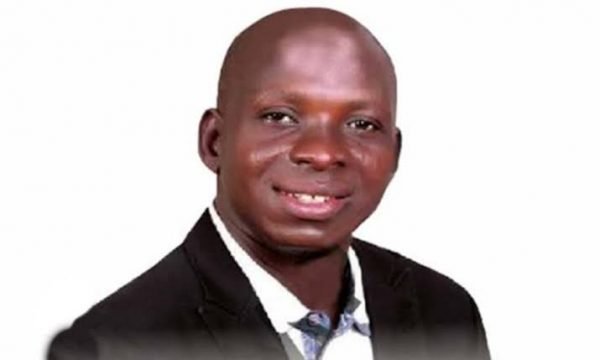
HE suspected Taraba kidnap kingpin is a petty fish trader, painter, politician, polygamist with many children and a philanthropist. His wealth status might have been exergerated because of his generosity and profligate spending.
He was reclusive until the last two years. His wealth, allegedly through kidnapping shot him into ‘prominence’.
He is at the centre of a disagreement between the Army and the Police following soldiers killing of three policemen and a civilian who were on an anti-kidnapping mission in Taraba State.
The incident is under probe following public outcry.
Who is he? His name is Hamisu Bala. His nickname is “Why Do You Mean?”, which many mistake for “Wadume.” He is a Hausa man whose great grand father migrated from Katsina state.
He was born and brought up in Ibi local government area of Taraba State. His late father, Bala, was Hausa, while his mother was Tiv, from Ukum local government area of Benue state.
He holds a secondary school certificate, having attended the Government Secondary School (GSS) Ibi. It was gathered that he was “not a brilliant” Arts student.
“He completed secondary school in 2004 and did not proceed to any tertiary institution,” one of his classmates told The Nation.
Bala, 35, suddenly became so rich that many believe he made it through ‘ritual’. His posh residence in Ibi was built only last year. Before then, he was a petty trader who specialised in buying and selling fish in Ibi.
“He was not even a big trader; he could only afford to buy only one or most of the time, half a basket of fish to sell at retail prices,” a source, who knows him well, said.
Bala was a painter who had partnership with his brother.
During the 2019 polls, he aspired to become a House of Assembly member, representing Ibi Constituency, on the platform of the Young Democratic Party (YDP). But, he did not make it.
After making money Bala has been living the life of a philanthropist.
In the last two years, he reportedly built houses for his friends and donated hundreds of motorcycles and cars to young men and women. He is also believed to be generous to security agents.
“Sometimes he (alleged kidnapper) goes to tea sellers and settles the bills of tea drinkers. Then, he gives N10,000 each to the people,” a source in Ibi said.
Two of his wives have been under house arrest. His other two wives are in Mecca on pilgrimage, it was learnt.
So, how did police know Bala was a big time kidnapper to the extent of apprehending him? One of Bala’s accomplices, known as Kwarba, was apprehended by the police in Jalingo, over his alleged involvement in the kidnapping of a Permanent Secretary.
During interrogation, Kwarba revealed that Bala was their leader. The police then allowed Kwarba to be communicating with Bala on the phone for over three days, as though he was not in detention. Based on their communication, the police were able to gather useful information.
It was during one of their conversations on the phone that Bala disclosed that he was coming to Ibi for Eid el Kabir celebration. On arrival in Ibi, Bala phoned Kwarba to inform him.
Operatives of the Intelligence Response Team (IRT) embarked on the journey. They got to the police headquarters in Jalingo, before proceeding to Ibi, in a white Toyota Hummer Bus marked, LAGOS: MUS-564EU.
They were in mufti, and carried Kwarba along so that he could identify Bala. They met Bala at a coffee joint, at the junction to Government Lodge. Kwarba identified him.
To pull the wool over the kidnapper’s eyes, the policemen in disguise went out and told him they brought a bus for sale. Bala sought to know the cost of the vehicle so that he could buy it, but the policemen suggested they would step aside for bargaining.
It was when he (Bala) got into the bus that the policemen told him they were there to arrest him, after handcuffing and chaining his legs.
After arresting the suspect, the operatives drove into Ibi town briefly and began to drive carefully out of the town.
But while passing the coffee joint, (where Bala was picked) the suspected kidnapper forced his head out of the vehicle and shouted: “I have been kidnapped by these people.”
Soon, the news spread and some of Bala’s ‘boys’ began to chase the vehicle on motorbikes. The operatives had passed the first and second check points, with only one remaining to pass.
Bala’s accomplices then called the military checkpoint where the bus was ambushed. They opened fire on the bus conveying the operatives and suspected kidnapper. The bus somersaulted into the bush, following the barrage of gun fire, as the driver lost control of the wheel.
A source revealed that, after the killing of the three policemen and the civilian, Bala, who was handcuffed and chained in the legs, crawled and took refuge in the home of an old Jukun woman.
The following day, he called his army captain friend who came with three of his ‘boys’ in a red Tyoyota Corolla.
Our source alleged that the army captain cut the chains on the suspected kidnapper.
“It was around 7:30 am that he (Bala) was taken back to his home in Ibi in the red car,” an eyewitness said.
On getting back to Ibi, his neighbours and Ibi residents went into jubilation. It was gathered that while the jubilation was on, Bala sneaked out of town. He has not been seen since then.
We use cookies on our website to give you the most relevant experience by remembering your preferences and repeat visits. By clicking “Accept”, you consent to the use of ALL the cookies.
This website uses cookies to improve your experience while you navigate through the website. Out of these, the cookies that are categorized as necessary are stored on your browser as they are essential for the working of basic functionalities of the website. We also use third-party cookies that help us analyze and understand how you use this website. These cookies will be stored in your browser only with your consent. You also have the option to opt-out of these cookies. But opting out of some of these cookies may affect your browsing experience.
Necessary cookies are absolutely essential for the website to function properly. This category only includes cookies that ensures basic functionalities and security features of the website. These cookies do not store any personal information.
Any cookies that may not be particularly necessary for the website to function and is used specifically to collect user personal data via analytics, ads, other embedded contents are termed as non-necessary cookies. It is mandatory to procure user consent prior to running these cookies on your website.


 The Central Bank of Nigeria (CBN) has released guidelines for the disbursement of lower denominations of the naira through microfinance banks (MFBs) across the country.
 Nigerian Government has responded to claim by the leader of the Islamic Movement of Nigeria (IMN), known also as Shiites, Ibraheem El-Zakzaky that the government is hindering his treatment.
 Leader of the Islamic Movement in Nigeria (MIN), otherwise known as Shiites, Ibrahim El-Zakzaky, told his own story about his medical sojourn in India, alleging that his condition and that of his wife, Zeenat, at the Indian hospital where they arrived Tuesday evening for medical treatment, is worse than that of Nigeria.
 The Nigerian Civil Aviation Authority (NCAA) has directed all operators, especially airlines operating regional and international flights into the country, to exercise a high level of vigilance
 First batch of Nigeria’s contingent to the 12th African Games holding in Rabat, Morocco have arrived in the North African country for the Games.
 HE suspected Taraba kidnap kingpin is a petty fish trader, painter, politician, polygamist with many children and a philanthropist. His wealth status might have been exergerated because of his generosity and profligate spending.

The Army-Police War: Where Is The NSA? By Yushau A. Shuaib