The Permanent Secretary, Special Duties, Ministry of Finance, Dr. Mohammed Dikwa, has recounted how the Presidential Initiative for Continuous Audit (PICA) blocked the leakage of N500billion across Ministries, Departments and Agencies, MDAs.
Permanent Secretary, who spoke when members of the National Institute for Policy and Strategic Studies (NIPSS) alumni visited him in his office in Abuja, stressed that if the PICA initiative was not in place, the N500 billion saved by the government would have been spent by MDAs.
“If you recall, over the last four years, this administration has put in place a lot of policies on ground and I am part of the financial policies put in place by the Ministry of Finance.
“One of the fundamental achievements was saving the government over N500bn from leakages and wastages under my leadership at PICA.
“If the initiative was not in place, this amount of money we are talking about would have been spent by MDAs.
“It was because of this initiative that was put in place that we were able to save that money from treasury looters.”
According to Dikwa, the primary focus of PICA is to put internal control systems in place to check unnecessary spending of government revenue.
“We have also put in place so many other measures like the Whistle-blowing Policy.
“When we came up with the policy, an average of 11, 000 tips were received on a monthly basis, but now, we hardly receive 20 to 30 tips simply because people have reduced the wrong doing in government.”
Speaker of the Edo State House of Assembly, Francis Okiye
Speaker of the Edo State House of Assembly, Francis Okiye, has filed a suit, asking an Abuja federal high court to stop the National Assembly from taking over the State House of Assembly’s functions.
In an originating summon and a motion on notice for interlocutory injunction with suit number: FHC/ABJ/CS/815/2019 filed by the speaker and the state’s assembly, the plaintiffs asked Justice Nkeonye Maha to restrain the National Assembly from going ahead with its plans pending the hearing on the matter.
The suit was instituted against the Clerk of the National Assembly, Mohammed Sani-Omolori, (first defendant) and the National Assembly of the Federal Republic of Nigeria (second defendant).
News Agency of Nigeria (NAN) reports that the state’s seventh assembly was inaugurated in controversial circumstances on June 17, when nine out of 24 members-elect during inauguration elected Okiye as the speaker at 9.00 in the night.
However, besides the House of Representatives that threatened to take over the assembly should Governor Godwin Obaseki fails to issue a fresh proclamation for the assembly’s inauguration recently, the Senate had, on Tuesday, passed a resolution giving the governor a week to issue the proclamation letter or risk the takeover of the state’s legislature.
The matter, which was brought before Justice Maha on July 23, was adjourned until July 31 for hearing since the parties were yet to be served.
However, the lead Counsel to the plaintiffs, Ola Olanipekun (SAN), today, July 31, told the court that after the defendants had been properly served as ordered by the court, the Senate on Tuesday, July 30, still went ahead and passed a resolution for the takeover of the assembly if the governor fails to comply with its resolution.
He explained that the defendants, through their lawyers, had on Tuesday served the plaintiffs a counter affidavit to their motion and written address and also filed a memorandum of conditional appearance.
He said that it is disheartening that despite that the governor had already issued a proclamation which was duly gazetted officially and that the members of the state assembly had duly been inaugurated, principal members elected and the house has since been performing its functions, the federal lawmakers directed Obaseki to issue a fresh proclamation.
The judge adjourned the case to August 7 to enable the complainants respond to the counter affidavit and written address filed by lawyers to the National Assembly.
Special Assistant in the Presidency, Alhaji Tijani Yusuf is dead. Tijani Yusuf, who died today, July 31 after a brief illness in Abuja at the age of 63, was special assistant on special duties to the Permanent Secretary in the State House, Presidential Villa, Jalal Arabi.
A statement by the special adviser to President Muhammadu Buhari on media and publicity, Femi Adesina, described the deceased as a very likeable and unassuming gentleman.
“Yusuf was known for his excellent administrative skills, most notably, his pivotal roles during Swearing-in/Oath-taking ceremonies of top appointees of the Federal Government before Nigerian leaders.
“In recognition of his meritorious services, Yusuf was given the national honours of Member of the Order of Niger, (MON 2006), and Officer of the Order of Niger, (OON 2012) after receiving several commendation letters, including one from the Archbishop of Canterbury.”
The decased was deployed to the State House in 1994 from the Federal Ministry of Water Resources and Rural Development and rose to the rank of Director in 2013, and retired in 2016 after decades of serving several Nigerian military and civilian leaders.
Following his mandatory retirement on the basis of age, he was appointed Special Assistant to the Permanent Secretary.
Femi Adesina said that late Yusuf will be sorely missed by the Management and Staff of the State House.
After prayers at the Abuja National Mosque, his remains were conveyed for interment in his hometown, Minna, Niger State.
The Catholic Archbishop of Abuja, Cardinal John Onayeikan has expressed fear that the way the federal government proscribed the Islamic Movement in Nigeria (IMN), known also as Shiites, shows that his Catholic Church could be next to be proscribed.
Saying that the proscription of the IMN was an error, the senior cleric said:
“the proscription portrays us as a country where government can wake up one day, get a court order from nowhere that particular religious group is proscribed.
“If we allow that to go, it means Catholics and my own religion too can be proscribed any day by any government who manages to get any judge to issue an ex-parte or non-ex-parte order.”
He insisted that Shiites have the right to protest the continued incarceration of their leader, Ibraheem El-Zakzaky, adding that if he (Onaiyekan) is detained unjustly, it would be difficult to prevent Catholic faithful from protesting against his incarceration.
The Ooni of Ife, Oba Adeyeye Ogunwusi has said that one of the plans to restore normalcy to the security situation in the Southwest is to fish out Fulani people that have constituted themselves into security risk and banished from the region.
The Ooni, who responded to reporters’ questions shortly after an audience with President Muhammadu Buhari at the Presidential Villa, Abuja today, July 31, admitted that not all the Fulani herdsmen are bad.
Ooni said that the call for the Fulanis to leave Southwest was because of the tension they have brought to bear on the region, but that such call is no longer necessary.
“Well, it was because of the tension but this time around, the traditional rulers have arrived at a resolution to ensure that that will not happen. It is the bad ones that should be focused on. We all live in Nigeria: it is the bad ones that have come in from different borders that are poroused. Those are the ones we will focus on to separate the corn from wheat.
“We are saying the bad ones should leave. The bad ones can never stay. Even Mr. President is with us on that. Even the Fulani clan do not want the bad ones to spoil their name. So many people are hiding under Fulanis to do evil now, so the bad ones must go.”
The Ooni, who led other traditional rulers from the Southwest to the meeting with the President said that in the new security arrangement, policemen and officers will be recruited from among people born and living in the various communities in the region.
“Community policing, so that they will recruit policemen and officers from
“We were told about community policing so the policemen will be recruited from the community: those that were born there, brought up there and they won’t be able to move them around. So we can use that strategy to avert a lot of tension going around the south west in particular now. We were able to achieve that milestone.
“Another milestone we achieved is that Mr President will fast track very rapid monitoring of our forests by using the technology of modern standard, the drones. The various security agencies will rally round the Inspector General of Police (IGP) and see how it can be properly deployed.
“Another thing is that they will install CCTV along our highways, the IGP said they are very aggressive about clearing our highways now.
“We believe that with all these there will be reduction in the tension in the Southwest because the Southwest is very sensitive in Nigeria. We don’t pray for crisis or war or uprising because it will snowball into a lot of things. That is why we are all represented from the six states that make up Southwestern Nigeria. We thank God that Mr. President is listening and so far so good, we are seeing the light at the end of the tunnel.”
Asked if the monitoring of the CCTV was factored into the discussion, the monarch said: “Absolutely. This time around, it is a fruitful interactive session. “It is not the normal let’s talk the talk, we are talking the work and we are going to walk the talk.
“Because, we as traditional rulers we know our people, we know the good, the bad and ugly, and that is why the government is taking it to another level by involving us directly on how to implement their initiatives.
“If they want to start community policing and they give it to politicians, it is not going to work. That is why they are involving us. Because, we know the people that are born within our communities: we know how to recommend them for this kind of employment. We know the good ones that will be willing to serve their communities. So by doing that, we will have crime reduction in our communities, because each community is peculiar.
“So, what government is doing now is a different ball game entirely. It had never been done before. So we should all work, cooperate with the government and see how they will implement them.
“Because, the problem has been that if you take police officers to the north, within six months they will shift them to another place in the south. They are not domiciled there and so any time they get there, they depend on the vigilantes, community heads, the Mogajis, the Baales and all the districts heads, so why can’t you give the jobs to the families of the Mogajis, the Baales, and all the districts heads? “So, it is a different rejigging and I can assure you the government is very serious now.”
Traditional rulers from the Southwest Nigeria, led by the Ooni of Ife, Oba Adeyeye Enitan Ogunwusi, today, July 31, storm the Presidential Villa, Abuja to confer with President Muhammadu Buhari on how to stem the rising cases of insecurity in the region.
The All Progressives Congress (APC) has warned the presidential candidate of the Peoples Democratic Party (PDP) in the last election, Atiku Abubakar to stop playing alternate President of Nigeria or be made to face felony charge. The ruling party reminded Atiku that there can only be one democratically elected and legitimate government at a time in Nigeria. A statement by the APC National Publicity Secretary, Mallam Lanre Issa-Onilu, warned Atiku that the laws are clear on all acts of criminalities, in this case, a clear case of felony, adding that the enforcement of relevant laws should apply to every Nigerian, irrespective of class and status. “The APC strongly condemns the 2019 presidential candidate of the oppositions Peoples Democratic Party (PDP), Atiku Abubakar who has now made it a pastime to make public statements on issues, which constitutionally should be reserved for the duly elected head of government or his designees. “As a party, we would have thought that Atiku who in the past occupied such high office as the country’s vice president would clearly understand the workings of government, particularly as it bothers on national security, foreign policy and our international engagement. “We have noted Atiku’s incessant habits of releasing statements on public issues as if he were an alternative President of this country and with a clear intention to undermine President Muhammadu Buhari and the APC-led government. “In recent times, Atiku has demonstrated lack of regard for the sovereignty of the office of the President and Nigerian government through condescending statements. He has made several of such statements regarding the activities of the Nigerian military, issues of national security, and international relations. “The latest of such statements is the one he made on the emergence of Boris Johnson as Prime Minister of Britain even when our duly elected President, who has the responsibility of making an official statement on such matter, has made the position of our country known. “We note with serious concern that Atiku has been throwing himself around as a shadow President of Nigeria. We would like to state clearly that such position could only be found under the parliamentary system; it does not exist under the Presidential system of government that we practice in Nigeria. “Atiku, like every Nigerian citizen, should understand that being a candidate for an elective office, including that of the President, does not confer on him a sovereign status. Atiku’s continuous portrayal of himself as a shadow President under our system borders on felony and makes him a patent impostor. “There can only be one democratically elected and legitimate government at a time in this country. That clearly is the administration of President Muhammadu Buhari. It is important to remind Atiku that issues of national security, foreign policy and international engagements are not matters to be exploited to achieve mischievous political ends. “We reiterate that Atiku has lost the 2019 presidential election and it would be unhelpful to him to continue to make a mockery of our country. We expect Atiku to quickly address himself to the stark reality of his loss and move on. Our laws are clear on all acts of criminalities, in this case, a clear case of felony. “Nigerians expect that the enforcement of relevant laws should apply to every Nigerian, irrespective of class and status. This government would not be found wanting where it is required to take decisive actions.”
One of the witnesses in the ongoing hearing on the petition filed by the Presidential candidate of the Peoples Democratic Party (PDP), Atiku Abubakar at the Presidential election petition Tribunal, Sule Mai’Adua has said that President Muhammadu Buhari, the candidate of the ruling All Progressives Congress (APC), in the disputed election was his school mate in Katsina.
Sule Mai’Adua, who is a retired Civil Servant, admitted that he attended the same secondary school with Buhari and that he took photograph with him while they were in class six.
He also told the tribunal that he wrote WASC examination in 1961 with Buhari and that he (Buhari) has two certificates.
When asked to read the army’s statement that Buhari’s certificates were not in his personal file with the military, the witness said he was never in the army and does not know the position of the army, but insisted that Buhari has two certificates.
Earlier, Buhari through his lead counsel, Chief Wole Olanipekun (SAN), had tendered series of documents including newspaper publications, receipts and certified true copies of WASC certificate, confidential result sheet from Provincial Secondary School and copy of Buhari’s CV duly signed by him as exhibits.
Although, both INEC and All Progressives Congress (APC) did not object to the admissibility of the documents, Atiku and PDP registered their opposition to the admissibility of the documents, but reserved reasons to the objection till the final address stage.
According to them, the documents were not pleaded and listed as documents to be tendered, adding that it was shocking to know that the documents were only filed today, July 30.
File photo of The repentant Boko Haram members | Credit: ChannelsTv
The Presidency has insisted that the government of Muhammadu Buhari has not only degraded Boko Haram terrorism ten years after its members mounted series of attacks on the Nigerian State, but that the terrorists have since been defeated.
“The real Boko Haram we know is defeated. What we have now is a mixture of remnants of the Boko Haram, fugitive criminals and the Islam in Maghreb together with West African terrorists bonding together. This is a fall out of the collapse of the Libyan State, and from farther away, of the Islamic State in Iraq, Syria and Lebanon. They are taking advantage of our porous Sahelian borders.”
A statement today, July 30, by the senior special assistant to the President on media and publicity, Malam Garba Shehu said that as a consequence of these international gangs, “we have seen an increase of trans-border crimes and the proliferation of small arms in the Lake Chad Basin area. Outrages are common in Niger, Mali, Chad and Cameroon.
“Nigeria is a large country covering nearly one million square kilometres. This is roughly equivalent to the size of France and Germany put together. In addition to our porous borders, in the neighbouring Sahel-Sahara region, a lot of ungoverned areas provide haven for terrorists’ occupation and training.”
The Presidency said that without the tremendous efforts of our armed forces and the joint operations by the Nigeria-led Multinational Joint Task Force (MNJTF), formed by the countries of the Lake Chad Basin, this single problem of illegal arms flow would have been much worse.
It said that at the moment, the Nigerian government under President Muhammadu Buhari has made the country safer than it met it, recalling that in 2015 when he took power, Boko Haram terrorism was active in nearly half the number of states in the country.
“They controlled a territory the size of Belgium, with a flag and systems of administration and taxation of their own. Emirs and Chiefs had fled their domains along with hundreds of thousands of ordinary citizens. Such is no more; they have been taken from them.
“At present, terrorist activities have been confined to the remote, rural agrarian areas of Borno State and pockets of outrages in Adamawa and Yobe States.
“As the situation develops, our fantastic armed forces are changing their tactics. Just recently, they launched “Super Camps.” The essence of this is to act proactively and respond quickly to the changing nature of terrorism.
“In addition to the additional support the government of Nigeria is receiving from friendly countries across Europe, United States and the Middle East, the Nigerian government is spending large sums of money in weapons procurement to keep our military in good fighting shape.
“While the military arsenal is not something you pay for and get, requiring mostly long-time orders, weapons will come in accordance with the terms of contracts. This country is expecting the commencement of the delivery of Super Tucano fighter jets, very effective in this kind of warfare, beginning next year from the United States.
“The administration has embarked on an ambitious electronic/digital border monitoring scheme to curtail the porosity of the borders and, working with the UN agencies, the World Bank, the Islamic Development Bank, donor agencies and friendly countries, has started providing solutions to backwardness in development and poverty in the sub-region because at the very heart of recruitment schemes of the terrorists lies the issue of poverty.
“A few weeks ago, the administration inaugurated the Northeast Development Commission, to fast track development and poverty eradication in the affected areas.
“The Buhari administration is strongly encouraged by successes recorded so far by our armed forces and the MNJTF, and is optimistic that in the same way as our military defeated the Boko Haram, so would the ISWA terrorism be defeated,”
Exxon Mobil Corp’s plan to accelerate asset sales, a way of delivering needed cash to finance shareholder returns and major projects, is getting off to a slow start as oil companies pull back on big deals.
The largest U.S. oil company is expected to report a 79-cents-a-share profit, down from 92 cents a year earlier, according to data provider, Refinitiv. With little cash from asset sales and a third straight quarter of weaker year-over-year earnings, Exxon cannot resume share buybacks sought by investors this year, said analysts.
Reuters reports that Chief Executive Darren Woods this year set a target of raising $15 billion by trimming its portfolio through 2021, above the average $3.3 billion a year rate between 2017 and 2013. The sales could include more oil-producing properties, compared with prior deals mostly in refining and marketing, he said.
But those goals are proving difficult. In its first quarter, proceeds from sales were just $107 million, the lowest in at least 11 quarters, and analysts expect the second quarter to come in at a similar level. Exxon last quarter agreed to sell a U.S. Gulf of Mexico property for $200 million.
“There´s not enough cash flow for buybacks, which is what people want to see,” said Jennifer Rowland, analyst at Edward Jones, who has a “hold” rating on Exxon. Exxon may have to use debt to help fund its shareholder dividend, she said.
A package of offshore Gulf of Mexico oilfields that Exxon put on the market last autumn has languished, said analysts. More recently, the company has begun to market offshore properties in Nigeria and Norway, according to analysts and people familiar with the matter. Any one could raise several billion dollars in a sale, the people said.
Stephen Greenlee, who oversees divestitures as president of Exxon’s Upstream Business Development group, was not available to address the asset sales, an Exxon spokesman said.
Exxon shares are rated a “buy” by just 23% of analysts, below BP PLC’s at 71%, Chevron Corp’s 74%, Royal Dutch Shell’s 80% and Total SA’s 89%, according to Refinitiv.
“The market is not ready to pay what Exxon thinks these assets are worth,” William Turner, a vice president at researcher Welligence, said of the offshore U.S. properties. “A lot of the recent transactions in the Gulf of Mexico have been going at discounted valuations.”
Exxon’s pitches are not the only going unanswered, said a U.S. merger and acquisition advisor who requested anonymity speaking about M&A matters. “There has been less activity. I’m not sure if it is the bid/ask or something else; but they just aren’t there,” the person said.
There is no doubt Exxon’s cash could use a boost. Analysts slashed earnings forecasts to 79 cents a share from 97 cents after the company disclosed operating unit expectations this month.
“We expect another large funding gap this quarter,” wrote Cowen analyst Jason Gabelman, who estimated Exxon’s organic free cash flow this quarter will not cover the $3.7 billion needed for dividends.
The two areas expected to show improved margins during the period, crude sales and refining, were offset by weaker natural gas prices and higher maintenance costs. The result was “another disappointing quarter,” wrote Biraj Borkhataria, analyst at RBC Capital Markets, in a client note.
Exxon has been investing to boost production in the Permian Basin, the top U.S. shale field, and in offshore Guyana. Exxon “is always countercyclical” and “has to be viewed in the long term,” said John Groton, director of equity research at Thrivent Asset Management, which holds Exxon shares. Exxon’s shares are up less than 1% over the last 10 years.
We use cookies on our website to give you the most relevant experience by remembering your preferences and repeat visits. By clicking “Accept”, you consent to the use of ALL the cookies.
This website uses cookies to improve your experience while you navigate through the website. Out of these, the cookies that are categorized as necessary are stored on your browser as they are essential for the working of basic functionalities of the website. We also use third-party cookies that help us analyze and understand how you use this website. These cookies will be stored in your browser only with your consent. You also have the option to opt-out of these cookies. But opting out of some of these cookies may affect your browsing experience.
Necessary cookies are absolutely essential for the website to function properly. This category only includes cookies that ensures basic functionalities and security features of the website. These cookies do not store any personal information.
Any cookies that may not be particularly necessary for the website to function and is used specifically to collect user personal data via analytics, ads, other embedded contents are termed as non-necessary cookies. It is mandatory to procure user consent prior to running these cookies on your website.


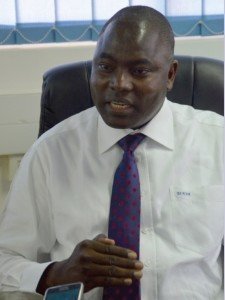 The Permanent Secretary, Special Duties, Ministry of Finance, Dr. Mohammed Dikwa, has recounted how the Presidential Initiative for Continuous Audit (PICA) blocked the leakage of N500billion across Ministries, Departments and Agencies, MDAs.
 Special Assistant in the Presidency, Alhaji Tijani Yusuf is dead. Tijani Yusuf, who died today, July 31 after a brief illness in Abuja at the age of 63, was special assistant on special duties to the Permanent Secretary in the State House, Presidential Villa, Jalal Arabi.
 The Catholic Archbishop of Abuja, Cardinal John Onayeikan has expressed fear that the way the federal government proscribed the Islamic Movement in Nigeria (IMN), known also as Shiites, shows that his Catholic Church could be next to be proscribed.
 The Ooni of Ife, Oba Adeyeye Ogunwusi has said that one of the plans to restore normalcy to the security situation in the Southwest is to fish out Fulani people that have constituted themselves into security risk and banished from the region.
 The All Progressives Congress (APC) has warned the presidential candidate of the Peoples Democratic Party (PDP) in the last election, Atiku Abubakar to stop playing alternate President of Nigeria or be made to face felony charge.
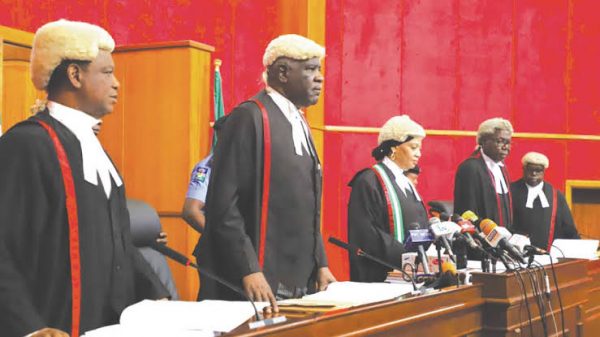 One of the witnesses in the ongoing hearing on the petition filed by the Presidential candidate of the Peoples Democratic Party (PDP), Atiku Abubakar at the Presidential election petition Tribunal, Sule Mai’Adua has said that President Muhammadu Buhari, the candidate of the ruling All Progressives Congress (APC), in the disputed election was his school mate in Katsina.
 Exxon Mobil Corp’s plan to accelerate asset sales, a way of delivering needed cash to finance shareholder returns and major projects, is getting off to a slow start as oil companies pull back on big deals.
