The root cause of Nigeria’s problem is, unarguably, inappropriate system of government. Bad governance, poor economy, insecurity and corruption are just offshoots. It is absurd to pool people characterized by ethnic nationalism with diverse regional allegiance, culture, interest and vision together under a central government, and expect to make progress.
Nigeria’s political structure is incompatible with its plural composition. As a multiethnic society, Nigeria has been struggling under a political framework that is unsuitable, anomalous, and inimical to its future, resulting in discordant policies and delivery setbacks. And until the political structure veiled in unitary configuration is discarded and replaced with federalism or, in the alternative, confederation, Nigeria risks collapse. Nigeria is a hypothesis that has been undergoing experiment, which can now be confirmed to be unworkable due to improper political system. After careful evaluation of its complex diversity, nothing suggestive that the country can ever overcome its challenges with the current system. It is like using palm oil as substitute for aviation fuel to power an aircraft, and expect it to fly. The country is on a wrong trajectory, and incapable of producing any form of prospects, except there is a change of system. The 1999 Nigerian Constitution is in structure, content, spirit and intent, a unitary constitution when viewed against the backdrop of the Exclusive list which has 67 items and the Concurrent list with 13 items, an indication of strong centre, weak states. The constitution is incompetent to resolve Nigeria’s unending woes. It is antithetical to the essence of the country’s amalgamation, where hitherto different independent nations, now have their destinies determined and centrally regulated against their vision and values. What Nigeria needs is a completely new Constitution with features of federalism, characterized by decentralization or devolution of powers to the federating units or regions, with authority over control of natural resources in their domains, together with liberty to pursue their dreams and aspirations in line with their peculiar potentials, values and needs. This will enable them develop at their paces independently without any statutory interference from the centre. Otherwise, the country can be restructured into a confederal system where the regions or federating nationalities should have obligation to wholly manage their affairs, except for responsibilities relating strictly to army, foreign affairs, currency, and perhaps, internal trade, which should be ceded to the central government to administer with full power and authority. These options are the only way Nigeria can be saved from a looming catastrophe, as elasticity of endurance is waning fast.Self-determination by agitators of Biafra Republic, Oduduwa Republic/Yoruba Nation, Niger-Delta Republic, Arewa Republic, and even the recent display and hoisting of Russian flags during the “End-Bad Governance Nationwide Protest” that was held from August 1 -10, 2024 in northern parts of the country, are evidence of widespread discontent arising from the current system of government. Besides, as a consequence of the unitary system, there is a growing feeling of ethnic and regional subjugation among ethnic nationalities, resulting in system disloyalty. Policies enunciated by government designed to reposition the economy, reform the political system, eradicate profligacies, and even eliminate terrorists’ organisations in the country are covertly frustrated with complicities of persons from aggrieved regions or sections. Put differently, differences in values, culture, heritage, tradition, history, language, geography and belief system, have led to clash of visions, interests, goals and priorities among federating units or regions, which have further thrown up centrifugal forces that have held the country hostage. This is a complex inherent challenge and source of division in the country. This portends danger, and a signal of emerging trouble, particularly within the context of young generation of persons in the various ethnic nationalities whose opportunities, talents and creativity are repressed by quota system and intrinsic flaws in the unitary structure. Running a country with people working clandestinely at cross-purposes to advance ethnic and regional agenda, offers no hope of achieving any deliverables beyond cosmetic progress. Also, the unitary system breeds economic injustice among federating states or regions. By allowing some states or individuals to freely harness, harvest and utilise mineral resources and cash crops, including groundnuts, cocoa, rubber, palm oil and solid minerals n their domains, while depriving other regions like Niger Delta of resources in their territories, is a major flaw in the system. It is not only unjust; it is a trigger for insurrection.Specifically, to single out the oil and gas resources in the Niger Delta Region for expropriation through obnoxious Petroleum Act of 1966 which now forms part of Section 44(3) of the 1999 Constitution, is tantamount to robbing Niger Delta people to service other regions. Government has used the law to legalise ownership, with proceeds shared among federating units or states, implicitly depriving the Niger Delta people of control over their resources. Regrettably, the people of the region alone suffer from hazardous effect of oil exploration. The ecosystem of the region has been destroyed, as agricultural and fishery activities are no longer generative. This is further compounded by depletion of their lands which have been constantly acquired by government and allocated as oil blocks to individuals and organisations.Unitary system in a plural society like Nigeria encourages high-stakes investments in politics induced by unhealthy ethnic and regional competition among politicians in an effort to grab power at the centre or federal level, and in turn, use it to control and distribute resources and appointments for ethnic and regional advantage. Such unwholesome quest for power has no place in federalism, where power is decentralized to federating units. Under the unitary system, states and local governments are appendages and dependants of the federal government. They rely on monthly revenue allocation from federal government for survival, which encourages laziness and docility with weak creative capacities for revenue generation. This promotes subservient corporatism and inefficiency.Besides, system contradictions inherent in the unitary system put a wide gap between the people and the central government, and this makes it difficult to hold leaders at the federal level accountable, particularly over breach in governance ethics. But a regionalized or decentralized system will bring people closer to power, and leaders can be held accountable for their actions and inactions. Nigeria’s stunted growth as reflected in the country’s continued decline in general indices, including misery index, is direct consequence of the centralized system, which has caged destinies, and by extension, capacities of the federating nations to develop independently. Therefore, political leaders must be courageous enough to think beyond personal interests and deep-rooted prejudices to support a system that will give the federating units freedom to drive and manage their aspirations. After all, a pluralistic country like India with diverse cultural differences are able to co-exist in peace because of suitable system of government – Cooperative Federalism. Besides, Scotland, Wales, England and Northern Ireland that make up the United Kingdom, separately pursue their dreams and even compete for laurels at Olympics and World Cup, while maintaining their status as members of the United Kingdom. Why can’t Nigeria be unbundled and recreated to make it work, so that federating regions can achieve their goals within the context of their distinct cultural aspirations. The current Nigeria’s system is a catalyst for division, unable to foster unity, a necessity required to drive the country in one direction. The four attributes of Unity, Faith, Peace, and Progress as contained in the country’s coat of arms, have failed to inspire confidence and loyalty, as they barely exist in the minds of Nigerians. In the absence of impaired vision, those opposed to change in status quo (unitary system) are doing so because of entrenched interests arising from benefits their regions or ethnic groups derive from the subsisting configuration. Nigeria’s political structure as encapsulated in the 1999 Constitution (as amended) cannot deliver on the country’s dream of prosperity, other than unending insecurity, ethnic rivalry, strife, nepotism, poverty, stunted development and corruption, which sadly, have become part of Nigeria’s trade mark and identity. Therefore, until the country is unbundled and reconstructed, using a new constitution that devolves powers to regions, which allows them to run independently within the context of their separate cultural and economic aspirations, Nigeria risks dismemberment.
Dr. Mike Owhoko, Lagos-based public policy analyst, author, and journalist, can be reached at www.mikeowhoko.com, and followed on X {formerly Twitter} @michaelowhoko.
Russian President Vladimir Putin has approved a new nuclear doctrine, implementing changes he outlined in September. The updated policy document was released Tuesday.
The revised doctrine permits Russia to use nuclear deterrence to counter aggression from hostile powers or military alliances with weapons of mass destruction or significant conventional arsenals. It also includes countries allowing their territory to be used for attacks against Russia.
The policy states that an attack by one member of a military bloc, even if non-nuclear, will be treated as an assault by the entire alliance. This principle also extends to countries without formal alliances but supported by nuclear powers.
According to the doctrine, Russia aims to ensure that any potential aggressor understands retaliation will be “inevitable.” The policy promises the same protection for Russia’s military allies.
The document outlines ten key threats necessitating deterrence, such as hostile nuclear capabilities, potential weapon proliferation, military build-up near Russian borders, and conventional weapon systems capable of striking Russian territory. It also addresses sabotage risks that could trigger large-scale environmental damage.
Triggers for nuclear action now include verified intelligence of a significant incoming attack involving aircraft, missiles, or drones crossing into Russian airspace.
The president of Russia retains the sole authority to decide on nuclear weapon deployment and inform foreign nations of any related decisions.
This update comes days after reports that U.S. President Joe Biden approved Ukraine’s use of long-range weapons for strikes within Russia. Putin has warned that such moves could lead to direct conflict between NATO and Russia.
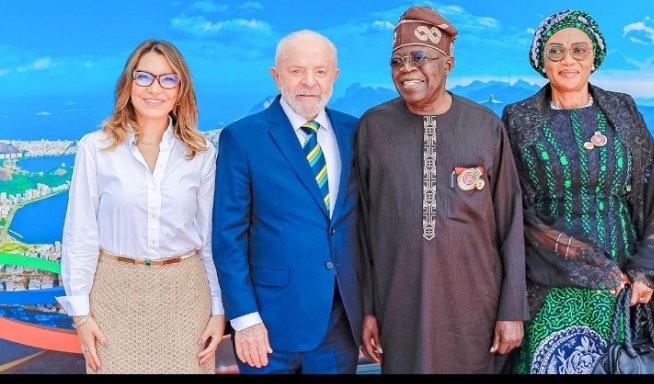
Nigeria’s President Bola Tinubu is seeking international collaboration and cooperation to combat hunger and poverty as well as other socio economic challenges. At the opening session of the G20 Summit in Rio de Janeiro, Brazil, President Tinubu emphasized that Nigeria would continue to leverage international cooperation and resources to bolster domestic strategies. He commended the creation of the Global Alliance Against Hunger and Poverty, championed by President Luiz Inacio Lula da Silva of Brazil, describing it as pivotal in the global fight against hunger and poverty. “This bold and visionary step underscores Brazil’s leadership in addressing one of the most urgent and persistent challenges facing our world today. “The creation of this Alliance marks a significant milestone in our global efforts to eradicate hunger and poverty, and it also sends a powerful message of solidarity to vulnerable populations around the globe. “By fostering collaboration between governments, international organisations, and civil society, this initiative offers a comprehensive approach not only to addressing immediate needs but also tackling the structural causes of hunger and poverty.” President Tinubu noted that the initiative is similar to one of the eight priority areas he outlined at his inauguration 18 months ago, saying that Nigeria’s eagerness to adopt international best practices to advance its economic development is unwavering. He said that Nigeria’s endorsement of the declaration of commitment to join the Global Alliance is a significant step in its efforts to address hunger and poverty. According to him, by supporting the initiative, Nigeria also demonstrates a solid commitment to realizing the Sustainable Development Goals (SDGs), particularly SDG 1, which focuses on eradicating poverty, and SDG 2, which aims to achieve zero hunger. “These goals are at the core of Nigeria’s development agenda, and the Alliance offers a platform to accelerate progress towards them. “By collaborating with international partners, Nigeria aims to leverage best practices, innovative solutions, and financial support to enhance its efforts to combat poverty and hunger. The endorsement reinforces Nigeria’s role as a key player in global efforts to promote sustainable development and improve the quality of life for all its citizens.” President Tinubu emphasized the urgent need for the United Nations Security Council reform to ensure its continued relevance in global interventions. He reiterated Nigeria’s readiness and capability to represent Africa within this elite. He called on the G20 to champion this noble ideal, having admitted the African Union as a group member. “The Security Council should expand its permanent and non-permanent member categories to reflect the world’s diversity and plurality. Africa deserves priority in this. “The Security Council should expand its permanent and non-permanent member categories to reflect the world’s diversity and plurality better. “Africa deserves priority in this process, and two permanent seats should be allocated to it with equal rights and responsibilities. Nigeria stands ready and willing to serve as a representative of Africa in this capacity.” In the statement read on his behalf by the Minister of Foreign Affairs, Ambassador Yusuf Tuggar, President Tinubu noted that the G20 now wears a toga of a forward-looking international institution that upholds reform-minded multilateralism. He commended the decision by the G20 to grant permanent membership to the African Union and for its consistency in sustaining the tradition of inviting guest countries to join the group. This broad participation, he said, allows the opportunity for more inclusive and effective discussions to address shared global challenges. “Some permanent members of the Council have shown promising signs of support for this process, which is a positive development. We welcome this shift in attitude and call for a faster pace to the long overdue change. “The world faces various challenges, including extreme poverty, inequality, climate change, terrorism, and global conflicts. “These issues are exacerbated by longstanding inequities in the global governance system, which have led to unsustainable sovereign debt and distortions in access to capital markets, trade imbalances, unfair representations and hindered development in the Global South. “It is our responsibility to find pragmatic solutions to fix these imbalances. “Particularly pressing is global taxation, which profoundly impacts developing countries. “The current international tax system, largely shaped by the interests of more affluent nations, often leaves developing countries at a disadvantage, especially in taxing digital economies. “This systemic imbalance has led to significant revenue losses, hampering our efforts towards sustainable development and economic self-reliance.” President Tinubu highlighted that Nigeria, alongside other African Group member states, championed a historic initiative at the United Nations: calling for a framework Convention on Tax to establish a more equitable and inclusive global tax system. He urged the G20 to heed the call by countries, especially those of the global South, to reform the international financial architecture. “Multilateral institutions must be revamped to bridge the gap between the Global North and South. This is the path for the future and one the G20 must champion. Nigeria is committed to being part of that future through active participation in the G20 and our steadfast support for achieving SDG 2030 targets.”
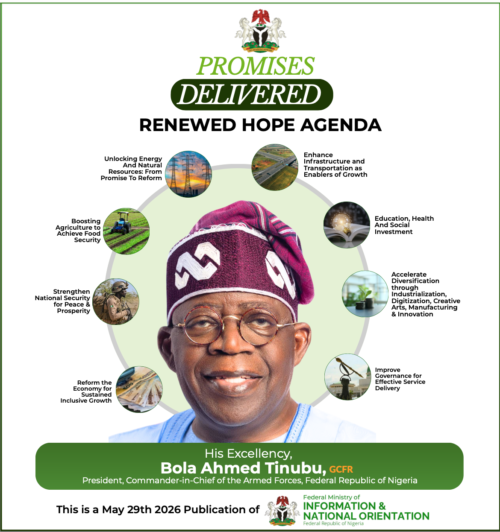
As against the previous practice where the presidency had a media arrowhead, the last of which was held by Ajuri Ngelàle, President Bola Tinubu has now done away with the idea of making one person heading his media team. In re-designing the media team, as contained in a statement today, November 19 by his Special Adviser on Media and Communications Strategy, Bayo Onanuga, the President grouped the three special advisers in one fold. The three special advisers are Bayo Onanuga, who is for media and communication strategy; Sunday Dare, as media and public Communications and Daniel Bwala, as policy communication.
The statement said that the redesigning indicated that “there is no single individual spokesperson for the Presidency. “Instead, all the three Special Advisers will collectively serve as spokespersons for the government.
“This approach aims to ensure effective and consistent communication of government policies, decisions, and engagements.”
Chairman of the Economic and Financial Crimes Commission (EFCC), Ola Olukoyede has tagged most Nigerian lawyers as criminals without which no mega financial fraud, especially illicit financial flows, can be possible. Olukoyede who spoke at the sixth Annual Criminal Law Review Conference in Abuja, stressed that lawyers aid in the transfer of huge funds into offshore accounts, preferably in tax havens. “The most traumatic discovery of the EFCC in recent years was the subjugation of national interest and well-being to personal interest by lawyers who aided briefcase foreign investors to fleece the nation in dubious transactions. “The P&ID scam, the Mambilla Power Project, and Sunrise issues are cases in point.” The EFCC boss said that while the anti-graft agency had had cause to prosecute judicial officers and senior lawyers, his respect for the bench and senior members of the bar remained undiminished. “However, based on the unique experiences of the EFCC in the prosecution of corruption cases, I am particularly interested in systemic reforms in our justice delivery system that capture the process for the discipline and regulation of judicial officers, the regulation and discipline of legal practitioners, ethics, values and standards of legal practice.
“These are essential to me because the job of EFCC is ensuring that the corrupt do not find space in our national life. When they do, to make them pay for their deeds.” The anti-graft chief advised the judiciary “to address the issue of obscene legal fees senior lawyers earn from political office holders, particularly the manner in which they collect such fees which clearly conflicts with existing statutes. “If a lawyer would not care about the source from which a sitting governor or any other public servant pays him millions of Naira to defend him in the electoral tribunal, the lawyer must necessarily be mindful of the fact that the only proper way to collect such humongous amounts is through the financial system. Aside from violating money laundering regulations, hauling millions of Naira of professional fees from public office holders in liquid cash as senior lawyers do is only aimed at tax evasion. “It is needless to stress that the best act of mentoring from leaders of the bar to the younger generation of lawyers is by living out the ethical demands of the profession.”
Under the leadership of Dr. Aminu Maida, the Nigerian telecom industry is undergoing a pivotal transformation that is laying the foundation for a more mature, efficient, and digitally-driven sector. Dr. Maida’s tenure as the Executive Vice Chairman (EVC) of the Nigerian Communications Commission (NCC) marks a shift from rapid infrastructure development to a strategic focus on compliance, governance, and digitalization. His leadership contrasts with that of his predecessor, Professor Umar Garba Danbatta, whose tenure was primarily defined by significant infrastructure expansion, including the successful rollout of the National Broadband Plan and a notable surge in mobile subscriptions. While Danbatta’s efforts played a crucial role in expanding the telecom landscape, Maida’s approach has been to refine and build on these accomplishments, steering the industry toward a more sustainable and regulated future. A key focus of Dr. Maida’s strategy is improving regulatory frameworks. His push to designate telecom infrastructure as critical national infrastructure and advocate for the reduction of right-of-way fees—previously a significant bottleneck under Danbatta’s tenure—has been widely praised as a forward-thinking move to ease operational challenges. Under Dr Maida’s leadership, the sector has experienced growth, with its contribution to the nation’s GDP reaching 14.58% by mid-2024 with a slight increase from 14.13% in 2023 under Professor Danbatta. This upward shift highlights the continued expansion of the sector, driven by Maida’s focus on digital transformation and modernizing infrastructure. While both leaders have significantly advanced the telecom industry, Maida’s leadership focus on improving operational efficiency and advancing the digital landscape. Moreover, Maida has placed a strong emphasis on digitalizing the NCC’s operations. With initiatives such as the License Application Management System, he is working to streamline processes, ensuring greater efficiency in regulatory functions. These steps are expected to enhance transparency, speed up industry approvals, and facilitate smoother interactions between telecom operators and the regulatory body, benefiting consumers and businesses alike. In a sector marked by inefficiencies, Maida’s leadership also extends to tackling long-standing issues like telecom infrastructure vandalism, which continues to cost the industry billions annually. Unlike previous approaches, Maida’s administration has advocated for increased collaboration among industry stakeholders—regulators, operators, and government agencies—to address these challenges. His push for greater stakeholder engagement presents a fresh avenue for solving the infrastructural damage that has plagued the sector for years. Looking ahead, Dr. Maida’s strategy seeks to guide the industry through a phase of maturity. The goal is to not just expand but to enhance the quality of telecom services, improve customer satisfaction, and foster an ecosystem that prioritizes both operational efficiency and consumer protection. While Danbatta’s tenure laid a strong foundation for infrastructure growth, it is under Dr. Maida’s leadership that the industry is expected to achieve long-term stability through effective governance and a more collaborative regulatory approach. Both administrations have made invaluable contributions to the Nigerian telecom sector, but Maida’s tenure seems poised to consolidate these gains, refine existing policies, and position the industry for a future defined by both growth and resilience. His leadership, focused on sustainability and digital innovation, promises to usher in a new era for Nigeria’s telecom landscape, one that balances expansion with operational excellence and consumer welfare.
The Central Bank of Nigeria (CBN) has alerted members of the public on the activities of fraudsters purporting to be in receipt of award letters of contracts related to construction works and special financial interventions on behalf of the Bank.
In a statement today, November 18, the apex Bank’s spokesperson, Hakama Sidi Ali, said that in line with the focus of its current management, the bank has discontinued direct development interventions and special projects funding. “We wish to clarify that this is false. These individuals are solely motivated by the desire to defraud unsuspecting Nigerians. Any such assertions are fraudulent and should be disregarded.” The statement emphasized that CBN has not authorised public notices for such interventions on social media, saying that the bank remained committed to its core mandate of ensuring monetary and price stability, and a sound and efficient financial system in Nigeria. The statement asked members of the public to remain vigilant and promptly report any suspicious platforms or any other news outlet, activities or publications to the relevant law enforcement agencies.
President Bola Tinubu has made it clear that there’s no good thing he can emulate from the leadership of the former President Olusegun Obasanjo. Reacting to what he described as “a recent display of his characteristic self-importance, President Tinubu said Obasanjo “once again took to the public stage to bestow his unsolicited wisdom on leadership and governance in Nigeria.” In a statement today, November 18, issued by his spokesperson, Bayo Onanuga, Tinubu said: “from his lofty perch, he (Obasanjo) blamed those who served after his tenure for the nation’s myriad challenges. “Unfortunately, the former leader’s habit of casting aspersions on every subsequent administration has devolved into a recurring pastime, overshadowing the expectation of an elder statesman to join a constructive dialogue on attaining national progress.” The President said that in his latest critique of the administration of President Muhammadu Buhari, whom he pejoratively called ‘Baba Go Slow’ and President Bola Tinubu, who he tagged ‘Emilokan’, Obasanjo used the platform provided by Chinua Achebe Leadership Forum at Yale University to unfurl his latest treatise on leadership and public morality, adding that he used the forum to write off Nigeria as a failing country. “The irony of Chief Obasanjo using the platform that celebrates Achebe to sermonise on the ideals of good governance, statecraft, economic management, and corruption should be apparent to discerning minds. When he was alive, Chinua Achebe was a universally acclaimed moral, cultural and literary icon with scant regard for Obasanjo. “It is on record that Professor Achebe rejected the third highest national honour bestowed on him by the Obasanjo-led administration in 2004 on the grounds of the prevalence of abuse of power, corruption, poor leadership, and, in particular, state-sponsored brigandage endorsed by Chief Obasanjo in Achebe’s home state of Anambra. “In Anambra, the former president actively supported the abduction of a sitting governor, Dr. Chris Ngige, by non-state actors, led by Chris Uba, a younger brother of Obasanjo’s senior aide. “In rejecting the 2004 national honour by the Obasanjo administration, Achebe declared: “Nigeria’s condition today under your watch is…too dangerous for silence. I must register my disappointment and protest by declining to accept the high honour awarded me in the 2004 honours list.” “Brazen illegality and assault on the Constitution of Nigeria reached a disturbing height under the leadership of Chief Obasanjo. During Obasanjo’s era, the unconstitutional impeachment of four governors who belonged to his party occurred. “The governors impeached by minority members of the Houses of Assembly were Joshua Dariye of Plateau, Rashidi Ladoja of Oyo, Ayodele Fayose of Ekiti and Diepreye Alamieyeseigha of Bayelsa. A man under whose watch all of these egregious infractions occurred should certainly not be the one to give any lecture on leadership and corruption. “He should not be taken seriously as he reeks of profound hypocrisy of the worst form.” Tinubu noted that Obasanjo has continuously pumped himself up as the economic wizard of Nigeria, but that a reality check showed he was nothing of such. “He left unresolved many, if not all, of the problems of Nigeria, which he itemised in his lecture. “He even recently admitted that his government made a mistake by not focussing on gas development, as the Tinubu administration does today. All oil and gas players know that Nigeria has more gas than oil. The only positive of the Obasanjo era was fiscal and monetary policy management buoyed by a consistent rise in crude oil prices throughout his eight-year tenure. “This rise in crude oil prices started in 2000 and peaked in 2013 when it reached over 100 dollars per barrel before a decline in 2014, which set the oil-dependent economy downward. “The current economic crisis the All Progressives Congress administrations have been battling since 2015 is the product of the poor choices in economic management made by Obasanjo and the two successors from his party. Obasanjo prides his government on paying the $15 billion debt owed to the Paris Club. Still, it was not a wise decision as it was done when the country’s critical economic infrastructure across sectors was in shambles. “While oil receipts brought money into the country, Obasanjo failed to fix the deplorable federal roads or expand the national road network. He did not repair the Lagos-Ibadan expressway, the Lagos-Abeokuta road leading to his hometown in Abeokuta, the Otta-Idiroko road, and many others. “His administration also should have paid more serious attention to universities and polytechnics. In a joint vote of no confidence in our tertiary institutions, Obasanjo and his deputy, Atiku Abubakar, sought to profit from their weaknesses by establishing their private universities. As a sitting President, Chief Obasanjo abused his office to advance personal interest against the spirit and letters of our constitution when he corralled leading businessmen, women and government contractors to donate billions of naira for his Olusegun Obasanjo Presidential Library and Resorts in Abeokuta and his Bell University in Otta. “After wasting billions of naira on a failed third-term project in 2007, Chief Obasanjo hurriedly organised a sham electoral process that would go down in history as the most fraudulent election held in Nigeria since 1960. “The beneficiary of the sham election, Umaru Yar’adua, admitted that the election was seriously flawed and, as Justice Muhammed Uwais’s panel recommended, worked towards electoral reforms. It is hypocrisy writ large when a man who presided over the worst election in Nigeria demands the sack of the leadership of the Independent National Electoral Commission. “For eight years, the Obasanjo administration made no significant investment in security by modernising the Armed Forces. He did not redesign the national security architecture or change the military doctrine. The most critical investment in our armed forces, especially the military, since the administration of President Shehu Shagari in 1980 was made by the APC-led administration of President Buhari from 2015-2023. When President Buhari assumed office in 2015, the Air Force had fewer than three serviceable fighter jets, and the Navy barely had one serviceable vessel. Within eight years, President Buhari acquired over 40 new fighter jets of different capabilities, including 12 Tucano jets. “He also acquired naval ships to strengthen the Navy. The APC administration of Buhari developed the air wings of the Army and Navy and changed the entire Armed Forces into one of the most potent fighting forces in the world.” President Tinubu said that he has continued to sustain the same support and funding to the military and other security agencies, adding that it is the reason the country is winning in the multi-pronged fight against Boko Haram terrorists, bandits, kidnappers, and other perpetrators of violent crimes. “In the last year, over 400 terror and bandit kingpins have been eliminated, and thousands of Nigerians have been freed from their abductors. The insecurity that engulfed Nigeria started under the Obasanjo administration with militancy and kidnapping of expatriate oil workers in the Niger Delta, which later became a festering wound from which the nation has not recovered. “Boko Haram, which became a violent movement in 2009, began its build-up under Obasanjo’s regime. “On matters of integrity, honesty, and morality in public leadership, Chief Obasanjo is certainly not a paragon of virtue for anyone to model after. Nigerians can still remember the messy public spat between Chief Obasanjo and his then-vice president, Atiku Abubakar, over PTDF money that led to a Senate Public Hearing in 2004. The sordid details of the public hearing included unsettling evidence of how Obasanjo instructed his Vice President to buy Sport Utility Vehicles for his mistresses with PTDF funds. There was also the Halliburton bribe scandal, which the US Congress probe revealed. Bribe payments were made to the highest political authorities at the Villa while Obasanjo was in charge. “Nigerians will also remember how the Obasanjo administration invested $16 billion on electricity, which left the country in utter darkness. The colossal amount spent on power was so embarrassing that President Umaru Musa Yar’Adua, Obasanjo’s successor, ordered a probe. Similarly, Obasanjo’s privatisation programme was scandalous. It did not deliver real value for the country. “His administration cheaply sold national assets to cronies who stripped the assets of the state-owned enterprises. “A case in point was the aluminium smelter company ALSCON in Ikot-Abasi, Akwa-Ibom State, built by the military government at the princely sum of $ 3.2 billion. “It was sold for 130 million dollars. Obasanjo also sank money into Turn Around Maintenance of our refineries, which never worked, leading to the massive importation of refined petroleum products. “Such was the miasma of corruption under Obasanjo that the former governor of Abia, Orji Uzor Kalu, his party member, petitioned the EFCC, accusing Obasanjo of gross abuse of office. “If Chief Obasanjo had addressed the many problems he critiqued in his poorly written Yale lecture when he ruled Nigeria for eight years, President Buhari and President Tinubu would have had a much lighter burden of fixing the country.” Tinubu said that while his administration is diligently working to overcome the country’s economic challenges, it would be better and more advisable for former President Obasanjo to temper his self-righteousness in his public discussions regarding our nation’s temporary difficulties. Instead, his remaining years would be better spent reflecting on the missed opportunities during his own time in leadership, both as military head of state and civilian president.
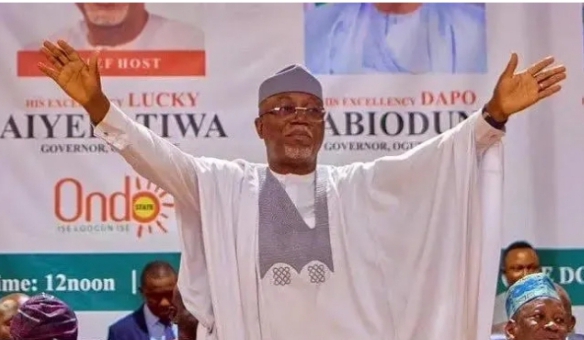
Kogi State Governor, Ahmed Usman Ododo has reminded the re-elected Governor of Ondo State on the platform of the ruling All Progressives Congress (APC), Lucky Aiyedatiwa that his re-election,is a challenge for him to do more for the people of the State. In a message by his spokesperson, Ismail Isah congratulating Ayiedatiwa, Governor Ododo described the victory of Aiyedatiwa and the APC as the result of hard work and strategic planning by the leadership and members of the party who were determined to ensure the APC retains power in Ondo state. The Kogi State Governor, who served as the deputy chairman of the committee on election management and strategy in the Ondo State Governorship Campaign Council, expressed optimism that the administration of Governor Aiyedatiwa will continue the development trajectory in the state. “We have known Governor Aiyedatiwa. He has been tested and can be trusted to continue the good work of the APC administration in Ondo state. “We have no doubt that he will build on existing infrastructure development, social welfare and security of lives and property across the state. “We are confident that he will succeed with this new mandate which is a further boost to the popularity and acceptance of the APC in Ondo state.” Governor Ododo commended the people of the state, especially the non-indigenous communities for their peaceful conduct before, during and after the election, saying that the support of the people would not gone unnoticed. He called on the people of Ondo state to support Governor Aiyedatiwa as he is set to begin his full term from February 2025. Governor Aiyedatiwa was declared winner of the November 16, 2024 Ondo State Governorship poll, having scored 366, 781 votes to defeat his closest challenger, Agboola Ajayi of the People’s Democratic Party (PDP) who scored 117, 845 votes.
THE Independent National Electoral Commission (INEC), has declared Governor Lucky Aiyedatiwa of the All Progressives Congress (APC), as the winner of the Saturday’s governorship election in Ondo State. Aiyedatiwa was declared winner after securing a total of 366781 of votes in the election. Announcing the result in Akure, the state capital, INEC’s Returning Officer and Vice Chancellor of Federal University, Lokoja, Professor Akinwumi Olayemi Durotimi, said that his closest rival, Ajayi Agboola of the Peoples Democratic Party (PDP), got 117845 while Olorunfemi Festus of the Labour Party (LP) had 1162 votes.
We use cookies on our website to give you the most relevant experience by remembering your preferences and repeat visits. By clicking “Accept”, you consent to the use of ALL the cookies.
This website uses cookies to improve your experience while you navigate through the website. Out of these, the cookies that are categorized as necessary are stored on your browser as they are essential for the working of basic functionalities of the website. We also use third-party cookies that help us analyze and understand how you use this website. These cookies will be stored in your browser only with your consent. You also have the option to opt-out of these cookies. But opting out of some of these cookies may affect your browsing experience.
Necessary cookies are absolutely essential for the website to function properly. This category only includes cookies that ensures basic functionalities and security features of the website. These cookies do not store any personal information.
Any cookies that may not be particularly necessary for the website to function and is used specifically to collect user personal data via analytics, ads, other embedded contents are termed as non-necessary cookies. It is mandatory to procure user consent prior to running these cookies on your website.




 The statement said that the redesigning indicated that “there is no single individual spokesperson for the Presidency.
 “This approach aims to ensure effective and consistent communication of government policies, decisions, and engagements.”
 “These are essential to me because the job of EFCC is ensuring that the corrupt do not find space in our national life. When they do, to make them pay for their deeds.”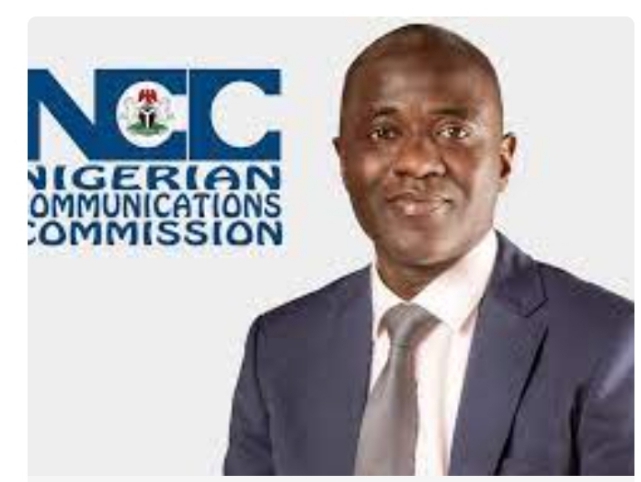




Restructure Nigeria To Avert Its Collapse, By Michael Owhoko
Nigeria’s political structure is incompatible with its plural composition. As a multiethnic society, Nigeria has been struggling under a political framework that is unsuitable, anomalous, and inimical to its future, resulting in discordant policies and delivery setbacks. And until the political structure veiled in unitary configuration is discarded and replaced with federalism or, in the alternative, confederation, Nigeria risks collapse. Nigeria is a hypothesis that has been undergoing experiment, which can now be confirmed to be unworkable due to improper political system. After careful evaluation of its complex diversity, nothing suggestive that the country can ever overcome its challenges with the current system. It is like using palm oil as substitute for aviation fuel to power an aircraft, and expect it to fly. The country is on a wrong trajectory, and incapable of producing any form of prospects, except there is a change of system. The 1999 Nigerian Constitution is in structure, content, spirit and intent, a unitary constitution when viewed against the backdrop of the Exclusive list which has 67 items and the Concurrent list with 13 items, an indication of strong centre, weak states. The constitution is incompetent to resolve Nigeria’s unending woes. It is antithetical to the essence of the country’s amalgamation, where hitherto different independent nations, now have their destinies determined and centrally regulated against their vision and values. What Nigeria needs is a completely new Constitution with features of federalism, characterized by decentralization or devolution of powers to the federating units or regions, with authority over control of natural resources in their domains, together with liberty to pursue their dreams and aspirations in line with their peculiar potentials, values and needs. This will enable them develop at their paces independently without any statutory interference from the centre. Otherwise, the country can be restructured into a confederal system where the regions or federating nationalities should have obligation to wholly manage their affairs, except for responsibilities relating strictly to army, foreign affairs, currency, and perhaps, internal trade, which should be ceded to the central government to administer with full power and authority. These options are the only way Nigeria can be saved from a looming catastrophe, as elasticity of endurance is waning fast.Self-determination by agitators of Biafra Republic, Oduduwa Republic/Yoruba Nation, Niger-Delta Republic, Arewa Republic, and even the recent display and hoisting of Russian flags during the “End-Bad Governance Nationwide Protest” that was held from August 1 -10, 2024 in northern parts of the country, are evidence of widespread discontent arising from the current system of government. Besides, as a consequence of the unitary system, there is a growing feeling of ethnic and regional subjugation among ethnic nationalities, resulting in system disloyalty. Policies enunciated by government designed to reposition the economy, reform the political system, eradicate profligacies, and even eliminate terrorists’ organisations in the country are covertly frustrated with complicities of persons from aggrieved regions or sections. Put differently, differences in values, culture, heritage, tradition, history, language, geography and belief system, have led to clash of visions, interests, goals and priorities among federating units or regions, which have further thrown up centrifugal forces that have held the country hostage. This is a complex inherent challenge and source of division in the country. This portends danger, and a signal of emerging trouble, particularly within the context of young generation of persons in the various ethnic nationalities whose opportunities, talents and creativity are repressed by quota system and intrinsic flaws in the unitary structure. Running a country with people working clandestinely at cross-purposes to advance ethnic and regional agenda, offers no hope of achieving any deliverables beyond cosmetic progress. Also, the unitary system breeds economic injustice among federating states or regions. By allowing some states or individuals to freely harness, harvest and utilise mineral resources and cash crops, including groundnuts, cocoa, rubber, palm oil and solid minerals n their domains, while depriving other regions like Niger Delta of resources in their territories, is a major flaw in the system. It is not only unjust; it is a trigger for insurrection.Specifically, to single out the oil and gas resources in the Niger Delta Region for expropriation through obnoxious Petroleum Act of 1966 which now forms part of Section 44(3) of the 1999 Constitution, is tantamount to robbing Niger Delta people to service other regions. Government has used the law to legalise ownership, with proceeds shared among federating units or states, implicitly depriving the Niger Delta people of control over their resources. Regrettably, the people of the region alone suffer from hazardous effect of oil exploration. The ecosystem of the region has been destroyed, as agricultural and fishery activities are no longer generative. This is further compounded by depletion of their lands which have been constantly acquired by government and allocated as oil blocks to individuals and organisations.Unitary system in a plural society like Nigeria encourages high-stakes investments in politics induced by unhealthy ethnic and regional competition among politicians in an effort to grab power at the centre or federal level, and in turn, use it to control and distribute resources and appointments for ethnic and regional advantage. Such unwholesome quest for power has no place in federalism, where power is decentralized to federating units. Under the unitary system, states and local governments are appendages and dependants of the federal government. They rely on monthly revenue allocation from federal government for survival, which encourages laziness and docility with weak creative capacities for revenue generation. This promotes subservient corporatism and inefficiency.Besides, system contradictions inherent in the unitary system put a wide gap between the people and the central government, and this makes it difficult to hold leaders at the federal level accountable, particularly over breach in governance ethics. But a regionalized or decentralized system will bring people closer to power, and leaders can be held accountable for their actions and inactions. Nigeria’s stunted growth as reflected in the country’s continued decline in general indices, including misery index, is direct consequence of the centralized system, which has caged destinies, and by extension, capacities of the federating nations to develop independently. Therefore, political leaders must be courageous enough to think beyond personal interests and deep-rooted prejudices to support a system that will give the federating units freedom to drive and manage their aspirations. After all, a pluralistic country like India with diverse cultural differences are able to co-exist in peace because of suitable system of government – Cooperative Federalism. Besides, Scotland, Wales, England and Northern Ireland that make up the United Kingdom, separately pursue their dreams and even compete for laurels at Olympics and World Cup, while maintaining their status as members of the United Kingdom. Why can’t Nigeria be unbundled and recreated to make it work, so that federating regions can achieve their goals within the context of their distinct cultural aspirations. The current Nigeria’s system is a catalyst for division, unable to foster unity, a necessity required to drive the country in one direction. The four attributes of Unity, Faith, Peace, and Progress as contained in the country’s coat of arms, have failed to inspire confidence and loyalty, as they barely exist in the minds of Nigerians. In the absence of impaired vision, those opposed to change in status quo (unitary system) are doing so because of entrenched interests arising from benefits their regions or ethnic groups derive from the subsisting configuration. Nigeria’s political structure as encapsulated in the 1999 Constitution (as amended) cannot deliver on the country’s dream of prosperity, other than unending insecurity, ethnic rivalry, strife, nepotism, poverty, stunted development and corruption, which sadly, have become part of Nigeria’s trade mark and identity. Therefore, until the country is unbundled and reconstructed, using a new constitution that devolves powers to regions, which allows them to run independently within the context of their separate cultural and economic aspirations, Nigeria risks dismemberment.
Dr. Mike Owhoko, Lagos-based public policy analyst, author, and journalist, can be reached at www.mikeowhoko.com, and followed on X {formerly Twitter} @michaelowhoko.