


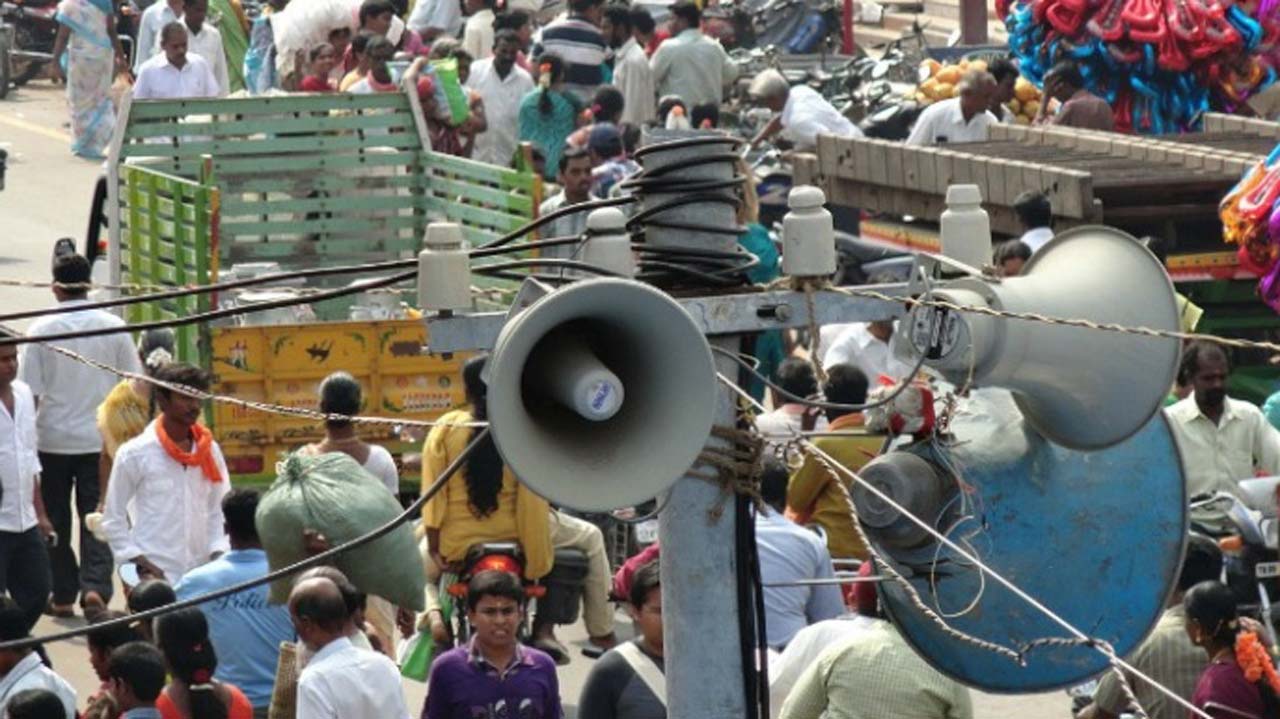

Some Lagos residents have expressed concern over environmental and health challenge arising from increasing noise pollution through public address systems use by religious centres, bars, workshops and also power generators.
The residents, who spoke in separate interviews in Lagos, complained about frequent overnight vigils, loud music from bars, grinding machines, generators and overlapping sounds from worship centres located within residential neighbourhoods.
Mrs. Adewale Miracle, a home baker residing in Abule Egba, said that noise pollution had become a daily struggle for many residents.
“From morning till evening, you hear grinding machines and generator noise everywhere.
“Sometimes, when there is a brief moment of silence, it feels as though your spirit has returned to your body.
“The noise becomes overwhelming and physically draining. By the time one source stops, another starts.”
Miss Chinwendu Nwoke, a university student residing in Akoka, said that constant noise from bars, generators and roadside activities have negatively affected her studies.
“Most nights, loud music from nearby bars continues till very late, while generators run for hours because of power outages.
“It becomes difficult to concentrate while reading, especially during examinations.
“Sometimes, I end up rereading the same page repeatedly because of the distractions.”
Daniel Ogunleye, a secondary school teacher in Bariga, said environmental noise had affected concentration and learning.
“Teaching has become difficult. Sometimes, you forget what you were explaining because of sudden loud sounds from nearby workshops or loudspeakers.
“Schools need to be in a controlled environment because the surrounding noise affects both teachers and students.”
Oladipo Oladele, a civil servant residing in Ikotun, said persistent late-night noise in his neighbourhood had disrupted his sleep pattern.
“You hardly sleep for more than a few hours before preparing for work because one church is conducting a vigil.
“I slept off inside a bus yesterday and missed my stop.”
According to him, exhaustion affects concentration and productivity at work.
Mrs. Kemi Adebayo, a foodstuff seller at Ladipo Market, complained about constant noise from nearby mechanic workshops.
“The banging of metals and continuous engine revving is unbearable.
“Most times, agberos are shouting at drivers or fighting. Everybody is trying to out-shout one another.”
She added that the persistent noise often left traders physically exhausted with headaches at the end of the day.
Ibrahim, a retiree residing in Surulere, said noise from welding activities close to residential buildings had worsened his blood pressure and hearing condition.
“Anytime there is loud noise around me, I feel uneasy and my heartbeat increases.
“Sometimes, people have to repeat themselves before I hear clearly.”
According to him, the sound from welding machines, metal cutters and hammering continues throughout the day, while bars and generators take over at night.
Speaking at the 11th Noiseless Lagos Summit organised by the Lagos State Environmental Protection Agency, the agency’s General Manager, Dr. Babatunde Ajayi, warned about the health implications of prolonged exposure to excessive noise.
“Scientific studies have shown that prolonged exposure to high noise levels can lead to hearing impairment, stress, hypertension, sleep disorders, reduced productivity and several other adverse health conditions.”
Ajayi urged religious organisations, nightclub operators, workshop owners and event centre operators to adopt sound control measures and comply with approved environmental standards or face sanctions.
Also speaking at the summit, an environmental consultant, Rotimi Soremekun, said persistent exposure to loud noise was contributing to rising health concerns globally.
According to him, the World Health Organisation estimates that millions of people are exposed to harmful noise annually, with increasing cases of productivity losses linked to prolonged noise exposure.
Source: NAN.