


The nurses at Al Shifa Hospital in Makkah are well-trained, diligent and passionate about their work. They are very active as well. When I started to come around — returning to this world through the gate of the other world — I imagined the hospital as an army unit and the nurses as soldiers. Mostly Egyptians, they were active, agile young men aged between 23 and 35.
Among my favourites is Walid Abdel Elah Ahmed, an Egyptian. A strong, good and cheerful young man with a wife and a six-month-old baby girl, he clearly enjoys his job. I was always happy whenever he was assigned to me. The system there is that there are shifts, or “change of guards”, every morning at 8 am and every evening at 8 pm. Each patient in the Intensive Care Unit (ICU) is assigned a nurse who is responsible for them during each shift.
Some patients cannot go to the toilet, so they defecate in bed. The nurse responsible for such a patient cleans them up. He also ensures the patient receives prescribed medication on time and, if necessary, feeds them.
Whenever Walid was assigned to me, he would come and say: “Mr Gimba, I am with you. Anything you want, just wave at me, and I will come.”
Throughout my two-month stay at the hospital, I was unable to speak because I was breathing through my throat. But between my bed and the nurses’ station was a glass partition through which I could see them, and they could see me. Therefore, waving was how I attracted attention, except on some occasions when I hit the side of the bed.
Another dedicated nurse was Mohammed Alzahrani, a 23-year-old Egyptian. A smart and well-dressed young man, he would leave his chair and rush to me anytime I coughed, asking: “Mr Hassan, do you need suction?”
Suction, in this context, refers to the use of a device to remove mucus, saliva or blood from a patient’s mouth or airway. This helps clear obstructions and improves breathing. Since I had undergone a tracheostomy, suction became imperative for me. So, at times, I coughed deliberately to attract attention (lol).
There was also Ahmed Abdelrauf Galal, who amused me by shadow-boxing with me. Samy Fathy was another good man, though a bit serious. Hotton Khalid Mohammed Mokhtar, however, was Saudi Arabian. Eslam Ahmed Zahra, another Egyptian nurse, entertained me with amusing remarks and sometimes altered his voice like an actor.
There were many good female nurses there that I relied on to “save” me, especially during periods when I needed to be put on oxygen. Learning to breathe again without the aid of the life-saving machine was trying. Whenever I complained to them, through signs or writing, as I could not talk, they took it upon themselves to challenge the male nurses, who were stricter, to put me on oxygen. One of them was one popularly called “Mother”, perhaps because she was married and blessed with two kids.
Among them was Areej Mushtaq, a beautiful 26-year-old Pakistani nurse who looked upon me as a father. I subconsciously adopted her as a daughter. I appreciated the way she cared for me when she was assigned to me. I even entertained the idea of making her my daughter-in-law.
Then there was Ahmed Khatib, another Egyptian nurse, who called me “Uncle Hassan”. He is a football enthusiast and actively plays the game. Before I left, he had sprained his ankle. Mohammed Ahamed Elmaasy, another football lover, preferred watching his favourite club, Barcelona, win matches. He would come to me, happiness spread over his face, saying, “Barcelona won, and I am happy Real Madrid lost.” He did not know that Real Madrid is my team. But I could not tell him, I would just smile and clap, because I believed you should not be on the opposite side of the nurse taking care of you (lol).
Reda Mady, a 35-year-old Egyptian nurse, was the one I mentioned earlier in part two as being among those who prepared me for burial. When I removed the shackle from my neck, he asked: “Gimba, why?” and I replied: “Kois.” We were initially close friends, although he later became distant, even removing the walker brought to me to learn how to walk. I did not mind much because he gave it to an old woman. Still, he was my final contact with Al Shifa Hospital because he was the one who took me to the airport after my discharge.
Ibrahim Shawky, another Egyptian nurse, once came and cut my hair for me. Abdallah Saleh, another kind-hearted nurse, bore an uncanny resemblance to Russian President Vladimir Putin, so I nicknamed him “Putin”.
Khalifa Samir Mohamed was another easy-going Egyptian nurse with plenty of swagger. I noticed that young Egyptian nurses often carry themselves stylishly while working. Mohammed Yemeni, another dedicated nurse, was the last nurse assigned to me. Shrad, an Uztaz, was delightful, as was Sheraz, a Pakistani. Baby-faced Mahmoud Zahran was also a good chap. Though he was 26 years old, one would think he was 16.
Then there was AbdurRahman Badr. Unfortunately, I never asked him, but judging from his name — as we often do here — it is possible that one of his ancestors on his father’s side was involved in the historic Battle of Badr. He was like a giant, very strong, with sideburns and a beard. He walked as though he were running.
Al Shifa Hospital hardly uses tablets or capsules. They prefer infusions and injections. They also have very large syringes. Sometimes you would see Badr holding one with an outstretched arm while approaching a patient. One might think he was carrying a chisel to break through a wall. A faint-hearted patient who could still run might flee at the sight of him approaching (lol).
Al Shifa is a wonderful hospital — one of the best in Makkah, and certainly the best I have visited. However, the hospital may need to standardise staff uniforms. The only people with consistent uniforms are the cleaners and security personnel. Doctors and nurses wear various types of uniforms, making it difficult at times to distinguish one from the other.
Then there is the issue of phones. Understandably, young people cannot easily be separated from their phones. However, constantly being on them — sometimes disturbing patients — is inappropriate. On several occasions, I was woken from sleep by a nurse speaking loudly on the phone, sometimes while they were administering infusions to you. One day, a nurse was suctioning me while talking on his phone, wedged between his cheek and shoulder.
On some days, a child would be seen running around the wards as though in a nursery school. Often, he dragged chairs noisily across the floor.
But all things considered, Al Shifa Hospital is worth recommending to anyone.
… The Great Doctors
I want to believe Allah (SWT) brought me back to read my scorecard. He does that whenever He wants. All the more reason to forgive those who transgressed against you and seek forgiveness from those you have hurt. Importantly, to continue doing the good things one has been doing for humanity, as Dr Imdad of Al Shifa Hospital told me.
And this was why He answered the prayers of the multitude of people who interceded with Him on my behalf. People, some I knew, many I never knew from Adam. There were prayers in the National Mosque in Abuja, in many mosques, including the central mosque in Potiskum, and in several local governments in Yobe.
There were special prayers by members of the Islamic Movement in Nigeria in Potiskum and several other centres. Nigerian brothers in Qum and Karbala also contributed their quota. And these prayers were not only on Fridays, but at every given opportunity.
Individuals also contracted others to pray for me: even their children, from as early as when they were able to talk, prayed for me. The prayers of some kids were recorded and sent to Makkah, where they were replayed in my ear when I was sojourning between this world and the other.
My siblings, in addition to many other forms of prayer, shared and read portions of the Holy Qur’an amongst themselves and with our children. They did not leave out the youngest, who could read the holy book. The same with my in-laws in Maiduguri.
A person may be forgiven if they thought Facebook and other social media apps were created for me because the people praying for me took them over. It is heartwarming that many, many people — family, friends, associates, those known and unknown to me — were all praying for me. I was surprised to hear that some Christian associates, pastors and a church in Ghana, too, had put me in their prayers.
On my birthday, April 9, social media was filled with messages of goodwill, “get well soon” wishes and prayers for more health and a long life. Many people I did not even expect to be so prominent in their prayers for me were. Good examples, out of many, were distinguished Senator Musa Mustapha (Coolers) and Professor Abubakar Bukar Kagu, the Matawalli of Machina. The senator’s message was long and heart-touching.
In Makkah, too, prayers for me were many and earnest. Many of those who knew me and went for Umrah prayed for me. Even Makkah dwellers whom we met, like our landlord, Ali Bukar, his family and many others, were not left behind. My two wives, Dr Aminat Zakari and Hajiya Falmata Baba Adam, together with my son Abubakar Sadik, were always performing Umrah and, most times, circumambulating the al-Ka’bah al-Musharrafah (simply Ka’aba). On all occasions, they were praying for me. But the prayers were not limited to only these.
I was in the Intensive Care Unit (ICU) of Al Shifa, and visits were twice a day — 11 am and 9 pm — for 30 minutes each. One night, my wife, Dr Aminat, visited. I was then between this world and the other one, and so did not even know she came because I was not aware of my physical environment. She watched me, cried and left, but she did not go far: she sat outside the hospital crying and praying for me.
According to her, Dr Tamer, the chief medical officer there, came down to go home. He saw her and stopped. It was then she realised it was around 1:30 am. He asked her, “You are still around?” She answered him in the affirmative. It was not visiting time then, yet he asked her, “Do you want to see him?” and she said yes. He broke the rule and brought her in to see me, forgoing his own need to go home and rest.
When they came to me, she was just watching me and shedding tears. To her surprise, he, too, started tearing up. Then he showed his humility and belief in Allah’s Powers and Will. He told her, “Please pray for him and pray for us (the medical team) … we are also praying for him.” He was the one who, whenever my family asked him to give them the hospital bills, would tell them not to worry. “Let us take care of him first,” he would say.
I used to think Arabs were racists, but the doctors and nurses at Al Shifa have cleansed me of that thought. Here was I, a poor black man from Nigeria who could not profit them in any way, yet they gave their all to restore my health.
Doctor Tamer is like a father figure wherever he is. He always electrifies the hospital whenever he arrives. He went out of his way to get me a visa, get insurance to underwrite my hospital bills and secure an airline well-equipped to bring me home.
Dr Nazee, who was directly in charge of me, was a bubbly chap who also, like Dr Tamer, took my case personally.
Dr Imdad, the only non-Egyptian among them, is a Pakistani with a melodious voice. He gives the impression of being the life of the party. Kind-hearted, he comes close to a patient, propping him up psychologically. I recall him telling me to eat food. “You may not like it,” he told me. “Just eat.” And that was how I found myself eating the spice-less, bland Arabian food served to me.
Dr Hassan and Dr Ahmed Alsaid are two other great doctors there.
I could not get the name of the hospital’s chief executive officer, who used to come to the hospital now and then. One day, he stood by the door and blew kisses towards me. He, too, knew about Gimba the Fighter.
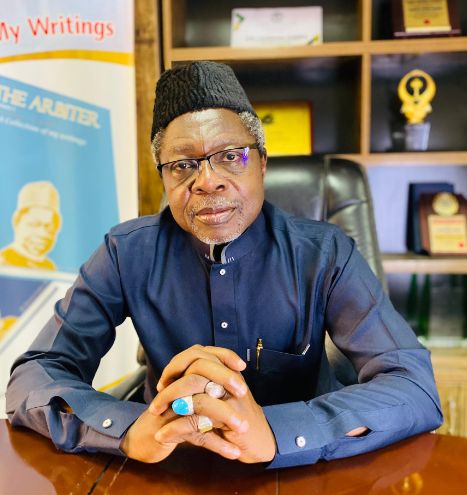
Hassan Gimba is the Publisher and CEO of Neptune Prime.