




We all know that Donald John Trump likes winning – a lot. In fact, the whole idea behind his Make America Great Again (MAGA) movement is that the United States must start winning again – at home and on the global stage. That simple message is probably one reason so many people, at home in the United States and in many places abroad, like him so much. After all, everybody likes a winner, and nobody wants his country to be the one always coming behind. And to be fair to him, America has indeed been racking up some notable gains in a number of areas under his leadership.
The concern in some quarters now, however, is that parts of No. 47’s endlesss run of winning might be slowly morphing into less than wholesome gains for everyone. I mean, with every policy, every diplomatic gamble, every trade war and (with Venezuela and Iran), every war – packaged as proof that America is ‘winning again’, the message is looking suspiciously quixotic: ‘winning is good, and more winning is even better – no matter the cost to anyone, including America itself. Yet, as any cook will tell you, too much of any condiment is bad for the sauce, so one wonders – is too much winning becoming a problem to Trump’s America?
The idea of ‘too much winning’ first sounded like political bragging – chest beating on the global stage. The deeper irony emerges when a nation begins to measure every interaction as a victory or defeat, slowly trapping itself inside a zero-sum world. In that kind of world, cooperation looks like weakness, compromise smells like surrender and every negotiation must produce a loser. The problem is that the modern world does not work like a FIFA football fixtures where elimination of other contestants is the goal.
Consider trade. When America slaps tariffs on partners to force better deals, it may win some concessions, especially when it is clear to all that trade with that ‘partner’ has been skewed against America for a good while. Do it to enough partners and you bring something akin to equity in the relationship between the US and others. However, do the same too many times and the same partners begin to redesign supply chains, diversify markets and reduce dependence on the American economy. Today’s ‘victories’ then spawn the seeds of tomorrow’s irrelevance because winning too hard can make others start planning life without you.
Diplomacy follows the same pattern. Alliances that begin to look like arrangements where only one side must always come out on top eventually push smaller partners to ask themselves a dangerous question: ‘Is this a partnership, or are we under supervision?’ Once that question enters the equation, the balance begins to shift.
Military strength is another area where ‘winning’ can get complicated. The United States still commands the most powerful armed forces on earth. Demonstrations of overwhelming force increasingly motivate rivals to invest in asymmetric ways to counter it – cyberwarfare, economic pressure, space capabilities and proxy conflicts. Take for example the current US-Israel vs Iran war. As of today, 9 March 2026, the US–Israel vs Iran war is roughly on Day 10 and no one is still debating whether the Persians have sprung unexpected surprises with their combat capabilities.
Iran appears prepared to take what many planners assumed would be a clean despatch combat to the mat and allow every side to prove its grappling mettle. The spectre of a nuclear option no longer sounds so far-fetched. The US has sent the E-6B Mercury, ominously nicknamed the ‘Nuclear Plane,’ to the theatre. This specialised command-and-control aircraft is designed to communicate with nuclear submarines and manage nuclear forces. Reports indicate its deployment to the region around March 4, 2026 serves as a warning to Iran and her allies that they can expect response in kind if escalation travels along that route.
An uncomfortable question now hovers over the Gulf battlefields as the consequences spread wider beyond the immediate combatants and begins to touch neighbouring states, rattle energy markets, alarm civilian populations and test alliances on every side. History recognises moments when victories arrive at such staggering cost that the triumph itself begins to resemble defeat – have current outcomes in the US-Israel vs Iran War started to look like a Pyrrhic victory? Whatever anyone thinks of that question the indisputable fact is that the scoreboard for this conflict has grown far messier than most people, except those in the respective warrooms perhaps, expected.
Even domestically, the culture of constant winning can produce strange side effects. Politics that evolves into a perpetual contest where the goal is both governance and total victory over political and other opponents gradually weakens public trust in institutions and process. This is because laws become weapons, compromise becomes betrayal and citizens – supposedly the beneficiaries of all this winning – begin to feel like weary spectators at a fight they never paid to watch. That moment marks the point when winning begins to look suspiciously like losing.
History offers quiet warnings. Great leaders rarely collapse because they lose too often. More frequently they collapse because they misunderstand what victory actually means. Empires that define success only through dominance eventually exhaust themselves trying to prove it again and again. This may not be the case with Trump 2.0 but recent polling places the President’s approval rating in the low forties – roughly 41 to 43 percent – with disapproval in the mid-fifties. These figures would normally be considered weak this early in an administration but they remain broadly consistent with the deeply polarized political landscape that has characterized the two Trump eras.
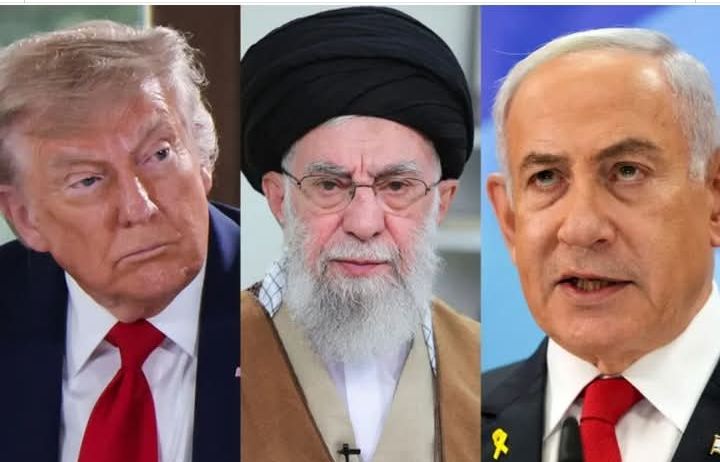
Which brings us back to the pidgin wisdom behind the title of this piece: Too much winning wan begin dey worry America. It means that every outcome framed purely as victory risks making a country forget the real purpose of power in the first place. It also connotes the admonition that the goal of might is not to win every battle, but to build a world where constant battles are no longer necessary.