

Eid ul-Adha, popularly known as the Festival of Sacrifice, is one of the most sacred celebrations in Islam.
Observed by millions of Muslims across the world, from Nigeria to Saudi Arabia, the festival goes beyond the slaughtering of animals and festive gatherings. It is a spiritual reminder of obedience, devotion, sacrifice, compassion, and submission to the will of Almighty Allah.
Every year, during the month of Dhul Hijjah — the final month of the Islamic calendar — Muslims commemorate the remarkable story of Prophet Ibrahim (Abraham), his son Ismail (Ishmael), and their unwavering faith in God. It is a story that continues to inspire humanity centuries after it first unfolded.
According to Islamic tradition, Prophet Ibrahim saw in a dream that Allah commanded him to sacrifice his beloved son, Ismail.
Dreams of prophets are regarded as divine revelations. Though the command was emotionally painful, Ibrahim did not hesitate to obey his Creator.
More astonishing was the response of Ismail, who willingly submitted himself to the divine decree.
The Holy Qur’an captures this extraordinary moment in Surah As-Saffat:
“O my son! I have seen in a dream that I am sacrificing you, so see what you think.”
He said:
“O my father! Do as you are commanded. If Allah wills, you shall find me among the patient.” (Qur’an 37:102)
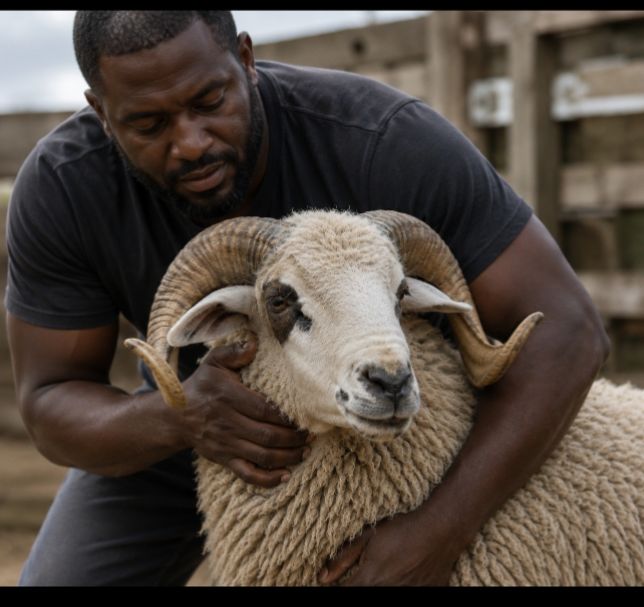
As Ibrahim prepared to fulfill the command, Allah replaced Ismail with a ram, rewarding both father and son for their faith and obedience.
The Qur’an further states:
“And We ransomed him with a great sacrifice.” (Qur’an 37:107)
That divine event became the foundation of Eid ul-Adha — a celebration not merely of sacrifice, but of complete trust in God.
Today, Muslims who can afford it slaughter animals such as rams, goats, cows, or camels as an act of worship.
However, Islam emphasizes that the essence of sacrifice lies not in blood or meat, but in sincerity and piety.
Allah says in the Qur’an:
“Neither their meat nor their blood reaches Allah, but what reaches Him is piety from you.” (Qur’an 22:37)
This verse carries a timeless lesson for humanity. True sacrifice is not about outward appearance or ritual performance alone. It is about the purity of intention, sincerity of heart, and willingness to give up something valuable for a higher purpose.
In a world increasingly driven by selfishness, greed, materialism, and personal ambition, Eid ul-Adha reminds humanity that meaningful progress requires sacrifice. No family survives without sacrifice. No nation develops without sacrifice. No relationship flourishes without sacrifice.
Parents sacrifice comfort for their children. Teachers sacrifice time for students. Soldiers sacrifice safety for national peace. Medical workers sacrifice sleep to save lives. Human civilization itself is built upon sacrifice.
Eid ul-Adha therefore teaches Muslims and non-Muslims alike that life’s greatest achievements often come through patience, endurance, and selflessness.
The festival also promotes compassion and social solidarity. Islamic teachings encourage Muslims to divide the sacrificial meat into portions for family, relatives, and the less privileged. In many communities, Eid becomes a season when poor families taste meat after many months of hardship.
This humanitarian dimension reflects Islam’s concern for social justice and human dignity.
Prophet Muhammad (peace and blessings be upon him) said:
“He is not a believer whose stomach is filled while his neighbor goes hungry.”
— Hadith reported in Al-Adab Al-Mufrad
In another Hadith, the Prophet (peace and blessings be upon him) emphasized the spiritual significance of sacrifice:
“The son of Adam does no action on the Day of Sacrifice more beloved to Allah than shedding blood (of sacrificial animals).”
— Reported by At-Tirmidhi
Yet, the deeper lesson remains moral and spiritual transformation. Eid ul-Adha calls on humanity to sacrifice hatred, corruption, injustice, pride, tribalism, and intolerance.
For societies plagued by violence and division, the message of Eid is particularly relevant. Communities cannot experience peace unless individuals are willing to sacrifice ego and vengeance for reconciliation and coexistence.
In countries facing economic hardship, leaders are reminded that leadership itself is a sacrifice, not an avenue for personal enrichment. Public office demands honesty, accountability, and service to the people.
For the youth, Eid ul-Adha teaches discipline and purpose. Success demands sacrifice — sacrificing laziness for hard work, distraction for focus, and negative influences for moral excellence.
The annual pilgrimage of Hajj, which coincides with Eid ul-Adha in Makkah, further reinforces the values of unity and equality.
Millions of Muslims from different races, languages, and social classes gather in simple white garments before Allah, demonstrating that humanity is one family under God.
The farewell sermon of Prophet Muhammad (peace and blessings be upon him) echoed this universal principle when he declared:
“No Arab has superiority over a non-Arab, nor a non-Arab over an Arab, except by piety and good action.”
Thus, Eid ul-Adha is not simply a Muslim celebration. It is a universal moral lesson about faith, humility, generosity, obedience, and service to humanity.
As Muslims celebrate this sacred festival with prayers, charity, and joyful gatherings, the world must not lose sight of its enduring message: sacrifice is the foundation of every meaningful human achievement.
The story of Prophet Ibrahim (peace be upon him) teaches that faith sometimes demands difficult choices. The example of Ismail teaches courage and submission. The teachings of Prophet Muhammad (peace and blessings be upon him) remind humanity that true religion must translate into compassion and justice.
At a time when the world desperately needs healing, empathy, and moral responsibility, Eid ul-Adha offers timeless guidance.
Beyond the slaughtered ram lies a deeper question for every human being: What are we willing to sacrifice for truth, peace, justice, and the betterment of humanity?
That is the true spirit of Eid ul-Adha.
– Abdulkarim Abdulmalik is Abuja-based Journalist and Chairman, Governing Board of the Guild of Interfaith Media Practitioners Nigeria (GIMP-Nigeria).