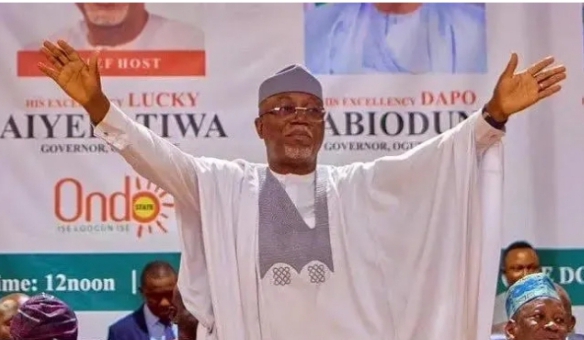
THE Independent National Electoral Commission (INEC), has declared Governor Lucky Aiyedatiwa of the All Progressives Congress (APC), as the winner of the Saturday’s governorship election in Ondo State. Aiyedatiwa was declared winner after securing a total of 366781 of votes in the election. Announcing the result in Akure, the state capital, INEC’s Returning Officer and Vice Chancellor of Federal University, Lokoja, Professor Akinwumi Olayemi Durotimi, said that his closest rival, Ajayi Agboola of the Peoples Democratic Party (PDP), got 117845 while Olorunfemi Festus of the Labour Party (LP) had 1162 votes.
Muslims intending to perform pilgrimage in Saudi Arabia in 2025 may pay as much as N10 million each. This is coming in the wake of rising foreign exchange and other factors. Less than a decade ago, pilgrimage to Saudi Arabia was less than N500,000. Already, most of the state pilgrims welfare agencies across the country have asked intending pilgrims to deposit between N8.4 million and N9 million before the end of December this year. Though the Kaduna State Pilgrims Welfare Agency asked each intending pilgrim to deposit the sum of N8.4 million but reduced it to N4.5 million. The Director of Operations of the Agency, Abubakar Usman Yusuf, speaking at the commencement of the registration of the pilgrims said that due to the unique nature of farmers, the Agency would collect N4.5 million as a deposit while the balance should be paid after harvesting their crops and within the stipulated time limit. This came as the Public Relations Officer of the Agency, Yunusa Mohammed Abdullahi stressed the importance of adherence to registration guidelines by intending pilgrims from the twenty-three local governments. He said that intending pilgrims should pay a minimum deposit of N8.4 million but are required to make it N8.5 million before 31 December 2024.
Governor Dikko Umar Radda of Katsina State has offered automatic job to a First Class graduate of Umaru Musa Yar’adua University, Sham’unu Ishaq, found to be selling sachet water for survival. Chief Press Secretary to the Governor, Malam Ibrahim Kaula, in a statement today, said that investigation had confirmed that Ishaq actually graduated with First Class honors in B.Sc (Ed.) Education/Biology during the 2021/2022 academic session. “Ishaq, who completed his National Youth Service Corps (NYSC) programme in Taraba State, had resorted to selling pure water to meet personal and family obligations. “Academic excellence should be rewarded, not relegated to the streets.” Kaula said that the governor has shown consistent drive to reward academic excellence and promote quality education in Katsina State. According to him, on October 12, 2024, the governor offered similar automatic employment to nine outstanding graduates of Isah Kaita College of Education, Dutsinma. “Additionally, the governor offered another direct employment to nine First Class Graduates from Umaru Musa Yar’adua University during the 9th/13th combined convocation held on May 26, 2024. “Our administration recognises that the future of Katsina State lies in harnessing the potential of our brightest minds.”
“My problem started from when I collected best dressed female with ₦1 million prize. For my life, if I see award for best dressed female (again) I go disappear from that location asap.”
This was the conclusion made by Nigerian crossdresser, Idris Okuneye, popularly known as Bobrisky. In a post on Instagram, Bobrisky emphasised that the award he received during the premiere of Eniola Ajao’s film signaled the onset of his recent ordeals. The award was presented at the movie premiere, where Bobrisky was acknowledged for his exceptional fashion choices. Subsequent to receiving the award, Bobrisky encountered a series of challenges, including arrest and various allegations, all of which he refutes. “My problem started from when I collected best dressed female with ₦1 million prize.
“Everyone knows the truth that I’m a baddie with class, you wanna compete with me? Ur mummy never!!!! But when problem wan too much make I run.”
Nigerian media personality and actress, Toke Makinwa has described marriage as sweet, to which she will give another chance. Speaking on a podcast hosted by British-Nigerian presenter Madame Joyce, the actress, who just turned 40, said that marriage is a “beautiful institution,” admitting that it comes with its fair share of challenges. Reflecting on her past, Toke Makinwa openly discussed her first marriage to businessman, Maje Ayida in 2014, which ended in 2017 amidst public controversies. She said: “People always think I hate men or a feminist who bashes men. I have been married before and marriage is one of the most beautiful institutions. “I see marriage like the relationship between siblings. If your siblings come to visit, the first couple of days are exciting. You guys wear matching pyjamas, sleep in the same bed, and catch up on all the lost years or lost moments. By the third day, it’s like, ‘Close my f*cking door. Who wore my shoes? Where are my earrings? Please, when are you going back to your house? Please, I am tired.’ And that was how I saw it. “There were days when I would rush home to tell my ex-husband everything I had been through. And there were days when I woke up in the morning, I said, ‘God, you must hate me for me to marry this idiot. This is not life; this must be hell.’ That was how I saw it. And it didn’t work out many years ago. But I still fancy the institution. I do want to get married again. “It hasn’t happened yet. I’m not ruling it out. I am just taking my time. Maybe it’s not God’s time yet. Whenever he is ready, I just hope I am not wrinkled.”
The International Monetary Fund (IMF) has raised concerns about the effectiveness of Nigeria’s ongoing economic reforms under President Bola Tinubu. In its latest report on the economic outlook for sub-Saharan Africa, the IMF advised President Tinubu to rethink his approach to the ongoing reforms, recommending improvement in communication, offering of what it called “compensatory measures” to ease the impact of reforms, and designing of policies that would address public concerns. “This will require greater attention to communication and engagement strategies, reform design, compensatory measures, and rebuilding trust in public institutions,” the report advised. IMF is not happy with the achievements of the reforms after President Tinubu’s 18 months in office. The IMF, presented yesterday, November 15 at the Lagos Business School by Catherine Patillo, IMF Deputy Director, highlighted successes in countries such as Côte d’Ivoire, Ghana, and Zambia, but Nigeria was conspicuously absent from the list of nations demonstrating positive outcomes from reform efforts. The report projected an average economic growth rate of 3.6% for sub-Saharan Africa in 2024, even as Nigeria’s growth rate is expected to lag at 3.19%, placing the country below the regional average. The IMF noted that while many African nations are reducing macroeconomic imbalances, Nigeria remains an outlier in its struggle to stabilize its economy. Inflation remains a pressing issue in Nigeria. Although there was a brief slowdown in July and August, inflation resumed its climb in September and October, reaching 33.8%. This figure is far above the 21% target set for 2024, and analysts expect further increases before the year ends. The IMF described Nigeria’s exchange rate instability as a significant challenge, adding that this is unlike other nations in the region that have reduced foreign exchange pressures. Another major issue highlighted in the report is Nigeria’s heavy debt servicing burden. The IMF said that Nigeria, alongside Angola, Ghana, and Zambia, spends an alarming 15% of total revenue on interest payments. This high level of debt servicing limits the country’s ability to invest in critical areas such as infrastructure and social programs.
In a groundbreaking move to simplify telecom services and enhance consumer protection, the Nigerian Communications Commission (NCC), under the leadership of Dr. Aminu Maida, is set to revolutionise the telecommunications sector. The commission has announced plans to streamline the current 369 telecom tariff plans across providers like MTN, Glo, and others. This initiative, which aims to make the sector more consumer-friendly, will take effect on or before December 31, 2024. The NCC’s new “Guidance on the Simplification of Tariffs in the Nigerian Communications Sector” limits telecom operators to a maximum of 100 bundles and seven tariff options. This move addresses the rampant confusion caused by the excessive proliferation of tariff plans. Dr. Maida emphasized the need for clarity during the 93rd Telecoms Consumer Parliament, noting that promotions disguised as tariff plans have compounded the complexity, leaving consumers struggling to make informed choices. “Telecom operators must provide clear and accessible information on data plans and pricing. This transparency will empower consumers to make better-informed decisions about their data usage and billing,” Maida stated. The NCC’s approach mirrors the success of India’s Telecom Regulatory Authority (TRAI), which, in 2004, capped telecom providers at 25 tariff options to enhance billing transparency and consumer understanding. The NCC sees this as a proven strategy for simplifying services and ensuring that consumers are not overwhelmed by an excess of plans. One of the NCC’s primary concerns has been the confusion stemming from promotional offers. According to an NCC official, “Consumers often subscribe to promotions that promise bonuses but are unaware that these promos are charged at higher rates, leading to faster depletion of airtime.” To address this, the NCC has mandated that all bonuses align with established price floors and caps. Operators must also clearly advertise promotional allowances in specific terms, such as naira, minutes, seconds, gigabytes, or megabytes. Telecom operators will be required to provide customers with detailed tables outlining all tariff plans, billing rates, and terms and conditions. Changes to tariff plans must be communicated to subscribers at least 30 days in advance, ensuring ample time for customers to assess their options. Gbenga Adebayo, Chairman of the Association of Licensed Telecommunications Operators of Nigeria (ALTON), commended the NCC’s move, noting that simpler, more transparent data plans will eliminate confusion and improve customer experience. Dr. Aminu Maida’s vision for a more customer-friendly telecommunications sector is evident in these reforms. By enforcing limits on tariff plans, requiring transparent billing practices, and ensuring consumer protection, the NCC is ushering in an era of simplicity and trust in the industry. As Nigeria moves toward full implementation of these reforms, subscribers can look forward to greater clarity, better service quality, and a telecom environment that prioritizes their needs above all else.
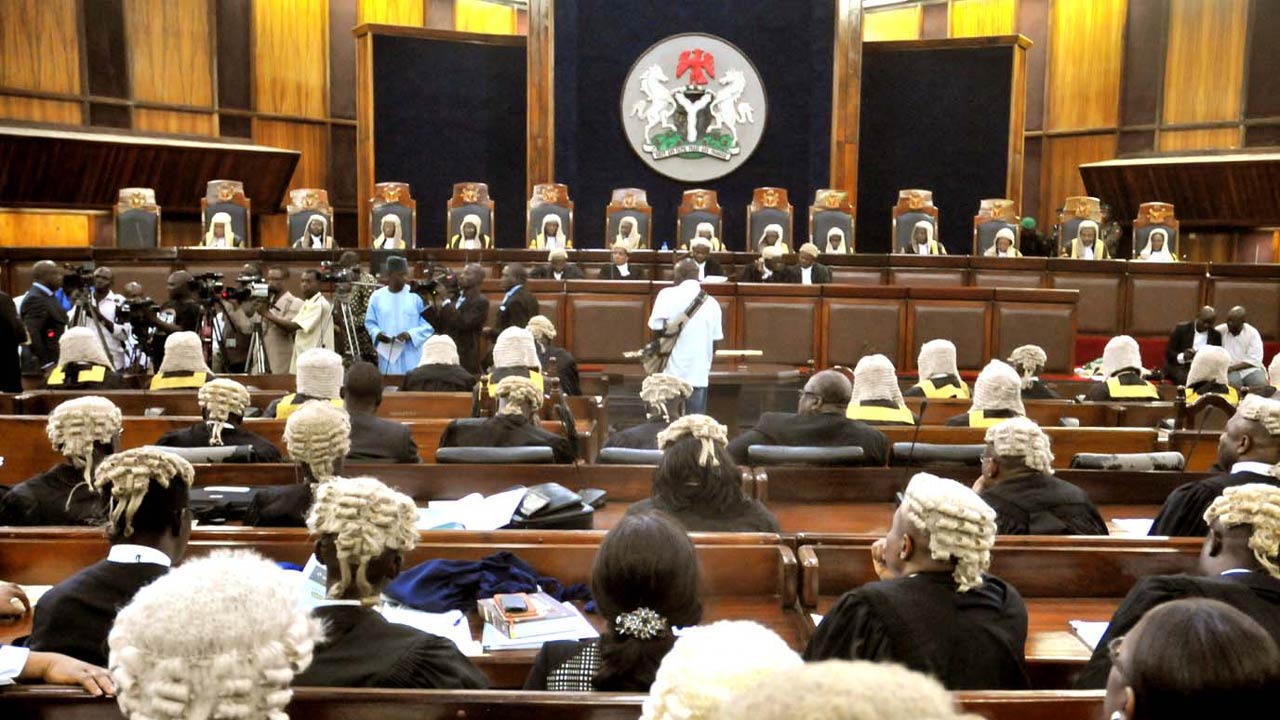
The Supreme Court has dismissed a suit filed by 16 states of Nigeria challenging the legality of the laws establishing the Economic and Financial Crimes Commission (EFCC) and two other anti-corruption agencies. The other agencies are the Independent Corrupt Practices and other related offences Commission (ICPC) and the Nigerian Financial Intelligence Unit (NFIU). A seven-member panel of justices, in a unanimous judgment today, November 15, held that the suit was unmeritorious. In the lead judgment by Justice Uwani Abba-Aji, the Supreme Court quashed the six issues raised for determination in the suit against the plaintiffs. The court held that the laws establishing the anti-corruption agencies were validly enacted by the National Assembly within its legislative competence. It faulted the claim by the plaintiffs that the EFCC Act, being a product of the United Nations convention on corruption, ought to be ratified by majority of the State Houses of Assembly. Source: Promptnews.
The Nigerian Communications Commission (NCC) is believed to be working to ensure that the about 153 million subscribers in the sector are only exposed to seven tariff plans, especially on data services. This is coming against the background of several complaints and confusions that have greeted close to 400 different tariff plans currently in existence. It is discovered that there are 369 tariff plans for both voice and data services in the sector, largely from mobile network operators (MNOs) like MTN, Airtel, Globacon and 9mobile. The Director of Consumer Affairs, Nigerian Communications Commission ((NCC), Dr. Ikechukwu Adinde, gave a hint on this at a media capacity training for journalists in Lagos, yesterday, November 14, when said that the Commission is working to streamline MNOs to seven tariff plans each for data services, which will be bundled in about 100 to include SMS, data and promos, for better understanding of the users and easy monitoring by the NCC. Against this background, MTN as the largest operator, currently has 159 tariffs, with 14 for voice and 145 for data. Airtel has 27 for voice and 41 for data services. Globacom has six for voice and 32 for data, while 9mobile with seven voice plans and 97 for data.
A significant proportion of the tariffs are currently being presented by the providers as promos and were originally promos that were subsequently converted into tariff plans, which present pricing uncertainty and diversity of plans. On pricing, operators apply different effective tariffs to bonus accounts, resulting in different tariffs for the main account and bonus account, and this information is not communicated to consumers, which may lead to uninformed decision.
The Commission is insisting that all current ‘tariffs’ featuring bonuses or promotional elements should be classified strictly as promotions and thus should be submitted to the Consumer Affairs Bureau for quality-of-service evaluation. Telecoms operators will be mandated to explain all benefits or allowances (voice SMS and Data) in a clear, uniform and user-friendly format that is the number of minutes/SMS, cost per minute/SMS, available and total data in MG/GB and validity periods. “Similar to the India experience, the Commission has placed a limit on the number of tariff plans an operator can offer at any given point in time,” a source hinted. The Commission wants tariff to be simplified, and targeted at bringing transparency to the sector and reducing complaints.
It’s observed that aside from complaints around poor services, tariff extortion is another major challenge of subscribers, “and we are looking at it critically.
The Nigerian Communications Commission (NCC) has started a two-day training programme for select media practitioners on emerging trends in telecoms and Information Communication Technology (ICT). The Commission said that the training, which began yesterday, November 14, has been designed to keep telecoms and ICT reporters abreast of emerging trends, regulatory strides and prospects in the telecoms industry. The Commission’s Director of Public Affairs, Reuben Mouka, kick-started the training by stressing that it was in line with the vision of the Executive Vice Chairman/CEO, Dr. Aminu Maida. He said that Dr. Maida insisted that its stakeholders and media partners should learn, relearn and well equipped with relevant knowledge and skills to do their jobs effectively and efficiently. Meanwhile, in a lecture, titled: “Overview of the Nigerian Telecoms Industry and the Roles of the NCC,” a top management staff of the Commission, Nwanko Okorie, said that the responsibility of the NCC, as a regulatory agency, is to protect younger operators and ensure that giant operators do not stifle them out of the market. She advised the Commission to allow for healthy competition and ensure discourage monopoly in the telecommunications industry. According to Okorie, as at September 2024, there were 153 million GSM subscribers in the country. “A lot of people will question why we have 153 million subscribers from the previous 198 million. This is because of the SIM-NIN linkage. “When we did that SIM-NIN linkage, we found out that so many numbers were not in use. “So when we now deactivated those numbers, the number of subscribers came down to 153 million and the broadband penetration of the 3G and 4G is about 41.66 per cent. “The telecoms industry has contributed about 16 per cent of the GDP. “Some people will tell you that telecommunication is the next oil.” Other speakers spoke on various topical issues, including data journalism and visualization tools, consumers and data usage, connectivity and resilience and digital economy, among others. The training is being held in Lagos, and is featuring different sessions by senior officials from selected departments of the Commission and experts in relevant fields.
We use cookies on our website to give you the most relevant experience by remembering your preferences and repeat visits. By clicking “Accept”, you consent to the use of ALL the cookies.
This website uses cookies to improve your experience while you navigate through the website. Out of these, the cookies that are categorized as necessary are stored on your browser as they are essential for the working of basic functionalities of the website. We also use third-party cookies that help us analyze and understand how you use this website. These cookies will be stored in your browser only with your consent. You also have the option to opt-out of these cookies. But opting out of some of these cookies may affect your browsing experience.
Necessary cookies are absolutely essential for the website to function properly. This category only includes cookies that ensures basic functionalities and security features of the website. These cookies do not store any personal information.
Any cookies that may not be particularly necessary for the website to function and is used specifically to collect user personal data via analytics, ads, other embedded contents are termed as non-necessary cookies. It is mandatory to procure user consent prior to running these cookies on your website.












Maida’s NCC Leads Customer-Friendly Revolution In Telecom Sector, By Abdulrahman Aliagan
In a groundbreaking move to simplify telecom services and enhance consumer protection, the Nigerian Communications Commission (NCC), under the leadership of Dr. Aminu Maida, is set to revolutionise the telecommunications sector.
The commission has announced plans to streamline the current 369 telecom tariff plans across providers like MTN, Glo, and others. This initiative, which aims to make the sector more consumer-friendly, will take effect on or before December 31, 2024.
The NCC’s new “Guidance on the Simplification of Tariffs in the Nigerian Communications Sector” limits telecom operators to a maximum of 100 bundles and seven tariff options.
This move addresses the rampant confusion caused by the excessive proliferation of tariff plans. Dr. Maida emphasized the need for clarity during the 93rd Telecoms Consumer Parliament, noting that promotions disguised as tariff plans have compounded the complexity, leaving consumers struggling to make informed choices.
“Telecom operators must provide clear and accessible information on data plans and pricing. This transparency will empower consumers to make better-informed decisions about their data usage and billing,” Maida stated.
The NCC’s approach mirrors the success of India’s Telecom Regulatory Authority (TRAI), which, in 2004, capped telecom providers at 25 tariff options to enhance billing transparency and consumer understanding. The NCC sees this as a proven strategy for simplifying services and ensuring that consumers are not overwhelmed by an excess of plans.
One of the NCC’s primary concerns has been the confusion stemming from promotional offers. According to an NCC official, “Consumers often subscribe to promotions that promise bonuses but are unaware that these promos are charged at higher rates, leading to faster depletion of airtime.”
To address this, the NCC has mandated that all bonuses align with established price floors and caps. Operators must also clearly advertise promotional allowances in specific terms, such as naira, minutes, seconds, gigabytes, or megabytes.
Telecom operators will be required to provide customers with detailed tables outlining all tariff plans, billing rates, and terms and conditions. Changes to tariff plans must be communicated to subscribers at least 30 days in advance, ensuring ample time for customers to assess their options.
Gbenga Adebayo, Chairman of the Association of Licensed Telecommunications Operators of Nigeria (ALTON), commended the NCC’s move, noting that simpler, more transparent data plans will eliminate confusion and improve customer experience.
Dr. Aminu Maida’s vision for a more customer-friendly telecommunications sector is evident in these reforms. By enforcing limits on tariff plans, requiring transparent billing practices, and ensuring consumer protection, the NCC is ushering in an era of simplicity and trust in the industry.
As Nigeria moves toward full implementation of these reforms, subscribers can look forward to greater clarity, better service quality, and a telecom environment that prioritizes their needs above all else.