The Super Eagles of Nigeria has booked a spot at the 2025 Africa Cup of Nations. The Super Eagles earned a place at the AFCON 2025 finals following Rwanda’s 1-0 home loss to the Mediterranean Knights of Libya. With the result, Rwanda, who occupy third position in Group D with five points from five matches can no longer catch up with Nigeria. The Super Eagles occupy top spot in the group with 10 points from four matches.
President Bola Tinubu has appointed Daniel Bwala, former aide to ex Vice President Abubakar Atiku, as Special Adviser on Media and Public Communications (State House). The Special Adviser to the President on Information and Strategy, Bayo Onanuga, in a statement today, November 14, said that Tinubu also approved the appointments of three Directors-General of various agencies. They are: (1) Mr. Olawale Olopade — Director-General, National Sports Commission (2) Dr. Abisoye Fagade — Director-General, National Institute for Hospitality and Tourism (3) Dr. Adebowale Adedokun — Director-General, Bureau of Public Procurement Olopade, the new Director-General of the National Sports Commission, is a sports administrator with many years of experience in the sector. He served as commissioner of youth and sports in Ogun state and was chairman of the local organising committee of the 2024 National Sports Festival. The new Director-General of the National Institute for Hospitality and Tourism, Dr. Abisoye Fagade is a marketing communication professional. He is the founder and managing director of Sodium Brand Solutions. Adedokun, the new helmsman of the Bureau of Public Procurement, was the director of Research/Training and Strategic Planning at the bureau before his appointment.
President of the Manufacturers’ Association of Nigeria (MAN), Otumba Francis Meshioye has said that the success of the Dangote oil refinery is a wakeup call on, and a challenge to, those in the Nigeria’s manufacturing sector. “The success of the Dangote Refinery serves as an inspiration to all of us in the manufacturing sector. It demonstrates what is possible when we combine innovation, technology and investment to create world-class facilities that benefit the entire nation.” Otunba Francis Meshioye, who spoke after a tour of the Dangote Petroleum Refinery, Petrol Chemical Complex and Fertilizer Plant in Lagos today, November 13, described the refinery as a source of pride and a gift not only to Nigeria but to the African continent and the world. According to him, Dangote Refinery is a game-changer in the Nigerian oil and gas industry, adding that it would create jobs and drive economic growth as well as contribute to the nation’s energy security and self-sufficiency. “To have been inspired to establish this facility is very magnificent. It is the first ever in Africa and the first ever of such refinery in the whole world. It has many first, first and first.” MAN president stressed that Dangote Refinery would have a positive impact on the entire manufacturing value chain, provide a reliable source of fuel and petrochemical products that are essential for capacity utilisation and value addition. “The company has the capacity to produce all our needs locally, petroleum, and other similar products: no one would come to the facility and he would not be inspired or encouraged to ensure that all the support that the company requires should be given to it.” The MAN President advised the government to do all that is humanly possible to ensure that the facility works Optimally. “It is prudent and expedient that the necessary supports are given to the company for the economic benefits of Nigeria. “If the facility can produce 650,000 barrels of crude per day and Nigeria is producing far above this volume per day, she should give the facility all crude it needed to produce. “With this kind of facility that starts from quality control to quality assurance, just to ensure that the harmful effects of the products are at zero level, what can be greater than this? “This is very unique and I will encourage all stakeholders to give maximum support, and not by the way support, but maximum support. “The facility can deliver products between 1760 trucks to 1800 trucks per day. So if you have such several trucks going out of the facility a day to various destinations in Nigeria, so many people will benefit from it. There will be more jobs, many families will be comfortable because of the jobs this will create, many artisans will benefit and it will have a spillover effect on so many sectors of the economy. “If they can produce AGO, gasoline and Jet A fuel, this is good and the government should have no reason not to ensure the facility gets its backing to carry out its activities, because it is going to benefit massively.”
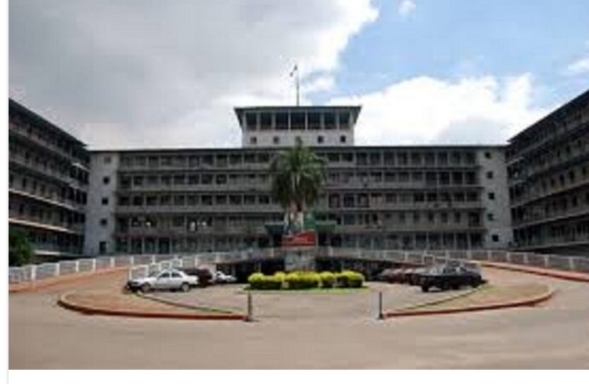
The management of the University College Hospital (UCH), Ibadan, capital of Oyo State, has embarked on an unending battle with Ibadan Electricity Distribution Company, (IBEDC), accusing it of forcing it into Band A thereby over-billing it. The hospital management complained that despite paying N60 million in the past month, the power company still disconnected the health facility. The Chief Medical Director of the hospital, Professor, Jesse Otegbayo, reacting to the standoff with the electricity supply authourity, said that despite efforts to meet its obligations, the power company has remained adamant, charging the highest rates and is unfazed by the humanitarian services rendered by the nation’s premier tertiary hospital. The IBEDC had several times, disconnected the hospital this year, citing unpaid accumulated debts. But the Chief Medical Director said: “we have been making efforts to pay. IBEDC forced us on Band A. Our latest bill for one month is N99 million. We paid N60 million but they refused to reconnect us. “The distribution company has, against all entreaties, categorised this hospital a business concern.” It was confirmed that the power company sent a bill of N723, 095, 841.55 from January 1, 2019 to November 10, 2024 and the hospital paid N676, 990,174.04. Meanwhile, the hospital management, in a memo on November 5, acknowledged the “chaotic and unbearable experience” arising from the disconnection by IBEDC and pleaded with staff, students and patients to exercise patience while alternative power sources are being strengthened. The memo reads: “Management has initiated the process to ensure that power is restored to the hospital as soon as possible. Nonetheless, provision of alternative power supply to some critical areas in the hospital, with priority to the service areas which are in high demand, has been put in place through generators and solar panels/inverters, as well as pumping of water to all areas of the hospital.” Monday last week, families of patients at the health facility protested the persistent power outages and water supply, claiming that lives of patients were at risk. It was reported that members of the hospital’s Public Relations Office tried to pacify the protesters who expressed anger and helplessness, citing harrowing instances where treatment and care have been disrupted due to erratic power supply. One of the protesters said: “We are tired seeing our loved ones suffering; patients are dying because they cannot receive the medical tests needed for treatment. The outages have not only hindered immediate medical assessments but have also severely complicated ongoing treatments, leaving families in a state of despair.” But the hospital dismissed the claims that patients’ lives were at risk during the period of power outage and that the claims did not reflect the current operational status of the hospital. In an official statement, UCH described the reports as “false and misleading,” assuring the public that the hospital’s utilities remain functional and adequate for patients care. While acknowledging the severity of incessant power cuts by IBEDC, the public relations department said that despite the power cuts, the hospital made provision for alternative power supply in its critical departments namely operating theatres, intensive care units, and the accident and emergency department. The situation at UCH is experienced by many government hospitals and educational institutions. The University of Medical Sciences, Ondo, was also disconnected from public power supply eight weeks ago. The institution detected an over billing in its record, receiving a monthly bill of N10m from Benin Disco when it consumed power worth about N7m. “We confronted them with metered data of all premises. “They did not like that. They wanted to transfer us to Band A, and forthwith presented us with N25m bill the following month. “We approached the Courts and got an injunction against arbitrary transfer. “Now they went berserk. Our light suddenly developed fault: transformer was not working. When we approached them to fix their transformer, they replied that we had taken them to Court. “After the intervention of the state government, they called for a truce! “Take case out of court, revert to BAND B. We are in a state of all motions, but no movement,” said a top management staff at the institution.
Some bluechip companies and organisations have indicated their support for the hosting of the Realnews 12th Anniversary Lecture, scheduled to hold at the Sheraton Hotel November 19.
The organisations include the Nigerian National Petroleum Company Limited, NNPCL, the Nigerian Content Development Monitoring Board, NCDMB, the Nigerian Ports Authority, NPA, Shell Nigeria, the Nigerian Liquefied Natural Gas, NLNG, the Nigerian Communications Commission, NCC, Zenith, and Access Bank Plc. Publisher of the Realnews, Maureen Chigbo said that the theme of Realnews 12th Anniversary Lecture is “Africa in World Shifting Geopolitics: Matters Arising on Democracy, Technology, Artificial Intelligence, Natural Resources”. According to her, the Lecture will be chaired by Ms. Beatrice Eyong, Country Chair, UN Women, and will be delivered by Ambassador Professor Ibrahim Gambari, former Chief of Staff of former President Muhammadu Buhari. Dr. Karim El Aynaoui, Executive President of Policy Center for New South, Rabat, Morocco, will keynote the conference. Chigbo said that the lecture will be held at the Sheraton Hotel by 10 am and will feature Mrs. Hadiza Bala Usman as the Special Guest/discussant along with Engr. Shehu Tijjani, Managing Director, Amal Technology Ltd. She said that there will be an investiture of all the speakers into The Realnews Hall of Fame immediately after the Lecture. Chigbo explained that the Realnews Hall of Fame was established to honour only those who played key roles during the anniversary lectures. Maureen Chigbo said that Realnews is a general interest magazine, and is an online publication that thrives on investigative journalism. “We have expertise in reporting the oil and gas sector with its attendant environmental challenges. “We aim to unearth exclusive stories about real people and the challenges they face in their day-to-day activities. “We do this bearing in mind that government can only act to influence the lives of people positively if they are aware of their true situation. “Hence, our objective is to use our investigative skills to ferret out information in the sectors we focus on and produce an unbiased report that will influence the government and decision-makers to take actions that will make society better.” Meanwhile, the publisher has expressed gratitude to the organisations that have indicated their willingness to support this year’s lecture series, praying to God to bless them and give their management the wisdom to lift their organisations to greater heights and prosperity. Chigbo also expressed her deep appreciation to all the banks, institutions, companies, and other organisations that have placed online advertisements on the Realnews website in the last 12 years. “Without their support, we would not have remained in business all through the years to do what we love best – investigative journalism.”
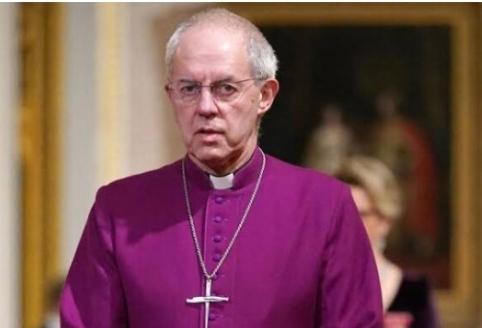
The leader of the world’s Anglican communion, Archbishop of Canterbury, Justin Welby, has announced that he was resigning, following a damning report that concluded the Church of England covered up a serial sexual abuse case. Welby had faced days of growing pressure to quit after the independent probe found that he “could and should” have formally reported decades of sexual abuse by a Church-linked lawyer, to authorities in 2013. A petition demanding his resignation, launched in the wake of the report’s revelations, has garnered nearly 14,000 signatures while leading clergy, including some bishops, were increasingly urging him to quit. “It is very clear that I must take personal and institutional responsibility for the long and re-traumatising period between 2013 and 2024,” Welby said in a statement. “I hope this decision makes clear how seriously the Church of England understands the need for change and our profound commitment to creating a safer church. “As I step down I do so in sorrow with all victims and survivors of abuse.” The independent Makin Review concluded that John Smyth, a lawyer who organised evangelical summer camps in the 1970s and 1980s, was responsible for “prolific, brutal and horrific” abuse of as many as 130 boys and young men. It found the Church of England — the mother church of Anglicanism — covered up the “traumatic physical, sexual, psychological and spiritual attacks,” which occurred in Britain, Zimbabwe and South Africa over several decades. Appointed the Church of England’s highest-ranking cleric in 2013, Welby has apologised for what occurred but previously insisted he would not resign because he did not know about the wrongdoing before then. He said today, November 12 however that he was told that police had been notified and had “believed wrongly that an appropriate resolution would follow.” Earlier, UK Prime Minister, Keir Starmer had ratcheted up the pressure on Welby when he said that Smyth’s victims had been “failed very, very badly.” Asked whether Welby should stand down, Starmer, a former chief prosecutor for England and Wales, said it was “a matter, in the end, for the Church. “But I’m not going to shy away from the fact that these are horrific allegations and that my thoughts are with the victims in relation to it,” he added. The report into Smyth, led by former social services chief Keith Makin, concluded those “at the highest level” within the Church knew from mid-2013 about the extent of his abusive crimes. The failure to alert police “represented a further missed opportunity to bring him to justice” it said. It may also have “resulted in an ongoing and avoidable safeguarding threat in the period between 2012 and his death in 2018.” The Makin probe further criticised the Church’s response to a 2017 Channel 4 expose of Smyth’s abuses, calling it “poor in terms of speed, professionalism, intensity and curiosity.” Source: AFP.
The Nigerian Content Development and Monitoring Board (NCDMB) has canvassed stakeholders’ support towards reversing negative trends in Nigeria’s energy sector. The Executive Secretary of the NCDMB, Engineer Felix Omatsola Ogbe, in a paper, titled “Resolving the Nigerian Energy Trilemma: Energy Security, Sustained Growth, and Affordability,” at the 42nd Annual International Conference and Exhibition of the Nigerian Association of Petroleum Explorationists (NAPE) in Lagos, identified “alarming scale of pipeline vandalism and theft of crude oil” as the biggest threats to Nigeria’s energy security. He stressed that major oil and gas projects are required as well as a robust security strategy based on mutually beneficial collaboration with host communities to combat the menace. According to him, the Board has already undertaken to work with stakeholders in the industry to dedicate one week in every calendar year to signing Final Investment Decisions (FIDs) on new projects, as prospective investors could be motivated to act expeditiously to meet agreed-upon deadlines and regulators are similarly encouraged. Engr. Ogbe said that FDIs would catalyze new projects in the Nigerian oil and gas industry, and that fruitful collaboration amongst stakeholders and NCDMB would actualize the intentions of the Presidential Directives that were rolled out in March 2024 by the Presidency, “to fast-track the contracting cycle and incentivize investments in our sector.” The NCDMB boss, who was represented by the General Manager, Corporate Communications and Zonal Coordination, Mr. Esueme Dan Kikile, Esq., suggested that the FDI Week be incorporated into any of the major oil, gas and energy conferences being held in the country. According to him, the Board holds a similar biennial event called Nigerian Oil and Gas Opportunity Fair (NOGOF), which is attended by all the international and indigenous operating companies to share awareness of opportunities and projects to be executed. On the Board’s strategy to create a safe and secure operating environment for oil and gas companies and thus eliminate the huge costs associated with vandalism and attacks on personnel and installations, the Executive Secretary disclosed that NCDMB has introduced a new policy known as “Back to the Creeks Initiative.” “We are convinced at the Board that the incessant tampering with crude oil pipelines and hostilities in oil-producing communities have a huge impact on energy security.” He stressed that the new initiative is geared towards curtailing incidences of disruptions of oil industry operations through targeted interventions. “These include execution of corporate social responsibility projects in communities, provision of affordable finance to local contractors, upgrade of basic educational facilities in villages and communities, building the capacity of teachers and improving the infrastructure at that level. “The initiative, whose details would soon be publicized, is expected to create a stakeholder feeling in host communities and make them view industry assets around them as facilities that are bound up with their socio-economic well-being. “Such an orientation would translate into safety of assets, increased crude oil production, drastically reduced security costs and more favourable pricing of petroleum products.”
The University College Hospital in Ibadan, Oyo State has been thrown into perpetual darkness because of its inability to settle a monthly electricity bill of N80 million. The Institution is placed on “band A” tariff structure by the Ibadan Electricity Distribution Company. The lack of power supply is believed to have affected essential services at the hospital, including surgeries, diagnostic tests, and other critical medical procedures. Meanwhile, patients and their families, yesterday, November 11, staged a protest over the prolonged electricity outage and water shortages, after 17-day in darkness, and still counting. The protesting patients and their families, who gathered at the hospital premises told the authorities to “stop killing people. People are dying here. The managers are thieves. We need light.”
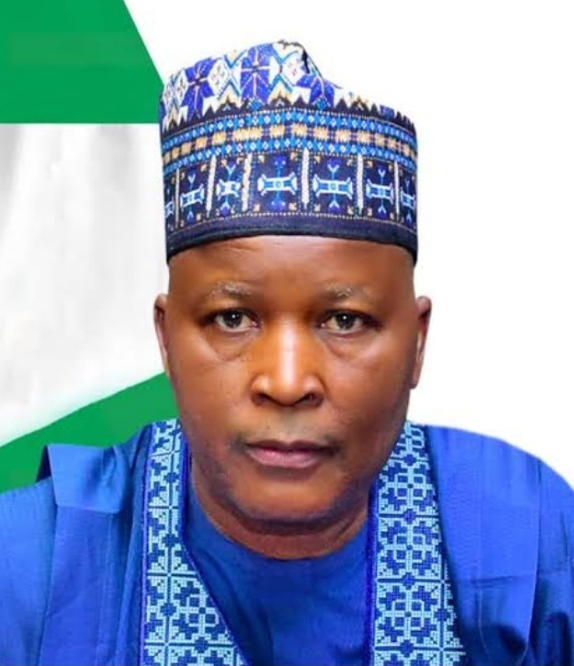
The immediate past Minister of State for Housing and Urban Development, Alhaji Abdullahi Tijjani Gwarzo, is still grumbling bitterly over his sack from the cabinet of President Bola Tinubu. Gwarzo was among the six ministers sacked by President Tinubu in the major cabinet shakeup recently. The ex minister, who spoke on a BBC Hausa programme, said that the excuse the president gave him was that Kano was overloaded with political officers, hence the need to cut down on some people from the state. He insisted that he wasn’t found guilty of any wrongdoing or poor performance, saying that he suspected that some people were behind the President’s decision to sack him. He said that after President Tinubu informed him of the pending dismissal, some suggestions were made regarding his replacement, but they were ignored. Gwarzo said that the 2023 All Progressives Congress (APC) gubernatorial candidate in Kano, Nasir Gawuna should have been offered the opportunity to represent Kano Central in the federal cabinet. “I was surprised (when I was sacked) because I wasn’t found guilty of any wrongdoing or poor performance. And I was a minister of state with the senior minister who handles a large chunk of the ministry’s activities. “Before the announcement, the President had put me on notice of his decision. “He said Kano North was overloaded with political officers, hence the need to strike a balance. We gave our advice, but it was ignored. “From there I began to suspect that some people are behind this, because for me that wasn’t a valid reason. “If it’s true that the ministerial slot will be allocated to Kano Central, we have our 2023 gubernatorial candidate, who is also our leader in Kano Central. Why not consider giving him the slot? “Gawuna should be offered the position first, unless he declines, in which case it could be given to someone else. “All his other colleagues who contested in other states were given positions, such as the candidates from Plateau and Zamfara states.”
I must confess from the onset that I have never been a fan of the just elected President of the United States of America, Donald Trump. As a matter of fact, I had never liked him, especially in his first coming (2017-2021) as President of the US. I wouldn’t know exactly why I had such a strong dislikeness to him, but I figure out that his campaign messages and the manner in which he carried out the campaigns contributed to such feeling in me. I’m referring to his anti-islamic and anti-African sentiments, or was it vitriolic attacks. In deed, the Africanness in me, besides my strong belief in the goodness of Islamic religion, just like Christianity, rose in me to look at him not only with suspicious eye, but pent-up hatred, if I may be excused to use such a strong word. Remember his famous vow, veiled in some kind of grammar, to send Muslims out of America or to make living in that country a hell for Muslims? Remember his arrogant vow to erect wall around the country to control the influx of Africans into the country, and similar other threats he came to power with, in his first coming? As a matter of fact, no true African would fancy the arrogance with which he smocked himself into power in the first term, the first term that was terminated, ironically, by the same Americans he vowed to protect, or appropriately, to turn to another terrorists in the world (the ones he said he would make to be superior to other species of God’s creations). To cut the long story short, I am beginning to like Trump for directly the same reasons that I disliked him; because he appears to have reversed himself or his policies that were considered in sane world, as crazy. He actually courted and romanced Muslims during his campaigns for his return to the Whitehouse. Having returned, with the 80 percent support from the Muslims in that country, it’s left to be seen whether he would maintain the tempo of love and understanding he sought to create between him and them. One of his opposite policy directions is the issue of war. He had declared this time: “I’m going to stop wars.” Against the background of his arrogance on the superiority of America and Americans, concerning wars in Islamic countries, especially the Middle East and Ukraine, Trump obviously simmered down this time by saying: “…they said, ‘he will start a war.’ I’m not going to start a war, I’m going to stop wars.” In the run-up to the election, Trump repeatedly said he would bring Israel’s war on Gaza to an immediate end, claiming that he could convince Russia and Ukraine to end their war in one day. Trump’s latest comment reiterating his commitment to ensuring immediate peace in the Middle East is in line with his anti-war position, expressed in an April interview where he said: “get it over with and let’s get back to peace and stop killing people.” It must be acknowledged that it was under Trump’s presidency that the Arab-Israeli normalisation process started as part of the Abraham Accords through bilateral agreements that Israel signed with the United Arab Emirates and Bahrain in 2020. In a break with official US policy for decades, the Trump administration also recognised Jerusalem as capital of Israel and shifted the US embassy from Tel Aviv, a move that drew global protest. On legal’ immigrants, Trump, this time, did not say he would build a wall to stop them, but that they are welcome. His campaign repeatedly demonised migrants, both regular and irregular, in the run-up to the November 5 election. But the victory speech by the president-elect demonstrated a shift from his earlier blanket opposition to immigration. He said: “we’re going to have to let people come into our country. We want people to come back in, but… they have to come in legally,” even though he has the plan of reintroducing his first-term policy of curbing illegal border crossings. “We’re going to have to seal up those borders… We’re going to fix our borders,” he said. According to an estimate by the US Department of Homeland Security, as many as 11 million irregular migrants lived in the US as of January 2022. The most refreshing part of Trump’s return to power is his open acknowledgment of the fact that his campaign received support from “all corners” of society, including unionised workers, African Americans, Hispanic Americans, Asian Americans, Arab Americans and Muslim Americans. He emphasized: “we had everybody and it was beautiful. It was a historic realignment, uniting citizens of all backgrounds around a common core of common sense… we’re the party of common sense.” Of course, Trump, like any other political giants in the so-called Democratic setting, has his shortcomings, but his policy change in the direction that can be said to be favourable to Africa and Muslims has endeered him to me as a person, and I’m sure, to many others.
We use cookies on our website to give you the most relevant experience by remembering your preferences and repeat visits. By clicking “Accept”, you consent to the use of ALL the cookies.
This website uses cookies to improve your experience while you navigate through the website. Out of these, the cookies that are categorized as necessary are stored on your browser as they are essential for the working of basic functionalities of the website. We also use third-party cookies that help us analyze and understand how you use this website. These cookies will be stored in your browser only with your consent. You also have the option to opt-out of these cookies. But opting out of some of these cookies may affect your browsing experience.
Necessary cookies are absolutely essential for the website to function properly. This category only includes cookies that ensures basic functionalities and security features of the website. These cookies do not store any personal information.
Any cookies that may not be particularly necessary for the website to function and is used specifically to collect user personal data via analytics, ads, other embedded contents are termed as non-necessary cookies. It is mandatory to procure user consent prior to running these cookies on your website.