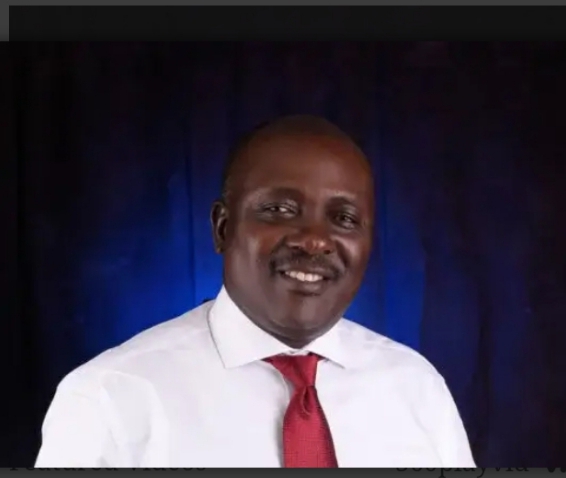
The Executive Vice Chairman and Chief Executive Officer of the Nigerian Communications Commission (NCC), Dr. Aminu Maida has challenged the judiciary in the country to join in the digital revolution that is fast occupying every aspect of life across the world. He declared: “as the digital landscape continues to evolve at an unprecedented pace, the judiciary stands as a vital pillar in shaping a present and a future where technology serves humanity.” Speaking today, November 5, at the 2024 Edition of the Judges Workshop at Sheraton Hotel Ikeja in Lagos, Dr. Maida said: “the judiciary is not simply a bystander observing the digital revolution; instead, it is an active participant, playing a continuous role in shaping the legal frameworks that govern this new technological era.” He stressed that the judiciary’s ability to adapt and evolve alongside technological advancements is paramount to ensuring that the benefits of digital transformation are accessible to all, while mitigating potential risks. The NCC Boss is of the view that with the digital age advancing, judicial officers must constantly adapt to ensure that the rule of law is as effective and enforceable in the online realm as it is in the world of brick and mortar. “One key challenge lies in adapting existing legal principles to the complexities of emerging and evolving technologies. “Nigerians are eager to see a new chapter of digital justice, where the roles played by the judiciary are effectively translated and adapted into online contexts, as follows: “Protecting fundamental rights: The responsibility of the judiciary to act as a guardian of individual rights in the digital sphere, safeguarding privacy, freedom of expression, and access to information, while also ensuring a balance between these rights and the need for security and order. “Enforcing digital contracts and resolving disputes: The responsibility of the judiciary to provide a mechanism for enforcing online agreements and resolving disputes arising from e-commerce, intellectual property, and other digital transactions, fostering trust and predictability in the digital economy. “Developing digital jurisprudence: The responsibility of the judiciary to continually interpret and apply existing laws to new digital contexts, creating a body of digital jurisprudence that provides clarity and guidance for individuals, businesses, and governments operating in the digital space. “Promoting innovation: the responsibility of the judiciary to foster innovation by providing a stable legal framework that encourages investment and development in emerging technologies.” Dr. Maida is optimistic that the workshop would enrich the development of communications law in Nigeria, and produce outcomes that would be of immense benefit to all stakeholders.
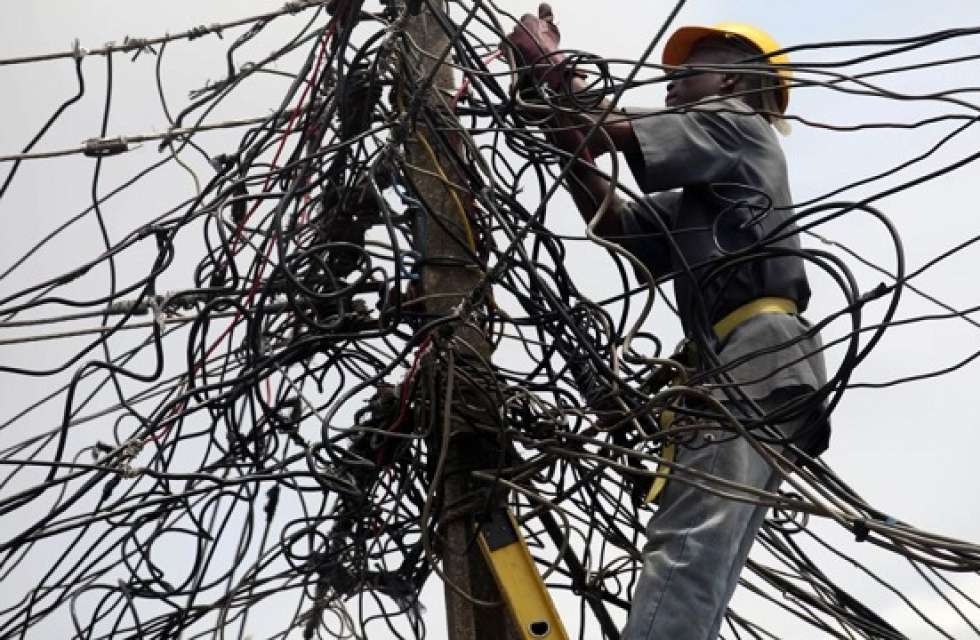
The National grid has suffered yet another collapse this afternoon, plunging the country, Nigeria into another round of darkness. The grid suffered multiple collapse in the month of October, with the Federal Government promising a permanent solution to the embarrassment. As at 2:35pm today, November 5,0hourly generation readings showed that none of the the Power Generation Company had a single megawatt. Details later…
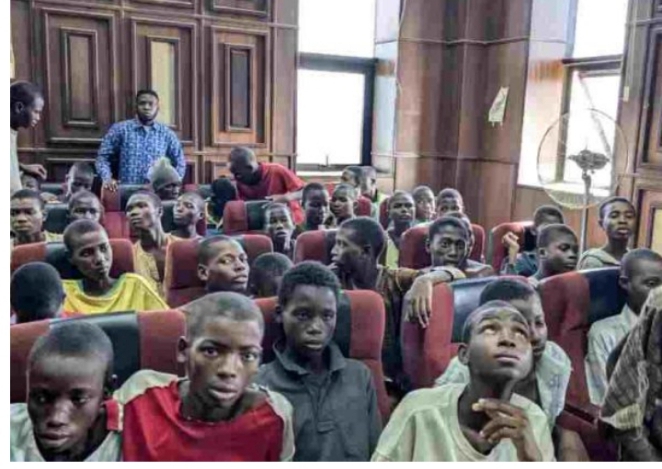
President Bola Tinubu has ordered the immediate release of all minors arrested and detained over #EndBadGovernance protest. Minister of Information and National Orientation, Mohammed Idris, told newsmen at the Presidential Villa, Abuja today, November 4, that the President has also directed investigation into their arrest. The minister said that President Tinuhu insisted that the minors should be formally reunited with their families anywhere they are in the country. “A committee has been set up to look at the issues surrounding their arrest, detention and release. “All the law enforcement agents related to the case will be investigated and anyone found wanting will be brought to book.”
The Publisher of The Eagle Online, Dotun Oladipo, has emerged as the President of the Innovative Media Partners Cooperative Multipurpose Society. Dotun, who served as President of the Guild of Corporate Online Publishers (GOCOP) for two terms, was among those who are members of the pioneer Executive Committee. Other pioneer executive committee members of the IMPCMS are Nkanu Egbe as the General Secretary and Dolapo Otegbayi as the Treasurer. The three officers: Dotun, Nkanu and Dolapo were endorsed for the position at the inaugural meeting of the IMPCMS on October 25, 2024, which birthed a new era of collaboration and empowerment among media professionals. Information at our disposal said that the IMPCMS was inaugurated by the Lagos State Ministry of Commerce, Cooperatives, Trade and Investment. The inauguration, directed by Naseerat Oyindamola Dosunmu, who led a team from the Surulere, Lagos State branch of the ministry, was a culmination of events that followed the Second Nigerian Media Leaders’ Summit, held in May 2024, convened by Taiwo Obe, the Founder and Director of The Journalism Clinic. Before the inauguration, Dosunmu outlined the key provisions of the cooperative’s bylaws, emphasising the importance of transparency, accountability, and democratic governance. She commended the initiative. “This cooperative demonstrates the power of collective action. “It will not only empower the members, but also contribute to the growth of the media industry in Lagos State.” Egbe, who had been coordinating events of the cooperative following its formation, provided an insightful overview of its vision, mission, and goals. He highlighted the following key objectives: Resource Sharing: Providing access to shared tools and facilities to reduce costs and enhance production quality; Training and Development: Offering workshops, seminars, and mentorship programmes to upskill members and stay abreast of industry trends; Collaborative Projects: Fostering and championing joint projects of interest to the members; Networking Opportunities: Creating a strong network of media professionals to facilitate collaboration and knowledge sharing. Dosunmu also inaugurated Oladipo, Egbe and Otegbayi to steer the affairs of the IMPCMS for the next two years, in the first instance, subject to renewal for another term of two years only. The initial three-member executive, Dosunmu said, is expected to bring others on board, subject to the agreement of members. In his acceptance speech, Dotun Oladipo promised to lead the cooperative to the best of his ability in fulfilling its objectives.
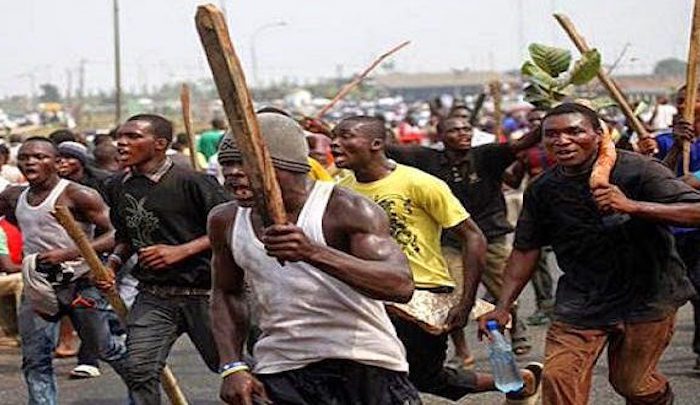
Students of the Federal College of Education, Technical FCE-T, Akoka Lagos, are still angry with the authorities, threatening a return to protest on the street over unresolved issues and imposition of flat N10,000 levy on each of them, against the background of the riot that led to its closure in August this year. The school was scheduled to be re-opened for the resumption of academic activities today, November 4. In a statement today, the Lagos Joint Campus of the National Association of Nigerian Students (NANS) said that it could not guarantee peace on campus without the resolution of issues which forced the institution to shut its doors early August. The college was shut down when the crisis on leadership, which lingered for over three months, degenerated into violence as some workers and students reportedly attacked the Chairman of the Governing Council, Olatunde Adenuga and other council members, vandalising cars and properties. NANS complained in the statement, fearing that another fight is looming over the N10,000 levy imposed on all students without identifying and prosecuting the ring leaders among staff and students who destroyed five vehicles and vandalised the official quarters on campus. “The Lagos State Chapter of the National Association of Nigerian Students (NANS) has been made aware of a recent decision by the college management to impose a blanket charge of 10,000 Naira on all students. This fee is said to be in response to damages sustained during the recent upheaval on campus, which stemmed from students’ expressions of their concerns regarding the college’s leadership. “This development has come as a significant shock and is widely seen as both unfair and insensitive, especially given the current economic climate. Families across Nigeria are grappling with soaring living costs, and many are struggling to afford basic needs, including food and essential supplies. “As an organization committed to the welfare of Nigerian students, we find this measure to be unacceptable. It not only fails to address the root causes of the unrest but also penalizes all students collectively, irrespective of their involvement or lack thereof in the incident. “Collective punishment of this nature disregards due process and overlooks the underlying reasons that led to students’ demands and frustrations. “In light of these concerns, we strongly urge the college management to reconsider and reverse this imposed fee. Failure to take immediate corrective action may leave us with no choice but to initiate a peaceful protest aimed at addressing this injustice and amplifying students’ voices. “We are hopeful that the management will choose the path of dialogue, empathy, and fairness in resolving this matter,” NANS wrote in a letter issued by Comrade Alimi Lekan Idris and Comrade Abefe Abdulrazak Yusuf, chapter chairman and secretary respectively. As the crisis in the institution began in July, the Governing Council of the College asked the Provost, Dr. Wahab Ademola Azeez to step aside and appointed Dr. Isaac Miller as the acting provost of the institution. In an internal memo on August 8, referencing FCE/T/AK/RO/IM/2/206 and signed by the Registrar of the College, Rasheed Dada, the council said that Wahab Azeez should “step down” as the provost effective 31 July. “This is to inform the College Community that at the inaugural meeting of the 8th Governing Council of the College on Tuesday, 30 July 2024, the Council directed that Wahab Ademola Azeez should step aside from office as the Provost of the College with effect from 31 July 2024, the statement reads in part. The Council had raised two panels, one to investigate allegations against the provost on maladministration and financial impropriety. The second one, a special committee was mandated to investigate the riot by some students and staff which resulted in the closure of the college. A circular dated Wednesday, August 7, 2024, and signed by Dada said the 8th governing council at its sitting on July 31 constituted an investigative panel and a committee to probe allegations against some staff and the crisis that engulfed FCE-T. The 2nd circular titled: “Special Committee of Council to Investigate various allegations against College Management and Staff” had a five-man committee with an external council member as chairman. The special investigative panel comprised the representatives of the Independent Corrupt Practices Commission, Attorney General of Lagos State, Nigerian Security and Civil Defence Corps, Nigerian Institute of Quality Surveyors, Minister of Education and Chairman, Oluwole Residents Association. The panel was mandated to look at the remote and immediate causes of the students’ unrest leading to the vandalization of five vehicles, damage to part of provost’s lodge, identify the ring leaders of the students’ crisis, staff, students and outsiders, itemized the damages suffered by the college in the course of the crisis, evaluate cost of replacements of the damaged items and assess the students facilities to be replaced and recommend those to be immediately repaired. Many students and staff of the college have expressed concern that two months after their inauguration, the findings of the panels are yet to be published. “It is unacceptable to punish all the students when those who participated in the riot were taken to court. Where is the outcome of the police investigation and the panels set up by the college,” Segun Olusola, a second-year student queried? Protest began at the college on 27 May, 2024, when students, and some staff locked up the office of the Provost of the College and issued him a notice to quit his official residence over his tenure of office. The protest was organised by the leadership of the Senior Staff Union of Colleges of Education, SSUCOEN, FCET chapter, and other unions who called themselves “concerned staff.” The protesters insisted that with the amendment of the Educational Colleges Act 2023, which introduced a five-year single term of office for provosts and other principal officers of the colleges, the tenure of Dr Azeez had ended on 26 May. However, the provost said he was appointed for the first term of four years in 2019 and that having been duly reappointed by the institution’s governing council in 2023, he had resumed his second term in office on 27 May 2023 before the amended act was signed into law on 12 June 2023. The staff unions asked for clarification on the tenure of office of the provost based on the amended act, and former the Minister of Education, Prof. Tahir Mamman, wrote the unions, affirming the legality of Dr Azeez’s second term of four years. The protesters ignored the minister’s verdict and continued to stage daily protests on the campus, denying management members access to their offices even after the former Minister of State for Education, Yusuf Sununu met with the warring parties in Abuja to reach an amicable settlement. Despite signing resolutions reached at a reconciliatory meeting chaired by Sununu, some workers of FCET continued to threaten a showdown should Dr Azeez return to the office. The resolutions signed by the representatives of the ministry, the governing council, and the staff unions included the reopening of the office of the college’s provost and his return to the office.
The Joint Action Committee (JAC) of NASU and SSANU has temporarily suspended its strike in Nigerian universities, effective November 5.
General Secretary of NASU, Mr Peters Adeyemi announced this in a press statement jointly signed by Mr Mohammed Ibrahim, President of SSANU on Sunday in Abuja.
The unions, representing non-academic staff, began their strike on October 28, demanding four months of unpaid salaries and resolution of other issues.
Following intense negotiations with the Federal Government, the unions reached an agreement to resume work for one month while commitments are met.
NASU General Secretary, Peters Adeyemi, revealed that the government has promised to pay two months’ salaries in phases, with the first installment already disbursed in October and the next due by November’s end.
JAC’s decision to pause the strike reflects the government’s initial response, spurred by efforts from the Minister of Education and Department of State Services.
Union leaders will convene on campuses to discuss progress, while other demands—including N50 billion in Earned Allowances and a Wage Award—are under review.
The Nigerian Association of Chambers of Commerce, Industry, Mines, and Agriculture (NACCIMA) has voiced serious concern over the escalating exit of businesses from Nigeria, attributing the trend to unfavorable economic policies.
President of NACCIMA, Dele Oye, stated this in a statement made available to newsmen, yesterday, in reaction to the recent exit announcement by South African retailer Pick n Pay, citing challenging market conditions.
NACCIMA President, noted that flawed Central Bank of Nigeria (CBN) policies are a primary cause, leading to significant foreign exchange losses for businesses.
Additionally, opaque practices in the Nigerian National Petroleum Corporation (NNPC) have spurred inflation in fuel prices after subsidy removal, compounding economic strain.
Oye stressed the need for the CBN to enact clear, stable policies to attract investment and stabilize the naira. He also urged for widespread reforms to improve the national business climate, fostering sustainable growth and appeal to both local and international investors.
Calling for an open dialogue among government, the private sector, and civil society, Oye emphasized that such collaboration is crucial for crafting solutions to Nigeria’s economic challenges.
In the resumed media war on prices of petroleum products, Dangote Petroleum Refinery has debunked insinuations that its product is more expensive than the imported ones. A statement by the Dangote’s Group Chief Branding and Communications Officer, Anthony Chiejina said that though the company had tried to refrain from engaging in media fights, but that it is being constrained to respond to the recent misinformation by IPMAN, PETROAN, and other associations. According to him, both organisations claimed that they could import petrol at lower prices than what is being sold by the Dangote Refinery. He said that Dangote benchmarked its prices against international prices, and believed that “our prices are competitive, relative to the price of imports. “If anyone claims they can land PMS at a price cheaper than what we are selling, then they are importing substandard products and conniving with international traders to dump low quality products into the country, without concern for the health of Nigerians or the longevity of their vehicles. “Unfortunately, the regulator (NMDPRA) does not even have laboratory facilities which can be used to detect substandard products when imported into the country. “Post deregulation, NNPC set the pace by selling PMS to domestic marketers at N971 per litre for sale into ships and at N990 for sale into trucks. This set the benchmark for our pricing, and we have even gone lower to sell at N960 per litre for sale into ships while maintaining N990 per litre for sale into trucks. “In good faith, and in the interest of the country, we commenced sales at these prices without clarity on the exchange rate that we will use to pay for the crude purchased. “At the same time, an international trading company has recently hired a depot facility next to the Dangote Refinery, with the objective of using it to blend substandard products that will be dumped into the market to compete with Dangote Refinery’s higher quality production. “This is detrimental to the growth of domestic refining in Nigeria. We should point out that it is not unusual for countries to protect their domestic industries in order to provide jobs and grow the economy. For example, the US and Europe have had to impose high tariffs on EVs and microchips in order to protect their domestic industries. “While we continue with our determination to provide affordable, good quality, domestically refined petroleum product in Nigeria, we call on the public to disregard the deliberate disinformation being circulated by agents of people who prefer for us to continue to export jobs and import poverty.”
Nigeria’s Presidency has written off some alternative measures proffered by the former Vice President, Atiku Abubakar, towards addressing socio economic challenges being faced in the country. “We have just read a statement credited to former vice president Alhaji Atiku Abubakar, in which he tried to discredit President Bola Tinubu’s economic reform programmes while pushing his untested agenda as a better alternative.” In a statement, Special Adviser to President Tinubu on information and strategy, Bayo Onanuga described Atiku’s ideas as lacking in details, adding that those were the ideas that Nigerians rejected in the 2023 poll. The Presidency feared that if Atiku had won the election in 2023 with such warped, untested ideas “we believe he would have plunged Nigeria into a worse situation or run a regime of cronyism.” Onanuga insisted that Atiku lost the election partly because he vowed to sell the NNPC and other assets to his friends. “Nigerians have not forgotten this, nor would they be comforted by Atiku’s antecedents when he ran the economy in the first term of President Olusegun Obasanjo’s government between 1999 and 2003. “As vice president, Atiku supervised a questionable privatisation programme. He and his boss demonstrated a lack of faith in our educational system, and both went to establish their universities while they allowed ours to flounder. “Talk is cheap. It is easy to pontificate and deride a rival’s programmes even when there are irrefutable indices that the economic reforms yield positives despite the temporary difficulties. “Despite the futile attempt to hoodwink Nigerians again in his statement, it is gratifying that the former Vice President could not repudiate the economic reforms pursued by the Tinubu administration because they are the right things to do. “His advocacy for a gradualist approach only showed that he was not in tune with the enormity of problems inherited by President Tinubu. “It is so easy to paint a flowery to-do list. It is expected of an election loser. “President Tinubu met a country facing several grave challenges. Fuel subsidies were siphoning away enormous resources we could ill afford, and there was criminal arbitrage in the forex market. “No leader worth his name will allow these two economic disorders to persist without moving to end them surgically. “While advocating for gradual reforms may sound appealing, Tinubu took measures that should have been taken decades ago by Alhaji Abubakar and his boss when they had the opportunity. “Alhaji Abubakar calls for empathy and a human face to reforms. We have no problem with this as it resonates well with our administration’s focus. President Tinubu has consistently emphasised the need for compassion and protection of the most vulnerable. “The administration has prioritised social safety nets and targeted support for those affected by recent economic transitions.”
Death has been announced of a veteran Nigerian Journalist, Dr. Ngozi Fidelia Anyaegbunam, aged about 67, after a brief illness. A statement signed by her son, Rocky C Agbese, on behalf of the family, described the deceased as a trailblazing journalist who had editorial stints with Champion Newspaper (1st female editor) and The Daily Times (where she authored the book Waziri Ibrahim: Politics Without Bitterness). The deceased, according to the statement, was born in October 1957 at Damaturu in modern day Yobe State to George and Victoria Anyaegbunam. It said that late Ngozi became a full time media management consultant to numerous blue chip companies. “She also held the distinction of being a female print media journalist to interview two sitting Presidents of Nigeria (Olusegun Obasanjo and Muhammadu Buhari). “A dedicated and loving mother, grandmother, sister, cousin and friend, Auntie Ngozi will be sorely missed by all who came across her and were impacted by her larger than life presence.” The statement said that funeral arrangements would be announced later.
We use cookies on our website to give you the most relevant experience by remembering your preferences and repeat visits. By clicking “Accept”, you consent to the use of ALL the cookies.
This website uses cookies to improve your experience while you navigate through the website. Out of these, the cookies that are categorized as necessary are stored on your browser as they are essential for the working of basic functionalities of the website. We also use third-party cookies that help us analyze and understand how you use this website. These cookies will be stored in your browser only with your consent. You also have the option to opt-out of these cookies. But opting out of some of these cookies may affect your browsing experience.
Necessary cookies are absolutely essential for the website to function properly. This category only includes cookies that ensures basic functionalities and security features of the website. These cookies do not store any personal information.
Any cookies that may not be particularly necessary for the website to function and is used specifically to collect user personal data via analytics, ads, other embedded contents are termed as non-necessary cookies. It is mandatory to procure user consent prior to running these cookies on your website.