Governor Willy Obiono of Anambra State has expressed appreciation to President Muhammadu Buhari for committing a total of N30 billion for the completion of the second Niger Bridge.
Governor Obiano, who spoke when President Buhari arrived in the State capital today, Thursday for his presidential campaign for second term, also commended the President for the government’s intervention on the Enugu/Onitsa road, and the on-going work on the second Niger bridge.
He appealed to the President to also work on the Onitsa/Nsuka road.
The Ime Obi Ohaneze from the Southeast of Nigeria has formally endorsed the candidacy of Alhaji Atiku Abubakar of the opposition Peoples Democratic Party (PDP), citing his promise to restructure the country as the major driving force.
The Ohaneze, in a statement after a meeting today, Thursday in Enugu, declared that it has ratified the decision its National Executive Committee (NEC) reached at the meeting held in Enugu on Tuesday 22 January, 2019, “to adopt the Atiku Abubakar/ Peter Obi ticket in the 2019 presidential election.
“Ime Obi therefore endorses and embraces fully, this ticket without equivocation, especially with regards to the position of Ndigbo at the AWKA Declaration which insisted on a complete restructuring of the Nigerian polity.”
In the statement signed by its President-General, John Nnia Nwodo, Ohaneze Ndigbo World Wide advised Ndigbo to see their PVCs as their most potent tool to ensure a restructured polity and for a better society.
It called on the international community to help to ensure a free and credible 2019 elections in Nigeria even as it called on all Igbo to come out and vote and to protect their votes.
The Court of Appeal in Abuja has refused to recognize Jerry Gana as the presidential candidate of the Social Democratic Party (SDP), and declared ex-Cross River State Governor, Donald Duke as the authentic candidate.
In a unanimous decision by a three-man panel, led by Justice Abdul Aboki, the court set aside the December 14, 2018 judgment of the High Court of the Federal Capital Territory (FCT) which had declared Jerry Gana the candidate of the party.
The court awarded N500,000 cost against Gana and in favour of Duke.
Gana, who came second with 611 votes in the SDP presidential primary held on October 6, 2018 had sued at the High Court of the FCT, challenging the competence of Duke’s participation in the primary in view of the zoning and rotation provision in the party’s amended constitution of 2018.
Gana had contended that Duke, who came first at the primary with 812 votes, was not qualified to become the party’s presidential candidate because, by the zoning and rotation provisions in Article 15(3)(2) of the amended constitution, Duke, a southerner cannot be the presidential candidate while the party’s National chairman was also from the southern part of the country.
According to Gana, under the amended constitution of the party, which provides for the zoning of the major offices including that of the national chairman and president, between South and North, and rotation among the six geo-political zones, a section of the country cannot produce both the national chairman and the president.
In the lead judgment read on Thursday by Justice Aboki, the Court of Appeal held that as at when the SDP’s presidential primary was conducted on October 6 last year, the party’s constitution that was in operation was that of 2011/2012 which did not provide for either zoning or rotation.
The court said although the party’s national convention adopted the amendment to the party’s constitution on October 6 last year, the amended constitution did not become operation until October 8, 2018 when it was registered with the Independent National Electoral Commission (INEC) as required under the Nigerian Constitution.
The court said the FCT High Court ought not to have heard the suit filed by Gana because it was premised on a wrong understanding of the zoning provision in the party’s constitution.
It said the zoning and rotation provisions only apply to positions like the national chairman and president, but not presidential candidate. It said the provision could only be activated if the party’s candidate emerges as a president of the country.
The court said it would have amounted to discrimination and a denial of constitutional guaranteed right for a member of a party to be prevented from contesting for a position solely because he is from a section of the country as the party’s National chairman.
It said the trial court contradicted itself in its January 14, 2019 judgement when, after holding that the amended constitution of the party was not operational as at when all process leading to the presidential primary were concluded, went ahead to void the outcome of the primary.
The appellate court wondered why Gana did not raise the issue before the conduct of the primary. It also wondered why Gana did not challenge the participation of the other three aspirants, who are all from the southern part of the country.
The court, which held that Gana was bound by the undertaking he signed to abide by the outcome of the primary and to support the winner, only challenged Duke because he (Duke) won the primary.
In his supporting judgment, Justice Emmanuel Agim, said Gana was seeking to achieve cheap victory, which he could not get at the primary.
Justice Agim said having signed an undertaking, like every other aspirants, to abide by the outcome of the primary, it was wrong for Gana to have turned around to seek to contest the primary’s outcome.
He said the conduct by Gana was responsible for why the nation’s political space was tense and violent prone.
He said if political leaders learn to conduct themselves with decorum and civility, there will not be need for the unending litigation engaged in by them before and after elections.
Both Gana and Duke were in court throughout the over three hours that the judgment lasted.
Gana, who looked unhappy, bolted out of the courtroom immediately the court rose at the conclusion of the judgment.
He failed to interact with anybody, not even the journalists, who sought his opinion.
Duke, who was happy with the outcome of the judgment, greeted and hugged his supporters and friends who came to him after the proceedings.
Minister of the Federal Capital Territory (FCT), Malam Muhammad Musa Bello has advised farmers in the FCT and other parts of the country to leverage the 2019 seasonal rainfall prediction made available by the Nigerian Meteorological Agency (NiMet) in planning their farming activities for the year.
Muhammad Bello, who made the call in Abuja today, during the unveiling of the 2019 Seasonal Rainfall Prediction (SRP) by NiMet, said that the call has become necessary to ensure that climate smart agricultural practices are promoted.
The FCT Minister also advised other institutions and communities to use the available professional data and information to improve their activities.
Muhammad Bello, who commended the Nigerian Meteorological Agency and the Ministry of Aviation for living up to the mandate of providing valuable meteorological information for aviation and non-aviation sectors of the country, said their activities are consistent with President Muhammadu Buhari’s agenda of improving the process of governance with available technology,
He assured that the FCT Administration will leverage effectively the available information in order to add value to governance, and guide the sizeable community of farmers in the FCT.
Unveiling the 2019 Seasonal Rainfall Prediction, the Minister of State Aviation, Senator Abubakar Hadi Sirika, said it is designed to provide relevant information for planning and execution of projects and programmes in various sectors of the economy like Agriculture, air transportation, infrastructure construction, telecommunication and water resources that are sensitive to weather.
The Minister said the early release of this vital information before the beginning of rainy season every year is to ensure effective harnessing of the climate resource and guarantee minimal losses from associated hazards which are becoming quite devastating in the era of climate change.
He noted that the agency has been able to successfully mitigate the effects of climate change in the country through early warning systems and other critical data provided it has been providing.
The Minister said that the country is expected to experience below normal, to normal rainfall season, and that the rains are expected to start late, especially in the northern parts of the country, while the south-eastern zone as well as the coastal areas will experience normal onset of the rains.
He noted that most of the Northern States will experience earlier than normal end growing season, in addition to more frequent dry spells during the rainy season in some parts of the extreme North around June and July. The rest of the country he added would also experience shorter growing seasons due to late onset of rains and early ending.
The Minister appreciated the partnership between the Agency and the FCTA including the provision of land housing the Agency which has helped to improve its activities.
Earlier in his welcome address, the Director General, NIMet, Prof. Sani Abubakar Mashi, said the Agency has been delivering on its mandate since it was set up in 2012, adding that its predictions have been consistently and accurately delivered over the period.
The DG noted that the predictions by NIMET are now being taken more seriously since the regrettable 2012 flood incident that was experienced in most parts of the country, which he said has encouraged the agency to do more to improve on the accuracy of the predictions.
Other highlights of the event were testimonies from very important stakeholders like the British American Tobacco as well as representatives of the Katsina and Kebbi State government among others, who explained how NiMet information have helped to improve agricultural and other economic activities in their regions.
President Muhammadu Buhari has declared open a world-class Post-Graduate Centre of Excellence at the University of Nigeria, Enugu Campus (UNEC) constructed and donated by the Central Bank of Nigeria (CBN).
The President, who lauded the CBN for making huge investments for the overall development of the country, said that the construction of the project by the CBN had also underscored the Federal Government’s commitment to provide a conducive environment for learning at all levels of education.
The President said that his administration places high premium on education to ensure, among other things, its affordability, stressing that education remained the bedrock of societal progress.
He said that the Federal Government would not rest on its oars in boosting the quality of education, he urged the CBN to go beyond providing physical infrastructure to the university to increasing partnership with the institution in terms of funding support.
This was even as the CBN Governor, Godwin Emefiele said that the aim of the Bank, being a knowledge-based and visionary institution, was to build human capacity for the financial system in particular and the economy in general.
He said that the project is mainly to ensure that students at post-graduate levels in Economics, Accounting, Banking and Finance, Business Administration and Statistics study in a serene environment that would stimulate effective learning with a view to building human capacity for the financial services sub-sector.
He said that the project, which was the product of a N10 billion Endowment Fund instituted in 2006 that has grown to over N23 billion, also aimed at checking brain drain as well a strain on the country’s foreign reserve used for funding educational pursuits abroad. According to him, the project was an expression that the Government, through the CBN, was contributing to education in the country.
Emefiele said that the centre of excellence would also enter into collaborative studies with ivy league institutions in the United States and Europe in order to attract the best brains in Finance, Accountancy and Economics.
He thanked stakeholders in the Federal Ministry of Education, National Universities Commission (NUC) and the University of Nigeria for their support in making the project a huge success, and advised the university to take maximum advantage of the project in order to produce graduates that are able to compete favourably in the global market.
The world-class Post-Graduate School project comprises a Faculty building and a 133-room hostel, as well as a 500-seater auditorium; four lecture and four tutorial rooms, traditional and e-libraries, and a telepresence room.
The Independent National Electoral Commission (INEC) has made it clear to the Presidential candidate of the Allied Congress Party of Nigeria (ACPN), Mrs. Oby Ezekwesili that it is too late for any candidate to withdraw from elections.
The Director of Voter Education and Publicity, Oluwole Osaze-Uzzi, who spoke to news men today, Thursday, shortly Ezekwesili declared her withdrawal from the Presidential race, said that since it had released its final list of candidates last week, it had become too late for anybody to withdraw.
According to the INEC official, the logo of the parties would still appear on the ballot paper come February 16.
“According to the Electoral Act, there is a time for withdrawal and that time has passed. We have published a list of candidates and on Election Day, these are the parties that you will see. It is too late.”
Ezekwesili, who is a former Minister of Education, had today, Thursday announced her withdrawal from the Presidential election, insisting that she would rather form a coalition with like minds in order to win the election.
The Presidential candidate of the Alliance for New Nigeria, Mr. Fela Durotoye, had also said that he would be willing to step down like Ezekwesili in order to form a coalition that could defeat the incumbent.
President Mohammadu Buhari has extolled the virtues of the late Dr. Nnamdi Azikiwe who he said would continue to be alive in the minds of Nigerians yet unborn.
Buhari, who spoke today, Thursday, while inaugurating The Zik Place, otherwise known as Zik Mausoleum and Conference Centre in Onitsha, said that the Mausoleum would promote nationalism, patriotism and public service.
He said that Zik’s memory would be indelible in the hearts of generation yet unborn for his selfless service in national development, adding: “this is meant to honour the memory of Dr. Nnamdi Azikiwe, the Owelle of Onitsha, the Zik of Africa and Nigeria’s first President and one of the country’s foremost nationalists.
“As I reflect on Zik’s life and all of what he achieved, I acknowledge that Zik does not need this house, it is we who need Zik’s name to give this house meaning and importance.
“Therefore like many who live in our hearts, the great Zik of Africa, the Owelle of Onitsha will remain evergreen.”
This was even as Governor Willie Obiano of Anambra State commended Buhari for keeping his promise and completing the mausoleum within a short period of time.
Obiano said that the mausoleum would become an important landmark In Eastern Nigeria and would add to the tourist attractions in the nation.
The governor called on the federal government to declare every November 16, a National Day in Nigeria, in honour of Zik’s birthday.
On his part, the Minister of Power, Works and Housing, Babatunde Fashola, noted that the project was abandoned by the previous administrations.
Fashola said that 96 workers were engaged in 2016 when work on the Mausoleum was resumed by the Buhari administration to ensure completion of the project in 2018.
He noted that the federal government under Buhari would ensure the completion of the second Niger Bridge, Enugu-Onitsha Expressway and federal secretariat, Awka, in the state capital.
The Obi of Onitsha, Igwe Alfred Achebe, on his part, described the late Azikiwe as an important figure in national development and history.
He called on the federal government not to abandon the project “at this stage.”
Achebe suggested that a board of directors be appointed to oversee the activities and progress of the Mausoleum and conference centre.
Speaking, one of Zik’s sons, Ambassador Emeka Azikiwe commended President Buhari for what he called “the wonderful legacy” he had kept.
He recalled that his late father contributed “immensely to the country’s independence, democracy and national development.”
While expressing gratitude over the development, he said the mausoleum would serve as a tourist centre while at the same time, immortalise his father.
“We must not only commemorate the sacrifices of our true national heroes, we should also endeavour to work towards oneness and togetherness to achieve unity, peace and the reclamation of our dear country”.
Central Bank of Nigeria (CBN) Governor Godwin Emefiele has warned that the Peoples Democratic Party (PDP) Presidential candidate, Atiku Abubakar’s suggestion that the exchange rate should be free float will lead the country into economic disaster.
“The Monetary Policy Committee reviewed it and concluded that it would be wrong. It is as good as saying that we should go back to the era of Structural Adjustment Programme (SAP) in Nigeria.”
Emefiele said that the implication of Atiku’s proposed policy if he wins the February 16 election can better be imagined.
“It will certainly lead to capital flight, lead to massive depreciation or devaluation of the currency and ultimately to currency crisis in Nigeria and I think we should all know that it is a road to perdition to ever go in that direction.”
Emefiele told news men shortly after the bi-monthly Monetary Policy Committee (MPC) meeting: “there is no capital control in Nigeria today because you cannot find the CBN trying to intervene in the market for demand and supply of foreign exchange.”
“Normally, the Central Bank as an independent institution is apolitical but it is also important that at the MPC meeting today we asked ourselves if there is any merit in it to begin to say that we should look at free-floating the currency or that we should allow free import of goods that we have restricted. The MPC came to a conclusion that this was a wrong premise.
“We cannot be talking about allowing import of items that can be produced in the country today, exporting jobs from Nigeria to foreign countries, and we say we have the interest of Nigeria at heart. We don’t agree with anybody. It is a wrong premise to say that you will allow imports to just flood the country just because you want to please anybody. It is not in our interest. We will remain apolitical. We will not want anybody to drag the central bank into issues that are within our remit otherwise, we would respond to it.”
Alhaji Atiku Abubakar in his policy document condemns what he calls the “Poor exchange rate management”, which bred “multiple exchange rates that were exploited by opportunists, rent-seekers, middlemen, arbitrageurs, and fraudsters”. By implication, he wants the naira to be on a free-float.
The CBN governor admitted that the apex bank has instructed banks to suspend interest on loans for fuel imports. According to him, “we have indeed told banks to suspend interest on those loans from July 2017. They should collect whatever credit notes have been issued and credit the account of petroleum marketers immediately. If any bank refuses to do so, the marketer or their association are free to report to CBN, mention the name of the bank and we will appeal to the bank to please carry out this instruction.” With regards to forex restrictions on imported items, Emefiele said CBN would get even more aggressive to see to it that any or all food items that can be produced in Nigeria and consumed in Nigeria and are currently being imported into Nigeria may face forex restrictions.
“We would go through our records and once we convince ourselves that these products can be produced in Nigeria, we will place them on the FX restriction list. It means that you cannot source foreign exchange from Nigeria foreign exchange market to import those items into Nigeria. If you have free dollars, you can bring it in but you will not be able to even make payments for those goods with dollars from the Nigerian foreign exchange market. This is because we think that the initiatives that CBN has put in place in the past to cut imports and diversify the structure of the Nigerian economy is yielding results and we will continue to be that aggressive.
” And we also went further to say that the Economic Intelligence Department of the CBN together with EFCC would investigate any company, any individual suspected of bringing these items through smuggling or any means for money laundering and economic sabotage. And that if we discover and conclusively too, that these companies or individuals that are are involved in bringing these goods, we would write to all the banks that they should blacklist all those companies and individuals running those companies that they can no longer operate any bank accounts in any Nigerian bank.
“We don’t need to talk about prosecuting them but just to say we will not allow you to do business in Nigeria and of course you know the implications of that.” Highlighting his successes and achievements as CBN governor, Emefiele argued that “Dangote is today establishing the biggest refinery I have ever seen. The size of Dangote refinery is at least 10 times the size of Victoria Island. By April 2019 when Dangote Fertiliser Plant begins to roll, we will place a ban on the importation of fertiliser because Nigeria will both be self-sufficient and even export.”
He also disclosed that he has “written to governors in the South south and South east that time has come to stop importation of crude palm oil. A barrel of crude palm oil is more expensive than crude petroleum per barrel. I told them that we will re-establish the oil palm belt in the South south and Southeastern parts of the country. Edo State has reacted positively like some other states. With support and intervention from CBN and government, we would reverse the trend. That should be the direction. It is important to say this so that people can know that the economy is doing well. A lot of work still needs to be done, there are still a couple of vulnerabilities and fragilities that we see in the economy but we are determined to resolve them.” At the end of the MPC meeting, all 11 members voted to keep the policy parameters unchanged from their current levels. By this decision, the MPC decided to retain the MPR at 14%; retain the asymmetric corridor of +200/-500 basis points around the MPR; retain the CRR at 22.5 per cent; and retain the Liquidity Ratio at 30 per cent.
In his assessment of the economy so far, Emefiele said: “It is important for me to say that if we think about where we are coming from, I would say I like to use some numbers: for instance, in September 2008, Nigeria’s reserve was about $62 billion, GDP was growing 7.2%; inflation was 15%. By January 2014, GDP was 6.2%, inflation had trended downwards to 8% and external reserve was 40%. Let us not forget that we were in a period of prosperity, in terms of crude prices between 2009 and 2014 which is five straight years, with no shut-ins in pipelines, with high crude oil price, reserve still dropped. From the end of 2014, we started another round of global crises. The global crises resulted in stagflation in Nigeria. GDP dropped, to 2.79% in 2015, went further and contracted to negative of 1.58% in 2016, improved in 2017 and then we are hopeful that 2018 would end at about 1.8%.
“Inflation was 15% in 2008, dropped to 8% in 2014 and it moved up to about 9.5% and by January 2017, it had moved up to 18.7% but today, through the activities of monetary and fiscal authorities, inflation had gone down to 11.4%. He also stated that “by 2008, with higher reserves, with higher productivity reserves dropped to $40 billion in January 2014 anmd ended 2014 at $35 billion, went further down in 2015 to $28 billion and indeed by October 2016 as a result of economic crises, reserves had plummeted further to $23 billion. Today as a result of all the actions and activities of both the monetary and fiscal authorities supported by the government, reserve is up, went to $39 billion in 2017 and 2018 we closed at $42.5 and I said so in my communique that even as at now, as a result of the confidence in the management of the Nigerian foreign exchange, the confidence in the management of the country, we’ve seen confidence even in foreign investors returning, reserves as at yesterday was $43.28 billion.”
“We have seen FX stability in the market and as if all of you will recall, that sometime in 2016 and up to early 2017, we saw a situation where exchange rate even in the black market had moved up in February to N525/$ and I was being told that by March, it will hit N1000/$. But as a result of the actions of CBN today, the all markets in fact BDC has come down to about N360/$ and even slightly lower. The I&E Window, which is a market that we set up as a free in-free-out market today is about N362/$. So we have seen a substantial convergence in the foreign exchange market in Nigeria.” On balance of trade developments, the CBN governor noted that “when people say nothing has happened in the economy, they should know that it is not a fair comment to make both on government and also on the monetary authority. In 2008, imports stood at $86 billion. By 2017, it had dropped to $45.8 billion as a result of the activities of government and of monetary and fiscal authorities.”
“Trade balance in 2008 was $46.2 billion, went down during the period of global crises to $6.4 billion and today it is up. In 2017 it was $13.15 billion and closed at $18.7 billion in 2018. When you talk about activities that related to issues on the restriction of foreign exchange for the importation of certain food items you will also find for instance that rice which is a major staple in Nigeria: data from the Thai Rice Exporters Association says that in 2014, Nigeria imported 1.2 million metric tonnes of rice. In 2015, it had dropped to 644 metric tons. In 2016 to 58,000 metric tons. In 2017, to 23,000 metric tons and 2018 to 6,000 metric tons” he pointed out. While reading the communique, Emefiele lamented that “on external borrowing, committee noted the increase in debt levels, advising for caution, noting that it could fast be approaching the pre-2005 Paris Club exit levels. MPC also noted that although there was an increase in inflation rate for the second consecutive month based on month on month, inflation continued to moderate indicating that the year on year measures will also moderate in the near term.”
If voting in the February 16 presidential election were to be influenced by candidates’ performances in the January 19 presidential debate, then both President Muhammadu Buhari of the All Progressives Congress (APC) and his strongest challenger, Alhaji Atiku Abubakar of the Peoples Democratic Party (PDP), would not stand a chance of winning.
Both Buhari and Atiku did not participate in the debate. They left the trio of Professor Kingsley Moghalu, Mrs. Oby Ezekwesili and Mr. Fela Durotoye to slug it out with one another. But fortunately for both men, as well as presidential candidates of other parties that were purportedly rigged out of the much-publicised debate, presidential debate has never counted for anything in the determination of the outcomes of presidential elections in the current Fourth Republic.
Validations: I cannot remember General Olusegun Obasanjo, as presidential candidate of the PDP in the 1999 election, debate with the presidential candidate of the Alliance for Democracy and All Peoples Party (AD/APP), Chief Olu Falae. That did not stop Obasanjo from winning the election. In 2003, Obasanjo and Muhammadu Buhari who was the APP presidential candidate did not debate; Obasanjo went ahead to win the election.
In 2007, Alhaji Umaru Yar’Adua, who was the PDP candidate, did not debate with Buhari, who was APP’s candidate; yet Yar’Adua won the election. In 2011, President Goodluck Jonathan of the PDP did not participate in the debate with Buhari, who was the presidential candidate of the Congress for Progressive Change (CPC); yet Jonathan won the election. In 2015, Buhari did not participate in the presidential debate with Jonathan. That did not stop Buhari from winning the election.
These historical developments inevitably question the relevance of debates in Nigeria’s presidential system of government and in the contestation for power when those who shunned the debates, in the past, ended up winning their respective elections. Is it therefore surprising that presidential candidates have continued to treat with disdain what should have been a serious issue, knowing full well that non-participation has always been rewarded with victory?
In advanced democracies, such sense of superciliousness will not go unnoticed and unpunished. It is sad that Nigeria is yet to get to that level where those who seek to govern the people are taken through the mills of public interrogation and compelled to stake their reputations and be accountable to the commitments they make to get voters’ support in furtherance of the social contract.
We are at an intersection where responsible and good actions should be deliberately encouraged and taken to elevate presidential debates to the high pedestal of shared value system that defines our democratic process and who we are as stakeholders and determiners of political choices. Nigerians should be defined by their commitment and sense of entitlement to good governance and play a strategic, direct role, not through a clique of political elite, in the choice of those who occupy elective offices.
The place of good education is important in the expected political renaissance where those who want to rule must obligatorily appeal to the people’s sensibilities for critical support. That is the kind of political enlightenment that has hallmarked voting patterns and behaviours in advanced democracies. The fact is that Nigerians have yet to get to that point. We owe it a duty to ourselves and future generations to pile reasonable pressure on the system and the operators to bow to popular will; that is, if we are sincerely desirous of changing the status quo.
Until we find a common drift along this trajectory, democracy in this matrix will continue to suffer from a discounted political and electoral value system, with manifest concerns over the quality and competence of leadership thrown up by interactions in the milieu of the political economy. Since 1999, we have had presidents that were not sufficiently interrogated by the people before they stepped into office. Their emergence had been on some personal reputations, which had consistently not aligned or tallied with performances in the long run.
Obasanjo was in 1999 foisted on Nigerians, by a cabal of northern military generals and leaders. There were reasons to believe that Nigerians would have preferred Chief Falae of the AD/APP. The Obasanjo presidency had been predetermined such that in the PDP primary, the cabal ensured that he defeated the more politically-experienced and sophisticated Alex Ekwueme to secure the party’s presidential ticket.
In 2003, it was not a question of whether or not Obasanjo had performed to deserve a second term; he simply deployed the machinery of government in retaining power. In 2007, Obasanjo had, single-handed, imposed Umaru Musa Yar’Adua as his successor in office after his third term presidential gambit had failed. Nigerians did not have the opportunity of interrogating the capacity and fitness of Yar’Adua. His presidency was a fait accompli.
Jonathan, who succeeded Yar’Adua in 2010, following his demise, was a constitutional creation. When the time came in 2011 to renew his mandate, he rode on the crest of some primordial political sentiments, including the promotion of the idea of accommodating the minority in the heritage of presidential power.
Buhari had ridden to power in 2015, on his reputation. Extreme political frenzy and partisanship, especially by his opposition party that ramped up support for him, did not create the opportunities for critical interrogation of his competence and capacity. His handlers did not allow him to participate in the debate, leaving Jonathan on the stage talking to himself and Nigerians.
Another presidential debate, the most significant in the series of debates, given the status and, perhaps, respectability of the organiser and the platform (BON/NEDG) has been evaded. This time round, Buhari’s absence at the debate had caused Atiku who was at the venue of the debate to withdraw his participation. It is moot whether or not the decision by Atiku to pull out was prudent and strategic. The fact remains that both of them did not talk to Nigerians on that particular platform.
Certainly, the development speaks to the continuous retreat of the ideal of citizens’ critical place and participation in the democratic process of choosing their president. If the people were the determiners of victory through their voting power – knowing full well that their votes would always count – no presidential candidate would shun such an important opportunity to debate.
Presidential debates in advanced democracies are not mere rituals. They are significant engagements. For instance, they are relevant to the degree that they enable citizens to assess the mental stature and preparedness of candidates who want the office of president. To shun the BON/NEDG debate, as Buhari and Atiku did, discounts the relevance of the platform.
However, it must be stated that the inability of the BON/NEDG to accommodate all the presidential candidates had also, from the outset of the process, cast them in the mold of compromised and partial organisers. Those who were not allowed to participate are justified to conclude that they were deliberately rigged out in furtherance of some delicate agenda. Nigerians have noted the limitation of the parties “rigged out” by the organisers.
In fact, these are some of the developments that have greatly diminished the presidential debate and aggravated the perception about the irrelevance of the exercise. In rounding off, I believe that Buhari and Atiku should have been at the event. This seeming condescension by candidates, who see themselves as, perhaps, indispensable in the matrix, must be forestalled in 2023.
The process of legalizing and compelling participation in presidential debates through an Act of National Assembly must begin as soon as the 9th National Assembly is inaugurated in June this year. The Act should provide a general framework that will set out criteria for organisation of debates such that the exercise is elevated in the ambience of electoral choices henceforth.
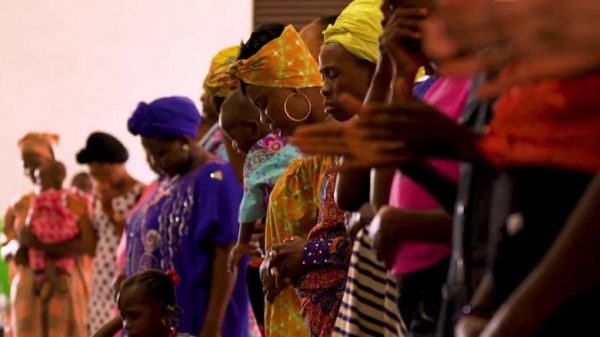
Nigerian government has discovered over 20, 000 Nigerian women most of who were sold in slavery in Mali.
According to the Director of the National Agency for the Prohibition of Trafficking in Persons (NAPTIP), Julie Okah-Donli, many other women who were so discovered, are being used as sex workers.
Speaking to Al Jazeera, Julie explained that the women mostly came from rural areas of six different states in Nigeria., adding that some were actually abducted while going to school.
“They were tricked into going to Mali by giving them the impression they were going to get jobs in hotels, for example.
“There are over one million Nigerian residents in Mali, out of which about 20,000 are trapped into forced prostitution. The conditions are horrible. They are kept in the thick of the forest where they cannot escape and with the ‘madames’ watching over them.
“I have said it several times that NAPTIP will not spare anybody in its determination to redeem the image of Nigeria in the eyes of the world as a source, transit and destination country for human trafficking.”
According to a 2018 report by the US State Department, human trafficking is a major problem in Nigeria.
Nigerian victims of human trafficking were found in about 40 different countries, the report stated, adding that 80 percent of all female Nigerian migrants in Italy are, or will become sex trafficking victims.
The United Nations has criticized Nigeria for failing to tackle human trafficking after a human rights mission looked at efforts to stamp out the organized trade in people.
NAPTIP was created on 14th of July 2003 by the Trafficking in Persons (Prohibition) Enforcement and Administration Act 2003 during the regime of President Olusegun Obasanjo.
We use cookies on our website to give you the most relevant experience by remembering your preferences and repeat visits. By clicking “Accept”, you consent to the use of ALL the cookies.
This website uses cookies to improve your experience while you navigate through the website. Out of these, the cookies that are categorized as necessary are stored on your browser as they are essential for the working of basic functionalities of the website. We also use third-party cookies that help us analyze and understand how you use this website. These cookies will be stored in your browser only with your consent. You also have the option to opt-out of these cookies. But opting out of some of these cookies may affect your browsing experience.
Necessary cookies are absolutely essential for the website to function properly. This category only includes cookies that ensures basic functionalities and security features of the website. These cookies do not store any personal information.
Any cookies that may not be particularly necessary for the website to function and is used specifically to collect user personal data via analytics, ads, other embedded contents are termed as non-necessary cookies. It is mandatory to procure user consent prior to running these cookies on your website.


 Governor Willy Obiono of Anambra State has expressed appreciation to President Muhammadu Buhari for committing a total of N30 billion for the completion of the second Niger Bridge.
 The Ime Obi Ohaneze from the Southeast of Nigeria has formally endorsed the candidacy of Alhaji Atiku Abubakar of the opposition Peoples Democratic Party (PDP), citing his promise to restructure the country as the major driving force.
 Minister of the Federal Capital Territory (FCT), Malam Muhammad Musa Bello has advised farmers in the FCT and other parts of the country to leverage the 2019 seasonal rainfall prediction made available by the Nigerian Meteorological Agency (NiMet) in planning their farming activities for the year.
 President Muhammadu Buhari has declared open a world-class Post-Graduate Centre of Excellence at the University of Nigeria, Enugu Campus (UNEC) constructed and donated by the Central Bank of Nigeria (CBN).
 President Mohammadu Buhari has extolled the virtues of the late Dr. Nnamdi Azikiwe who he said would continue to be alive in the minds of Nigerians yet unborn.
 If voting in the February 16 presidential election were to be influenced by candidates’ performances in the January 19 presidential debate, then both President Muhammadu Buhari of the All Progressives Congress (APC) and his strongest challenger, Alhaji Atiku Abubakar of the Peoples Democratic Party (PDP), would not stand a chance of winning.