Operation Python Dance III has finally arrived in the Nigeria’s Federal Capital Capital Territory (FCT), Abuja, ahead of the general elections, beginning February 16.
Speaking at the Flagg off ceremony which held at the Guards Brigade Step-up Headquarters Kuje, Abuja, the Minister of FCT, Muhammed Musa Bello said the essence of the exercise is to secure FCT and it’s environs against all forms of crime and to create a condusive atmosphere for the conduct the 2019 general elections.
The minister who said that security challenges have been on the increase since the arrival of the elections, expressed confidence in the operation python dance to guarantee a peaceful environment for the elections.
“2019 general elections has arrived and our security challenges are also increasing. But I have no doubt that with what we are witnessing today elections will come and go peacefully and we will continue to operate as one nation in the objective that unite us together.
“I also note that this exercise is not targeting any individual or group, but to create a condusive atmosphere for the conduct of the forth coming 2019 general elections where every law abiding citizens will exercise his or her Democratic right freely.” He said.
The minister charged the civilian populace to accept the troops into their various communities and provide them with the needed information and any other support they need to do their job effectively.
He assured the Guards Brigade as well as all other military and paramilitary agencies within the territory of his to enable them discharge their constitutional role in the right way and manner.
Earlier, The Commanding Officer, Guards Brigade, Brigadier General Umar Musa speaking at the ceremony informed that the exercise is in preparation against any security challenge that may arise before, during or after the 2019 General Elections.
He said that the build up to 2019 General Elections has witnessed an upsurge of security challenges such as stockpiling of arms by criminal groups, formation of militias and violence induced by political activities is on the rise.
“These challenges coupled with other security threats across the country such as terrorism, militancy. kidnapping and banditry portend that dissident groups and criminal elements could cash in on the situation to perpetrate large scale violence before, during or after the 2019 General Elections.
Musa Umaru assured that the exercise will rid the FCT and environs of criminal element that would likely cause havoc, while charging all law abiding citizens to go about their normal activities without any form of fear.
“I want to assure you that the officers and men of the Guards Brigade are ever ready to the responsibility of protecting the seat of government and FCT in general, and are ready to make all sacrifices needed in carrying out these tasks.
“Our troops will discharge this tasks within the confines of the law and operate within the Rules of engagement and code if conflict for military operations.”
President Muhammadu Buhari has expressed confident that with the adequate preparations that have so far been made, the Independent National Electoral Commission (INEC) will conduct credible elections, starting in February this year.
Speaking when he received the European Union Observer Mission (EOM) at the Presidential Villa, Abuja today, Buhari said that he had listened earlier in the day, to the INEC Chairman, Professor Mahmood Yakubu, when he briefed the National Council of State.
“I am happy and impressed with the briefing he gave. I hope that the confidence he exuded and the intellect he brought to bear on the Report will be justified at the end of the day.”
The President told the EU delegation, led by led by the Chief Observer and member of the European Parliament, Maria Arena, that Nigeria had grown its electoral system incrementally, getting better year after year.
“Having participated in elections four times in the past, I would say that since 2015, technology has helped the credibility of our elections.”
President Buhari said that Nigeria with over 250 cultural groups across religions and ethnic groups, with each group canvassing for identity and primacy in the affairs of the nation, “patriotism demands that we identify the nation’s best interest and go with it.”
He stressed that the governing All Progressives Congress (APC) administration had the good sense of identifying the national interest to include security, peace and stability, improved economy, jobs creation and the campaign against corruption, noting that the party was not wrong in 2015, and is not wrong going into the election this year with the same issues in its campaigns.
The President thanked the delegation for taking interest in Nigeria’s elections, and in the affairs of the nation generally.
The EOM team, accompanied by the Head of European Delegation to Nigeria and ECOWAS, Ambassador Ketil Karlsen, said that the EU had observed every election in Nigeria since 1999, and had come here again for the next one, following an invitation by INEC.
The delegation promised impartiality and neutrality in the monitoring of the elections.
The Nigeria Labour Congress (NLC) has rejected the N27,000 new national minimum wage adopted by the National Council of State today, Tuesday.
The NLC Secretary-General, Dr. Peter Ozo-Eson, made this known to the News Agency of Nigeria in Abuja.
According to him, the council has no jurisdiction determining another amount after a Tripartite Committee had submitted its report.
“It is abysmal of government to be delaying the submission of an Executive Bill to the National Assembly and by wrongfully adopting N27,000 through the council of states.”
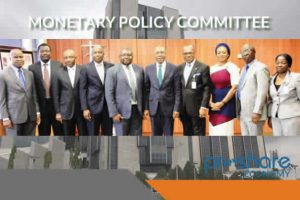
The monetary committee of the Central Bank of Nigeria (CBN) has expressed satisfaction with the continued recovery in output growth in the domestic economy after the 2016 recession.
The committee, at its meeting today, Tuesday in Abuja for the first time in 2019, said that the real GDP grew by 1.81 per cent in third quarter of 2018 from 1.50 per cent in the second quarter of 2018.
According to the communiqué issued at the end of the meeting, the services and agricultural sectors continued to drive output growth, contributing 1.19 and 0.56 per cent, respectively.
It said however, that the persistence of herdsmen attack on farmers, cattle rustling and flooding in some parts of the country affected agricultural and livestock output.
“Based on the Manufacturing and Non-Manufacturing Purchasing Managers’ Indices (PMI), output growth for Q4 2018 is expected to expand further. The expected performance projected in the PMI is attributed to continued stability in the foreign exchange market, improvements in the flow of financing resources to the real sector through the various interventions by the Bank, effective implementation of the Economic Recovery and Growth Plan (ERGP) and the increase in non-oil sector GDP.
“The outlook for growth, however, remains fragile as the late implementation of the 2018 budget and the residual impact of flooding and security challenges, constitute headwinds to growth. The Committee, therefore, believes that the effective implementation of the 2018 capital budget and the ERGP, improvement in the security situation, and continued stability in the foreign exchange market will enhance aggregate demand and output growth.”
Part of the communiqué goes thus:
The Monetary Policy Committee (MPC) held its first meeting for fiscal 2019 on 21stand 22ndJanuary, 2019 amidst concerns over the slowdown in global economic activity, arising from on-going trade tensions, tightening global financing conditions and mounting external debt in Emerging Market and Developing Economies (EMDEs). On the domestic front, the resurgence of moderate inflationary pressure and possible threats to accretion to external reserves due to softening crude oil prices were noted. The Committee reviewed the developments in the global and domestic economic and financial environments in 2018, as well as the risks and outlook in the short to medium term. Eleven (11) members of the Committee were in attendance.
The Committee noted the divergence in performance of most economies in 2018 leading to moderation in global output. In addition, a combination of factors including: financial market volatilities, trade war between the US and key allies, continuing monetary policy normalization by the US, BREXIT, the termination of the European Central Bank’s (ECB) asset purchase program in Dec 2018 and the slowdown in the Chinese economy, further heightened uncertainties for the global economy in 2019. Consequently, global growth has been downgraded by the IMF to 3.5 per cent in 2019, from 3.7 per cent in 2018.
The Committee noted the gradual increase in global inflation, with inflationary pressures intensifying in some EMDEs who have in the recent past faced currency depreciation arising from capital flow reversals arising from progressive monetary tightening by the Federal Reserve. It is, however, expects that the recent decline in oil prices may reverse the trend, especially for oil importing economies and thus moderate currency depreciation in these countries.
The Committee noted that the broader measure of money supply, M3, grew by 16.58 per cent in 2018, above the provisional benchmark of 13.0 per cent. Broad money (M2), also grew by 12.17 per cent in December 2018 over its level at end-December 2017, in contrast to the provisional benchmark of 10.48 per cent for 2018. The increase in M2 reflected the growth in Net Foreign Assets (NFA) of 18.54 per cent in December 2018, above its provisional benchmark of 14.50 per cent. Credit to the private sector rose marginally by 12.97 per cent below its provisional benchmark of 12.40 per cent while credit to government grew by 33.77 per cent in December 2018, above its benchmark rate of 17.40 per cent.
The Committee noted the appreciable growth in credit to the private sector which had been a constraint to growth in the real sector and expressed optimism of further improvement in lending, through the sustained effort of the Bank to enhance credit delivery to small and medium scale industries in the economy. The MPC, thus, commended the Management of the Bank for its efforts so far in sustaining credit delivery to the real sector of the economy.
The resurgence in inflationary pressure in the economy was of concern to the MPC as headline inflation (year-on-year) inched up to 11.44 per cent in December 2018 from 11.28 per cent in November 2018. The increase in headline inflation was driven by food inflation which rose to 13.36 per cent in December 2018 from 13.30 per cent in November, while Core inflation declined marginally to 9.77 per cent in December 2018 from 9.79 per cent in the previous month. The Committee, however, observed that the uptick in inflation was attributed to seasonal factors which impacted mainly on food. Consequently, all measures of inflation, month-on-month, showed a decline. Thus, headline, food and core inflation declined to 0.74, 0.81and 0.50 per cent in December 2018 from 0.84, 0.90 and 0.68 per cent, respectively, in November 2018.
The Committee observed that the near-term risks to inflation remain: the residual impact of flooding on agricultural output, insecurity in parts of the food producing belts of the country, exchange rate pass-through to inflation due to weakening oil price and campaign-related spending towards the 2019 general elections. Accordingly, the MPC urged the Federal Government to sustain its current effort towards improving security to ease the food supply chain bottlenecks.
Money market interest rates in the review period, generally reflected the level of liquidity in the banking system as the average Inter-bank call rate declined significantly to 7.17 per cent in November 2018 from 14.18 per cent in October 2018. The Open Buy Back (OBB) rate which stood at 6.57 per cent in October 2018, increased marginally to 6.76 per cent in November 2018. On December 24 and 31, 2018, the interbank call and OBB rates, however, closed at 14.00 and 18.94 per cent, respectively. The improvement in net liquidity position and interest rate reflected the combined effects of the CBN quasi-fiscal operations, OMO auctions, maturing CBN Bills and foreign exchange interventions as well as statutory allocations to state and local governments.
The Committee observed the decline in the equities market for the most part of 2018. On a year-on-year basis, the All-Share Index (ASI) decreased by 17.81 per cent from 38,243.19 at end-December 2017 to 31,430.50 at end- December 2018. The All-Share Index (ASI) further decreased by 1.35 per cent to 31,005.17 as at January 18, 2019. Similarly, Market Capitalization (MC) decreased by 13.87 per cent from N13.61 trillion at end-December 2017 to N11.72 trillion at end-December 2018. It further declined by 1.37 per cent to N11.56 trillion as at January 18, 2019. The Committee observed that these developments largely reflected the impact of the progressive monetary policy normalization in some advanced economies and the sustained profittaking activities of foreign investors arising from perceived political risk in the build-up to the 2019 general elections. The MPC, however, remained optimistic of the gradual reversal of the current trend in the medium term, given the current stability in the foreign exchange market and the external reserves position, as well as continued improvements in key macroeconomic indicators.
The Committee noted the relative stability at both the Bureau-de-Change (BDC) and the Investors’ and Exporters’ (I&E) window of the foreign exchange market, supported by the Bank’s proactive exchange rate management policies. It also observed with satisfaction, the contribution to stability in the market of the implementation of the Bilateral Currency Swap Agreement (BCSA) with China and the inflow of the US$2.8 billion Euro bond. The Committee also noted the marginal increase in the external reserves, from US$42.54 billion at end-December, 2018 to US$43.28 billion as at January 21, 2019, noting that these improvements would further strengthen investor confidence in the Nigerian economy.
Forecasts for key macroeconomic indicators in 2019 portend a positive outlook for the domestic economy. Output growth is expected to be driven by fiscal stimulus from increase in oil and non-oil receipts to support the Federal Government’s Economic Recovery and Growth Plan. The economy is projected to grow by 2.0 per cent by the IMF, 2.2 per cent by the World Bank and 2.28 per cent by the CBN. Key headwinds to these forecasts, however, are softening oil prices, persistent security challenges arising from insurgency in the North East and herdsmen attack in some parts of the country and perceived political risks associated with the 2019 general elections.
The outlook for inflation in the first half of 2019 is mixed, with the expectation of an increase in the near-term before a gradual decline towards the mid- year. Inflation is expected to rise marginally amidst palpable tailwinds, which include increased spending preparatory to the 2019 general elections and continued disruptions to the food supply chain in the insurgency prone areas and herdsmen attack regions of the country.
The MPC appraised the possibility of external shocks in 2019 as the outlook for the global economy remains uncertain due to the effect of on-going trade tensions between the US and its key allies, slower growth in China, unclear direction of BREXIT negotiations and continuing monetary policy normalization in some advanced economies. The Committee was of the view that oil prices may, however, remain relatively stable, within the US$50pb bracket in view of recent OPEC’s production cutting actions.
The Committee noted with satisfaction, the performance of the economy in 2018, highlighting the achievements in key macroeconomic indicators in the face of global uncertainties and domestic challenges. In particular, it noted the stability in the exchange rate, stable accretion to external reserves, moderation in inflation and the low but gradual improvement in real GDP growth in the last six consecutive quarters commencing from Q2 2017. The MPC further noted. The MPC noted that given global economic conditions and the risk confronting emerging markets and developing economies in recent times, as well as the limited productive capacity of the economy, the managed float foreign exchange management regime of the CBN has delivered the most optimal results when compared with other emerging markets in recent times. Consequently, capital flows into the domestic economy has continued unabated after an initial lull. The Committee, considered the risks to the global economy, noting the downward revision in projected global output in 2019, the adverse impact of the trade war between the U.S and its major trading partners, likelihood of lower crude oil prices, impact on capital flows of continued monetary policy normalization by major advanced economies, distorted signals on BREXIT negotiations, as well as pockets of other socio-political tensions and perceived election risks on the domestic front.
The Committee commended the government’s focused expenditure on investment in infrastructure and urged the Federal Government to sustain the pace towards addressing the infrastructural deficit in Nigeria. It noted that the immediate impact of this approach on GDP may be slow in coming, but will eventually expand the economy’s productive base, reduce unemployment and increase aggregate demand in a more sustainable manner and over a long period of time.
The Committee acknowledged the strategic role of the private sector in economic growth and remained concerned over the slow growth in credit to the private sector through 2018, noting the sudden increase at end- December 2018. The MPC commended the initiative of the Bankers Committee in addressing the phenomenon of low credit to the small and medium scale enterprises through partnering with the Nigeria Incentive- Based Risk Sharing System for Agricultural Lending (NIRSAL) to establish a national Microfinance bank with branches in all States and Local Government areas of the Federation to provide low interest rate lending to small scale businesses. A further initiative by NIRSAL with the CBN to de-risk lending to small scale enterprises is also being fine-tuned. On external borrowing, the Committee noted the increase in the debt level, advising for caution, noting that it could fast be approaching the pre-2005 Paris Club exit level.
The MPC also noted that although there was an increase in the inflation rate for the second consecutive month, month-on-month inflation continued to moderate, indicating that the year-on-year measures will also moderate in the near term. This is supported by the stability in the naira exchange rate and thus, urged the Bank to sustain this stability. To this end, it welcomed the narrowing of the exchange rate premium between the BDC segment and the Investors’ and Exporters’ (I&E) window of the foreign exchange market.
The Committee also noted with satisfaction the gradual reduction in Non- Performing Loans of the deposit money banks (DMBs) which has further strengthened their balance sheets. The Committee believes that as Government pays off contractor debt and other obligations, there will be a sizable reduction in the NPLs of the banking system.
The Committee also noted the attempt by Government to broaden the base of the Value Added Tax (VAT) and urged the authorities to expedite action in that respect, arguing that increased tax collection will reduce the pressure on government expenditure and create fiscal buffers to improve macroeconomic management.
The observed and recent high foreign capital inflow into the Nigerian economy despite the perception of election risk, is evidence of the confidence of the international community in the country’s macroeconomic management and provides a compelling reason for the Committee to await clarity on macroeconomic performance after the general elections in February and March 2019.
In the light of the observed risk confronting the economy, including the global and domestic inflationary pressures, which have intensified the risk of currency depreciation, the MPC was of the view that a loosening option was very remote. Weighing the balance of its judgment on price stability conducive to growth, the MPC felt that tightening would result in the loss of the gains so far achieved, noting that this may drive the banks to reprice their assets; thus increasing the cost of credit as well as elevating credit risk in the economy. It will also worsen the position of non-performing loans of the banks. The Committee also felt that tightening would dampen investments and hamper improvements in output growth, given the already fragile growth performance so far achieved.
The Committee’s Decision
In the light of the above, the MPC decided by a vote of all eleven (11) members to keep the policy parameters unchanged from their current levels.
In summary, the MPC voted to:
Retain the MPR at 14 per cent;
Retain the asymmetric corridor of +200/-500 basis points around the MPR;
The Code of Conduct Tribunal (CCT) has made it clear that all orders of court restraining or stopping it from proceeding with the trial of the Chief Justice of Nigeria (CJN) Justice Walter Onnoghen are not binding on it.
In a split decision of two to one, the Tribunal discountenanced the orders of the court on the grounds that the orders were made by courts of equal jurisdiction and the CCT is a special Court empowered to handle exclusively the issues relating to assets declaration.
The Chairman of the Tribunal, Justice Danladi Umar who spoke along with Justice Juli Anabor, held that those who obtained the orders of the High Court were busybodies because they are not parties in the matter at the tribunal.
He said that the orders of the High Courts and that of the National Industrial Court are null and void on account of being inconsistent with the provisions of the Constitution, adding that section 246 makes it crystal clear that the tribunal has unquantified jurisdiction to hear any assets declaration case as may be referred to it by the Code of Conduct Bureau (CCB).
Justice Umar also disagreed with the request to adjournment the trial Sine Die, on the grounds of a pending appeal at the Court of Appeal, adding that section 306 of the Administration of Criminal Justice Act, ACJA, 2015, did not Make provisions for stay of proceedings in a criminal matter and that in the instant case, it shall not be entertained.
In his dissenting ruling, Justice Williams Atedze held that it would result to judicial anarchy for the tribunal to proceed with the trial in view of the four subsisting court orders and the pending appeal at the Court of Appeal.
According to him, orders are binding on the tribunal until they are set aside in view of section 287(3) of the 1999 Constitution which allows court orders to be enforced in all parts of the county, stressing that the CCT cannot operate in isolation.
“Having summarized argument from both parties, it is my submission that CCT as a creation of law is bound by the existing court orders to avoid judicial anarchy”, he held.
The member, who further held that the issue of jurisdiction of the tribunal to entertain the charge against CJN must first be resolved, held that status quo must be maintained by adjoining proceedings sine die until all contending issues are resolved.
Although the Chairman ordered that the motion challenging the jurisdiction of the tribunal be moved immediately, counsel to the defendant, Chief Wole Olanipekun SAN however, informed the tribunal that the response of the complainant, Federal government was served on him late Monday and as such needed time to study the response and then filed reply on point of law.
Counsel to the Federal government, Aliyu Umar, agreed that the government’s response was served late on the defendant, prompting the Chairman to adjourned further proceedings till Monday, January 28.
Former President Obasanjo is many things to many people; but he is all things unto himself. His recent contribution to our political discourse wherein he alleges plots to steer the coming elections shows he benefits from an exceedingly faulty memory, is purely shameless or has a most wicked sense of humor. Perhaps all three are facets of his makeup and were equally on display in his latest prosaic display.
The crux of his long tirade was the allegation that INEC is poised to cook the election results. Chief Obasanjo should not get his dander up and waste good ink for nothing. This election will be a free and open exercise of the people’s right to choose their leaders. Obasanjo makes fiery allegations against this right but offers no corroborating evidence; he presents only reams of words. This is because Obasanjo is projecting onto the APC the misconduct he would wrought if still in power. Yet, the ways of Obasanjo are not those of the APC. And this difference has meant the better for Nigeria.
Moreover, Chief Obasanjo should be the last to complain about election rigging. His administration was an unalloyed miscarriage of justice and of the best aspirations of the Nigerian people. We all know he was not elected in 1999. He was handed Nigeria on a silver platter; perhaps because Nigeria was so easily given that he went about treating the nation as if it was a less than precious thing; he thought it was a cheap give-away not a privilege to govern this nation.
This man should have positioned himself to be the father of the nation. All the goodwill that could be granted a political figure was bestowed on him. The global economy was such that it fueled our growth. Everyone wanted Nigeria to succeed after emerging from years of noxious military rule. Despite the flawed exercise that rendered him president, we all bit our tongues in hope that he would say and do the right things that would move Nigeria forward.
Instead of being a unifying figure as Commander-in-chief, he lowered himself to being a divisive, vindictive conniver. There was no table which he neared that he did not upset and overturn. There was no one who came into his company for any period of time with whom he did not fall out if he expresses a thought contrary to one of his.
He tried to convert our young democracy into a one party state. His PDP boasted that they would rule for 60 uninterrupted years. Never did they boast that they would govern us well during even one year of the sixty. He could have placed the economy on the path to durable growth and shared prosperity through diversification, industrialization and creation of a social safety net for the poor. Instead, he handed the economy over to a tight group of cronies, turning what should be a modern economy into a version of the mammoth trading companies that dominated the 17th and 18th century. The Transcorp conglomerate was intended to be a throwback to monopolistic enterprises such as the East Indian Company wherein a select handful would control the national economy’s strategic heights.
We hoped that Obasanjo would personify statesmanship, thus showing the way to a more benign political culture. Instead, he bickered and feuded with his vice president and mostly anyone who dared remind him that he was human and thus infallible.
Given the vast margin between the good he could have achieved and the nebulous feats that comprise his true record, Chief Obasanjo is the person most responsible for the flaws in the Nigerian political economy since 1999. His ego is as expansive as the firmament but his good deeds would fit into a modest sachet with ample room to spare.
The worst of Obasanjo’s record, I have yet to describe. When it comes to elections, he has been a rigger without peer. There is no election which occurred under Obasanjo’s watch or in which he participated that did not involve cheating on his part. Even the late President Umaru Musa Yar ‘Adua admitted he was the beneficiary of a flawed election engineered by none other than today’s vociferous complainant. For Obasanjo to lament over electoral malpractice is tantamount to the ocean complaining that a few raindrops are causing it to get wet.
In his writing, Obasanjo alleges the Osun election indicates rigging will take place in the coming contests. Let’s go straight to the truth, Obasanjo has no grievance with the process. His personal history suggests fair process is the least of his concerns. What knocks Obasanjo off kilter is that he could not dictate the result in Osun. He told those in the PDP that he held sway in Osun and throughout the Southwest. They believed him. He led them to defeat notwithstanding the almost impossible voter turnout in PDP strongholds in that state. Obasanjo can only win an election when has the final say over the final vote tally. Otherwise, he is a troubled man.
In an attempt to relieve his trouble, Chief Obasanjo makes reference to a joke about INEC. He says, “The INEC was asked if the Commission was ready for the election and if it expects the election to be free, fair and credible. The INEC man is reported as saying in response, ‘we are ready with everything including the results.’” The joke has a touch of humor; we are glad that Obasanjo is not completely devoid of this most human of traits. However, he makes a telling omission by failing to give you the vintage of this bit of sarcasm.
The jest was not born last week. It’s vintage is circa 2003- a time when a certain President Obasanjo rode roughshod over INEC. He would summon the nervous INEC chairman to the Villa, proceeding to hector the man until he gave way to Obasanjo’s demands. At Obasanjo’s urging, INEC improperly published fake election results on the gubernatorial race in Lagos. Not until a public outcry did INEC back away from rigging Lagos. A similar attempt was made in Lagos in 2007. In essence, for Obasanjo to laugh at this joke means he has belatedly developed the ability to laugh at himself.
If Obasanjo was so committed to free elections, how could he countenance Atiku’s recent boast of single-handedly rigging elections in the Southwest. Atiku claimed that he took all states for the PDP but left Lagos alone due to some misguided affinity for me. By this statement, Atiku publicly admitted to rigged elections in the SW. Beyond resort to wholesale rigging, Atiku could never deign to be more popular and potent in the Southwest than the panoply of good and decent leaders that guided the defunct AC. Moreover, I can assure you that we did not need Atiku’s false beneficence to win the elections in Lagos. The people voted for us and their votes countered the ill-designs Obasanjo and Atiku set in motion. Thus, if Obasanjo cannot chastise Atiku for publicly boasting that he rigged elections, then Obasanjo’s display of righteous indignation is but a magician’s trick.
His fine words and sentiments come a dozen years too late. These noble things would have greater effect had he placed them into practice when he was at the helm of affairs. At that time, he was powerful so he did as he might. Now that he lacks power, he has taken to preach that which he never did.
In his commentary, he mentions that INEC has a record of past rigging. I wonder if he understands the admission he makes. No other president has exercised such tight control over INEC for as many years as Obasanjo. No president has had the domineering relationship with INEC that Obasanjo enjoyed. If there are reports of past INEC rigging, those reports are of Obasanjo’s making. It is the irony of ironies for Obasanjo to complain of the fruit on the table when his was the hand that planted the tree.
Chief Obasanjo tries to further confuse matters by pointing to the case of the CJN’s assets declaration as evidence of future vote-rigging via tampering with the judiciary. Again, Obasanjo goes into a personality shift. For years, Obasanjo has boasted of himself as our corruption fighter nonpareil. The very aim of this current letter is to attack imagined INEC malfeasance. Yet, with regard to the CJN, he blithely ignores the large cache of dollars in the CJN’s account and the millions of dollars that passed through the accounts. Obasanjo seems unbothered by the unexplained presence of such sums. Perhaps Obasanjo’s nonchalance regarding the money is that he expected the funds there because he knows both the origin and reasons for the trove.
Chief Obasanjo sinks so low as to suggest that the VP, during the exercise of his official duties, was taking the PVC numbers of market women and traders. This statement reveals the bilious nature of the man. Obasanjo even quotes the notorious Bode George in claiming that the VP was “gutting our collective treasury” by giving loans of N10,000 to market women under the administration’s empowerment programs.
What? Giving money to poor people to enhance their lives and escape the maw of poverty is, by PDP metrics, gutting the collective treasury. If helping the poor is gutting the treasury, Atiku’s privatizing large chunks of the economy into his own pocket must have been seen by the PDP as a vital public service. Jonathan and his Petroleum Minister’s siphoning government coffers of several billion dollars to enrich the already-rich must have been viewed by the PDP as the epitome of a social safety net. Obasanjo’s and the PDP’s disdain for the common person could not be clearer.
Obasanjo should be ashamed to even raise this issue. When he was president, the economy was on an easy sledding due to positive global trends. Obasanjo did not raise a finger to do anything for the poor. He and Atiku were champions of trickle-down economics. If anything good trickled down to the poor it was by accident. Obasanjo left the poor unattended because he cared nothing for them. Poverty increased under his cold indifference. Not one meaningful social program was established during his watch. The banking and pension deregulation he brought were geared to profit the wealthy CEO’s and managers of these financial entities. The malpractices attendant to these deregulation fiascos extinguished the savings of millions of Nigerians. In reliance on these artifices of Obasanjo and his ilk, many Nigerians were thrust down the lower rungs of the poverty they so desperately sought to avoid. Obasanjo’s allies gobbled the savings of the poor and still feast on them to this day.
Chief Obasanjo is one of the last people to preach to anyone about using public funds to care for the poor. He had the gall to fret that funds should not be given to the urban poor because they are not poor enough. But his grouse does not show any defect in the administration’s program. His complaint shows the defect in Obasanjo’s humanity or lack of it. To complain that some people are not poor enough for his liking is to reveal that seeing human suffering does not motivate him to cure it. He would rather that people suffer it the more. Your unease and distress becomes his entertainment or at least evidence he is superior to the common man. Watching a laborer struggle against penury is no more than a spectator sport for Obasanjo.
The most fantastic of all his claims is that this administration has returned Nigeria to the days of Abacha. If this were true, the press would be constantly closed. Obasanjo would be constricted in writing such letters. Elections would not be upon us. Atiku would not be able to freely campaign and the diversity of opinion in the public space would be suppressed.
For Obasanjo to utter such an outrage is that he hopes lighting strikes twice. He was ushered into office after Abacha’s demise. He thinks if he can invoke Abacha’s name, the same thing will happen again. By hook, crook or utter fantasy, Obasanjo seeks to return to Aso Villa, not as an irritating, importuning guest but as a long-term resident. He wants to be back in control. If he cannot be president, then the president better carve from his office a special room for Obasanjo.
Obasanjo thinks he is more than the greatest Nigerian. He thinks himself greater than Nigeria itself. Unless he is allowed to lead the procession, he will groan, grouse and grit. However, neither President Buhari nor the progressive APC have much use for his reactionary policies and his megalomaniac ways. Thus, we shall be forced to endure more of his letters. But enduring such missives is vastly superior and small price to pay for not having to endure a repeat of his unenlightened misgovernance”.
Former President Olusegun Obasanjo, in a handshake with President Muhammadu Buhari at the Council of State meeting today, Tuesday at the Presidential Villa, Abuja where the new national minimum wage for the Nigerian workers was decided. Obasanjo, who released another letter virtually abusing Buhari on Sunday, seems to be telling President Buhari: “don’t mind my sarcastic criticism; it is just politics.”
The Nigeria Council of State, made up of, among others, present and past Presidents and Heads of State has finally agreed to N27,000 as new minimum wage for the Nigerian workers.
Rising from a meeting today, Tuesday at the Presidential Villa, Abuja, the Council gave President Muhammadu Buhari a go-ahead to present the bill on the new minimum wage to the National Assembly before the close of tomorrow, Wednesday.
Briefing news men shortly after the meeting today, the Minister of labour and productivity, Dr. Chris Ngige, referred the exclusive list of the constitution, second schedule, item 34 and said that it is not a job that can be done by the executive alone.
“The president has to transmit the bill to the National Assembly and the National Assembly will take legislative action and return the bill that has been so treated to the president for his assent.
“So, a bill will now be transmitted to the National Assembly that will amend the 1981 Act and 2011 Act. The highlight is what you want to know. The figure of N27,000 monthly has been approved for transmission to the National Assembly. “The frequency of the review of the bill is five years, to get it in consonance with pension law of the federation as enshrined in the constitution.
“Exemptions to this bill will be establishments that are not employing people up to the number of 25. The various times prescribed have also been altered in the bill and will be sent to the National Assembly before the close of work tomorrow.”
The Chairman of the Independent National Electoral Commission (INEC), Mahmood Yakubu has said that the allegation by former President Olusegun Obasanjo against the commission did not come as a surprise even as he said that the commission is not and can never be under pressure from any quarter to do what is wrong.
Professor Mahmood Yakubu, who spoke today, Monday, at a meeting with the new acting Inspector General of Police (IGP), Mohammed Adamu, said that Nigerians can trust the commission to deliver credible elections.
“This is to be expected in an election year when people make all sorts of insinuations,” he said.
“I want to tell you that we as a commission have never been under any pressure to do what is wrong.
“We will never compromise our integrity to do what the law says that we shouldn’t and for the 2019 general elections, I want to assure and reassure Nigerians that votes and nothing but votes will count.
“With this level of cooperation from the security agencies, I want to assure you that Nigerians will have a pleasant voting experience in 2019.”
He said that the nation is looking forward to INEC and the police to conduct credible elections, adding that the media would be provided unimpeded access to the commission during the elections.
He called for a close working relationship between the commission and the police at all levels.
“The more we collaborate with the police, the easier the prosecution of election offenders. We are going to consult the security agencies for the deployment of personnel for the elections.
“We must work in partnership to give Nigerians a pleasant election in the upcoming elections, our responsibility is to serve the Nigerian people.”
He urged the police personnel to be on ground early enough to escort officials of the commission to polling units.
Earlier, Mohammed Adamu had said that the deputy inspector-general of police in charge of force criminal intelligence and investigation department (FCIID), had been directed to set up a special election investigation teams.
He said the teams would take into custody and undertake detailed investigation of all arrested electoral offenders across the country.
Mohammed Adamu said the teams shall liaise with INEC towards the prompt processing of the case files of the offenders for prosecution.
He said the police would respect and protect the rights of all citizens of the country regardless of their socio-economic status.
Obasanjo had questioned INEC’s integrity, expressing doubts about the commission’s ability to conduct free, fair and credible elections in 2019. He alleged that the commission is under pressure to manipulate the polls in favour of the All Progressives Congress (APC).
President Buhari attends APC Campaign Rally in Borno State on 21st Jan 2019
President Muhammadu Buhari has expressed his deepest sympathies to the victims of a collapsed pavilion at the massively-attended campaign rally in Maiduguri, Borno State capital today, Monday.
President Buhari was quoted as saying, by his spokesman, Malam Garba Shehu: “I am shocked to hear about the many who suffered injury following the tragic incident at the stadium this afternoon in Maiduguri. May Allah heal all those that were injured.
“I understand that the Borno State government, the Red Cross and other aid agencies are taking steps to help affected people. May Allah heal the injured.”
Reports say that the pavilion caved in and crashed on party faithful who wanted a vintage view of the speakers.
We use cookies on our website to give you the most relevant experience by remembering your preferences and repeat visits. By clicking “Accept”, you consent to the use of ALL the cookies.
This website uses cookies to improve your experience while you navigate through the website. Out of these, the cookies that are categorized as necessary are stored on your browser as they are essential for the working of basic functionalities of the website. We also use third-party cookies that help us analyze and understand how you use this website. These cookies will be stored in your browser only with your consent. You also have the option to opt-out of these cookies. But opting out of some of these cookies may affect your browsing experience.
Necessary cookies are absolutely essential for the website to function properly. This category only includes cookies that ensures basic functionalities and security features of the website. These cookies do not store any personal information.
Any cookies that may not be particularly necessary for the website to function and is used specifically to collect user personal data via analytics, ads, other embedded contents are termed as non-necessary cookies. It is mandatory to procure user consent prior to running these cookies on your website.



 President Muhammadu Buhari has expressed confident that with the adequate preparations that have so far been made, the Independent National Electoral Commission (INEC) will conduct credible elections, starting in February this year.
 The Nigeria Labour Congress (NLC) has rejected the N27,000 new national minimum wage adopted by the National Council of State today, Tuesday.
 The monetary committee of the Central Bank of Nigeria (CBN) has expressed satisfaction with the continued recovery in output growth in the domestic economy after the 2016 recession.
 The Code of Conduct Tribunal (CCT) has made it clear that all orders of court restraining or stopping it from proceeding with the trial of the Chief Justice of Nigeria (CJN) Justice Walter Onnoghen are not binding on it.
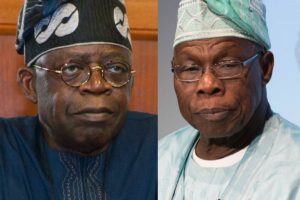 Former President Obasanjo is many things to many people; but he is all things unto himself. His recent contribution to our political discourse wherein he alleges plots to steer the coming elections shows he benefits from an exceedingly faulty memory, is purely shameless or has a most wicked sense of humor. Perhaps all three are facets of his makeup and were equally on display in his latest prosaic display.

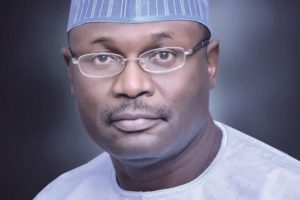 The Chairman of the Independent National Electoral Commission (INEC), Mahmood Yakubu has said that the allegation by former President Olusegun Obasanjo against the commission did not come as a surprise even as he said that the commission is not and can never be under pressure from any quarter to do what is wrong.

