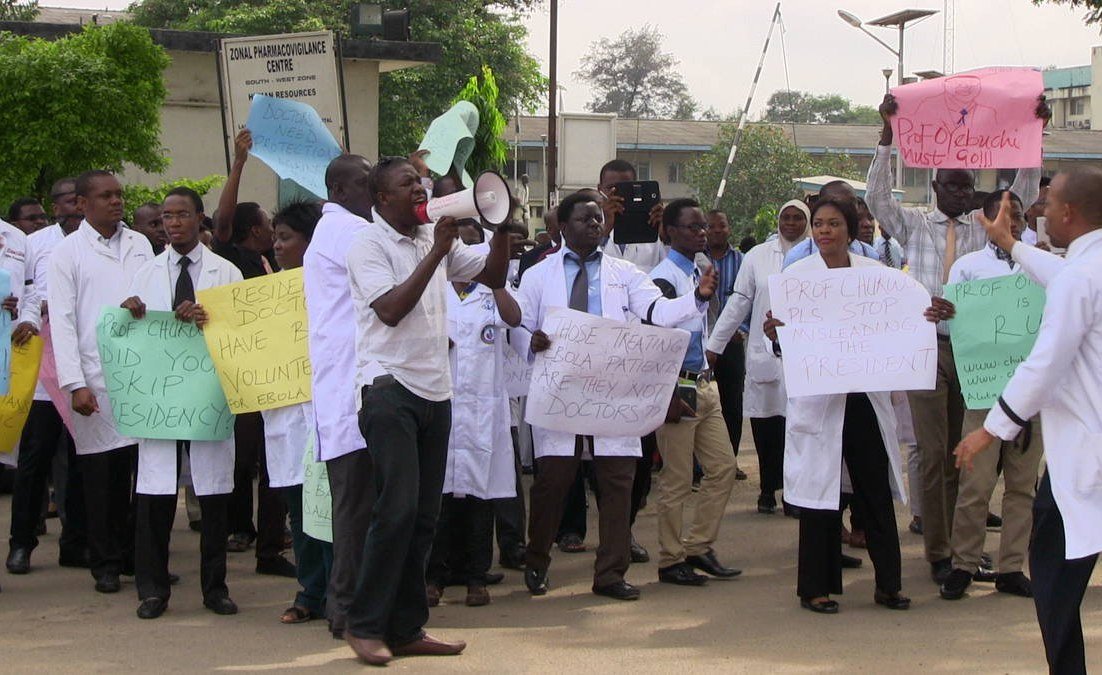
Nigeria health workers under the canopy of Joint Health Sector Unions and Assembly of Health Care Professionals (JOHESU) have declared a 7-day warning strike, beginning from midnight today. The workers had earlier given the federal government a 15-day notice of industrial action, against the backdrop of their demands, which have been pending for some time. JOHESU’s national chairman, Kabiru Minjibir, who spoke to newsmen in Abuja, the nation’s capital, listed the union’s key demands, which include the immediate implementation of the consolidated health salary structure, payment of a 25 percent review of arrears from June to December 2023. The health workers also demanded the upward review of retirement age, tax waiver on healthcare workers’ allowances, and the immediate payment of COVID-19 inducement hazard allowance. The union directed all its members across the country to comply with the strike directive immediately.
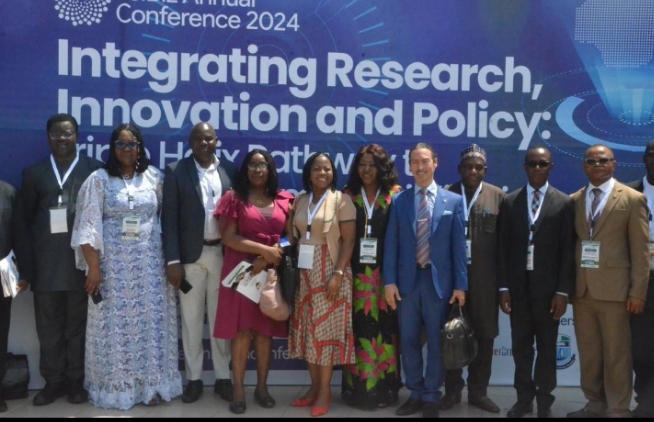
The Nigerian Content Development and Monitoring Board (NCDMB) has planned to support new research and development projects as part of its Technology Innovation and Incubation Strategy and the enduring commitment to catalyze innovation in the Nigerian oil and gas industry and linkage sectors. The new projects will add to the 14 applied research projects NCDMB is currently sponsoring at various stages of technological readiness, one of which is the Amal Technology, which manufactures gas leak detection devices and printed circuit board in Abuja. The Executive Secretary of the NCDMB, Engineer Felix Omatsola Ogbe, made this known in the keynote address at the 2024 edition of the Triple Helix Nigeria SciBiz Conference in Abuja. It was attended by industry representatives, researchers from knowledge institutions and policymakers, with theme: “Integrating Research, Innovation, and Policy: Triple Helix Pathway to Research Commercialisation.” He described research and innovation as the lifewire of Nigeria’s hydrocarbon industry He said that NCDMB has consistently applied local content development to enhance research and commercialisation of innovative solutions for the country’s oil and gas sector. “It hopes to accelerate the circle of innovation and wealth creation by fostering partnerships between universities, research institutions, and industry players.” Represented by the General Manager Research and Statistics, Silas Ajimajaye, the Executive Secretary charged Nigerians to embrace the spirit of innovation and work together to build a future where research and development are at the forefront of the national agenda. “Creating an ecosystem where research, innovation and policy can interact has never been more critical as we steer through the complexities of the 21st Century. “The Triple Helix Model of academia, industry, and government collaboration is an appropriate international business framework that adds to our strength of innovation and ensures that all efforts go into fuelling the grand old aim – National Development. “The $50 million Nigerian Content Research and Development Fund was created by the Board in 2020 from the Nigerian Content Development Fund (NCDF), and was designed to provide much-needed research funds in the oil and gas R&D space.” The President, Triple Helix Nigeria, Alhaji Abdulmalik Halilu, in his presentation, said that the THN, whose membership has grown from an initial 12 founding members to 240, realises the fact that research and innovation have fuelled human and societal development and that the body seeks to catalyse enterprises so oriented. According to him, THN is committed to foster value creation in the Nigerian economy in line with local content philosophy of looking inwards, promote the development of technology skillsets required to solve African problems by Africans, promote strong advocacy platform for building research capabilities in knowledge institutions, and foster structured partnerships between industry and research community, to attract research-based funding in the direction of Africa-based researchers. On the organisation’s vision, Halilu who is Director, Monitoring and Evaluation at the NCDMB, said: “Triple Helix Nigeria seeks to inspire at least 10 knowledge institutions to accelerate innovation and have at least 10% equity in 10 listed companies in the next 10 years.” Halilu canvassed that the role of universities in this era is no longer confined to the education of minds or the advancement of theoretical knowledge, instead, they must play a central role in the commercialization of research, turning knowledge into tangible products that drive economic growth. “The transition from education through research to commercialization heralded an evolving frontier where academia, industry, and government collaborate under the Triple Helix model to ensure research transcends the boundaries of laboratories and classrooms, to solving real-world problems and fostering economic prosperity.” Earlier in a welcome address, the Chairman of the Planning Committee of the Conference, Professor Eucharia Oluchi Nwaichi, said that her members were so joyous to witness 156 authors submitting 47 high-quality papers on various subjects that directly contribute to the theme of this Conference – “Integrating Research, Innovation, and Policy: Triple Helix Pathway to Research Commercialisation.” She expressed her confidence that together, “we can build a robust ecosystem where research meets industry, innovation drives policy, and Nigeria rises as a global leader in science, technology, and innovation.” The 2024 Triple Helix Nigeria SciBiz Conference 2024, held from October 23 to 25.
A helicopter, a Sikorsky SK76 with registration 5NBQG and operated by East Wind Aviation, crashed today, October 24, along the waterways in Port Harcourt, Rivers State capital, killing three out of the eight occupants. Information reaching us at Greenbarge Reporters online newspaper said that the accident occurred at about 11.22am. The helicopter was en route from Port Harcourt Military Base (DNPM) to the Nuimantan oil rig. According to spokesperson for the Ministry of Aviation and Aerospace Development, Odutayo Oluseyi, a total of eight persons were on board. The aircraft was said to have ditched into the waters near Bonny Finima in the Atlantic Ocean. The authorities said that rescue efforts have been activated. Meanwhile, the Nigerian National Petroleum Company Limited (NNPCL) has owned up to hiring of the helicopter. In a statement shared with the media, the company said: “On the 24th of October 2024, about 11:22am, we lost contact with the Helicopter – Register Number: 5NBQG, engaged by NNPC Limited, that took off from Port Harcourt NAF Base en route the FPSO. “The helicopter was operated by East Winds Aviation.” The NNPCL confirmed that there were eight persons on board (6 passengers and 2 crew members). It said that appropriate authorities, including the Ministry of Aviation, which had since issued a press statement, have embarked on search and rescue missions. NNPCL confirmed that so far, three bodies have been recovered. “We shall continue to monitor the situation and provide regular updates as the events unfold. “Our prayers are with the passengers, crew and their respective families at this very difficult time. “We will continue to do everything possible to support the ongoing search and rescue operation.”
Kogi State Governor, Ahmed Usman Ododo has called for collaboration between the state and the federal government towards accelerating investment in the exploration of oil resources in the state. Governor Ododo, who visited the minister of state for petroleum resources (oil), Senator Heineken Lokpobiri in Abuja, stressed his commitment to providing enabling environment for investors and their investments. Governor Ododo expressed willingness of the Kogi State government to cooperate with the federal government to ensure that oil exploration in the state comes on stream in line with the commitment of President Bola Ahmed Tinubu to pursue oil exploration in the frontier basins in Nigeria. This was even as the minister of state for petroleum resources (oil) Senator Heineken Lokpobiri reaffirmed the status of Kogi as an oil producing state and pledged the commitment of the federal government towards mobilizing investments to explore the huge oil deposits in Kogi State. The minister said that the Petroleum Industry Act mandates the Nigerian Upstream Petroleum Regulatory Commission (NUPRC) to explore frontier basins and pledged the federal government’s determination to deploy funds to unlock new discoveries and exploration of oil in Nigeria. The minister commended Governor Ododo for his giant strides in providing good governance to the people of the state. Kogi State became the first oil producing state in Northern Nigeria following the affirmation of the discovery of oil in commercial quantities by the federal government in 2022.
President Bola Tinubu has regretted that the long-term neglect of the livestock sector of the Nigeria’s economy has weighed down heavily on the import bills. “The long-term neglect of the livestock sector has weighed heavily on the country’s import bills, with milk and dairy products accounting for $1.2-1.5 billion.” The President, who opened a two-day Consultative Workshop on Livestock Reforms at the presidential villa, Abuja, today, October 24, stressed the urgent need to revamp and reposition the sector to create employment and attract foreign Direct Investment (FDI). “The livestock sector is critical, and we will give all it needs to bring value to our country. Stakeholders, I assure you that you will not regret the collaboration and investment in this sector. “It is about time that we do it right. A country of over 200 million people and cannot serve our children one pint of milk in a classroom per day? That is not right. “We didn’t see the investment opportunities. We didn’t see the economy of livestock in the past. Now that we have seen it, we must work together to restart the sector.’’ President Tinubu commended the Presidential Livestock Reform Implementation Committee, led by the Co-Chairman, Professor Attahiru Jega, and the Secretary, Professor Muhammed Yahaya Kuta, for their commitment to repositioning the livestock sector. “Our shared mission is clear: we aim to transform the livestock sector from its current subsistence model into a thriving, commercialised industry, an industry that significantly contributes to Nigeria’s Gross Domestic Product and provides decent jobs and sustainable livelihoods for our growing population. “The potential is immense: With 563 million chickens, 58 million cattle, 124 million goats, 60 million sheep, and 16 million pigs, Nigeria is the leading livestock producer in West Africa. Yet, despite this vast resource, we face stark realities. “Our annual production of animal-source foods, like milk at 0.7 billion litres, meat at 1.48 million Tonnes and eggs at 0.69 million metric Tonnes, falls far short of our needs. Our per capita consumption levels—8.7 litres of milk, 9 kg of meat, 3.5kg or 45 eggs per year—are troublingly low compared to global averages. These are 44 litres of milk, 19 kg of meat and between 160 and 180 eggs per year. “What is more worrisome to me is the average milk yield by cow breeds managed by our pastoralists: it is a mere 0.5 to 1.5 litres per day, compared to a global average of 6.6 litres per day. We can do much better! “Yes, we can do it. We can bring prosperity to our people. We can feed our children. From grass, we can achieve grace. We can contribute so much to the Gross Domestic Product (GDP) and provide decent jobs.” President Tinubu thanked the Nigerian Governors Forum (NGF), chaired by the Governor of Kwara State, Abdurrahman Abdulrazaq, for supporting the reform of animal farming in the country. “Your Excellency, Chairman of the NGF, Abdulrazaq, thank you for assuring C-of-Os and other instruments from other areas. I also know that the Etsu Nupe, Alhaji Yahaya Abubakar, with the vast land in his domain in Niger State, will accommodate many investors. “We didn’t see the cold room investment. We didn’t see that opportunity before now. But it is coming. We are going to give it all it takes. “The opportunity is there; when I inaugurated the Presidential Livestock Reform Committee, I didn’t see the path clearly until they started working. Thank you, Prof Attahiru Jega.” The President acknowledged Abdullahi Ganduje, Chairman of the All Progressives Congress (APC), for nurturing the idea of reforming the livestock stock, Nuhu Ribadu, national security Adviser, and Nyesom Wike, FCT minister, for their commitment to realising the dream. “We can create a vivid picture of the future we want to see; it’s the future of our country. The economic opportunities for our children, and with that effort, we can say God bless Nigeria.” The Chairman of NGF, Abdulrahman Abdulrazak, assured of “100 per cent buy-in of the subnational to make the reform a success because it is not just food security, but national security.’’ Abdulrazaq thanked President Tinubu for leading the initiative by chairing the implementation committee, regretting that past efforts in the same direction were reduced to files in the Ministries of Agriculture in states and local councils due to lack of political will. He said that each state should create a segment for livestock farming and extend the value chain to meat and dairy production. The Minister of Agriculture and Food Security, Senator Abubakar Kyari, thanked the President for his “bold action, exemplary leadership and unparalleled commitment to livestock reform.’’ Kyari assured of working with the Ministry of Livestock Development to realise the president’s vision to diversify the economy and empower more Nigerians.
President Bola Tinubu has dropped five serving ministers in a major ministerial reshufflement, even as he appointed the widow of late Chief Emeka Odumegwu Ojukwu, the civil war label leader, Mrs. Bianca Odumegwu Ojukwu and six others as new ministers. Those that were dropped in the announcement from the presidency today, October 23, are Barrister Uju-Ken Ohanenye, Minister of Women Affairs; Lola Ade-John, Minister of Tourism; Professor Tahir Mamman, Minister of Education; Abdullahi Muhammad Gwarzo, Minister of State for Housing and Urban Development and Dr. Jamila Bio Ibrahim, Minister of Youth Development. The newly appointed ministers are Dr. Nentawe Yilwatda as Minister of Humanitarian Affairs and Poverty Reduction; Muhammadu Maigari Dingyadi as Minister of Labour & Employment; Bianca Odinaka Odumegu-Ojukwu as Minister of State for Foreign Affairs; Dr. Jumoke Oduwole as Minister of Industry, Trade and Investment (Trade and Investment); Idi Mukhtar Maiha as Minister of Livestock Development; Rt. Hon. Yusuf Abdullahi Ata as Minister of State, Housing and Urban Development and Suwaiba Said Ahmad PhD as Minister of State for Education. These were among the eight far-reaching actions approved by the President to reinvigorate the capacity of his government for optimal efficiency, pursuant to his commitment to deliver on his promises to Nigerians. The eight actions include: The renaming of the Ministry of Nigeria Delta Development to Ministry of Regional Development to oversee the activities of all the Regional Development Commissions. The Regional Development Commissions to be under the supervision of the new Ministry are the Niger Delta Development Commission, the South East Development Commission, the North East Development and the North West Development Commission. The immediate winding up of the Ministry of Sports Development and the transfer of its functions to the National Sports Commission in order to develop a vibrant sports economy. The merger of the Federal Ministry of Tourism and the Federal Ministry of Arts and Culture to become Federal Ministry of Art, Culture, Tourism and the Creative Economy; The re-assignment of ten ministers to new ministerial portfolios. The discharge of five Ministers and nomination of seven new ministers for onward transmission to Senate for confirmation; The appointment of Shehu Dikko as Chairman of the National Sports Commission; The appointment of Sunday Akin Dare as Special Adviser to the President on Public Communication and Orientation working from the Ministry of Information and National Orientation. The ministers that have been reassigned to new portfolios are Hon Dr. Yusuf Tanko Sununu from Minister of State, Education to Minister of State Humanitarian Affairs and Poverty Reduction; Dr. Morufu Olatunji Alausa, from Minister State, Health to Minister of Education; Barr. Bello Muhammad Goronyo, from Minister of State, Water Resources and Sanitation to Minister of State Works and Hon. Abubakar Eshiokpekha Momoh from Minister of Niger Delta Development to Minister of Regional Development. Others are Uba Maigari Ahmadu from Minister of State Steel Development to Minister of State Regional Development; Dr. Doris Uzoka-Anite from Minister of Industry, Trade and Investment to Minister of State Finance; Senator John Owan Enoh from Minister of Sports Development to Minister of State, Trade and Investment [Industry]; Imaan Sulaiman-Ibrahim from Minister of State, Police Affairs to Minister of Women Affairs and Ayodele Olawande from Minister of State for Youth Development to Minister for Youth Development as well as Dr. Salako Iziaq Adekunle Adeboye from Minister of State, Environment to Minister of State Health. President Tinubu thanked the outgoing members of the Federal Executive Council for their service to the nation even as he wished them the best in their future endeavours. He charged the newly appointed ministers as well as their reassigned colleagues to see their appointment as a call to serve the nation. He said that all appointees must understand the administration’s eagerness and determination to set Nigeria on the path to irreversible growth and invest the best of their abilities into the actualisation of the government’s priorities.
President Bola Tinubu begins the cabinet reshufflement with the scrapping of Niger Delta Ministry and the Ministry of Sports Development. Announcing this today, October 23, the Presidential spokesperson, Bayo Onanuga, said that there would now be a ministry of regional development to oversee all the regional development commissions, such as Niger Delta Development Commission, North West Development Commission, South West Development Commission, North East Development Commission. He said that the National Sports Commission would take over the role of the Ministry of Sports, adding that the decisions were taken at the Federal Executive Council (FEC) meeting today. Onanuga said that the president has also approved the merger of the Ministry of Tourism with the Ministry of Culture and Creative Economy.
President Bola Tinubu has promised commercial vehicle owners free conversation of the Compressed Natural Gas (CNG) in their vehicles, being an alternative to fuel. The President said that the free conversion of CNG is one of the incentives his government is working on, in addition to selling the new fuel alternative at just N200 per standard cubic meter. The President, who received in audience today, October 22, the executives of NIPCO at the presidential villa, Abuja, said: “Nigeria’s motorists can buy petrol at N1,000 per litre or equivalent gas per Standard Cubic Meter at N200. “We have also introduced incentives for commercial motorists to convert from petrol to gas at free of cost.” Tinubu insisted that CNG is a cleaner and more affordable fuel, and that can reduce the carbon footprint and save consumers significant fuel costs. President Tinubu commended NIPCO’s contributions to the nation’s energy transition efforts, particularly its support for the Presidential Compressed Natural Gas Initiative (PCNGI). He acknowledged NIPCO’s role as a critical player in enhancing the adoption of CNG as an alternative fuel, saying that such investments align with his administration’s energy security and economic diversification strategy. He lauded NIPCO’s efforts in promoting and supporting the “Switch to CNG” campaign, which has been instrumental in boosting public awareness and providing affordable CNG conversion kits even before the official kickoff of the Presidential CNG Initiative. He stressed the significance of this initiative in reducing the nation’s reliance on petrol and cutting down fuel costs for consumers. The President emphasised the importance of public-private partnerships in driving the transition to cleaner energy, even as he reaffirmed commitment to providing a conducive environment for private sector investments and expanding Nigeria’s CNG infrastructure to enhance energy efficiency and economic growth. President Tinubu encouraged NIPCO to continue its innovative approach to CNG expansion while supporting the government’s broader goals in the energy sector. NIPCO director, who led the delegation, Mr. Ramesh Kasangra, thanked President Tinubu for his support of the CNG sector, and expressed the company’s commitment to furthering the partnership with the government to ensure Nigeria’s energy transition remains on track. He assured the president that the company is ready to invest in infrastructure to make CNG more accessible nationwide. According to him, NIPCO has been a key player in various sectors of Nigeria for over four decades and will continue to believe in Nigeria for the long term.
Former Nigeria’s President Olusegun Obasanjo has regretted that despite all the opportunities available for Nigeria to lead Africa, it had faltered far too long and disappointed not only the black race but Africa and the world. “We have disappointed ourselves. We have disappointed the black race, Africa and the world at large. We have rubbished the value of integrity, no truth, no love.” Obasanjo, who received in audience today, October 22, a 20-member delegation from the League of Northern Democrats, led by former Kano State governor, Ibrahim Shekarau, at his Presidential Library in Abeokuta, expressed deep concern over the state of disunity in the country, describing it as a major obstacle preventing Nigeria from achieving its full potential. According to him, lack of national cohesion has hindered Nigeria from becoming the leading light of the black race, a position it should naturally occupy. He said however that despite the challenges, he remains an “incurable optimist” about the country’s future, believing that Nigeria can turn things around if it addresses the mistakes of the past. He advised that the country should prioritize the national interest over sectional considerations, saying, “It is high time we began working for the national interest. “Yes, you have identified your group as League of Northern Democrats but how I wish you call your group National League of Democrats because where you come from should not be a problem. “Where I was born should not be the enemy of my Nigerianess. I will be increasing by being a Nigerian rather than being a member of the Republic of Oodua. “I am undoubtedly proud to be a Yoruba but my being a Nigerian should not be the enemy of my being a Yoruba…we must get the best man for the job, it doesn’t matter where he comes from. We must get our acts together. “The African continent, the black race and the entire world are looking up unto us. When we got our independence, what they were calling us was giant in the sun but is that the situation today? Obasanjo said that he shared the concerns of the group for the poor state of things in the country but that the situation is not beyond salvation as long everyone is ready to come together and work as a united nation. He said that he would forever remain a Pan-Africanist, a patriotic and Nationalistic Nigerian and a proud black man from the black race. He advised the League of Northern Democrats to consider changing their name to the National League of Democrats because the ideals the group espoused are what cut across the nation. He said that he would not mind being their patron if he could not be their active member due to old age.
The Chief Justice of Nigeria (CJN), Justice Kudirat Motonmori Olatokunbo Kekere-Ekun, has made it clear that judicial officers in the country require some basic necessities to be able to function well. Flagging off the design and construction of 40 housing units Judges Quarters in Katampe District of the Federal Capital Territory (FCT) today, October 21, Justice Keke-Ekun said: “beyond the courtroom, a supportive and conducive living environment is essential to their ability to focus on the heavy responsibilities entrusted to them.
“Judicial officers require peace of mind, security and comfort in their residences to fully dedicate themselves to the rigorous task of interpreting and applying the law. “It goes beyond addressing the basic needs for housing. It reflects the recognition that the mental and emotional wellbeing of judicial officers is directly tied to their living conditions. “These homes will provide a secure and tranquil environment enabling judicial officers to perform their duties with greater focus efficiency and clary of mind.” Justice Kekere-Ekun also acknowledged the focus of the Renewed Hope Agenda of President Bola Ahmed Tinubu, even as she commended the FCT Administration for its initiative and forward-thinking in implementing the project. She said that priority placed on the well-being of the judicial Officers reflected the importance placed on their welfare. The FCT minister, Nyeson Wike, who was among the dignitaries that witnessed the groundbreaking event, stressed the commitment of the Federal Government to safeguarding the rule of law and administration of justice by ensuring the independence of the judiciary. The Minister highlighted some of the practical steps taken by the government to ensure the independence of the judiciary, including improvements in the condition of service of judicial officers, increment of allowances and salaries as well as the provision of befitting and comfortable accommodation. “Mr. President said it is not every time that we talk about the independence of the judiciary. We must show in practice; we must show in action that we are indeed not saying so but we are doing so, so that people can see that we are seriously doing that. “Mr. President said we must at all times provide housing. But that can only be better if you have an owner occupier, so that every judge will know that at the end of the day, as I’m retiring from office; I have my own home. “With that, it will be difficult for anybody to manipulate or interfere. When you have a home, what are you afraid of? When you know that salaries and allowances can be paid when you are retired, when you know that your tenure of office is guaranteed, that of course, anybody will be firm and courageous to do his or her work. “That of course is what Mr. President’s renewed Hope Agenda is doing, not merely talking but by showing in action.” The Minister explained that the FCT Administration did not limit the provision of accommodation to High Court Judges but also the Federal High Court and Court of Appeal Judges that are rendering services to the residents of the FCT and other Nigerians. “Mr. President has also approved that by next year, we should also provide for the Industrial Court so that they will also be part of the benefits of the Renewed Hope Agenda.” Wike said that 70 percent of the budget for the Judges Quarters has been approved and assured of adequate funding for the project. He added that the project has a 15-month completion timeframe and charged the contractor to ensure its timely completion. “You have only 15 months to hand over well-furnished houses because our judges are doing their best. They are doing a lot of hard work and good work for the country. Highlights of the event include the presentation of Certificate of Occupancies to the Federal High Court, the FCT High Court and the Court of Appeal respectively, by the Minister and the symbolic stone laying for the project by the Chief Justice of Nigeria.
We use cookies on our website to give you the most relevant experience by remembering your preferences and repeat visits. By clicking “Accept”, you consent to the use of ALL the cookies.
This website uses cookies to improve your experience while you navigate through the website. Out of these, the cookies that are categorized as necessary are stored on your browser as they are essential for the working of basic functionalities of the website. We also use third-party cookies that help us analyze and understand how you use this website. These cookies will be stored in your browser only with your consent. You also have the option to opt-out of these cookies. But opting out of some of these cookies may affect your browsing experience.
Necessary cookies are absolutely essential for the website to function properly. This category only includes cookies that ensures basic functionalities and security features of the website. These cookies do not store any personal information.
Any cookies that may not be particularly necessary for the website to function and is used specifically to collect user personal data via analytics, ads, other embedded contents are termed as non-necessary cookies. It is mandatory to procure user consent prior to running these cookies on your website.