Senator Oyelola Ashiru, representing Kwara South, has hit back at the Nigeria Drug Law Enforcement Agency (NDLEA), saying that the agency has told a lot of lies against him in order to cover up its inadequacies. In a statement today, October 21, debunking what he described as “wrong and fallacious impressions,” the Senator recalled the lie by the NDLEA that its men and officers raided his house in Ilorin, and found illicit drugs. “This accusation came on the heels of Senator Ashiru’s declaration on the senate floor that the NDLEA is corrupt.” The statement, issued on behalf of the Senator by his aide, Olaitan Adeyanju said: “we find it preposterous and mere fishing for justification that NDLEA had to wait for the senator’s observation on the floor of the Senate before making its spurious allegations. “As a matter of fact, Senator Ashiru never employed any aide bearing Ibrahim Mohammed or Mohammd Yahaya as bandied by NDLEA. “The agency claimed that its operatives visited the senator’s Ilorin house and found nothing incriminating. “The entire house was searched, and nothing incriminating was found. “If any drugs were found on certain persons mentioned by the NDLEA, it is rational to ask that in which court of law were the culprits charged? “It is also important to state that Senator Ashiru has not sent any aide to the NDLEA to influence the dropping of drug allegations against anyone known as Tosin Odepidian. Indeed, all the names mentioned by the agency are strange, and none works directly or indirectly with Senator Ashiru. “The NDLEA has the duty to take anyone suspected of drug dealing to court rather than name-calling and engaging in media trial. “This clarification is necessary to set the record straight and address the misleading information circulated by the NDLEA. “It is an open secret that many criminals, cultists, armed robbers, and drug addicts find their way back into business after gratifying and bribing law enforcement officers. “The NDLEA ought to search its house and fish out bad eggs rather than seek cheap publicity! “Senator Ashiru remains committed to serving the people of Kwara South and upholding the truth at all times in the search for strict professionalism among our law enforcement agencies.”
Governor Ahmed Usman Ododo of Kogi State has charged the newly elected Council Chairmen and Vice Chairmen to sustain the tempo of development which his government has since embarked on at the grassroot level, for the benefit of the masses. Swearing in the Council leaders today, October 21, at the government House in Lokoja, the state capital, Governor Ododo reminded them that there would be no excuse for lack of performance by any of them. He reminded them about the essence of new dispensation whereby local governments are as independent to operate as any other arm of government. The Governor emphasized the need for the chairmen and vice chairmen to be dedicated in serving the people they represent. Ododo further charged them to embark on projects and programmes that will improve the lives of the people and to ensure security of lives and property of the people in their areas. He asked them to key into signature programmes of his government in the areas of health, agriculture, social welfare and empowerment initiatives to transform the lives of the people in their respective local government areas. The Governor who described the local government as the most important tier of government and the closest to the people also enjoined the new council chairmen to ensure that the people are carried along in all their activities and to promote inclusion of all stakeholders in decision making process. He stressed that the local government administration should not only be seen but must be felt by the people in line with the policy of his administration to bring governance closer to the people. Governor Ododo called on the new chairmen to be transparent and accountable in running the affairs of the local government, and that they must see their election as an opportunity to justify the autonomy of the local government administration by according priorities to matters that have direct positive impact on the lives of the people at the grassroots. The chairman of Yagba West local government area, Tosin Olokun, who spoke on behalf of the 21 local government chairmen assured of their commitment to complement the efforts of the state government by embarking on projects and programmes that will transform the lives of the people at the grassroots. He also promised to unite the people, irrespective of political differences in line with the agenda of the state government under Governor Ododo, to unite the people of the state and focus more on development.
Madam Aishetu Ojeifo, mother of the publisher of CONCLAVE online newspaper, Sufuyan Ojeifo, has been scheduled to be buried on November 22 at her residence in Agbede in Etsako West Local Government Area of Edo State. In a statement today, October 21, on behalf of the family, Sufuyan Ojeifo said that the burial will be heralded by a wake at the family residence in Owo, Ondo state on November 21, to be followed by religious ceremonies that would culminate in the interment of her remains on Friday, November 22. “On Saturday, November 23, 2024, there will be a celebration of life of Madam Aishetu Ojeifo by children, grandchildren, great grandchildren, extended family members, family friends, and communities who were directly or indirectly impacted by her life and times of discipline compassion, and good neighbourliness, nested in the service of God and mankind.” The statement added that there would be a thanksgiving church service on November 24, in Owo, Ondo State. Madam Aishetu died on October 12 at the age of 91, two months to her 92nd birthday that would have been celebrated on December 12. She died after a brief illness at the family house in the ancient town of Owo in Ondo State, where she lived all of her married life. According to information, the deceased left behind worthy legacies of service to God and mankind as well as successful children, including those she mentored.
…mother and son (Sufuyan) Madam Aishetu Ojeifo, born into the royal family of Agbede, is survived by three children: Mr. Tajudeen Mayor Ojeifo, a retired secondary school principal; Mr. Sufuyan Ojeifo, a Journalist and publisher of THE CONCLAVE online newspaper and Mr. Kabir Ojeifo, a quantity surveyor at the FCTA in Abuja; as well as twenty grandchildren and 12 great grandchildren. We at Greenbarge Reporters online newspaper send our condolences to Sufuyan Ojeifo and other members of the Ojeifo family over the loss of their matriarch.
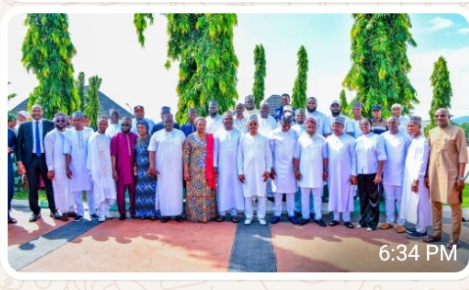
The Governor of the Central Bank of Nigeria (CBN), Mr. Olayemi Cardoso, has said that the Bank is determined to develop the next generation of leaders in the financial and social sciences sectors, emphasising the necessity of addressing the scarcity of skilled professionals in finance-related fields in Nigerian universities. Cardoso spoke during a strategic engagement with the President and Chairman of the Governing Council of the Nigerian Economic Society (NES), Professor Adeola Adenikinju, who led a team of NES officials and the Nigerian Economics Students Association (NESA), at the CBN Head Office in Abuja. He expressed his belief in the collective effort needed for youth development, saying that special consideration should be given to creating opportunities for youths and providing them with tools to thrive in their respective sectors and make them globally competitive. He described the meeting as a demand-driven conversation, adding that it had set the stage for a robust pipeline of talents that will drive Nigeria’s Financial System Strategy. After the presentations by members of NES and NESA on research topics, recommendations, and ongoing activities that could assist the CBN in achieving its mandate, Governor Cardoso emphasised the need for organising mentorship collaboration with NES and NESA to enable both associations to achieve their set objectives. The Governor stressed the importance of communication, saying that there need to simplify dense and heavy economic concepts, which has always been challenging when communicating monetary policy. He noted the place of the young economists in demystifying the subject and giving it a better perspective, even as he reaffirmed the CBN’s readiness to work with NES and NESA and encourage significant female representation. Cardoso expressed optimism that the collaboration with the groups marked an essential step towards building a resilient and inclusive financial sector that thrives on talent, innovation, and diversity. He hoped that such would instil hope in the sector’s future. In his remarks, the President and Chairman of the Governing Council, Nigerian Economic Society (NES), Professor Adeola Adenikinju, highlighted areas of concern for the team and the need for collaboration with the CBN. He said that the association had the largest number of economists who could transfer such knowledge, citing a gap around mentorship programmes. According to him, other areas include research support, internship opportunities, workshops/conferences and leveraging social media in communication. Also speaking, the National President of the Nigerian Economics Students Association (NESA), Comrade Bakre Israel Boluwatife, expressed gratitude to the CBN Governor for the opportunity for the engagement. He said that NESA looked forward to contributing to the body of research in inflation and money supply.
The Nigerian Content Development and Monitoring Board (NCDMB) and the Universal Basic Education Commission (UBEC) have signed a Memorandum of Understanding (MOU) for the implementation of the NCDMB-UBEC Smart Schools Development Initiative (NUSSDI). The MoU is aimed at providing educational infrastructure, particularly in areas with high rates of out-of-school children as well as underserved rural communities, integration of technology in learning, building the capacity of teachers and educational administrators and improving overall learning outcomes. At the signing ceremony in Abuja, the Executive Secretary of the NCDMB, Engineer Felix Omatsola Ogbe, explained that the NUSSDI would leverage the combined mandates, expertise and resources of the two federal agencies “to bequeath smart schools equipped with modern technology and innovative teaching methods.” “It will equip the next generation of leaders with the knowledge, skills, and technological capacity necessary to thrive in an increasingly digital world.” He said that basic education is the foundation of human capital development and that the NCDMB is deliberate in its efforts to develop “a pipeline of talents for Nigeria’s oil and gas industry.” The Executive Secretary of UBEC, Dr. Hamid Bobboyi described the significance of the MoU, as a “game changer” for the funding and implementation of basic education. He said that the partnership would have a profound and lasting influence on the lives of children, families, and Nigeria’s future. He canvassed for increased resources and support in the education sector, adding that the partnership with other agencies and organizations will bridge funding gaps. Under the MOU, NCDMB will provide training and professional development opportunities for teachers, while UBEC and NCDMB will collaborate on infrastructure development projects. The MoU also seeks to develop and implement local content programmes in basic education, foster research and development in basic education and promote industry-academia partnerships. The Smart Schools Development Initiative represents a systematic broadening of NCDMB’s programmes for promotion of digital education as well as the study of Science, Technology, Engineering and Mathematics (STEM), under which the Board has provided several secondary schools in the country’s six geopolitical zones with fully equipped Information and Communication Technology Centres (ICTs) and trained scores of teachers to enhance their effectiveness in impartation of knowledge and relevant skills.
The All Progressives Congress (APC) has swept Kogi State clean in the local government election conducted yesterday, October 19, winning all 21 chairperson seats. The State Electoral umpire, Mamman Nda-Eri, who announced the election results, said that the APC also won all 239 councillorship seats. Nda-Eri described the elections as “peaceful, free, and fair.” Nda-Eri added: “APC performed excellently; it cleared all the chairmanship and councillorship positions, leaving nothing to the other 18 political parties that took part in the election.” He said that the results had earlier been declared at various collation centers by returning officers, even as he expressed gratitude to election officials, security personnel, observers, and journalists for their roles in ensuring a successful electoral process. The chairman said that a woman won the chairperson seat in Ogori-Magongo LGA, making history among newly elected officials. Before the polls, Kogi APC reserved LGA vice-chairperson positions for women as a way of promoting gender representation. The APC also committed to reserving 40% of councillorship tickets for female candidates, empowering women in politics. Hereunder is the list of elected chairpersons. 1. Adavi – Rasheed Okatengwu 2. Ajaokuta – Haruna Aliyu 3. Ankpa – Adamu Yahaya 4. Bassa – Adama Theophilus Daruwana 5. Dekina – John Urah 6. Ibaji – Emmanuel Onuche 7. Idah – Alfa Halilu 8. Igalamela/Odolu – Cosmos Atabor 9. Ijumu – Haruna Ibrahim 10. Kabba/Bunu – Zacheaus Dare 11. Kogi – Musa Abdulmalik 12. Lokoja – Abdullahi Adamu 13. MopaMuro – Ademola Bello 14. Ofu -Musa Muhammed Lawal 15. Ogori/Magongo – Rosemary Ohiezuchah 16. Okehi – Amoka Monday 17. Okene – Enesi Ahmed Nuhu 18. Olomaboro – Ameh Williams 19. Omalla – Edibo Mark 20. Yagba East – Joshua Dare Monday 21. Yagba West – Olokun Tosin
Yakubu Gowon, a retired General of the Nigerian Army was the youngest Head of State (1966-1975) that Nigeria had produced. He needs no introduction. He was, and is still loved by many. And here’s an account of my first hand ‘close contact’ with him. In 1973, while preparing for our promotional examinations from Primary 1 to primary 2, at LGEA Primary School, Uchi-Mbakor, present day Tarka local Government Area, (then in old Gboko local government area), our former Headmaster, Late Gbakaan Aminde announced to the students and teachers, during one of our assembly gatherings, the state visit of the Head of State to Benue-Plateau State, Gen. Yakubu Gowon. The school was thrown into excitement. We were told the Head of State would pass through our school, situated by the road side along Makurdi-Gboko highway to visit the then Tor Tiv, HRH, Gondo Aluor now late in his palace in Gboko. To my little mind, i thought he would stop by and shake our hands. All students were to line up along the road in front of our school in our blue shorts and white shirts uniforms. It was a sight to behold. One of the teachers, i can’t remember his name, was asked to teach us this line: “General Yakubu Gowon, welcome to Benue-Plateau State.” We were to be waving in the air. As early as 7am on the day of his visit, we came prepared. As soon as the headmaster and teachers were convinced that the population of students was enough, we started repeating the line waving in the air. We chorused this in sync, excitedly. The rendition was that of a mass choir in the presence of the King. By noon, both teachers and students were fatigued due to long hours under the scorching sun. The headmaster then dismissed us for a short break but directed us to resume immediately. We did and came back early and lined up. Some pupils and even teachers were still struggling to fix themselves up on the line when at about 4pm or there about, we heard the presidential convoy of Peugoet cars blaring with sirens from a distance. We all rushed into line and began our routine of repeating the line: “General Yakubu Gowon, welcome to Benue-Plateau State.” We waved alongside. In a flash, the Head of State and his convoy passed without even slowing down. I’m not sure he ever noticed that the school pupils had been in the sun for almost a whole day. The speed with which the comvoy passed without acknowledging our presence made me think we didn’t matter. Fast forward: And so, many years after, i trained as a journalist, working with Vanguard newspaper in Abuja. General Gowon who was toppled in 1975, fled the country before he eventually returned to Nigeria. During one of my routine assignments at Transcorp Hilton, Abuja, i ran into our former head of state at the entry foyer of Transcorp Hilton. This time, no convoys. No heavy security details around him. He was just alone, with his orderly. They were waiting for his driver to come forward with his car. I was excited to ‘catch’ our head of state so easily. As I moved closer to him, the detail closed in on me but the fatherly wave to him saved me. I greeted him respectfully. He asked me who I was. I told him and went ahead to narrate how we stood in the sun for almost a whole day waiting for him in 1973. I told him i was, like many then, were disappointed that he didn’t even slowed down to acknowledge our well rehearsed welcome message and hand wave. Gowon smiled and tapped me at the back saying, “young man, you did it for me. They will also do it for you tomorrow.” By this time, his car had parked and the orderly had opened the door as i walked with him to his car. He waved again smiling. I don’t know what mat have been going through his mind. There were no phones then so I didn’t have the opportunity to take any selfies with the former president. From this ‘close’ contact and a watching him from a distance, Gowon played his part for the sake of Nigeria. We should strive to do our part, building on what he and our forefathers had lived and fought for. Such is the life of this gentleman soldier, politician, academic, father, grand father and great grand father. Your Excellency sir, as you mark your 90th Birthday, I join thousands in Nigeria and around the World to wish you many more years filled with joy and happiness. Happy Birthday General Yakubu Gowon.
Former Nigeria Vice President, Atiku Abubakar and the minister of the Federal Capital Territory (FCT), Nyeson Wike are back on the political brickbat, calling each other uncomplimentary names. While Wike, who is in the same People’s Democratic Party (PDP) with Atiku, made disparaging remarks about Atiku in the media today, October 19, Atiku just responded through a statement titled: “Wike and his T-Pain Collaborators playing politics with the suffering of Nigerians.” In the statement by his spokesperson, Paul Ibe, the former Vice President said that his attention was drawn to the recent remarks by Wike, “which can only be described as another of his theatrical outbursts.
“Ordinarily, we would not respond, but we recognize that silence might be misinterpreted. “However, we remain calm, knowing that Nigerians are well acquainted with his antics, a lingering symptom of the bitterness he harbours from his defeat to the Wazirin Adamawa at the 2022 party presidential primaries. “Mr. Wike’s comments are nothing more than a string of inanities, lacking substance and driven by personal grievances. If he truly believes Nigerians are content with the current state of affairs under the government he serves, it reveals a deeper truth: his priorities lie not with the people but with himself. This self-absorption is evident in his preoccupation with domestic affairs in Rivers rather than his ministerial responsibilities. “While he may seek to divert attention with his baseless rants, we remain focused on the genuine issues affecting Nigerians. It is clear that Mr. Wike is more concerned with self-interest than addressing the real challenges faced by the nation. In contrast, our commitment remains unwavering, centred on the welfare and progress of the people. “Mr. Wike appears to delight in conjuring fantasies, indulging in his imagination, and paying for live TV coverage to launch tirades against whomever he pleases. “However, we shall not descend into the gutters where he feels at home. “Instead, we prefer to rise above, maintaining our dignity while others revel in the mud.”
The Nigerian chapter of the International Press Institute (IPI) has announced the release of Edna Ulaeto, a reporter with OrderPaper online, from the custody of the Department of State Security (DSS). Ulaeto was arrested on October 18, 2024, but was released the same day as a result of the intervention of IPI Nigeria. The medium had inaccurately reported, this week, that DSS operatives invaded the Nigerian National Assembly as part of a purported plot to impeach Senate President Godswill Akpabio. The DSS expressed concerns that OrderPaper’s publication posed serious national security threats and caused significant local and international embarrassment. But DSS said that it sought to understand from the reporter the reasoning behind the inaccurate reporting and potential sources of false information aimed at destabilising the country. In a statement, the Legal Adviser & Head, Advocacy Committee IPI Nigeria, Tobi Soniyi, acknowledged the DSS’s concerns and appreciated their decision to release Ulaeto. “We are hereby emphasising the importance of adhering to journalistic ethics and accurate reporting. “While OrderPaper promptly issued a retraction and apology, we understand DSS’ argument about the damage already done to it and the country. “We urge journalists to always verify information before publishing and refrain from sensationalism. Truthful reporting is crucial for a stable society.”
The World Bank’s Senior Vice President by the name of Indermit Gill, who is originally Indian, incited mass panic in Nigeria on October 14 when he said Nigeria would need to sustain its current soul-sucking, agonizingly punishing, and self-destructive “reforms” for “at least another 10 to 15 years to transform its economy.” Gill’s speech at the 30th Nigerian Economic Summit in Abuja—which read partly like the smug, cloying, self-congratulatory bluster President Bola Tinubu would write and partly like the intentionally obfuscating gobbledygook of dubious experts who want to conceal the truth from the uninitiated—elicited verbal and nonverbal expressions of fervent disapproval from the well-fed elites of the Nigerian Economic Summit Group and the Ministry of Budget and National Planning (who planned the event) when he said Nigeria must continue this path of national self-incineration “at least another 10 to 15 years.” Gill was compelled to wonder aloud if the murmurs his callous exhortation triggered were a signal of disagreement or agreement from his audience. The camera zoomed in on people nodding discontentment or using their fingers to gesture disapproval. If he is smart, he would know the answer to his question. But the soulless, blood-sucking economic vampire was unmoved. He insisted that enduring “terrible hardship across the breadth of Nigerian society” (his words) as a consequence of the gutting of petrol subsidies is the only way to “become the engine of growth in sub-Saharan Africa.” “It is very difficult to do these things,” he said, “but the rewards are massive.” What massive rewards can come out of policies that take both lives and means of livelihood? The phrase “at least” suggests that 10 to 15 years of piecemeal national mass immolation is the irreducible minimum required to achieve prosperity. That is, 10 to 15 years is the smallest possible national self-annihilation Nigeria has to endure to “transform its economy.” Since the least possible effort can’t always guarantee success, it means it would take more than 15 years (possibly 50 years— or even eternity) to achieve prosperity through national mass annihilation. Well, since President Tinubu can’t rule longer than seven more years (assuming he wins a second term in 2027), the World Bank has effectively prepared the perfect, ready-made alibi to explain away the irrecoverable harm its loathsome and baleful prescriptions will visit on Nigeria in the next few years. Tinubu’s successor, whoever that may be, would be insane to continue with this mass obliteration of the populace they call “reforms.” If he or she has brain cells in his or her skull and reverses this ruinous course, the World Bank would say, “Well, we told you that you needed to incinerate yourselves for at least 15 more years before you can have a chance at living. Since you brought yourselves back to life after only eight years of being in the burner, you are not sufficiently cooked, and we are not responsible for the burns and devastation that eight years of incineration brought to you. You see, you can only live if you burn yourselves alive, which you refused to do.” This caricature might come across as grotesque and transgressive of the bounds of reasonableness, but it faithfully captures the logic of World Bank economic prescriptions for developing countries: you need to die before you can live. If not, how could anyone celebrate the democratization of privation? “The price of [petrol] has quintupled since the subsidy cuts, imposing terrible hardships across the breadth of Nigerian society,” Gill said with a triumphant tone. Well, one of the unspoken, unacknowledged but nonetheless far-reaching consequences of the quintupling of petrol prices is the slow but sure death of what remained of Nigeria’s education. Because of the dire existential precarity that the unaccustomed and ceaseless hikes in petrol prices have caused, many children are dropping out of school like leaves abandoning a tree before the storm hits. A National Assembly member told me a few days ago that a prominent emir in Northwest Nigeria confided in him that he was alarmed by the sheer number of young people who are dropping out of school (at all levels of education) in his traditional sphere of authority because parents can’t afford to feed, and they consider paying the school fees of their children a burden they can’t shoulder. This tragedy, this conscienceless assassination of the future of our youth in the service of the World Bank, isn’t limited to the North. Two weeks ago, a close relative of mine who lives in the Southwest requested my assistance to pay the school fees of five children who were roaming the streets because they had been sent home from school for failure to pay their school fees. Their father disappeared without a trace before he couldn’t cope. Their mother, a petty trader, manages to feed the children once in a day on a good day. But they used to get by before Tinubu’s “economic reforms” upended their lives. We in the North are in a worse state because we are already behind the rest of the country in educational attainment. Now we are sliding even further as the sting of Tinubu’s World Bank-instigated “reforms” disrupts lives. When a “reform” rolls back gains in school enrollment and effectively jeopardizes the future of the youth and of the country, you have to wonder why you need to implement it for at least 10 to 15 years to “grow.” It’s like pulling bricks from the foundation of a house in the name of building a taller roof. What good can possibly come out of that? What sort of “reform” contracts the economy, diminishes the productive sector, reduces the purchasing power of the people, reverses growth in education, and even kills people’s will to live? Tinubu has repeatedly assured Nigerians that the dark tunnel of his “reforms” will produce light during his presidency and that Nigerians only have to endure a temporary penance. But the World Bank, his puppeteer, has undercut his message. It says it will take at least 10 to 15 years of maintaining these “reforms,” which extend beyond the time he is constitutionally allowed to rule, to see any benefits. In other words, Nigerians are condemned to unmitigated anguish and deprivation for a deferred benefit that will never come since Tinubu won’t be around for the next 10 to 15 years, and his “reforms” would probably ensure that Nigerians don’t elect another neoliberal World Bank/IMF flunkey who will tout mass starvation of the citizenry as praiseworthy “reform.” And here’s the uncomfortable truth: history offers too many cautionary tales of developing nations that have followed this very same script, only to find themselves worse off. Argentina in the early 2000s, for instance, stood on the precipice of ruin after blindly swallowing the IMF’s bitter medicine. With a wild, neoliberal, anarchist wacko of a president called Javier Milei, Argentina is back in the pit of World Bank/IMF hell. Ecuador, too, suffered a devastating financial crisis when it adopted policies that hollowed out its middle class. The World Bank and its cadre of international experts rarely account for the peculiarities of each nation’s economic and social dynamics. What they offer is a one-size-fits-all solution that has often wreaked havoc on the most vulnerable. Nigeria is being told to trust this path, but development doesn’t emerge from policies that wipe out the middle class, impoverish the population, and render a nation’s currency barely worth the paper it’s printed on. True development is rooted in fostering economic diversity, building local industry, and safeguarding the purchasing power of ordinary citizens. It’s about listening to the rhythm of the local economy and respecting its complexity, not bulldozing over it with a neoliberal agenda crafted in the halls of Washington. No doubt, Nigeria’s economy has long needed repair. But it is one thing to call for reform and another to advocate for policies that feel like economic warfare on your own people. Tinubu may believe that this is a necessary sacrifice, but the logic of endless suffering in the name of eventual relief is deeply flawed. Countries do not develop by punishing their citizens into submission. We must ask ourselves: how much longer can Nigeria afford to endure policies that erode its very foundation? For a nation whose citizens have weathered so many storms, the path forward must be built not on external dictates but on an understanding of Nigeria’s unique strengths and vulnerabilities. And while the World Bank preaches patience from afar, Nigerians know better than most that promises of future prosperity mean little when the present is unbearable.
A leader worth following is one who understands this. A leader who places the needs of the people above the dictates of international financial institutions. Nigeria cannot afford to pay this price much longer, and Bola Tinubu’s legacy may well rest on whether he is willing to listen to the cries of his people—or whether he will remain a distant echo of the world’s technocrats.
We use cookies on our website to give you the most relevant experience by remembering your preferences and repeat visits. By clicking “Accept”, you consent to the use of ALL the cookies.
This website uses cookies to improve your experience while you navigate through the website. Out of these, the cookies that are categorized as necessary are stored on your browser as they are essential for the working of basic functionalities of the website. We also use third-party cookies that help us analyze and understand how you use this website. These cookies will be stored in your browser only with your consent. You also have the option to opt-out of these cookies. But opting out of some of these cookies may affect your browsing experience.
Necessary cookies are absolutely essential for the website to function properly. This category only includes cookies that ensures basic functionalities and security features of the website. These cookies do not store any personal information.
Any cookies that may not be particularly necessary for the website to function and is used specifically to collect user personal data via analytics, ads, other embedded contents are termed as non-necessary cookies. It is mandatory to procure user consent prior to running these cookies on your website.





 …mother and son (Sufuyan)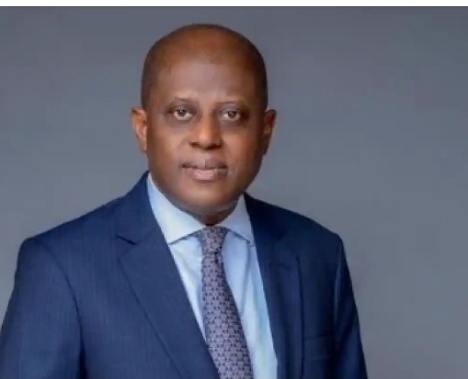





General Gowon At 90: My Reminiscing, By Nathaniel Ikyur
Yakubu Gowon, a retired General of the Nigerian Army was the youngest Head of State (1966-1975) that Nigeria had produced. He needs no introduction. He was, and is still loved by many. And here’s an account of my first hand ‘close contact’ with him.
In 1973, while preparing for our promotional examinations from Primary 1 to primary 2, at LGEA Primary School, Uchi-Mbakor, present day Tarka local Government Area, (then in old Gboko local government area), our former Headmaster, Late Gbakaan Aminde announced to the students and teachers, during one of our assembly gatherings, the state visit of the Head of State to Benue-Plateau State, Gen. Yakubu Gowon. The school was thrown into excitement.
We were told the Head of State would pass through our school, situated by the road side along Makurdi-Gboko highway to visit the then Tor Tiv, HRH, Gondo Aluor now late in his palace in Gboko. To my little mind, i thought he would stop by and shake our hands. All students were to line up along the road in front of our school in our blue shorts and white shirts uniforms. It was a sight to behold.
One of the teachers, i can’t remember his name, was asked to teach us this line:
“General Yakubu Gowon, welcome to Benue-Plateau State.” We were to be waving in the air.
As early as 7am on the day of his visit, we came prepared. As soon as the headmaster and teachers were convinced that the population of students was enough, we started repeating the line waving in the air. We chorused this in sync, excitedly. The rendition was that of a mass choir in the presence of the King.
By noon, both teachers and students were fatigued due to long hours under the scorching sun. The headmaster then dismissed us for a short break but directed us to resume immediately. We did and came back early and lined up.
Some pupils and even teachers were still struggling to fix themselves up on the line when at about 4pm or there about, we heard the presidential convoy of Peugoet cars blaring with sirens from a distance. We all rushed into line and began our routine of repeating the line: “General Yakubu Gowon, welcome to Benue-Plateau State.” We waved alongside.
In a flash, the Head of State and his convoy passed without even slowing down. I’m not sure he ever noticed that the school pupils had been in the sun for almost a whole day. The speed with which the comvoy passed without acknowledging our presence made me think we didn’t matter.
Fast forward: And so, many years after, i trained as a journalist, working with Vanguard newspaper in Abuja. General Gowon who was toppled in 1975, fled the country before he eventually returned to Nigeria.
During one of my routine assignments at Transcorp Hilton, Abuja, i ran into our former head of state at the entry foyer of Transcorp Hilton. This time, no convoys. No heavy security details around him. He was just alone, with his orderly. They were waiting for his driver to come forward with his car. I was excited to ‘catch’ our head of state so easily.
As I moved closer to him, the detail closed in on me but the fatherly wave to him saved me. I greeted him respectfully. He asked me who I was. I told him and went ahead to narrate how we stood in the sun for almost a whole day waiting for him in 1973. I told him i was, like many then, were disappointed that he didn’t even slowed down to acknowledge our well rehearsed welcome message and hand wave.
Gowon smiled and tapped me at the back saying, “young man, you did it for me. They will also do it for you tomorrow.” By this time, his car had parked and the orderly had opened the door as i walked with him to his car. He waved again smiling. I don’t know what mat have been going through his mind.
There were no phones then so I didn’t have the opportunity to take any selfies with the former president.
From this ‘close’ contact and a watching him from a distance, Gowon played his part for the sake of Nigeria. We should strive to do our part, building on what he and our forefathers had lived and fought for. Such is the life of this gentleman soldier, politician, academic, father, grand father and great grand father.
Your Excellency sir, as you mark your 90th Birthday, I join thousands in Nigeria and around the World to wish you many more years filled with joy and happiness.
Happy Birthday General Yakubu Gowon.
Ikyur wrote in from Makurdi, Benue State.