

We Won’t Allow INEC Chairman, Prof Amupitan, To Conduct 2027 Elections – Nigeria’s Opposition Parties

Nigeria’s Opposition Political Parties, at a crucial National Summit on Saturday April 25, in Ibadan, Oyo State capital passed a vote of no confidence on the chairman of the Independent National Electoral Commission (INEC), Professor Joash Amupitan.
In a communique emanating from the Summit, the opposition parties, including the People’s Democratic Party (PDP), the African Democratic Congress (ADC), the Labour Party (LP) and others, accused the INEC Chairman of having shown bias and partisanship in favour of the ruling All Progressives Congress (APC).
They insisted that Professor Joash Amupitan should not conduct the 2027 general elections “as Nigerians across board have lost confidence in him and his capacity to guarantee the required neutrality to deliver free, fair, transparent and credible elections.
“His continuous stay in office is vexatious and capable of triggering wide spread crisis in our nation.”
They called on the National Assembly to immediately review the Electoral Act, 2026 to remove all sections that threaten the sanctity and integrity of the elections and run counter to constitutional provisions.
Text of the communique is reproduced hereunder:
IBADAN DECLARATION
Communiqué issued at the end of Opposition Political Parties National Summit held on Saturday April 25, 2026 in Ibadan, Oyo State.
Participating Opposition Parties in Nigeria, after an extensive deliberation on the collective threats that we face and the existential challenges facing our country under the stranglehold of the oppressive and anti-democratic All Progressives Congress (APC) and given the need for urgent, collective action to rescue our nation and the destiny of over 200 million compatriots, hereby resolve as follows:
1. That we shall resist all machinations by the APC to foist a one-party State on Nigeria and fight for the survival of multi-party democracy in our country.
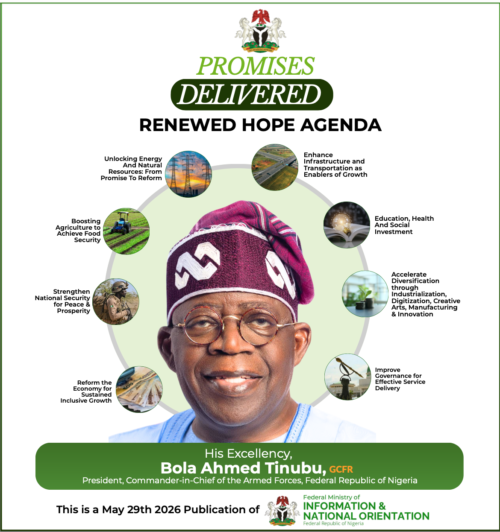
2. That despite the onslaughts and manoeuvrings of the ruling party, the APC to impose President Bola Tinubu as the sole Presidential candidate in 2027; we shall field candidates and contest the 2027 Presidential and other elections.
3. That we shall work towards fielding one Presidential Candidate for the 2027 elections, which shall be agreed and supported by all participating opposition parties to rescue our nation and her long suffering masses.
4. That the INEC Chairman, Prof. Joash Ojo Amupitan, having shown bias and partisanship in favour of the ruling APC, should not conduct the 2027 general elections as Nigerians across board have lost confidence in him and his capacity to guarantee the required neutrality to deliver free, fair, transparent and credible elections. His continuous stay in office is vexatious and capable of triggering wide spread crisis in our nation.
5. That the National Assembly should immediately review the Electoral Act, 2026 to remove all sections that threaten the sanctity and integrity of the elections and run counter to constitutional provisions.
6. That all leading politicians that are being detained or harassed on bailable offences be released with immediate effect and allowed to exercise their fundamental rights of participation and inclusivity as Nigerians.
7. That we consider the recent guidelines released by the INEC as obstacles, deliberately engineered to impose conditions and deadlines on the opposition parties. We therefore demand that INEC extends the deadline for primaries till the end of July, 2026.
8. The Summit commends Nigerians for their resilience and readiness to work with Opposition Parties to free our nation from State capture.
9. The National summit of Opposition Political Parties thank the Oyo State Governor Engr. Seyi Makinde and the people of Oyo State for hosting the epochal event.
SIGNED:
Chairmen of Participating Opposition Parties.


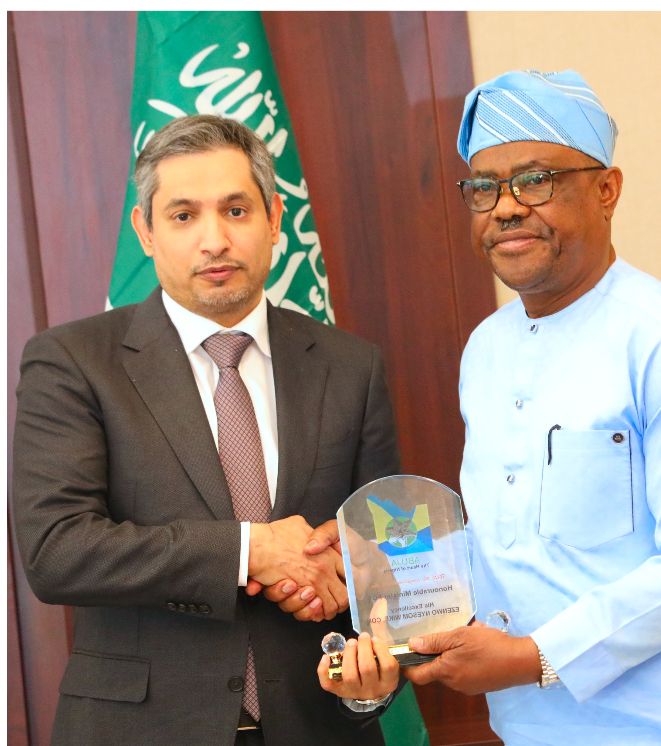
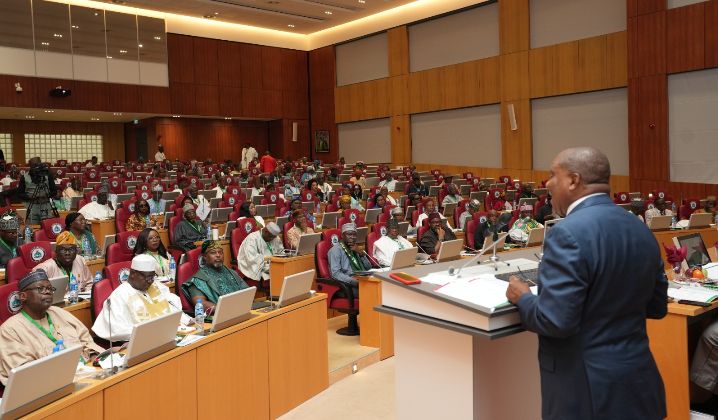 The Head of the Civil Service of the Federation, Mrs. Didi Esther Walson-Jack, appreciated AANI for convening the forum and commended its leadership for sustaining a platform for strategic national dialogue.


Religious Dogmatism And Poverty Of Rationality In Nigeria, By Abdulkarim Abdulmalik
Nigeria, despite its aboundant human and natural resources, remain webbed in crises that defy logic and reason. Many factors are responsible for the evitable narrative.
Two of these factors contributing to this paradox are religious dogmatism which is an uncompromising adherence to beliefs without critical examination and its companion, the poverty of rationality. Together, they form a silent but potent force shaping public discourses, governance and everyday life in ways that hinder national development.
Religion, in itself, is not the problem. Indeed, faith has historically played a vital role in providing moral guidance, social cohesion and a sense of purpose for the overall good of humanity. Nigeria’s two major religions – Islam and Christianity – preach values of justice, compassion and accountability. However, when religious adherence becomes rigid, intolerant and resistant to reason, it ceases to be a tool for enlightenment and instead becomes a barrier to progress.
Religious dogmatism manifests in many forms across Nigeria. It is seen in the refusal to question religious authorities, even when their teachings contradict common sense or public interest. It appears in the blind acceptance of miracles over medicine, prophecy over policy and divine intervention over civic responsibility. It is evident when citizens prioritize religious identity over national unity or when leaders exploit faith to manipulate emotions and evade accountability.
This culture has serious implications for rational thinking. Rationality requires the ability to question, to analyze evidence and to make decisions based on logic and facts. Yet, in a society where questioning religious narratives is often seen as sacrilegious, critical thinking is stifled. It becomes an inmate in the prison of rational deficit.
Young people are discouraged from asking “why” and are instead trained to accept “what is” without scrutiny. The result is a populace that is easily swayed by rhetoric, misinformation and emotional appeals.
One of the consequences of lack of this rational or failure is the proliferation of misinformation and conspiracy theories. From health crises to political events, many Nigerians rely more on religious interpretations than on scientific evidence. During disease outbreaks, for instance, some communities have rejected medical advice in favor of spiritual remedies, sometimes with tragic outcomes. This not only endangers lives but undermines public trust in institutions and the experts managing them.
Bearing in mind that religious dogmatism often fuels division and conflict, Nigeria’s history is replete with instances where religious differences have escalated into monumental violence.
Although the causes of such conflicts are complex and multifaceted, the role of rigid belief systems could not be ignored. When individuals are taught that their faith is the only truth and all others are false or inferior, tolerance becomes difficult, and coexistence becomes fragile. Peace becomes wishful.
In the political arena, the intersection of religion and governance further complicates matters. Many politicians would, in their campaign, invoke religious sentiments to gain support, framing policy debates in moral or spiritual terms. This does not only create distractions from substantive issues but also polarizes the electorate. Instead of evaluating leaders based on competence and performance, many voters are influenced by shared religious affiliations or endorsements from clerics.
Education, which should be a breeding ground for critical thinking, is not immune to these challenges. In some cases, curricula are shaped by religious considerations that limit exposure to diverse perspectives. Teachers may avoid controversial topics for fear of backlash, while students are rarely encouraged to engage in open debate. Without a strong foundation in critical inquiry, the future generations risk perpetuating the same cycle of dogmatism and irrationality.
The economic implications are equally significant. A society that undervalues rationality is less likely to innovate, adapt or compete in a globalized world. Investment in science, technology and research suffers when decision-making is guided more by belief than by evidence.
Entrepreneurs may shy away from risk, while policymakers may ignore data-driven solutions in favor of populist or measures that appeal to religious sentiments. Over time, this erodes productivity and stifles growth.
Granted that it would be unfair to paint all religious expressions in Nigeria with the same brush, there are numerous faith leaders and communities actively promoting dialogue, education and social development. Interfaith initiatives, such as those led by journalists and civil society organizations, demonstrate that religion could be a force for unity and progress when approached with openness and sincerity.
The challenge, therefore, is not to eliminate religion from public life, but to recalibrate its role. Faith must coexist with reason, not replace it. Religious teachings should encourage inquiry, compassion and critical engagement. Clerics have a responsibility to guide their followers not only spiritually but also intellectually towards fostering an environment where questions are welcomed and evidence respected.
Government and educational institutions also have a crucial role to play. Policies must prioritize scientific literacy, critical thinking and civic education. Schools should be safe spaces for dialogue, where students can explore ideas without fear of condemnation. Media organizations, too, must uphold standards of accuracy and objectivity, resisting the temptation to sensationalize religious narratives.
Ultimately, the future of Nigeria depends on its ability to balance faith with reason. A society that embraces and harnesses the moral strength of religion as well as the problem-solving power of rationality. But if dogmatism continues to overshadow critical thinking, the nation risks remaining trapped, gyrating in a cycle of underdevelopment and avoidable division.
The time has come for a national conversation: one that challenges entrenched beliefs, promotes intellectual curiosity, and redefines the relationship between religion and reason. This way, Nigeria would be on the match to unlocking its full potential and thus, charting a path toward sustainable development and lasting peace.
– Abdulkarim Abdulmalik is a journalist and Chairman, Governing Board of the Guild of Interfaith Media Practitioners Nigeria (GIMP-Nigeria). He can be reached on: info@interfaithmediaguild.org; nowmalik@gmail.com