The All Progressives Congress (APC) has said that those who could not cause confusion and disrupt the recently held national convention of the party are behind the formation of reformed APC (rAPC).
In a statement today, Friday, the APC National Publicity secretary, Bolaji Abdullahi said that while investigation is ongoing to establish the true colour of those behind it, preliminary investigation showed that those behind the rAPC are not the core members of the party.
“Having failed to scuttle the National Convention as was their original plan, they now resort to this subterfuge as a way of achieving the pre-determined end of causing confusion.
“As a matter of fact, we doubt that these individuals parading as leaders of the so called faction are actual members of our Party. We are currently investigating their true membership status within the Party.”
Bolaji said that while the party leaders will continue to monitor developments in this respect, “we will not hesitate to take lawful actions to defend the unity of our Party and protect the sanctity of its identity.
“We are currently reviewing the action of this so-called faction in order to determine if any aspect of the Party’s constitution has been breached with the connivance of any of our members.
“For those members who have genuine grievances, we want to assure them of the commitment of the new leadership of the party to address those grievances as quickly as possible in a manner that ensures that justice is done to all.”
Bolaji stressed that there is no faction in APC and even as he declared the action by the rAPC members as mischievous and ill-advised
It will be recalled that on Wednesday, July 4, a group of individuals announced itself as ‘Reformed All Progressives Congress (APC)’ at a press conference held in Abuja.
The Supreme Court has finally laid to rest, the trial of a Senate President, Dr. Bukola Saraki, on assets declaration and sundry charges instituted against him before the Code of Conduct Tribunal, describing the trial as “equivalent to judicial equivalent of a forensic somersault.”
A five-man panel of the apex court, led by Justice Dattijo Muhammad unanimously upheld Saraki’s appeal, by dismissing the remaining three count charges, declaring that the evidence led by the prosecution is hearsay.
In a lead judgment today, Friday, Justice Centus Nweze upheld Saraki’s appeal and dismissed the Federal Government’s appeal. He held that the Court of Appeal was wrong to have restored three out of the 18 count charges earlier dismissed by the CCT when it agreed that the evidence led by the prosecution was hearsay but went ahead to isolate three of the counts as having been proved.
Justice Nweze quoted a part of the Court of Appeal’s judgment where it held that “the prosecution failed to call those who have direct knowledge of the facts sought to be proved, to testify.”
The judge faulted the Court of Appeal’s turn around to restore three of the counts based on the evidence it had declared as hearsay.
The Danladi Umar-led CCT had, in June last year, terminated the trial upon an application by Saraki, by dismissing the entire 18 counts preferred against the Senate President.
The CCT’s decision was based on the grounds that the prosecution, with its four witnesses and 49 exhibits tendered, only led hearsay evidence which could not be the basis to link Saraki to the 18 countcharges preferred against him.
However, the Court of Appeal in Abuja ruling on December 12 last year, in an appeal filed by the Federal Government against the decision of the CCT, restored three out of the dismissed 18 count charges and ordered Saraki to return to the CCT to defend the three charges.
While Saraki had appealed to the Supreme Court against the part of the Court of Appeal’s decision restoring three of the 18 counts, the Federal Government had cross-appealed against the part of the decision affirming the tribunal’s dismissal of the rest of the 15 counts.
Former Nigeria’s Vice President and Peoples Democratic Party (PDP) presidential aspirant, Atiku Abubakar has described the victory of Senate President, Dr. Bukola Saraki at the Supreme Court today, Friday, as the real bastion of equity and good governance in any society.
“The position of the judiciary further affirms the fact that indeed, the judiciary is the last hope not only for the common man, but for all men, and the real bastion of equity and good governance in any society.”
In a statement by his Media Office in Abuja, Atiku said that it was clear to all men of goodwill and discerning Nigerians that the charges for which the Senate President was serially arraigned before the Code of Conduct Tribunal (CCT), would not stand rigorous judicial examination but was more of politics.
He commended the Supreme Court jurists for the unanimity of their judgment.
“I believe that this judgment has given hope to Nigerians in their quest in seeking redress on grounds that the judiciary will always be fair and firm.
“I am a firm believer in the rule of law and I will never forget the role the judiciary played in emboldening me to continue with my efforts to provide good and quality leadership for Nigeria and Nigerians. The multiple suits on corruption which I won in my days of trial as Vice President will never be forgotten in a hurry. It was an independent, firm and fair judiciary that made it all possible.”
According to him, this victory is not only for Saraki but for the Senate and the entire National Assembly which has been facing challenges of legitimacy and intimidation arising from a not too cordial relationship with the executive arm of government.
On the issue of Governor Ugwuanyi, the PDP presidential aspirant said the Court’s affirmation of the legitimacy of his election, showed that he is indeed the true choice of the people of Enugu State.
Atiku noted that all through the case lasted in the Courts, the Governor was not distracted but continued to passionately execute people-oriented projects in the State which has significantly improved the lives of the people of the State.
He charged him to continue on the tradition of excellence for the good of the people of Enugu State, and the PDP, in whom the people have for many years invested their political future.
Atiku urged both Senate President Saraki and Governor Ugwuanyi to continue to serve the people of Nigeria honestly as they have been doing in their various capacities bearing in mind that Truth is Constant and Justice, no matter how long, ultimately would be served.
The former Vice President praised the Judiciary for standing up to the truth and not leaving justice to the whims and caprices of those in power.
He said that by its courageous and principled stance, the Judiciary has further enhanced it place, role and relevance in consolidating the nation’s democracy.
The rapidly evolving technology and the changing media landscape have reshaped communication mechanism to be instant, participatory, and global in scale. This modern communication platform has afforded large majority of people to communicate effortlessly with wider audience. Developing events around the world can now be tracked on the go. Social media has brought a lot of developments to humanity. It enables leaders and the leads to be closer to each other, making it possible for the citizens to have direct conversation with their leaders without third parties. It increases participation of the masses on national issues, and given voices to voiceless people. But as beautiful and laudable as these may sound, something terrifying is undermining this monumental paradigm shift without quick fix in sight, and Nigeria remains on edge as the country preparing for another important election, next year.
There is no doubt that the increasing negative sides of social media seem to be outweighing its benefits. Recent developments around the world have proved that social media has assumed a destructive dimension and threatening the very humanity it came to improve.
The unending controversies surrounding the U.S election that ushered in Donald Trump as President have actually unraveled the ugliest side (disinformation) of social media. The alleged Russia meddling in the U.S election through the social media platforms is an eye-opener for the rapidly growing virtual community of universal outrage. The revelation of Facebook data scandal with a research firm, Cambridge Analitica gives more insight into the increasing adverse role of social media that was thought to be a tool that would help strengthening democracy, enlightening the populace, imparting knowledge and uniting the world. Social media is now just doing the opposite.
From America to Europe to Africa, communities are being fiercely divided along ethno-religious, socio-political, and racial lines. Politics is becoming brutal, nasty and cruel. Part of the reason is that, by spreading outlandish falsehood and denigrating statements on social media, aggravating angers and, in some cases induce mob attacks and extremism.
However, the evolution of fake news, false news, post-truth, or disinformation (whatever you call it) did not start today. It has been in existence since immemorial, but technology exacerbated it. As more and more people are gaining access to the internet they become purveyors of information and disinformation with the supersonic power of social media. Although, the term ‘fake news’ has not been scholarly defined. But it is generally described as completely false information, photos or videos purposefully created and spread to confuse, misinform the general public in order to influence their judgments.
The current momentum in the debates of the destructive power of social media is as a result of its practical devastating experiences of countries and communities around the world. Social media which was seen not long ago as a nemesis for rogue, unpopular and authoritarian regimes and corrupt officials is now turning out to serve their very interests. Rogues and fantastically corrupt individuals, some of them who had been displaced and disgraced are being currently pushing to the frontline on the strength of fake news spiraling on social media. Donald Trump ascension to the presidency is a reference point in this regard. One of the thousands of fake news reported to have boosted his electoral chances was the Pope Francis’s adoption of his candidacy. This story reached a vast majority of Americans and beyond, and no doubt influenced their electoral judgments.
In Europe, fake news on social media is now aggravating the increasing anger of the rightwing extremism. In Asia, fake news influenced major political events in Southeast Asia last year. From Indonesia’s fake news of biological attack by Beijing to fake elections reports to Myanmar’s–Rohingya crisis, the spread of misinformation and disinformation have been used to bolster hate speech, stereotypes, and propaganda. In Kenya, the recently conducted election witnessed gradual institutionalization of fake news and post-truth as an effective instrument of political manipulation in Africa.
Also, in Nigeria, the proliferation of fake news on social media has reached an unprecedented level, putting the country in a precarious situation. This trend gained prominence during the build-up to the 2015 elections. The reported demise of the then-presidential candidate, Gen. Muhammadu Buhari in London became a hitting point for the then governing party, PDP. The phenomenon assumed a frightening dimension immediately after the inauguration of APC government in may 2015, even as the recently proscribed Biafra agitators quickly seized the opportunity to advance their secession agenda. Ever since then, the country continues to bloom in the vicious circles of ubiquitous disinformation.
In September last year, a well-crafted fake UN speech of President Muhammadu Buhari was circulated on social media even before the President arrived in New York for the 72 sessions of United Nation General Assembly meeting.
Even Mark Zuckerberg, the Facebook CEO, who had earlier denied that his platform abetting fake news or hoaxes is now adjusting to the reality as more and more mountain of practical evidences continue to emerge from, and around the world.
No one is immune
Everyone who has read news on social media would probably fall victim to fake news. Even the mainstream media are not spared. In an attempt to remain relevant in the face of the obvious threat posed by social media to their very survival, they fall victim to fake news. For example, some years ago, a national daily flashed a fake picture lifted from social media on their front-page that contained foreign mercenaries which the paper described as U.S marine fighting Boko Haram in Nigeria.
Also, just few days ago, the Nigerian media including the self-acclaimed reputable ones were awash with bogus interview granted by the North Central Zonal Chairman of Miyetti Allah, where he was quoted to describe the recent attack in Jos, Plateau State as retaliatory for the killings of large number of their cattle in the state. It was just the latest hoax that exposes the vulnerability and ethical question in the Nigeria media. A Fortnight ago, another purported press release by the alleged national president of Fulani Nationality Movement, (FUNAM) got circulated on social media platforms.
The frightening aspect of fake news on social media is that, while it travels faster than the truth, the vast majority of people take them as prophetic revelation especially when it serves their very interests without questioning the validity. Far from the truth. Fake news is a poison that divides society, blinds the mind, reinforces sentiments and plunges society into unending conflicts that hinder development and create unstable global community.
Recently, British Broadcasting Corporation, BBC chronicled how false or fake news fueling herders-farmers unending conflicts in Nigeria that has resulted to the death of hundreds of people.
Nigeria remains on edge
As Nigeria preparing for another very important election come 2019, the chances of election rigging appear very slim with the introduction of card reader and permanent voter card. But trust Nigerian politicians, they are learning fast and have taken a cue from U.S terrible experience. They have found another means of manipulating electorates in their favour. Youths are being recruited, equipped with internet devices to syndicate trolls and fake news on social media, while professional bodies are equally being sponsored to engage in ominous political activities, all for the purpose of weakening the electoral chances of their political foes.
There is a dear need for concerted efforts to stem the rage of this dreaded phenomenon on social media. Though, the giant social network platforms (Facebook, Google, and Twitter) had earlier promised to do something since the U.S election controversy ensued. But it seems little has been done for the past almost two years, as the problem continues to rear havoc across the world. So they cannot be relied on to solve the problem. But something urgent needs to be done before it is too late.
What needs to be done?
As we have seen, it is unarguable that fake news proliferation on social media is one of the biggest political problem facing leaders around the world. It is an existential threat to world peace. Unfortunately, there is no known universal antidote to the rapidly expanding monstrous firestorm. But nations around the world are responding to the challenge in line with their respective social realities. While some are using technology to counter the spread of fake news, others are using legislation to stem the tide of the poison, yet some others are engaging in massive enlightenment to confront the problem. Recently, Germany enforced law that forces social media companies, such as Twitter and Facebook, to promptly remove content from their websites deemed hate speech or fake news, or face fines of up to 50 million euros. In Czech Republic, a special task force unit has been established to fight fake news online. In Indonesia, cyber army unit has been established to fight the menace. U.S is considering a comprehensive framework to address the challenge.
However, it is obvious that one technique is not sufficient to curb the challenge posed by social media, but a combination of many would be very useful.
Several efforts in the past to regulate the use of social media in Nigeria have failed woefully because of the insincerity of the country’s lawmakers and the fear of gagging free speech. As it is now, Nigeria needs to look inward and sincerely develop a holistic approach to confront this existential threat. Collaboration with reputable online news publishers association like GOCOP and others is a good place to start from. Spiral official response to damaging fake news can do the magic of defusing it. Massive enlightenment of citizens on how to identify fake news online and its negative consequences should be considered, while the establishment of a special unit to track the sources of hate statements and fake news on social media and alert the public is imperative. Special laws that accommodate inputs from all patriotic and reputable stakeholders should be enacted and effectively enforced by an independent and impartial body to checkmate the spread of all forms of disinformation. Above all, operations of regulatory bodies of the media should be strengthened to effectively enforce the media code of ethics in the country. If this threat is left unchecked in Nigeria before the forthcoming election, then the country should be preparing for its’ doomsday. [myad]
There is also a very strong link between corruption, peace and security. Unfortunately, corruption is everywhere; at all levels of government, and every stratum of our society. Without doubt, corruption constitutes an unusual and extraordinary threat to the well-being, national security, and economy of Nigeria.”
These were the exact words of President Muhammadu Buhari when he signed Executive Order No. 6 today, Thursday, to further strengthen institutions on curtailing and restricting illicit activities in the country.
The President who declared national emergency on corruption, asked institutions, agencies and individuals to rise up and fight to reverse the negative culture of pilfering public funds, warning that such agencies and individuals risk plunging the country into turmoil.
“Like I have said many times, if Nigeria does not kill corruption, corruption will sooner-or later kill Nigeria.
“It has thus become necessary to re-kit and re-tool our arsenal to be able to effectively tackle corruption’s perilous counter-attack against the Nigerian State. Accordingly, the Federal Government of Nigeria has declared a national emergency to deal with that crisis.
“In this regard, the Federal Government of Nigeria in line with its anti-corruption strategy seeks to ensure that justice is not defeated or compromised by persons involved in a case or complaint of corruption.”
The President said the viability and continuous well-being of the nation faces enormous threat from corruption, pointing out that, “Whilst there are many reasons why Nigeria has been struggling; regrettably, the most unfortunate cause of great disparity between Nigeria’s wealth and its poverty is endemic corruption.’’
“It is in consequence of this that I have decided to issue the Executive Order No. 6 of 2018 to inter alia restrict dealings in suspicious assets subject to investigation or inquiry bordering on corruption in order to preserve such assets from dissipation, and to deprive alleged criminals of the proceeds of their illicit activities which can otherwise be employed to allure, pervert and/or intimidate the investigative and judicial processes.
“Or for acts of terrorism, financing of terrorism, kidnapping, sponsorship of ethnic or religious violence, economic sabotage and cases of economic and financial crimes, including acts contributing to the economic adversity of the Federal Republic of Nigeria and against the overall interest of justice and the welfare of the Nigerian State.”
President Buhari said that the real battle against corruption will be heightened by the strengthening of policies and institutions, noting that the Administration had achieved some milestones with multi-sectoral reforms on anti-corruption including the enforcement of Treasury Single Account (TSA), strict implementation of the Bank Verification Number Policy and Signing of the Open Government Partnership.
“From available records, the aggregate value of funds involved in some on-going prosecution of high profile corruption related cases stands at N595,409,838,452.25k.
“This amount is in excess of the N500 billion approved for Social Investment Programme in the 2018 Budget, which sum would be applied to cater for home grown school feeding programme, government economic empowerment programme, N-Power Job Creation Programme, Conditional Cash Transfers, etc. Cumulatively, scores of millions of Nigerian citizens would benefit from those programmes.
“To further put things in perspective, the highest appropriation in the 2018 Budget in the sum of N344 billion went to the Ministry of Works for construction and rehabilitation of several roads nationwide.”
The President listed roads that will benefit from monies recovered from corruption cases to include: Lagos-Shagamu-Ibadan Dual Carriageway; Ilorin-Jebba-Mokwa Bokani Road; Abuja-Abaji Road; Kano–Maiduguri Road; Enugu-P/Harcourt Dual Carriageway, Odukpani-Itu-Ikot Ekpene Road; Sokoto-Tambuwal-Jega-Kontangora- Makera Road; Dualisation of Obajana to Benin; Calabar-Ugep-Katsina-Ala Road; Onitsha-Enugu Dual Carriageway; Abuja-Kaduna-Zaria-Kano Dual Carriageway; Benin-Ofosu-Ore-Ajebandele-Sagamu Expressway Phase III and Kontagora-Bangi Road.
He said that all the roads are expected to be either constructed or repaired with equivalent of about 57% of the monies recovered by some of the on-going high profile corruption related cases.
In his remarks, the Attorney General and Minister of Justice, Abubakar Malami, said the proceeds of corruption had been used to undermine the growth of the economy, and heighten the insecurity in the country.
Malami noted that the fight against corruption would be difficult except policies and institutions were strengthened.
The three top causes of problems and thus hospital admission for newborns in Nigeria are prematurity, infections and asphyxia. I have two biological daughters and both are part of the newborn morbidity statistics in Nigeria.
My elder daughter was delivered normally by Dr. Yinka Gbajumo at term, but on day 2 she became jaundiced and we were whisked off to Lagos University Teaching Hospital. My second was slightly preterm at 32 weeks; she was, and still is the stronger of my two daughters. We didn’t move hospitals in her case, but we did stay longer than normal to allow her grow a bit more; that’s where her own story ended.
My first has a story that had more impact on me and left me quite emotional. As the jaundice deepened, she was admitted into a very efficient high tech neonatal (or special care baby) unit for further investigations and phototherapy. I was left homeless on the corridor in LUTH. I stayed with family friends- the Kusamotus- and went to the hospital four times a day. Mothers were not allowed inside the unit. The nurses would line us up and yell orders ‘wash your breast’ which we would all dutifully do. We would then sit on the most uncomfortable wooden benches on our sore stitches and express breast milk into labeled cups which we handed over to the nurse through a window, all in full view of each other. Woe betide you if your breasts weren’t gushing like the woman next to you.
Aside from the feeling of inadequacy, be sure you would feel another jab in your heart when the sister collects your cup and eyes you with disdain, “is that all you can express?” She won’t excuse the fact it’s your first, the hormones are still upside down in you and the feeling of loss you are dealing with whilst she has your baby. You couldn’t even clearly see through the windows let alone touch your child. Happily, both my daughters quickly healed and we were discharged. I would soon “separate” from my elder one again. Although I am grateful none of them ended up as part of the data in the top three causes of death in Nigerian babies, I never forgot my scars from that first separation.
Years later, during my training in the U.K, I discovered that my experience in LUTH is not how it should be; it was the experience of a developing world mother. In the UK, mothers have an allocated comfortable room next to baby unit and are allowed into the intensive care areas as long as they are properly cleaned and covered. Researchers have also found a positive correlation between mothers touch and early bonding in healing sick babies on such units. As I gained experience, I realized that the strictness of neonatal nurses is global and that no unit can function without a good set. But I also came to realize their firmness is not coming from meanness. It comes from placing the wellbeing of the child first.
One of the first visitors I received after my husband was sworn in was Dr. Taslim Lawal, the only Consultant Paediatrician at the Federal Medical Centre, Birnin Kebbi. Understandably, he came to see me as a colleague, confidently armed with his wish list; top of which was the need for a mother’s room. He told me about his growing special care baby unit which sometimes had up to 18 babies spending anything from days to months on admission. Coincidentally the unit was set up by an old teacher and registrar of mine from Zaria, Dr. Audu. It was the same Dr. Audu who looked after my second baby when she was born preterm. There was no provision for the mothers with babies in the SCBU. They spent their days on the corridor, come rain, come shine. For me, it was an immediate Deja vu. I knew I had to do something to ease the plight of such mothers.
We drew up plans, costed and the hospital management allocated an ideal area for the building almost immediately. But we were slow and I was soon distracted by many other needs. In September 2017, I got the green light to host my colleagues for the 11th Annual Meeting of the Nigerian Society of Neonatal Medicine; this was my trigger and finally, we started building.
Last week, the mother’s room was commissioned at the Federal Medical Centre, Birnin Kebbi by His Excellency, Senator Abubakar Atiku Bagudu. The scissors’ tray was held by a 4 year-old who spent 6 months in the unit whilst her mum slept mostly on the corridor. My colleagues at the commissioning commended the level of comfort. One said “you have gone all out” I had to. Physician was finally “healing thyself”.
The mothers room is a gift to encourage the doctors and nurses on the unit. It is a gift to make mothers more comfortable. It is a gift to let sick babies have the love and support of a mother nearby. It is a gift from my heart, to wipe out my scars. I pray that my gift will ease some of the trauma of separation our mothers face as well as heal our babies in Kebbi faster.
Thank you Dr. Taslim for making me give this therapeutic gift; thank you NISOMN for the final push to start the building; thank you, Your Excellency my better half for your unending support; most of all thank YOU God for all of Your blessings…none of which I can ever deny.
Dr. Shinkafi-Bagudu, a Consultant Paediatrician and wife of the Governor of Kebbi state wrote in from Birnin Kebbi.
Nigeria’s widespread corruption, which has been eating the eco-system like termites, met on audacious response from President Muhammadu Buhari on Thursday afternoon with the signing of a new Executive Order No.6 on preservation of assets connected with corruption. President Buhari holds the view that after three years in office it was another good time to further review the achievements of the administration and set goals in a key policy area, the anti-corruption war.
On the basis of the re-appraisals made, the President said that it had become “necessary to re-kit and
re-tool our arsenal to be able to affectively tackle corruption’s perilous counter-attack against the Nigerian State.” As a result, the Federal Government of Nigeria had “declared a national emergency to deal with that crisis.” President Buhari came into power in 2015 vowing to fight corruption which had been undermining the country’s economy, politics, governance and entire society.
The government is of the understanding that corruption is one of Nigeria’s major challenges; one that had obstructed the country’s drive to realize its full potentials. Most citizens believe that corruption is holding the country by the jugular and must be tackled if we are to make progress and make meaning of our lives. Since the war against corruption unleashed by President Buhari took hold, significant strides had been achieved. Vehicles of fraud and embezzlement have been stopped dead in their tracks; enabled with the implementation of the Bank Verification Number policy and signing the Open Government Partnership and rebuilding the anti-corruption institutions, and generally the country’s highly improved corporate governance.
Fifty thousand ghost workers were deleted from monthly payroll, saving an annual N200 billion in payments; ghost pensioners have in their thousands been fished out and with vigour and precision, millions of bank accounts with suspicious cash deposits are being investigated. A large number of senior public officials are being investigated and a huge sum of money including buildings, estates, ships and automobiles have been seized. Former Head of State, Gen. Sani Abacha’s money, USD326 million was recovered and will be distributed to the poor.
The Buhari administration has so far investigated and jailed ex-governors, ministers, generals and a large number of public officials. All of these efforts are building up to an ecosystem that is pro-poor, people oriented, clean, transparent and one that doesn’t tolerate corruption. Based on all these, Nigeria’s anti-corruption war under President Buhari, striking and visible as it is, has aroused interests both locally and internationally. The President is currently serving as the Champion of Anti-corruption for the entire continent, selected by his peers in the African Union.
It is an established fact that, all over the world, deep-rooted corruption is always difficult to deal with. It is mostly hidden. It is hard to detect, and as we have seen in dealing with the world’s economic powers, they love, cherish and nurture it in countries like ours by holding onto stolen assets against all efforts to retrieve them. But there are signs that things are
changing.
Every day, harsh words against the government are all that the President gets from Wadata House, the Head Office of the opposition Peoples Democratic Party, PDP, because their leaders, as do some other Nigerians are already feeling the heat. To say the truth, I am not sure if there are many of our citizens who expected any PDP support for the President in his war against corruption.
In spite of all the achievements recorded, you still hear complaints that the anti-corruption isn’t as dramatic as Nigerians wished it to be. Some want the country to do it the Chinese way. Others say the government is not arresting the powerful people.
For the Buhari administration, concern lies in the fact that corruption has become a big problem because investigation, prosecution and trial in courts are made harder by persons accused of crimes relating to it. They are using the enormous resources in their possession to thwart the system. The President’s view is that, it is only a clean Nigeria that can attract foreign investment, free money for more of the capital projects the administration is executing and creating jobs for our teeming population of young men and women.
The President says in the interest of justice and the welfare of the Nigerian state, persons accused of crimes relating to corruption must be prevented from utilizing the proceeds and dissipating such assets suspected to be proceeds of corruption (or associated with corruption) pending final determination of any investigation or legal actions related to such assets or owners thereof.
In signing the new Executive Order, he said: “I’m bound to restrict dealings in suspicious assets…to preserve same in accordance with the rule of law and with guarantee and safeguard of fundamental human rights.” A person who feels that his rights are infringed is free to go to a high court. To understand the threat posed to our democracy and economy by unchecked access to stolen or illicit funds, the President cited the large volume of cash government is fight to retrieve through the legal system.
The aggregate value of those funds involved in some of the on-going prosecution of high profile corruption cases is N595,409,838,452.25k. This amount is more than what has been budgeted this year for the all-important Ministry of Power, Works and Housing (N344 billion) and social Investment (N500b), intended for millions of Nigerians through programs such as the N-Power Graduate Employment Scheme, the Conditional Cash Transfer, CCT to the poorest of the power and GEEP (Government Economic Empowerment Programme).
The 2018 budget which has made the highest appropriation ever in the sum of N344 billion to the Ministry of Works is to be spent on the following roads:
– Lagos-Shagamu-Ibadan Dual Carriageway
– Ilorin-Jebba-Mokwa-Bokani Road
– Kano-Maiduguri Road
– Enugu-Port-Harcourt Dual Carriageway
– Odukpani-Itu-Ikot-Ekpene Road
– Sokoto-Tambuwal -Jega-Kontagora-Mokwa Road
– Dualization of Ojabana to Benin Road
– Calabar-Ugep-Katsina-Ala Road
– Onitsha-Enugu Dual Carriageway
– Abuja-Kaduna-Zaria-Kano Dual Carriageway
– Benin-Ofosu-Ore-Ajebandele-Sagamu expressway
phase III
– Kontagora-Bangi Road
The amount of money voted this year for these roads therefore translates to about 57% of the monies recovered by the on-going high-profile corruption cases. The defendants in these cases have unrestricted access to these funds using it as a war chest. They have used it to stall administrative and judicial processes. No gainsaying that it is impossible to achieve any meaningful progress in the fight against corruption where there is no effective law enforcement and prosecution of offenders via an effective justice system. In simple terms, the idea of the new Executive Order is to ensure that criminal elements are prevented from using their illicit resources to “allure, pervert and/or intimidate the investigative and judicial process.”
The purpose of the Executive Order is not to forfeit peoples properties but rather temporarily deny access which can be used to corrupt or interfere with the investigative and judicial processes. Equally, it is not intended to, and cannot take over the powers and functions of statutory agencies with prosecutorial powers or create new ones. Rather, this is designed to activate existing provisions of the law on freezing of assets and to establish a system of coordination under the office of the Attorney-General, who has constitutional powers over all prosecutions.
Henceforth, it will be a criminal offence to violate the Executive Order. Prosecution authorities will, in all future prosecutions, file application to freeze the assets implicated before, or alongside the charge information sheet. For cases that are on-going, such application shall be filed within seven days of this Executive Order.
As provided by the law and the constitution, the President is empowered to “abolish all corrupt practices and abuse of power”. It is in his determination to fully execute this function that he declared a national emergency to deal with the threat posed by corruption. While it will definitely take a while for the President Buhari war against corruption to penetrate the lower rungs of government and society, a pervasive canker that had been a part of daily working life of the nation for so long, there is no doubt that the daring response through this Executive Order will go a long way in fast tracking that process.
Finally, then, is to state that a win for President Buhari in 2019 in next year’s general elections is the best way to provide a good and stable leadership for tackling the problems of corruption in Nigeria.
Garba Shehu is the Senior Special Assistant to the President on Media and Publicity.
President Buhari and members of the CAN from the 19 Northern States
President Muhammadu Buhari has called on the leaders of the Christian Association of Nigeria (CAN) to join his government and be united in fighting the common enemies of the country who hide under ethnic and religious bases to create conflicts in the country for short-term political gains.
The President, who received in audience today, Thursday, members of the CAN from the 19 Northern States and Abuja, led by Rev Dr. Yakubu Pam, at the Presidential Villa, said that his government is irrevocably committed to bring violent conflicts in Plateau, Benue, Nasarawa, Taraba, Zamfara and other flash-points to a decisive end.
He called on the Christian community to complement government efforts by working firmly for a united and strong Nigeria.
‘‘Government can achieve lasting peace only with the sincere and active cooperation of communities, religious leaders, youths and other stakeholders.
‘‘These include the Media in whose hands lies the power to frame, shape the perspectives and narratives which influence the thinking of millions of people within and outside Nigeria.
“Let us collectively shame those who are stoking the fires of ethnic and religious conflicts for their short-term political gains.
“This country belongs equally to Christians and Muslims and even those who claim ignorance of God,’’ the President told the Christian leaders.”
Buhari condemned the recent killings in Benue, Zamfara and lately Plateau States, describing them as “wicked, condemnable and completely unacceptable acts.”
He stressed that Nigerians are religious people and that no religion or culture accepts the killing of people for any reason whatsoever.
“This is why we must all rise as one to condemn these vile and wicked acts to ensure that all the culprits are brought to justice
“We owe it to the memory of those who lost their lives in the violence in Plateau, Benue, Nasarawa, Taraba, Zamfara and elsewhere since 1999 to bring the conflicts to a decisive end. I assure you that we will do this.
“Let me make it clear that even a single life lost in any part of the country is one too many. I came to office vowing to ensure the protection of lives and property, and I remain committed to this despite the challenges we have experienced.”
He used the occasion of the visit by CAN Northern leaders to enumerate some steps taken by his administration to check the recurring violence in some parts of the country.
“In recent weeks, we have beefed up Operation Safe Haven in Plateau State, with the deployment of extra Special Forces from the Defence Headquarters.
“Besides, we currently have no fewer than three special military intervention forces in the troubled zones.
“Operation Safe Haven to secure Plateau State, Operation Whirl Stroke 1 (OPWS) to secure Benue, Taraba and Nasarawa and OPWS 2 to secure Zamfara and Kaduna States.
“These forces are supported with investigative and intelligence gathering capabilities from the Nigeria Police Force, Department of State Services and other agencies.”
The President, who admitted that it is the full responsibility of government to deploy law enforcement agencies in troubled spots, said that creating the platform and mechanisms for dialogue remained a collective effort for all citizens.
He told the Christian leaders that the military and police have arrested hundreds of suspects across the various flash-points in the region and several prosecutions are going on, noting that there have been a number of convictions.
“Nigerians are right when they say they want to see more convictions and I would like to appeal to the judiciary to help us fast track these cases,’’ he said.
President Buhari also condemned insinuations that his government has done nothing about the recent killings.
“When some, for clearly political purposes, attempt to suggest that this government is doing nothing about the killings and that I, being Fulani, must be encouraging these satanic acts, it seems to me that there is no limit to the evil in the minds of men.
“Otherwise, how can anyone in their right minds suggest that I, as an elected President even with substantial votes in the affected areas, will for any reason do harm by an act of omission to those same people?
“Secondly, the problems in all these areas, as you all know, are historical. There is no administration that has not had to contend with killings in these same areas over the years.
“Indeed, in 2001, you may recall that after thousands were killed in Plateau State, a State of Emergency was declared and a Governor was replaced by an Administrator.”
Earlier, the leader of the delegation, Dr. Pam had enumerated some demands from the Christian community in Northern Nigeria, including an urgent review of the nation’s security architecture; rebuilding of communities ravaged by the attacks and provision of adequate security for farmers in the region.
The cleric, among others, also challenged the Federal government to encourage herders to acquire land for ranching across the country as a means of private business investment.
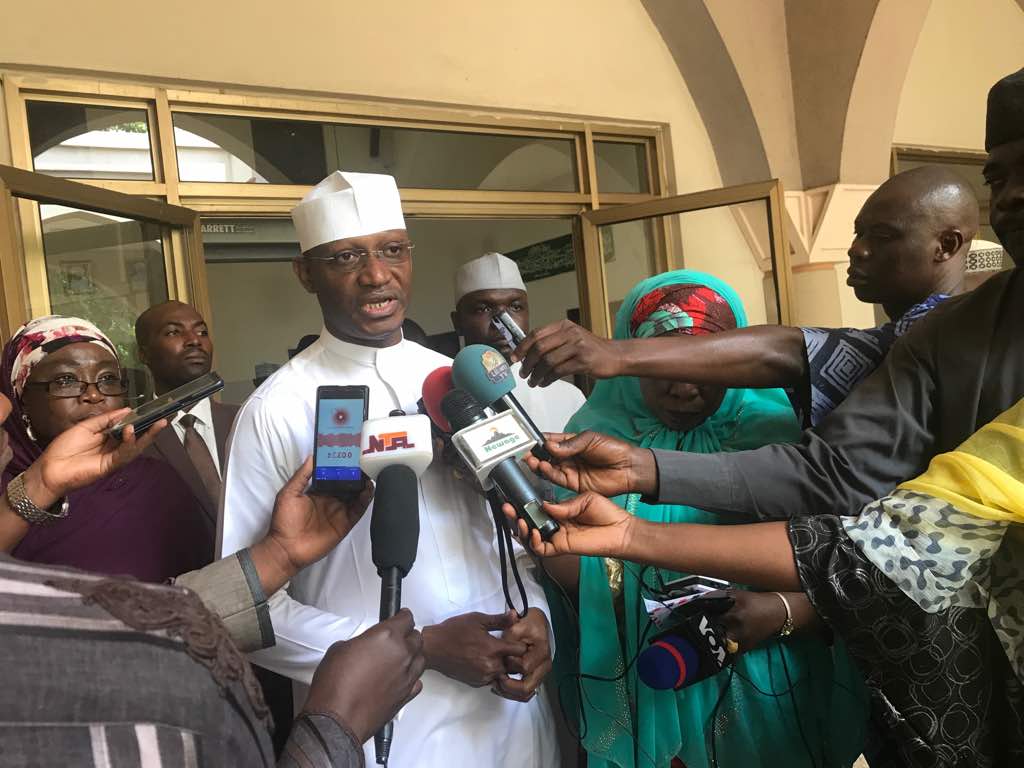
Journalists besieged the Chairman, Chief Executive Officer of the National Hajj Commission of Nigeria (NACON), Barrister Abdullahi Mukhtar Muhammed for an interview shortly after the end of the 2018 Hajj operation Stakeholders’ Forum, held at the National Mosque Auditorium today, Thursday. (myad)
President Muhammadu Buhari has recognized the contributions made by Malam Adamu Ciroma, who died today, Thursday in Abuja, to the national unity and cohesion and his style of politics that sought to unite the people of the country.
In a condolence message today, the President said that he received the news of the death of Ciroma with sadness.
President Buhari noted that Ciroma, as a political leader and Federal cabinet minister for Industries, Agriculture and Finance, at various points in his life, will be long remembered for his remarkable service and dedication to the country’s unity, progress and stability.
He said that Ciroma, who was also one time Governor of the Central Bank of Nigeria (CBN), will be honoured for his contributions in promoting democracy in Nigeria and that his legacies should be a constant reminder to politicians who wish to work for the good of their communities and our great country.
Also, the national leader of the ruling All Progressives Congress (APC) , Asiwaju Bola Ahmed Tinubu, said that with the demise of Adamu Ciroma, the country has lost an illustrious leader, consummate politician and accomplished public servant.
According to him, Ciroma, who was the founder of Peoples Democratic Party (PDP), was one of the illustrious leaders this country has produced, adding that he was a politician of note.
“You cannot but recall his days in the Second Republic National Party of Nigeria and in the Peoples Democratic Party where he was one of the party’s founding fathers.
“He also made name as an experienced technocrat and skilful public servant particularly as Central Bank of Nigeria (CBN) governor and in later years as Minister of Finance.
“He was a fine man who played politics with a commitment to serve the people and change society. This did not come as a surprise given his background honed by sound education at the popular Barewa College and University and his nationalistic worldview.
“My condolences go the Ciroma family and the people of government of Yobe State. May his soul rest in peace.”
We use cookies on our website to give you the most relevant experience by remembering your preferences and repeat visits. By clicking “Accept”, you consent to the use of ALL the cookies.
This website uses cookies to improve your experience while you navigate through the website. Out of these, the cookies that are categorized as necessary are stored on your browser as they are essential for the working of basic functionalities of the website. We also use third-party cookies that help us analyze and understand how you use this website. These cookies will be stored in your browser only with your consent. You also have the option to opt-out of these cookies. But opting out of some of these cookies may affect your browsing experience.
Necessary cookies are absolutely essential for the website to function properly. This category only includes cookies that ensures basic functionalities and security features of the website. These cookies do not store any personal information.
Any cookies that may not be particularly necessary for the website to function and is used specifically to collect user personal data via analytics, ads, other embedded contents are termed as non-necessary cookies. It is mandatory to procure user consent prior to running these cookies on your website.



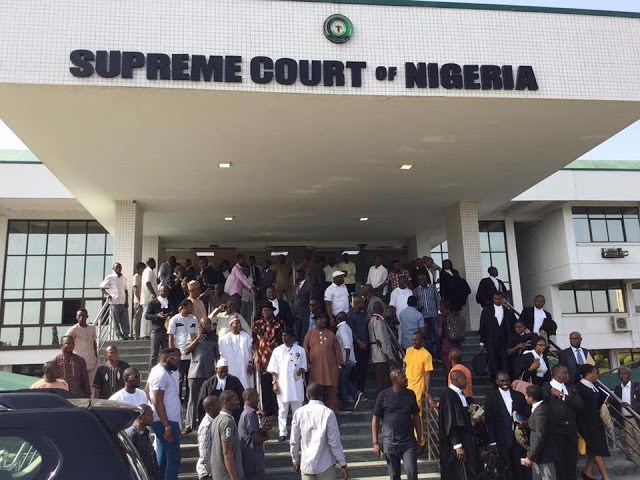 The Supreme Court has finally laid to rest, the trial of a Senate President, Dr. Bukola Saraki, on assets declaration and sundry charges instituted against him before the Code of Conduct Tribunal, describing the trial as “equivalent to judicial equivalent of a forensic somersault.”






Social Media, Fake News And 2019 Elections, By Deen Adavize
The rapidly evolving technology and the changing media landscape have reshaped communication mechanism to be instant, participatory, and global in scale. This modern communication platform has afforded large majority of people to communicate effortlessly with wider audience. Developing events around the world can now be tracked on the go. Social media has brought a lot of developments to humanity. It enables leaders and the leads to be closer to each other, making it possible for the citizens to have direct conversation with their leaders without third parties. It increases participation of the masses on national issues, and given voices to voiceless people. But as beautiful and laudable as these may sound, something terrifying is undermining this monumental paradigm shift without quick fix in sight, and Nigeria remains on edge as the country preparing for another important election, next year.
There is no doubt that the increasing negative sides of social media seem to be outweighing its benefits. Recent developments around the world have proved that social media has assumed a destructive dimension and threatening the very humanity it came to improve.
The unending controversies surrounding the U.S election that ushered in Donald Trump as President have actually unraveled the ugliest side (disinformation) of social media. The alleged Russia meddling in the U.S election through the social media platforms is an eye-opener for the rapidly growing virtual community of universal outrage. The revelation of Facebook data scandal with a research firm, Cambridge Analitica gives more insight into the increasing adverse role of social media that was thought to be a tool that would help strengthening democracy, enlightening the populace, imparting knowledge and uniting the world. Social media is now just doing the opposite.
From America to Europe to Africa, communities are being fiercely divided along ethno-religious, socio-political, and racial lines. Politics is becoming brutal, nasty and cruel. Part of the reason is that, by spreading outlandish falsehood and denigrating statements on social media, aggravating angers and, in some cases induce mob attacks and extremism.
However, the evolution of fake news, false news, post-truth, or disinformation (whatever you call it) did not start today. It has been in existence since immemorial, but technology exacerbated it. As more and more people are gaining access to the internet they become purveyors of information and disinformation with the supersonic power of social media. Although, the term ‘fake news’ has not been scholarly defined. But it is generally described as completely false information, photos or videos purposefully created and spread to confuse, misinform the general public in order to influence their judgments.
The current momentum in the debates of the destructive power of social media is as a result of its practical devastating experiences of countries and communities around the world. Social media which was seen not long ago as a nemesis for rogue, unpopular and authoritarian regimes and corrupt officials is now turning out to serve their very interests. Rogues and fantastically corrupt individuals, some of them who had been displaced and disgraced are being currently pushing to the frontline on the strength of fake news spiraling on social media. Donald Trump ascension to the presidency is a reference point in this regard. One of the thousands of fake news reported to have boosted his electoral chances was the Pope Francis’s adoption of his candidacy. This story reached a vast majority of Americans and beyond, and no doubt influenced their electoral judgments.
In Europe, fake news on social media is now aggravating the increasing anger of the rightwing extremism. In Asia, fake news influenced major political events in Southeast Asia last year. From Indonesia’s fake news of biological attack by Beijing to fake elections reports to Myanmar’s–Rohingya crisis, the spread of misinformation and disinformation have been used to bolster hate speech, stereotypes, and propaganda. In Kenya, the recently conducted election witnessed gradual institutionalization of fake news and post-truth as an effective instrument of political manipulation in Africa.
Also, in Nigeria, the proliferation of fake news on social media has reached an unprecedented level, putting the country in a precarious situation. This trend gained prominence during the build-up to the 2015 elections. The reported demise of the then-presidential candidate, Gen. Muhammadu Buhari in London became a hitting point for the then governing party, PDP. The phenomenon assumed a frightening dimension immediately after the inauguration of APC government in may 2015, even as the recently proscribed Biafra agitators quickly seized the opportunity to advance their secession agenda. Ever since then, the country continues to bloom in the vicious circles of ubiquitous disinformation.
In September last year, a well-crafted fake UN speech of President Muhammadu Buhari was circulated on social media even before the President arrived in New York for the 72 sessions of United Nation General Assembly meeting.
Even Mark Zuckerberg, the Facebook CEO, who had earlier denied that his platform abetting fake news or hoaxes is now adjusting to the reality as more and more mountain of practical evidences continue to emerge from, and around the world.
No one is immune
Everyone who has read news on social media would probably fall victim to fake news. Even the mainstream media are not spared. In an attempt to remain relevant in the face of the obvious threat posed by social media to their very survival, they fall victim to fake news. For example, some years ago, a national daily flashed a fake picture lifted from social media on their front-page that contained foreign mercenaries which the paper described as U.S marine fighting Boko Haram in Nigeria.
Also, just few days ago, the Nigerian media including the self-acclaimed reputable ones were awash with bogus interview granted by the North Central Zonal Chairman of Miyetti Allah, where he was quoted to describe the recent attack in Jos, Plateau State as retaliatory for the killings of large number of their cattle in the state. It was just the latest hoax that exposes the vulnerability and ethical question in the Nigeria media. A Fortnight ago, another purported press release by the alleged national president of Fulani Nationality Movement, (FUNAM) got circulated on social media platforms.
The frightening aspect of fake news on social media is that, while it travels faster than the truth, the vast majority of people take them as prophetic revelation especially when it serves their very interests without questioning the validity. Far from the truth. Fake news is a poison that divides society, blinds the mind, reinforces sentiments and plunges society into unending conflicts that hinder development and create unstable global community.
Recently, British Broadcasting Corporation, BBC chronicled how false or fake news fueling herders-farmers unending conflicts in Nigeria that has resulted to the death of hundreds of people.
Nigeria remains on edge
As Nigeria preparing for another very important election come 2019, the chances of election rigging appear very slim with the introduction of card reader and permanent voter card. But trust Nigerian politicians, they are learning fast and have taken a cue from U.S terrible experience. They have found another means of manipulating electorates in their favour. Youths are being recruited, equipped with internet devices to syndicate trolls and fake news on social media, while professional bodies are equally being sponsored to engage in ominous political activities, all for the purpose of weakening the electoral chances of their political foes.
There is a dear need for concerted efforts to stem the rage of this dreaded phenomenon on social media. Though, the giant social network platforms (Facebook, Google, and Twitter) had earlier promised to do something since the U.S election controversy ensued. But it seems little has been done for the past almost two years, as the problem continues to rear havoc across the world. So they cannot be relied on to solve the problem. But something urgent needs to be done before it is too late.
What needs to be done?
As we have seen, it is unarguable that fake news proliferation on social media is one of the biggest political problem facing leaders around the world. It is an existential threat to world peace. Unfortunately, there is no known universal antidote to the rapidly expanding monstrous firestorm. But nations around the world are responding to the challenge in line with their respective social realities. While some are using technology to counter the spread of fake news, others are using legislation to stem the tide of the poison, yet some others are engaging in massive enlightenment to confront the problem. Recently, Germany enforced law that forces social media companies, such as Twitter and Facebook, to promptly remove content from their websites deemed hate speech or fake news, or face fines of up to 50 million euros. In Czech Republic, a special task force unit has been established to fight fake news online. In Indonesia, cyber army unit has been established to fight the menace. U.S is considering a comprehensive framework to address the challenge.
However, it is obvious that one technique is not sufficient to curb the challenge posed by social media, but a combination of many would be very useful.
Several efforts in the past to regulate the use of social media in Nigeria have failed woefully because of the insincerity of the country’s lawmakers and the fear of gagging free speech. As it is now, Nigeria needs to look inward and sincerely develop a holistic approach to confront this existential threat. Collaboration with reputable online news publishers association like GOCOP and others is a good place to start from. Spiral official response to damaging fake news can do the magic of defusing it. Massive enlightenment of citizens on how to identify fake news online and its negative consequences should be considered, while the establishment of a special unit to track the sources of hate statements and fake news on social media and alert the public is imperative. Special laws that accommodate inputs from all patriotic and reputable stakeholders should be enacted and effectively enforced by an independent and impartial body to checkmate the spread of all forms of disinformation. Above all, operations of regulatory bodies of the media should be strengthened to effectively enforce the media code of ethics in the country. If this threat is left unchecked in Nigeria before the forthcoming election, then the country should be preparing for its’ doomsday. [myad]