Home Blog Page 1275

2019: 130 Associations Applied To Be Registered As Political Parties, INEC Boss Confirms

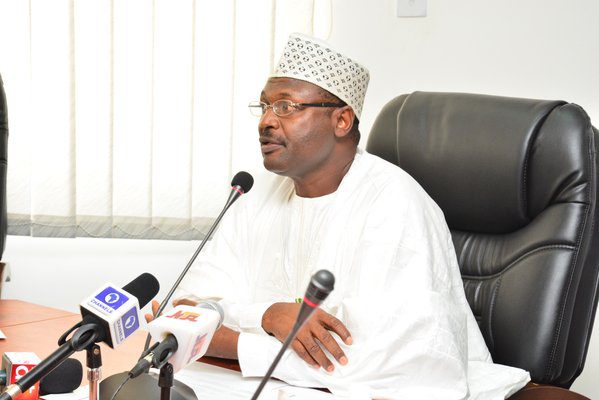
INEC Chairman, Prof. Mahmood Yakubu

The says it will continue to register any association that meet legal requirements for registration as political party ahead of 2019 general elections.

Chairman of the Independent National Electoral Commission (INEC), Professor Mahmood Yakubu,has confirmed that no fewer than 130 new associations have applied to be registered as political parties ahead of the 2019 general elections.

Professor Yakubu, who spoke to News Agency of Nigeria (NAN) today, Sunday in Lagos, said that while the electoral body would continue to register associations that met the conditions for registration, such new parties would not be allowed to participate in the elections if they are so registered six months to the general elections.

“Once associations meet the legal requirements as political parties, the commission is under obligation to register them, but the law also provides for a period of six months to general elections.

“It states that any association registered as a political party six months to the election cannot participate in the general elections.

“We have 68 political parties at the moment. As at last week, we had received applications from 130 associations for registration as political parties.

“So, we will continue to register political parties based on the position of the law.’’

According to him, as part of its duties, the commission would do what the law required of it, saying “if we don’t, they will go to the court and the court will order the commission to register them as political parties.

“But, we will not allow the commission to be dragged to court over a matter which we have responsibility under the law. So, we will continue to do the needful.”

I’ll Run For Presidency In 2019 Because I Am Professional Politician, Bafarawa Declares

Former Sokoto State Governor, Attahiru Dalhatu Bafarawa

Former governor of Sokoto State, Attahiru Bafarawa, has formally declared his intention to run for the 2019 presidential election on the platform of the Peoples Democratic Party (PDP).


Bafarawa, who spoke at his residence in Sokoto at the week end, said that as a professional politician, he is in good position to know the major challenges of the country and how to find solutions to them.

“Politics is my profession. I am a grassroots politician spanning for over four decades.”

He told his supporters that he decided to contest because of his love for the people and that he delayed his declaration despite calls from across the country because of the situation in the country and his party.

 The one-time presidential candidate of the Democratic People’s Party (DPP), said that the problem of Nigerians has been to allow unprofessional politicians to run democratic government, apparently referring to President Muhammadu Buhari.

“President Buhari is my student. I brought him into politics. I gave him ticket to contest when I was the national chairman of the defunct All Nigeria Peoples Party. Therefore I know how to run the affairs of the country and the party.

“Nigerians are calling for restructuring because of the way APC government was running the affairs of the country.”

Of National Conversations, Presidential Debates And Big Ideas, By Sufuyan Ojeifo

The late business mogul, philanthropist and winner of the June 12, 1993 presidential election, Chief Moshood Kashimawo Olawale Abiola, put his nose to the grindstone to be president of Nigeria. Abiola was almost stepping in the saddle, but the military junta of General Ibrahim Badamasi Babangida annulled the election and invalidated the mandate that Nigerians freely gave to him.

Abiola was not a neophyte in the presidential enterprise.  His desire to be president dates back to the second republic.  He planned to succeed second republic president, Alhaji Shehu Shagari, at the expiration of his constitutionally-guaranteed two terms of office in 1987. The schema was on the platform of the defunct National Party of Nigeria (NPN). However, the military coup of 1983 truncated the desire and reset the consummation of his presidential aspiration.

The military unconscionably rendered the June 12 election inchoate and the consummation became fatally illusory. But one thing was self-evident about Abiola’s ill-fated voyage to the presidency: it was not a happenstance; he steadfastly worked for it, investing his time and energy, deploying the instrumentalities of his vast connections and contacts; his philanthropy, his awesome financial war chest as well as the magnitude of his cosmopolitan, assertive and fecund intellectual prowess.

Having strategically warmed to Nigerians by his acts of monumental charity, he set out to externalize his essential persona and capacity to epitomize the African spirit in the articulation of what was turning out to be a continental fixation on the subject of reparations.  Remarkably, Abiola explored and exploited his intellectual capital to interrogate the ramifications of the damages done to the African continent by the West through the transatlantic slave trade, colonialism and neocolonialism.

Abiola would go on to engage the world on those platforms through advocacy and campaign for payment of reparations to the continent. His campaign for reparations started with a two-day international conference on reparations to Africa and Africans in the Diaspora hosted by the Concord Press in December 1990.  The conference had demanded that Africa’s external debts to western nations and banks be cancelled as reparations for the violence those nations had unleashed on Africa.

Reparations to Africa approximated Abiola’s philosophy.  He owned and espoused the idea. The annulment of his victory, his detention following his Epetedo declaration and his eventual demise in the custody of the Nigerian government constituted a major setback to the reparations campaign. But significantly, the issue received national and international attention.  A robust national conversation was developed around it.

The issue formed, substantially, one of the fulcra of Abiola’s presidential electioneering. He passionately elucidated it during the presidential debate in which he, as the presidential candidate of the defunct Social Democratic Party (SDP), took on his opposition, Alhaji Bashir Tofa of the defunct National Republican Convention (NRC). Abiola was single-minded to provide a bulwark of support for reparations campaign and make it a big idea in the focus of government and governance on the African continent.

This is how ideas, big ideas, emerge to rule and transform the world: it took Abiola the ingenuity and clear-headedness to push the issue to the front burner of national and global discourse. Interestingly, and this bears recalling, in 1992, about the same period that the highly fecund Abiola was having his eyes on the presidency of Nigeria as a trajectory to a social contract to eradicate pervasive poverty (one of his campaign catchphrases was goodbye to poverty), another prolific mind, Chester James Carville Junior, was deploying his intellectual, creative powers in the United States of America to plot the emergence of Bill Clinton as president.  He successfully led Democrats’ Clinton to a win against Republicans’ George Bush.

The major issue in America, at the time, was the economy. There were job cuts and the economy was sliding into recession. That became the national concern: the survival of America through the revitalization of the economy. Anybody who wanted the votes of Americans must leverage on the economy as the linchpin. For Carville, it was the economy, stupid.  It was one of the formulations he deployed in the campaign. He reportedly posted a list, in the war room to help focus himself and his staff members, with three points that were critical, to wit: change vs. more of the same; the economy, stupid; and, don’t forget health care. Those were the issues the campaign espoused that bore significant connect with Americans and won the election for Clinton.

Since 1999, contestations for the position of president of Nigeria have been shorn of the ingredient of robust and engaging national conversations.  Whereas, this meeting of minds should have served to guide the Nigerian electorate in their voting decisions; resorts to shared prejudices and primordial sentiments of ethnicity and religion have, unfortunately, always dominated and determined the presidency. Ahead 2019 general elections, there is the imperativeness to appraise presidential candidates on the bases of the philosophies that they espouse. Unlike the frivolities that had attended presidential debates previously, the platform should, this time round, provide opportunities to interrogate the specifics of candidates’ philosophies, clear understandings and commitments to show fidelity to them in the context of an abiding social contract.

However, it is worrisome that while the list of the presidential aspirants for 2019 presidential poll is growing, there is conversely a reduction in the number of those who have been able to chart philosophical trajectories through which they will get the buy-in of Nigerians. President Muhammadu Buhari’s anti-corruption crusade is the essential philosophical underpinning of his administration for which he enjoys national and continental approbation.  He is the African Union’s anti-corruption champion. He has just left for the AU summit in Mauritania where he would speak to the issue of anti-corruption war as a pathway to Africa’s transformation. His 2019 electioneering will centre on the progress of the anti-graft war.

Former vice president, Alhaji Atiku Abubakar, who is one of the leading presidential aspirants on the platform of the Peoples Democratic Party (PDP), is driving his presidential enterprise on the fulcrum of restructuring of the Nigerian federation.  His emphasis is on power devolution from Abuja to the component states that make up the six geo-political zones. Restructuring will be salutary to true federalism and resource control. It will address all the structural imbalances and cure the mischiefs of federal character, zoning arrangements for the presidency and allegations of marginalization. The southern region of the country is enamoured of the idea.  It is also in the contemplation of the middle belt region, comprising states in the north central and north east zones.

It is necessary to have more agenda issues for interrogation. Former deputy governor of the Central Bank of Nigeria, Professor Kingsley Moghalu; former Kano state governor, Rabiu Kwankwaso; outgoing governor of Gombe state, Ibrahim Hassanh Dankwambo; former minister of special duties under the Jonathan administration, Kabir Tanimu Turaki (SAN); former Jigawa state governor, Sule Lamido; former governor of Cross Rivers state, Donald Duke; Sahara reporters’ publisher, Omoyele Sowore; motivational speaker and life coach, Fela Durotoye, et al., are expected to refocus their campaigns on issues and ideas. They should be clearer in the articulation of the philosophical underpinnings of their presidential aspirations.

There should be some big, transforming ideas and issues that they espouse. They should define specific ideological directions and not befuddle the political space and the presidential enterprise with nebulous agendas. We need national conversations on and about contemporary issues of national development; ideas and agendas that conduce to growth in pragmatic terms.  The aspirants must bring on these ideas now to enable Nigerians appraise the workability and ramifications of their promised offerings.

·         Ojeifo, an Abuja-based journalist, writes via ojwonderngr@yahoo.com

Buhari To Europe, Others: Release Without Conditions, Our Stolen Assets

President Muhammadu Buhari at the closed session of the 31st Ordinary Session of the African Union Assembly of Heads of State and Government today in Nouakchott, Mauritania #AUSummit

President Muhammadu Buhari has called on nations where looted assets  have been stashed to release them without the usually long technicalities  involved in the process of reptriation.

Speaking today, Sunday in Nouakchott, Mauritania, during his introductory remarks as the leader of the African Union theme of the year, Winning the Fight against Corruption, A Sustainable Path to Africas Transformation, shortly before the commencement of the debate on  the African Anti-Corruption Year,  President Buhari said:

“We must all collectively work to place high on the agenda, the need for open and participatory government, as well as the repatriation of stolen assets without procedural technicalities and legal obstacles.”

President Buhari also appraised the anti-corruption efforts so far, saying that during the last six months, “we have engaged in multi-sectoral dialogue with a broad range of actors including parliamentarians, national anti-corruption agencies, civil society, media, youth and women groups and development partners. We have convened three (3) different regional Consultative Workshops in line with my campaign programme in an effort to sensitize our people on the evil effects of corruption on our societies.

“These workshops will be extended to other regional blocs as we continue the fight against corruption in a bid to transform our continent.”

The Nigerian President also informed the gathering of his intention to partner with the AU Chairperson to further push the frontiers of the anti-corruption battle:

“I plan to convene the African Youth Congress in Abuja within the next quarter, and we will be working with the Chairman of the African Union, His Excellency, Paul Kagame and the Chairperson of the African Union Commission, to organize an Interactive Dialogue on the theme at the next session of the United Nations General Assembly in New York during the high level segment.”

President Buhari called on all other member States that are yet to ratify the African Union Convention on Preventing and Combating Corruption to take all necessary measures to sign and ratify it with a view to achieving its universal ratification during this calendar year as the Republic of Mauritius just did, becoming    the 40th State Party to the Convention.

The President thanked African Heads of State and Government “for the continued support provided to me in driving and amplifying the African Union anti-corruption agenda. Your unwavering support remains a strong source of strength and encouragement as we look forward to an even more vigorous second half of this year.”

The AU theme of the year leader recalled that  the meeting of the African Union Peace and Security Council held under the chairmanship of Nigeria in April 2018 highlighted the corrosive effect that corruption can have on societies,  considered the link between corruption and conflict and its implications for peace and security in Africa and concluded by  emphasizing the need to utilize South-South cooperation mechanisms through voluntary information exchange, mutual legal assistance and sharing of best practices among national anti-corruption agencies, audit agencies and investigative bodies.

President Buhari regretted: “the scourge of illicit financial flows continues to bite, eating back the gains and militating against the attainment of our aspirations under Agenda 2063 and the Sustainable Development Goals of the United Nations 2030 Agenda.”

 He reiterated Nigeria’s abiding commitment to the fight against corruption.

Special Anti-Corruption Courts Deliver Judgement In 324 Cases Within 6 Months

This is contained in the report card of the Corruption and Financial Crime Cases Trials Monitoring Committee, (COTRIMCO), inaugurated in November 2017 by the Honourable Chief Justice of Nigeria, and Chairman of the National Judicial Council, Hon. Mr. Justice Walter Samuel Nkanu Onnoghen, GCON,  to tour the six geo-political zones of the country to determine the causes of slow pace of corruption and financial crimes cases in the country’s courts.

The Committee, headed by Hon. Mr. Justice Suleiman Galadima, a retired Justice of the Supreme Court, has, in the last six months crisscrossed the country to monitor and ensure compliance with the directive of the Honourable Chief Justice to ensure speedy dispensation of the cases.

A statement by the Director of Information of the National Judicial Commission, Soji Oye said that prior to the formation of the Committee, the Chief Justice  had directed the Heads of Court, at a Special Session of the Supreme Court to mark the commencement of the 2017/2018 Legal Year, to designate special Courts solely for the purpose of hearing and speedy determination of corruption and financial crime cases.

The statement said that upon receipt of the lists, the Committee divided itself into three sub-committees to cater for the easy monitoring and evaluation of the said cases in the different zones of the country as follows:

  • Zone A: Abuja and the Federal Capital Territory (FCT)
  • Zone B: Northern Zone
  • Zone C: Southern Zone

It said that of the total number of 324 judgements delivered, the Supreme Court, in Zone A, delivered 52 judgements and reserved seven cases for judgement from the list of 125 cases pending before it, leaving an outstanding number of 73 cases.

According to the statement, the Court of Appeal, Abuja Division, within the period, also disposed of 74 appeals and reserved 11 for judgement from the list of 137 cases in its docket.

“The Federal High Court delivered two judgements from the 91 pending cases before it, while the High Court of the Federal Capital Territory likewise delivered three judgements and reserve one case for judgement thereby leaving an outstanding number of 178 cases pending.

“In Zone B, Northern Zone, 62 judgements were delivered by the six Court of Appeal Divisions, 19 Federal High Court Divisions and 19 High Courts of various Northern States from the total number of 425 cases pending in the Zone, while 12 cases were struck out.

“From the 12 cases struck out, five are from the Court of Appeal and seven from High Courts of three States.

The designated Courts in Zone C, (Southern Zone), have delivered judgements in 131 out of the 952 corruption and financial crime cases on-going at the various Courts and reserved 43 cases for judgements.

“From the total number of judgements delivered in the zone, the Federal High Court delivered seven judgements out of a total of 304 cases pending before it; while the High Courts of 17 States delivered 124 cases from the 524 on-going in their various Courts.

“The Court of Appeal in the zone has reserved 31 out of 121 appeals pending in the Court for judgement. The Federal High Court, on its part, reserved three cases for judgement while the various State High Courts in the Zone have reserved nine cases for judgement. The Committee will continue the exercise after the courts’ vacation.”

Buhari To Okonjo-Iweala: Good To See You

So, you were not corrupt during Goodluck Jonathan government? President Muhammadu Buhari seems to be asking Okonjo Iweala, who was the Jonathan’s Coordinating Minister of the Economy and Minister of Finance, and Author of ‘Fighting Corruption is Dangerous, when he had a chat with her during the 31st Session of the African Union (AU) summit taking place in Nouakchott, Mauritania today, Sunday, July 1st.

President Buhari laughs as he chats with Okonjo-Iweala at the summit. [myad]


Explosion Burns Down 15 Shops In Kaduna, Angry Victims Dismiss Fire Service For Being Late

A wild explosion, suspected to have come from gas has burnt down 14 shops and a pharmacy with one person injured. Most of the shops affected by the explosion contained kitchen equipment, gas cylinders and refilling facilities.

The explosion occurred today, Saturday, at about 5:40 pm on Ibrahim Taiwo Road by Abeokuta street in Kaduna.

Residents, who were said to have mobilized to put out the fire before it spread further in the densely populated area reportedly chased away fire service personnel from the Kaduna State University who arrived over an hour after the fire started.

One of the shop owners, Ifeanyi Eze said that the fire started as a result of electrical surge which led to heavy explosion in one of shops selling gas cylinders.

An eye witness, Samuel Emma said that immediately after the explosion, fire emerged from the shop, adding that the owner was slightly burnt and was rushed to hospital.

“We don’t know his situation now, but from there, the fire extended to the rest of the shops and only a few items were salvaged.

“We thank God no life was lost. We called the fire service but for close to two hours we didn’t see them until one fire service vehicle from Kaduna State University came and was chased away by angry neighbors.

A resident, Hamza Ado said: “we called the fire fighters but they didn’t come and when we called again we were told that they had no water in their vehicles.”

It was the youth that fetched water from all available sources to control the blaze.”

Source: NAN.

How Social Media, Including 26 Million Facebook Users Inflame Conflicts In Nigeria – BBC

The British Broadcasting Corporation (BBC) has analyzed how fake pictures and news items are being circulated on social media to inflame more communal and even religious conflicts in Nigeria.

The Corporation recalled a gruesome image of a woman with face down in a pool of blood, a gaping shoulder wound was displayed in social media and was purported to be from the recent attacks.

“It has hundreds of retweets on Twitter, but it first appeared on the internet in 2011 in a story about domestic violence in Nigeria.

“Another image appears to show half a dozen people that were killed in the attacks. On closer inspection it becomes clear that the picture was not taken in Nigeria, and is actually the scene of a 2015 traffic accident in the Dominican Republic.

They are both too graphic for us to display and were accompanied by highly inflammatory comments.”

BBC also recalled that earlier in the week, major Nigerian news outlets ran a story claiming that Danladi Circoma, a leader of the Miyetti Allah Cattle Breeders Association, said the attacks in Plateau were revenge for the loss of 300 cows.

They quoted Danladi Ciroma as saying: “since these cows were not found, no-one should expect peace in the areas.”

The Corporation said that such comments drew widespread anger and swift condemnation, but that he had denied ever making the statement.

It confessed however that misinformation and fake news in Nigeria is not a new thing, saying that in some cases, the lack of official information created a vacuum which has been filled by rumours. This only serves to escalate tensions further.

“The explosion of social media – Nigeria has 26 million active Facebook users – and the rapid growth of smartphones means rumour spread quickly and easily on social media.

“In January, the presidency denounced a fake Twitter account which appeared to justify herdsmen attacks in Benue state to the anger of the public.

“A month later, a letter alerting the public to an apparent attack by herders on the Lagos-Ibadan Expressway, a major route in the country’s south-west, went viral before the police issued a statement to deny it.”

Why I Support Devolution Of More Power To States – Vice President Osinbajo

Vice President Prof. Yemi Osinbajo

Vice President Yemi Osinbajo has made it clear that the devolution of more power to the states will enable them control more of their resources and make more of their own administrative decisions such as creation of Local Governments; state and community police, including the state prisons; creation of special courts and tribunals of equivalent jurisdiction to high courts.

Professor Osinbajo, who spoke today, Saturday, at the third Anniversary of the 8th Assembly of the Lagos State House of Assembly, stressed: “thepoint I am making is that states must have more powers and more rights.”
He said that he had decided to choose a topic: ‘Stronger states and the eradication of poverty’ because of the recognition of the fact that the legislature is no longer, in modern democracies, an island, adding that it is the crucial gateway and interlocutor to the most important concerns of the electorates.

“In our case, the Nigerian electorate and those concerns revolve around simple issues. How do we survive, how do we make a living for ourselves? That is the central question of what occupies government; that is what occupies the legislature in this centre of government.
“Perhaps the most important business of governments today is the creation of an environment that conduces to reduction of poverty by the creation of wealth, jobs and opportunities. It is my thesis that the most important structural change we can make in Nigeria is to speedily eradicate poverty and this is best achieved by stronger States, by creating stronger states, and by states I mean, the legislature which is the centre of the state including the executive and the judiciary.
“Nigeria is a Federation of 36 sub-nationals and a Federal Capital Territory. The people, land, the busineses, the schools and healthcare facilities are all in the states. It is simply impossible for the nation to be wealthy when its component parts are poor. The standard of living of the federation depends on the standard of living of people who live in the states.”
Vice President Osinbajo said that one of the two streams of thoughts he had in mind is the fact that poverty can be eradicated and that a better standard of living and improved development indices are possible by actions of States.
The second one, he said, is that to achieve these objectives, Nigeria needs stronger states, defining the concept of a strong state as institutions that must work proactively and creatively as independent administrative and wealth producing economic entities.
“The first is that states could by law of the State House of Assembly create their own local governments. However, after the creation by law the state would have to go a step further by submitting returns to the National Assembly which in turn would list the new local government areas to be in the Constitution. It is because the state can create its own local governments that the Lagos state government at the time took the position that it could hold elections into the LCDAs that it created without any other law. But in consultation again with the State House of Assembly we agreed to create a special which is an LCDA law to empower the LCDAs not only to function administratively but to be capable of rendering the sort of services that local governments render. The important point to be made is that after the Supreme Court had said that we had the right to create local governments we have not back tracked on that since then and even up till today, state governments have maintained that position.
“The second is that the Constitution intends that everything relating to local government must be in the province of the State Government rather than in that of the Government of the Federation. The National Assembly has no power whatsoever under any provision of the Constitution, to increase or alter the tenure of the elected officers of the Local Government Councils.  Only the House of Assembly of a state has such power.
“The third point is that a state has exclusive legislative and executive authority over urban and regional planning functions. Even with respect to federal lands in states, the Federal Government must seek building or other development control permits from the state. It is to the effect that the state has exclusive authority to make laws on urban and regional planning. Even where federal land is concerned the Federal Government must seek permission from the state.
“The fourth is that the President has no power however good his reasons may be to seize or withhold the statutory allocation of a state or local government.”

Russian Company Returns To Invest In Nigeria’s Mineral Sector, 35 Years After It Left

Acting Minister of Mines and Steel Development, Hon. Abubakar Bwari,

A Russian mineral deposits prospecting company, JSC Zarubezhgeologia, has come back to invest in Nigeria, 35 years after it closed business in the country.

The Russian Ambassador to Nigeria, Alexey Shebarshin, who assumed office recently, made this known when he paid a courtesy visit to the Ministry of Mines and Steel Development (MMSD) in Abuja.

The Ambassador said: “JSC Zarubezhgeologia specialises in the study and evaluation of mineral, energy, water, land, and other natural resources, as well as geo-ecological research and projects.”

“The organization was founded to carry out production, design, and scientific work in the field of geology in foreign countries.

“Zarubezhgeologia functioned as a general service provider and contractor for the former USSR Ministry of Geology in organizing technical collaboration with partner countries, and in geological research under international agreements. The company was also involved in the supply of materials and equipment, as well as providing Russian specialists for projects abroad.”

Ambassador Shebashin, who led the company’s delegation from his country to the ministry during the visit, said he was in Nigeria to build on the long existing relationship between his country and Nigeria.

“The Embassy avails itself of the opportunity to express to the ministry the renewed assurance of its highest consideration.”

Responding, the Minister of Mines and Steel Development, Alh. Abubakar Bawa-Bwari, aaid he was delighted by the visit of the ambassador because the ministry was the second, after Agriculture, to be visited by the diplomat following his assumption of office only a month ago.

He said Russia had been a development partner of Nigeria and the relationship was what led to the establishment of Ajaokuta Steel Plant whose objectives had unfortunately not been realised to date. He expressed optimism that with the priority being accorded it by government now, those dreams will soon come to pass.

Bwari, explained that, Shebarshin choice of visit showed that he was following developments in the country, “as the present government is giving serious attention to other economically viable sectors, especially Agriculture and mining in the quest to diversify the economy.”

He said the company was in Nigeria and contributed immensely to mineral exploration efforts from1968 till 1983 when it closed business and left, adding that they are most welcome to Nigeria.

“I also recall that Russia was involved in the Aluminium Smelter Plant in Ikot-Abasi, and I believe that all the issues around that project have almost been resolved.

“I believe our relationship with with Russia will not stop on those two plants, especially now that JSC Zarubezhgeologia has been reintroduced to continue geological survey activities in the country.”

Advertisement ADVERTORIAL
WP2Social Auto Publish Powered By : XYZScripts.com