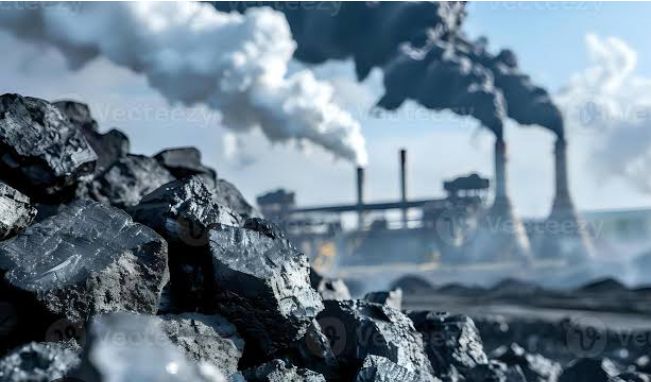
More countries across the world believed to now resort to coal for energy security as a result of rising gas prices and supply disruptions that has been linked to the Middle East crisis. It was learnt that countries that previously pledged to phase out coal are delaying shutdowns and are extending plant lifetimes or restarting reserve coal facilities to stabilize grids and control energy costs. It was noted that despite coal’s comeback, renewables remain structurally cheaper in many markets. Coal is considered the single largest driver of global temperature rise, responsible for about 40 per cent of all greenhouse gas (GHG) emissions and 70 per cent of energy-related combustion increases. Its heavy carbon footprint makes it the most polluting of all major power generation sources, emitting twice as much CO2 as natural gas per unit of energy produced. However, the ongoing comeback by coal is unlikely to reverse the clean energy transition in large part due to falling renewable energy costs. The Levelized Cost of Energy (LCOE) for solar and onshore wind is now said to be significantly cheaper than coal, falling in the range of $24 – $96 per MWh compared to $68-$166 per MWh for new coal plants. It may be recalled that fifty years ago, over 40 countries pledged to scale back and phase down unabated coal power at the COP26 UN Climate Summit by 2030-2040, with hundreds of institutions promising to end international coal financing. Three years later, the Group of Seven (G7) nations, namely the United States, UK, Canada, France, Germany, Italy, and Japan, officially agreed to exit from unabated coal power generation between 2030 and 2035, marking the first major commitment by the world’s largest economies. But the rules are now being rewritten, and in times of crisis, it always comes back around to dirty coal. Global demand for coal as a primary power source is surging again, thanks to the ongoing energy crisis triggered by the war in Iran, with countries that previously prioritized cleaner energy reversing course and utilizing coal as a reliable, cost-effective baseline alternative. Governments worldwide are desperately tweaking their energy strategies to counter the supply crunch and soaring natural gas costs. India imports about 60 per cent of its LNG through the vulnerable Strait of Hormuz, and now, high gas prices have forced the country to prioritize cheaper, domestic coal. India is now burning record amounts of coal amid a nationwide heatwave that has pushed power demand to new highs, with temperatures soaring past 45°C in some regions. India’s peak power demand has surged to an all-time high of 257 GW, with coal-fired plants providing upwards of 75% during peak load periods. Authorities have ordered coal plants utilizing imported fuel to run at full capacity and instructed idle gas-fired plants to restart to shore up the grid. Similarly, South Korea, drastically boosting its coal-generated electricity by more than a third and pivoting away from LNG. That has seen coal imports surge significantly, with imports from Russia alone jumping to 95 per cent during the first quarter of the year. The Korean government has abolished the spring-time regulatory cap that had historically limited coal-fired power plants to 80 per cent capacity. The utilization rate of nuclear reactors has also been ramped up to as much as 80 per cent to pre-empt supply risks. Coal is making a comeback in clean-energy-obsessed Europe, too. In March, Chancellor Friedrich Merz announced that Germany may have to slow down coal plant phase-outs to protect the core of the country’s industry against unrealistic decommissioning targets. The push for a slower phase out comes amid delayed auctioning and building new hydrogen-ready gas-fired power stations, which were intended to serve as reliable backups for wind and solar. Industry representatives have been urging lawmakers to temporarily allow coal-fired power plants currently held in “reserve mode” to return to the regular market to help cushion energy price spikes. Berlin’s climate neutrality goals don’t always align with the short-term realities of energy security. While the federal government recently published new draft laws for gas-fired power plant subsidies to support the green energy build-out, grid operators continue to rely on coal to stabilize fluctuating renewable supplies. Germany’s landmark Coal Exit law passed in 2020, mandates a step-by-step shutdown of coal and lignite power stations, with a final termination deadline set for 2038. However, the country’s strategy to replace coal with up to 15 gigawatts of hydrogen-ready gas power plants has fallen significantly behind schedule, creating a potential gap in baseload electricity capacity. Meanwhile, Italy’s lower house of parliament voted earlier this year to postpone the nation’s permanent coal phaseout deadline by 13 years, from 2025 to 2038. Lawmakers justified the reversal of the 2017 phaseout pledge by citing intensifying geopolitical tensions and oil supply crunches in the Middle East. Italy’s last four coal stations–primarily owned by the utility company Enel S.p.A.have now seen their lifetimes officially extended. The government now considers these plants as emergency assets that could be reactivated if natural gas and oil prices remain high.
Experts have warned that the Liquified Natural Gas (LNG) market looks gloomy in 2026 and 2027, amid curtailed output from Qatar and the UAE. The de facto closure of the Strait of Hormuz, according to them, trapped about 20 per cent of daily global LNG flows, mostly those previously shipping out of Qatar and part of the UAE’s LNG flows. They noted that Iranian drone and missile strikes on energy infrastructure in the region has damaged Qatar’s key LNG liquefaction complex Ras Laffan, which is the world’s single largest such facility. Due to the attacks, QatarEnergy has been forced to declare force majeure for up to five years on some long-term LNG contracts and has advised that full capacity could take up to five years to restore following extensive damage from the strikes. The global gas markets are seriously underestimating how the shock loss of LNG supply from the Middle East will affect the world and economies in the coming months and years, the head of Australia’s top LNG exporter, Woodside, said on Wednesday. “I don’t think markets and consumers and society are yet fully appreciating it, and there’s a belief that things will return to normal at some soon point,” Liz Westcott, chief executive officer at Woodside Energy, told Bloomberg Television in an interview on the sidelines of the Australian Energy Producers Conference. “The immediate activity for customers is securing short-term supply as a result of having so much supply held back from the Middle East. “Customers are looking for us to honor our contracts, and if there is any additional volumes, to keep them in mind,” the executive said. Woodside is also looking to secure firm long-term commitments for its newly-approved Louisiana LNG plant in the United States. Buyer interest in volumes from Louisiana LNG has recently increased, Woodside’s Westcott told Bloomberg. The Middle East conflict upended global LNG supply and demand balances.
Chairman of the Independent National Electoral Commission (INEC), Professor Joash Amupitan (SAN), has raised curse on any leader who uses all devious means to win election at the expense of the lives of people. He spoke at an occasion of the signing of a Peace Accord today, May 21, by 13 political parties and their candidates for June 20, 2026 Ekiti State Governorship election. The signing of the Peace Accord in Ado-Ekiti, Ekiti State capital, was done in the presence of members of the National Peace Committee (NPC), chaired by former Head of State General Abdulsalami Abubakar, (rtd), who was represented by retired General Martin Luther Agwai. Professor Amupitan said: “leadership won at the expense of human life and public trust is a hollow victory.” He insisted: “INEC does not look for a particular outcome; we are interested only in a lawful process.” Professor Amupitan stressed that the Commission had refined its logistics, audited its technological frameworks and strengthened result management pathways to eliminate systemic vulnerabilities. For the election, he said that the Commission had deployed officials to 16 Local Government Areas, 177 Registration Areas, and 2,445 Polling Units, with 1,059,360 registered voters eligible to cast their ballots. According to him, the Certified True Copy of the harmonised Voters Register had been presented to the political parties. The INEC Chairman said that 52,446 NYSC members have been mobilised as ad-hoc staff to man polling units, not only for the Ekiti election but also for the upcoming Osun governorship election and a series of bye-elections in Nasarawa, Enugu, Rivers, Ondo, Kebbi, and Kano states. Professor Amupitan said that 54 media organisations and 470 accredited journalists have applied to cover the election, with the accreditation portal set to close on Sunday, 7th June 2026. He added that a total of 98 observer groups, 96 domestic and 2 international, have been accredited to monitor the election. Speaking on behalf of General Abdulsalam Abubakar (rtd), General Martin Luther Agwai (rtd) called on all political actors to conduct themselves peacefully and responsibly. He stressed that no political ambition should be worth the loss of life or the destruction of communal peace. “Election will come and go, but the peace and unity of the state must remain.” Inspector-General of Police, Olatunji Rilwan Disu, assured stakeholders that the Nigerian Police Force, working with Inter-Agency Consultative Committee on Election Security (ICCES), has made comprehensive security arrangements, covering all local governments and over 2,400 polling units across the state. “The Nigerian Police will remain professional, impartial and fully committed to the protection of democratic values throughout the electoral process.” The IGP encouraged voters to come out on Election Day and exercise their franchise without fear of intimidation. The event was witnessed by the Governor of Ekiti State, Chairmen, candidates and running mates of all 13 contesting political parties, traditional rulers, civil society organization representatives, diplomatic corps, religious leaders and members of the media.
1he cousin of my wife staying with us quietly walked into my room yesterday, May 17, 2026, after taking permission, to simply hand his handphone to me. He apologized for waking me up from sleep, which I usually has after my early morning devotion. When I looked at the phone screen, what I saw jolted me up. I didn’t know when I shouted out with “inna lilLahi waina ileihi Rajiuun” (From Allah we came and to Him we are returning). It was the announcement of the death of Prince Nazir Ado Ibrahim, son of the immediate past Ohinoyi (King) of Ebiraland in Kogi State, late Dr. Ado Ibrahim. My eyes cleared immediately from the unfinished sleep. I jumped to my feet. I began to repeat the same words… Inna lilLahi waina Ilaihi Rajiuun. The reality gradually dawned on me that I had never met Prince Nazir physically all the while that I interacted with him. His death hit me so bad as though the two of us just parted a few minutes before his death. As a matter of fact, the contact number of Prince Nazir was given to me by his father, late Dr. Ado Ibrahim at the time I was gathering materials for the purpose of writing a biography on him. The late King had been a witness to Ebira-English Dictionary which I authored. He actually offered prayer for its successful outing as far back as 1996,a year to his ascension of the reverend stool. The Dictionary was launched in Kano. The late King was also instrumental to the launching of the Holy Qur’an Translation into Ebira language, which I Co-authored. He personally hosted the launching in his famous Azad Palace. He gave out the sum of N2 million in cash. The two successfully completed projects gave me the courage to sell the idea of writing his biography. He bought the idea without any form of resistance. From then, he made it so easy for me to be close to him, so much that I could walk into his palace at anytime; I could call him on his special private line from anywhere anytime. In the process of interacting, and on my request, he obliged me the contact numbers of his children: Prince Malik. Prince Colonel Ahmed, Prince Nazir and that of his Personal Assistant, Prince Alonge. The idea was that I should have access to his top ranking children for whatever material I would need from them. Of all his children whose contact numbers he gave me, it was only Prince Nazir that responded to me positively, with humility. In September 2024, after a series of chats via WhatsApp, I brought up the issue of the biography of his father. At the time, I had done 75 percent work on the compilation of relevant materials. What remained were interviews with relevant people connected to him in one way or another, including his children, mother (s) of the children, friends, associates and so on. Prince Nazir welcomed my suggestion that I should be given a go-ahead with the project. He pleaded with me to give him time to consult with his siblings who would be home on October 29, 2024 for the first anniversary prayers for their father, late King Ado Ibrahim. He died on October 29, 2023. Two weeks after October 29, I engaged him in another chat, requesting to know the outcome of his consultations with his siblings. He responded promptly by pleading with me to give him more time to get the acceptance of what he called “complex family.” With such response, I was wise enough to read between the lines. I comforted myself that Prince Nazir was just trying to be nice and diplomatic. I therefore decided to rest the matter and allow it to take its natural course. At another time, I invited him to the launching of a book by the Guild of Corporate Online Publishers (GOCOP) in Abuja in October 2024. He promised to attend the event, which I considered to be an opportunity for the two of us to meet one-on-one. However, he could not make it to the event as he was engaged in another very important event in Lagos. He however transferred the sum of N250,000 to my account and asked me to present it as the contribution to the book launch in the name of his late father, King Ado Ibrahim. Two copies of the book were packaged for me to be delivered to him. As a matter of fact, I was praying fervently to God to make it possible for us to meet one-on-one. What seemed an opportunity came last year when I invited him to grace the special annual get-together of Ozuka Agidima Worldwide, a prominent Clan in Ebiraland to which I belong. He gave me his word that he would attend. On the day of the event, December 6, 2025, I virtually glued my eyes to entrance gate of the venue. He didn’t seem to be coming. I had to call him on his handphone. He apologized that he couldn’t make it and that he was actually in Lagos airport getting set to fly out. Since then, I cautioned myself not to take his humility and respect for granted, because each time we engaged in discussion, he would be responding to me as “sir.” I decided to apply some kind of wisdom, believing that he needed to be allowed to “flex” without any kind of cajolement. One can therefore imagine the kind of feeling that I had when the news of his death was announced to me on Sunday, May 17, 2026. This was a man that felt free talking to me whenever I contacted him. This was the man who was so close to me, but the man I never really met in life. Prince Nazir, I pray to Allah subhannahu wata Allah to forgive all your shortcomings and admit you in His Aljanatu Firdausi. Adieu!!!
Yusuf Ozi-Usman, nipr
Tom Ohikere, a childhood friend and brother narrates as follows: My dearest brother, Prince Nazir Ado Ibrahim of the Royal House of the Atta’s in Ebiraland, Kogi state has passed and it has hit me hard. We grew up together, shared an eventful and rich childhood with many remarkable experiences and went through thick and thin together for 60 years! I thought we would grow old together and share the memories of our childhood whilst in retirement. I thought we would comfort each other in old age whilst the world quietly passed us by. I thought so much and planned so much but alas you are gone! You were one in a million brother. Always putting smiles on everyone’s faces. I remember the days of Atta Lodge in Yaba, your dear father, the late Ohinoyi’s house, where we all used to meet with friends and have a great time in the late 1970’s and early 1980’s. I remember the days in Chelsea at my apartment in Pier House, my fathers house in Brighton and your father’s mansion in Belgravia. I remember the days of Lagos Polo Club, Ikoyi Club and Apapa Club where we used to gather and move around in our fearsome and daring “gang” of wild and adventurous friends! I remember the boxing and karate lessons we used to have and what a great warrior and courageous fighter you were. I remember how we were at JB’ s house in a place called Bourdillon near the National Stadium in Lagos and police raided the place! I remember how we fought back to back and shoulder to shoulder together against our assailants whenever either of us was attacked or threatened. We never lost brother and they never had us down! That is what made our relationship so special. Nothing & no-one could come between us. We spoke a strange language to one another and we communicated in code and with our eyes. We walked the dark side together and, by the grace of God, we both survived. I remember how we learnt to ride horses together & play polo and how we used to both love marking the streets and treading the paths of the rougher sides of old Lagos in flashy cars whilst flexing our hard and crazy muscles. I remember the rivalries we all had over the girls, I remember the fights with the white boys and the locals, I remember the squabbles we all used to have over the most insignificant things, I remember the love that our band of brothers shared, I remember the numerous controversies we got into, I remember the numerous punishments that we jointly faced from our respective parents for our many wild outings and I remember how we used to go to night clubs like Legends, Tramp, Main Squeeze, Monkberrys and others in London and Studio 54 and Xenon in New York! I remember visiting you in a place called Geneva in upstate New York and how we drove to meet our brother Des Braithwaite in Syracuse! I remember your Porsche 928 S and his and mine and I rember how, in the various cities in the world, the police would stop and ask us how we could afford such cars at such a young age. We laughed them to scorn because they did not know who & what we were & more often than not we served them with hot words & left them with teary eyes & red faces! That was in the early 1980’s and my goodness, we had fun! We lived life to the fullest with Azad your older brother, Des Braithwaite, Kunle Braithwaite, Tonye Amachree, Deremi Ajidahun, Layeni Fagbayi, Gbegi & Dapo Ojora, Oscar Ibru, Gregg Mbadiwe, Gbolahun Sanyaolu, Ade Adetona, Ike Monu & so many others. Later in the 1980’s you became my in-law after I married your beautiful cousin Saratu Atta, who was the daughter of your Uncle, the late Governor Adamu Atta of the old Kwara state. She and I have a beautiful daughter called Folake who you used to dote over with such affection & who you had a soft spot for when she was a baby. So much happened since that time but through it all you and I loved each other in the same way that Achilles and Patrocholus loved one another. Always watching each others backs & standing up for one another, often fighting over small matters & always coming back together again. Sadly we did not spend much time together in the last few years and were only in touch from time to time but when I heard of your passing earlier today something broke in me. I realised that you were literally the living symbol of my lost childhood and the rallying point and star of those of us that grew up with you and loved you. You were the bridge between the North and the South: who spoke Yoruba better than I did but who was proud of his noble Ebira Northern heritage and his Royal roots. You were also the bridge between the children of the elites who went to the best schools from a very young age in England and those who went to the very best schools from a young age in Nigeria. We fought gang wars between the two groups in those days whenever we came home for holidays from abroad at the parties we used to meet and the various social clubs we all belonged to but you brought us all together. Ours was a generation of love and brotherhood which cannot be matched or replaced. We lived life to the fullest, we had it all, we saw it all, we watched each other’s backs and accepted each other as we were. Those were the days when brotherhood meant something. Those were the days when loyalty was everything. Those were the days when we took pride in who we were and in being Nigerians. Those were the days when we, as a people and a generation, bowed to no-one and had it all. Those were the days we rocked London, New York, Paris, Athens, Cannes, Marbella, Malaga, Nassau, Monte Carlo, St. Tropez, St. Moritz, Juan Le Pins, Acapulco and much of the world without a care and with no apology. We were tough, proud, wealthy, healthy, strong and feared young Nigerian men who had everything that we could ever want and we moved together like a pack of young wild lions. Those were the days my brother and we thought they would never end. Those were thevdays when our parents would worry about us and our futures and we would exchange notes and share jokes behind their backs and make a mockery of their fears. Then came adulthood with all its challenges and responsibilities and I believe that we all kept the flag flying and acquitted ourselves well. Outside of that our nation changed and the carefree days of joy and abundance for all came to an end as the fortunes of our beloved Nigeria dwindled. We pray for better days ahead and that our children and grandchildren can enjoy the essence and greatness of our people and country the way we once did. Meanwhile my brother I commit you into the hands of God. May He forgive you for all your sins and grant you eternal peace and rest in heaven. May your name never fade away or be forgotten and may your legacy, a great legacy built by your distinguished ancestors and forefathers, remain strong. I miss you already. I miss our fellowship. I miss our shared experiences and our many secrets. I miss our joint childhood and all our other brothers many of whom have passed on. Ours is a dwindling generation. We had our time and God was good to us. We had everything and cannot complain. Now it is time for you to rest brother and for those of us you have left behind to accept the inevitablity of what lies ahead. God is with us and you are with Him. Greet our brothers that crossed over before you and tell them that FFK sends his love. I pray for your precious soul brother and know that I shall NEVER forget you, whether in this world or the next. Rest well Suku Su and may the Lord strengthen, bless and protect your family and your wife, children and loved ones that you have left behind.
Professor Nentawe Yilwatda, National Chairman of the ruling All Progressives Congress (APC) has assured Nigerians that the ongoing reforms of President Bola Ahmed Tinubu will lead to Nigeria’s expansive prosperity of tomorrow and years to come. The APC National Chairman, in a statement signed by his Special Adviser on Media and Information Strategy, Abimbola Tooki, said that while the economic reforms initiated by the administration of President Bola Ahmed Tinubu have demanded sacrifice, patience and resilience from Nigerians, there are already clear and measurable indicators showing that the country is gradually returning to the path of sustainable growth, productivity and national renewal. Professor Yilwatda, who was speaking after the successful conduct of the primary election of the party into the House of Representatives across the country, said the Renewed Hope Agenda of President Tinubu was never designed as a short-term populist project, but as a bold and strategic intervention aimed at correcting decades of structural distortions that weakened national productivity, discouraged investments and constrained economic competitiveness. According to him, “great nations are not built on easy choices or temporary comforts, but on courageous decisions that secure the future of generations yet unborn. The reforms being implemented today are laying the foundation for a more stable, productive and prosperous Nigeria.” The APC National Chairman acknowledged the economic pains currently being experienced by many Nigerians, especially in the areas of inflationary pressure and cost of living, but maintained that the Federal Government has continued to respond through targeted interventions, infrastructure investments, support for local industries and strategic expansion of critical sectors of the economy. Professor Yilwatda noted that several economic indicators are already reflecting growing investor confidence and improving commercial activities across the country. He cited the latest maritime sector performance report which revealed that Nigerian ports handled 1,092 ocean-going vessels in the first quarter of 2026, describing it as a strong sign of increasing trade activities, expanding export operations and renewed confidence in the Nigerian economy. According to him, the development demonstrates that the administration’s investments in port infrastructure modernization, logistics improvement, transport connectivity and export expansion policies are beginning to stimulate productive economic activities nationwide. “The handling of over 1,092 ocean-going vessels within the first quarter of the year is not an isolated statistic. It reflects increasing commercial confidence, stronger maritime operations, rising export activities and renewed international economic engagement with Nigeria. This is a direct outcome of strategic reforms and infrastructure investments being undertaken by the Federal Government.” Professor Yilwatda further pointed to the recent improvement in Nigeria’s crude oil production, which has now reached about 99.2 percent of the Organisation of Petroleum Exporting Countries (OPEC) production quota, as evidence of enhanced security coordination and improved operational efficiency within the oil and gas sector. He added that the commissioning of new 330kV transmission lines in Edo State and the addition of 600MW to the national grid represent concrete efforts by the Tinubu administration to strengthen power infrastructure, support industrial growth and improve electricity supply across the country The APC National Chairman also referenced growing interests by investors and local manufacturers in sectors such as automobile spare parts, industrial production and energy infrastructure as signs that the economy is gradually repositioning itself for long-term competitiveness and self-reliance. Professor Yilwatda assured Nigerians that the APC-led administration remains committed to responsible governance, economic stability, job creation and national development. He urged citizens not to lose faith in the country’s future, stressing that the difficult but necessary reforms currently being implemented would ultimately create a more resilient economy capable of delivering opportunities, prosperity and improved living standards for all Nigerians. “Nigeria is passing through a period of economic rebuilding. While the journey may be challenging, the signs of recovery and national renewal are becoming increasingly visible. The APC administration under President Bola Ahmed Tinubu remains focused, determined and committed to building a stronger and more prosperous nation for both present and future generations.” Professor Yilwatda reaffirmed the commitment of the All Progressives Congress to supporting policies and initiatives that deepen economic reforms, encourage investments, expand infrastructure and promote inclusive national growth.
Prince Nazir Ado Ibrahim, the son of the late Ohinoyi of Ebiraland, His Royal Majesty, Dr. Abdulrahman Ado Ibrahim, is dead. Family source said that Prince Nazir died today, May 17 after a brief illness. His death has sent shockwaves of grief across Ebiraland and beyond. The news of his death elicited an outpouring of condolences, particularly from those familiar with the Ado Ibrahim royal family’s enduring influence and contributions to the development of Ebira land. Prince Nazir was a member of the esteemed royal household of the late Ohinoyi, Abdulrahman Ado Ibrahim, who reigned over Ebiraland from 1997 until his death in 2023. We at Greenbarge Reporters online newspaper, especially our Editor-in-chief who was close to him, as well as friends and well-wishers, pray for the peaceful repose of his soul and solace for the entire royal family. May his soul rest in peace.
In a tribute, one of the prominent leaders in Ebiraland, Mr. Tom Ohikere said: “we lost a good man in the early hours of this morning. Prince Nazir was kind, humble, and full of integrity. I had the privilege of working with him as an Immigration Officer, and I saw firsthand how he carried himself with respect and gratitude. He made my work easy and always appreciated the effort to secure his expatriate quota position and visa on arrival. He treated everyone with fairness and never forgot a favor. May Allah forgive him, grant him Aljannatul Firdaus, and comfort his family and loved ones. Rest well, Your Highness. You will be remembered as a good man. Nyatu Oziandu!.”
I want to believe Allah (SWT) brought me back to read my scorecard. He does that whenever He wants. All the more reason to forgive those who transgressed against you and seek forgiveness from those you have hurt. Importantly, to continue doing the good things one has been doing for humanity, as Dr Imdad of Al Shifa Hospital told me. And this was why He answered the prayers of the multitude of people who interceded with Him on my behalf. People, some I knew, many I never knew from Adam. There were prayers in the National Mosque in Abuja, in many mosques, including the central mosque in Potiskum, and in several local governments in Yobe. There were special prayers by members of the Islamic Movement in Nigeria in Potiskum and several other centres. Nigerian brothers in Qum and Karbala also contributed their quota. And these prayers were not only on Fridays, but at every given opportunity. Individuals also contracted others to pray for me: even their children, from as early as when they were able to talk, prayed for me. The prayers of some kids were recorded and sent to Makkah, where they were replayed in my ear when I was sojourning between this world and the other. My siblings, in addition to many other forms of prayer, shared and read portions of the Holy Qur’an amongst themselves and with our children. They did not leave out the youngest, who could read the holy book. The same with my in-laws in Maiduguri. A person may be forgiven if they thought Facebook and other social media apps were created for me because the people praying for me took them over. It is heartwarming that many, many people — family, friends, associates, those known and unknown to me — were all praying for me. I was surprised to hear that some Christian associates, pastors and a church in Ghana, too, had put me in their prayers. On my birthday, April 9, social media was filled with messages of goodwill, “get well soon” wishes and prayers for more health and a long life. Many people I did not even expect to be so prominent in their prayers for me were. Good examples, out of many, were distinguished Senator Musa Mustapha (Coolers) and Professor Abubakar Bukar Kagu, the Matawalli of Machina. The senator’s message was long and heart-touching. In Makkah, too, prayers for me were many and earnest. Many of those who knew me and went for Umrah prayed for me. Even Makkah dwellers whom we met, like our landlord, Ali Bukar, his family and many others, were not left behind. My two wives, Dr Aminat Zakari and Hajiya Falmata Baba Adam, together with my son Abubakar Sadik, were always performing Umrah and, most times, circumambulating the al-Ka’bah al-Musharrafah (simply Ka’aba). On all occasions, they were praying for me. But the prayers were not limited to only these. I was in the Intensive Care Unit (ICU) of Al Shifa, and visits were twice a day — 11 am and 9 pm — for 30 minutes each. One night, my wife, Dr Aminat, visited. I was then between this world and the other one, and so did not even know she came because I was not aware of my physical environment. She watched me, cried and left, but she did not go far: she sat outside the hospital crying and praying for me. According to her, Dr Tamer, the chief medical officer there, came down to go home. He saw her and stopped. It was then she realised it was around 1:30 am. He asked her, “You are still around?” She answered him in the affirmative. It was not visiting time then, yet he asked her, “Do you want to see him?” and she said yes. He broke the rule and brought her in to see me, forgoing his own need to go home and rest. When they came to me, she was just watching me and shedding tears. To her surprise, he, too, started tearing up. Then he showed his humility and belief in Allah’s Powers and Will. He told her, “Please pray for him and pray for us (the medical team) … we are also praying for him.” He was the one who, whenever my family asked him to give them the hospital bills, would tell them not to worry. “Let us take care of him first,” he would say. I used to think Arabs were racists, but the doctors and nurses at Al Shifa have cleansed me of that thought. Here was I, a poor black man from Nigeria who could not profit them in any way, yet they gave their all to restore my health. Doctor Tamer is like a father figure wherever he is. He always electrifies the hospital whenever he arrives. He went out of his way to get me a visa, get insurance to underwrite my hospital bills and secure an airline well-equipped to bring me home. Dr Nazee, who was directly in charge of me, was a bubbly chap who also, like Dr Tamer, took my case personally. Dr Imdad, the only non-Egyptian among them, is a Pakistani with a melodious voice. He gives the impression of being the life of the party. Kind-hearted, he comes close to a patient, propping him up psychologically. I recall him telling me to eat food. “You may not like it,” he told me. “Just eat.” And that was how I found myself eating the spice-less, bland Arabian food served to me. Dr Hassan and Dr Ahmed Alsaid are two other great doctors there. I could not get the name of the hospital’s chief executive officer, who used to come to the hospital now and then. One day, he stood by the door and blew kisses towards me. He, too, knew about Gimba the Fighter. Hey, do you want to know about a nurse at Al Shifa Hospital whose great-great-grandparents might have fought side by side with the Prophet at the Battle of Badr, or who was born around that time?
Hassan Gimba is the Publisher and CEO of Neptune Prime.
For years, Donald Trump sold Americans and much of the world a simple political story: China was cheating, America was losing, and only confrontation could restore U.S. greatness. He called China a “currency manipulator.” He imposed massive tariffs. He launched a bruising trade war. He repeatedly accused Beijing of “ripping off” the United States. The rhetoric was muscular, nationalistic and unapologetically confrontational. But politics has a way of colliding with reality as Trump leaked his venom spit, wore the suite of a statesment that value diplomacy and visited Xi in Beijing. And from that beautiful Chinese capital, Trump was telling a very different story. Standing beside Xi Jinping, Trump sounded less like a warrior confronting a rival superpower and more like a statesman acknowledging an uncomfortable truth: America can no longer dictate the global economic order alone. “We’re going to have a fantastic future together. I have such respect for China. The job you’ve done. You’re a great leader,” Trump reportedly told Xi. He added: “I say it to everybody.” Whether one sees the statement as diplomacy, pragmatism, or surrender depends largely on political perspective. But one thing is difficult to ignore: the tone has changed dramatically. And tone matters in geopolitics. The symbolism was even more striking because Trump did not arrive in Beijing alone. He went with some of the most powerful corporate figures in America — men and women who collectively represent the commanding heights of U.S. finance, technology, manufacturing, aviation, artificial intelligence and global commerce. There was Elon Musk of Tesla and SpaceX. There was Tim Cook of Apple. There was Jensen Huang of NVIDIA. Finance giants like Larry Fink, Stephen Schwarzman, and David Solomon were present. Executives from Boeing, Visa, Mastercard, Qualcomm, Micron, and GE Aerospace followed closely behind. This was not merely a diplomatic visit. It looked like an economic pilgrimage. The message beneath the optics was impossible to miss: despite years of political hostility, America’s largest corporations still need China. That dependence may explain why the aura of absolute confidence that once defined Trump’s China rhetoric now appears diminished. A brand new Trump at the microphone! The old Trump projected dominance. The new Trump appears more cautious, more transactional, and perhaps more aware of America’s limitations in an emerging multipolar world. Politics at the highest level can be unpredictable, sometimes. Great powers would shift from confrontation to negotiation, especially when the costs of conflict become too high. But the question is whether Trump’s recent overture is a mark humility after a disgraceful outcome of his unprovoked war against Iran or it is a strategic realism. The contrast is stark. It is gruff. This is the same Trump who once suggested American companies should decouple from China. Yet the very business titans accompanying him to Beijing have deep commercial ties to the Chinese market. Apple depends heavily on Chinese manufacturing. Tesla’s Shanghai operations are central to its global production strategy. Nvidia and Qualcomm see China as a critical battleground for future technological dominance. Wall Street giants continue searching for opportunities within China’s enormous financial market. The economic truth neither Washington nor Beijing can easily escape is this: the two economies remain deeply intertwined. For all the slogans about decoupling, neither side can afford a complete divorce. China, meanwhile, has spent the last decade positioning itself for precisely this moment. While the United States wrestled with internal political polarization, China invested aggressively in infrastructure, manufacturing, artificial intelligence, electric vehicles, rare earth minerals, semiconductor ambitions, and global trade networks. Through projects linked to the Belt and Road Initiative, Beijing expanded its influence across Asia, Africa, Latin America, and parts of Europe. The result is that America is no longer dealing with the China of the 1990s or early 2000s — a rising economy dependent on Western approval. It is dealing with a strategic rival that increasingly believes it can shape global systems on its own terms. That reality appears to have forced a recalibration in Washington. The tariffs hurt China, but they also hurt American businesses and consumers. Supply chain disruptions exposed how dependent U.S. industries had become on Chinese manufacturing. American companies discovered that replacing China was far more difficult than political speeches suggested. Even America’s allies have struggled to fully disengage from Beijing because China remains central to global trade. This is why Trump’s softer tone in Beijing matters beyond personality or political theatre. It may signal recognition that confrontation without cooperation is unsustainable. The bigger question is whether Americans themselves are prepared to accept this new balance of power. For decades after the Cold War, the United States operated as the unquestioned global superpower. Today, however, the international system is evolving into something more competitive and less predictable. China’s rise has introduced a level of strategic parity that Washington cannot simply dismiss with rhetoric or tariffs. And perhaps Trump understands that better now than before. The image of the once-combative president praising Xi Jinping while surrounded by America’s corporate elite carries a certain irony. The man who built political momentum by attacking China now finds himself engaging Beijing with careful diplomacy and economic realism. Some will call it wisdom. Others will call it capitulation. But maybe the deeper story is not about Trump alone. Maybe it is about the changing structure of global power itself. Because when the leaders of America’s biggest corporations travel to Beijing alongside a president who once vowed economic war against China, one conclusion becomes unavoidable: the world has changed. And perhaps, for the first time in a long while, Trump knows it too.
The Ogun State Commissioner for Environment, Ola Oresanya, has confirmed the outbreak of air pollution that has led to no fewer than 100 students in various schools in the State being hospitalized The Commissioner, in a statement however, gave assurance that the ministry and relevant agencies have commenced necessary interventions in the matter. Such other agencies, he said, include ministries of education, environment, security agencies and local government authorities. The commissioner explained that an Air Quality Monitoring Device installed at Ijebu Ode Grammar School had detected what he called “elevated methane concentrations.” He said that the device recorded methane concentrations of about 13,500 parts per million (ppm) in surrounding areas. According to him, the monitoring device forms part of the state’s environmental surveillance programme for detecting abnormal air quality conditions. Oresanya said that the methane concentration remained below the lower explosive limit but required immediate technical investigation and precautionary measures. He said that the state government would activate a multi-agency environmental and public health assessment team to investigate the incident. He added that the team would determine the emission source, assess exposure risks and evaluate other associated gases in the environment. He listed the gases to be investigated as hydrogen sulphide, volatile organic compounds and other air quality parameters. The commissioner advised residents to avoid open flames near areas with unusual gas odours. He also advised residents who are experiencing dizziness, headaches, nausea or respiratory discomfort to seek immediate medical attention. Oresanya reaffirmed government’s commitment to protecting lives, public health, and environmental safety across the state just as he assured residents that verified updates would be provided as investigations progress.
The Director General of the National Emergency Management Agency (NEMA), Mrs. Zubaida Umar, has advised State Governments across the country to commence proactive measures aimed at preventing and mitigating the impact of flooding. This is coming on the heels of predictions that more than 30 states are likely to experience serious flooding during the 2026 rainy season. Mrs. Zubaida Umar, who paid a courtesy visit to the Governor of Adamawa State, Ahmadu Umaru Fintiri, in Yola, stressed the need for stakeholder to engage and flag-off the 2026 National Preparedness and Response Campaign on Flood Disaster and Related Hazards. She identified some of the key actions expected from states to include the reintroduction and enforcement of monthly environmental sanitation exercises, regular clearing of drainages and waterways, strengthening and supporting State Emergency Management Agencies (SEMAs), as well as ensuring the inauguration and operational functionality of Local Emergency Management Committees (LEMCs) at the grassroots. The Director General said that in response to the forecasts, the Agency has developed the 2026 Climate-Related Risk Management, Preparedness and Mitigation Framework to guide coordinated efforts toward reducing flood impacts nationwide. She added that through Flood Early Warning System, the Agency has identified flood risk profiles and produced vulnerability maps for at-risk communities across the country to support targeted disaster risk reduction planning by Federal, State, and Local Governments. She called on traditional institutions, religious organizations, women and youth groups, the media and the private sector to support NEMA in amplifying early warning messages and promoting community preparedness. Governor Umaru Fintiri commended NEMA for its proactive approach toward disaster preparedness and response, particularly the early warning and sensitization campaigns being undertaken ahead of the rainy season. The Governor assured that the State Government would carefully consider and implement the recommendations and advice provided by the DG NEMA to reduce the impact of flooding in the state. He appreciated the various interventions and support consistently provided by NEMA to the State during emergencies and disaster situations.
We use cookies on our website to give you the most relevant experience by remembering your preferences and repeat visits. By clicking “Accept”, you consent to the use of ALL the cookies.
This website uses cookies to improve your experience while you navigate through the website. Out of these, the cookies that are categorized as necessary are stored on your browser as they are essential for the working of basic functionalities of the website. We also use third-party cookies that help us analyze and understand how you use this website. These cookies will be stored in your browser only with your consent. You also have the option to opt-out of these cookies. But opting out of some of these cookies may affect your browsing experience.
Necessary cookies are absolutely essential for the website to function properly. This category only includes cookies that ensures basic functionalities and security features of the website. These cookies do not store any personal information.
Any cookies that may not be particularly necessary for the website to function and is used specifically to collect user personal data via analytics, ads, other embedded contents are termed as non-necessary cookies. It is mandatory to procure user consent prior to running these cookies on your website.




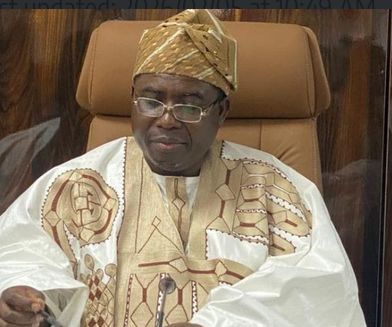
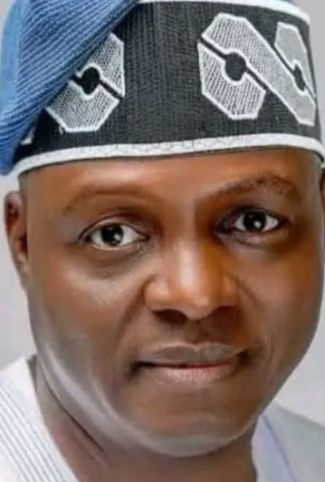
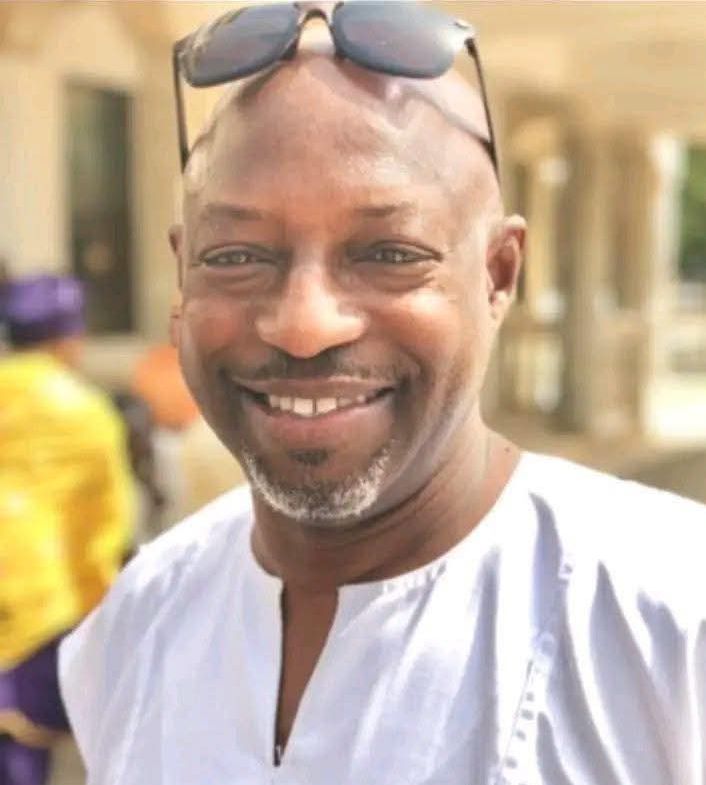
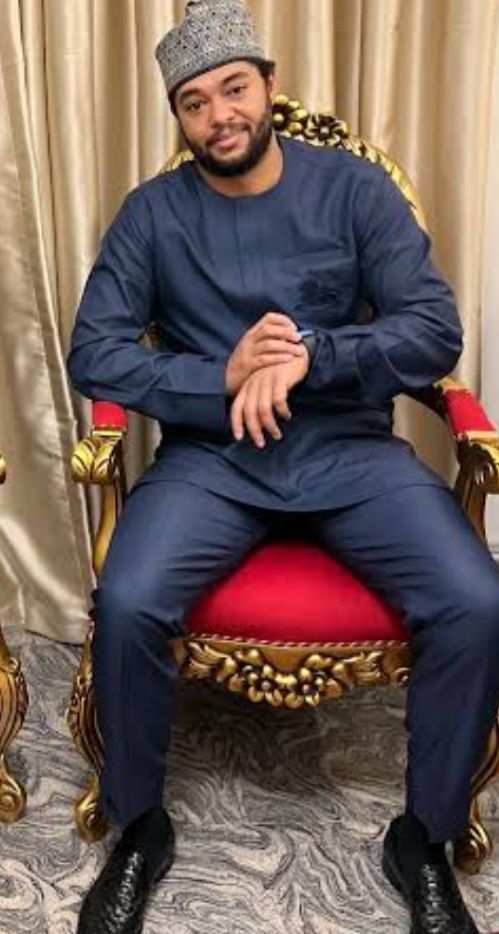 In a tribute, one of the prominent leaders in Ebiraland, Mr. Tom Ohikere said: “we lost a good man in the early hours of this morning. Prince Nazir was kind, humble, and full of integrity. I had the privilege of working with him as an Immigration Officer, and I saw firsthand how he carried himself with respect and gratitude.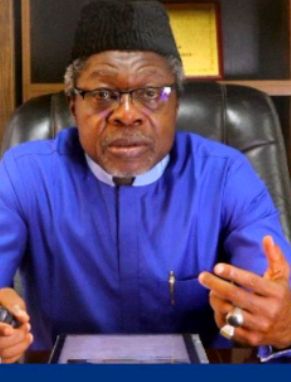
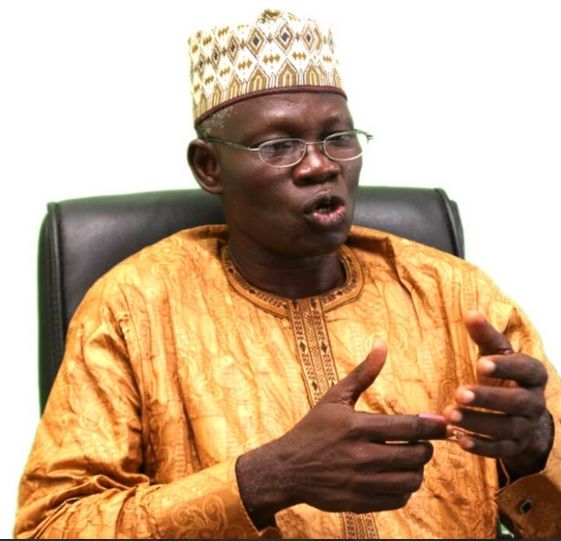

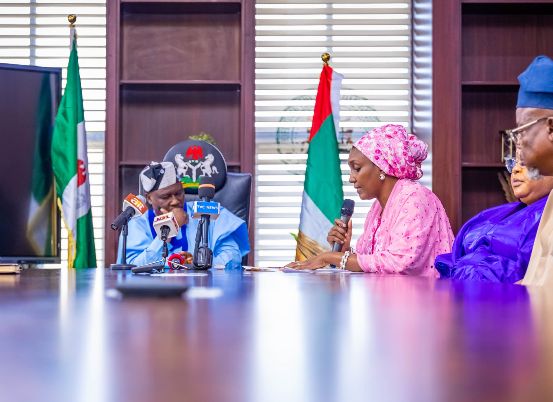



Prince Nazir Was So Close But So Far, By Yusuf Ozi-Usman
1he cousin of my wife staying with us quietly walked into my room yesterday, May 17, 2026, after taking permission, to simply hand his handphone to me. He apologized for waking me up from sleep, which I usually has after my early morning devotion. When I looked at the phone screen, what I saw jolted me up. I didn’t know when I shouted out with “inna lilLahi waina ileihi Rajiuun” (From Allah we came and to Him we are returning).
It was the announcement of the death of Prince Nazir Ado Ibrahim, son of the immediate past Ohinoyi (King) of Ebiraland in Kogi State, late Dr. Ado Ibrahim.
My eyes cleared immediately from the unfinished sleep. I jumped to my feet. I began to repeat the same words… Inna lilLahi waina Ilaihi Rajiuun.
The reality gradually dawned on me that I had never met Prince Nazir physically all the while that I interacted with him. His death hit me so bad as though the two of us just parted a few minutes before his death.
As a matter of fact, the contact number of Prince Nazir was given to me by his father, late Dr. Ado Ibrahim at the time I was gathering materials for the purpose of writing a biography on him. The late King had been a witness to Ebira-English Dictionary which I authored. He actually offered prayer for its successful outing as far back as 1996,a year to his ascension of the reverend stool. The Dictionary was launched in Kano.
The late King was also instrumental to the launching of the Holy Qur’an Translation into Ebira language, which I Co-authored. He personally hosted the launching in his famous Azad Palace. He gave out the sum of N2 million in cash.
The two successfully completed projects gave me the courage to sell the idea of writing his biography. He bought the idea without any form of resistance. From then, he made it so easy for me to be close to him, so much that I could walk into his palace at anytime; I could call him on his special private line from anywhere anytime.
In the process of interacting, and on my request, he obliged me the contact numbers of his children: Prince Malik. Prince Colonel Ahmed, Prince Nazir and that of his Personal Assistant, Prince Alonge. The idea was that I should have access to his top ranking children for whatever material I would need from them.
Of all his children whose contact numbers he gave me, it was only Prince Nazir that responded to me positively, with humility.
In September 2024, after a series of chats via WhatsApp, I brought up the issue of the biography of his father. At the time, I had done 75 percent work on the compilation of relevant materials. What remained were interviews with relevant people connected to him in one way or another, including his children, mother (s) of the children, friends, associates and so on.
Prince Nazir welcomed my suggestion that I should be given a go-ahead with the project. He pleaded with me to give him time to consult with his siblings who would be home on October 29, 2024 for the first anniversary prayers for their father, late King Ado Ibrahim. He died on October 29, 2023.
Two weeks after October 29, I engaged him in another chat, requesting to know the outcome of his consultations with his siblings. He responded promptly by pleading with me to give him more time to get the acceptance of what he called “complex family.”
With such response, I was wise enough to read between the lines. I comforted myself that Prince Nazir was just trying to be nice and diplomatic. I therefore decided to rest the matter and allow it to take its natural course.
At another time, I invited him to the launching of a book by the Guild of Corporate Online Publishers (GOCOP) in Abuja in October 2024. He promised to attend the event, which I considered to be an opportunity for the two of us to meet one-on-one. However, he could not make it to the event as he was engaged in another very important event in Lagos. He however transferred the sum of N250,000 to my account and asked me to present it as the contribution to the book launch in the name of his late father, King Ado Ibrahim. Two copies of the book were packaged for me to be delivered to him. As a matter of fact, I was praying fervently to God to make it possible for us to meet one-on-one.
What seemed an opportunity came last year when I invited him to grace the special annual get-together of Ozuka Agidima Worldwide, a prominent Clan in Ebiraland to which I belong. He gave me his word that he would attend. On the day of the event, December 6, 2025, I virtually glued my eyes to entrance gate of the venue. He didn’t seem to be coming. I had to call him on his handphone. He apologized that he couldn’t make it and that he was actually in Lagos airport getting set to fly out.
Since then, I cautioned myself not to take his humility and respect for granted, because each time we engaged in discussion, he would be responding to me as “sir.” I decided to apply some kind of wisdom, believing that he needed to be allowed to “flex” without any kind of cajolement.
One can therefore imagine the kind of feeling that I had when the news of his death was announced to me on Sunday, May 17, 2026.
This was a man that felt free talking to me whenever I contacted him. This was the man who was so close to me, but the man I never really met in life.
Prince Nazir, I pray to Allah subhannahu wata Allah to forgive all your shortcomings and admit you in His Aljanatu Firdausi. Adieu!!!
Yusuf Ozi-Usman, nipr
Tom Ohikere, a childhood friend and brother narrates as follows:
My dearest brother, Prince Nazir Ado Ibrahim of the Royal House of the Atta’s in Ebiraland, Kogi state has passed and it has hit me hard.
We grew up together, shared an eventful and rich childhood with many remarkable experiences and went through thick and thin together for 60 years!
I thought we would grow old together and share the memories of our childhood whilst in retirement.
I thought we would comfort each other in old age whilst the world quietly passed us by.
I thought so much and planned so much but alas you are gone!
You were one in a million brother. Always putting smiles on everyone’s faces.
I remember the days of Atta Lodge in Yaba, your dear father, the late Ohinoyi’s house, where we all used to meet with friends and have a great time in the late 1970’s and early 1980’s.
I remember the days in Chelsea at my apartment in Pier House, my fathers house in Brighton and your father’s mansion in Belgravia.
I remember the days of Lagos Polo Club, Ikoyi Club and Apapa Club where we used to gather and move around in our fearsome and daring “gang” of wild and adventurous friends!
I remember the boxing and karate lessons we used to have and what a great warrior and courageous fighter you were.
I remember how we were at JB’ s house in a place called Bourdillon near the National Stadium in Lagos and police raided the place!
I remember how we fought back to back and shoulder to shoulder together against our assailants whenever either of us was attacked or threatened.
We never lost brother and they never had us down! That is what made our relationship so special. Nothing & no-one could come between us.
We spoke a strange language to one another and we communicated in code and with our eyes.
We walked the dark side together and, by the grace of God, we both survived.
I remember how we learnt to ride horses together & play polo and how we used to both love marking the streets and treading the paths of the rougher sides of old Lagos in flashy cars whilst flexing our hard and crazy muscles.
I remember the rivalries we all had over the girls, I remember the fights with the white boys and the locals, I remember the squabbles we all used to have over the most insignificant things, I remember the love that our band of brothers shared, I remember the numerous controversies we got into, I remember the numerous punishments that we jointly faced from our respective parents for our many wild outings and I remember how we used to go to night clubs like Legends, Tramp, Main Squeeze, Monkberrys and others in London and Studio 54 and Xenon in New York!
I remember visiting you in a place called Geneva in upstate New York and how we drove to meet our brother Des Braithwaite in Syracuse!
I remember your Porsche 928 S and his and mine and I rember how, in the various cities in the world, the police would stop and ask us how we could afford such cars at such a young age.
We laughed them to scorn because they did not know who & what we were & more often than not we served them with hot words & left them with teary eyes & red faces!
That was in the early 1980’s and my goodness, we had fun!
We lived life to the fullest with Azad your older brother, Des Braithwaite, Kunle Braithwaite, Tonye Amachree, Deremi Ajidahun, Layeni Fagbayi, Gbegi & Dapo Ojora, Oscar Ibru, Gregg Mbadiwe, Gbolahun Sanyaolu, Ade Adetona, Ike Monu & so many others.
Later in the 1980’s you became my in-law after I married your beautiful cousin Saratu Atta, who was the daughter of your Uncle, the late Governor Adamu Atta of the old Kwara state.
She and I have a beautiful daughter called Folake who you used to dote over with such affection & who you had a soft spot for when she was a baby.
So much happened since that time but through it all you and I loved each other in the same way that Achilles and Patrocholus loved one another.
Always watching each others backs & standing up for one another, often fighting over small matters & always coming back together again.
Sadly we did not spend much time together in the last few years and were only in touch from time to time but when I heard of your passing earlier today something broke in me.
I realised that you were literally the living symbol of my lost childhood and the rallying point and star of those of us that grew up with you and loved you.
You were the bridge between the North and the South: who spoke Yoruba better than I did but who was proud of his noble Ebira Northern heritage and his Royal roots.
You were also the bridge between the children of the elites who went to the best schools from a very young age in England and those who went to the very best schools from a young age in Nigeria.
We fought gang wars between the two groups in those days whenever we came home for holidays from abroad at the parties we used to meet and the various social clubs we all belonged to but you brought us all together.
Ours was a generation of love and brotherhood which cannot be matched or replaced.
We lived life to the fullest, we had it all, we saw it all, we watched each other’s backs and accepted each other as we were.
Those were the days when brotherhood meant something. Those were the days when loyalty was everything.
Those were the days when we took pride in who we were and in being Nigerians.
Those were the days when we, as a people and a generation, bowed to no-one and had it all.
Those were the days we rocked London, New York, Paris, Athens, Cannes, Marbella, Malaga, Nassau, Monte Carlo, St. Tropez, St. Moritz, Juan Le Pins, Acapulco and much of the world without a care and with no apology.
We were tough, proud, wealthy, healthy, strong and feared young Nigerian men who had everything that we could ever want and we moved together like a pack of young wild lions.
Those were the days my brother and we thought they would never end. Those were thevdays when our parents would worry about us and our futures and we would exchange notes and share jokes behind their backs and make a mockery of their fears.
Then came adulthood with all its challenges and responsibilities and I believe that we all kept the flag flying and acquitted ourselves well.
Outside of that our nation changed and the carefree days of joy and abundance for all came to an end as the fortunes of our beloved Nigeria dwindled.
We pray for better days ahead and that our children and grandchildren can enjoy the essence and greatness of our people and country the way we once did.
Meanwhile my brother I commit you into the hands of God.
May He forgive you for all your sins and grant you eternal peace and rest in heaven.
May your name never fade away or be forgotten and may your legacy, a great legacy built by your distinguished ancestors and forefathers, remain strong.
I miss you already. I miss our fellowship. I miss our shared experiences and our many secrets.
I miss our joint childhood and all our other brothers many of whom have passed on.
Ours is a dwindling generation.
We had our time and God was good to us. We had everything and cannot complain.
Now it is time for you to rest brother and for those of us you have left behind to accept the inevitablity of what lies ahead.
God is with us and you are with Him. Greet our brothers that crossed over before you and tell them that FFK sends his love.
I pray for your precious soul brother and know that I shall NEVER forget you, whether in this world or the next.
Rest well Suku Su and may the Lord strengthen, bless and protect your family and your wife, children and loved ones that you have left behind.