An outbreak of Tuta Absoluta, popularly known as Sharon has hit parts of Kano State, ravaging tomato farms. Information reaching us at Greenbarge Reporters online newspaper showed that the pest has spread across key tomato producing areas, including Bagwai, Shanono, Rogo, Tofa, Bunkure, Kura, Garun Malam, Rano, Kibiya and parts of Tudun Wada and Dawakin Kudu Local Government Areas. Tuta Absoluta is confirmed to attack tomato crops at all growth stages, destroying leaves, stems, flowers and fruits, which leads to severe crop losses if not properly managed. Chairman of the Standing Committee on Agriculture and Natural Resources, Alhaji Ahmed Ibrahim (APC-Karaye) in a report presented to the Assembly on the outbreak, said that the committee was assigned to assess the infestation following a motion on a Matter of Urgent Public Importance by Ali Lawan Kiyawa (APC-Bagwai/Shanono). He said that the outbreak has severe consequences, not only for farmers but for the state and the nation as a whole. According to him, the outbreak can cause a shortage of tomatoes and drive up prices nationwide. The committee chairman called on the House to direct the Kano State government and other stakeholders to as a matter of urgency take immediate action to contain the pest. According to him, the outbreak occurs annually, mostly during the summer period. To address this, the committee recommends the following measures: “Immediate provision of resources to Kano State Agricultural and Rural Development Authority, KNARDA, including approved insecticides, pheromone traps, sprayers, protective equipment, and other implements to manage the outbreak and prevent its spread. “Deployment of extension workers and technical staff to farming areas, equipped with necessary working materials for early detection and management of crop diseases. “Collaboration between KNARDA and local governments to sensitize farmers, provide training on Integrated Pest Management (IPM), and enforce regulations against fake or substandard agrochemicals. “Strengthening state-owned agricultural research institutions and continuous collaboration with federal and NGO agencies to provide technical support to farmers. “Provision of relief assistance to affected farmers to reduce losses. “That the House should kindly urge the State Government to treat this matter with urgency in the interest of citizens and agricultural development.”
The editorial board of Greenbarge Reporters online newspaper was for over three years, inundated with suggestions and requests from our numerous readers across the world for us to begin to focus on environmental and climate change issues. And so, recently, members of the Board and management evaluated such avalanche of requests and suggestions, and concluded to begin to refocus on environment in particular and climate change in general, especially in line with our nomenclature: “Greenbarge.” This is coming as strategic move to address the emerging discourse across Nigeria, Africa and the wider world, on climate change which is no longer a distant environmental issue. It is confirmed that climate change affects agriculture, security, health, migration, energy, transportation and the economy. We therefore, wish to use the Greenbarge Reporters online newspaper platform to consistently report these realities and hoping to eventually become an important voice in public education and policy advocacy. We are aware that climate change reporting has become more demanding in Nigeria because many communities are already experiencing its effects directly. There is a growing desertification in the Northern part of the country; flooding in states along the Niger and Benue rivers, erosion in southern communities. There is rising food prices caused by, among other environmental issues, irregular rainfall and heat-related health challenges. It is a clear point showing how environmental issues connect with everyday life. By focusing on these matters, Greenbarge Reporters hopes to help readers understand that climate change is not merely a scientific debate but a social and economic reality. The newspaper will contribute in several important ways as follows: *Public Awareness and Education: Many citizens still have limited understanding of climate change. Through investigative reports, interviews, documentaries and opinion articles, the newspaper hopes to simplify scientific concepts for ordinary readers. And it is aimed at helping communities to understand causes, consequences and possible solutions. *Holding Authorities Accountable: We are embarking on climate journalism as way of monitoring government promises on flooding control, environmental protection, renewable energy and ecological funding. Our commitment to investigative reporting is likely to expose poor implementation of environmental policies, illegal mining, deforestation and pollution.
Promoting Local Solutions: Beyond reporting disasters, Greenbarge Reporters will highlight positive efforts by farmers, researchers, students, innovators and local communities on how they are adapting to climate challenges. Stories will be featured on tree planting, solar energy, waste recycling and sustainable farming to inspire action. *Amplifying Voices of Vulnerable Communities: Rural dwellers; fishermen, women and young people are often the most affected by environmental problems but receive the least media attention. The newspaper will give such groups a platform to share their experiences and demands. *Encouraging Youth Participation: Young Africans are increasingly active in climate advocacy. By featuring youth-led, and women-led initiatives, debates and environmental campaigns, the newspaper will help to build a generation more conscious about sustainability and environmental responsibility. *Creating Specialized Journalism: Climate journalism is becoming a respected and influential media niche globally. Consistent and credible reporting will go a long way to position Greenbarge Reporters as a leading authority on environmental and climate issues in Nigeria and Africa. We acknowledge the fact that to succeed, Greenbarge Reporters newspaper would have to ensure accurate and fact-based reporting, engage in collaboration with scientists and environmental experts and bring about balanced coverage, free from sensationalism. We therefore solicit partnerships with environmental organizations, academic institutions and international climate initiatives interested in supporting public awareness projects. As a matter of fact, the Greenbarge Reporters’ shift toward climate change reporting reflects a forward-looking understanding of one of the defining issues of the 21st century. And we are determined to pursued it with professionalism and consistency for the purpose of educating the public, influencing policy discussions and contributing meaningfully to environmental protection and sustainable development in Nigeria and beyond.
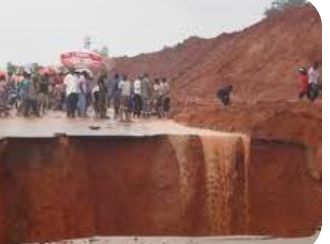
Over 65 years after Nigeria’s Independence, South East in particular, is still with uncontrollable erosion. It’s estimated that at least N20 Billion is needed to fix the major ones in Anambra alone. Why have the States and Federal Governments turned their back on this regional menace for this long?
For those who have closely followed the trajectory of the National Emergency Management Agency (NEMA) under the leadership of Zubaida Umar over the past two years, her recent visit to a primary school to share knowledge on disaster risk reduction comes as no surprise. It is, rather, a natural extension of a leadership style that has steadily emphasised preparedness, responsiveness, and human connection in public service. Her presence at LEA Primary School in Durumi, Abuja, was more than a ceremonial appearance. In a country where public officials are often distant figures, rarely seen engaging directly with ordinary citizens, let alone schoolchildren, her interaction carried a symbolic and practical weight. For the pupils, the encounter was not merely memorable; it was formative. It introduced them to ideas and responsibilities that are rarely embedded in their formal education, yet are crucial to their survival and well-being. During the visit, Zubaida Umar engaged the children in an interactive session focused on disaster prevention and safety awareness. She spoke in simple, relatable terms, emphasising everyday habits and practical measures that can reduce risks at home and in school. This approach reflects a broader understanding that disaster management is not confined to emergency rooms or rescue operations; it begins with awareness, preparedness, and responsible behaviour at the most basic level of society. In many ways, this initiative exposes a glaring gap in Nigeria’s educational and social framework. The system continues to prioritise theoretical knowledge at the expense of practical, life-saving skills. Children are taught to pass examinations, but not necessarily to navigate emergencies. Skills such as CPR, basic first aid, situational awareness, and even rudimentary navigation are largely absent from the curriculum. Yet, these are competencies that can mean the difference between life and death in critical moments. By introducing pupils to concepts of disaster preparedness, Umar is not only filling this gap but also redefining what it means to educate. Her message that safety is a shared duty resonates far beyond the classroom. It challenges a culture of passivity, encouraging individuals, no matter how young, to take responsibility for their environment. Teaching children to recognize hazards, report dangers promptly, and adopt preventive habits instills a mindset that can ripple through families and communities. This outreach also underscores the importance of mentorship, an often-overlooked aspect of leadership in Nigeria. In a society where young people frequently lack access to role models within public institutions, such engagements can be profoundly impactful. Seeing a figure of authority not only speak to them but invest time in their development can inspire confidence, curiosity, and a sense of belonging in the national narrative. However, this school visit is only one facet of a broader record. Under Zubaida Umar’s leadership, NEMA has demonstrated a more proactive and coordinated approach to disaster management. Her tenure has been marked by timely responses to emergencies, notably during the devastating floods of 2024. Her decision to temporarily relocate to Maiduguri following the Alau Dam overflow exemplified a hands-on approach that prioritised immediate action over bureaucratic distance. Such leadership, grounded in presence and urgency, is rare but necessary in times of crisis. Equally significant are the structural improvements introduced within the agency. The strengthening of early warning systems and the timely issuance of alerts have enhanced the country’s ability to anticipate and mitigate disasters. The deployment of technology-driven solutions, including a centralised emergency response dashboard for real-time monitoring and resource mobilisation, reflects a shift toward modern, data-informed governance. These innovations not only improve efficiency but also build public trust in the system’s capacity to respond effectively. Moreover, her emphasis on collaboration has reinforced NEMA’s operational strength. By fostering closer coordination with state emergency agencies, the military, paramilitary organisations, non-governmental bodies, and international partners, she has helped create a more integrated and responsive network. Disaster management, by its nature, requires collective effort, and this inclusive approach ensures that resources and expertise are effectively harnessed. Yet, perhaps the most enduring aspect of her leadership lies in its human dimension. The decision to step into a classroom and speak to children about safety is a reminder that governance is not solely about policies and institutions, but about people. It is about anticipating needs, bridging gaps, and investing in the future in ways that are both practical and meaningful. In a nation grappling with numerous challenges, such initiatives offer a glimpse of what purposeful leadership can achieve. They remind us that progress is not always measured in grand projects or sweeping reforms, but sometimes in quiet, deliberate acts that plant the seeds of change. By equipping young Nigerians with the knowledge and mindset to navigate risks, Zubaida Umar is contributing to the creation of a more resilient society that is better prepared, more aware, and ultimately, more secure. Her outreach to schools, therefore, should not be seen as an isolated gesture, but as a model worth emulating. It calls on other public officials to rethink their roles, to engage more directly with the people they serve, and to prioritise initiatives that have lasting impact.
The National Chairman of the ruling All Progressives Congress (APC), Professor Nentawe Yilwatda, has threatened to wield big stick on any aspirant seeking elective positions on the platform of the party that tries to cause any kind of trouble in the forthcoming primaries. A statement by Abimbola Tooki, his Special Adviser on Media and Information Strategy, quoted the chairman as advising the aspirants to conduct themselves with utmost discipline, maturity and statesmanship during the party primaries across the country. Addressing the aspirants who recently underwent screening exercises conducted by various committees that were constituted by the party for the 2027 electoral process, Professor Yilwatda stressed that the party is committed to transparent, peaceful, credible, and democratic primaries that will further strengthen internal democracy and consolidate the confidence Nigerians continue to repose in the ruling party. He made it clear that the leadership of the party would not tolerate any act capable of disrupting the smooth conduct of the primaries. He said that any aspirant or supporter found instigating violence, sponsoring unrest, engaging in anti-party activities or attempting to undermine the integrity of the process would face severe disciplinary measures, including immediate suspension from the party. According to him, the APC has painstakingly built a reputation as the most organised and nationally accepted political platform in Nigeria, and that no individual ambition would be allowed to override the collective interest of the party and the stability of the nation. Professor Yilwatda reminded the aspirants that contests of such nature inevitably produce winners and non-winners, stressing that democracy thrives on healthy competition, mutual respect and acceptance of outcomes. “In every democratic contest, only one person will eventually emerge victorious. What is important is the spirit with which the process is approached. I urge all aspirants to display maturity, patriotism, and good sportsmanship by embracing the outcome of the primaries in the overall interest of the party and our democracy.” The APC Chairman advised all aspirants to see themselves as ambassadors of the party whose conduct before, during and after the primaries would reflect the values, discipline, and vision of the APC. Professor Yilwatda who commended President Bola Ahmed Tinubu for his tireless commitment to strengthening democratic institutions and ensuring the success of the party’s internal processes said that the President Tinubu has continued to invest enormous energy, political goodwill and leadership capacity in building a stronger, more united and forward-looking APC capable of delivering sustainable development to Nigerians. He advised aspirants and party stakeholders to align with the President’s vision and avoid actions or utterances capable of creating division, overheating the polity, or undermining the significant progress already recorded under the Renewed Hope Agenda. “The Renewed Hope administration is laying a solid foundation for a stronger and more prosperous Nigeria. This is not the time for destructive politics or selfish interests that may put a dent on the remarkable progress that has been achieved.”
Former Vice President of Nigeria, Atiku Abubabar has expressed disappointment over the way opposition parties have zoned the 2027 presidential ticket to the south ahead of primaries, thereby technically scheming him out. In a statement by Olusola Sanni, his spokesperson, Atiku, who said he would be contesting for Presidency for the last time in 2027, described the adoption of zoning the presidency to the South as a self-defeating and intellectually dishonest. According to him, it would amount to political naivety for the opposition to adopt the same logic as the All Progressives Congress (APC), without a sober assessment of electoral realities. Atiku said that politics must be driven by strategy, coalition-building and hard electoral arithmetic, not emotional talking points or selective moral arguments. “The first and most obvious question is this: how does a Southern opposition candidate realistically unseat a sitting Southern president? Nigerian political history offers no precedent for such an outcome. “No incumbent president has ever been defeated by an opposition challenger from the same geopolitical bloc. To insist otherwise is to enter the contest already defeated.” Atiku argued that the moral argument being advanced in favor of southern zoning collapses under scrutiny. “By 2027, the South would have held presidential power for approximately 18 years in the Fourth Republic, compared to about 10 years for the North. If the South retains power for another four years, that disparity widens even further. “It therefore becomes difficult to understand the justice in an argument that seeks to deepen an already existing imbalance under the guise of equity.” Atiku also accused some political actors of selective memory and opportunism, particularly those who abandoned the zoning principle in 2011 following the death of President Umaru Musa Yar’Adua, only to now present it as a sacred political doctrine. “It is intellectually dishonest for those who enthusiastically supported a Southern presidency under Goodluck Jonathan in 2011, despite the North’s legitimate expectation under the informal zoning arrangement, to now suddenly posture as custodians of rotational justice. Principles do not become sacred only when they align with personal ambition.” He however acknowledged that the South’s aspiration to produce a president remains legitimate and deserving of serious national engagement, but warned against reducing that aspiration to what he called: “transactional political bargaining.” “The Southeast deserves a sustainable and credible pathway to national leadership—not symbolic tokenism or bespoke arrangements tailored to satisfy one individual’s ambition.” Atiku called on the opposition parties to focus on building a credible national coalition capable of defeating the incumbent rather than embracing narratives that may inadvertently strengthen President Tinubu’s re-election prospects. “Defeating an incumbent president requires realism, not romanticism; strategy and not sentiment; honesty, not selective memory. The opposition must decide whether its goal is to make an emotional statement or to actually win power.” Meanwhile, the Nigeria Democratic Congress (NDC) and other opposition parties have recently zoned presidential ticket to the Southern part of Nigeria.
I had earlier spoken about intubation. It is a medical procedure involving the insertion of a flexible plastic tube into the trachea (windpipe) through the mouth or nose to maintain an open airway, deliver oxygen, or facilitate mechanical ventilation (life-support machine). It is used during emergencies, critical care, or anaesthesia to ensure gas exchange when a patient cannot breathe independently. Or, as in my case, where there is respiratory failure/distress: when a patient cannot breathe sufficiently on their own because of severe pneumonia or COPD. Different people may have different experiences regarding it since it takes one to a hallucinatory world. In my case, I imagined myself with just one eye, with my head in a glass box through which I viewed the world. You know, the kind of box they used to sell meat pie, or chop one, some decades ago. And you will see yourself wandering all over the world, sometimes recalling childhood memories long forgotten. It was in this state that I saw myself, where I imagined a gate of no return, once you pass through it. A lady was standing there, and I overheard her telling someone that his time was up, nothing more to do. Something told me that I would be dying if I kept silent because it meant I agreed with her opinion. So I quickly told her I had things to do, things to amend, and needed to go back. She looked at me for a time, dispassionately, and told someone, “Let him go.” This was the point at which I assumed I turned back from that gate. Kois is an Arabic word that means good, nice, well, or okay. It comes from Egyptian Arabic and is often used at Al Shifa, likely because most of the doctors and nurses there are Egyptian. People use it to describe something of good quality, a good person, or to say everything is fine. A worker will come and say, for instance, “Gimba, how are you?” and I would say “kois.” Or they may just say, “Gimba, kois?” and I would say “kois.” When I was intubated, I also saw myself wrapped in a shroud, among people to be buried. I heard them saying I was in the next batch. I told myself why a living person would be buried. There was a shackle on my neck, and I pulled it out. A nurse, whose name I will disclose later, supervising the burial, turned to me aghast, I guess, because I had escaped. He said, “Gimba, why now?” I turned to him and said “kois”. That was how I “escaped” being interred (lol). After the tracheostomy, the doctors next had to wean me off dependence on life-support machines and oxygen. The problem was with the oxygen-supply machine; you feel so comfortable that you would not want to leave that zone. This was made all the more difficult because my lungs had not been working at all, while my chest was stiff, and now the challenge is to awaken them. Without the machine, I found it difficult to breathe; it was very gritty, like rubbing sandpaper on concrete, making me feel like I might not last the next five minutes. I heard a doctor telling me that I had to start breathing naturally. When they removed the oxygen-supplying machine, I could only breathe with the utmost difficulty. I told the doctor I would not do it, and he said, “Then I must intubate you again.” I thought he was bluffing and wanted to call him out. I said, “Do it.” Before you could say kois, I imagined my one-eyed head in a box. I shouted, “I will do it,” and the “magician” brought me back to normal. Then he said what touched me, “Hassan, we want to help you, but you must also help us.” From then on, I resolved to help myself and thought of the saying, “no gain, no pain.” I thought of my family, friends and associates, my loved ones, and I said to myself, “You can do it.” And perhaps, just perhaps, I also thought of further blackening the heart of an enemy. I adopted a method of breathing taught to me by Coach Kalid, an Egyptian physiotherapist at Saudi-German: Breath in deeply through the nose and exhale slowly from the mouth. In life, a human being normally has other humans he looks up to and draws strength from, in most cases, living beings. This is because, in your mind, they embody what you aspire to be, and so to you they are fighters, strong men and heroes. To Allah, in whose Hands my life is, and Who gave me more time, Adamu Maina Waziri and Honourable Mai Mala Buni, the governor of Yobe, were the two people whose faces were engraved in my mind while going through that difficult breathing experience. People may see them as different or even opposite personalities. No, they aren’t. Both of them fulfil promises and will never tell you what they know is not true. They are loyal to those who attach themselves to them and can go to any length to defend a loyalist. They are forgiving. In their lives and careers, they have been betrayed, yet they would welcome back the betrayer if he showed remorse. The difference may be that Waziri has a strong personality and infectious charisma with palpable strength – characteristics some see as depicting arrogance or trouble-seeking. Come close to him, and you will be surprised at how humble he is. He may serve you food and collect the dishes. Mai Mala, on the other hand, too, has steely strength that is deeply hidden behind an unassuming facade. But he is also as humble as they come. If he knew you thirty years ago, and you met today, he would interact with you as you did at that time. You will be the one to pull back, knowing his status. Well, Waziri knew me when I could not know him. Being a childhood friend of my late cousin, Dr Mohammed Mamman, he might have known me when I was barely out of my napkins! The first time I spoke with him was when he was an S.A. to Adamu Ciroma in the Federal Ministry of Agriculture. He facilitated my getting a contract to print posters for the 1995 World Food Day, christened “Water is Life.” Politics brought me close to Mai Mala, a very generous soul from the outset. Sometimes, when he visits you with his generosity, you will forget the two words “Thank you”. Your first instinct would be to kneel and say “Forgive me”. I overheard his fellow Governor from a North-Eastern State bordering Yobe State, eulogising him in public, addressing him as Dogo mai hanun kyauta or “The tall man with the generous hand”. The bond between Waziri and me must have been established, or solidified, by my late father, Alhaji Suleiman Gimba Ahmed. There was a day he called me and said, “Hassan, I met with Adamu Waziri today in Fika, and I told him to take care of you.” And I still recall when he (my father) was on his way to Nasarawa State, accompanied by Alkali Mohammed Ahmed (aka Alkali Yaro ba kunya), they stopped over at Waziri’s house. When they were leaving, he held Waziri’s right hand, brought up my right hand and joined them. We were in the same camp as Mai Mala in the People’s Democratic Party (PDP) 2023 gubernatorial primaries. When the Action Congress (AC) was formed in 2006, he became its first Yobe State Chairman, and I became the first State Secretary. It is little wonder that I looked up to these great Yobeans whom Allah (SWT) has elevated to the level of affecting national affairs. Waziri and his wife, Hajiya Zulai, visited me twice at the hospital. Mai Mala has also sent a representative, Alhaji Shettima Alkali, to visit me, and he helped a lot with the hospital bills. It was a pleasant surprise seeing the people who visited me in the hospital. Apart from those I mentioned, the Consul-General (like an Ambassador) of our Embassy visited me twice, likewise his deputy and one member of the embassy staff. Professor Hauwa Mohammed Sani, Dr Abubakar Usman, Ibrahim (Iro) Madaki and many others, some I know, some I don’t. My Government College (GOCOMAID) colleagues of the 1982 set showed me that we were more than classmates, but brothers from different parents. Our forum, though founded by me, is coordinated by Liman Shettima. It is powered by Shettima Alkali Imam, together with Ambassador Umar Iliya, the Fulani boy (to us) from Joringel, just outside Damagum, who Allah (SWT) has elevated to a national political player. Shettima, a “bamblasta”, whose generosity has “blasted” almost all colleagues in need and Ambassador Umar Iliya are really utilising Allah’s blessings on them to make our mates (who life has not been smiling at) laugh in joy. It is the same with my Shehu Garbai Primary School 1977 classmates. These wonderful souls, in these hard times, just like the GOCOMAID chaps, too, contributed money for my hospital bills. And they were always on the phone, communicating with my family. Indo (Aisha) Buba Ardo, Misan Obiatan, Amina Musa Kida, Mohammed Kumalo Abubakar Barde, Salamatu Umar Baba and others. And even our big brother, Ahmadu Musa Kida, another Shehu Garbai product. I also acknowledge that the Vice President, Kashim Shettima, sent me his contribution through Lawan Kolo Geidam. The NSA, too. Meanwhile, to everyone, I say kois, until we meet in the next edition to discuss Al Shifa Hospital and its staff, plus other things, in sha Allah.
Hassan Gimba is the Publisher and CEO of Neptune Prime.
Nigeria is once again having one of its oldest political arguments — who should lead next, the North or the South? But beneath the noise, accusations, and emotional slogans lies a deeper national question many ordinary citizens are quietly asking: Does it really matter where the president comes from if hunger, insecurity, and hardship continue to define daily life? A political article currently circulating across social media has reignited the zoning debate with unusual intensity. The piece argues that, since Nigeria returned to democracy in 1999, the South has spent more years in presidential power than the North. Therefore, the logic of rotation demands that the North still has a legitimate claim to produce the president for some more years. The argument is a simple arithmetic. Former President Olusegun Obasanjo governed for eight years. Former President Goodluck Jonathan spent about six years in office. President Bola Ahmed Tinubu is currently serving his term. From the Northern, the late President Umaru Musa Yar’Adua governed for about two years before his death, while former President Muhammadu Buhari completed eight years. To many supporters of rotational politics, the conclusion appears obvious: if zoning truly matters, then fairness should not suddenly become selective. Afterall, the issue is not as straightforward as political loyalists on either side want Nigerians to believe. For decades, zoning has acted like an unofficial peace agreement within Nigerian politics — an unwritten understanding designed to calm fears in a deeply divided country. In a country where ethnicity, religion and regional identity often influence political loyalty, rotating power became a way of assuring every region that it belonged to the Nigerian project. That arrangement may not be written directly into the Constitution, but politically, it has shaped nearly every major presidential contest since the return of democracy. Today, many Nigerians appear exhausted by the entire conversation. A trader struggling to feed her children in Kano may not care whether the president comes from Lagos or Katsina. A farmer displaced by insecurity in Benue is likely more concerned about surviving the next planting season than about political arithmetic. A graduate roaming the streets of Abuja or Port Harcourt without employment may see little comfort in regional arguments while inflation continues to swallow hope. This is the point where the debate becomes emotional. Supporters of zoning say abandoning rotation could deepen feelings of exclusion and fuel dangerous resentment in an already fragile federation. To them, balance matters because Nigeria’s history has shown how quickly political domination can trigger distrust. But critics ask a painful question: What exactly has ordinary Nigeria gained from “turn-by-turn” leadership? They argue that power has rotated for years between North and South yet insecurity has worsened, corruption remains deeply rooted, electricity is unstable, unemployment keeps rising and millions continue to battle poverty regardless of who occupies Aso Rock. For these Nigerians, competence matters more than geography. The controversy surrounding former Vice President Atiku Abubakar and other political figures has further exposed what many see as the hypocrisy within elite politics. The same politicians who once defended zoning passionately sometimes dismiss it when it no longer favors their ambitions. That inconsistency is part of what is fueling public frustration. Many citizens increasingly believe that political elites use zoning only when convenient, while ordinary people are left carrying the consequences of poor governance. Maybe that is why this latest debate has attracted so much attention online. It is not merely about the North or the South. It reflects a growing national anxiety about fairness, leadership, trust, and the future of Nigeria itself. The truth is that Nigeria stands at a difficult crossroads. The country is battling economic hardship, rising food prices, insecurity, youth frustration, and weakening public confidence in institutions. In moments like this, regional arguments can easily become emotionally charged because citizens are desperate for answers and stability. However, history also teaches that nations survive not simply because power changes hands geographically, but because leadership produces results people can actually feel in their daily lives. At some point, Nigerians may have to decide whether elections should continue to revolve primarily around where a candidate comes from — or whether the country is finally ready to ask tougher questions about competence, integrity, vision, and accountability. This is because, in the end hunger has no tribe. Unemployment has no religion. And insecurity does not ask whether its victims are Northerners or Southerners before striking. As the country moves closer to another election cycle, the tension between zoning and merit remains one of the defining issues in Nigeria’s political conversation. This is the uncomfortable truth hiding beneath Nigeria’s counterproductive endless zoning debate.
The Committee for the Defence of Human Rights (CDHR) has advised the Socio-Economic Rights and Accountability Project (SERAP) to pay the N100 million damages awarded against it as a mark on respect for the judgment of the High Court of the Federal Capital Territory in the defamation suit instituted by two operatives of the Department of State Services (DSS). In a statement, the rights group stressed the importance of individuals and organisations obeying decisions of competent courts in line with the rule of law and democratic principles. The group said that while advocacy organisations and citizens possess constitutional rights to freedom of expression and public criticism, such rights must be exercised responsibly and within the bounds of the law. According to the organisation, the court, after reviewing evidence presented before it, found that the publication made against the DSS operatives was defamatory and injurious to their professional reputation. The group advised SERAP to therefore comply with all lawful directives contained in the judgment pending any appeal and refrain from statements capable of escalating tensions or undermining judicial authority. “The rule of law remains the foundation of every democratic society. Human rights advocacy must coexist with accountability, fairness, and respect for due process.” The statement, signed by CDHR President and Secretary of the Board of Trustees, Debo Adeniran and the group’s National Publicity Secretary, Jeremiah Onyibe respectively, made it clear that no organisation is above the law, just as no security agency should be immune from lawful scrutiny. Also, the Centre Against Injustice and Domestic Violence (CAIDOV), accused SERAP of attempting to ridicule the court’s decision. In a statement signed by its Executive Director, Comrade Gbenga Soloki, CAIDOV said that SERAP had continued to pin on its X handle claims that DSS operatives invaded its Abuja office on September 9, 2024, despite what it described as a misrepresentation of facts. “We in the human rights community should lead by example. We should not be seen as the very persons breaching human rights in the name of free speech. Human rights is universal. It is for everybody. We should not trample on the rights of others simply because they chose to be security agents.” CAIDOV argued that the N100 million damages awarded against SERAP for defamation should not be viewed as extraordinary, citing examples of global firms sanctioned over misconduct. “Very big corporations around the world have at one time or the other been caught lying or cheating. Just last year, Deloitte, PwC and EY Netherlands were fined $8.5 million for cheating, while KPMG Netherlands was fined $25 million in 2024 for widespread cheating on training exams. What then is the big deal in a Nigerian court imposing a N100 million fine on SERAP for defamation?” The group also faulted Senior Advocate of Nigeria, Ebun-Olu Adegboruwa, for allegedly criticising the judgment instead of encouraging an appeal process. “SERAP had nearly two years while the matter lasted in court to assemble the best lawyers in their arsenal. They failed to. All their legal luminaries waited until they lost the case, then turned to the media to wage propaganda against two DSS operatives.” CAIDOV described as an irony for SERAP that had often relied on Nigerian courts to hold public institutions accountable, to now be the one questioning the judiciary because the verdict did not favour it. “If people like Ebun-Olu Adegboruwa feel they know more than our revered judges, it is not too late for him to transmute from a lawyer to a judge.”
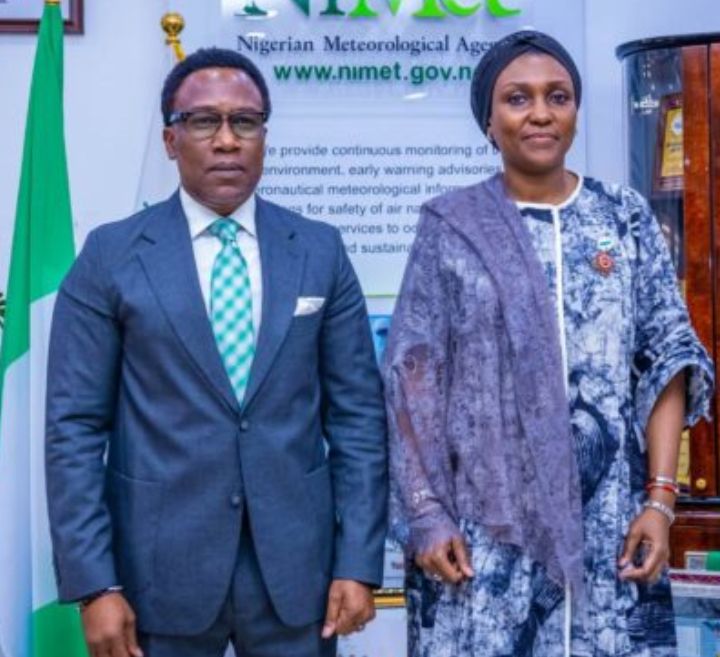
The Director General of the National Emergency Management Agency (NEMA), Mrs. Zubaida Umar, has advocated data sharing process with Nigerian Meteorological Agency (NiMet) for the purpose of, amongst others, disaster risk management. Mrs Zubaida Umar, who paid a working visit to NiMet in Abuja yesterday, May 7, stressed the need for the two agencies of the government to strengthene synagy on climate information for timely disaster preparedness. She emphasized the importance of stronger synergy in the areas such as timely weather and climate forecast dissemination, early warning systems, preparedness planning, and data sharing for disaster risk management. She noted that there has been increase in climate-related hazards such as flooding, windstorms, and extreme weather conditions which she said require sustained collaboration among relevant agencies to ensure timely preparedness and coordinated response actions. The NEMA boss said that there is need for continuous engagement between both agencies through an effective joint disaster early warning framework aimed at enhancing proactive disaster management and protecting lives and livelihoods. Mrs. Zubaida Umar further noted that access to timely and reliable climate information remains critical to NEMA’s ongoing efforts to promote anticipatory action and strengthen community resilience nationwide. This was even as the Director General of NiMet, Charles Anosike, gave assurance that the Agency would continue to be committed to strengthening its partnership with NEMA through the provision of climate and weather data necessary for timely disaster preparedness and emergency management in Nigeria.
We use cookies on our website to give you the most relevant experience by remembering your preferences and repeat visits. By clicking “Accept”, you consent to the use of ALL the cookies.
This website uses cookies to improve your experience while you navigate through the website. Out of these, the cookies that are categorized as necessary are stored on your browser as they are essential for the working of basic functionalities of the website. We also use third-party cookies that help us analyze and understand how you use this website. These cookies will be stored in your browser only with your consent. You also have the option to opt-out of these cookies. But opting out of some of these cookies may affect your browsing experience.
Necessary cookies are absolutely essential for the website to function properly. This category only includes cookies that ensures basic functionalities and security features of the website. These cookies do not store any personal information.
Any cookies that may not be particularly necessary for the website to function and is used specifically to collect user personal data via analytics, ads, other embedded contents are termed as non-necessary cookies. It is mandatory to procure user consent prior to running these cookies on your website.





 Promoting Local Solutions:







NEMA’s Defining Moment Under Zubaida Umar
Her presence at LEA Primary School in Durumi, Abuja, was more than a ceremonial appearance. In a country where public officials are often distant figures, rarely seen engaging directly with ordinary citizens, let alone schoolchildren, her interaction carried a symbolic and practical weight. For the pupils, the encounter was not merely memorable; it was formative. It introduced them to ideas and responsibilities that are rarely embedded in their formal education, yet are crucial to their survival and well-being.
During the visit, Zubaida Umar engaged the children in an interactive session focused on disaster prevention and safety awareness. She spoke in simple, relatable terms, emphasising everyday habits and practical measures that can reduce risks at home and in school. This approach reflects a broader understanding that disaster management is not confined to emergency rooms or rescue operations; it begins with awareness, preparedness, and responsible behaviour at the most basic level of society.
In many ways, this initiative exposes a glaring gap in Nigeria’s educational and social framework. The system continues to prioritise theoretical knowledge at the expense of practical, life-saving skills. Children are taught to pass examinations, but not necessarily to navigate emergencies. Skills such as CPR, basic first aid, situational awareness, and even rudimentary navigation are largely absent from the curriculum. Yet, these are competencies that can mean the difference between life and death in critical moments.
By introducing pupils to concepts of disaster preparedness, Umar is not only filling this gap but also redefining what it means to educate. Her message that safety is a shared duty resonates far beyond the classroom. It challenges a culture of passivity, encouraging individuals, no matter how young, to take responsibility for their environment. Teaching children to recognize hazards, report dangers promptly, and adopt preventive habits instills a mindset that can ripple through families and communities.
This outreach also underscores the importance of mentorship, an often-overlooked aspect of leadership in Nigeria. In a society where young people frequently lack access to role models within public institutions, such engagements can be profoundly impactful. Seeing a figure of authority not only speak to them but invest time in their development can inspire confidence, curiosity, and a sense of belonging in the national narrative.
However, this school visit is only one facet of a broader record. Under Zubaida Umar’s leadership, NEMA has demonstrated a more proactive and coordinated approach to disaster management. Her tenure has been marked by timely responses to emergencies, notably during the devastating floods of 2024. Her decision to temporarily relocate to Maiduguri following the Alau Dam overflow exemplified a hands-on approach that prioritised immediate action over bureaucratic distance. Such leadership, grounded in presence and urgency, is rare but necessary in times of crisis.
Equally significant are the structural improvements introduced within the agency. The strengthening of early warning systems and the timely issuance of alerts have enhanced the country’s ability to anticipate and mitigate disasters. The deployment of technology-driven solutions, including a centralised emergency response dashboard for real-time monitoring and resource mobilisation, reflects a shift toward modern, data-informed governance. These innovations not only improve efficiency but also build public trust in the system’s capacity to respond effectively.
Moreover, her emphasis on collaboration has reinforced NEMA’s operational strength. By fostering closer coordination with state emergency agencies, the military, paramilitary organisations, non-governmental bodies, and international partners, she has helped create a more integrated and responsive network. Disaster management, by its nature, requires collective effort, and this inclusive approach ensures that resources and expertise are effectively harnessed.
Yet, perhaps the most enduring aspect of her leadership lies in its human dimension. The decision to step into a classroom and speak to children about safety is a reminder that governance is not solely about policies and institutions, but about people. It is about anticipating needs, bridging gaps, and investing in the future in ways that are both practical and meaningful.
In a nation grappling with numerous challenges, such initiatives offer a glimpse of what purposeful leadership can achieve. They remind us that progress is not always measured in grand projects or sweeping reforms, but sometimes in quiet, deliberate acts that plant the seeds of change. By equipping young Nigerians with the knowledge and mindset to navigate risks, Zubaida Umar is contributing to the creation of a more resilient society that is better prepared, more aware, and ultimately, more secure.
Her outreach to schools, therefore, should not be seen as an isolated gesture, but as a model worth emulating. It calls on other public officials to rethink their roles, to engage more directly with the people they serve, and to prioritise initiatives that have lasting impact.
Taken from Blueprint Newspaper. Editorial.