Former Aviation minister, Femi Fani-Kayode, has called on Nigerians not to laugh at the Inspector-General of Police (IGP), Ibrahim Idris over his alleged struggle to read a speech at an event in Kano.
”Our I-G of Pol. needs prayers and we must treat him with compassion. What happened to him whilst reading his infamous “transmission” speech was not ordinary. He is the victim of dark spirits and satanic forces. We must not gloat over it or laugh at him. Instead we must pray for him.”
Fani Kayode said these in series of tweets against the background of the footage trending online in which the police boss was shown as continually repeating ‘transmission’ at the commissioning of the Police Technical Intelligence unit in Kano state. [myad]
Governors of the 36 states of Nigeria have discovered that the sum of N526 billion and 21 billion dollars was under-paid to the federation account by the Nigerian National Petrleum Corporation (NNPC) and other Federal Government revenue generating agencies between 2010 and 2015.
Rising from the monthly National Economic Council (NEC) today, Thursday, the governors said that the affected agencies which included NNPC and 15 others were exposed following the presentation of the report of the technical audit of the agencies to the NEC by KPMG.
Governor Ibrahim Dankwambo of Gombe, who spoke to news men shortly after the meeting, presided over by Vice-President Yemi Osinbajo at the Council Chamber of the presidential villa, Abuja, said that NEC’s Ad hoc Committee which he chaired with members including governors of Edo, Kaduna, Akwa Ibom, Lagos and the Finance Minister had recommended refund of the amounts under-paid.
According to the governor, NEC has agreed to extend the audit to June 2017.
“One of the resolutions of NEC today is to extend the audit to June 2017. So, the audit will continue for the remaining agencies.
“It is NNPC, NPDC, DPR, Customs, Federal Internal Revenue Services, NPA, Maritime Authority, all the revenue generating agencies and the details of the infringement are contained in the report.
“Because it is voluminous report there are a lot of items that are there.
“The most important decision that was taken is that a sub-committee will be set up which will be an arm of the legal committee of NEC that will look into details of these kinds of infringements and make sure that those issues that are criminal and require prosecution will be handled by office of the Attorney General of the Federation,’’ he added.
He disclosed that the council had resolved to pursue strengthening of the NNPC governance structure to prevent further recurrence of such gross under-remittance by the NNPC and other revenue generating agencies.
In his contribution, Gov. Rauf Aregbesola of Osun said the council commended the courage of the President and Vice President as Chair of Council in ensuring the probe of Federal Government Agencies and completing the audit report.
According to him, this has gone a long way to promote transparency and the anti-corruption efforts of the Buhari administration.
The Minister of Budget and National Planning Sen. Udoma Udo Udoma, updated the Council on the just concluded Economic Recovery and Growth Plan (ERGP) Focus.
He said the ERGP Focus Labs were conducted successfully and the outcomes presented to the public last Tuesday, May 15.
He told council members that the labs identified 164 projects spread across the six geopolitical zones of the country, saying that the outcomes indicated that over 500,000 jobs were likely to be created by 2020.
He announced that more labs would be conducted in due course for other sectors and recommended that states should adopt the same model and commended all stakeholders for making the labs a success.
“The labs process was found to be extremely rewarding exercise and stakeholders who attended benefited,’’ he said.
A statement released by the secretariat of the council indicated that the Minister of Finance, Mrs Kemi Adeosun,reported to council that the balance in the Excess Crude Account (ECA) as at May 14, stood at N1,830, 682, 945.
She also reported that the current balance in the Stabilisation Account as at May 14, stood at N15, 725,456,963, while the current balance in the Natural Resources Development Fund as at May 14, 2018 was N116, 104,644,763. [myad]
The leadership of the Joint Health Sector Union (JOHESU) has directed health workers in Lagos, Kano and Yobe States “to tactically relax” the ongoing indefinite strike following the cooperation of the governors of these states.
The directive to relax the strike in Lagos, Kano and Yobe States to accommodate emergency services was as a fall-out of the positive responses from the state governments to the demands made by JOHESU.
Speaking to newsmen yesterday, Thursday night, JOHESU Chairman, Biobelemoye Josiah said: “it is paramount we seize this discourse to specially convey deep appreciation to state governments which have gone ahead to meet the various clamours and terms of settlement in agreements with government. These include Yobe and Lagos States which have now adjusted the CONHESS Scale as demanded.
“We specially commend the Lagos State Government for approving the consultancy cadre for pharmacists in its employment. Just like the Niger State Government did with pharmacists since 2012.
“The JOHESU also expresses gratitude to the Kano State government for ensuring good welfare package for its healthcare workforce in addition to the intervention of Governor Ganduje to ameliorate the ongoing strike action. We urge our members in Lagos, Yobe and Kano to tactically relax the strike to accommodate emergency services in those states as a measure of goodwill.”
The JOHESU boss said that the crux of its clamour has always been restoration of the relativity in the CONHESS and CONMESS scale which was deliberately distorted with active government collaboration in 2014, adding that JOHESU remains “steadfast that in alignment with democratic norms and the rule of law, this desire remains very legitimate.”
He berated the Minister of Health, Professor Isaac Adewole, demanding that the federal government terminates his appointment as a minister.
“The Federal Ministry of Health as presently led by Prof. Isaac Adewol has constituted itself as a major hindrance to fruitful deliberation as he has never disguised his intention to symbolise the propaganda machine of the NMA through his posturing at all our meetings, which necessitated JOHESU to take a position that the negotiations were structured to fail ab-initio.
“Prof. Isaac Adewole is on record to have insisted that the wage structure in the health sector must reckon with what was obtainable in the 1991 late Prof. Olukoye Ransome – Kuti’s dual salary system (MSS and HSS) which marked the beginning of persistent acrimony until it was corrected through the Harmonised Tertiary.
“The duo of the Ministers of Labour and Health who are both members of the NMA have taken a position that parity must entail a basic salary differential in the emolument of health professionals and their doctor colleagues.
“On May 15, 2018, JOHESU came up with a comprehensive presentation to graphically showcase the realities of the various salary scales in the Health Sector from 1977 till date.
“Even when the reality on ground shows that a fresh doctor presently enters the public service on CONMESS 3 which is the equivalent of GL 12 with a take home monthly package of N313,000,00 per month, the closest in line who are health professionals enter public service on CONHESS 9 which is the equivalent of GL 10 with a package of N161,670.00 with a proposal to have an adjustment that takes him to a total emolument of N190,000.00. The two ministers who are members of NMA have taken positions that these health professionals seek parity with doctors. In mathematical terms this is a significant 61% differential.”
Josiah who was accompanied by JOHESU Secretary, Ekpebor Florence, said that should President Buhari fail to remove Prof. Adewole from office, the minister would remain “a major threat to public health, especially at a time that the dreaded Ebola disease is currently rampaging in some African Countries.
“The Federal Government must energise the deadlocked negotiations between the JOHESU and Federal Ministry of Labour and Employment with genuine conciliators who have national interest. Specifically, a befitting budget to offset the already compromised three options presented by JOHESU to the Federal Government on May 16, 2018 must be made available through interventions facilitated by the Office of the Secretary to the Government of the Federation.” [myad]
The Chief Imam of Aso Rock Presidential Villa, Abuja, Sheikh Abdulwaheed Abubakar has expressed gratitude to God for freeing President Muhammadu Buhari from the ailment that kept him away from the country throughout the Ramadan Fasting period last year.
In a sermon today, Thursday, which involved the translation and interpretation of the Holy Qur’an at the Villa Mosque to begin this year’s Muslim Fasting, Sheikh Abdulwaheed asked God to continue to grant the President full health and the energy he needs to discharge the requirements of his office.
The Chief Imam thanked Nigerians for their prayers for the President and the nation, even as he asked them to submit to the will of their creator.
Sheikh Abdulwaheed also prayed to Allah for peaceful elections in the coming year.
President Buhari, joined other Muslims in the mosque to listen to the preaching. [myad]
Kwara State Governor, Abdulfatah Ahmed has made it clear that he has nothing to do with suspected cultists arrested in Ilorin, the state capital and transferred by the Nigeria Police to Abuja, describing insinuations linking him and the Senate President, Dr. Abubakar Bukola Saraki as false and misleading.
Governor Ahmed, in a statement by his Senior Special Assistant on Media and Communications, Dr. Muyideen Akorede, said that neither him nor the Senate President nor any of their aides have links with the suspected cultists or their alleged activities.
He also denied any knowledge of or any intention to harm any individual as the political leadership in the state has never used violence as a political tool.
The statement referred the general public to the parade of the suspects by the state commissioner of police, Mr. Aminu Pai Saleh on Thursday, May 10, 2018 in Ilorin, during which he announced that the suspects were arrested for alleged murder and membership of cult groups but made no mention of any confessional statement linking their activities to any sponsors.
Ahmed described the alleged killings as the outcome of clashes between rival cults in the state as most victims have been identified by security agencies as members of cult groups.
“The growing problem of cultism and cult-related criminalities formed the basis of the new Kwara State Commissioner of Police, Mr. Saleh to focus on ending the menace on his resumption last month”.
“The state government sees cultism as a serious security issue requiring urgent attention and has accordingly amended the State Cultism Law to prescribe stiffer penalties for convicts and those who aid and abet them, besides providing operational support to all security agencies in the state in their fight against all forms of criminalities, including cultism.”
Governor Ahmed warned that cultism is a serious security challenge which should neither be trivialised nor turned into a political tool nor be treated with levity.
He urged well-meaning Nigerians to disregard any attempt to politicize the menace of cultism but focus instead on joining hands with the government and security agencies to bring the menace to an end in the interest of public safety while allowing the rule of law and justice to prevail in the matter.
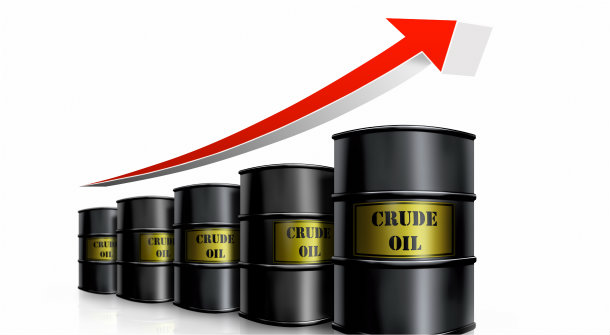
Oil prices, today, Thursday, hit $80 a barrel for the first time since November 2014 even as there are concerns that Iranian exports could fall due to renewed U.S. sanctions and reduce supply in an already tightening market.
Brent crude futures LCOc1 reached an intraday high of $80.18 while U.S. West Texas Intermediate (WTI) crude futures were up 57 cents at $72.06 a barrel, also their highest since November 2014.
President Donald Trump’s decision this month to withdraw the United States from an international nuclear deal with Iran and revive sanctions that could limit crude exports from OPEC’s third-largest producer has given strong tailwind to oil prices.
France’s Total on Wednesday warned it might abandon a multi-billion-dollar gas project in Iran if it could not secure a waiver from U.S. sanctions, casting further doubt on European-led efforts to salvage the nuclear deal.
A rapid decline in Venezuela’s crude production has further roiled markets in recent months.
“The geopolitical noise and escalation fears are here to stay,” said Norbert Rücker, head of macro and commodity research at Swiss bank Julius Baer.
“Supply concerns are top of mind after the United States left the Iran nuclear deal.”
Several banks have in recent days raised their oil price forecasts, citing tighter supplies and strong demand.
But high oil prices could hit consumption, the International Energy Agency warned on Wednesday, lowering its global oil demand growth forecast for 2018 to 1.4 million from 1.5 million barrels per day (bpd).
Asia’s demand is at record highs and with rising prices its crude could cost $1 trillion this year, about twice what it paid during the market lull of 2015/2016.
The IEA said global oil demand would average 99.2 million bpd in 2018, although U.S. bank Goldman Sachs said consumption would cross 100 million bpd “this summer.”
President Muhammadu Buhari Presenting 2018 appropriation bill to the national assembly
Six months after President Muhammadu Buhari laid the 2018 nation’s budget before the joint session of the National Assembly, the lawmakers have just passed it, with an increase N508 billion compared.
The original estimate which President Buhari presented to the National Assembly in November 2017 was N8.6 Trillion while the lawmakers finally passed the sum of N9.21 Trillion.
The National Assembly which passed the budget today, Wednesday, barely a day after the report on it was submitted by the appropriation committees of both the House of Representatives and the Senate, said the increase was done after due consultation with the Executive arm of government.
The Chairman of the Senate Committee on Appropriations, Danjuma Goje, said that the reason for the increase was based on the decision to increase oil benchmark from the proposed N45 to N51.
The passage of the bill was expected to have come long before now, as it was presented to the National Assembly by President Muhammadu Buhari since November last year.
The National Assembly had blamed the delay in the passage of the budget on the Ministries, Departments and Agencies (MDAs) that were said to have refused to submit details of the budget proposals.
They were also said to have refused to appear before the committees working on the budget.
At a point, the leadership of the National Assembly met President Buhari over the delay and informed him about the alleged refusal of some of the agencies to co-operate.
Buhari, at that point intervened and directed the agencies affected to submit the necessary documents to aid the completion of work on the budget.
Governor Tanko Umar Al-Makura of Nasarawa State has predicted that Dr. Kayode John Fayemi, who had just won the All Progressives Congress (APC) governorship ticket as candidate for the forthcoming election in Ekiti State will find it easy to clinch the final victory.
Al-Makura, who headed the APC election committee at the recent party primary in the State said: “I think we can consider this election as a foregone conclusion, given the support and the solidarity shown by other aspirants after the declaration.
The Nasarawa governor, who spoke to news men shortly after he formally presented Dr. Fayemi to President Muhammadu Buhari at the Presidential Villa, Abuja, today,Wednesday, said that he had an inkling that Fayemi is going to enjoy the support of all the aspirants who contested with him for te party’s ticket.
“If you look at the quality, the competence, the maturity of the delegates who have unanimously voted Fayemi, you will know that out there, the caliber of people they control are also people that represent the interest of Ekiti State.
“Should the election hold today, I can assure you that with what we have seen, we are comfortable that Fayemi will emerge the governor of Ekiti State.”
Also speaking, Dr. Fayemi, who is currently the minister of Mines and Solid Minerals, said tat with the party election concluded: “we can say that we are ready to go forward and campaign for the election in line with INEC conditions.”
The APC governorship flag bearer said that a critical hurdle has been crossed but that he had a major work to do.
“The important thing is to see this as a collective rescue mission and I am glad that my co-contestants have seen it in that light. I have met with all the co-contestants, I have broken fast with them, I have shared ideas with them, I have also extended an olive branch to them to be part of the candidate advisory council for this election, and they have all graciously agreed to do that. “We are confident that the APC will carry the day but there is still a lot of work to do.”
On the issue of the current governor, Ayodele Fayose calling him a walk in the park and that PDP candidate defeat him woefully, Dr. Fayemi said: “Well, as far as I am aware, Fayose is not on this ballot. We will deal with the candidate on this ballot and the track record that we have in Ekiti is what will sell us.”
Responding to a question on the probe panel that brought out the report and his recent public apology, he said he did not just apologize on its own, adding that what he said was that there were people in Ekiti even though they were minority, who were not happy with some of the policies and programmes of his government whilst he was in office “and to such people, I tender an apology.
“But, for me the rescue mission in Ekiti is a job that has to be done. What do you want? You want continuity or lack of salary, continuity of poverty, continuity of want, continuity of directionlessness or so you want to return to a past of buoyancy, human development, accountability and transparency in government. That is the clear dividing line and people can see that.
“As to the probe panel that you mentioned, well, I don’t want to dwell on the probe panel. But, the law the land of the land is clear, it is only a court of competent jurisdiction that can convict anyone, any Nigerian for any malfeasance. You cannot seat in your house, cook up a probe panel, a kangaroo tribunal and you say you have indicated someone and that person is guilty and should be ban from public office. That is just a joke but then the man we are taking about is an Alawada like we say in Yorubaland, so that is not surprising.”
President Muhammadu Buhari has sent his greetings and best wishes to Muslims in Nigeria and across the world as they commence the 30-day Ramadan fast tomorrow, Thursday, May 17.
In the message, the President reminded Muslims that fasting is not meant merely to stay hungry or thirsty, but an opportunity to strive for inner purification and self-accountability.
He explained that it is meant to inculcate righteousness and discipline, even as he advised Muslims to increase their love for humanity, acts of charity, kindness, generosity and gratitude. He reminded them of the Holy Prophet Muhammad used to spend very generously on the poor and the needy during this period, advising them to copy such good example.
He called on Muslims and all Nigerians to always remember men and women who are less fortunate than themselves and to help the government in confronting the challenges facing the nation.
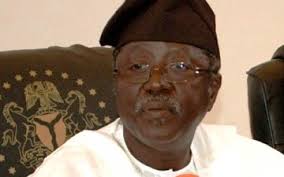
The Plateau State High Court sitting in Jos has ordered that Senator David Jonah Jang, who had once served as governor of Plateau State, be remanded in prison on a 12-count charge bordering on misappropriation of funds to the tune of N6.3billion.
Jang was charged before Justice Daniel Longji by the Economic and Financial Crimes Commission (EFCC) for allegedly embezzling special funds released to the state by the Central Bank of Nigeria (CBN), two months to the end of his tenure as governor of the state in 2015. He was Jang alleged to have pocketed N2 billion released by the CBN for disbursement to small and medium enterprises in the State under the Micro, Small and Medium Enterprises Development Funds (MSMEDF), a month before the expiration of his tenure in April 2015. He was also said to have abused his office as the governor by collecting money to the tune of N4.3billion from the state coffers through the cashier of the Office of the Secretary to the State Government, Yusuf Gyang Pam. Jang was docked alongside Pam, who was also accused of using his office for personal enrichment to the tune of N11.5million. Count eight of the charge reads: “That you, Senator Jonah David Jang, whilst being the Governor of Plateau State between January and May, 2015 in Jos, within the jurisdiction of this Honourable Court, used your office as Executive Governor of Plateau State to confer unfair advantage upon yourself by collecting the sum of N4,357,195,000 (Four billion, Three Hundred and Fifty-Seven Million, One Hundred and Ninety-Five Thousand Naira) from the cashier of the Office of the Secretary to the Plateau State Government, and which sum was derived from the account of Plateau State Government, and you thereby committed an offence punishable under Section 19 of the Corrupt Practices and Other Related Offences Act, 2000”. Particulars of count nine read: “That you, Yusuf Gyang Pam, whilst being a cashier at the Office of the Secretary to the Plateau State Government on 11th July, 2014 in Jos, within the jurisdiction of this Honourable Court, used your office as cashier at the Office of Secretary to the Plateau State Government to confer corrupt advantage upon yourself by making a cash lodgment of the sum of N10,000,000 (Ten Million Naira) into your personal account with Zenith Bank and which sum was derived from the account of Plateau State Government , and you thereby committed an offence punishable under Section 19 of the Corrupt Practices and Other Related Offences Act, 2000”. The defendants pleaded not guilty to the charge. Upon their plea, counsel to the EFCC, Rotimi Jacobs, asked the court to fix a date for hearing and to remand the suspects in prison custody pending trial. However, Robert Clarke, representing the defendants informed the court that, he had a pending “bail application for the 1st and 2nd defendants”. He urged the court to admit the defendants to bail on self recognition saying, “the first defendant was a former military governor, two time civilian governor and currently a serving senator”. In his ruling, Justice Longji ordered the remand of the defendants in prison custody and adjourned the case to May 24, 2018 for hearing of the bail application.
Jacobs, in response, opposed the application and urged the court not to grant it considering the weight of the offence adding that, “the defence counsel’s submission was not based on law”.
We use cookies on our website to give you the most relevant experience by remembering your preferences and repeat visits. By clicking “Accept”, you consent to the use of ALL the cookies.
This website uses cookies to improve your experience while you navigate through the website. Out of these, the cookies that are categorized as necessary are stored on your browser as they are essential for the working of basic functionalities of the website. We also use third-party cookies that help us analyze and understand how you use this website. These cookies will be stored in your browser only with your consent. You also have the option to opt-out of these cookies. But opting out of some of these cookies may affect your browsing experience.
Necessary cookies are absolutely essential for the website to function properly. This category only includes cookies that ensures basic functionalities and security features of the website. These cookies do not store any personal information.
Any cookies that may not be particularly necessary for the website to function and is used specifically to collect user personal data via analytics, ads, other embedded contents are termed as non-necessary cookies. It is mandatory to procure user consent prior to running these cookies on your website.



 Oil prices, today,


 The Plateau State High Court sitting in Jos has ordered that Senator David Jonah Jang, who had once served as governor of Plateau State, be remanded in prison on a 12-count charge bordering on misappropriation of funds to the tune of N6.3billion.
