The main opposition Peoples Democratic Party (PDP) has claimed that with the killings going on everywhere in Nigeria, especially the recent one in Benue State, it is evidence that Nigeria has no government in place now.
“The APC administration should accept one huge fact that under their watch, the country has collapsed irreparably and there is no evidence of the existence of government in the land.”
The national chairman of the PDP, Uche Secondus, in a statement today, Wednesday, decried the brutal murder of two Catholic priests and 17 other worshipers of St Ignatius Quashi Catholic Church parish in Ukpor-Mbalom in Gwer local Government area of the state.
“From whichever angle you are witnessing what is happening in this country, one thing is agreeable that this country is sliding dangerously”
“Nigerians and the global community have continued to watch as all the tenets of democracy are being eroded and giving way to dictatorial tendencies.
“In the last one week we have watched as disturbing indices continue to crop up ahead of the forthcoming general election with APC administration either unconcerned or involved in a tactical endorsement of such act.
The PDP National Chairman alerted the nation and the international community that the choreographed tension in the land is being designed by the APC administration to charge up the polity to enable them carry out its agenda of abusing democratic process and the rule of law ahead of 2019.
Prince Secondus admonished the security operatives as professionals to bear in mind always the words of the former US President Theodore Roosevelt that ” patriotism means to stand with the country. It does not mean to stand with the President”
“I find it unexplainable that some group of gunmen should hold a state to ransom since January killing and maiming citizens and destroying their houses and the security operatives appear helpless.
“Where are the military operatives that carried out Python and Crocodile dances in South East and South South Region respectively lately brandishing their might to less dangerous citizens and who have been unable to tackle the Benue killings.
“How can anybody expect Benue state for instant to contribute its own share of the $1b security votes when the nation security architecture is not designed to protect their people?
“If we are to give in to the President’s assertions lately that these killer herdsmen are foreigners trained by late Libyan leader, Muamour Gadhafi, where then lies our pride as a nation that a dead Gadhafi could leave behind such deadly force that a living President and its army have no answer to.” [myad]
Former Vice President, Alhaji Atiku Abubakar delivering speech at the Royal Institute of International Affairs, London
Former Nigeria’s Vice President, Atiku Abubakar has taken his age-long crusade for the restructuring of Nigeria to Royal Institute of International Affairs otherwise known as Chatham House in the United Kingdom.
He said, when he delivered a 10-page address today, titled: ‘The Importance Of Strengthening State Economic Management Systems,’ Wednesday, that even at the risk of repeating himself, restructuring Nigeria is no longer an option but a necessity, adding that this was why he told Nigeria’s elite that ‘restructuring will not cheat them but will free them.
According to Atiku, restructuring will foster the spirit of co-operation and consensus in a nation of diverse ethnic groups, cultures and religions, adding that it is desirable and is required to establish, nurture and sustain a strong and effective democratic government.
“We must also remind ourselves that restructuring is not a new or strange phenomenon. A number of developing economies have had cause to restructure their economies, for greater efficiency or to correct imbalances or to reorient them towards, for example, more open and market-oriented systems with greater reliance on the private sector as engine of growth. Even the United Kingdom is restructuring its political and economic systems to enable a better union among its component parts. Businesses restructure for better performance. Even families do!
“Faced with the reality of non-performance, Nigerians have clamored for the restructuring of the economy towards a more diversified structure. Similarly, in line with current global realities, citizens have come to appreciate that the old economic model, built on public sector supremacy is no longer a viable, sustainable option. They have therefore called for a re-orientation of the economy to leverage resources from the private sector and stimulate growth and development.
“To make this, that is, economic restructuring happen would require appropriate political intervention. In particular, it would require that we establish and sustain a model of governance which would nurture a spirit of participation and consensus on key national issues and accommodate all the diverse segments of the society.
“In other words, if we accept the wisdom behind calls for a restructuring of the economy, we must be ready to build a foundation for its success: we must, in other words re-structure the polity.
“Nigeria has operated for too long a faulty system of federalism especially under military governments. True federalism ensures that a strong federal government guarantees national unity while allowing various parts of the country or the federating units to set their own priorities.”
Full text of the address is reproduced here:
I thank the Royal Institute of International Affairs for giving me this platform to speak to such a distinguished audience. I specifically want to thank Dr. Alex Vines for inviting me to give this address.
I particularly want to thank Nigerian nationals who are present here today. Your love for Nigeria is evident in that you have left your regular pursuits to be here to interact with lovers of Nigeria on issues that, if implemented, will lead to the progress of Nigeria. Your presence inspires me.
To friends of Nigeria here present, I appreciate your friendship and it is my strong desire that our collective wish to see Nigeria fulfill her potentials are realized in the not so distant future.
I am a widely traveled man, and everywhere I visit around the world, there is agreement that Nigeria has the potential to make that leap from third world to first that Singapore, under Lee Kuan Yew, made. We have the human and material resources required to make the leap and in fact, many of our nationals have helped other nations make that transition.
And it is not that we have not made progress, after all, within a decade we were able to move from being the third largest economy in Africa to being the largest bar none.
Yet, there is still that consensus that we are not meeting up with our potential and all things considered, that verdict is true.
The question becomes why is Nigeria not living up to the promise of her potentials?
More specifically, why are we saddled with a heavy and almost unsustainable debt burden twelve years after President Olusegun Obasanjo and I provided the leadership that paid off Nigeria’s entire foreign debt of $32 billion in one fell swoop?
After paying off a monumental debt accumulated by previous governments, then President Olusegun Obasanjo on April 22, 2006 said “Nigeria will not owe anybody one kobo”. Today, almost exactly 12 years to the day, you can almost say ‘Nigeria is now owing everybody more than one kobo’.
What happened in the intervening years to turn the dream that our administration had, into this present reality where Nigeria now owes double what we paid off in 2006?
In talking about the Importance of Strengthening State Economic Management Systems, we must identify the structural defects in Nigeria’s federal structure that prevents all levels of the Nigerian government, federal, states and local governments, from operating at optimal levels.
After nineteen years of uninterrupted democracy in the fourth republic, it is now an indisputable fact that today’s Nigerian states essentially have been reduced to parastatals of the Federal Government and are addicted to the monthly allocation they receive from Abuja.
There is nothing as addictive as states that are dependent on their monthly share of revenue from crude oil sales and the only way to get them to manage their economies in an economically viable way is to cure them off that addiction. Nigeria needs to be restructured. We must commit to a new development agenda with focus on wealth creation by the federating units, rather than wealth distribution from Abuja to state and local government capitals. We must undertake far reaching economic reforms to attract private resources, including financial resources and build bigger, stronger and more dynamic sub-national economies. We must expand the frontier of private sector activity beyond the realm of the oil sector and build a new Nigeria without oil.
If oil could save a nation then surely it would have saved Venezuela, the nation with the largest proven reserves of oil in the world. But you and I know what is up with Venezuela and if oil has not saved her, it will not save Nigeria.
If we want to help states strengthen their economies, we must come up with creative ways to encourage them to look inwards rather than outwards.
Before we outline the steps we will take to support the states, we remind ourselves how we got to where we are.
We have promoted, tolerated and indeed celebrated a defective political structure. The federalism we practice is not smart. We politicized the creation of states and local governments over the years. States and local governments became too weak to meet their constitutional responsibilities and consequently the Federal Government emasculated them and took away those responsibilities which belong to them. Many of the states are small, subsistence economies with very limited capacity to sustain growth and lift their citizens out of poverty. It is therefore very attractive for these states and local governments to become addicted to revenues from federation accounts and to care less about their internal revenue opportunities. As a result, combined Internally Generated Revenue from all the 36 states came up to less than 1% of Nigeria’s nominal GDP and less than 12% of their 2016 budgets! Internally generated revenue is far less than what the states require to run their administrations – and many state and local governments survive by consuming more resources than they can generate internally – thanks to the generous ‘handouts’ from the federation accounts.
We allowed crude oil to ‘crowd out’ the non-oil sectors which were Nigeria’s lifeline in the 1960s and 1970s and celebrated the windfall from oil exports – which resulted in a steep rise in the volume of funds allocated to all tiers of government in the federation. We preferred to survive on rent than on hard, productive efforts. We were too drunk to remember to build a revenue buffer – for the proverbial ‘rainy day’. There has been no effective revenue stabilization programme and effective strategic planning to cushion the effect of falls in the price of crude oil.
We lived on another structural fault line for too long and pretended all was well. The Nigerian economy remains fragile and vulnerable to the vagaries of the global oil market, making the fiscal position of the national and sub-national economies become precarious. However, this faulty economic structure has always been shielded by increased revenues from crude oil sales. Its deficiency is only exposed when global oil prices collapse with impact on investments, consumption and growth.
Now the big question: what can we do to help the federating units strengthen their economies?
There is no alternative to a policy which promotes the growth and diversification of the sub national economies. How much revenue they generate locally from taxes and fees depends on the size and structure of their economies. The bigger and more diversified the better. The federal government will create a business-friendly macro-economic environment, through the pursuit of appropriate monetary and exchange rate policies, to leverage private sector investments especially in agriculture to promote economic diversification. Indeed, achieving diversification is central to our economic development strategy. Let us begin to visualize Nigeria without oil or one not predominantly dependent on hydro-carbon.
Our economic policies will be coherent, consistent and therefore more predictable by the business community. Nothing could be more threatening to investment flows than an environment that is full of policy flip-flops.
We will ensure spatially balanced investments, through a carefully designed incentive regime, in order to provide more opportunities in the poorer and less endowed federating units.
The sub-national economies will be assisted in reforming their economic management institutions, including the revenue generating agencies which are seen by many as failed and ineffectually managed institutions within the state service. They need to be reformed and strengthened to make them more innovative and efficient in service delivery. The reformed agencies will be expected to improve tax-payer compliance, develop potentials of non-tax revenue sources and block all leakages associated with tax administration.
Beyond institutional and administrative reforms to improve operational efficiency of the revenue agencies the federating units will be challenged to double their efforts in rebuilding the fiscal-social contract, by enhancing service delivery in key areas such as health, education, water supply and infrastructural development. Only this would change the predominant perception that government revenues are diverted to the private bank accounts of politicians and their cronies.
And it is for the purpose of making states lose their addiction to federal allocation, to make them look inwards, and return to the healthy competition of 1957-1966, when Nigeria practiced her unique brand of true federalism known as regionalism, that I suggest the introduction of matching grants to states, that have succeeded in increasing their internally generated revenue.
My idea is for the introduction of Matching Grants to be taken from the revenue accruable to the Federal Government for the purpose of matching the Internally Generated Revenue of each state in order to encourage states to become self-reliant. If I have my way, the Federal Government will match state’s IGR up to $250 million per state.
Even with this policy, the Federal Government will continue to offer support (in the form of intervention programmes) for states that rank below the average development index, until such a time as they are able to become self-sufficient and sustaining.
In furtherance of strengthening their economic management systems, another policy I would recommend to Nigerian state is to follow the example President Obasanjo and I laid between 1999 and 2007 when we privatized and liberalized many aspects of the Nigeria economy. It had the almost immediate effects of reducing our wage bill and increasing services, capacity and jobs in the private sector.
By privatizing those state government owned public enterprises that gulp huge sums by way of recurrent expenditure yet give little returns by way of return on investment, state governments can free more of their revenue from recurrent and devote it to capital expenditure.
We will promote and insist on fiscal efficiency at the federal level to lead other tiers of government by example. The states will be challenged to adopt sound fiscal management strategy so as to reduce wasteful spending. Many view government spending as wasteful, imprudent and lacking in priorities. Typically, recurrent costs constitute between 60% and 72% of state and local governments.
As I said in a recent interview, if I had the opportunity, I would disrupt Nigeria’s budgeting process. We would have a budget heavy on capital expenditure. Roads will be built in every state. Mass housing schemes would pop up in every local government area. Railways will be extended to every state capital. Rivers would be dredged to open up the hinterlands of the North. Licenses would be given to state governments to begin immediate exploitation of resources in their jurisdictions.
While this is happening on a macro level in the Federal Government, I would create the enabling environment for this to be done on a micro level in the states.
When citizens are working, especially in construction and the service sector, the economy benefits because they pay more taxes, they utilize their increased purchasing power in buying goods and services, which improves Value Added Tax revenue and helps the private sector. The multiplier effects are almost limitless.
I am not talking about what can happen. I am talking about what is currently happening in Rwanda. According to the International Monetary Fund, Rwanda’s economy is expected to grow by 7.2 per cent in 2018. This is an economy that already grew by 6.1% in 2017. Their growth is being driven by the services sector, construction and tourism.
In my private capacity, I am already doing this. There has not been a year in the last twenty years that I have not set up a new enterprise to employ Nigerians. The latest being that we brought the Chicken Cottage franchise to Nigeria which will be creating direct and indirect jobs all across the country.
If states are to strengthen their economic management system the Debt Management Office, which our administration set up in the year 2000 to centrally coordinate the management of Nigeria’s debt must be given more independence than it already has. The head of the DMO must be a person with proven ability to say no to powerful persons otherwise the states will keep on borrowing at an unsustainable rate as we see in today’s Nigeria.
In her just released book, “Fighting Corruption is Dangerous –The Story Behind the Headlines”, Dr. Mrs. NgoziOkonjo-Iweala, former Managing Director of the World Bank and two time Nigerian minister of finance and coordinator of the economy who served during my time in office, revealed that she almost got beaten up by a particular Governor at a meeting of the National Economic Council, because she would not approve his request to take out more foreign loans for his already over indebted states.
There are already statutory parameters in place before the Debt Management Office could approve foreign loans to states, but I would want such parameters strengthened such that Nigerian Governors who are close to the President would not use that relationship to get the ministry of finance and DMO to approve wasteful, unnecessary loans that in many cases are squandered on white elephant projects.
There are states in Nigeria who are unable to pay workers’ salaries, yet have taken out huge foreign loans to build stadia and secretariats. Projects that would not improve their financial position.
We have seen in recent years that both Fitch and Standard and Poor’s have downgraded Nigeria just as the Egmont Group has suspended us. As one who worked very hard along with President Olusegun Obasanjo between 1999 and 2007 to bring Nigeria back from the brink and pay off our entire foreign debt, these negative indices bother me.
It is also imperative that our foreign reserves and revenue buffers are boosted to insulate the economy against adverse shocks and to strengthen countercyclical fiscal capacity.
We will streamline the operations of the Sovereign Wealth Fund, the Excess Crude Account and the Stabilization Account which is currently embedded in the Revenue Allocation Formula for more effective stabilization outcomes.
Unless these stabilization vehicles are reshaped Nigeria will continue to be subject to the vagaries of the world oil market.
Let me end by providing more detail on restructuring – even at the risk of me repeating myself. Restructuring Nigeria is no longer an option. It is a necessity. This is why I said in February to Nigeria’s elite that ‘restructuring will not cheat you. It will free you.’
Restructuring will foster the spirit of co-operation and consensus in a nation of diverse ethnic groups, cultures and religions. It is desirable, in fact you may even say it is required to establish, nurture and sustain a strong and effective democratic government.
We must also remind ourselves that restructuring is not a new or strange phenomenon. A number of developing economies have had cause to restructure their economies, for greater efficiency or to correct imbalances or to reorient them towards, for example, more open and market-oriented systems with greater reliance on the private sector as engine of growth. Even the United Kingdom is restructuring its political and economic systems to enable a better union among its component parts. Businesses restructure for better performance. Even families do!
Faced with the reality of non-performance, Nigerians have clamored for the restructuring of the economy towards a more diversified structure. Similarly, in line with current global realities, citizens have come to appreciate that the old economic model, built on public sector supremacy is no longer a viable, sustainable option. They have therefore called for a re-orientation of the economy to leverage resources from the private sector and stimulate growth and development.
To make this, that is, economic restructuring happen would require appropriate political intervention. In particular, it would require that we establish and sustain a model of governance which would nurture a spirit of participation and consensus on key national issues and accommodate all the diverse segments of the society.
In other words, if we accept the wisdom behind calls for a restructuring of the economy, we must be ready to build a foundation for its success: we must, in other words re-structure the polity.
Nigeria has operated for too long a faulty system of federalism especially under military governments. True federalism ensures that a strong federal government guarantees national unity while allowing various parts of the country or the federating units to set their own priorities.
As a consequence, the Federal Government appropriates, along with these responsibilities, huge resources. For example, in the allocation of revenue from the Federation Account the Federal Government is unduly favoured at the expense of the States and Local Governments. Out of every Naira in the Federation Account, 56k will go to the Federal Government and four other ‘special accounts’ which it manages! This is neither efficient nor equitable.
Let me use this opportunity to once again emphasize why everyone of us must be involved in the discourse on re-structuring. When I carry the gospel of restructuring Nigeria around, I don’t carry it for mere political convenience, I am in this crusade for the purpose of making Nigeria work. Africa and indeed the world needs a Nigeria that is working.
While maintaining all the other niceties inherent in promoting the restructuring discourse in Nigeria, today, I want to add that beyond the healthy competition among the federating units which a restructured Nigeria would engender, is the unique opportunity for the retooling of the leadership recruitment process in the country. Governance would be elevated to a serious business manned by equally serious-minded people. The attraction to power would no longer be a chance to stumble upon privileges not worked for. But a carefully calibrated move to demonstrate ingenuity and quality in creating wealth for the country.
The restructured Nigeria that I talk about, is a Nigeria that not only provides opportunities for everyone to work but even more specifically challenges the leadership to demonstrate capacity to create wealth for every layer of governance.
It is time for serious minded people to get involved and take the lead in making our country work. It is time for citizens to demand as a matter of right, from people aspiring to lead them, a plan on not just how to manage their wealth but most fundamentally how the wealth is going to be created. Slogans cannot take the place of plans and propaganda is a poor substitute for proper agenda.
For long, our leadership has been pampered. We work into managing a wealth we have little input into how it is created. And because we are not involved in the creation, we rarely appreciate it. Hence, we turn out as either bad managers or killers of the greater Nigerian dream.
For instance, I insist, anybody who cannot tell Nigerians at the State level how, he/she is going to generate the required resources to run the State he/she is aspiring to govern is not worthy of the electorates’ votes. Nigeria needs a leadership that can create wealth for the country and make it work. Every part of Nigeria has enough wealth to sustain it. What is lacking is the leadership with the required capacity and vision to tap and manage the wealth on behalf of all.
To me, any skeptic of restructuring Nigeria, is submitting to the leadership indolence which has denied the country its cherished position of leading Africa to greatness.
Restructuring is not just about the devolution of powers to the states, it is about transforming the role of the federal government. In matters of territorial governance, the federal authorities must learn to cooperate with, and in some instances defer to state authorities; in matters of economic governance, the federal authorities must learn to cooperate with, rather than displace or ignore, the private sector.
If we want Nigeria to succeed, we must break with the misguided notion that the Federal Government, or the President, knows best, and that no one else can be trusted. When I talk about restructuring, I am not talking about just constitutional tweaks, I am talking about a cultural revolution. It is not about re-shuffling a few responsibilities or resources, but about disrupting the authoritarian politics our democracy has inherited from its military and colonial rulers.
And there is nothing abstract about it: just think about the open skies agreement [Single African Air Transport Market (SAATM)], which African governments agreed on in January, and which the Nigerian government underwrote without consulting our airline industry. You do not have to convince me that we must integrate African markets, that we need arrangements like the open skies agreement. I am a believer. But you will never convince me that a government can build an open market economy or transform trade relations if it refuses to cooperate with the private sector.
We, as a nation, must rekindle the spirit of enterprise we experienced two decades ago, when we prepared our return to democracy. We must rediscover the pragmatism that guided us through the difficult transition we were facing at the time. And we, as leaders, must recognise that this time, we cannot do it alone: we must encourage cooperation, we must embrace openness, and we must rebuild trust – with our people, but also with our international partners.
These are some of the ways I believe Nigeria’s states can improve their capacity, increase their revenues and better manage their local economies which are critical to the safety, prosperity, and welfare of all Nigerians and will allow my homeland to realize its true potential.
Let me end with these words: Some Nigerians states are poor not because they are not receiving a fair share of oil money but because they are not receiving a fair shot at true federalism. Only restructuring can correct that.
The House of Representatives has resolved to suspend plenary for 3 consecutive days to protest the killing of Nigerians, especially in Benue State.
The House, at its sitting today, Wednesday, also resolved to pass a vote of no confidence on all the Service Chiefs and all security advisers to the President even as it asked the president to declare all killer herdsmen as terrorists.
The resolutions, which also included the invitation of President Muhammadu Buhari to appear before it to explain why the country is no longer safe, were supported by the majority of members.
Suspected herders killed two priests and 14 parishioners in an attack on a Catholic church in Benue state on Monday.
The Emir of Zazzau Suleja, Malam Muhammad Awwal Ibrahim has, in a letter dated April 20, 2018, confirmed the nomination of the Permanent Secretary in the Federal Ministry of Niger Delta Affairs, Aminu Aliyu Bisalla, as the new Dallatun Zazzau Suleja. The appointment letter was signed by Aliyu N. Saidu on behalf of the Suleja Emirate Council. Until his recent appointment, Aminu Aliyu Bisalla, a prince of the Zazzau Suleja emirate, was the Sarkin Bai Zazzau. Born on July 23, 1959, in Suleja, Suleja Local Government of Niger State, Aminu Aliyu Bisalla, attended Anguwar Gayan Primary School in Suleja from 1965 to 1971, Government Secondary School Zungeru from 1972 to 1976, Zungeru College of Advanced Studies from 1977 to 1978, University of Sokoto from 1979 to 1983 and Bayero University, Kano, from 1996 to 1998. After his National Youth Service Corps in 1984, he was retained and employed by the Niger State College of Education as a lecturer/head of Business Education Department from where he left in 1988 to join the banking sector. He served with Savannah Bank, Commerce and United Bank for Africa. The professionalization of the Civil Service in 1999 brought in Aminu Aliyu Bisalla along with others as Chief Accountant in the pool of the Accountant-General of the Federation in the year 2000. He was appointed Executive Director of Finance and Account with Federal Roads Maintenance Agency (NEMA) between 2006 and 2009, and also served as Director of Administration and Finance at the National Bio-technology Development Agency and the National Hajj Commission of Nigeria. He was appointed Permanent Secretary in September 2014 and deployed to the Police Service Commission. At the inception of the current administration, Aminu Aliyu Bisalla was among the Permanent Secretaries retained and was redeployed to the Federal Ministry of Industry Trade and Investment and later Ministry of Niger Delta Affairs. [myad]
Vice President Yemi Osinbajo has concluded that the world has come to the end time with the devil becoming more desperate and devious.
He said: “We are in the end times. Indeed the time of his return is closer than when we first believed. As we work and recognise that we must work to meet with this commission, we must accept that there will be resistance, the devil is even more desperate and devious as the end comes nearer.”
Professor Osinbajo who spoke today, Tuesday at the inauguration of the Deeper Life Bible Church Headquarters building in Bagada, Lagos State, noted that the immediate implication of the end time is that there must be urgency in the fulfillment of the great commission.
“We must work harder to obey the command and commission in Matthew 28:19-20 – “to go therefore and make disciples of all the nations, baptizing them in the name of the Father and of the Son and of the Holy Spirit, teaching them to observe all things that I have commanded.”
The Vice President asked: “what are some of the resistance we see?
“First, there is a resistance to the building of churches, there are specific cases of places where specific allegations have been made of valid applications to build churches have been refused.
“The President has mandated that I take up those cases with the specific State and local authorities, the right to freedom of worship is also the right to build places of worship.
“Second is the physical persecution of Christians; a phenomenon we have seen for years. Just this morning on my way here, I was notified the violation of a catholic church in Benue State by armed killers who went in while a burial mass was taking place and they killed a priest and some worshippers.
“It is not only a heinous sacrilege, but high wickedness to kill persons in a place of worship. As I discussed these issues with the President and other ministers in the Security Council, it is evident to me and to many, that the devil’s bigger agenda is to stoke up a religious conflict in Nigeria, one that will make it impossible for anyone to preach the gospel or even for Muslims to worship in their mosques. A few days ago in Bama, a mosque was bombed and many died. Many such examples abound.
“While the security agencies continue to work relentlessly to hunt down the perpetrators of these evil acts and to bring a permanent end to all of the killings going on in the name of herdsmen, Boko Haram, or in any other name, we as a body of Christ must not lose focus.
“The enemy wants us to stand on our pulpits and preach hate, we will not. We will obey the Lord Jesus Christ who said that we must love our enemies and pray even for those who persecute us. No person born or yet to be born, can stop the march of the gospel of the Lord Jesus Christ. Indeed as the Word of God says, this Word of God is living and powerful, and sharper than any two-edged sword, piercing even to the division of soul and spirit, and of joints and marrow, and is a discerner of the thoughts and intents of the heart.
“In any event, we are assured by the Lord Himself that He is building His church and gates of hell shall never prevail against it.
“In this we are supremely confident. For those of us Christians in government are sometimes referred to as Esthers. We are told that we are in office for a time such as this. What is often forgotten, is that when Mordecai told Esther that she was in the palace for such a time, she said to him in Esther 4:16 “Go, gather all the Jews who are present in Shushan, and fast for me; neither eat nor drink for three days, night or day. My maids and I will fast likewise. And so I will go to the king, which is against the law; and if I perish, I perish!” This I say to the church as well. It is the duty of the church, as we ask that the church prays for those in government, that the church upholds the hands of those in government, not by complaining but by supporting us in the place of prayer. I ask that you pray for every one of us in the place of authority in this land.” [myad]
The Nigerian police has given a graphic description of how Senator Dino Melaye, representing Kogi State West Senatorial Area, tried to escape from the lawful custody with the help of some hoodlums riding in two Toyota Hilux vehicles.
An official statement by the Force Public Relations Officer, ACP Jimoh Moshood today, Tuesday, said that Melaye was being taken for arraignment in Federal High Court, Lokoja from Abuja,when hoodlums and miscreants in two Toyota Hilux vehicles blocked the Police vehicle conveying him around Area 1 round about in Abuja.
The statement said that in the process, the Senator jumped out of the Police vehicle through the window and was rescued from the Police men by hoodlums and miscreants to an unknown destination.
“The Police team re-enforced and trailed Senator Dino Melaye to Zankli Hospital, Abuja where he was re-arrested. The Senator would be arraigned in court without further delay.
“Meanwhile, one of the Toyota Hilux vehicles used by the hoodlums and miscreants in aiding the escape of the Senator has been recovered by the Police investigation team.”
The statement said that the Inspector General of Police (IGP) has already directed a thorough investigation into the circumstances leading to the rescue and escape of Senator Dino Melaye from lawful custody. [myad]
Former Governor of Edo State, Adams Oshiomhole is believed to have to be battling the incumbent national chairman of the ruling All Progressives Congress (APC), John Odigie-Oyegun for thr position at the national convention of the party scheduled for May 14 in the nation’s Federal Capital Territory.
Information reaching us indicates that already, South South zonal chapter of APC where the two combatants come from has been divided.
It was learn that Oyegun is still the stronger contender in the zone, with four out of the six state chairmen of the party from the zone having thrown their support behind him. They are chairmen of the Rivers Stat, Bayelsa State, Cross River State and Akwa Ibom State as well as the APC Deputy National Secretary.
It was gathered that move by the present governor of Edo State, Godwin Obaseki and the zonal Vice Chairman of the party to rally support for Oshiomhole as the South South zone’s candidate for the party’s national chairmanship was resisted by members of the zonal caucus at a meeting held at the Edo State Government House.
They insisted that the APC National Chairman, Chief John Odigie-Oyegun should be given a right of first refusal to seek re-election for the position.
The Central Bank of Nigeria (CBN) has stepped into the inter-bank sector of the Foreign Exchange market, intervening in the wholesale segment and other sectors of the market to the tune of $210 million.
Figures by the apex bank showed that the Wholesale sector of the market got another injection of $100 million, even as the Small and Medium Enterprises (SMEs) and invisibles sectors each received $55 million.
The Acting Director of the Corporate Communications Department of the CBN, Isaac Okorafor, confirmed the figures and said that today, Tuesday’s interventions, were in line with the Bank’s commitment to sustain the high level of stability in the Forex market and continually ease access to the currency by those requiring it for genuine activities.
Okorafor, who commended the role of every player in the market, said that the CBN is ready to inject funds into the market, whenever and wherever necessary, in order to maintain market stability as well as sustain the financial system.
He said that the financial regulator is further buoyed by recent gains in the foreign exchange sector, which had seen the country’s reserves soar closer to the $50 billion mark.
Okorafor said that the country’s reserves continued to enjoy accretion, adding that the present reserves status at the Bank meant that the CBN is capable of sustaining foreign exchange liquidity in the system.
Tuesday’s intervention came as one US Dollar exchanged for N361 in the Bureau De Change (BDC) segment of the market.
It will be recalled that the CBN in its last Friday’s interventions, injected the sum of $396.18 million into the Retail Secondary Market Intervention Sales (SMIS).
Dangote Group has not only brought to a successful end, importation of cement into Nigeria but has also exported a total of 211 kilotons of cement to three African countries: Ghana, Togo and Niger in the first quarter of this year. to Ghana, Togo and Niger.
The company’s volume in the Nigeria also increased significantly by 5.3 per cent to nearly four million tons for the period under review.
These were contained in the Dangote Cement’s first quarter audited results for the three months ended 31st March 2018 which was presented on the floor of the Nigerian Stock Exchange (NSE).
It showed that Dangote cement’s gross revenue increased by 16 percent, from N208.12 billion in the corresponding period of 2017 to N242.1 billion.
The company’s gross profit for the period rose from N120.36 billion to N144.76 billion indicating an increase of 20.30 percent. While Profit before tax rose by 40.2 percent, from N77.32 billion to N108.04 billion, Profit after tax for the period went up by 29 percent, from N55.8 billion to N72.12 billion.
A breakdown of the results indicated that the total volume of cement sales by the Group went up by 2.8 percent to 6.2 million tonnes with Nigerian volumes up by 5.3 percent to nearly 4.0 million tonnes.
In the reviewed period, Engineer Joe Makoju was appointed Group Chief Executive Officer While Cherie Blair and Mick Davis also joined the Board as Independent Non-Executive Directors.
Group Chief Executive Officer, Joe Makoju speaking on the results said: “The first quarter of 2018 has started strongly with substantial increases in revenues and profitability that drove excellent cash generation across the Group. Despite a slightly slower start to the quarter, Nigerian volumes increased significantly in March and underpin our confidence that 2018 will be a good year for the Group. Across our Pan-African operations, higher revenue per tons boosted revenues and increased EBITDA margins, with great potential to improve further when Tanzania switches to gas.”
Chairman, Dangote Cement, Aliko Dangote said: “I am delighted to welcome Cherie and Mick to the Board of Dangote Cement. They bring diverse and valuable experience of emerging-market business, sustainability and governance to our Board.
Expatiating further on the capacity of the company, Makoju said “Dangote Cement is Africa’s leading cement producer with nearly 46Mta capacity across Africa. A fully integrated quarry-to-customer producer. The company has a production capacity of 29.25Mta in its home market, Nigeria. Our Obajana plant in Kogi state, Nigeria, is the largest in Africa with 13.25Mta of capacity across four lines; our Ibese plant in Ogun State has four cement lines with a combined installed capacity of 12Mta and our Gboko plant in Benue state has 4Mta. Through our recent investments, Dangote Cement has eliminated Nigeria’s dependence on imported cement and has transformed the nation into an exporter of cement serving neighbouring countries.
In addition, we have operations in Cameroon (1.5Mta clinker grinding), Congo (1.5Mta), Ghana (1.5Mta import), Ethiopia (2.5Mta), Senegal (1.5Mta), Sierra Leone (0.5Mta import), South Africa (2.8Mta), Tanzania (3.0Mta), Zambia (1.5Mta).“
Facebook has announced that it has found and removed 1.9 million social-media posts by the Islamic State and al Qaeda terrorists during the first three months of 2018, using new anti-terror algorithms.
“In first quarter, we took action on 1.9 million pieces of ISIS (Islamic State terror group, outlawed in Russia) and al-Qaeda content, about twice as much from the previous quarter,” facebook said.
“Taking action means that we removed the vast majority of this content, and added a warning to a small portion that was shared for informational or counter speech purposes.
”Detection technology has been critical to progress detecting terrorist posts, with the Facebook counterterrorism team growing from 150 last June to 200 at present, with plans to continue expanding the team, the release explained.
“In Q1 2018, 99 percent of the ISIS and al-Qaeda content we took action on was not user reported,” facebook said.
“We found this material due to advances in our technology, but this also includes detection by our internal reviewers.”The median time for newly uploaded terrorist content to be flagged was less than one minute, Facebook noted.
However, because content receives less attention the longer it remains on line, the Facebook team also went back and reviewed older posts, accounting for 600,000 removals in the January-March quarter.
We use cookies on our website to give you the most relevant experience by remembering your preferences and repeat visits. By clicking “Accept”, you consent to the use of ALL the cookies.
This website uses cookies to improve your experience while you navigate through the website. Out of these, the cookies that are categorized as necessary are stored on your browser as they are essential for the working of basic functionalities of the website. We also use third-party cookies that help us analyze and understand how you use this website. These cookies will be stored in your browser only with your consent. You also have the option to opt-out of these cookies. But opting out of some of these cookies may affect your browsing experience.
Necessary cookies are absolutely essential for the website to function properly. This category only includes cookies that ensures basic functionalities and security features of the website. These cookies do not store any personal information.
Any cookies that may not be particularly necessary for the website to function and is used specifically to collect user personal data via analytics, ads, other embedded contents are termed as non-necessary cookies. It is mandatory to procure user consent prior to running these cookies on your website.




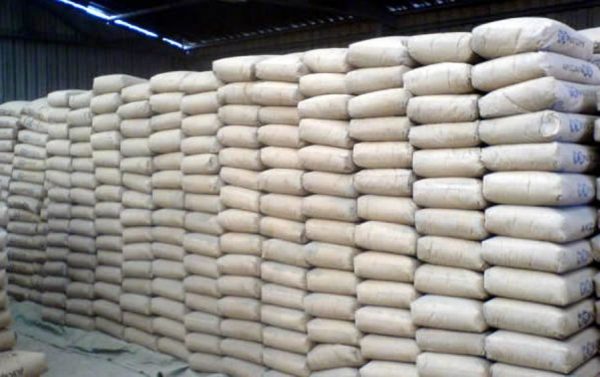 Dangote Group has not only brought to a successful end, importation of cement into Nigeria but has also exported a total of 211 kilotons of cement to three African countries: Ghana, Togo and Niger in the first quarter of this year. to Ghana, Togo and Niger.
 Facebook has announced that it has found and removed 1.9 million social-media posts by the Islamic State and al Qaeda terrorists during the first three months of 2018, using new anti-terror algorithms.
