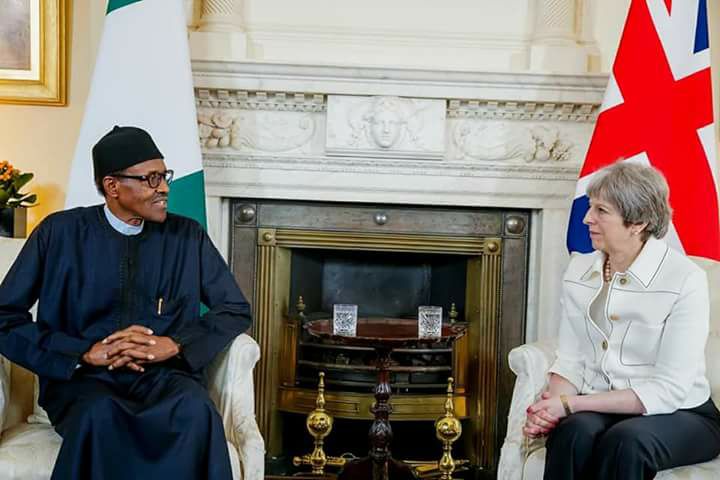
President Muhammadu Buhari has described the passing away of South-African anti-apartheid icon, Mrs. Winnie Madikizela-Mandela, as a huge loss to Africa, of a courageous woman.
The President said that she was a woman of uncommon determination, steadfastness and perseverance who held aloft the torch of the struggle against institutionalized discrimination even while her ex-husband, the late Madiba, President Nelson Mandela was incarcerated.
A statement by the senior special assistant to the Presieent on media and publicity, Malam Garba Shehu, quoted Buhari commiserating with the family of the deceased, the government and people of South Africa on behalf of the government and people of Nigeria.
He urging the South Africans to be consoled by the knowledge that the late Winnie Mandela’s contributions to ending apartheid will not be forgotten, adding that she remained a pride not only to the African woman, but all Africans.
President Buhari prayed that God will comfort all those who mourn the departed and grant her soul eternal rest. [myad]
The anti corruption organization, Rights and Accountability Project (SERAP) has asked President Muhammadu Buhari’s government to send former President Olusegun Obasanjo to jail over alleged $16 billion fraud committed during his regime.
The anti-corruption organization, in a letter addressed to the Chief Justice of Nigeria (CJN), Justice Water Samuel Nkanu Onnoghen, insisted that an independent counsel should be appointed to investigate the $16 billion which Obasanjo’ s government spent on power projects between 1999 and 2007.
In the letter dated 24 November, 2017 and signed by Mr. Timothy Olawale, the organization’s Senior Staff Counsel, SERAP said that the request was based on Section 52 of the Independent Corrupt Practices and Other Related Offences (ICPC) Act 2000 as well as the letter and spirit of the Act, and the object and purpose of the 1999 Constitution (as amended).
SERAP recalled that a parliamentary hearing by the House of Representatives into the spending of $16 billion on the power project between 1999 and 2007 revealed, through testimonies of witnesses, that the amount budgeted for the power project may have been stolen by some government officials and others and cannot be accounted for.
It pointed out that the parliamentary hearing, which took place between March 11 and 12 March, 2008, revealed that Mr. Bernerd Mensen, the Chief Executive Officer of German firm, Lameyer, was paid N370 million (out of the total contract sum of N600million) just for a feasibility study on a power station. Mr. Mensen, SERAP recalled, however, confessed that he had never visited the site of the Mambilla Hydro-Electric Power Project in Taraba State.
Similarly recalled was the revelation that N200 million of the N370million collected was spent to build a bungalow at Gembu, apparently to create the impression that work was in progress, but the project was later abandoned.
A witness, who testified at the hearing, recollected SERAP, said that the ground-breaking was done at Gembu, about 25kilometers from the Mambilla, and that they never got to the Mambilla.
He also disclosed that the sample of oil Lameyer collected for test was dumped at somebody’s compound that the company did nothing to implement the project, which was expected to generate 2,600 megawatts of electricity.
The investigative committee, SERAP reminded the CJN, was equally told that the contracts awarded for the Kainji, Egbin, Afam and Ugehlli power stations were never executed despite being included by the Power Holding Company of Nigeria (PHCN) in its report to the hearing on how it spent its budgetary allocations between 1999 and 2007.
The hearing also revealed that there were about nine of such contracts, with an aggregate value of $142million.
“Section 52 of the Corrupt Practices Act requires the Chief Justice of Nigeria to authorise an independent counsel to investigate any allegation of corruption against high-level public officials at the federal or state level-and to report his findings to the National Assembly or appropriate house of assembly,” SERAP stated in the letter.
It expressed the belief that the findings by the parliamentary hearing provide sufficient ground for the CJN’s intervention in the matter.
“We therefore urge you to interpret this provision robustly and flexibly in the light of the unique role of the judiciary in the efforts to prevent and combat corruption and its destructive effects on the society.
“We believe your urgent intervention will contribute to improving the integrity of government and public confidence and trust in their government. It would also serve as a vehicle to further the public’s perception of fairness and thoroughness, and to avert even the most subtle of influences that may appear in an investigation of highly-placed executive officials,” the organisation said.
SERAP advised the CJN to be guided by the overall public interest of the right to uninterrupted power supply and the spirit and letter of the constitution, not by technicalities of ICPC Act.
“In particular, Chapter 2 of the 1999 Constitution dealing with Fundamental Objectives and Directive Principles of State Policy, high-level public officials have a clear obligation to eradicate all corrupt practices and abuse of power,” it further stated.
SERAP observed that inadequate electricity supply has compelled many Nigerians to use contaminated surface water for drinking and robbed them of the ability to boil, purify, disinfect and store water. It further argued that the situation has affected Nigerians’ ability use irrigation to boost agricultural productivity, thereby limiting food supplies and shrinking employment opportunities.
The organization also pointed out that the constitution prohibits the exploitation of the country’s human and natural resources for any reasons other than collective interest, a position that it said is backed by the provisions of the UN Convention against Corruption to which Nigeria is a state party.
“In exercising your statutory and constitutional responsibilities, we urge you to work very closely with both the Independent Corrupt Practices and Other Related Offences Commission (ICPC) and the Economic and Financial Crime Commission (EFCC),” SERAP counseled.
The organization noted that successive governments have failed to tell the public that the $16 billion expenditure on power supply amounts to failure.
It added that corruption in the energy sector have resulted in the epileptic power supply and corresponding deprivation and denial of access to quality healthcare, adequate food, shelter, clothing, water, sanitation, medical care, schooling and access to information. [myad]
Chief Olusegun Obasanjo and President Muhammadu Buhari
Former President Olusegun Obasanjo has once again descended on President Muhammadu Buhari’s government, asking the government to stop giving excuses for the challenges it met when it came in in 2015.
“As I said, stop giving excuses; we met challenges. If there are no challenges, then we wouldn’t need you to come. You come in because you know there are challenges and then giving us excuse that you have many challenges, that is why you haven’t achieved results.”
Obasanjo, who spoke today, Monday when he hosted a group of young professionals under the aegis of Nigerian Young Professionals Forum and New Nigeria 2019 in Abeokuta, Ogun State, regretted that despite the alleged failure of President Buhari, he still wants to contest the 2019 elections for a second tenure.
“And then you still want to go. The first lesson I learnt in my military training is never reinforce failure. What we have now is failure. Never you reinforce failure. Let failure be failure.”
He advised the youth to take charge of their destiny instead of waiting for tomorrow that may never come, urging them to ignore excuses from leaders he described as incompetent and ineffective.
Obasanjo suggested that a coalition of all the movements in the country and poaching of the ‘uninfected members’ of the leprous APC and PDP to join the mass coalitions, would bring about the needed change in leadership in 2019.
“The point is this: the way to wrest power is to know that those that are there, you have to carry them along so that they will willingly (yield space).. so that they will not be frightened, they will not be intimidated.
“But this time, for us to make it, we need all hands on deck. You see, I have publicly said and I mean it, that as a party, neither PDP nor APC can get us there as they have been.
“Never mind about reforms and apology and all that. And yet we have to get there. I asked one of the foundation members of PDP, the PDP when we started, was it a grassroots party? He said it was an elitist party.
“Really, we have never had the so-called grassroots party. Even NEPU which we could say is the nearest, was not grassroot enough.
“And I believe strongly that we must have a strong popular grassroots movement to bring about the change, sustainability and stability that we need in our democracy and development.
“I am happy to meet with you but don’t take anything for granted. There will be a lot of work that we have to do.
“What those I call power addicts would want to do is to divide you based on gender, age, tribe, religion and region. You have one commonality – interest of Nigeria.
“And it doesn’t matter where you come from. We had that interest. The truth is this: when you have an ineffective and incompetent government, we are all victims.
“And don’t let anybody deceive you. Those of you who are in business, your business could have been better today if we have a competent and effective and performing government.
“And if you do not see what you should see, you will then be a victim of what you don’t like because it’s only when you see what you should see and you do what you should do that you put away what you do not like. And if you don’t see what you should see and you don’t do what you should do, you will be a victim of what you don’t like.
“But let us bring together all these movements because we are pursuing the same thing. If we allow ourselves to be take piecemeal, it is finished. Now if we are together… Yes, I said you cannot take PDP as it is and APC as it is; but they are not all made of evil people.
“There are good people. I said PDP is leprous hand, APC is leprous hand, but there are some clean fingers in them. So, let’s take those clean fingers in them and graft the clean fingers in our own.
“That is the way to go and if we go that way, we will get there, we will move together, and we will will move fast and we will move far.”
The Presidency has formally asked President Muhammadu Buhari to declare to run for a second term in office in the 2019 Presidential election.
In a chat with news men at the Presidential Villa, the senior special assistant to the President on media and publicity, Malam Garba Shehu said: “yes, I will (ask him to re-contest) because he richly deserves a second term in office.”
Reacting to calls by Buhari’s contemporaries in the military and former presidents not to run for that office, Garba Shehu said: “my response to them is that if they like they can come and contest against president Buhari. He will defeat them, all of them.”
He said that with all the noise the Peoples Democratic Party (PDP) is making, “even during their tenure as President, did they give breakfast lunch and dinner to every citizen? Is there any country in which someone does not go hungry?
“I am not saying it is perfectly in order but they are just politicizing these issues. This is a government that has removed this country from the shame of food importation, every state of the country now is into rice production, and we are feeding not only Nigeria but to West Africa. And the government is working on having respectable prices for food items; food inflation is coming down grossly.
“Everyone complaining of hunger should go and work. And you know that this is the only government that has introduced social investment schemes; we pay out now for the poorest of the poor, the least they will get is N5,000 and a lot of these jobs that are being created are from loans with little or no interest from the Central Bank, Bank of industry, Banks of Agriculture, Development Bank and the rest. So there is a lot going for people who really want to go out there to work especially in Agriculture.
Responding to a question on some Nigerians In Diaspora who see the President as not changing or reshuffling his cabinet members as a sign of weakness, the Presidential spokesman said that the President is the one who wears the shoes and who knows where it pinches.
“If the President hasn’t sacked his ministers, it means that he wants to continue to work with them. Maybe those agitating for the sack of the ministers are also looking for a chance to come in to replace those who are there. In that case, they are driven by selfish motive.
“As President and Commander In Chief, he reserves the right to hire and fire. For the fact that he hasn’t done that does not mean that he does not have the power to do that. I am sure if he wants to do it, he will do it at his own pace.
“I think people should just be busy let them go and start farming instead of sitting down to speculate whether they can be made ministers or not.” [myad]
Special adviser to the Senate President, Bukola Saraki, on Media and Publicity, Yusuf Olaniyonun has made it clear that his boss will not contest the 2019 Presidential elections.
In a recent interview, Olaniyonu said that report making the round that Senator Saraki will contest the 2019 Presidential election against President Muhammadu Buhari is not true.
“The report is false. If it is true that he is contesting, you would have seen the report in major dailies since last week Saturday when the news broke out on social media. But as you can see, there is nothing like that.”
This clarification came against the backdrop of a report by Ovation publisher and former presidential aspirant, Dele Momodu in his Boss Newspaper, that Saraki will be contesting the 2019 Presidential election.
The report read: “The Boss can exclusively reveal that Senate President, Dr Abubakar Bukola Saraki has joined the 2019 Presidential race. There is no doubt that he would be a formidable force that should not be ignored because only few politicians in Nigeria today have the pedigree, the experience, the clout and the connection of Senator Saraki.
“Impeccable sources reveal that as he plots his move for the Presidency, he is said to be considering building alliances with all Nigerians of like minds. He is also considering using the Deputy Senate President, Senator Ike Ekweremadu as his running mate.” [myad]
Former Niger State Governor, Babangida Aliyu has vowed to challenge the Federal Government for including him on the list of those it alleged to have looted the nation’s treasury, insisting that he did not loot the state treasury during his eight-year tenure.
Babangida Aliyu, in a statement he signed in Minna, capital of Niger State today, Monday, said “I wonder why the federal government should include my name in the 24 treasury looters list released again by the Minister of Information, Alhaji Lai Mohammed.”
The former governor said that nobody had confronted him with any document that he received N1.6 billion from the former National Security Adviser (NSA), retired Colonel Sambo Dasuki and asked the government to prove it.
He alleged that the All Progressives Congress (APC) was doing everything possible to blackmail him because he refused to join the party.
“The APC government has embarked on calculated blackmail against my person because I refused to join the party.
“We all have our minds and what we believe in politics is a thing of the mind.
“In the orchestrated plot to tarnish my image, I am presently before the Federal High Court and a Niger High Court for the same alleged offence.
“This is to show that the government is hell bent on bringing me down but they will not succeed.”
Babangida Aliyu said that as a governor, he served the people of Niger to the best of his ability, adding: “as a Governor, I left a landmark for posterity, no amount of blackmail or character assassination can wipe me out from the minds of the people.” [myad]
South African anti-apartheid campaigner, Winnie Mandela has died aged 81, according to her personal assistant. Winnie Madikizela Mandela was the former wife of South Africa’s first black president, Nelson Mandela. Winnie was, until Mandela walked free from prison after 27 years, still wife and together, they were a symbol of the anti-apartheid struggle for nearly three decades. However, in later years her reputation became tainted legally and politically. Family spokesman Victor Dlamini said in a statement: “She died after a long illness, for which she had been in and out of hospital since the start of the year. “She succumbed peacefully in the early hours of Monday afternoon surrounded by her family and loved ones.” Mrs Mandela was born in 1936 in the Eastern Cape – then known as Transkei. She was a trained social worker when she met her future husband in the 1950s. They were married for a total of 38 years, although for almost three decades of that time they were separated due to Mr Mandela’s imprisonment. Despite their separation two years after his release, and their divorce in 1996, she kept his surname and maintained ties with him.
The Chaplain of the Aso Presidential Villa Chapel, Pastor Seyi Malomo, has predicted that Nigeria will rise again.
Delivering a sermon at Easter on a topic: “The Temporary Hour of Darkness,” Pastor Malomo said: “Nigeria is going to rise again,” adding that the resurrection of Christ signified that darkness can only reign but for a while.
”According to the message today, darkness only reign for a while; no natter the evil, the problem we are facing, just as Jesus only laid in the grave for three days, all these will be over. As long as Jesus rose from the dead, we are going to rise again, even all of you listening to me,” he said.
He called on all Nigerians to emulate the life of Jesus Christ who sacrificed his life for the salvation of mankind.
”In terms of sacrifice, we have to emulate the life of Jesus Christ. He sacrificed for mankind. And we are liberated and celebrating because he paid the sacrifice.
”We are all call to do our role in giving that sacrifice that will bring the liberation, the greatness of our nation.” [myad]
A former deputy senate president, Ibrahim Mantu, has confessed that he has been in the business of rigging elections, especially, for the Peoples Democratic Party (PDP) for about 20 years.
He said, while answering questions on Channels Television: “Yes, yes, I did. But I am now confessing the truth. What do I mean? I didn’t have to go and change election but you provide money. You give money to INEC boys to help; that is, they see any chance they should try and favour you. You provide money for the security. All our elections in the past, I’ve been in the game for about 20 years.”
Mantu, who is also a former member of the PDP’s Board of Trustees, said: “I tell you each time it is not necessarily when I am contesting an election but when my party sponsors a candidate I would like that candidate to win the election. What we used to do before, we make provision for INEC, we make provision for security, we make provision for even agents of other parties so that they would not raise any objection to what we are able to get. Whether I rig myself or not, but when I provide those resources to the officials, I am rigging election.
“I believe so because if people are born again like me and refuse to do it, we, the players; unless we give before somebody will take. Don’t give so you will not get a taker,” he said.
The interview has sparked outrage with people calling on the authorities to arrest and prosecute him for electoral fraud.
But Mantu explained during the same interview that he decided to confess to election rigging because he was tired of the negative perception Nigerians have abroad, adding: “you didn’t even ask me why am I thinking this way,?
“I am tired of being seen as a criminal on the street of the world because you are a Nigerian. You assume that everybody is an innocent human being until being proven otherwise but whilst you are outside this country with a green passport and they see that you are a Nigerian, even if you are a pastor or an imam they will assume that you are criminally minded or you have criminal tendencies just because of where you come from. That must change.”
He said he confessed because he was tired of the abundance of poverty in the country. He said he hopes that his confession will result in good governance by the election of credible people, who would prudently manage the resources of the country and ensure equitable wealth for everyone, into public office.
“I am tired of living in poverty in the midst of plenty. Even how much you have, you see people coming to you every day, my wife has given birth my relation is in the hospital. Every day. But if everybody has enough to take care of his or herself, they won’t come bordering you saying give me this, give me that.
“We have the resources that people can live decent lives without being beggars to those who have. Just because we haven’t gotten our own governance system right. So, we need good governance, good governance can only be provided by good people, good people who are truly repentant, who are actually there to serve the people, who are concerned about the well-being of the people being the primary concern. If we have such leaders, then I can tell you they would judiciously and prudently use our resources for the common good of everybody.” [myad]
I got a credible information last week from some grapevines in Abuja that the much-talked about outstanding sum of $322 million (not $321 million as has been widely reported) stashed away in some secret accounts by former military dictator, the late General Sani Abacha, in Liechtenstein, Luxembourg and Switzerland, routinely referred to as “Abacha loot”, has been repatriated and it is sitting pretty in a dedicated account in the Central Bank of Nigeria (CBN).
This calls for pomp and ceremony, especially by the office of the Attorney General of the Federation and Minister of Justice, Mr. Abubakar Malami (SAN), which had committed to ensure that the loot was repatriated, regardless of the shenanigans and blackmail from within and outside some official quarters in Nigeria.
A powerful Nigerian delegation, led by Malami and comprising a team of Nigerian Law Firm of Oladipo Okpeseyi and Co., had signed a Memorandum of Understanding (MoU) with the Swiss Federal Council and the World Bank on December 7, 2017 for the repatriation of the loot, composed of $250 million traced to Liechtenstein and $72 million traced to Luxembourg, which was confiscated by the Court of Switzerland. The repatriation of the fund actually began two weeks from the day the MoU was signed in accord with its (MoU’s) provision.
The success of the effort must be celebrated on three planks. The first is the critical condition given by the Swiss authorities and the World Bank that the money must be channeled to some development projects that would benefit Nigeria and her people; otherwise, it would not be repatriated. The condition had a background. The money repatriated before now was allegedly misappropriated. For instance, $1.25 billion was repatriated under the Olusegun Obasanjo administration without anything concrete to show for its expenditure. More than $5 billion was reportedly stashed away in foreign bank accounts by Abacha.
It is celebratory that the Muhammadu Buhari administration, whether rightly or wrongly, enjoys the trust of these foreign entities. They, however, believe his administration should be assisted to judiciously use the outstanding $322 million from the Swiss, Liechtenstein and Luxembourgish axis in the execution of the sanctioned projects in the trilateral agreement, specifically for some security and safety net projects in the health and education sectors.
The World Bank was for good reasons responsible for the initial delay in the fund’s repatriation because it did not sanction the first set of projects proposed by the Nigerian government. The Bank strategically sanctioned the new projects that fell within the purview of its original programmes of intervention. In essence, it would not spend a dime but would only partner Nigeria to help monitor and supervise the execution of the projects. The whole essence is to ensure that the repatriated fund was not re-looted or misappropriated. This is commendable and one is eager to see an exemplar, in this instance, of how to utilise and maximize public funds for public good.
The second plank is the demonstrated capacity by the federal government through the Office of the Attorney General of the Federation and Minister of Justice to enhance the integrity of the process by not resorting to acts that could question the honesty of the administration and taint its vaunted anti-corruption capital in the perception of the foreign entities. Malami must be commended for acquitting himself creditably in this area. He was able to reject an offer by the foreign lawyer who was on the issue from the outset, Mr. Enrico Monfini. He asked for a fresh 20 percent on the value of the total money as his professional fees after he had reportedly been paid for the same services by the previous administration.
Perhaps, given the seeming lack of experience by Malami, Monfrini had thought he could arm-twist and hold him to ransom, but Malami, courageously, and with his eyes on prudence, made a counter offer of five percent, which Monfrini rejected, thus prompting Malami to engage from a list of three indigenous firms, which expressed interest in completing the process, an experienced team of Nigerian lawyers, to wit: Mr Oladipo Okpeseyi (SAN) and Mr. Temitope Isaac Adebayo, who have vast contacts in the area of international litigation, arbitration, mediation, conciliation and negotiation. Remarkably, they were offered four percent which they accepted, in the national interest, to complete the critical last leg of the process.
Interestingly, that was a process that some forces in some government quarters have continued to claim had been completed by Monfrini and that Malami was possibly manipulating the process in order to fleece the federal government. They were obviously out to fault Malami’s engagement of the Nigerian senior lawyers. I shudder at their claims and suggestions, contoured by the obvious illogicality of their warped logic. If the repatriation process had been completed by Monfrini as they claimed, why did Monfrini reapply to complete the process on payment of a fresh 20 percent on the value of the total money as his professional fees?
Was Monfrini, perhaps, acting in concert with some influential Nigerians in the immediate past administration to re-loot part of the funds? The agency of government in Nigeria and other individuals in the vanguard of trying to blackmail Malami may have, after all, embarked on a wild goose chase of trying to search for a skeleton in his cupboard. Their searchlight may eventually expose individuals who started the process as those to indict.
The third plank on which the successful repatriation of the Abacha loot must be celebrated is the utilisation of the local content capacity of the nation’s legal capital in the face of intimidatory antics posed by the acclaimed savvy of the foreign lawyer. Using Nigerian lawyers to complete the process on payment of rock-bottom professional fees is salutary in many ways. It reinforces the patriotic zeal and nationalistic spirit of the Nigerian Bar. Besides, the nation is, by and large, building a body of legal experts in the apparently recondite area of tracing, confiscation and repatriation of looted public funds for future engagements.
The duo of Okpeseyi and Adebayo must be commended for their effort at providing professional services without acting the shylock. Four percent is considered fair enough against Monfrini’s offer of 20 percent that was counter-offered by Malami’s five percent. If this, in the views of those who have tried to tar Malami with a brush of malfeasance in the repatriation deal, is how to provide “jobs for the boys”, I sincerely believe we need more of such “jobs for the boys” that ensure cost-effective negotiations in the management of our public finance. For rendering professional services, they deserve their wages, which payment should be expeditiously facilitated by the relevant government ministries.
Overall, we need transparency, which is key and, which the World Bank’s monitoring would ensure in the deployment of the repatriated loot in the execution of target-specific projects. But if those who are intent on blackmailing Malami and the process of repatriation of the funds have evidence of sordid and immoral deals, they should spill the beans now with evidence, not unsubstantiated claims; otherwise, they should stop their time-wasting exertions and the dishonourable tactics of muckraking when and where no muck possibly exists.
Mr. Ojeifo, an Abuja-based journalist, contributed this piece via ojwonderngr@yahoo.com [myad]
We use cookies on our website to give you the most relevant experience by remembering your preferences and repeat visits. By clicking “Accept”, you consent to the use of ALL the cookies.
This website uses cookies to improve your experience while you navigate through the website. Out of these, the cookies that are categorized as necessary are stored on your browser as they are essential for the working of basic functionalities of the website. We also use third-party cookies that help us analyze and understand how you use this website. These cookies will be stored in your browser only with your consent. You also have the option to opt-out of these cookies. But opting out of some of these cookies may affect your browsing experience.
Necessary cookies are absolutely essential for the website to function properly. This category only includes cookies that ensures basic functionalities and security features of the website. These cookies do not store any personal information.
Any cookies that may not be particularly necessary for the website to function and is used specifically to collect user personal data via analytics, ads, other embedded contents are termed as non-necessary cookies. It is mandatory to procure user consent prior to running these cookies on your website.
The $322 Million Repatriated Abacha Loot: Matters Miscellany, By Sufuyan Ojeifo
I got a credible information last week from some grapevines in Abuja that the much-talked about outstanding sum of $322 million (not $321 million as has been widely reported) stashed away in some secret accounts by former military dictator, the late General Sani Abacha, in Liechtenstein, Luxembourg and Switzerland, routinely referred to as “Abacha loot”, has been repatriated and it is sitting pretty in a dedicated account in the Central Bank of Nigeria (CBN).
This calls for pomp and ceremony, especially by the office of the Attorney General of the Federation and Minister of Justice, Mr. Abubakar Malami (SAN), which had committed to ensure that the loot was repatriated, regardless of the shenanigans and blackmail from within and outside some official quarters in Nigeria.
A powerful Nigerian delegation, led by Malami and comprising a team of Nigerian Law Firm of Oladipo Okpeseyi and Co., had signed a Memorandum of Understanding (MoU) with the Swiss Federal Council and the World Bank on December 7, 2017 for the repatriation of the loot, composed of $250 million traced to Liechtenstein and $72 million traced to Luxembourg, which was confiscated by the Court of Switzerland. The repatriation of the fund actually began two weeks from the day the MoU was signed in accord with its (MoU’s) provision.
The success of the effort must be celebrated on three planks. The first is the critical condition given by the Swiss authorities and the World Bank that the money must be channeled to some development projects that would benefit Nigeria and her people; otherwise, it would not be repatriated. The condition had a background. The money repatriated before now was allegedly misappropriated. For instance, $1.25 billion was repatriated under the Olusegun Obasanjo administration without anything concrete to show for its expenditure. More than $5 billion was reportedly stashed away in foreign bank accounts by Abacha.
It is celebratory that the Muhammadu Buhari administration, whether rightly or wrongly, enjoys the trust of these foreign entities. They, however, believe his administration should be assisted to judiciously use the outstanding $322 million from the Swiss, Liechtenstein and Luxembourgish axis in the execution of the sanctioned projects in the trilateral agreement, specifically for some security and safety net projects in the health and education sectors.
The World Bank was for good reasons responsible for the initial delay in the fund’s repatriation because it did not sanction the first set of projects proposed by the Nigerian government. The Bank strategically sanctioned the new projects that fell within the purview of its original programmes of intervention. In essence, it would not spend a dime but would only partner Nigeria to help monitor and supervise the execution of the projects. The whole essence is to ensure that the repatriated fund was not re-looted or misappropriated. This is commendable and one is eager to see an exemplar, in this instance, of how to utilise and maximize public funds for public good.
The second plank is the demonstrated capacity by the federal government through the Office of the Attorney General of the Federation and Minister of Justice to enhance the integrity of the process by not resorting to acts that could question the honesty of the administration and taint its vaunted anti-corruption capital in the perception of the foreign entities. Malami must be commended for acquitting himself creditably in this area. He was able to reject an offer by the foreign lawyer who was on the issue from the outset, Mr. Enrico Monfini. He asked for a fresh 20 percent on the value of the total money as his professional fees after he had reportedly been paid for the same services by the previous administration.
Perhaps, given the seeming lack of experience by Malami, Monfrini had thought he could arm-twist and hold him to ransom, but Malami, courageously, and with his eyes on prudence, made a counter offer of five percent, which Monfrini rejected, thus prompting Malami to engage from a list of three indigenous firms, which expressed interest in completing the process, an experienced team of Nigerian lawyers, to wit: Mr Oladipo Okpeseyi (SAN) and Mr. Temitope Isaac Adebayo, who have vast contacts in the area of international litigation, arbitration, mediation, conciliation and negotiation. Remarkably, they were offered four percent which they accepted, in the national interest, to complete the critical last leg of the process.
Interestingly, that was a process that some forces in some government quarters have continued to claim had been completed by Monfrini and that Malami was possibly manipulating the process in order to fleece the federal government. They were obviously out to fault Malami’s engagement of the Nigerian senior lawyers. I shudder at their claims and suggestions, contoured by the obvious illogicality of their warped logic. If the repatriation process had been completed by Monfrini as they claimed, why did Monfrini reapply to complete the process on payment of a fresh 20 percent on the value of the total money as his professional fees?
Was Monfrini, perhaps, acting in concert with some influential Nigerians in the immediate past administration to re-loot part of the funds? The agency of government in Nigeria and other individuals in the vanguard of trying to blackmail Malami may have, after all, embarked on a wild goose chase of trying to search for a skeleton in his cupboard. Their searchlight may eventually expose individuals who started the process as those to indict.
The third plank on which the successful repatriation of the Abacha loot must be celebrated is the utilisation of the local content capacity of the nation’s legal capital in the face of intimidatory antics posed by the acclaimed savvy of the foreign lawyer. Using Nigerian lawyers to complete the process on payment of rock-bottom professional fees is salutary in many ways. It reinforces the patriotic zeal and nationalistic spirit of the Nigerian Bar. Besides, the nation is, by and large, building a body of legal experts in the apparently recondite area of tracing, confiscation and repatriation of looted public funds for future engagements.
The duo of Okpeseyi and Adebayo must be commended for their effort at providing professional services without acting the shylock. Four percent is considered fair enough against Monfrini’s offer of 20 percent that was counter-offered by Malami’s five percent. If this, in the views of those who have tried to tar Malami with a brush of malfeasance in the repatriation deal, is how to provide “jobs for the boys”, I sincerely believe we need more of such “jobs for the boys” that ensure cost-effective negotiations in the management of our public finance. For rendering professional services, they deserve their wages, which payment should be expeditiously facilitated by the relevant government ministries.
Overall, we need transparency, which is key and, which the World Bank’s monitoring would ensure in the deployment of the repatriated loot in the execution of target-specific projects. But if those who are intent on blackmailing Malami and the process of repatriation of the funds have evidence of sordid and immoral deals, they should spill the beans now with evidence, not unsubstantiated claims; otherwise, they should stop their time-wasting exertions and the dishonourable tactics of muckraking when and where no muck possibly exists.