

Bill Gates As “A Wailing Wailer” By Reuben Abati
 Microsoft founder, Bill Gates
“I do not enjoy speaking to you this bluntly when you have been gracious enough to invite me here…” – Bill Gates.
Mr. Bill Gates, Microsoft founder, friend of Nigeria and one of the richest men in the world was in Nigeria recently, but he ended up violating the official interpretation of “table manners” in Nigeria’s corridors of power. When you are a guest in people’s home, you don’t count their nine toes one by one. It is an essential part of African tradition and culture that when people host you in their homes, treat you with courtesy, open their doors to you, even if the dinner they serve you is the worst you have ever had, you are still required to say nice words. Mr Gates’ recent visit to Nigeria was like a special treat.
He had a special audience with the President. He was also a special guest at one of the most memorable weddings on the Nigerian social calendar: the wedding of Alhaji Aliko Dangote’s daughter to the son of a former Inspector General of Police, IGP Mohammed Abubakar – from Kano to Abuja, to Lagos. Mr. Gates was also invited as a Special Guest to the meeting of Nigeria’s National Economic Council, and was given the opportunity to make a speech and he simply proceeded to tell Nigerian leaders that they are not doing enough to help their people. This was a collection of Nigeria’s biggest men, the same guys who currently call the shots- so powerful they can demolish anybody’s house, lock anybody up and classify any critical statement as “hate speech.” In fact, one of these big men didn’t waste time in reminding Bill Gates of expected “table manners”.
The only problem is that Bill Gates chose to determine his own table manners. He did not come to Nigeria to “eat”. He is not a contractor; he is not looking for an oil bloc, and he obviously has no plans to take a Nigerian wife. He was in a manner of speaking, putting his mouth where his money is. “I have been coming here regularly since 2006”, Gates told his audience. He defined his bona fide further: The Bill and Melinda Gates Foundation has spent about $1.6 billion in Nigeria’s health sector trying to make the lives of Nigerians better – that’s more than 500 billion Naira and that’s Mr. Gates’ hard-earned money. His words: “…With the money I’d been lucky enough to earn at Microsoft, we started working toward a different goal: a healthy and productive life for everyone. That’s why I come to Nigeria, and that’s why Melinda and I will continue coming for as long as we are able. Our foundation’s biggest office in Africa is here. We have committed over $1.6 billion in Nigeria so far, and we plan to increase our commitment. We have strong relationships with the federal government, state governments, businesses, NGOs, and civil society organisations. We are eager to support you as you work to make Nigeria a global economic powerhouse that provides opportunity for all its citizens—as you strive to fulfil this country’s immense promise.”
Mr.. Gates’ speech was not just about “immense promise; it was also about the seeming reluctance of the Nigerian state to confront the hard facts and avoid the risks of failing to commit fully to the development of human capital in Nigeria. He took one good look at the Nigerian government’s “Economic Recovery and Growth Plan” and dismissed it on the grounds that it does little to develop human capital. He also believes that a lot more can be done to develop the health, agriculture and education sectors. I find the following particularly instructive: “This is the scenario we all want: Nigeria thrives because every Nigerian is able to thrive.” Gates didn’t talk about “some Nigerians” but “every Nigerian” – a country that is committed to the common good for the happiness of all. There is nothing strange or earth-shaking in what Mr. Gates has said. Nigerians say very much the same things every day on television, in seminars and workshops, and other fora. But the Bill Gates voice carries a strong and special resonance.
While it may difficult to transform Nigeria overnight, given the extent of the rot, the decline is worse because something has gone wrong with the nexus between leadership, democracy and public opinion in Nigeria. Those in the corridors of power, perhaps because of the triumph of politics over rationality, have resolved to filter everything through the lens of partisanship – religious, ethnic and political. Every critical opinion is dismissed as the opinion of “a wailing wailer” – not Bob Marley’s “Wailing Wailers” – no certainly not in that sense. The Nigerian “wailing wailer” is dismissed as a frustrated person, an irritant, claiming to know how best Nigeria should be run, because his or her party, Godfathers, kinsmen, associates or members of the same religious faith are no longer in power. Every contrary opinion is therefore dismissed as procured; every contribution is rejected except it comes as perfumed eulogy.
Mr Gates cannot be accused of ethnic bias, or religious or political partisanship. He would also feel insulted if he were to hear that some Nigerians have been saying that he is probably echoing the thoughts of some Nigerians, acting as their spokesperson. But “a wailing wailer”? May be yes. Among many Nigerians, the label “wailing wailer” has since been adopted as a badge of honour. There is even a twitter account – @WailersNG and an online newspaper that has since adopted the label as title and identity. The “wailing” citizens of Nigeria are, like Mr. Gates, frustrated with what Nigeria has become in the light of what it is capable of becoming, and the opportunities that have been missed. The people have expected change in their circumstances for so long, but change is so long in coming. Even when the change that the people were promised in 2015 has turned out to be a myth, they are like Mr. Gates still asking for change – real change. Nigerians like other human beings just want to be happy. They want a country that works. They want exactly all those basic things of life that Mr. Gates outlined in his speech: they want their needs to be addressed; they want their potentials to grow.
Mr Gates’ place in Nigeria is tied to his efforts in the health sector, to help the Nigerian people through their governments and other institutions to fulfil these expectations. And to that end, he has committed $1.6 billion from 2006 to date. To be sure, his speech is not quite a criticism of the Buhari administration. He may have cited the Buhari government’s Economic Recovery and Growth Plan (ERGP), but I think, in a sense, he may just have felt the same way about the Obasanjo government, the Yar’Adua eight-point agenda, the Goodluck Jonathan Transformation Agenda, and the efforts of the various state governments he has had cause to work with. He has offered us an informed commentary on the Nigerian state since 2006 as he has seen it. His speech is a comment on the leadership elite in Nigeria – he calls them out on the duty they owe their people and the need to do more in terms of policy thrust and execution. The speech is not about APC or PDP, APGA or SDP or 2019 – I don’t think he gives a damn about that – he is more concerned about the people and how this great country can fulfil its potential. I don’t even get the sense that he is attacking the Federal Government; he is in fact advising the Nigerian government at all levels and the leadership elite in every sector.
But there is a whiff of frustration and disappointment in that intervention. Having addressed the expanded National Economic Council and seeing how his statement was brusquely dismissed, Mr. Gates has since gone to CNN, to restate his position, just in case his original audience was hard of hearing: “As a partner in Nigeria, I am saying the current plan is inadequate. Nigeria has all these young people and the current quality and quantity of investment in these young generations: in health and education just isn’t good enough. So, I was very direct. If they can get health and education right, they will be an engine of growth not just for themselves but for all of Africa.”
What Mr. Gates says is perhaps as important as things he has left unspoken. He is an outsider, looking in, offering dispassionate advice. But as “a partner,” he probably knows Nigeria more than many of us claim to do. We have heard you, Mr Gates; definitely $1.6 billion is a lot of money. When Mr. Gates takes the newspapers and he reads that in Nigeria, rats have invaded the Nigerian President’s office, even if he considers this a tad bit bizarre, he is likely to wonder what impact the Gates Foundation’s investment in Nigeria’s health sector has been able to make. Don’t they realize health is important, if rats can invade their President’s office, what will be the fate of the ordinary Nigerians we are trying to help?
Mr Gates also obviously knows that corruption is a big problem in Nigeria as it is in other parts of the world, but when he reads or gets to hear that Nigerians have since added a new dimension to the art of corruption: pythons now swallowing millions of money, he cannot be blamed for wondering how much of his $1.6 billion may have been swallowed by rats and snakes, and whether indeed that explains why not much progress has been made. Over the years, in the course of visiting Nigeria, Mr. Gates must have observed the opulent lifestyle of Nigerian leaders. He probably has visited one or two private homes, or government houses, to see car garages full of exotic vehicles, some of them useful only for display, and he would surely wonder why anyone should live so conspicuously when Nigerian children are suffering from malnutrition, over 10 million of them are out of school and the ones that have had the benefit of education have no competitive skills. He must also, I believe, have held discussions with some of our highly placed persons, and be shocked by the inability of many of them to keep a long attention span on serious subjects or have an intelligent conversation.
In the world of the internet, he must have read or heard about the shocking wealth of some Nigerians, and wonder why these same Nigerians cannot join him, an outsider, to invest in human capital in Nigeria and Africa. He knows Aliko Dangote who is supporting philanthropic causes and touching lives. He probably also knows Tony Elumelu who is promoting Afro-optimism and developing entrepreneurship in 33 countries across Africa. But he probably has seen many more privileged Nigerians who can make a difference but who do not seem to care. He may have in fact attended one or two Nigerian “owambe” parties: he would have been shocked at the elaborate dressing of Nigerian women: the rich ones among them looking like they are decked in a million dollars per party, from “N40 million hair attachments” to designer make-up, shoes, jewelry, handbag and a haughty attitude on top. He must be similarly intrigued by our flowing agbada and babariga, and neck-beads and golden walking sticks, and the lavish parties we throw, in a country where the poor can barely feed or pay hospital bills. Hence: “Nigeria is one of the most dangerous places in the world to give birth…”, he announced.
Bill Gates’s core message is that Nigeria must get its priorities right, and make governance more people-oriented. If Nigeria must grow its potential and make its people happy, Nigerian leaders must develop a sustainable plan for progress, do more for their people and encourage youth development, promote transparency and accountability and reduce alienation. That certainly is not “hate speech.” It is so simple; it shouldn’t be too difficult to understand. We should listen, lest Mr. Gates finds a more deserving environment and turns his back on Nigeria. [myad]
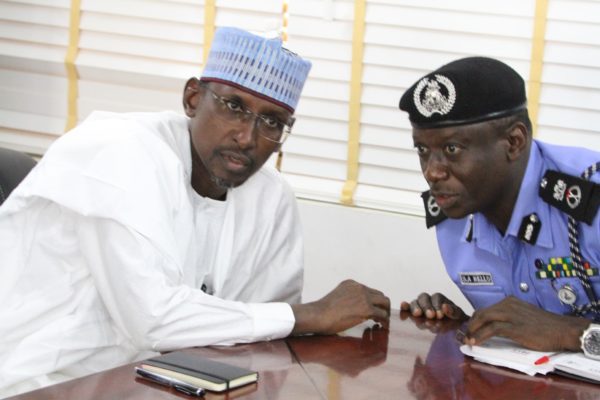 Minister of the Federal Capital Territory (FCT), Malam Muhammad Musa Bello has given the Security Committee a marching order to go after kidnappers in the outskirts of the Territory and others who are engaged in insurgency and other crimes.

 As an intern attached to a court in Nigeria, I witnessed how female counsels were mandated by judges to indicate their marital status while announcing appearance as opposed to their male counterparts. The most painful part is the manner Judges ask the question and the derision (sure, from the male folks in courtroom). If the female counsel tries to evade the apparent embarrassment; the presiding Judge who often attempts to justify the practice would further ask ‘Miss or Mrs or would you prefer to be referred to as an Esquire?’ or ‘please let us know when you are available or off market, you never can tell there could be a prospective suitor …’ Expectedly the male counterparts are thrilled and always show gratitude by prolonging such conversation in a manner that massages their ego. Little wonder, some men expect women’s education to end in kitchen and the infamous “the other room”.
 “We mean to hold our own. I have not become the King’s First Minister in order to preside over the liquidation of the British Empire,” said the indefatigable Prime Minister of Britain during World War 11, Winston Churchill, in 1942. But unfortunately, that was what he was compelled to do as recounted by Peter Clarke in his book titled: “The Last Thousand Days of the British Empire”.
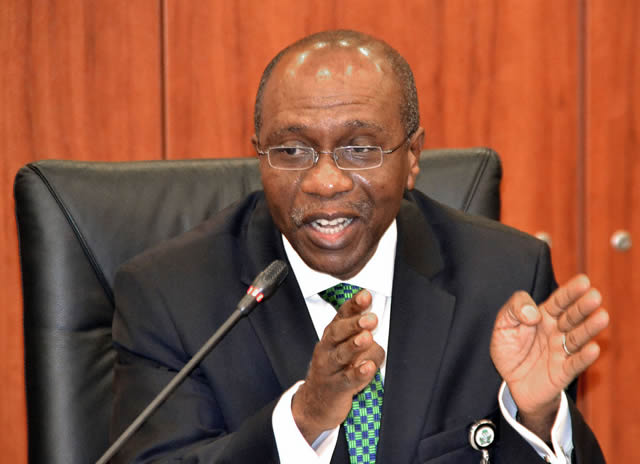



Appraising Nigerian External Reserves Position, By Joseph Orjime
When the Governor of Central Bank of Nigeria Mr Godwin Emefiele was appointed on the 3rd of June, 2014 to head the apex bank it was obvious that he needs to think outside the box to salvage the nation’s financial sector.
This is given the numerous challenges that confronted the financial sector that time. For instance, as at May 20, 2014, stakeholders in the financial sector had expressed concern over the drop in fiscal buffers stating that the development had exposed the economy to weaknesses arising from both domestic and external shocks.
Nigeria’s reserves which are pivotal to defending the Nation’s currency opened the year at $34.4 billion and officially closed at $29.8 billion representing a 15.4% year on year drop. However, analysts believe the reserves are probably less than $20 billion if we net off currency swaps used by the CBN.
But Emefiele upon resumption hit the ground running by introducing certain reforms in the Nigerian financial sector. Key among these reforms include pursuing gradual reduction in key interest rates to include unemployment rate in monetary policy decisions, maintain exchange rate stability and aggressively shore up foreign exchange reserves, and building sector-specific expertise in banking supervision to reflect loan concentration of the banking industry. The balance in reserves may have been worse had it not been for the CBN’s introduction of the managed float policy back in February 2015.
Others include, abolishing fees associated with limits on deposits and consider ongoing practice in which all fees associated with limits on withdrawals accrued to banks alone: introducing a broad spectrum of financial instruments to boost specific enterprise areas in agriculture, manufacturing, health, oil and gas.
The policy placed restrictions on dollar transactions in Nigeria barring a list of 41 items from accessing the official window. The CBN also restricted deposit and withdrawal of forex by depositors from commercial banks.
Despite huge challenges which include fall in the global price of crude oil, Mr Emefiele, alongside his team of professionals at the CBN, has recorded notable milestones. Prominent among these achievements include Financial Systems Stability.
The CBN has successfully regulated the activities of Bureaux de Change (BDCs) to effectively scrutinize rent-seeking among the operators, depletion of the foreign reserves, unauthorized financial transactions, and dollarization of the economy, among others.
For instance, out of 130 BDCs sampled based on volume of purchase from banks, as at the time of the reforms, the bank found 121 BDCs, representing 93%, to be in breach of the objectives and provisions of its guidelines.
Another notable milestone recorded by Emefiele and his team is in the area of banking supervision. In order to achieve the mandate of ensuring safety and soundness of the financial system, CBN conducted a Risk-based examination of all banks with High and Above Average Composite Risk Rating in the previous years.
Also on the list of CBN’s achievements include consumer protection. The bank has refunded over N4.01 billion to bank customers based on complaints resolved and directives communicated to them following the Consumer Compliance Examinations and a Spot-check conducted on the banks.
It concluded full deployment of the Consumer Complaint Management System CCMS with the migration of all banks to the live platform of the system.
The giant strides recorded by the CBN under Emefiele cannot be complete without the mention of a revolution in the Gross External Reserves which rosé by 11.3 per cent to US$38.21 billion at end-November 2017 above the US$34.33 billion at end-October 2017.
The rise was attributed to receipts from Eurobond Proceeds, crude oil exports, foreign exchange purchases and third party receipts.
A breakdown of the external reserves by ownership showed that the share of the Federation reserve was US$2.39 billion 6.2%, Federal Government reserves US$10.31 billion (27.0%), and the CBN reserves, US$25.51 billion (66.8%) of the total reserves.
Consequent upon the reforms introduced by Mr Emefiele, Nigeria’s external reserves has now risen to $46 billion. The CBN spokesman, Mr Isaac Okoroafor confirmed this development recently to newsmen in Abuja.
According to the image maker, the reserves grew by about $3.2 billion between February and March 2018.He said that the reserves at the beginning of 2018 stood at $39.3 billion then rosé to $42.8 billion in February before hitting the new high of $46 billion.
Mr Okoroafor attributed the continued accretion to the country’s reserves to the bank’s effort at vigorously discouraging unnecessary importation and reducing the nation’s import bill, inflow from oil and non-oil exports, as well as the huge inflows through the investors and exporters’ window of the foreign exchange market.
Emefiele’s performance at CBN over the years indicates that he and his team have ensured stability in the sector, in spite of global and domestic challenges.
Analysts are of the opinion that the bank under his watch is really on the right track to guaranteeing the soundness and stability of the Nigerian financial system.
There is no doubt that Emefiele has made his mark financial management of this country. Right from his hay days as Managing Director/ Chief Executive Officer of Zenith Bank, Mr Emefiele has distinguished himself as a guru in growing financial institutions from the cradle, and also consolidating on the successes recorded there from.
Now saddled with the sacred responsibility of regulating the Nigerian economy as the governor of the CBN he has brought his experience to bear on the steady growth witnessed these past years in his office.
Joseph Orjime, a journalist and public affairs analyst, wrote in from Abuja.