It is now appropriate, indeed imperative, for the Nigerian Left to present its own manifesto to the country. This should be in form of a people’s manifesto, a people’s charter of demands in a situation of national emergency. A people’s manifesto at this point in our history is not a dissertation-like programme of social transformation, the type of thing any Left formation should be able to produce in 24 hours. Rather, it should be a clear and concise statement of not only what the Left believes should be done to reprieve the nation from a threatening catastrophe, but also a statement of what—in alliance with other socio-political forces—the Left can mobilize the Nigerian people to do.
To put the matter differently, a people’s manifesto at this time is first and foremost a Nigerian Left’s manifesto in the ordinary sense of the word: a “public declaration of intentions, motives, or views” or a “public statement of policy or opinion”. Yes; but beyond this, a people’s manifesto is a people’s charter of demands presented to the Nigerian state and governments by the Nigerian Left. A people’s manifesto has this double character because although it can be used for an election, it is not election-bound.
This opening declaration should, however, not be misunderstood as implying that without an explicitly Left intervention, the country is doomed. No. Nigeria can still be reprieved—as it was reprieved in 2015—and before that, in 1993 and at some other critical points in the country’s post-civil war history. What my proposition should be understood as implying is that if the country continues in its present course, a reprieve from catastrophe will again be a temporary or false one. And a temporary or false reprieve will, again, make the nation’s fundamental problems more acute and complex when they explode again in a conjuncture—as will surely happen again. The problems will then be much more difficult to resolve in the context and framework of a single country.
This article is, however, not the people’s manifesto as advocated. It is rather the initiation of a discussion on its contents, nature, parameters and politics. An illustration will also be provided.
A Nigerian people’s manifesto drafted and presented by the Nigerian Left should not begin with a catalogue of what a Nigerian state or the incumbent or future government should do for the people. Rather, it should begin with a self-introduction of the movement, organization or platform presenting the manifesto. There are at least three reasons for this. In the first place, the Nigerian masses have, for decades, been recipients and victims of deception from personages and entities in power or seeking power. The people are, therefore, increasingly cynical. In the second place, the Nigerian Left has a strong and enviable record of involvement in popular struggle and patriotic selfless service which it should be proud to present to the public.
In the third place, we know that in this era, it is not only speech-writers that can be hired; manifesto-writers are also hired. In other words, manifesto-writing has been professionalized. Just put the money down and say what type of manifesto you want and the scale of lies you wish to be included, and the job will be done. Although there are always differences between fake manifestoes—however beautifully written—and genuine manifestoes, most readers may not be patient enough to spot the inconsistencies and incongruities in fake declarations.
I wish to propose that the difference between a people’s manifesto drafted and presented by the Left and other manifestoes cannot be found in the “lists of contents”, a comparison of what the authors and publishers promise to deliver to the people: roads, bridges, hospitals, schools, airports, electricity, jobs, “stomach infrastructure”, etc, etc.
The difference lies in the “totality” or “packaging” which shows whether the manifesto is a revolutionary and popular-democratic declaration or a pack of lies, deceptions and illusions. On the one hand, the “totality” or “packaging” indicates not only what will be done but also how it will be done, with what resources it will be done, where the resources will come from, and when exactly it will be done. For, even if you swear by all the deities known and unknown, that you will run from Lagos to Calabar in three hours I will be a bastard to believe you.
On the other hand, in this period of extended emergency, the “packaging” or “totality” unambiguously answers the question: Whose desperate needs are being articulated and planned for: those of the Nigerian masses or those of exploiters, predators and state-robbers who always present themselves as “the nation”? To put the matter more bluntly, does the manifesto unambiguously indicate plans to immediately redeploy the nation’s resources in favour of the hungry, the endangered and the forgotten?
An appropriate “table of contents” for a people’s manifesto in this particular period of extended national emergency in the lives of the Nigerian masses may be structured in several ways. For instance, it may have the following eight-point structure: Who are we (that is, the authors—the Nigerian Left)?; The country we now have; The country we wish to have and are committed to fighting for; Fundamental human rights; Directive principles of state policy; Social transformation; National unity, federalism and popular-democratic restructuring; and Immediate steps (on pressing needs and current crises).
Back to history. The Nigerian Left is one of the oldest ideological tendencies in Nigerian politics because the Left grew out directly from organized anti-colonial and labour struggles—both of which started in the early 1930s. By the eve of independence in 1960, popular democracy and socialism had become the clear aim of the Left.
As early as May 1961, a Leftist group in Lagos, organized by Gogo Chu Nzeribe, Peter Ayodele Curtis-Joseph, Tanko Yakassai, M.O. Johnson, J.B. K. Thomas and a few others, had, in an extended public declaration, described itself as the “organization of workers, women, farmers and farm laborers, peasants, artisans, teachers and intellectuals, small businessmen and women, professionals, lawyers, youths, students, the unemployed, the maimed, the deformed …”
This was a clear ideological selection which the authors justified this way: “These are the people who know misfortune and therefore are capable of waging limitless and courageous struggles until victory is won”. Left out of this long list was the “indigenous Nigerian capitalist and feudal class that had emerged as the virtual successors to the British colonialists”. The group pledged to “organize, unite and lead the peoples of Nigeria in a relentless and uncompromising fight against capitalism and capitalist exploitation of the Nigerian peoples”.
Significantly, these young Nigerians opposed regionalism and declared their commitment to “one undivided Nigeria, under unitary and centralized government”. And, consistently, they declared their belief in the creation of a “Union of African States” and “one common nationality for all Africans”.
The revolutionary Lagos group—let us call them so here—advocated a 40-hour week for all workers, full employment, unemployment benefits, social security, worker-participation in management, special allowances for “all labour that is especially risky or dirty”, adequate minimum wage, free medical treatment, free education, paid maternity leave, paid rest-time during nursing period ….”.
Putting itself forward as a vanguard in post-colonial nation-building, the group concluded its public declaration by repeating that it was formed to “lead the peoples of Nigeria in their just struggles for peace, friendship, national reconstruction, a better future, democracy and the triumph of socialism”.
That was the Nigerian Left about 57 years ago, just six months after independence. A contemporary people’s manifesto can proceed from here by indicating what has changed, what has remained and what has emerged.
Madunagu, mathematician and journalist, writes from Calabar, Cross River State.
Suspected thugs were reported to have murdered a former Speaker of the Ebonyi State House of Assembly who later became Commissioner for Justice and Attorney General, Mr. Elias Nwankwegu.
The people of Nwofe Agbaja, in Izzi Local Council of the State, who stage a protest against the killing, alleged that the incumbent Speaker of the House, Francis Nwifuru, and Special Assistant to the Governor on Internally Generated Revenue (IGR), Martin Okwuegbu, were behind the killing.
Nwifuru, however, denied complicity in the killing, as the state police have arrested one Emmanuel Nwofe in connection with the murder.
Nwankwegu was shot dead at the weekend by suspected thugs during a political rally organized by Nwifuru who hails from the same area with the deceased.
The people of the community carried placards with inscriptions such as: “Chairman Izzi Council bring Back Our Son”; “Speaker, Bring Back Our Son”; “SA IGR, Bring Back Our Son”; “Ebonyi State PDP, Please Bring Back Our Son”; and “Federal Government Come To Our Rescue,” among others.
Elder brother of the deceased, Samson Nwankwegu, said that he was in an event when they called him that the incident happened, adding: “We learnt that my brother was called to attend a rally that he is going to be given motorcycle.
“On getting there, three boys accosted him and one of them called Emma pulled a gun and shot him. We were not there to rescue the boy and I learnt that he died immediately before he was taken to the hospital.
“Emma Nwofe is one of the Speaker’s boys. This incident happened about 2pm close to the rally ground.”
Reacting to the allegations of complicity in the incident, Nwifuru said the killers were some boys loyal to a faction of the PDP in the area.
He and Nwankwegu have been having a running battle in the constituency since Nwifuru defeated Nwankwegu in the party’s primaries in 2010.
Spokesman to the Speaker, Tony Nwizi, exonerated his principal from the death of Okarika.
Men of the prisons Armed squad and the police force have reportedly foiled attempt by some miscreants to free 18 prison inmates who were being driven to court for trial in Sokoto.
Information from the Sokoto State Prison Command Public Relations Officer (PRO), ASP Bello Umar Farouk said that the hoodlums, armed with machetes and other dangerous weapons attempted to set free the inmates being taken to court along sultan Abubakar Road, Sokoto today, Wednesday.
“This was however repelled as men of the Nigerian Police Force swiftly responded to assist the Nigerian prisons Armed squad personnel to resist the attack thus preventing what would have been resulted in a major security breach in Sokoto State.”
Bello Farouk said that the prisoners were later escorted back to safe custody in the prison yard and that security has since been beefed up in and around the facility.
He said that the controller of prisons in the State command, Haliru Nababa had expressed appreciation to sisters security organizations even as he assured the public of adequate safety and human custody of all prisoners in the command, in line with the mandate of the Nigerian prisons Service.
Meanwhile, the Independent National Electoral Commission (INEC) has intensified efforts towards ensuring the rights of prison inmates to vote in the forthcoming general elections in Nigeria as it is already making arrangements with the Nigeria Prisons Service (NPS) to ensure that prisoners are allowed to vote in the 2019 general elections.
The Secretary of INEC in Kebbi State, Alhaji Bello Magaji Isah, who spoke during a visit to Controller of Prison in Kebbi State, Mallam Sani Adamu Potiskum in Kebbi, said that there is a need for effective synergy among critical stakeholders in creating public awareness on inmates voting rights towards ensuring participations of eligible Nigerians to exercise their franchise.
“I am here to lets you know that the INEC is working on the possibility of creating polling units in Nigerian prisons to allow some categories of inmates to vote.
“The essence is to capture as many eligible voters to participate in the election since voters’ education and sensitisation are very essential in this regard.
“We also consider the feasibility of inmates in custody and the plight of Internally Displaced Persons (IDPs), Persons With Disabilities (PWDs) and People in Diaspora to Vote in elections.”
The Nigerian President, Muhammadu Buhari, has listed the inherent danger in the planned currency integration in the Economic Community of West African States (ECOWAS) by the year 2020.
Buhari, in a speech read on his behalf by the Governor of the Central Bank of Nigeria (CBN), Godwin Emefiele, today, Tuesday, at the 5th meeting of the Presidential Task Force on ECOWAS Currency Programme in Accra, Ghana, said that Heads of Government had not properly articulated and analyzed a comprehensive picture of the state of preparedness of individual countries for monetary integration by 2020.
The President said that the non-preparedness of some member countries, the credibility of the union if anchored on watered down criteria, and the continuing disparities between macro-economic conditions in ECOWAS countries, continued to be major issues of concern that members must examine in order to make progress.
President Buhari observed that ECOWAS Heads of Government have not been adequately briefed on the full implications of forcing through the integration by 2020, particularly where some countries were not individually ready domestically.
He said that there have been outstanding issues in the roadmap to an integrated currency union, and that the macro-economic fundamentals of many countries in ECOWAS are diverse and uncertain.
According to the Nigerian leader, the inflation targeting regime recommended as framework is not feasible as it is based on adoption of a flexible exchange rate regime, adding that real convergence is nowhere near achievable despite efforts that have been made so far.
President Buhari therefore called for a push towards ratification and domestication of legal instruments and related protocols, and the harmonization of all fiscal, trade and monetary policies and statistical systems, with a view to limiting the extent of current policy divergences.
He also advised that the West African Economic and Monetary Union (UEMOA) countries to make a presentation on a clear roadmap towards delinking from the French Treasury.
The President called for a review of the fast-track approach to monetary integration and the harmonization of plans by ECOWAS members with that of the African Union Programme of monetary convergence that had recommended a convergence deadline of 2034 for the for the establishment of Regional Central Banks in all sub-regions of the continent.
He used the occasion of the meeting to call for the establishment of an Ombudsman with powers to invoke sanctions when member countries are in breach of agreed standards, protocols and convergence criteria.
The Nigerian President also called for the transformation of the West African Monetary Institute (WAMI) into a West African Monetary Zone Commission, equivalent to the UEMOA Commission, stressing that his proposal of merging WAMI and WAMA, by the ECOWAS Commission into the ECOWAS Monetary Institute would be very critical in achieving monetary union in the West African sub-region.
Nigeria’s foremost political economist and chieftain of the All Progressives Congress, APC, Professor Pat Utomi has said that President Muhammadu Buhari possesses all the cardinal attributes of a good leader.
“He (Buhari) remains a man of integrity, self-discipline and modesty with a high sense of moral rectitude. These are the cardinal attributes of a good leader. We are enthused that he is the President of Nigeria at this time. He is on a rescue mission. He does not pay lip service to patriotism.
Professor Utomi who was responding to a question on why Nigerians are yet to feel the impact of change promised by the APC government, said that socio-economic change is a gradual phenomenon and it is not automatic even as he rated the performance of President Buhari’s administration high.
He said that if Nigerians take a critical look at where PDP left the country, the level of impunity and unprecedented looting, Nigerians would rather commend the President’s efforts.
“If you remember where we are coming from, you will give Buhari government acclamation and commendation. The country was under a highly corrupt and incompetent system; our resources squandered by a few political office holders in the worst form of impunity and recklessness ever seen in Africa’s most populous nation.”
“Yes there are challenges of governance under the present administration, but Buhari has shown commitment and sincerity to effect a resounding change in social, economic and political development of Nigeria.”
Professor Utomi called on well-meaning Nigerians to continue to support the President on his mission to re-order the country, even as he enjoined Nigerians to also pray for Buhari to succeed.
“Buhari is passionate about the progress and survival of Nigeria. Every reasonable Nigerian should support him. He deserves all good will because he is not a corrupt and irresponsible leader,” he added.
The South African government is intending to severe diplomatic ties with Israel in protest against its treatment of the Palestinian people.
The South African’s Science and Technology Minister Naledi Pandor announced the move today, Wednesday when he addressed parliamentarians, saying the resolution was taken after a ten-hour joint debate on South African President Cyril Ramaphosa’s State of the Nation Address (SONA) which he delivered last week.
“The majority party has agreed, that government must cut diplomatic ties with Israel, given the absence of genuine initiatives by Israel to secure lasting peace and a viable two-state solution that includes full freedom and democracy for the Palestinian people,” she said.
The comments were made in response to opposition leader Kenneth Meshoe, who had argued that it was disappointing that national and provincial authorities in South Africa had refused help from Israeli companies to address the country’s current water crisis.
The proposal was applauded by parliamentarians and Pandor, who is expected to be appointed vice president in Ramaphosa’s new Cabinet, was given a standing ovation as she left the podium.
The government’s decision was further confirmed on the South African Parliament’s official Twitter account.
South Africa has been a staunch ally of the Palestinian struggle and regularly spoken out against the atrocities committed by the Israeli government.
Last month, the South African representative to the UN told the Human Rights Council that Israel is the “only state in the world that can be described as an apartheid state”, just days after the ruling African National Congress (ANC) party called for government ministers to strengthen the country’s visa restrictions with Israel.
Last year, the government also resolved to downgrade the South African Embassy in Israel to a liaison office, and cautioned Tel Aviv for blacklisting supporters of the Boycott, Divestment and Sanctions (BDS) movement, which included prominent figures of the ANC.
The BDS South Africa campaign has witnessed significant support from the nation’s public, with universities and churches backing a cultural and economic boycott of Israel affiliated organisations.
The former Governor of Niger State, Dr. Babangida Aliyu has vowed to remain in the Peoples Democratic Party (PDP) for the rest of his life.
Babangida Aliyu, who spoke in Minna after the defection of 34,826 politicians to the ruling All Progressives Congress (APC), including the deputy chairman of PDP in the state, Aminu Yusuf, said: “I have no intention of defecting to the APC, because I believe in the PDP.”
The News Agency of Nigeria reports that many of the politicians who defected to the APC were mainly Babangida Aliyu’s close allies in the state.
The former governor said that he had the opportunity of decamping to the APC ahead of the 2015 general elections when he led the G-7 Governors, but did not do so because of his belief in the PDP.
“What we protested then was to correct some of the abnormalities in PDP, but not to defect to the APC. If I were a selfish politician, I would have defected to the APC then. Maybe I would have become a minister now,’’ he said.
He noted that the PDP made him a governor, and that it was a strong political party if not for internal wrangling that made it to lose the 2015 election.
The former governor said the party had started working toward correcting the wrongs at the various levels.
Governor Tambuwal presenting a bag of fertiliser to one of the beneficiary-farmers at the flag-off of fertilizer sales for dry season farming in Sabon Birni LGA
Governor Aminu Waziri Tambuwal of Sokoto state has announced that his government will be spending N1.4 billion to subsidize the price of fertilizer for the farmers in the state for the 2018 cropping season.
The governor who spoke in Sabon Birni local government at the flag-off of fertilizer sales for dry season farming and distribution of improved seeds to farmers across the state said: “we have bought 500,000 bags of fertilizer at the cost of N6,800 per 50kg bag but we have decided to sell the product to our farmers at the subsidized cost of N4,000 per bag. In all, we are spending the sum of N1.4 billion to subsidize the product.
“This intervention becomes necessary in view of our determination to boost agriculture in the state and to encourage new entrants into the sector.
“We will continuously explore other avenues to grow the agric sector bearing in mind that it is the largest employer of labour for majority of our citizens,” the Governor added.
Governor Tambuwal said that the government will buy a total of 25,000 metric tons of fertilizer at the cost of N3.4 billion for the dry season farming alone in the state.
According to him, the state government will construct 1000 tube wells to assist dry season farmers as a result of shortage of water being experienced at the Goronyo Dam.
On seeds, the Governor said the ministry of agriculture has procured faro-brand rice seedlings at the cost of N281 million to be distributed to dry season farmers free of charge, while another N9.5 million worth of seedlings for carrot, onion, water melon and garlic have been bought for the farmers to assist in improving their yields.
“This in addition to payment of N20 million counterpart funding to the State Agricultural Development Project (SADP) for the provision of Tube wells to farmers and motorcycles to monitoring officers in 2017.
“The government has paid the sum of N40 million as counterpart funding to the International Fund for Agricultural Development (IFAD) and N56 Million for the World Bank funded-Fadama III project which are all aimed at improving farming activities in the state.”
In recognition of its role in the promotion of interreligious and intercultural dialogue in Africa, The United Religions Initiative (URI) recently awarded the 2018 Africa Peace Award to the International Dialogue Centre (KAICIID). The URI is an interfaith peace organisation that shares consultative status with the United Nations Economic and Social Council and is engaged in the promotion of enduring daily interfaith cooperation with the aim of ending religiously motivated violence, and create cultures of peace, healing and justice for the Earth and all living beings. It comprises 204-member organizations in 31 African countries.
The award was established 11 years ago and recognizes the commitment of winners in evolving effective leadership for sustainable peace, development and reconciliation for inter-religious and inter-cultural harmony in the continent. The award celebrates and honours the accomplishments of individuals or organizations engaged in exhibiting extraordinary leadership in building peace, reconciliation and harmony among different religions and cultures and promote human dignity as enshrined in the universal declaration of human right.
Presenting the award to KAICIID International Dialogue Centre, URI’s Regional Director for Africa, Ambassador Mussie Hailu, noted in a statement that the award to the Vienna based organisation is an “appreciation and acknowledgement of the work of KAICIID as intergovernmental organisation in promoting interreligious and intercultural dialogue in Africa and the rest of the world to prevent and resolve conflict and to enhance understanding and cooperation.
“The award is also in recognition of the contribution of KAICIID for reviving the African Union Interfaith Dialogue Forum in partnership with the African Union and fostering dialogue among people of different faiths and cultures that bridges animosities, reduces fear and instils mutual respect.”
The Secretary General of KAICIID, Faisal bin Muammar, is upbeat on the award: We are proud and happy to receive this international award, which reflects the centre’s prestigious international stats and its achievements in implementing successful interreligious and intercultural dialogue initiatives and promoting the role of international organisations and their partnerships with the centre. This award is an important recognition of our work supporting peaceful co-existence and common citizenship in Africa, especially through KAICIID supported dialogue platforms for religious leaders and policy makers in Nigeria and the Central African Republic.
The works of KAICIID International Dialogue Centre in the African continent have left indelible footprints in the promotion of peaceful co-existence among diverse followers of faiths and cultures and leading to the creation of dialogue platform for constant engagements. In Nigeria, KAICIID has assisted in the formation of the Interfaith Dialogue Forum for Peace (IDFP) that encourages Muslims and Christians to embrace dialogue as means of achieving peace. In Central African Republic, KAICIID is working with partners like the Organisation of Islamic Cooperation and the Network of Religious and Traditional Peacemakers to foster dialogue among the diverse religious communities in the country.
Beyond engaging critical stakeholders in promoting peaceful co-existence, the International Dialogue Centre in collaboration with the Citizens and Diaspora Directorate (CIDO) of the African Union Commission organised two summits to rally continental support for peace. At its 2nd AU Inter-faith Dialogue Forum that held in Abuja from November 10-11, 2016, African scholars, religious leaders and officials of the African Union advanced various views for promoting interfaith unity for sustainable development in the continent.
At the end of the two-day conference, delegates approved a Declaration and a Plan of Action on their joint work in education, partnerships, media and development, including the “need to build partnerships between African Union, interfaith and faith-based organisations, as well as religious and traditional leaders to effectively implement the African Union’s Agenda 2063 and the UN’s Sustainable Development Goals in Africa.
The Action Plan adopted by the summit also called for the promotion of peace and reconciliation “through the teachings of the different holy books in all places of worship and to enhance media coverage.” In achieving the objectives of the summit, delegates elected a 12-member steering committee to ensure the realisation of the AU Agenda 2063 that calls for closer collaboration of all stakeholders towards attainment of sustainable development in the continent As part of the Action Plan, the Steering Committee is to pursue a 10-year interfaith development agenda for all African Union member states.”
KAICIID Secretary General Muammar at the 2nd Interfaith Summit in Abuja underscored the relevance of the steering committee elected for interfaith development agenda, when he declared, “The steering committee launched today is a vital instrument in that endeavour. It fosters, among other relations, Interreligious dialogue, which is an integral component in achieving the Africa Agenda 2063, global strategy to optimize use of Africa’s resources for the benefit for all Africans.”
The steering committee membership, representing the different regions, religions, including African Traditional Religions, is committed to a plan of action anchored on building partnerships among Africa’s interfaith and faith-based organisations to prevent religious extremism and promote harmony in the continent.
Mandated to partner with the African Union, the Regional Economic Communities (RECs) and other peace-building organizations, the committee is expected to develop an interfaith development agenda for all African Union member states based on Agenda 2063 and Agenda 2030 and five-year strategic plan; create an evaluation strategy for the Steering Committee; strengthen community resilience through advocacy and awareness, among others, based on Sustainable Development Goals as agreed by the AU.
There is no doubt that URI’s 2018 Africa Peace Award on KAICIID International Dialogue Centre is in recognition of its tremendous works in the promotion of peace across diverse religious and cultural groups in the continent. It is hoped that the various peace-platforms being established by KAICIID in various African countries would serve as torchlight for further peace initiatives that are community-driven and tailored to meet peculiar challenges in combating violence and hate speech among various religions and cultures.
Reef, a media professional, writes from Abuja and can be reached via: simonreef927@gmail.com
President Muhammadu Buhari was demonstrably unfair to have saddled Asiwaju Bola Tinubu with the responsibility of reconciling aggrieved members of the All Progressives Congress (APC) ahead of the 2019 general elections. Buhari’s order to him to undertake the exertion was a Hobson’s choice of sorts. Confronted with such a single-minded order and positive expectation by the president, Tinubu was bound to accept it and nothing else.
As a leader of the APC, Tinubu had every reason to look in the president’s face and tell him point-blank that he could not do the job. The major plank on which he could have grounded his rejection of the order is the principle of fairness in law: nemo judex in causa sua (rule against bias or that you cannot be a judge in your own matter). It is a fact that Tinubu is an aggrieved leader of the ruling party. He should, therefore, have been allowed to rescuse himself from driving the reconciliation process.
If there is any individual in the APC who needs reconciliation the most, it is Tinubu. If the narratives about his having been undermined, sidelined and dumped in the post-election activities leading to the formation of the government were considered as incredible or impossible, the recent confirmation by his wife, Senator Oluremi, that her husband was “trashed” after helping the party and the president to victory has put the issue back in context.
The strongman of southwest politics needed to be reconciled with those that used the platform of the presidency to batter and shatter him such that he could not influence ministerial appointments or enthrone his favourite candidate as APC’s governorship candidate in Ondo state. There were successful attempts to massively degrade his base. If not for the steadfast loyalty of Governor Akinwunmi Ambode, Tinubu would have been pushed back and restricted to his Bourdillon Mansion in Lagos.
While this was on, Buhari had made it clear at a meeting in the Presidential Villa that there is only one national leader of the APC and he (Buhari) is. It was a subtle move against Tinubu who was then being widely referred to as the national leader of the party. In any case, Buhari may be the National Leader; nothing stops Tinubu from being a national leader. He is in his own right. He has earned that badge of honour, regardless of what the Presidency feels.
The confetti of indignity, notwithstanding, Tinubu had stoically carried on, contemplating his political future in the APC. Amid that contemplation, Buhari had resorted to the same man, whom he used and dumped after 2015 electoral victory, to salvage and repackage the APC and his presidency ahead of the 2019 general election. I do not need to be told that Buhari is simply interested in frostily using Tinubu to win again the southwest in 2019 after which he would now be shredded, not just trashed.
From all indications, the 2019 presidential election is a battle between Buhari as a candidate of the APC and Nigerians. Nigerians are now very sensitized and are conscientious enough to deploy their Permanent Voter Cards (PVCs) for public good. The PVC is the licensed AK-47 with which every eligible voter will shoot any candidate that is considered a danger to the wellbeing of the nation. It is thus understandable why Buhari has brought in Tinubu to coordinate the southwest for him.
The so-called national reconciliation is a way of committing the Jagaban of Borgu to Buhari’s re-election in 2019 and, it is, to that extent, secondary consideration. Buhari has already lost the southwest. Even if some states in the southwest decide to vote for APC in the governorship election because it is a local election and their sons and daughters are involved, the presidential election may not elicit that kind of sentimental attachment.
Besides, it is a historic fact that for any candidate to win the presidency of Nigeria, he must win either southwest or northwest or both. The two zones have massive votes that can swing the pendulum of victory to any candidate that wins them. In 1999, Olusegun Obasanjo from southwest lost the zone but won northwest and the other zones to become president. In 2003, Obasanjo, as an incumbent president, won in all zones except northwest, which Buhari tucked in his kitty. In 2007, Yar’Adua, instructively, won in all the zones. In 2011, Jonathan won in southwest while Buhari won in northwest in the same election. In 2015 elections, Buhari, remarkably, won in both zones.
There is no doubt that Buhari will still win northwest in 2019 if he contests. If he loses southwest and he is not able to make remarkable showing in south-south, southeast and north central zones, he may find it difficult to get the required two-thirds spread in at least twenty-four states to win the election. If the opposition PDP picks a formidable presidential candidate from the northeast, then Buhari cannot guarantee that the northeast would abandon its own to give him bloc votes. It is against the backdrop of this scenario that Buhari has decided to pamper Tinubu in order to recommit him to delivering southwest to him in 2019.
Southwest is an enclave where the agitation for restructuring of the federation is on and the leaders expect the APC government to do it before the 2019 elections. Ditto in the southeast, that has suffered from decades of political marginalization. In fact, the zone has never had it worse than under the APC government. If not for the constitutional provisions, Buhari would have even denied the zone ministerial appointments for giving him only 198,000 votes (five per cent) in the 2015 presidential election.
In the south-south, the traditional PDP enclave, a number of considerations will play out. One of them is that the zone will see the 2019 election as an opportunity to pay back Buhari in his own coin. He dislodged Goodluck Jonathan in 2015; therefore, it will help to dislodge Buhari this time round for any other candidate that it is sponsoring. In the north central, the menace of Fulani herdsmen and the shambolic handling of the issue by Buhari’s presidency will be a major determinant in 2019, especially in Benue, Plateau, and Nassarawa states.
The son-of-the-soil consideration will work to a large extent for Buhari in northwest. If the PDP picks its most formidable candidate from the northeast, the son-of-the-soil consideration will likewise play out in the zone. So the two leading candidates will balance out in the northwest and northeast zones, except that the northwest votes outweigh those of the northeast. This is why Tinubu has become indispensable to Buhari in the 2019 presidential battle. Buhari has his eyes on southwest votes, especially now that he has lost the support of former President Olusegun Obasanjo. Therefore, if not Tinubu, who else can he rely on to deliver?
But as it is, can Tinubu deliver in circumstances where all other Yoruba leaders are speaking with one voice against the Buhari administration? Tinubu seems to have in his hands a ctach-22 situation. How can he navigate the political terrain that Buhari has wittingly or unwittingly laden, to the detriment of his re-election, with the mines of nepotism, ethno-religious chauvinism, religious bigotry, anti-restructuring posture, etc.? What will Tinubu tell the Yoruba about Buhari before and during the electioneering?
Truth is, securing southwest for Buhari , no doubt, appears an impossible task for Tinubu to accomplish, given the political dynamics and calculations that do not support and sustain Fulani’s irredentism to which Buhari is callously committed. Asiwaju should not have been coldly confronted with this kind of Hobson’s choice in the garb of a tokenistic reconciliation task amid obvious lack of good faith by Buhari. But what is really on Tinubu’s mind?
We use cookies on our website to give you the most relevant experience by remembering your preferences and repeat visits. By clicking “Accept”, you consent to the use of ALL the cookies.
This website uses cookies to improve your experience while you navigate through the website. Out of these, the cookies that are categorized as necessary are stored on your browser as they are essential for the working of basic functionalities of the website. We also use third-party cookies that help us analyze and understand how you use this website. These cookies will be stored in your browser only with your consent. You also have the option to opt-out of these cookies. But opting out of some of these cookies may affect your browsing experience.
Necessary cookies are absolutely essential for the website to function properly. This category only includes cookies that ensures basic functionalities and security features of the website. These cookies do not store any personal information.
Any cookies that may not be particularly necessary for the website to function and is used specifically to collect user personal data via analytics, ads, other embedded contents are termed as non-necessary cookies. It is mandatory to procure user consent prior to running these cookies on your website.


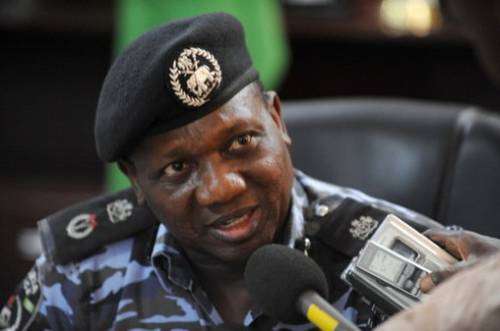
 Men of the prisons Armed squad and the police force have reportedly foiled attempt by some miscreants to free 18 prison inmates who were being driven to court for trial in Sokoto.
 Nigeria’s foremost political economist and chieftain of the All Progressives Congress, APC, Professor Pat Utomi has said that President Muhammadu Buhari possesses all the cardinal attributes of a good leader.
 The South African government is intending to severe diplomatic ties with Israel in protest against its treatment of the Palestinian people.
 The former Governor of Niger State, Dr. Babangida Aliyu has vowed to remain in the Peoples Democratic Party (PDP) for the rest of his life.



Drafting A People’s Manifesto, By Edwin Madunagu
To put the matter differently, a people’s manifesto at this time is first and foremost a Nigerian Left’s manifesto in the ordinary sense of the word: a “public declaration of intentions, motives, or views” or a “public statement of policy or opinion”. Yes; but beyond this, a people’s manifesto is a people’s charter of demands presented to the Nigerian state and governments by the Nigerian Left. A people’s manifesto has this double character because although it can be used for an election, it is not election-bound.
This opening declaration should, however, not be misunderstood as implying that without an explicitly Left intervention, the country is doomed. No. Nigeria can still be reprieved—as it was reprieved in 2015—and before that, in 1993 and at some other critical points in the country’s post-civil war history. What my proposition should be understood as implying is that if the country continues in its present course, a reprieve from catastrophe will again be a temporary or false one. And a temporary or false reprieve will, again, make the nation’s fundamental problems more acute and complex when they explode again in a conjuncture—as will surely happen again. The problems will then be much more difficult to resolve in the context and framework of a single country.
This article is, however, not the people’s manifesto as advocated. It is rather the initiation of a discussion on its contents, nature, parameters and politics. An illustration will also be provided.
A Nigerian people’s manifesto drafted and presented by the Nigerian Left should not begin with a catalogue of what a Nigerian state or the incumbent or future government should do for the people. Rather, it should begin with a self-introduction of the movement, organization or platform presenting the manifesto. There are at least three reasons for this. In the first place, the Nigerian masses have, for decades, been recipients and victims of deception from personages and entities in power or seeking power. The people are, therefore, increasingly cynical. In the second place, the Nigerian Left has a strong and enviable record of involvement in popular struggle and patriotic selfless service which it should be proud to present to the public.
In the third place, we know that in this era, it is not only speech-writers that can be hired; manifesto-writers are also hired. In other words, manifesto-writing has been professionalized. Just put the money down and say what type of manifesto you want and the scale of lies you wish to be included, and the job will be done. Although there are always differences between fake manifestoes—however beautifully written—and genuine manifestoes, most readers may not be patient enough to spot the inconsistencies and incongruities in fake declarations.
I wish to propose that the difference between a people’s manifesto drafted and presented by the Left and other manifestoes cannot be found in the “lists of contents”, a comparison of what the authors and publishers promise to deliver to the people: roads, bridges, hospitals, schools, airports, electricity, jobs, “stomach infrastructure”, etc, etc.
The difference lies in the “totality” or “packaging” which shows whether the manifesto is a revolutionary and popular-democratic declaration or a pack of lies, deceptions and illusions. On the one hand, the “totality” or “packaging” indicates not only what will be done but also how it will be done, with what resources it will be done, where the resources will come from, and when exactly it will be done. For, even if you swear by all the deities known and unknown, that you will run from Lagos to Calabar in three hours I will be a bastard to believe you.
On the other hand, in this period of extended emergency, the “packaging” or “totality” unambiguously answers the question: Whose desperate needs are being articulated and planned for: those of the Nigerian masses or those of exploiters, predators and state-robbers who always present themselves as “the nation”? To put the matter more bluntly, does the manifesto unambiguously indicate plans to immediately redeploy the nation’s resources in favour of the hungry, the endangered and the forgotten?
An appropriate “table of contents” for a people’s manifesto in this particular period of extended national emergency in the lives of the Nigerian masses may be structured in several ways. For instance, it may have the following eight-point structure: Who are we (that is, the authors—the Nigerian Left)?; The country we now have; The country we wish to have and are committed to fighting for; Fundamental human rights; Directive principles of state policy; Social transformation; National unity, federalism and popular-democratic restructuring; and Immediate steps (on pressing needs and current crises).
Back to history. The Nigerian Left is one of the oldest ideological tendencies in Nigerian politics because the Left grew out directly from organized anti-colonial and labour struggles—both of which started in the early 1930s. By the eve of independence in 1960, popular democracy and socialism had become the clear aim of the Left.
As early as May 1961, a Leftist group in Lagos, organized by Gogo Chu Nzeribe, Peter Ayodele Curtis-Joseph, Tanko Yakassai, M.O. Johnson, J.B. K. Thomas and a few others, had, in an extended public declaration, described itself as the “organization of workers, women, farmers and farm laborers, peasants, artisans, teachers and intellectuals, small businessmen and women, professionals, lawyers, youths, students, the unemployed, the maimed, the deformed …”
This was a clear ideological selection which the authors justified this way: “These are the people who know misfortune and therefore are capable of waging limitless and courageous struggles until victory is won”. Left out of this long list was the “indigenous Nigerian capitalist and feudal class that had emerged as the virtual successors to the British colonialists”. The group pledged to “organize, unite and lead the peoples of Nigeria in a relentless and uncompromising fight against capitalism and capitalist exploitation of the Nigerian peoples”.
Significantly, these young Nigerians opposed regionalism and declared their commitment to “one undivided Nigeria, under unitary and centralized government”. And, consistently, they declared their belief in the creation of a “Union of African States” and “one common nationality for all Africans”.
The revolutionary Lagos group—let us call them so here—advocated a 40-hour week for all workers, full employment, unemployment benefits, social security, worker-participation in management, special allowances for “all labour that is especially risky or dirty”, adequate minimum wage, free medical treatment, free education, paid maternity leave, paid rest-time during nursing period ….”.
Putting itself forward as a vanguard in post-colonial nation-building, the group concluded its public declaration by repeating that it was formed to “lead the peoples of Nigeria in their just struggles for peace, friendship, national reconstruction, a better future, democracy and the triumph of socialism”.
That was the Nigerian Left about 57 years ago, just six months after independence. A contemporary people’s manifesto can proceed from here by indicating what has changed, what has remained and what has emerged.
Madunagu, mathematician and journalist, writes from Calabar, Cross River State.