Nigeria’s political environment is gathering hot air as the National Independent Electoral Commission (INEC) suddenly woke up to disown the leadership of David Mark as national chairman of the African Democratic Congress (ADC), leading to the deployment of security operatives to it’s headquarters in Abuja, the nation’s federal capital in anticipation of possible reaction. Our Reporters said that as early as this morning, April 2, armed soldiers and police operatives had taken over INEC headquarters as news of mass protest by members of the ADC filtered in. The reporters said that there’s a large deployment of Nigerian Army personnel at the commission’s premises, with armoured tanks and officers of the Nigeria Police Force brandishing assault rifles and other weapons. Reports indicate that aggrieved members of the party were planning to stage a protest at the INEC’s office over the decisions affecting the party’s leadership structure. Yesterday, INEC announced the removal of the names of David Mark and Rauf Aregbesola from its official portal as National Chairman and National Secretary of the ADC respectively, citing an ongoing court dispute. The commission said it acted in compliance with “preservatory orders” issued by the Court of Appeal, which directed all parties to maintain the status quo pending the determination of the case before the Federal High Court in Abuja. INEC said that the order arose from a legal battle involving Mark and another party chieftain, Nafiu Bala Gombe, with multiple factions laying claim to the party’s leadership. “The names of the current National Working Committee members led by Senator David Mark would be removed from the INEC portal pursuant to the order of the Court of Appeal to maintain the status quo ante bellum.” INEC said that it had received conflicting communications from rival factions, with one group warning against recognising Gombe as acting chairman, while another demanded full implementation of the appellate court ruling. Amidst the confusion, the commission said that it would suspend recognition of any faction of the ADC and refrain from engaging with any group until the court delivers a final judgment. “The commission shall not receive any further communication or deal with any of the parties or groups… and will not monitor any meeting, congress or convention convened on behalf of the ADC by any group.” Meanwhile ADC has faulted INEC, saying that it acted outside the law by taking sides in the party’s leadership dispute. The national publicity secretary of the ADC, Bolaji Abdullahi argued that Bala no longer has the legal standing to act on behalf of the party as his tenure ended following his resignation and the dissolution of the executive committee he belonged to. He said that the party’s National Executive Committee, as the next highest organ after the convention, had already taken binding decisions regarding the leadership structure. The ADC spokesman questioned INEC’s actions, alleging that the commission was recognising moves by Bala despite being aware of his resignation. He also criticised the commission’s conduct in relation to a directive of the Court of Appeal to maintain the status quo.
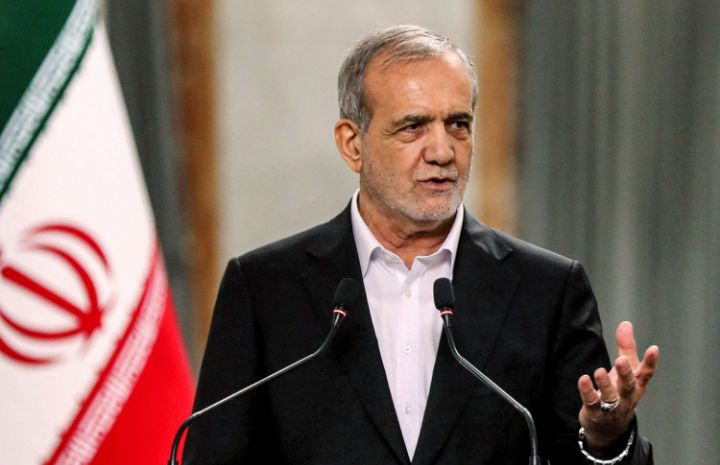
The President of Iran, Masoud Pezeshkian has thrown a question to Americans, asking: “is America First” truly among the priorities of the U.S. government today?” In a letter to American people, ahead of the national broadcast by President Donald Trump to the nation about the ongoing war with Iran, President Masoud Pezeshkian said that the ongoing war had brought the world to stand at a crossroads. President Masoud Pezeshkian said that the confrontation is becoming more costly and futile than ever before, emphasizing that the choice between confrontation and engagement is both real and consequential. “Its outcome will shape the future for generations to come.
“Throughout its millennia of proud history, Iran has outlasted many aggressors. All that remains of them are tarnished names in history, while Iran endures—resilient, dignified, and proud.” The President of Iran warned that the US/Israeli attacks on the country’s vital infrastructure, including energy and industrial facilities are direct attack on the Iranian people. “Beyond constituting a war crime, such actions carry consequences that extend far beyond Iran’s borders.” Part of Masoud Pezeshkian’s letter goes thus: “To the people of the United States of America, and to all those who, amid a flood of distortions and manufactured narratives, continue to seek the truth and aspire to a better life: Iran—by this very name, character, and identity—is one of the oldest continuous civilizations in human history. Despite its historical and geographical advantages at various times, Iran has never, in its modern history, chosen the path of aggression, expansion, colonialism, or domination. Even after enduring occupation, invasion, and sustained pressure from global powers—and despite possessing military superiority over many of its neighbors—Iran has never initiated a war. Yet it has resolutely and bravely repelled those who have attacked it. The Iranian people harbor no enmity toward other nations, including the people of America, Europe, or neighboring countries. Even in the face of repeated foreign interventions and pressures throughout their proud history, Iranians have consistently drawn a clear distinction between governments and the peoples they govern. This is a deeply rooted principle in Iranian culture and collective consciousness—not a temporary political stance. For this reason, portraying Iran as a threat is neither consistent with historical reality nor with present-day observable facts. Such a perception is the product of political and economic whims of the powerful—the need to manufacture an enemy in order to justify pressure, maintain military dominance, sustain the arms industry, and control strategic markets. In such an environment, if a threat does not exist, it is invented. Within this same framework, the United States has concentrated the largest number of its forces, bases, and military capabilities around Iran—a country that, at least since the founding of the United States, has never initiated a war. Recent American aggressions launched from these very bases have demonstrated how threatening such a military presence truly is. Naturally, no country confronted with such conditions would forgo strengthening its defensive capabilities. What Iran has done—and continues to do—is a measured response grounded in legitimate self-defense, and by no means an initiation of war or aggression. Relations between Iran and the United States were not originally hostile, and early interactions between the Iranian and American people were not marred with hostility or tension. The turning point, however, was the 1953 coup d’état—an illegal American intervention aimed at preventing the nationalization of Iran’s own resources. That coup disrupted Iran’s democratic process, reinstated dictatorship, and sowed deep distrust among Iranians toward U.S. policies. This distrust deepened further with America’s support for the Shah’s regime, its backing of Saddam Hussein during the imposed war of the 1980s, the imposition of the longest and most comprehensive sanctions in modern history, and ultimately, unprovoked military aggression—twice, in the midst of negotiations—against Iran. Yet all these pressures have failed to weaken Iran. On the contrary, the country has grown stronger in many areas: literacy rates have tripled—from roughly 30% before the Islamic Revolution to over 90% today; higher education has expanded dramatically; significant advances have been achieved in modern technology; healthcare services have improved; and infrastructure has developed at a pace and scale incomparable to the past. These are measurable, observable realities that stand independent of fabricated narratives. At the same time, the destructive and inhumane impact of sanctions, war, and aggression on the lives of the resilient Iranian people must not be underestimated. The continuation of military aggression and recent bombings profoundly affect people’s lives, attitudes, and perspectives. This reflects a fundamental human truth: when war inflicts irreparable harm on lives, homes, cities, and futures, people will not remain indifferent toward those responsible. This raises a fundamental question: Exactly which of the American people’s interests are truly being served by this war? Was there any objective threat from Iran to justify such behavior? Does the massacre of innocent children, the destruction of cancer-treatment pharmaceutical facilities, or boasting about bombing a country “back to the stone ages” serve any purpose other than further damaging the United States’ global standing? Iran pursued negotiations, reached an agreement, and fulfilled all its commitments. The decision to withdraw from that agreement, escalate toward confrontation, and launch two acts of aggression in the midst of negotiations were destructive choices made by the U.S. government—choices that served the delusions of a foreign aggressor. Attacking Iran’s vital infrastructure—including energy and industrial facilities—directly targets the Iranian people. Beyond constituting a war crime, such actions carry consequences that extend far beyond Iran’s borders. They generate instability, increase human and economic costs, and perpetuate cycles of tension, planting seeds of resentment that will endure for years. This is not a demonstration of strength; it is a sign of strategic bewilderment and an inability to achieve a sustainable solution. Is it not also the case that America has entered this aggression as a proxy for Israel, influenced and manipulated by that regime? Is it not true that Israel, by manufacturing an Iranian threat, seeks to divert global attention away from its crimes toward the Palestinians? Is it not evident that Israel now aims to fight Iran to the last American soldier and the last American taxpayer dollar—shifting the burden of its delusions onto Iran, the region, and the United States itself in pursuit of illegitimate interests? I invite you to look beyond the machinery of misinformation—an integral part of this aggression—and instead speak with those who have visited Iran. Observe the many accomplished Iranian immigrants—educated in Iran—who now teach and conduct research at the world’s most prestigious universities, or contribute to the most advanced technology firms in the West. Do these realities align with the distortions you are being told about Iran and its people? Today, the world stands at a crossroads. Continuing along the path of confrontation is more costly and futile than ever before. The choice between confrontation and engagement is both real and consequential; its outcome will shape the future for generations to come. Throughout its millennia of proud history, Iran has outlasted many aggressors. All that remains of them are tarnished names in history, while Iran endures—resilient, dignified, and proud.”
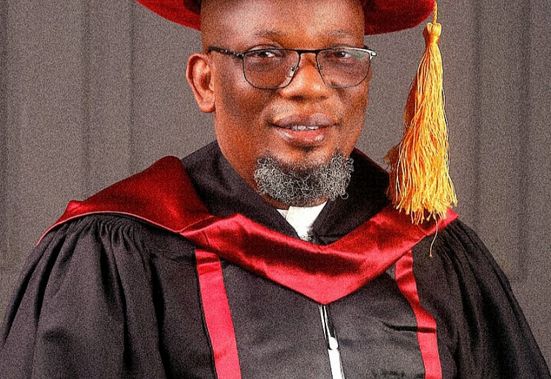
A former Speaker of the Kogi State House of Assembly, who at one time acted as Governor of the State,, Abdullahi Bello has qualified to receive a Master of Science (M.Sc) and Doctor of Philosophy (Ph.D) Degrees in Security and Strategic Studies . He is scheduled to receive the double degree certificates at the Institute of Governance and Development Studies, School of Postgraduate Studies, Keffi in Nasarawa State on April 11, 2026 Right Honourable Abdullahi Bello was also a member of the House of Representatives, representing Okene/Ogorimagongo Federal Constituency of Kogi State. In 2015, he was appointed Kogi State Coordinator for the Muhammadu Buhari/Yemi Osinbajo presidential campaign on the platform of the All Progressives Congress (APC).
Kuje Area Council in Abuja, the Federal Capital Territory (FCT) has imposed a 6pm to 6am Curfew on parts of the greater Kuje town following intelligence report that members of the Boko Haram are planning to again, invade the Medium Security Custodial Centre in the area. A security alert being circulated through mainly social media advised the residents to adhere to the time of the Curfew. The alert came from an emergency security meeting held by the leadership of the Area Council. The security alert stressed that the areas within the Council affected by the Curfew include anything from Wowo garage to chibiri village (passing through the front of the Correctional Center); Shadadi village, Shetuko village and Kango village. The message advised the residents to return to their houses before 6pm to avoid embarrassment, saying that this was a resolution reached by security Council of Kuje area council. There was no further details about the circumstances leading to the decision to impose curfew, but a senior police officer confirmed by simply saying: “the bad guys are planning to storm the Correctional Center again.”
Combined team of Police and soldiers have been patrolling the major parts of the Area Council, blaring siren and brandishing weapons. The last time Boko Haram invaded the same prison was on July 5, 2022 (night attack) during which about 879 inmates escaped, including dozens of Boko Haram suspects. Armed militants, mainly from ISWAP, a Boko Haram breakaway faction invaded Custodial Centre, lasting less than an hour but highly coordinated. The invaders used explosives and gunfire to breach the prison.
Every year on April 1, like today, phones buzz with strange messages, shocking headlines and unexpected announcements. A friend would claim to have won millions. Colleagues would say they’ve quit their job. A family member would share surprising news—only to end it with, it is “April Fool!” For many, it is all a harmless fun. A day set aside for laughter, tricks and playful deception. But for Muslims, and indeed for anyone concerned about ethics, it raises a deeper question: Is it right to lie, even as in a joke? This is not about being overly serious or rejecting laughter. Islam is not a joyless religion. The Prophet Muhammad (peace be upon him) was known for his warm smile, gentle humour and kind interactions with people. He laughed, he joked and he built strong human connections. But there was one thing he never did—he never lied, even in jest. That distinction is where the conversation about April Fool’s Day becomes important. At the core of Islamic teaching is a strong and consistent message: truth matters. Not sometimes, not only in serious matters, but always. The Qur’an calls on believers to stand firmly with truthfulness and the Prophet (peace be upon him) made it clear that honesty is the pathway to righteousness and, ultimately, to Paradise. On the other hand, lying, even in what we might call “small” or “harmless” situations, is not treated lightly. There is a saying of the Prophet that often stops people in their tracks: “Woe to the one who lies to make people laugh.” It is repeated for emphasis—woe to him, woe to him. That statement feels especially relevant on a day like April 1, where the entire idea is built on making people believe in something that is not true. Now, some might say: “But it’s just a joke. Nobody means harm.” And yes, in many cases, the intention is not to hurt anyone. But intention alone does not always erase impact. Think about it. Not everyone reacts to pranks in the same way. What seems funny to one person may be upsetting to another. A fake announcement about illness, loss, or major life change, even if quickly revealed as a joke can cause real emotional distress, even if only for a few moments. And in some cases, people feel embarrassed or even betrayed for being tricked. Beyond the immediate reaction, there is something more subtle but equally important: trust. Trust is fragile. It is built slowly but can be weakened quickly. When people get used to being deceived, even in small ways, they may begin to question what is real and what is not. Over time, this chips away at the sincerity which relationships depend on. Islam places a very high value on trust (amānah). It is not just about safeguarding money or property; it includes being trustworthy in speech. When you speak, people should feel safe believing you. There is also a wider context we cannot ignore. Today, we live in a world already struggling with misinformation. False news spreads rapidly. Social media amplifies unverified claims. People are increasingly unsure about what to believe. In such a climate, adding even “playful lies” into the mix can unintentionally contribute to a culture where truth is blurred. So where does that leave us? Should Muslims simply withdraw from anything that looks like fun? Not at all. Islam does not ask us to abandon laughter; it asks us to elevate it. There is nothing wrong with joking, teasing lightly or creating moments of joy. But there are boundaries: no lying, no hurting, no humiliating. Humour should bring hearts closer, not create confusion or discomfort. In fact, the best kind of humour is often the simplest—the kind that doesn’t rely on deception. A clever remark, a shared memory, a lighthearted observation are forms of laughter that leave no one feeling tricked or uneasy. April Fool’s Day, then, becomes less about what we are missing out on and more about what we are choosing to uphold. It is a quiet but meaningful decision: choosing honesty over convenience and integrity over imitation. And yes, there is also the question of cultural influence. April Fool’s Day is not part of Islamic tradition. While Islam does not forbid engaging with global cultures, it encourages thoughtful participation. Not everything widely practiced is automatically good or suitable. As Muslims, there is always that inner filter: Does this align with my values? Does it please Allah? Sometimes, the most powerful statement is not loud or confrontational. It is simply living by principle. When others are sharing pranks, you choose sincerity. When others are spreading jokes based on falsehood, you offer humour, grounded in truth. That quiet consistency speaks volumes. In the end, April 1 is just one day, but the values it tests are lifelong. Truthfulness is not seasonal. It is a daily commitment. A reflection of character. A sign of faith. So, as the world laughs through tricks and surprises today, April 1, Muslims are invited to pause and reflect: can we laugh without compromising who we are? The answer is yes. And perhaps, in doing so, we rediscover a deeper kind of joy—one that is rooted not in deception, but in sincerity.
– Abdulkarim Abdulmalik, a Journalist, could be reached on: nowmalik@gmail.com
“Nigerians must not allow criminal elements to divide communities. “Nigeria’s unity remains strong and we must all work together to sustain peace and stability across the country.” The Minister of Information and National Orientation, Mohammed Idris, made the call today, March 31, while addressing media men and women in Abuja. He spoke against the background of the recent attack in Angwan Rukuba, Jos North. He declared: “Nigeria will not yield to criminal elements. We will protect our people, and we will prevail.” The Minister expressed deep concern over the incident and extended condolences to the families of the victims, as well as to the government and people of Plateau State. He recalled that security agencies responded swiftly to the attack as troops under Operation Enduring Peace were immediately deployed, while the military and other security agencies secured the area and launched operations to track down those responsible. “These swift actions ensured that the situation was quickly contained and prevented further escalation.” Idris said that the response formed part of ongoing efforts to strengthen security across Plateau state and the wider North-Central region. He said that Federal Government has sustained military and intelligence-led operations in vulnerable communities, supported by increased surveillance, troop deployments and joint patrols involving the military and the police. He added that these measures are aimed at preventing further attacks and maintaining stability, even as he assured that the government of President Bola Ahmed Tinubu is committed to addressing security challenges through targeted operations and strategic coordination among security agencies. He disclosed that the President has already met with top security and intelligence chiefs to review the situation and take further decisive steps. He said that the Governor of Plateau State, Caleb Manasseh Mutfwang, has been invited for further consultations to strengthen collaboration and ensure a coordinated response towards lasting peace. The Minister acknowledged steps taken by the Plateau State Government, including the imposition of a 48-hour curfew in Jos North to stabilise the situation and support ongoing operations. He stressed that federal and state authorities are working closely to prevent reprisals, restore calm and facilitate investigations. While describing the attack as deeply regrettable, Idris said that it does not represent a breakdown of national security, but a criminal act in a conflict-prone area that is being actively addressed. He assured Nigerians that those responsible will be brought to justice, saying: “There will be no safe haven for criminal elements anywhere in Nigeria.” The Minister reassured Nigerians that the situation in Plateau State is under control and urged Nigerians to remain calm and law-abiding. He also cautioned against the spread of unverified information, noting that such actions could worsen tensions and undermine security efforts. He said that the government will continue to strengthen intelligence gathering, operational readiness and inter-agency coordination to stay ahead of emerging threats and ensure lasting peace nationwide.
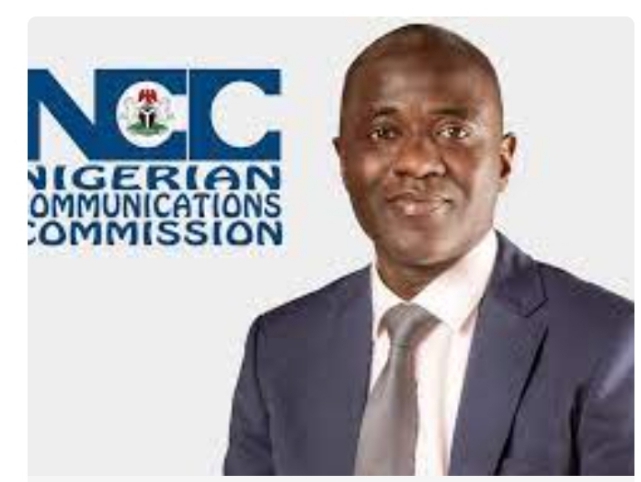
The Nigerian Communications Commission (NCC) has made it mandatory for Mobile Network Operators (MNOs) to provide compensation to subscribers whose network quality of service experience is below specified targets within specific locations.
The Commission said that it would not allow a situation where subscribers are made to bear the full burden of service disruptions where operators fail to meet prescribed standards of service delivery. A statement by the Commission’s spokesperson, Nnenna Ukoha said that under the new arrangement, erring operators will compensate affected users directly for breaches of Quality of Service (QoS) Key Performance Indicators (KPIs). She said that Mobile Network Operators (MNOs) would be required to pay these compensations for instances of poor quality of service recorded within specified time frames. According to the spokesperson, the compensation would be provided in the form of airtime credits calculated, based on subscribers’ average spending patterns and their presence within Local Government Areas where service failures occur. She said that the directive is rooted in the Commission’s broader regulatory philosophy that places the consumer at the centre of Nigeria’s telecommunications ecosystem. Telecommunications services today underpins economic activity, social interaction, and access to digital opportunities. “When service quality is poor, the consequences affect productivity, commercial activities, and even public confidence in our communications system. “While regulatory fines have traditionally served as a deterrent against poor service delivery,” she stressed, adding that the Commission is adopting a more consumer-focused approach that would strengthen accountability within the industry. She said that the Commission has designed this measure to complement existing and ongoing efforts to strengthen service quality monitoring and enforce performance standards. Nnenna Ukoha said that the Commission is also mandating Tower Companies who own the critical infrastructure for Quality of Service delivery, such as masts, to invest in infrastructure with measurable outcomes using sums that it has fined these companies, in addition to other financial fines the Commission will deem appropriate. She said that the Commission would continue to reinforce the obligation of operators to invest consistently in network resilience, capacity expansion and infrastructure upgrades to meet the growing demand for telecommunications services. “At the same time, it will deploy regulatory tools that promote fairness, transparency and accountability across the sector, ensuring that every subscriber receives the quality of service they deserve while sustaining a telecommunications industry capable of powering Nigeria’s digital future.”
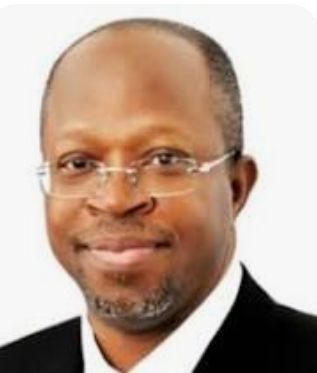
No fewer than 200 senior nurses in the services of the Federal Capital Territory Administration (FCTA) on grade level 14 who were invited and sat for promotion examination sometime in November 2025 to the next grade level have been thrown into confusion. Reliable sources hinted that out of over 200 such nurses serving in various hospitals across the FCT, who were due to be moved to management cadres, only five of them have so far been promoted. Information reaching us at Greenbarge Reporters online newspaper showed that others who have been so thrown into confusion, including top leaders of the nurses’ union have been running around the Civil Service Commission of the Federal Capital Territory Administration to be educated on what actually went wrong four months after the promotion examination. It was gathered that the only reason given by the authorities for withholding the promotion has been that the affected nurses have not met the conditions for promotion even when five of them have been elevated. The condition, according to a circular, signed by the chairman of the FCT Civil Service Commission, Chief Emeka Eze, is that the affected nurses obtained their B.Sc Degrees less than three years before the promotion examination last year. In the circular, dated 26th March 2026, with reference number FCT/CSC/COMM/S.230, Chief Eze said that in applying “the automatic conversion privilege to a Nursing Officer, the date of the officer’s degree certificate is taken into consideration. ” “The officer’s maturity to the next grade level will start counting from the first January of the year after the date of acquisition of the degree certificate. ” “For example, if an Officer’s B.Sc Nursing degree certificate is dated 16th October 2021, his or her maturity for next promotion will start from 1st January 2022; in which case the Officer will not sit for promotion examination until 1st January, 2025 after three years of maturity as a degree holder.”
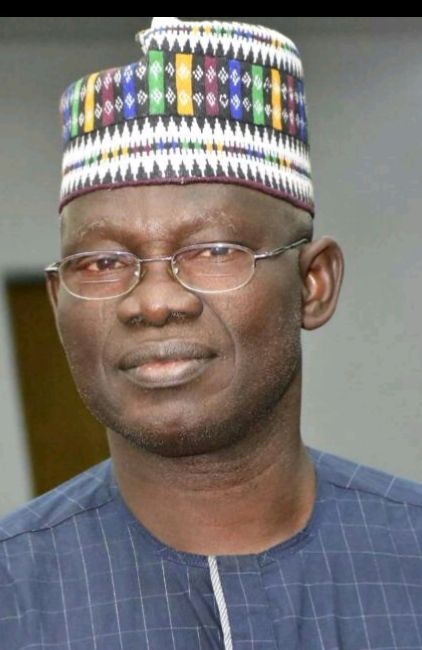
… Emeka Eze But the confused nurses are asking the question as to why would the authority invite them for promotion examination in November 2025 when it knew that it was not yet time for them to be promoted to the next grade level. “What criteria the authority used in promoting only five of us, some of who obtained their Degrees less than two years ago whereas those of us that have not been elevated obtained our own as far back as 2022?” one of the affected nurses who pleaded to remain anonymous because they are still talking with the authority, asked. He said that nurses, especially in the services of the FCT have always believed in dialogue to solve issues such as this one, saying: “we are never known to cause problem for the Administration despite several causes for such.” He pleaded with the FCT Minister, Barrister Nyeson Wike to immediately intervene by causing the Civil Service Commission to effect their promotion based on the promotion examination they sat for in November 2025, the same way five of their colleagues who joined them in that examination have been promoted. The affected nurses described the latest circular, which contradicted the circular issued in 2015 as “an afterthought.” Efforts to reach out to the FCT Civil Service Commission chairman, Chief Emeka Eze for his comment on the matter did not yield result. He neither picked several phone calls from us nor responded to our Whatsapp messages and SMS.
Wale Ajetunmobi, an aide to the Lagos state Governor, Babajide Sanwo-Olu, has narrated how his expensive phone was stolen at the just concluded National Convention of the All Progressive Congress (APC), in Abuja, the nation’s federal capital, and with the help of tracker and police, was recovered from the official of the Ministry of Justice, Nasarawa State, at a Mosque in Karu, Nasarawa State. Ajetunmobi said that he returned to his hotel on that day to find that his phone had been stolen. ”I opened my iPad and tracked the whereabouts of my missing iPhone: 17 Pro Max. To my surprise, the device was already in Wuse Zone 6, about 8 kilometers away from Eagle Square where it was picked. “I called the phone repeatedly but no answer. I texted it, pleading, as it is my main workstation. “The ‘Mover’ didn’t move. I could not sleep. I managed to sleep around 3:50am and woke up by 5:30am. After I prayed Fajr, I started tracking the iPhone again on my “Find My” app.” “My tracking of the device showed the phone was geo-located to a house in Wuse Zone 6 but the map would not show the street name. “I was curious. I placed a call to a top police officer in Abuja for help. He quickly contacted Mr. Victor Geoffrey, an Assistant Commissioner of Police and Commander of Scorpion Squad, Abuja, who immediately activated his team for recovery of the phone. “The police team, led by Assistant Superintendent of Police (ASP) Isah Mohammed, started trailing and tracking the suspect who stole the phone… at 8:20am. At 10:50am, we tracked the iPhone to a location in Karu, near NNPC Filling Station. “The policemen called me and asked me to join them. I was tracking from my iPad and the distance was closing in on the phone. “At a roadside car lot close to Karu Bridge, my iPad beeped and showed my phone was close to where my driver (Mallam Idrissa) and I parked our vehicle. “I came down and walked into the car lot; the 3D map of “Find My” app led me to a shield that looked like a makeshift mosque where some 15 people (mostly in their 50s) were sitting and chatting away. “I pretended I wanted to pray. As I sat on a bench, then my iPad beeped and indicated the phone was exactly where I sat. I signaled at the police clad in mufti, who were stealthily following me, and they moved in. “At that point that he witnessed real professionalism displayed by the policemen. “I was impressed. They asked to see the Head of the car lot. An elderly man (looking 60s) came out and he was properly briefed about their mission.
“The car lot’s head confirmed the people sitting under the shield were coming from the Eagle Square after attending APC Convention but their extraordinary SUV (branded with the face of a governorship aspirant in Nasarawa State) had overheating issue.
“So, they had to stop by for repair before proceeding to Keffi. “It was here the man informed the leader of the group of the presence of policemen and their mission. “The leader of the group agreed they all be thoroughly searched. “After searching five persons, the next person to be searched started getting nervous. Lo and behold: my iPhone slipped out of Mahmoud Abdullahi’s trousers.
“The phone was off due to low battery. But I had my power bank with me to power it on. I was told to type my passcode; then the phone came alive. “Mahmoud Abdullahi, who claimed to be working with Nasarawa State Ministry of Justice, stole my phone during the chaotic moment at the VVIP entrance of the Eagle Square. The suspect was arrested… Many thanks to these highly professional men of Nigeria Police Force. “This crime-busting team led by ASP Isah Mohammed comprises ASP Douglas Ishaku, Inspector John Emmanuel and Inspector Gana Mohammed. These guys are wonderful.”
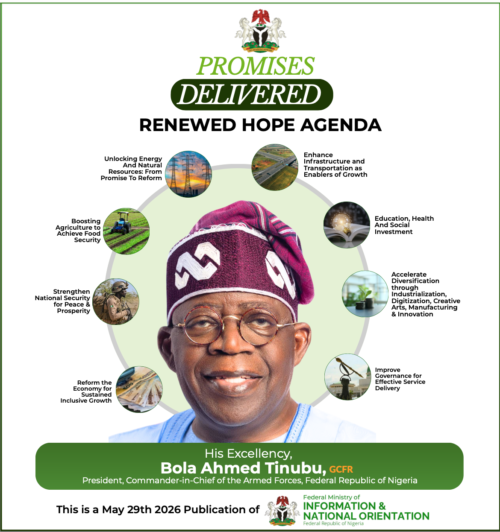
President Bola Ahmed Tinubu has sent a condolence message to the former Kaduna State Governor, Malam Nasir Ahmad El-Rufai over the death of his mother, Hajiya Umma, saying: “I understand the depth of your loss.” In the message, President Tinubu said: “Nasir, please accept my heartfelt condolences on the passing of your beloved mother, Hajiya Umma, which happened today in Cairo.
“As someone who had also lost an old mother, I share in your grief. I understand the depth of your loss. President Tinubu described the late matriarch of the El-Rufai family as a mother who lived a remarkable life and raised children and grandchildren who have contributed greatly to our nation. Tinubu said to El-Rufai: “losing a mother is a pain unlike any other. I know that no words can fully ease your sorrow, but I pray that the memories of her love, wisdom, and guidance bring you comfort in the days ahead.
“I also hope you find strength in the remarkable life she lived and the values she instilled in the entire family. “As firm believers in Allah, we are convinced that she has played her part in this world as laid out for her by the Almighty and has gone back to her maker. “I join family, friends, and well-wishers in mourning with you. May Allah grant your dear mother Aljannah Firdaus.” Hajiya Umma died today, March 27 in Cairo, Egypt aged 98, after illness. This is even as the National Security Adviser (NSA), Nuhu Ribadu, who is a personal friend of El-Rufai, also mourned the passing of Hajiya Umma El-Rufai. In a statement, Ribadu said: “I am deeply saddened to learn of the passing of Hajiya Umma El-Rufai, the matriarch of the El-Rufai family. I have fond memories of shared moments with her and her motherly care. “At a time like this, words can offer little comfort for such a profound loss. “My heartfelt condolences to Mallam Nasir El-Rufai and the entire family. “May Almighty Allah forgive her shortcomings, grant her eternal rest in Aljannah Firdaus, and give the family the strength to bear this loss.”
We use cookies on our website to give you the most relevant experience by remembering your preferences and repeat visits. By clicking “Accept”, you consent to the use of ALL the cookies.
This website uses cookies to improve your experience while you navigate through the website. Out of these, the cookies that are categorized as necessary are stored on your browser as they are essential for the working of basic functionalities of the website. We also use third-party cookies that help us analyze and understand how you use this website. These cookies will be stored in your browser only with your consent. You also have the option to opt-out of these cookies. But opting out of some of these cookies may affect your browsing experience.
Necessary cookies are absolutely essential for the website to function properly. This category only includes cookies that ensures basic functionalities and security features of the website. These cookies do not store any personal information.
Any cookies that may not be particularly necessary for the website to function and is used specifically to collect user personal data via analytics, ads, other embedded contents are termed as non-necessary cookies. It is mandatory to procure user consent prior to running these cookies on your website.






 … Emeka Eze


