The Management of Media Trust Group, owners of Daily Trust, Trust TV and Trust Radio, has admitted that it might have been wrong in the interpretation of the Samoa Agreement, signed by Nigeria, the report that has raised dust in the country since June 26. Reacting to the threat of the Federal Government to go, not only court to challenge the report, but drag the newspaper company to the ombudsman of the Newspaper Proprietors Association of Nigeria (NPAN), the newspaper management said: “We have also acknowledged lapses in our reporting on this particular matter (that was) pointed out to us by professional colleagues, and we will review and take appropriate measures.” In a statement, the company’s Secretary/Legal Adviser, Maryam Aminu Bello, Esq. said: “Two ministers of government, and other sundry commentators have taken us to the cleaners over our story on the Samoa Agreement in particular, and some other reports published earlier. We have followed with attention what these government officials said, and left unsaid, and we will publish that in full, for the records… “As our editors understood it, the Samoa Agreement signed by Nigeria has expanded the definition of gender rights, from the traditional male-female, to a new norm, captured by the term LGBTQ (Lesbian; Bi-sexual, Gay, Transgender and Queer). That is the crux of the matter. “If the agreement does not aim at promoting such new orientation, widely accepted in Western countries, then we are wrong in our interpretation. We will readily apologise both to the government and to the public for crying wolf. “We expect that those qualified, by training and experience, to make such a judgement, will weigh into the matter and we will as usual, publish all sides in the discussion, including that of the government. “We wish to add that in this story, as in others over the last 26 years, the Daily Trust tried to be guided by public interest. “It is also important for us to clarify some of the insinuations by the information minister about other stories that Daily Trust had done. First, the statement that our newspaper had given “a banner headline to a baseless accusation that the Government was working on citing foreign military bases in the country. “Nothing could be further from the truth. We only reported in the Daily Trust of Sunday, 5th May, 2024, details of an open letter by six scholars and activists urging the president and the National Assembly to reject any bid to cite United States of America and French military bases within Nigeria. “Also, the minister said “Daily Trust concocted and popularised a lie that the Federal Government had renamed the Murtala Muhammed Expressway in Abuja to Wole Soyinka Way. “We did publish two opinion articles in Daily Trust of Wednesday and Saturday, June 12 and 15, 2024, in which the opinion writers raised concerns over alleged renaming of the Murtala Muhammed Way, Abuja, after Wole Soyinka. “We recall that the information minister’s press statement on that matter, which was issued on the 17th of June, 2024, with the headline “Abuja’s Murtala Muhammed Way NOT Renamed after Soyinka-FG”, was reported generously in our online and offline platforms. “We wish to reiterate that we are an impartial media outlet. Since 1998, we have operated under six different governments, with the Bola Ahmed Tinubu Administration being the seventh. Throughout this period, we have consistently demonstrated a high level of impartiality in our reportage.” The Nigeria’s minister of information and national orientation, Mohammed Idris, had, at a media briefing in Abuja, yesterday, July 6, described the report on the agreement as “baseless and sensational.” He accused Daily Trust of attempting to set the country on fire on the issue that was not as severe as such made other governments clamped down on the media. “On the part of the Government, we continue on the honourable path of civility by restraining ourselves from taking self-help or draconian measures. “While past governments clamped down on the media for infractions much lower than this, we are however toeing the path of civility and the rule of law.” “The Federal Government is lodging a formal complaint to the NPAN Ombudsman on this irresponsible reporting. In addition, the Federal Government will use every lawful means to seek redress in the court of law,” the minister had said.
The Director General of the National Youth Service Corps (NYSC), Brigadier General Yushau Ahmed has assured corps members that their monthly allowance will soon be reviewed upward in line with the soon-to-be implemented national minimum wage for workers. The Director General, who spoke to 2,762 corps members of Batch B, Stream one at Ogun State NYSC Orientation Camp, Sagamu, yesterday, July 6, said that the corps members are too special to be forgotten by the Federal government. “For your allowance, don’t worry, as soon as the ongoing negotiation on the minimum wage is concluded, you can be so sure that your allowance too will definitely go up. “There is no way the government will forget you because you are really special.” He warned the corps members against posting camp activities on their social media handles, saying that it is against the rule. General Ahmed said that three corps members who violated the rule have been expelled from the camp. “Let me also remind you of the camp rules that you are not allowed to post the camp activities online or on social media, three of your colleagues elsewhere were found breaking these rules, posting camp activities on social media, and they have been decamped.”
Fact-Check has revealed that though the clauses on Lesbian, Gay, Bisexual, and Transgender (LGBT) rights in the $150 billion Samoa Agreement were contained in the initial draft of the Samoa Agreement, but because of protests by some member states, including Nigeria, the European Union (EU) was forced to abolish the clauses in the final document that Nigeria signed on June 28, 2024. The Nigerian government signed the agreement seven months after it was formally signed in Samoa. The government said that it delayed its consent to allow it to carry out a thorough review and ensure no clause in the agreement contravenes Nigerian laws. “The general public is invited to note that Nigeria was not represented at the Signing Ceremony, which took place in Samoa on Wednesday, 15th November 2023 and hence has not signed the Agreement,” Francisca Omay, the spokesperson for the Ministry of Foreign Affairs, said last year. “Relevant Nigerian stakeholders are currently studying the instrument to ensure that its provisions do not contravene Nigeria’s domestic legislation.” In a document, the Nigerian government made declarations against 13 articles in the signed agreement. For instance, the Nigerian government, in its declaration concerning Article 9.2, which borders on Human rights, democracy and the rule of law, noted that the Nigerian Constitution has provisions on human rights. This includes the “prohibition of discrimination in any form and further includes the grounds upon which the National Assembly has and may enact legislations for the advancement of persons within Nigeria who have been politically, socially, economically and educationally disadvantaged by past discriminately laws or practices. This position is also consistent with various United Nations Conventions on Human Rights and discrimination to which Nigeria is a party.” Other declarations made by the Nigerian government are Article 1 (Objectives), Article 3 (Partnership Dialogue), Article 4 (Policy Coherence), and Article 79 (Cooperation in International Organisations and Forums). In addition to this, the government also made declarations about Article 19 (Serious crimes of concern to the international community); Article 36 (Gender equality and women and girls’ empowerment); Article 49 (Trade and sustainable development); Article 51 (Trade in services) and Article 97 (Other agreements and arrangements). Others include Article 101 (Disputes settlement and fulfilment of obligations), Article 22 (Services), Article 40 (Gender equality and empowerment of women), Article 51 (Climate action), and Article 3 (Foreign exchange).
Verifying the claim We reviewed the 172-page document to find out whether it contains LGBT clauses as claimed by Daily Trust and other newspapers. Mr Ekwowusi, whose opinion article formed the basis of the newspaper’s report, claimed some articles of the agreement systematically legalise LGBT. “Certain Articles of the Agreement, especially Articles 2.5 and 29.5 legalise LGBT, transgenderism, abortion, teen sexual abuse, and perversity in African countries,” the Lagos-based lawyer who doubles as the Chairman of Human and Constitutional Rights Committee, African Bar Association (AfBA), wrote in his article published by Daily Trust on 3 July. Mr Ekwowusi’s interpretations of these articles contrast with what we found in the agreement document reviewed by our reporter. “The Parties shall systematically promote a gender perspective and ensure that gender equality is mainstreamed across all policies,” article 2.5 of the agreement reads without a mention of any sexual orientation as claimed by Mr Ekwowusi. Similarly, the lawyer slipped in his interpretation of article 29.5: “The Parties shall support universal access to sexual and reproductive health commodities and healthcare services, including for family planning, information and education, and the integration of reproductive health into national strategies and programmes.” Contrary to the lawyer’s claims amplified by the newspapers, there is no mention of LGBT in the article above. According to the reviewed document and EU press statements, the Samoa agreement focused on addressing global challenges. Its objectives aim to contribute to achieving the United Nations (UN) Sustainable Development Goals (SDGs) and the Paris Agreement adopted under the UN Framework Convention on Climate Change. In one of its press statements, the EU highlighted the priority areas of the agreement to include human rights, democracy and governance, peace and security; human and social development, inclusive, sustainable economic growth and development, environmental sustainability and climate change; and migration and mobility. There was a series of negotiations before the agreement was finalised – the Nigerian government’s press statement issued last year and another EU press statement confirmed this. Emphasising that the parties will commit to promote, protect and fulfil all human rights, be they civil, political, economic, social or cultural, the EU, in the press statement, noted that “some ACP states were reluctant to see the foundation agreement mention sexual orientation and gender identity (LGBTI rights) – an issue on which there are also differences among EU Member States.” In the statement, the EU referred to the provision of Article 36.2 of the agreement when it says: “As a matter of compromise, the parties will commit to the implementation of existing international agreements – notably the International Conference on Population and Development Programme of Action on sexual and reproductive health and rights, the Beijing Platform on gender equality and their follow-up.” However, it grumbles that the above wordings “falls short of the EU negotiators’ ambitions.” LGBT clauses were contained in the initial draft of the Samoa Agreement, but protests by some member states forced the EU to abolish the clauses in the final document. This was evident when the EU, in another document, said it welcomes the commitment to promote universal human rights without discrimination based on any ground “but regrets that the Agreement fails to mention explicitly that discrimination could be based on sexual orientation and gender identity.” The EU went ahead to plead with parties to “avoid any discrimination based on sexual orientation and to put an end to the criminalisation and punishment, including the death penalty, of LGBTI people…”
Conclusion It is evident that the EU subscribes to the idea of LGBT and wants to co-opt member states of the Samoa Agreement into protecting the rights of LGBT people. But protests by some member states,, including Nigeria, forced it to omit it in the new document uploaded on the EU’s database on 22 December 2023. When the document was uploaded, Nigeria had yet to sign the agreement, which, according to the EU, took effect earlier this year and will elapse in the next two decades. Meanwhile, Article 101 of the new agreement is focused on dispute settlement and fulfilment of obligations. In contrast to what was widely reported in sections of the media, Article 2.2 of the new agreement states that: “Parties reaffirm their commitment to developing friendly relations among nations, based on respect for the principle of sovereign equality among all states, and to refraining from the threat or use of force against the territorial integrity or political independence of any state, or in any other manner inconsistent with the Charter of the United Nations (the UN Charter).” Nigeria, as a sovereign state under the leadership of former President Goodluck Jonathan, signed into law an act that prohibits same-sex relationships or marriage. This is why critics argue that Nigeria should not be part of the Samoa Agreement. These critics were, however, ridiculed by public commentators who argued that such an international agreement, even if signed, must be debated on the floor of the National Assembly as stipulated in Section 12(1) of the Constitution of the Federal Republic of Nigeria, 1999. Rabiu Yusuf, chairperson, House Committee on Treaties, Protocols and Agreements Chairman, and Asabe Ndahi, a Programme Manager with the Kukah Centre, recently said the National Assembly has yet to be fully involved in the conversation around the Samoa Agreement. Yusuf, who spoke at a webinar organised by the Centre for Journalism Innovation and Development (CJID), to understand Nigeria’s position on the Samoa Agreement, noted that the document spells out many benefits for Nigeria as a participating nation.
Verdict Contrary to what was reported in sections of the media, there are no LGBT clauses in the new Samoa Agreement recently signed by Nigeria, according to PREMIUM TIMES findings. The Daily Trust report did not present any clause in the agreement that mandates LGBT rights beyond quoting the opinion of Mr Ekwowusi, despite also quoting the administrative secretary of the NSCIA as saying the council did not find same-sex marriage in the draft shared with it by the government before signing the agreement, In addition, the interpretation of Mr Ekwowusi, the Lagos-based lawyer whose opinion article the media outlets relied on for their reporting, is misleading. Source: Premium Times.
The United Kingdom-based Diageo has exited Nigeria, joining about 15 other multinational companies that have left in the past three years. The exit of the multinationals is coming on the heels of the economic crisis that was sparked by the twin policies of petrol subsidy removal and unification of FX windows, introduced at beginning of President Bola Tinubu government. Diageo announced its departure on June 11 by way of selling its 58.02% stake in Guinness Nigeria to Tolaram. Among others multinationals that have exited Nigeria are Kimberly-Clark, manufacturers of Huggies and Kotex brands of diapers; US-based Procter and Gamble (P&G); GlaxoSmithKline (GSK); Unilever and Sanofi-Aventi Nigeria. They either exited completely or reduced their exposure in a country facing its worst cost-of-living crisis in decades. Unilever Nigeria announced its exit from the home care and skin cleansing markets in Nigeria in November 2023, saying it did so “to find a more sustainable and profitable business model.” Procter & Gamble was the last to announce its exit from the country the same year. Similar reasons given by these and other companies include high energy costs, currency depreciation, insecurity etc. The Federal Government itself acknowledged these challenges in an interview granted by Minister of Finance, Wale Edun on Channels Television’s Sunday Politics programme, where he said “lack of a liquid foreign exchange market was the major reason why some multinational companies exited Nigeria.” According to him, the inability of the exiting multinationals to access foreign exchange was a major impediment to their operations in the country. This was even as the Director-General of Nigeria Employers’ Consultative Association, (NECA), Adewale Oyerinde, confirmed, in his assessment, that “Over 15 organisations, with a combined value-chain staff strength of over 20,000 employees, have either divested or partially closed operations.” He lamented that the development has dire consequences not only for organised businesses but also for labour, government revenue and the households; massive job losses across sectors, which would continue to create insecurity challenges. “When NECA examined the exit of prominent companies like GSK, Sanofi, Procter & Gamble, Nampak and others, who had been doing business in Nigeria for decades and were huge employers of labour, it was worried about the ripple effect on the broader business ecosystem. “Within the value chain, numerous enterprises serve as suppliers to these major corporations, and their sustainability is significantly compromised when the primary businesses they cater to face extinction. “The survival prospects of these secondary businesses are at stake, and their employees are also at risk, as the departure of the main clients could lead to their demise. The crisis within the value chain deserves more attention than it currently receives.” Analysts believe the persistent exit of multinational companies from the country would impact negatively on the economy. Data from the National Bureau of Statistics (NBS) revealed that the performance of the GDP in the first quarter of 2024 was driven mainly by the services sector, which recorded a growth of 4.32 per cent and contributed 58.04 per cent to the aggregate GDP, whereas the nominal GDP growth of the manufacturing sector in the first quarter of 2024 was recorded at 8.21 per cent (year-on-year), 9.64 per cent points lower than the figure recorded in the corresponding period of 2023. Real GDP growth in the manufacturing sector in the first quarter of 2024 was 1.49 per cent (year-on-year), lower than the same quarter of 2023. President of the Manufacturers Association of Nigeria (MAN), Otunba Francis Meshioye asked the government to frontally address insecurity, improve electricity supply, promote fiscal sustainability and ensure policy consistency. “Among other priorities, the fiscal authority must also lend supportive measures by adequately incentivising the manufacturing sector and other productive sectors. “This is very important to boost non-oil export earnings in addition to the increase in oil export proceeds occasioned by increased oil production, rising global oil prices and the coming on stream of the Dangote Refinery.”
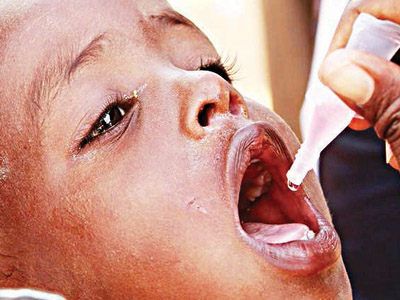
A variant of polio, known as vaccine-derived poliovirus (cVDPV), which is a rare and mutated form of the virus has reportedly surfaced in Nigeria, about four years after the country was declared polio-free. The Africa Regional Certification Commission had certified Nigeria polio-free on August 25, 2020, marking a milestone in the global fight against the disease. But just recently, the country reported cases of cVDPV, which is a variant of the poliovirus that can cause disease in individuals who are not fully vaccinated or have weakened immune systems. According to health experts, cVDPV is a rare phenomenon that occurs when the weakened poliovirus in oral poliovirus vaccines (OPV), mutates and regains its ability to cause disease. This mutated virus can then spread to others, posing a risk to public health. The Global Polio Eradication Initiative, GPEI, a public-private partnership that led the efforts to eradicate polio in Nigeria, expressed concern over the new outbreak. “While we celebrate the progress made in Nigeria, we must remain vigilant and ensure that we maintain high vaccination coverage to prevent the spread of cVDPV,” the GPEI spokesperson said. Health officials in the country have launched an investigation into the outbreak and are believed to be working to strengthen vaccination efforts, particularly in areas with low vaccination rates. “We urge all parents and caregivers to ensure that their children receive a full course of polio vaccines to protect them against this preventable disease,” a health official said. The outbreak of cVDPV in Nigeria serves as a reminder that the fight against polio is not yet over. While significant progress has been made globally, with five of the World Health Organization’s six regions now polio-free, ongoing efforts are needed to ensure that all countries remain polio-free. Meanwhile, health officials are asking the public to remain calm but vigilant, and to take all necessary precautions to prevent the spread of cVDPV. Source: Realnews.
Bandits in their large numbers, yesterday night (July 6), stormed Danhonu community in the Millennium City of Chikun local government area of Kaduna State and kidnapped two journalists reporting for The Nation newspaper and Blueprint newspapers in the State. The reporters, Alhaji AbdulGafar Alabelewe and AbdulRaheem Aodu, respectively, were kidnapped alongside their wives and children. Alhaji Alabelewe is the current chairman of the Correspondents Chapel of the Nigeria Union of Journalists (NUJ), Kaduna State Council. A family member of one of the victims, Taofeeq Olayemi, who confirmed the incident, said that the bandits stormed the community at about 10:30pm yesterday night and started shooting sporadically before carrying out the kidnap. He said that they kidnapped Alhaji Alabelewe, his wife and two of his children, while Alhaji Aodu and his wife were kidnapped, leaving behind their sick daughter. “Initially, they picked Alhaji Abdulgafar, his wife and three of his children and a girl staying with them before asking the girl to return back with one of the children, leaving with Abdulgafar, his wife and two children. “They shattered their doors, windows and removed their burglary after scaling the fence.” Olayemi, who is a family member of Mr. Aodu and lives close to the victims’ houses, further said: “they came around 10:30pm on Saturday night and started shooting sporadically. “They first forced Aodu’s door open and picked him and his wife and left their sick daughter behind. “Then, they entered Abdulgafar’s house through the fence and jumped into his house. They went straight into his bedroom and picked him, his wife and two of their kids and left immediately, after which the vigilantes arrived and started shooting into the air.” The Police Public Relations Officer (PPRO), ASP Mansir Hassan, could not be reached for reaction as his phone was not connecting as at the time of filing this report. Source: Leadership newspaper.
The Federal Government of President Bola Tinubu is angry with Daily Trust newspaper organisation over some stories the newspaper published in recent past that threatened national security and peace, including the recent one on Samoa agreement, with particular reference to same sex. Speaking to newsmen today, July 6, on behalf of the government, the minister of Information and National Orientation, Mohammed Idris said that the Federal Government has resolved to lodge an official complaint to the Newspapers Proprietors of Nigeria (NPAN) about Daily Trust, adding that the government will also seek redress in court against the newspaper’s misinformation and fake news. “The Federal Government under President Bola Ahmed Tinubu has maintained an open arm relationship with the media. It is in line with the philosophy of the President as an avowed democrat who spent a lifetime fighting for the entrenchment of democracy and human rights. “This administration has remained very tolerant of media criticism and guaranteed citizens’ rights to freedom of expression. It is however disheartening that some elements are abusing this free environment guaranteed by the Government. “We are alarmed by the level of reckless reporting and statements by some media organisations and individuals that border on national security and stability. “While we sometimes view and treat those occasional reporting as part of media’s normal work, we have now seen a pattern that is difficult to be wished away as normal journalism. “The insidious and inciting publications by the Daily Trust these past months have come across as nothing but a deliberate effort to brush the government with a tar. On many occasions we have restrained ourselves from believing that this was the case but the consistency of the jejune and mischievous publications leaves us with no option. “In the aftermath of the coup in Niger Republic, Daily Trust championed a jaundiced narrative that the Federal Government was driving the country into a war and twisted it with regional sentiment to cause disaffection. The same newspaper gave a banner headline to a baseless accusation that the Government was working on citing foreign military bases in the country. Neither Daily Trust nor originators of that imaginative allegation provided any shred of evidence. “Then just two weeks ago, Daily Trust concocted and popularised a lie that the Federal Government had renamed the Murtala Mohammed Expressway in Abuja to Wole Soyinka Way. In all those instances all that the paper depended on were falsehood and hearsays. They also showed no remorse or the humility to recant. “We however did not envisage that Daily Trust and people behind it could decend to the reckless level of attempting to set the country on fire by falsely accusing the government of signing a deal to promote LGBTQ. We found that despicable and wicked because the allegation is nowhere in the document signed. Surprisingly, the paper put forward no evidence nor provided the agreement allegedly signed to prove their point. “The baseless and sensational story unfortunately formed a basis for khutba (sermons) by some of our respected imams who were misled by the story thereby raising tempers. “On the part of the Government, we continue on the honourable path of civility by restraining ourselves from taking self-help or draconian measures. While past governments clamped down on the media for infractions much lower than this, we are however toeing the path of civility and the rule of law. “This afternoon, I have the Honourable Minister of Budget and National Planning to provide more clarity on this issue. “But beyond this, the Federal Government is lodging a formal complaint to the NPAN Ombudsman on this irresponsible reporting. “In addition, the Federal Government will use every lawful means to seek redress in the court of law. “The Federal Government once again restates its friendly policy towards ethical media and free speech. We would however not take fake news and disinformation that would injure the peace of our country and it’s national security lightly. “We once again thank you for your support and cooperation.”
A 20-year-old student of the Capital Government Day Secondary School in Adamawa State, identified as Alex Emeka, has admitted raping a mentally ill woman at three different times. The student, who is charged before Magistrate Musa Alhaji Adamu of Adamawa judiciary, pleaded guilty to the offence. He has been remanded after the prosecuting police read the charge, including the fact that he was caught in sex romp with the mentally ill woman on the 26th of June 2024. In the First Information Report (FIR) tendered in court, the prosecution alleged that the defendant had sexual intercourse with the mentally retarded woman on three occasions. The prosecuting officer, Inspector Galeon Nimrod, told the court that one Habu Jibrilla came to Karewa Police Station and reported the matter. Nimrod said Jibrilla, who is of the State Low-Cost Housing Estate in Jimeta, stated that he caught the defendant having sex with the mentally unhinged woman by the street side around 6:40am and decided to take hold of him and hand him over to the police. Source: Neptune Prime.
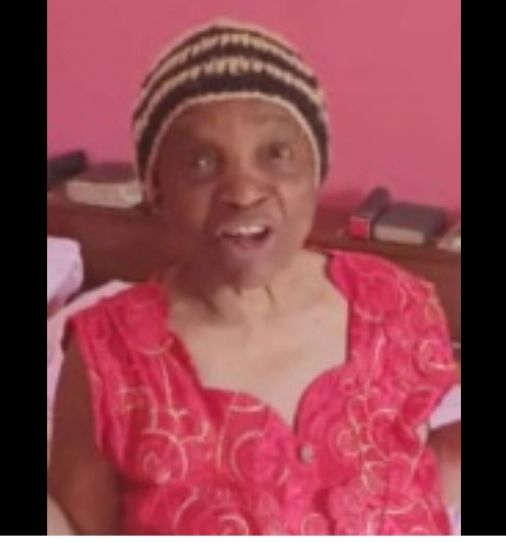
Eseme Eyiboh, Spokesperson to the Senate President, Godswill Akpabio, has written to his boss announcing the death of his mother, Mrs. Grace Eyiboh, three days to her 90th birthday. In the letter, which he submitted to Senator Akpabio today, July 5, Eseme Eyiboh said: “Your Lordship, I woke up in the early hours of today, Thursday July 4, to the affirmation of the disruptive and inevitable presence of death in our common humanity. “Tears are sometimes an inappropriate response to death when a life has been lived in complete honesty, service and in the fear of God.
“The correct response to death’s punctuation mark is courage. Today, it is sufficiently manifest that, to die when a name is still well spoken is never death but a transfiguration. “I pray to God to bless the spirit of my late mother – Deaconess Grace Sunday Eyiboh with the compass of His course.”
British voters have voted out Prime Minister Rishi Sunak and voted in Keir Starmer, who heads the Labour Party. Sky News confirmed today, July 5, that the Labour Party got 326 467 Parliament’s seats out of the 476 to send the PM out of the Downing Street. Reports say that Prime Minister Sunak had since conceded defeat before any media outlet declared that the threshold of 326 seats was reached. The exit poll commissioned by three broadcaster, the BBC, ITV, and Sky News forecast earlier that the Labour would achieve a landslide win of 410 seats, while the number of seats for the Conservatives would be reduced to 131. “The Labour Party has won this general election, and I’ve called Sir Keir Starmer to congratulate him on his victory,” Sunak said. “The British people have delivered a sobering verdict tonight, there is much to learn… and I take responsibility for the loss,” he said. Sunak is expected to announce his resignation soon to pave the way for Starmer to take over as Britain’s new prime minister after meeting Britain’s King Charles III. “We did it. You campaigned for it, you fought for it and now it has arrived,” Starmer addressed crowds in central London after the Labour majority was confirmed. “Change begins now. “The British people had to look us in the eye and see that we can serve their interests and that doesn’t stop now,” he said. “I don’t promise you it will be easy,” he added. “But even when the going gets tough and it will be remembered tonight and always what this is all about.’’ Source: Xinhua
We use cookies on our website to give you the most relevant experience by remembering your preferences and repeat visits. By clicking “Accept”, you consent to the use of ALL the cookies.
This website uses cookies to improve your experience while you navigate through the website. Out of these, the cookies that are categorized as necessary are stored on your browser as they are essential for the working of basic functionalities of the website. We also use third-party cookies that help us analyze and understand how you use this website. These cookies will be stored in your browser only with your consent. You also have the option to opt-out of these cookies. But opting out of some of these cookies may affect your browsing experience.
Necessary cookies are absolutely essential for the website to function properly. This category only includes cookies that ensures basic functionalities and security features of the website. These cookies do not store any personal information.
Any cookies that may not be particularly necessary for the website to function and is used specifically to collect user personal data via analytics, ads, other embedded contents are termed as non-necessary cookies. It is mandatory to procure user consent prior to running these cookies on your website.







 “The correct response to death’s punctuation mark is courage. Today, it is sufficiently manifest that, to die when a name is still well spoken is never death but a transfiguration.