A Judge of the Oyo State Judiciary, Justice Adegboye Gbolagunte, is dead, aged about 65.
His death was made known yesterday, June 25, in a statement by his eldest son, Oladiran.
The statement said that Justice Gbolagunte died on Monday, June 24, after a brief illness in an Oyo hospital. It said that the deceased, until his death, was serving in the Oyo State High Court. The the statement said that Justice Gbolagunte, who was born on December 10, 1959, left behind his wife, Wuraola; son, Oladiran, a Digital Technologist with specialisation in Network Communications; a daughter, Oladoyin, a lawyer and an accountant; and another son, Oladotun, also a lawyer. The statement said that the family appreciated those who have paid condolence visits, first among who was the Chief Judge of Oyo State, Justice Iyabo Subulade Yerima, who was received by wife of the deceased. The Publisher of The Eagle Online, Dotun Oladipo, who is the younger brother of Wuraola Gbolagunte, was present when the Chief Judge visited. The statement said that a condolence register has since been opened at the home of the Gbolaguntes and at the headquarters of the Oyo State Judiciary in Ibadan. It narrated that before he joined the bench, Justice Gbolagunte started out as a journalist, having studied Mass Communications at the University of Lagos. After getting his degree in Law, from the University of Ibadan, he continued with his lecturing at The Polytechnic, Ibadan, Oyo State and practiced as a lawyer both in Lagos and Oyo States. The statement said that his family played a huge role in the siting of a campus of The Polytechnic, Ibadan in Eruwa, where they hail from. His father, Chief Davidson Mokolade Gbolagunte, a former Speaker of the Oyo State House of Assembly in the defunct Second Republic, was instrumental in this. Late Justice Gbolagunte also lectured law and law related courses at The Polytechnic, Ibadan; Nigerian Institute of Journalism, Ogba, Lagos; and Radio Nigeria Training School, Sogunle, Lagos State at different times before 1995.
The Governor of the Central Bank of Nigeria (CBN), Olayemi Cardoso has again, expressed the determination of the Bank’s Monetary Policy Committee (MPC) to tame inflation through conventional methods. Cardoso, who spoke today June 25, in an interview with Bloomberg in London, said that the Bank would focus on the stability of the Naira and inflation rates. He stressed a deceleration in the month-on-month inflation rates, saying that it is a positive development. He gave assurance that the Monetary Policy Committee (MPC) members would remain vigilant in monitoring inflation trends and ensure a moderation of inflation numbers. “MPC members will continue to monitor the trajectory and are determined to ensure that they put inflation under control.” He highlighted a period of stability following previous volatility in the foreign exchange market and expressed optimism about the recent improvements in liquidity and return of confidence to the market. He attributed the new development to increased liquidity and a calmer approach from market participants on both the buy and sell sides. “In the past, people were panicking and front-loading their requests,” he explained, stressing: “now, a lot of that has calmed down. “There’s no inclination to do that because liquidity has returned to the market.” Cardoso also highlighted the significant achievement of merging disparate exchange rates into a more unified system. “We had two different rates; right now, we more or less have one rate. “And we believe that this is good. It allows companies to plan,” he stated, emphasising the importance of a predictable exchange rate for economic planning and investment.” He expressed confidence in the current market dynamics, where willing buyers and sellers operate freely, adding that it had contributed to the stability of the Naira. He, however, stressed the importance of continuous observation and management to ensure the market benefits all participants. Governor Cardoso highlighted the crucial role of coordinated monetary and fiscal policies in achieving economic stability, adding that the collaboration was essential for managing the macroeconomic fundamentals that influence the market, aiming to provide the best value for the Naira. It will be recalled that Nigeria’s annual inflation rose to a 28-year high of 33.95% in May 2024, but recent data from the National Bureau of Statistics reveals that the month-on-month inflation rate had slowed for the third consecutive month, validating the effectiveness of the Central Bank of Nigeria’s monetary policy tightening measures.
Nigerian afrobeat singer and Grammy award nominee, David Adeleke, popularly known as Davido, has finally tied the marital knot with his long time partner, Chioma Rowland, now Chioma Adeleke. The much publicized wedding, which was conducted today, June 25 in Lagos, attracted the former Nigeria’s President, Olusegum Obasanjo, the Ooni Of Ife, Oba Adeyeye Ogunwusi, state governors and renowned stars in the entertainment industry. The Governor of Edo State, Godwin Obaseki and the senator representing the Edo South Senatorial District of Edo State, Daisy Danjuma, were present at the venue of the wedding ceremony. Nigerian singer, Paul Okoye, popularly known as Rudeboy, Reggae-dancehall singer, Patoranking, and Skit maker Craze Clown, were also at the venue. Son of President Bola Tinubu, Seyi Tinubu, the Governor of Ogun State, Dapo Abiodun and popular businessman, Obinna Iyiegbu, popularly called Obi Cubana are also at the venue of the event in Lagos.
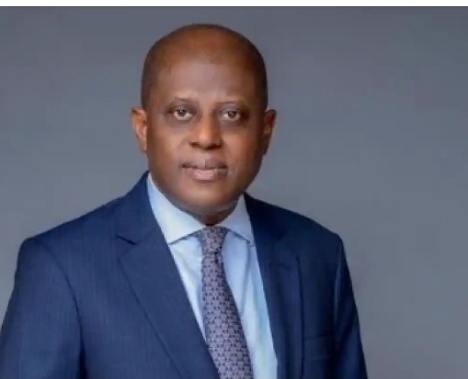
Their presence was announced via different videos that were shared on social media today. The couple’s wedding has been building up excitement on social media with the hashtag #CHIVIDO2024 since the duo released their pre-wedding photoshoot. Source: Prompt News.
The Governor of Kano state, Alhaji Abba Kabir Yusuf has saved the daughter of late Ado Bayero, Emir of Kano, Zainab Jummai Ado Bayero, her brother and her mother from being ejected from their rented Lagos residence by moving fast to settle the rent bill a few hours to the deadline of the eviction notice they were served. The Governor’s spokesperson Sanusi Bature was believed to have arrived in Lagos in the early hours of today, June 25, to meet with the General Manager of the apartment where the Ado Bayero family have lived since early this year, Sunel Kumar, who vowed to evict them by 3pm today. The governor’s intervention followed an outcry in the newspapers by Princess Zainab Bayero on behalf of her mother and brother who were allegedly neglected by the royal family after the death of Emir Ado Bayero. Zainab Ado Bayero is a documentary producer who recently worked on the personality profile and documentary of her late father, Ado Abdullahi Bayero. Receiving the representative of Kano state Governor, Sanusi Bature Dawakin Tofa in Lagos, Zainab and her mother expressed appreciation for the gesture of Governor Abba Kabir Yusuf in rescuing them at the right time. “You came at the right time. We were about to be forcefully evicted from the facility for our inability to pay the rent. They said today is final. We must move out by 3:00 pm and you came just fifteen minutes to the time. They have already mobilised youths to remove us out of the apartment. Alhamdulillah for your arrival” Zainab appreciated. On his own part, the representative of Kano state Governor, Sanusi Bature Dawakin Tofa said that the governor’s humanitarian intervention was due to the fact that many citizens of Kano feel that the matter did not portray the royal family and Kano in good light. “They are not only members of the Royal Family, they are our Muslim sisters and brothers, currently in need.”
The Sokoto State Governor, Ahmad Aliyu has dismissed rumour making the rounds that he is planning to dethrone the Sultan of Sokoto, Alhaji Muhammad Sa’ad Abubakar III. According to the Governor, his relationship with the Sultan and the Sultanate Council has been very cordial. A statement today, June 25, by Malam Abubakar Bawa, spokesman of the governor, quoted Governor Ahmed Aliyu as describing allegation on a plan by the state government to dethrone the Sultan as baseless and unfounded. ”It is an attempt by mischief makers and enemies of progress to fabricate false and unsubstantiated information, just to create an unfriendly atmosphere and fear in the minds of the law-abiding and peaceful citizens of the state. ”We assure MURIC that the present administration just like the previous administrations in the state, cherishes and respect the Sultanate Council long before MURIC was established. ”The Sultanate Council which has a long standing historical importance is so reverred to all the people of Sokoto State, therefore we still hold the institution in very high regards and esteem.” The Governor emphasized that the relationship between his administration and the Sultanate Council, led by respected traditional ruler, Abubakar, has been very cordial. He said that his administration always consulted with Sultan on issues affecting the state and his invaluable contributions and inputs are always respected and included in policy implementation. Governor Ahmed Aliyu said that the sacking and transfer of some District Heads made recently by Sokoto state government was done due to some unbecoming behaviours of the affected traditional rulers. The Governor asked Vice President Kashim Shettima, who had raised concern over the rumour of the dethronement, to disregard the false information. ”The Sultan enjoys all the powers he is entitled to; we never denied him any of his freedom or rights. ”We do not need to be told to guard, protect, and promote the Sultan, it is our sole responsibility. ”The government and People of Sokoto state cherish and adore the sultanate council and would do everything possible to protect the dignity of the revered institution.” Source: partly NewsDiary online.
Deputy Comptroller of finance, administration and technical service at the Nigeria Customs Service (NCS), Essien Etop Andrew, has been declared dead after he slumped during a session at the National Assembly. The top senior customs officer was said to be fielding questions from members of the House of Representatives committee on public account when he coughed and slumped. Information reaching us at Greenbarge Reporters online newspaper said that Essien Etop Andrew was rushed to the National Assembly’s clinic where he was confirmed dead. The chairman of the committee, Bamidele Salam, said that the panel will suspend other hearings for one week to honour the late customs chief. “It was a very sad incident. He was very eloquent and clearly understood the issues being considered. “He suddenly said he wanted to drink water, to which we obliged and even asked if he needed some tea. “It was sad he died in active service. Our committee is suspending other hearings for the week in his honour.” In a statement, spokesperson of the House of Representatives, Akin Rotimi, said that the green chamber will “support efforts to understand the circumstances surrounding the incident and is cooperating fully with all relevant authorities to ensure all necessary protocols are followed.” This was even as the Speaker of the House, Tajudeen Abbas, expressed his condolences, saying that the House “is deeply saddened” by the officer’s death. Source, partly TheCable.
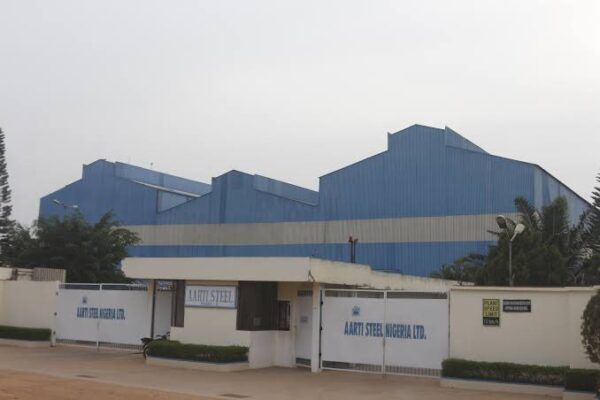
After more than a decade of operations in Nigeria, Aarti Steel, a prominent roofing sheet manufacturer, has reportedly closed shop.
The company’s exit is believed to have added to the growing list of multinational firms leaving the country due to harsh economic conditions.
Sources close to the company hinted that the Ota-based plant had been struggling with production for nearly a year and that severe indebtedness from forex losses, unfavourable economic policies, and depressed local pricing mechanisms forced the company to sell below production costs.
Insiders suggest that two major Nigerian steel companies and several Indian steel firms have shown interest in acquiring the closed plant, potentially saving thousands of jobs along its value chain.
This is even as Peter Obi, the Labour Party’s 2023 Presidential candidate, decried the mass exodus of multinational companies from Nigeria.
Peter Obi claimed that the nation has lost N95 trillion in the past five years due to these departures.
“These companies have highlighted the same problems across the board. It is clear these issues are not coincidental but symptomatic of a larger governance problem.”
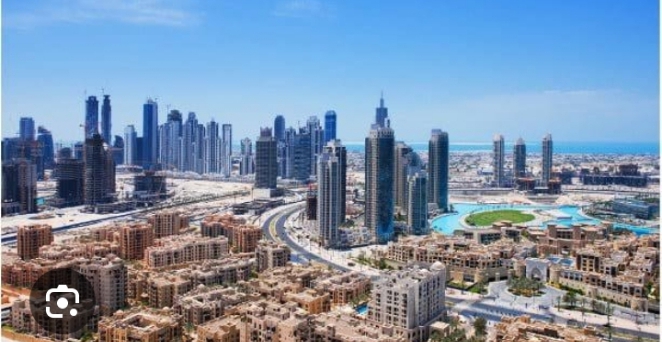
Within four years, Nigerians who are classified as Politically Exposed Personalities (PEPs) are believed to have doubled their investment in the real estate sector of Dubai, the United Arab Emirates (UAE), according to an investigation on Business Day. The newspaper reports that the investigation is part of ‘Dubai Unlocked,’ a six-month probe of UAE’s booming and secretive property market led by the Organized Crime and Corruption Reporting Project (OCCRP) together with more than 70 media partners. Economy Post is said to be the only Nigerian firm which participated in the project. The newspaper reported that as of 2020, 800 houses were traced to Nigerian PEPs, but four years later, the number had reached 1,600. In terms of value, the report said as of 2020, 800 properties valued at $400 million were traced to Nigerian PEPs in UAE’s commercial capital, but it has now increased to nearly $1 billion and 1,600 properties.
Quoting Dubai Land Department, the report listed Nigerians as the second highest foreign purchasers of Dubai properties after India. “BusinessDay’s data analysis showed that aside from PEPs, top security agents, civil servants and people connected in government with their family members own 88 percent of properties ascribed to Nigerians in Dubai.” “The locations are mostly posh areas, including Burj Khalifa, world’s tallest building; Marsa Dubai, Al Merkadh, Palm Jumeirah, Wadi Al Safa, Madinat Al Mataar, and Nad Al Shiba First, among others. “Findings showed that some Nigerian male property registrants identified as females while did females registered as the opposite sex,” the report read. The newspaper clarified that the report is not an indictment on the names listed, as there is no evidence that the individuals acquired the properties with stolen or public funds. Below is the list: ATIKU ABUBAKAR A three-bedroom flat estimated at $1.23 million at Palm Tower in Dubai. ATIKU’s 23-YEAR-OLD DAUGHTER A one-bedroom flat at Trade Centre Second, valued at $104,135. She also owns another two-bedroom flat at Hadaeq Sheikh Mohammed Bin Rashid estimated at $289,305.75. LATEEF FAGBEMI Nigeria’s chief attorney and justice minister owns an $85,846 property at Al Hebiah Third. NASIR EL-RUFAI A four-bedroom flat valued at $193,084 at Al Hebiah Third was traced to the former Kaduna State Governor. YUSUF DATTI BABA-AHMED Eight properties valued at $2.28 million were traced to the running mate to Peter Obi, Labour Party’s Presidential Candidate in the 2023 elections. The properties are located in choice locations such as Burj Khalifa, Al Yelayiss, Al Barsha South Fourth, and Town Square Safi 2. IFEANYI UBA A property valued valued at $1.13 million. While eight properties were linked to Uchenna Uba, his wife. The values were not inserted in the files, but one property (a villa) at Wadi Al Safa 7 costs about $1.13 million, while two others are valued at $294, 516 each. ATTAHIRU BAFARAWA 7 properties valued at $1.48 million, while another real estate asset, located at Palm Jumeirah and valued at $750,112, belongs to his wife. AHMED MARKAFI A property at Burj Khalifa valued at $$822,016 was traced to the former Kaduna governor TAFA BALOGUN The former Inspector-General of Police, who is now late, was linked with five properties in various locations, including Marsa Dubai. The properties cost more than $1 million. MBU JOSEPH A property was traced to the former Assistant Inspector-General of Police (AIG). AHMADU ALI A property whose value was not stated was traced to the former Peoples Democratic Party (PDP) chairman, while one valued at $422,887 was traced to his daughter, Khadijah Nneamaka Ali. MAINA AJI LAWAN 11 properties were traced to the former Borno State governor and senator. ASHE AHMADU MUAZU Wife of a former PDP chairman, owns a property located at Hadaeq Sheikh Mohammed Bin Rashid, valued at $1.16 million. CHRISTABEL BENTU A former special assistant to one-time governor of Plateau State, Joshua Dariye, owns a property . ISA MAHMOUD NUHU Two properties were traced to this Nigeria Customs Service (NIS) senior official. One property is estimated at $553,802. SALISU ABDULLAHI YUSHAU Two properties were traced to this former senior officer of the Nigerian Air Force. MOHAMMED SIDI SANI A flat at Marsa Dubai, valued at $590,807, was traced to the former director-general of the National Emergency Management Agency (NEMA), who was sacked in April 2023 with seven of the agency’s directors. The property is valued at $590,807. HADIZA ALI SHERIFF A Marsa Dubai property valued at $3.093 million was linked to wife of former Borno State governor. NENADI USMAN One real estate was linked to this Nigeria’s former finance minister. BOBBOI KAIGAMA A property was traced to this Labour leader who was Trade Union Congress (TUC) president. JIMOH IBRAHIM 7 properties were linked to the senator representing Ondo South. IKE EKWEREMADU Five properties were traced to Ike Ekweremadu, former deputy Senate president, who is serving a jail term in the United Kingdom. ORJI UZOR KALU One property was traced to the former Abia State governor who is now a senator. JEREMIAH USENI One property was traced to the former military governor of old Bendel State. OSITA CHIDOKA A real estate estimated at $101,793.37 at Jabal Ali First was traced to this former aviation minister. OLISA METUH Another real estate asset was linked to Olisa Metuh, former PDP spokesman. ABDULSALAMI ABUBAKAR A property at Marsa Dubai is said to be owned by Nigeria’s former head of state. HASSAN ARDO TUKUR A property valued at $1.025 million is reportedly owned by a former principal secretary to ex-President Goodluck Jonathan. ADEYEMI IKUFORIJI A property at Marsa Dubai was traced to this former speaker of the Lagos State House of Assembly. DAN ETETE Another property is said to be owned by Dan Etete (Dauzia Loya Etete), Nigeria’s former petroleum minister. Source: Daily Trust.
Nigeria’s Vice President, Kashim Shettima has warned the government of Sokoto State to ensure that nothing happen to the Sultan of Sokoto, Alhaji Muhammad Sa’ad Abubakar III. He described the Sultan as representing an idea and an institution that all Nigerians should jealously guard and protect. Vice President Shettima, who spoke today, June 24, at the ongoing North West Peace and Security Summit, which is being broadcast live on Trust TV, said: “our father who is a permanent picture in all developmental issues in this country, His Eminence, the Sultan of Sokoto. I want to use him as my point of reference to recognize and appreciate all our royal fathers present here. “And to the Deputy Governor of Sokoto, I have a simple message for you. Yes, the Sultan is the Sultan of Sokoto, but he is much more than that; he represents an idea. He is an institution that all of us in this country need to jealously guard, protect, promote, preserve and project for the good of our nation.” Vice President Shettima’s warning came on the heels of the suspicious making the rounds that the Sokoto State Government is toying with the idea of deposing Sultan Abubakar III. The Executive Director of Muslim Rights Council (MURIC), Professor Isiaq Akintola had raised the alarm that the Sokoto government is allegedly plotting to depose the Sultan. In his statement earlier today, Professor Akintola had said that Nigerian Muslims would reject any plan to depose the Sultan. “MURIC advises the governor to look before he leaps. The Sultan’s stool is not only traditional, it is also religious. In the same vein, his jurisdiction goes beyond Sokoto. It covers the whole of Nigeria. He is the spiritual head of all Nigerian Muslims. “Therefore, any governor who tampers with the stool of the Sultan will have Nigerian Muslims to reckon with because the Sultan combines the office of the Sultan of Sokoto and that of the President General of the NSCIA.” Under the current law, the authority to appoint district and village heads lies with the Sultanate Council. However, in practice, the Sultanate Council merely provides recommendations to the state government, with the governor ultimately making the appointments. The state’s Attorney-General and Commissioner for Justice, Nasir Binji, had clarified that the proposed amendment aimed to synchronise the legal framework with the customary procedure in Sokoto. He told newsmen after a State Executive Council meeting that under the proposed amendment, the Sultanate Council would retain the power to recommend candidates, while the authority to appoint would be vested in the governor.
A group known as Independent Hajj Reporters (IHR) has kicked against the call for the scrapping of the National Hajj Commission of Nigeria (NAHCON) and decentralization of Hajj operations in the country. The group which said that it used to monitor and report hajj in Nigeria, instead, called on the National Assembly to amend the NAHCON Act to ensure a cohesive and effective hajj operating system in the country. In a statement today, June 24, the group’s national coordinator, Ibrahim Muhammad said that the necessity for the new dispensation should take cognisance of the Saudi Arabian Ministry of Hajj’s adjustment of hajj policy and calendar of events, “which is a detailed approved guideline for all hajj participating countries. According to the statement, Nigeria is the fifth largest hajj country and the first in Africa with an allocation of 95,000 slots. “Nigeria is the only country out of the Top 10 Hajj participating countries which includes Indonesia, India, Pakistan, Bangladesh, Iran, Turkey, Afghanistan, Morocco and Malaysia that does not operate a centralized system. “We operate a three-tier system in Nigeria (Federal, State and Local Governments). All the countries mentioned above have a unified and central control hajj administration with a coordinating unit at zones, so they found it easy to run 5 to 6 year hajj rolling plans. “Local Government Pilgrims officers do Pilgrims Registration under the control of state Muslim Pilgrims Welfare Boards. Thereafter the State Pilgrims boards deposited such funds in their respective accounts before it will be moved to the NAHCON operational account on request – all within one hajj calendar year. “Management of hajj operations is strictly time-limited to start thinking of continuing with these time-consuming bureaucracies. “We support an advocacy for improved services to our dear pilgrims but the recent calls for the decentralisation of NAHCON and devolving powers to the states would be a very wrong move. “For example, the new calendar of activities released by the Ministry of Hajj and Umrah recently scheduled 4th September for the kickoff of arrangements for the 2025 hajj. “By virtue of diplomatic protocol, the Saudi Ministry of Hajj only relates with National Hajj missions not regional bodies. Decentralisation as being touted will allow 36 states’ pilgrim’s welfare boards and agencies to send 36 different delegations to Saudi Arabia (the first in the History of Hajj operation) to liaise with Saudi Arabia (host country) on Hajj plans. 36 states will also sign different hajj memorandum of understanding with one country. “On service delivery, NAHCON controls Airlines and accommodation in Madina. In the last few years, Nigerian pilgrims have been housed in a 4-star hotel within the vicinity or 5 minutes’ walk close to the Prophet’s Mosque. “On the other hand, States are responsible for choosing their accommodation in Makkah. This year for example, our team currently in Saudi Arabia observes that Niger state pilgrim’s accommodation is located in an isolated area, far away from the holy Mosque, this invariably denies quite a number of the pilgrims the opportunity to observe their obligatory prayers at the Haram. “Also, registration of pilgrims starts from the local governments after which the funds are transferred to state pilgrims’ boards before being transferred to NAHCON. “There are allegations that most of the delays experienced every single year, that affects the smooth operations of the Hajj, including this year is as a result of the failure of some state boards to remit their collected fares to NAHCON in time because governors have used the monies for other purposes and are being awaited to make refunds. “We, therefore, call on the National Assembly to make it possible for pilgrims to pay their deposits directly to NAHCON (where the funds will end up anyway) so that the commission can in turn meet its obligations in time and avoid a situation where the entire operation will be put in jeopardy. “This, we believe, is also the best way to truly hold the commission to account in case of any service failure.”
We use cookies on our website to give you the most relevant experience by remembering your preferences and repeat visits. By clicking “Accept”, you consent to the use of ALL the cookies.
This website uses cookies to improve your experience while you navigate through the website. Out of these, the cookies that are categorized as necessary are stored on your browser as they are essential for the working of basic functionalities of the website. We also use third-party cookies that help us analyze and understand how you use this website. These cookies will be stored in your browser only with your consent. You also have the option to opt-out of these cookies. But opting out of some of these cookies may affect your browsing experience.
Necessary cookies are absolutely essential for the website to function properly. This category only includes cookies that ensures basic functionalities and security features of the website. These cookies do not store any personal information.
Any cookies that may not be particularly necessary for the website to function and is used specifically to collect user personal data via analytics, ads, other embedded contents are termed as non-necessary cookies. It is mandatory to procure user consent prior to running these cookies on your website.





 Their presence was announced via different videos that were shared on social media today.


 Quoting Dubai Land Department, the report listed Nigerians as the second highest foreign purchasers of Dubai properties after India.