The Executive Council and Members of the African Public Relations Association (APRA) has advised the President of Kenya to dialogue with the people for policy formulation as a way of advertising the violent protest that led to the killing of some citizens of the country. In a statement today, June 27, by the Secretary-General, Omoniyi Ibietan, fnipr, the APRA asked the Government of Kenya to put the people of Kenya first. The Association appreciated the fact that the Presidency has already indicated its capacity to engage in conversation with relevant stakeholder. It advised that such consultations should be done with empathy and an openness to reconciliation. The Association condoled with all Kenyans over the recent crisis that happened, saying: “we stand in solidarity with our colleagues in the Public Relations Society of Kenya (PRSK). “We commiserate with the families of those who died and wish a speedy recovery to those injured during the protests. “We fervently pray for the repose of the souls of the deceased.”
The Adeleke Dynasty of Edeland in Osun State has listed the dignitaries who attended the wedding of their son, David Adeleke, to Chioma Rowland on June 25, in Lagos. In a message of appreciation today, June 27, the President of the Adeleke dynasty, Governor Ademola Adeleke of Osun State, described attendance and goodwill at the wedding as “quite robust and overwhelming.”
“We thank friends and associates from far and near for the love they showered on the Adeleke family by their enthusiastic presence and messages to the new couple on their memorable and historic wedding. We were overwhelmed by the massive show of brotherhood for the family in our time of happiness and joy.
“We take note of the love and support from the following: 1. Former President Olusegun Obasanjo 2. Former National Chairman of the PDP, Dr. Iyorchia Ayu 3. Lagos State Governor and his wife, Mr. and Mrs. Sanwoolu 4. Ogun State Governor and his wife, Mr. and Mrs Abiodun 5. Abia State Governor, Dr. Alex Otti 6. Governor Godwin Obaseki of Edo state 7. Former Governor of Akwa Ibom state, Mr. Emmanuel Udom 8. The Deputy Governor of Imo State, Mrs. Chinyere Ekomaru 9. The Deputy Governor of Oyo State, Chief Bayo Lawal 10. The former Governor of Abia State, Dr. Okezie Ikpeazu 11. Oyo State Assembly Speaker, Rt Hon. Adebo Ogundoyin 12. Senator Sanusi Daggash 13. Mr. Seyi Tinubu 14. Mrs. Abike Dabiri 15. Senator Daisy Danjuma 16. Senator Abiodun Olujinmi 17. Senator Enyinnaya Abaribe 18. Senator Osita Izunaso. 19. His Royal Majesty, the Ooni of Ife, Oba Enitan Adeyeye Ogunwusi 20. The Soun of Ogbomoso land, Oba Gandi Adeoye 21. The Ataoja of Osogboland, Oba Jimoh Olanipekun 22. The Timi of Edeland, Oba Munir Adesola Lawal 23. Oba Saheed Ademola, Elegushi of Ikateland and many other royal fathers.
“We convey our heartfelt thanks to our esteemed in-laws from Igboland; top business and political leaders from far and near; countless traditional rulers, leading lights of Nigerian entertainment industry; members of the National Assembly from Osun state; members of the Osun State Executive Council, members of the Osun State House of Assembly, members of the diplomatic Corps, members of the diaspora community and several other dignitaries too numerous to mention here.
“On behalf of my big brother, the father of the bridegroom; Dr. Deji Adeleke; my sister, Chief (Mrs) Modupe Adeleke-Sanni, and the entire Adeleke family, we extend our best wishes to all those who honour the wedding of our son, Davido and his lovely wife, Chioma. We pray that sounds and thrills of joy and happiness shall be our portion all the time of our lives. Amen”
Thanks for coming. Signed: HE, Senator Ademola Adeleke, For the Adeleke family.
The Senate of the University of Abuja (UniAbuja) has elected first female, Professor Aisha Sani Maikudi as the Acting Vice Chancellor pending the inauguration of the University Council and the appointment of a substantive Vice-Chancellor. Her appointment is coming on the heels of the end of the tenure of Professor AbdulRasheed Na’Allah as the 6th Vice Chancellor of the University on 30th June 2024. The new acting Vice Chancellor is a professor of international law and until her appointment, Deputy Vice-Chancellor (Academic). Born in Zaria on the 31st January 1983 and hailed from Katsina State, Professor Aisha attended Queens College, Lagos where she obtained her West African Senior School Certificate Examination (WASSCE). After her secondary school education, she attended the University of Reading and the London School of Economics in the United Kingdom, where she obtained her Bachelor of Laws (LLB) and Master of Laws (LLM) degrees, respectively. She also attended the Nigeria Law School, Abuja, for her call to the Bar and the University of Abuja for her Doctor of Philosophy (PhD) in Law. In 2007, Aisha participated in the National Youth Service Corps (NYSC) at the Corporate Secretariat and Legal Division of the Nigerian National Petroleum Corporation (NNPC). In 2008, she joined the University of Abuja as a Lecturer and became the first female and youngest Head of the Department, Faculty of Law in 2014; the first female and youngest Deputy Dean, Faculty of Law in 2018; and the pioneer Director University of Abuja. It was gathered that she is the youngest Professor of the University of Abuja and indeed Nigeria, as well as the first female Professor of Law in the North West and the University of Abuja. She specializes in United Nations Law and has written extensively on the area. Professor Aisha floated a Postgraduate course on United Nations Law and has supervised numerous undergraduate and postgraduate works. She has also taught Company Law for over 12 years and is well-versed in its mechanics. She has participated in numerous conferences and trainings worldwide. She is also a Member of various professional associations, including the Nigerian Bar Association (NBA), the Nigerian Law Teachers Association (NLTA), and the International Federation of Women Lawyers (IFWL). Aisha is married with children. Source: PRNigeria
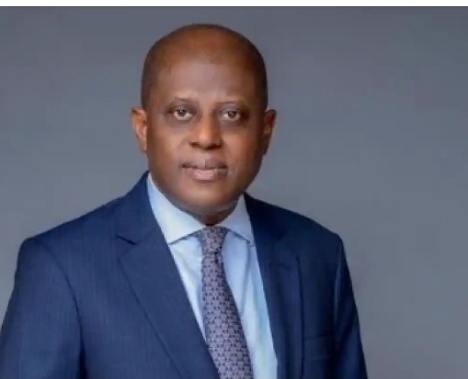
The Governor of the Central Bank of Nigeria (CBN), Olayemi Cardoso, has said that the determination of the apex Bank under his leadership is to foster stronger, healthier and more resilient banks that are capable of withstanding economic shocks and supporting the Government’s goal of achieving a GDP of US$1 trillion by 2030. One of the ways to achieve the goal, he said, is the recapitulation. Speaking in London yesterday, June 25, in an address to stakeholders on “The Impact of the Recapitalization of Nigerian Banks” at the UK-Nigerian Chamber of Commerce, Cardoso said that the apex Bank will continue to collaborate with relevant financial institutions, the fiscal authorities and the National Assembly to ensure a successful recapitalisation exercise, including providing adequate protection of property rights and interests of minority shareholders. The Governor, who was represented by the Bank’s Deputy Governor, Financial Systems Stability, Phillip Ikeazor, said that the anticipated impact of the recapitalisation programme will include an increase in banks’ lending capacity, a boost in the volume of foreign direct investment (FDI), and an increase in foreign exchange liquidity. He said that the exercise would also contribute to GDP growth, better risk management, improved credit ratings, a diversified ownership base, better governance and strategic decisions, and increased market volume and value, leading to a more vibrant equity market. “With the recapitalisation programme, our goal is to trigger the emergence of stronger, healthier and more resilient banks.” He said that several factors influenced the new minimum capital requirements, including macroeconomic conditions, stress test outcomes and the need for improved risk management. “We will rigorously enforce our “fit and proper criteria” for prospective new shareholders, senior management and board members of banks, and proactively monitor the integrity of financial statements, adequacy of financial resources, and fair valuation of banks’ post-merger balance sheets.” Cardoso stressed the significant opportunity it presents to engage investors, policymakers, and technocrats on the critical issue of bank recapitalisation in Nigeria. He explained that since his assumption of office in October 2023, his priorities at the CBN have included achieving monetary and price stability, maintaining a stable exchange rate, controlling inflation, and creating an enabling environment for businesses. He said that the recapitalisation directive excluded retained earnings from the minimum capital requirement to simplify capital calculations and enhance transparency. He said that the decision, rooted in the BOFIA Act 2020, aligns with international standards like Basel III and emphasises core capital elements to improve financial stability. Reflecting on the successful 2004/5 Banking Sector Reforms, which consolidated the industry, increased capital bases and boosted resilience against the global financial crisis, the Governor assured that the current recapitalisation initiative is aimed at building on these achievements.
The Managing Director and Chief Executive Officer (CEO) of the News Agency of Nigeria (NAN), Ali Mohammed Ali has offered suggestions on how to stop fake news which has been in existence since 1890s, from flourishing. According to him, fake news has a long history, dating back to the 1890s when sensational reportage by newspapers was the vogue, but that it is randomly used today as a form of false information or even unedifying report which attacks the reputation of high profile persons in society. To stem fake news and misinformation, he said: “we must uphold truthfulness and accuracy in combating infodemics, misinformation and fake news if we are to build trust with the public. The authenticity of a message reinforces that copy or communication. “When people perceive the message to be authentic, they tend to believe it the more and show understanding. Genuineness or sincerity is critical in winning the people over. “For example, through sustained information outflows by certain institutions (Army, Police, first emergency responders, Lagos government etc,) the Lekki Gate false narratives during the #EndSARS protest was debunked as a ” massacre without bodies!” Ali M Ali offered the suggestions at the First National Roundtable on “Asymmetrical National Security Challenges, the Army and National Development,” organized by Nigerian Army Resources Centre in collaboration with Development Specs Academy in Abuja. The NAN Boss said that to also stem fake news and misinformation, we must be timely in countering misinformation, saying that it entails striking a balance between speedily responding and the volume of information available. “A burning issue should not be allowed to fester before we react although there are times when silence is said to be golden until an auspicious time when a valid response would be desirable. “Because misinformation and fake news are crafted to be sensational, we must also craft our responses in an interesting manner that would attract attention given the crowded media space and the competition for attention. “We must also work with friendly media influencers who are credible and have the capacity to push out copies which grab media attention. “Regular communication through constant engagements is critical, especially for institutions of state. “They must always talk to the people and not the people begging them to react to issues as they break. “In effect, we must be proactive rather than reactive in communication. “Institutions of state in particular must promote digital literacy among their communications professionals, especially now that the media landscape is constantly in a state of flux.” Ali M. Ali cautioned communication specialists to be innovative and refrain from a one-size-fits all communication approach. He gave as an example, Artificial intelligence (AI) technologies with capability to generate convincing fake texts, images, audio and videos (often referred to as ‘deepfakes’), as presenting significant difficulties in distinguishing authentic content from synthetic creations. “This capability lets wrongdoers automate and expand disinformation. “This is why it is essential for communication specialists to critically evaluate information and sources in order to mitigate damage done as well as promote a safer and more informed public discourse.” Read the full text of the speech of NAN Managing Director: It gives me great pleasure to be invited to this distinguished gathering, and even to speak on an issue that has attracted such absorbing interest: the management of news in the face of the onslaught by the triple evils of infodemics, misinformation and fake news. Today, the media globally plays a very important role in practically every aspect of our lives. There is literarily now no international boundary to knowledge as the media provides the platform to spread information, news as well as entertainment from one part of the world to the other with just a click. In an increasingly shrinking global space marked by exponential growth in media convergence and artificial intelligence, the dampners of infomedics, misinformation and fake news have all but assumed lives of their own. This development rightly ought to be a source of concern and it is gratifying that the Nigerian Army Resource Centre and its partner, the Development Specs Academy, have given this issue more than cursory attention. From the topic, “Professional News Management as panacea for Infodemics, Misinformation and Fake news,” our task is clearly well laid out. And that is as communication specialists, how do we use our news management skills to counter the toxic news content being daily pushed out to avid consumers in the public space. Even stretched further, how do private and public institutions manage or contend with misinformation or fake news about them? If management of news is simply deliberately influencing the presentation of information emanating from the news media, we will need to meander through the laborious labyrinths of infodemics, misinformation and fake news to understand why this tripod of malfeasance have continued to be a recurring decimal on our country’s media landscape. INFODEMICS The term, “infodemics” was coined as a blend of information and epidemic in 2003 by journalist and political scientist David Rothkopf in a Washington Post column, when the world’s attention was on Severe Acute Respiratory Syndrome (SARS). What did Rothkopf actually mean by Infodemics? According to him, it is ” …a few facts, mixed with fear, speculation and rumor, amplified and relayed swiftly worldwide by modern information technologies, have affected national and international economies, politics and even security in ways that are utterly disproportionate with the root realities. It is a phenomenon we have seen with greater frequency in recent years—not only in our reaction to SARS, for example, but also in our response to terrorism and even to relatively minor occurrences such as shark sightings.” Infodemics, however, gained traction in the heat of the COVID-19 pandemic in 2020 when it was used to describe that anomalous situation where there was an abundance of false information dominating the public space and being spread in harmful way. The World Health Organisation (WHO) explains that infodemics are an excessive amount of information about a problem, which makes it difficult to identify a solution. They can spread misinformation, disinformation and rumours during a health emergency. It can hamper an effective public health response and create confusion and distrust among people. At that time, WHO was forced to raise the alarm that the COVID-19 related “infomation epidemic ” being spread was just as dangerous as the virus itself! As we have come to realise, the genie of infodemics is out of the bottle and now no longer within the precincts of the health sector. It is now dominating our national life where purveyors of misinformation and fake news turn little facts on their heads to achieve a predetermined end. MISINFORMATION Misinformation is simply wrong information which is given to someone, often in an attempt to make them believe something which is not true. It can also be false or inaccurate information that is spread unintentionally, often due to a lack of knowledge or understanding. It can take many forms, including text, images or videos, and can be disseminated through various channels such as social media, news outlets or word of mouth. Misinformation certainly can have grave consequences. These include but not limited to 1. Fueling social unrest, violence, and even genocide, as people are misled into believing harmful stereotypes or conspiracy theories. (Rwandan genocide of 1994 in which between 500,000 and 800,000 people were killed in just 100 days.) 2. Spreading harmful beliefs and behaviors such as anti-vaccination sentiments or unsafe health practices.(Current insidious campaign against the HPV vaccine in some quarters in the false belief that it causes infertility.) 3. Eroding trust in institutions, media, and experts, leading to a breakdown in social cohesion and the rise of conspiracy theories.( Attempts for example to impugn on the integrity of the election management body, INEC, by politicians and their social media goons in the aftermath of the 2023 general elections. 4. Deepening political polarisation by reinforcing biases and prejudices, making it difficult to find common ground.( Exploiting the country’s faut lines of religion and ethnicity to further stratify the nation. ) 5. Causing financial losses, as people make investment decisions or purchase products based on false information. (Multilevel marketing, network marketing or pyramid selling which have seen many people’s life savings go up in smoke.) 6. Damaging one’s reputation and credibility, making it harder to be taken seriously in the future.( The multitudes of defamation cases speak to this.) FAKE NEWS Wikipedia, the online dictionary, describes fake news as false or misleading information (misinformation, including disinformation, propaganda and hoaxes) presented as news. Fake news often has the aim of damaging the reputation of a person or entity. Although fake news has a long history dating back to the 1890s when sensational reportage by newspapers was the vogue, it is randomly used today as any form of false information or even unedifying report which attacks the reputation of high profile persons in society. With the advent of social media, fake news has blossomed while disinformation and propaganda have received new impetus. All these are used to alter, shape and manipulate people to promote sectarian and political interests, attempt to entrench and exploit attitudes and conflicts as well as to elevate divisive politics. In many instances, the media had exploited ethnicity and religion to undermine Nigeria’s democracy and even threaten national security. Today, Nigeria is worse for it, especially in our country where gullibility is so high. The consequences of fake news in the light of our contemporary history have been tragic, to say the least. Let us use the October 2020 #EndSARS violence which raged in parts of the country as a case study. In two weeks of rage, 57 civilians as well as six soldiers and 37 policemen were killed, 196 policemen injured, 164 police vehicles destroyed and 134 police stations razed. Some 269 private/corporate facilities were also burnt/looted/vandalised, 243 government facilities burnt/vandalised and 81 government warehouses looted. Eight medium security custodial centres in six states (Edo, Lagos, Abia, Delta, Ondo and Ebonyi) were attacked while 1,957 inmates were set free, with 31 staff injured. This needless violence was initiated and orchestrated by purveyors of fake news and misinformation who latched on to the efficacy of the social media as a tool of mass mobilisation. There were instances of how purveyors of fake news used the social media to guide arsonists and looters to certain public and private properties while pictures of persons, including some celebrities, who were supposedly killed at the Lekki Toll Gate by soldiers, were circulated. Some of those who were reported killed , however, came out to refute such claims. By the time the dust settled, about N20 billion had been lost to the orgy in just 14 days. In some cases as the #ENDSARS violence amplified, a report with false or harmful information would have done its damage by the time a response is made. Not responding in mitigation efforts, however, would make a bad situation worse. If what we have endured are the often negative and sometimes tragic outcomes of infodemics, misinformation and fake news, how can communication specialists, some of whom are gathered here, sustainably mitigate the damage wrought by adversarial report as well as manage information in a way that will promote the public good? WHAT WE MUST DO 1. First, we must uphold truthfulness and accuracy in combating infodemics, misinformation and fake news if we are to build trust with the public. The authenticity of a message reinforces that copy or communication. When people perceive the message to be authentic, they tend to believe it the more and show understanding. Genuineness or sincerity is critical in winning the people over. For example, through sustained information outflows by certain institutions (Army, Police, first emergency responders, Lagos government etc,) the Lekki Gate false narratives during the #EndSARS protest was debunked as a ” massacre without bodies!” 2. We must also be timely in countering misinformation. This entails striking a balance between speedily responding and the volume of information available. A burning issue should not be allowed to fester before we react although there are times when silence is said to be golden until an auspicious time when a valid response would be desirable. 3. Because misinformation and fake news are crafted to be sensational, we must also craft our responses in an interesting manner that would attract attention given the crowded media space and the competition for attention. 4. We must also work with friendly media influencers who are credible and have the capacity to push out copies which grab media attention. 5. Regular communication through constant engagements is critical, especially for institutions of state. They must always talk to the people and not the people begging them to react to issues as they break. In effect, we must be proactive rather than reactive in communication. 6. Institutions of state in particular must promote digital literacy among their communications professionals, especially now that the media landscape is constantly in a state of flux. As I close, let me admonish us as communication specialists to be innovative and refrain from a one-size-fits all communication approach. Artificial intelligence technologies for example, with their capability to generate convincing fake texts, images, audio and videos (often referred to as ‘deepfakes’), present significant difficulties in distinguishing authentic content from synthetic creations. This capability lets wrongdoers automate and expand disinformation. This is why it is essential for communication specialists to critically evaluate information and sources in order to mitigate damage done as well as promote a safer and more informed public discourse. I thank you for your kind attention. Ali Muhammad Ali, Managing Director/CEO
Fire broke out on Wednesday at the Dangote Petroleum Refinery in the Lekki Free Zone, Lagos Spokesman of Dangote Group, Anthony Chiejina confirmed the fire outbreak in a statement, saying however that there was no casualty.
The statement read: “We have swiftly contained a minor fire incident at our effluent treatment plant (ETP) today, Wednesday, 26th of June. “There is no cause for alarm as the refinery is operating normally, and there are no recorded injuries or bodily harm to any of our staff on duty.”
Former Governor Nasir El-Rufai has dragged the Kaduna State House of Assembly to court, challenging it over its claim that N432 billion was siphoned during his eight-year administration. El-Rufai filed a fundamental rights suit at the Federal High Court in Kaduna today, June 26, through his counsel, Abdulhakeem Mustapha, a Senior Advocate of Nigeria (SAN), challenging the report of the Kaduna Assembly Committee which indicted. In the suit, El-Rufai asked the court to declare that by the provisions of Section 36 of the Constitution of the Federal Republic of Nigeria, 1999, the Report of the Ad-Hoc Committee on Investigation of Loans, Financial Transactions, Contractual Liabilities and Other Related Matters of the Government of Kaduna State from 29 May 2015 to 29 May 2023, as ratified by the Kaduna State House of Assembly, is unconstitutional and therefore null and void for violating his right to fair hearing as guaranteed under the Constitution. The ad hoc committee, set up by the Kaduna State House of Assembly to investigate all finances, loans and contracts awarded under Nasir El-Rufai had submitted its report, indicating the ex-governor and some of his appointees. El-Rufai had reacted, through his media aide, Muyiwa Adekeye, describing the report as false and scandalous. “We are aware of news that the Kaduna State House of Assembly has adopted the report of the ad hoc committee it asked to probe the El-Rufai government. “We have not been provided with a copy of the report, to which we would respond robustly whenever we obtain it. “We affirm the integrity of the El-Rufai government and dismiss the scandalous claims being aired as the report of the committee.”
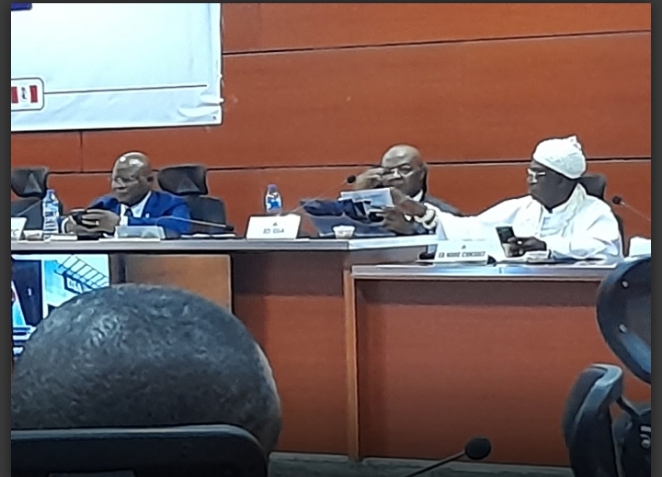
Experts in information world have offered ideas on how best the military and other uniformed personnel can synergize with media and media practitioners in the dissemination of information for harmonious relationship, amidst the security challenges facing the country. Taking a shot at the topic during a RoundTable session on Asymmetric security challenges, held in Abuja, Professor Okey Ikechukwu, mni. insisted on the need for media to be always factored into the plans of the military for the purpose of winning the hearts and minds of Nigerians. This was even as Waziri Adio highlighted the centrality of media to the security issues. Adio spoke on the need for synergy between the media and the military. He identified, among others, issues such as an engagement plan as a strategy, saying that it is all about what you need from whom, when and how? He stressed the need to understand the lay of the (media) land: ecosystem and its configuration “Need to understand them: who are they, how are they wired, and how do they make decisions? “Need to broaden the field of engagement: going beyond correspondents to decision-makers: publishers/owners, editors, columnists, anchors… “Need to consistently nurture the relationship: Noah’s analogy. Preparation. Briefings. Consultations. “Need to be proactive in shaping narrative: Banex example “Need to know the limits: they can’t always do your bidding (most that can get sometimes is to reflect your own side or downplay)” Also, the Director General of the Voice of Nigeria (VON), Jibrin Ndace, specifically canvassed for the incorporation of media planing as part of the highlights in the first day of the event. Again, communication, media as well as gender issues formed focal point in day two of the event, held at the Army Resource Centre in partnership with Development Specs Academy. Those who spoke on communication Media and gender include retired Brigadier General Sani Kukasheka Usman, mni who was spokesman of Nigerian Army; Malam Ali Mohammed Ali, Managing Director of the News Agency of Nigeria (NAN); Professor Biodun Adeniyi of Baze University and Margaret Agbo of Development Specs Academy, who addressed the gender sensitive communication. Retired Brigadier General Usman, the former Army Spokesman noted in his presentation, that the the impact of non-violent communication (NVC) on national security in Nigeria is profound. “By fostering a culture of dialogue and understanding, NVC contributes to: “Stability: Improved army-civilian relations lead to greater stability within communities, reducing the likelihood of insurgencies and civil unrest. “Collaboration: Enhanced communication and trust enable more effective collaboration between the military and civilian populations in addressing security challenges. “Human Rights Protection: NVC encourages the military to engage with civilians in ways that respect human rights and dignity, reducing incidences of abuse and violence.” Ali M. Ali, in his presentation, said inter Alia, “If what we have endured are the often negative and sometimes tragic outcomes of infodemics, misinformation and fake news, how can communication specialists, some of whom are gathered here, sustainably mitigate the damage wrought by adversarial report as well as manage information in a way that will promote the public good?” He said offered solutions, which include the fact that we must uphold truthfulness and accuracy in combating infodemics, misinformation and fake news if we are to build trust with the public. “The authenticity of a message reinforces that copy or communication. When people perceive the message to be authentic, they tend to believe it the more and show understanding. Genuineness or sincerity is critical in winning the people over. “For example, through sustained information outflows by certain institutions (Army, Police, first emergency responders, Lagos government etc,) the Lekki Gate false narratives during the #EndSARS protest was debunked as a ” massacre without bodies! “We must also be timely in countering misinformation. This entails striking a balance between speedily responding and the volume of information available. A burning issue should not be allowed to fester before we react although there are times when silence is said to be golden until an auspicious time when a valid response would be desirable. “Because misinformation and fake news are crafted to be sensational, we must also craft our responses in an interesting manner that would attract attention given the crowded media space and the competition for attention. “We must also work with friendly media influencers who are credible and have the capacity to push out copies which grab media attention. “Regular communication through constant engagements is critical, especially for institutions of state. They must always talk to the people and not the people begging them to react to issues as they break. In effect, we must be proactive rather than reactive in communication. “Institutions of state in particular must promote digital literacy among their communications professionals, especially now that the media landscape is constantly in a state of flux.” On his part, Professor Adeniyi took a look at the issues of reporting security related matter. “Public Interest: Assess whether the story serves the public interest. “Harm Minimisation: Weigh the potential harm to individuals and communities against the public’s need to know. “Informed Consent: Seek consent from individuals involved, particularly when dealing with vulnerable populations.” Gender Sensitive Communication Margaret Agbo who spoke on gender sensitive communication asserted: ”Our use of gender-biased language is sometimes designed to deliberately give offence, but not always. Whether intended to give offence or not, gender-biased use of language tends towards social exclusion and not inclusion. “Gender inclusive communication on the other hand, reduces discrimination and makes everyone feel that he or she is part of a team or group of equal parts. It reenforces group cohesion, collaboration, team work and reduces conflict. It also strengthens self confidence among the individual and promotes forward looking social change. Egs… “In order to improve gender sensitive communication, we must avoid gender stereotypes, exclusionary terms, unequal forms of address, and gender inequity through titles and labels. She concluded by outlining what she termed steps toward gender sensitive communication thus: “Training of communication personnel to raise awareness about gender biases and stereotypes. ”Develop and explain gender neutral expressions that could be used to substitute gender biased notions and culturally induced gender stereotypes. “Entrenched commitment to equity through non-discriminatory practices as official policy. “Avoid the use of negative gender-specific terms as a matter of course.”
“People are tired, hungry and unemployed and they (government) keep pushing these punitive taxes.” A 28-year-old Hanifa Farsafi, who joined in the protest against tax hike bill by the Kenyan government told newsmen amidst police struggle to halt the massive protest, in which many people have lost their lives and hundreds were injured. She added: “everyone is coming out (to protest) because we’re tired (of the hardships in the country)” The country’s Defence Minister, Aden Duale had said in the official gazette that Kenya’s army had been deployed to support the police in controlling the “security emergency” which has resulted in the “destruction and breaching of critical infrastructure.” The United Nations (UN) Secretary-General, Antonio Guterres has expressed “deep concern” by the deadly violence. His spokesman, Stephane Dujarric, quoted him as saying that he was very much saddened by the reports of deaths and injuries, including journalists and medical personnel. The youth-led protest Yesterday was the third round of protests against the bill.
Two people were killed last week during demonstrations – one hit by a gunshot and another by a tear gas canister. The protests erupted last week, largely led by young activists, as the tax hikes – the second in as many years sought by Ruto’s government – stirred anger over the price rises they would incur on basics such as diapers and sanitary towels. Amendments to the bill, which removed some of the more stringent proposals, like a bread tax, have failed to assuage protesters. Parliament approved the finance bill, moving it through to a third reading by lawmakers. The next step is for the legislation to be sent to the president for signing. He can send it back to Parliament if he has any objections. Last year, when there was a similar tax hike, he had signed it immediately.
Kenya is boiling as youths occupied vital areas of the country, vehemently protesting tax hike bill. Reports reaching us at Greenbarge Reporters online newspaper and hardcopy magazine in Abuja said that several people have already been killed as Kenyan police open fire on the anti-tax bill protesters. It was gathered that parts of parliament building were set ablaze as protesters storm the complex in the country’s capital, Nairobi. Police were said to have fired live rounds at protesters trying to storm Kenya’s legislature, where lawmakers voted to pass a contentious finance bill that would hike taxes. Thousands of people joined the youth-led demonstration in the Kenyan capital, Nairobi, yesterday, June 25, to demand that lawmakers vote against the bill amid soaring tensions over a cost-of-living crisis in the country. But the legislators voted to pass the bill, as some of the Lawmakers escaped from the chamber through perimeter fence, as protesters breached the complex of the Parliament. Parts of the Parliament building were set ablaze. It was gathered that police eventually managed to drive the protesters from the building amid clouds of tear gas and the sound of gunfire. The lawmakers were evacuated through underground tunnels, local media reported. At least five people were reportedly killed and 31 others were wounded. The Kenya Medical Association and several other NGOs said in a statement, said that of the wounded, 13 had been shot with live bullets and four with rubber bullets. “Despite the assurance by the government that the right to assembly would be protected and facilitated, today’s protests have spiraled into violence,” the groups said. Kenyan President, William Ruto said that the security of Kenyans remained his “utmost priority.” President Ruto described the deadly protests as “treasonous,” adding that the debate over the tax increases had been “hijacked by dangerous people.” Source: Al Jazeera.
We use cookies on our website to give you the most relevant experience by remembering your preferences and repeat visits. By clicking “Accept”, you consent to the use of ALL the cookies.
This website uses cookies to improve your experience while you navigate through the website. Out of these, the cookies that are categorized as necessary are stored on your browser as they are essential for the working of basic functionalities of the website. We also use third-party cookies that help us analyze and understand how you use this website. These cookies will be stored in your browser only with your consent. You also have the option to opt-out of these cookies. But opting out of some of these cookies may affect your browsing experience.
Necessary cookies are absolutely essential for the website to function properly. This category only includes cookies that ensures basic functionalities and security features of the website. These cookies do not store any personal information.
Any cookies that may not be particularly necessary for the website to function and is used specifically to collect user personal data via analytics, ads, other embedded contents are termed as non-necessary cookies. It is mandatory to procure user consent prior to running these cookies on your website.




 “We thank friends and associates from far and near for the love they showered on the Adeleke family by their enthusiastic presence and messages to the new couple on their memorable and historic wedding. We were overwhelmed by the massive show of brotherhood for the family in our time of happiness and joy.
 “We take note of the love and support from the following:
 “We convey our heartfelt thanks to our esteemed in-laws from Igboland; top business and political leaders from far and near; countless traditional rulers, leading lights of Nigerian entertainment industry; members of the National Assembly from Osun state; members of the Osun State Executive Council, members of the Osun State House of Assembly, members of the diplomatic Corps, members of the diaspora community and several other dignitaries too numerous to mention here.
 “On behalf of my big brother, the father of the bridegroom; Dr. Deji Adeleke; my sister, Chief (Mrs) Modupe Adeleke-Sanni, and the entire Adeleke family, we extend our best wishes to all those who honour the wedding of our son, Davido and his lovely wife, Chioma. We pray that sounds and thrills of joy and happiness shall be our portion all the time of our lives. Amen”
 Thanks for coming.



 Two people were killed last week during demonstrations – one hit by a gunshot and another by a tear gas canister.



Listen To The People, African Public Relations Association Tells Kenya’s President
The Executive Council and Members of the African Public Relations Association (APRA) has advised the President of Kenya to dialogue with the people for policy formulation as a way of advertising the violent protest that led to the killing of some citizens of the country.
In a statement today, June 27, by the Secretary-General, Omoniyi Ibietan, fnipr, the APRA asked the Government of Kenya to put the people of Kenya first.
The Association appreciated the fact that the Presidency has already indicated its capacity to engage in conversation with relevant stakeholder.
It advised that such consultations should be done with empathy and an openness to reconciliation.
The Association condoled with all Kenyans over the recent crisis that happened, saying: “we stand in solidarity with our colleagues in the Public Relations Society of Kenya (PRSK).
“We commiserate with the families of those who died and wish a speedy recovery to those injured during the protests.
“We fervently pray for the repose of the souls of the deceased.”