

Osinbajo Asks Africa Countries To Get Ready For The Challenge Of zero Oil World
 Vice President, Yemi Osinbajo
Acting President Yemi Osinbajo has drawn the attention of the countries in Africa to the reality of a future where demand for and revenues from oil would drop sharply.
According to him, almost every major oil importing country today has embarked on an aggressive non-fossil fuel alternative programme, saying: “China, Japan, and some Scandinavian states have already set dates within the next 10 to 15 years to produce and use only electric vehicles. The zero oil days are clearly around the corner.
Professor Osinbajo spoke today, Monday, at the Extra-Ordinary Session of the Council Of Ministers of African Petroleum Producers Organisation (APPO) in Abuja.
He recalled that over the last three years or so, oil-producing countries across the world have experienced the full impact of the drop in oil prices, with significant negative impact on government revenues and budgets, and on the value of even national currencies.
He said: “this volatility has triggered much soul-searching, and governments are being compelled to ask themselves difficult but necessary questions about the present and the future.
The full text of the Acting President’s speech is reproduced here: It gives me very special pleasure to be here at this Extra-Ordinary Session of the Council of Ministers of the African Petroleum Producers Organisation (APPO).
This session holds at a very significant time for our continent and our countries. A time when we as a continent and indeed the rest of the world, are witnessing volatility in the petroleum market, and by implication, our local economies.
The centrality of the hydrocarbon industry to the economies of our countries is self-evident. This is reflected in the revenue inflows that account for a significant percentage of our budgets and have become one of the, if not the primary sub-structures upon which economic planning is based, and from which economic development and growth are generated.
Over the last three years or so, oil-producing countries across the world have experienced the full impact of the drop in oil prices, with significant negative impact on government revenues and budgets, and on the value of even national currencies.
This volatility has triggered much soul-searching, and governments are being compelled to ask themselves difficult but necessary questions about the present and the future.
Besides, the reality of a future where demand for and revenues from oil drop sharply, is already upon us. Almost every major oil importing country today has embarked on an aggressive non-fossil fuel alternative programme; China, Japan, and some Scandinavian states have already set dates within the next 10 to 15 years to produce and use only electric vehicles. The zero oil days are clearly around the corner.
I think the point has been very eloquently made by the Honourable Minister for Petroleum Resources of Nigeria, Dr. Ibe Kachikwu.
It is therefore heartwarming that, after thirty years of service to Member-Countries and its existence, this Organisation has recognised the need to fashion out and implement a bold programme of reforms.
Nigeria shares this objective and fully supports the reform process that will enable APPO rise up fully and adapt to the changing realities of the global oil industry, and the global economic order.
Indeed there can be no better time than now, for the reform that APPO has embarked upon, a reform to restructure its operations, and its interaction with the world, while continuing to deliver service to its members. Let me state that the reform is in the right direction and it certainly follows global trends.
Our government revenues and export bases are in dire need of diversification, away from the dangerous dependence on natural resources that we have seen in the past.
But also the paradox is inescapable that we need oil to get out of our dependency on oil. So the capacity to add value to the crude oil that we extract is crucial.
The whole range of petrochemical enterprise remains a largely untapped option for growing industrial opportunities, creating jobs and increasing our chances of delivering on our national and continental commitments to inclusive growth.
We must leverage our oil resources to fund and to support our ambition to create economies fit and ready for the 21st century.
In Nigeria we’re pursuing a series of reforms along these lines, combining executive and legislative actions to create a sector that is more efficient, more transparent, and more attractive to domestic and foreign investments.
We are also making progress in fine-tuning and implementing our local content policy – and that, I must say, is one area that is critical to the future of APPO.
Indeed that was one of the reasons why APPO was created; to provide a platform that will support and empower African countries to build and exploit local capacity and technology to the fullest.
We know, of course, that the prosperity of Africa ultimately lies in its human resources and talent, and not in anything we extract from the earth.
But as the world begins to move in the direction of alternative and clean energy, the reform of APPO should factor in these new realities, and aim to reposition the Organisation as a clear leader in this regard.
We must convince ourselves of the imperative of investing today’s fossil fuel revenues in the clean energy technologies that are already defining today and tomorrow.
Technology and innovation still remain a challenge to developing countries and in particular APPO Member-Countries, and this of course negatively impacts efficiency and competitiveness.
I believe that your reforms must address these challenges and proffer solutions in the form of knowledge sharing, technology sharing and technology development.
But peculiar to our member-countries is the challenge of ensuring that our technology-efficient ideas take into account our growing population of young people who need jobs.
In order words, we must pay attention to the threat that technology takes away jobs and we must create the necessary balance so that the youth bulge that we experience is actually a demographic dividend and not a deterrent or any kind of disadvantage.
Permit me to mention a matter of immediate concern. Around the world today, we are increasingly seeing crude oil – often of untraceable origins – funding the activities of terrorist groups and other purveyors of violence and conflict.
Many of these groups constitute a threat or a potential threat to the safety and security in many of our member states. APPO reforms therefore need to build the capacity to maintain a reliable statistical database, and to deploy technology to track every molecule of crude oil extracted from our territories.
This is an important step, not only for global security, but also for fiscal transparency, accountability, and of course the required levels of international collaboration and cooperation that an organization like APPO is well-placed to muster.
In closing, let me use this opportunity to announce that from February 2018, Nigeria would host, annually, a world-class International Petroleum Summit here in Abuja. This represents our contribution to the quest for a sustainable platform for global industry players to come to Africa in the interest of the oil industry.
It is now my pleasure to unveil the logo of the NIGERIAN INTERNATIONAL PETROLEUM SUMMIT (NIPS), and to invite you and industry players and your national institutions to be our guests in 2018. I am going to unveil it electronically.
It is now my very special pleasure to declare this Extra-Ordinary Session of the Council of Ministers of APPO open.
I wish you all very fruitful deliberations and I urge you to please enjoy Nigeria’s warm hospitality. Long live APPO. Long live the Federal Republic of Nigeria. Long live all member-countries of APPO. [myad]


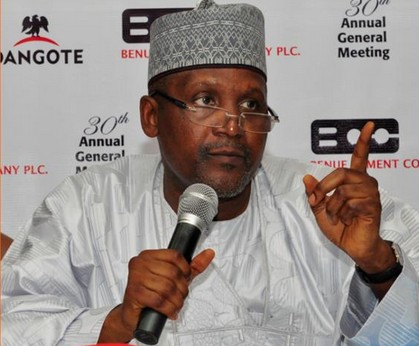

 Borno State Governor, Alhaji Kashim Shettima has said that despite the continued suicide bombing in Borno state, there is cause for celebration against the background of the situation about two years ago.


The Restructuring Bogey And Its Latter Day Disciples, By Peter Claver Oparah
Such jarring contradiction is written all over the present syndicated clap-trap about restructuring and the noisy manner in which it is being clamored for. The paradox in the present clamor obtains in people who, up till 2015 were sitting on the very zenith of power being the loudest and the most insistent in declaring that it is either Nigeria restructures now or heavens will fall. The contradiction that those who till yesterday, employed power for the corrupt benefits it served them but are today whelping about restructuring as if their lives depend on it, is so obvious. Yes, their political lives that were abbreviated with the historic electoral decision Nigerians took in March 2015 depend on the new-fangled restructuring they are yakking about. Yes, their power to sit in high political positions and employ same to freeload and plunder hangs on this chaotic demand for restructuring. For sure, their loud claim to relevance, which came to an abrupt end when their electoral ship wrecked in 2015, hangs on the restructuring clamor they have made their war cry today. We have to grant them such rights but that has not given any road map on restructuring. That has not shown any clarity on what they mean when they talk about restructuring.
But then, what is it in the restructure bogey those that were our slave masters till just yesterday have now made their clarion call? What is it for ordinary and storm-tossed Nigerians, in the present orchestrated noise about restructuring? What is it for the long suffering masses in this new fad about restructuring? What is it for a country that is going through a painful mending process from the vicarious plundering these same choristers carried out before 2015? No one is telling us what our cut is in the present noisy clamour. No one is telling the famished masses what they stand to gain should the country accede to their noisome demand. No one is telling the poor, harassed masses what significantly they stand to gain if the country restructures. Most importantly, no one is providing any clarification on what the restructuring is all about, how the country wants to go and what makes this the only option left for a country that had been pulled through consistent series of corrupt, rudderless and inchoate governance since independence.
Nigerians are not being told what the clear results of such hackneyed option to dealing with the malignant tumor of horrible leadership would translate to them. The proponents of the present war cry of corruption or nothing are the same people that despoiled the country and vandalized it to the bones before 2015. Immediately they were rusticated out of power, the shards of mischievous wisdom struck them and they suddenly discovered the urgent need for Nigeria to restructure or go down. The hypocrisy in the present call is that no effort is being made to break down the restructuring mantra to clear, understandable format, with clear indication of what each people or component group stands to gain from this bogey. The dubious intent in the present clamour is that those who have very blurred or no knowledge of the term are the most agitated proponents today. Those who have spent their entire political lives, fighting against and frustrating the demand for restructuring in the past are the most fanatical proponents today. In the sequel, it is understandable why there is such blurred understanding of the topic today.
Most importantly, many Nigerians are asking which practical ways Nigeria can restructure to meet the not-so-clear intents of those hawking the restructuring totem today as if it is their second god. Ask any of the noisy hawkers what we will gain from restructuring and you hit a brickwall. Ask them the conceptual clarity in their demand and you meet a bulwark. Most significantly, what happened between March 2015 and now to make restructuring the only cure-all panacea to Nigeria’s problems? What is it that made restructuring so unattractive before 2015 but which makes it critically imperative two years after? What deep fracture had happened between 2015 and today that has placed the life of the country on the sole life-saving machine of restructuring? What ill, what injustice, what wrong has Nigeria found it will never live with after 2015?
When you gloss through these posers, you discover that the only thing that happened was that PDP and its gargantuan corruption complex, were offloaded off power. The only thing that has happened between 2015 and now is that free-loading and immense looting of the country’s resources has been capped. What happened between 2015 and now is that the perennial locusts and vampires that live off the resources of the state have been rendered jobless. The only thing that has happened between 2015 and now is that the same group of people; either in the North, South, East or West who live off stealing what belongs to the whole has been thrown out of power, for the first time in Nigeria’s history. You can therefore locate the present syndicated cry for a restructuring no one has really broken down to understandable level to this historical reality. You can now understand why those that have lived their entire lives opposing the demand for restructuring are the ones raising strident calls for it today. The above were the reasons why restructuring has become so attractive to the same leaders of PDP who were in power for 16 whole years and who rather employed power as a tool to satiate their corrupt carnal cravings. When fully grasped, the restructuring bogey we have today is a distractive mantra to distract the present government and soften the ground for the re-launching of the cabal rusticated through the 2015 election and ease them into power once again. The restructuring bogey we have today is nothing more than a political strategy and has no intent to better the lots of Nigerians.
The tragedy is that some people see the demand for restructuring as a North versus South war fare which is just a way politicians across board divide their victims and recruit them to fight for them. If restructuring is a southern agenda, why did the country not restructure for the 14 years the South held power under Obasanjo and Jonathan? Why is it that the kingpins of the present restructuring who were loud players in this era did not seize that golden opportunity to restructure Nigeria to the desirable format in this long historical stretch? Why is that the so-called ‘Southern and Middle Belt leaders’ who enjoyed the booty of that era and are now belching sterile hot airs, didn’t employ that benevolent opportunity to restructure Nigeria to the desired taste they are prescribing today?
It is right to mention that when the South West was making this demand for restructuring in this fourteen years period, it was shouted down by those who today masquerade as Southern and Middle Belt Leaders. Of course, they wanted to savour the sweet aroma of power then. The ring leaders of these desperate campaigns forget their northerness and southerness when they loot and quickly remember their unique identities in seeking selfish options to their problems. In recruiting their victims into doing their dirty jobs, they exhume their sectional identities and wear them like badges of honour. That is what the so-called ‘Southern and Middle Belt Leaders’ did when what unties them was the fact that they were parts of the horrendous PDP vandalism that happened the other day. They were very prominent in the ultra corrupt scheme to perpetuate the last regime in power and they were handsomely rewarded for such dirty efforts. As they were doing that; just two light years ago, Nigeria was a perfect state. As soon as Nigerians disappointed their selfish political cravings, they saw the fault lines in Nigeria, which only restructuring can solve and they have made a war cry of it that all Nigeria’s problems would be solved only if we restructure. What bland hypocrisy!
The above shows that there is no sincerity, no patriotism and no honesty in the present blurred demand for restructuring so it is neither meant to solve any problem nor serve the country any fruitful benefit. It is a selfish quest for rehabilitation by a cabal that does not fathom life outside power for the generous stealing rights it guarantees them. It is a strategy to shout themselves back into reckoning and create rehabilitative platforms they believe, can launch them back into power. It is no coincidence that the same principalities that domesticated power for very ulterior motives for the 16 years the PDP debauchery lasted are the most noisome today in the chaotic demand for restructuring. It is not happenstance that the very people who, through deliberate acts and schemes, frustrated the genuine call for restructuring for 16 years are the same people making ominous threats should the government not concede to their weird appropriation of restructuring.
To be fair to them, it is the Yorubas that have consistently clamored for a restructuring of the country. This call is espoused in all their demands from the Nigerian state in the many fruitless constitutional conferences that have been held especially since the annulment of the June 12, 1993 election. The other component units or tribes, either because of lack of clarity in the call or because they find no real attachment to it, have bandied against and defeated such demand. The Yoruba call for restructuring is firmly anchored on their demand that Nigeria revert to regional governance and this demand hardly saw the light of the day because other Nigerians, rightly or wrongly, did not buy into it.
But then, since Afenifere, the socio political group that had hitherto served as the mouthpiece of the race decided to sell itself off to the erstwhile Jonathan government and become a subset of the PDP, this marked the end of the clamour. The meeting of the individual interests of Afenifere members in exchange for working for the continuation of the Jonathan and the PDP era became a more attractive project Afenifere embarked upon in 2015 but it sank with that project and with it, the originality of their demand for restructuring. Not that it marked the end of restructuring but the capitulation of Afenifere robbed restructuring of the needed conceptual clarity that should drive the debate. In the absence of this clarity, what we have today is a noisome clanging by those that lost their deposit in the last election and the clanging is by way of distracting the present government than achieving anything. That is why there is this chaotic and hardly agreeing riot amongst the agitators such that restructuring has today become that mythical elephant felt by seven blind men.
God, be thanked, the APC, which holds the biggest chunk of the stick, being the party in power, has come out to clarify its position on restructuring and has indeed set up a ten-man committee to fine tune and present its position on restructuring. That serves as the most practicable answer to the restructuring bogey being presently syndicated all over the place by those that lost power in the recent election. All those entertaining the thought that they will noisily stampede or blackmail a ruling party to adopt steps they never dared take when they were in power, should do well to wait for the APC to come out with their roadmap to restructuring the country as that remains the only viable option in meeting the demands of this syndicated noisome clamour.
Peter Claver Oparah wrote in from Ikeja, Lagos and can be reached on: peterclaver2000@yahoo.com
[myad]