AG PRESIDENT OSINBAJO PRESIDES OVER FEC 0A&B. Acting President Yemi Osinbajo brief State House Press on his visit to the President Muhammadu Buhari in London before the Federal Executive Council Meeting at the State House in Abuja. PHOTO; SUNDAY AGHAEZE/STATE HOUSE. JULY 12 2017
Nigeria’s version of Paparazzi, the inquisitive media men and women covering the Presidential Villa, accosted Acting President Yemi Osinbajo today, Wednesday, on his way to preside over the weekly meeting of the Federal Executive Council (FEC) with barrel of questions, on his few hours trip to London to see ailing President Muhammadu Buhari. And they got him talking.
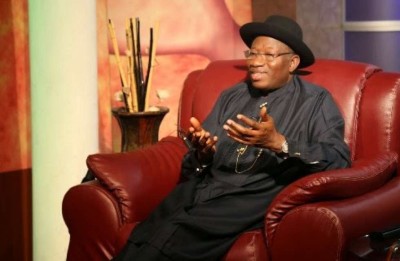
Former President Goodluck Jonathan has described the Peoples Democratic Party (PDP) as a party that gave Nigeria the largest economy in Africa even as he asked Nigeria to appreciate it.
Jonathan, who was reacting to the Supreme Court ruling that confirmed ex-Kaduna State Governor, Ahmed Makarfi as the national chairman of the PDP, remarked: “the party that gave Nigeria the largest economy in Africa is a party whose heart is large enough to find a place for all Nigerians.”
The former President, in a congratulatory message on his Facebook page, said that though there are issues with some individuals but that the Supreme Court ruling signifies “no winners no vanquish.”
He advised Makarfi to run an all-inclusive policy, even as he begged those who decamped to other parties due to the leadership crisis to return.
“I congratulate my political party, the Peoples Democratic Party, on the successful resolution of its leadership crisis by the Supreme Court of Nigeria.
“I believe in our jurists. We may have issues with some individuals but the Nigerian judiciary deserves our respect and commendation. They have served this country well.
“Today’s verdict is a judgment where there are no winners or losers. It is a verdict that will bring our party together. We should all thank the Supreme Court of the Federal Republic of Nigeria.
“As I congratulate the Ahmed Makarfi led Caretaker Committee, I want to strongly urge them not to see this as a victory of a section of the party, but as a moral victory of constitutionality over arbitrariness.
“Thus, they must take inspiration from General Yakubu Gowon and declare a ‘no victor and no vanquished policy’.
“As a senior member of the party, I hereby call on all those who left the party because of its leadership issues to return to their natural home and build the PDP.
“The PDP is an inclusive vehicle not an exclusive one. We see Nigerians as human beings deserving of the rule of law, separation of powers and a free market economy that provides a level playing ground for all.
“I thank God for this day of Justice and may God bless Nigeria. GEJ.” [myad]
“The president of the republic has enormous responsibilities. As such, his culpability is also enormous when he commits crimes.
This was the reasoning by the Judge of a court in Brazil, Sergio Moro, who found the country’s former president, Luiz da Silva, guilty of corruption and money laundering and sentenced him to almost 10 years in prison. The verdict came as a shocking reversal of fortune for da Silva who wielded far-reaching influence across Latin America for several years.
He was the President of the largest country in South America from 2003 to 2010.
The judge said that da Silva’s actions were part of a “scheme of systemic corruption” in Petrobras.
Mr. da Silva, was convicted for receiving $1.1 million, alongside his wife, in improvement and expenses from a construction company in exchange for contracts from the state-owned oil company, Petrobras.
The scandal alongside several others led to Mr. da Silva’s successor, Dilma Rousseff, being impeached from office by the country’s senate last year.
He has dismissed the allegation as a “farce” and has announced he would run for the country’s presidential election next year.
Though Mr. da Silva can appeal the conviction, it will, however, pose a serious obstacle for a possible political comeback..
Mr. da Silva’s conviction is a continuation of the move by the country’s judiciary to purge the country’s political class of corruption.
Last month, the incumbent president, Michel Temer, was also charged with corruption.
The Kogi State chapter of the Nigeria Union of Teachers, NUT, has staged a protest over the handing over of teachers’ salaries and allowances to Local Government councils.
NUT officials from all the 21 local government areas in the state gathered at the state secretariat of the union in Lokoja, carrying banners and placards, part of which read: “Kogi NUT says No! to funding of primary education by local government councils, they have no capacity to pay primary school teachers,” “Save Primary education from imminent collapse,” “we say No to the dark era of nonpayment of salaries,” among others
Addressing the news men during the protest match, the state chairman of the union, Comrade Suleiman Abdullahi said the NUT is not against the granting of autonomy to local governments, but that their grudge is that their salaries and allowances should not be handed over to the councils.
He said that the national headquarters of the union has taken the matter before the National Assembly to either handover basic education teachers’ emolument to Universal Basic Education Commission, UBEC, at Abuja or to state governments, as experience has proved that local councils would not pay teachers.
The NUT chairman referred the National Assembly to a Supreme Court ruling contained in the Nigerian Law Reports of 6th May 2002, which held that administering of UBE was the responsibility of state governments and that local councils only come in as participants. [myad]
The Presidency has asked the minister of Finance, Kemi Adeosun, to release the sum of N1.6 billion to 15 states of Nigeria that were ravaged by floods. According to Femi Adesina, Special Adviser to President Muhammadu Buhari on Media and Publicity, the move is to help cushion the effects of the disaster on Nigerians. Adesina, who was briefing news men State shortly after the Federal Executive Council (FEC) meeting, presided over by Acting President Yemi Osinbajo at the Presidential Villa, Abuja, said that the money would be taken from thr Federal Governent’s Ecological Account in thr Central Bank of Nigeria (CBN). He said that the Minister of Finance has been directed to release the money to the National Emergency Management Agency (NEMA) for onward distribution to the affected states. The states to benefit from the federal government’s largesse are: Ekiti, Kwara, Lagos, Bayelsa, Enugu, Sokoto, Ebonyi Akwa Ibom, Osun, Kebbi, Niger, Abia, Oyo, Plateau and Edo.
This piece shares title with a 1960 Argentine drama film directed by Leopoldo Torre Nilsson, which depicts the political corruption in Argentina in the 1930s, a period referred to as the “Infamous Decade.” The decade, which began in 1930 with the coup against President Hipolito Yrigoyen by Jose Felix Uriburu, culminated in the ascension to power of Juan Peron after the military coup of 1943. The decade was marked by rural mass movements, worsened by the 1929 Great Depression, which had decimated rural landowners and pushed the country in the direction of import substitution industrialisation. Another coup was executed in 1943 due to popular discontent in response to the poor economic results of the policy. Tagged the “Revolution of ‘43,” the coup was masterminded by the Grupo de Oficiales Unidos (GOU), the nationalist faction of the Armed Forces, against the acting president Ramon Castilo, hence putting an end to the “Infamous Decade.” Electoral fraud, persecution of political opposition leaders and government corruption characterised the period, against the backdrop of the Great Depression, which was a severe global economic depression that lasted until 1941, presenting the longest, deepest and most pervasive depression in the 20th century. There is, indeed, a similitude between the Argentina’s debacle under reference and Nigeria’s current experience. Nigeria slid into recession last year. The All Progressives Congress (APC)-controlled federal government is yet unable to get the country out of it. A national leader of the party, Asiwaju Ahmed Bola Tinubu, in March this year, advised the federal government to ease the monetary policy in order to stimulate the economy. In a paper to course participants at the National Defence College in Abuja, titled: “Strategic Leadership: My Personal Theory and Practice,” Tinubu explained that the monetary policy must be consistent with the environmental needs of our domestic requirements. He had argued that too much is tied down and advised the federal government to spend itself out of this recession; and that it cannot do that by consistently stifling the banks of liquidity. Has government heeded Tinubu’s advice? How significantly has government intervened to push up market demand by undertaking public works? Only N350 billion has reportedly been released for capital projects. What is the percentage of that in the 2017 budget of N7.4 trillion? And what is the level of performance of the N350b released vis-à-vis the implementation of the projects to which the release is tied? Besides, how many Nigerians have been employed or financially empowered through this intervention for capital projects development? How many local companies which depend on locally-sourced raw materials are factored into this special intervention package? Or is it another opportunity for foreign construction companies to make easy money and repatriate the same to their home countries? I am not an economist. I do not understand the plethora of economic concepts, principles and terminologies or jargons, which economy experts daily deploy to explain how our economy is working. We are so easily bamboozled by statistics, especially from the National Bureau of Statistics (NBS). The NBS’ verdict is that Nigeria is the largest economy on the Africa continent and the 26th in the world with its rebased Gross Domestic Product (GDP), which, as of April 2014, stood at US$509.97 billion (N80.2 trillion). But my attitude towards economic development, which refers to the problems of under-developed countries, is very simple: let us see how well the masses are faring. How has the rebased GDP transformed our economy and the various aspects of our nation, especially the lives of the individual citizens? How has it attacked widespread absolute poverty? How has it reduced inequalities and removed the sceptre of unemployment? That, in spite of the “biggest economy’ status, Nigeria still slid into recession is evidence of how superficial and vulnerable the economy is to absorb shocks both at the micro and macro levels. Businesses are collapsing on daily basis. Prices of goods and services are consistently going up. Purchasing power of citizens is ebbing away. Job losses have become daily occurrences. The number of people earning money is decreasing. The gap between the rich and the poor has grown much wider. A vast majority of Nigerians are under financial pressure and unable to meet their basic needs. There is pain on the faces of the people and anguish in their hearts. The scenario painted supra is symptomatic of leadership failure and economic upheaval. In pre-1999 Nigeria, such a scenario would have provided an objective condition for leadership overthrow. But post-1999 Nigeria is averse to that. The democratic foundations have been laid and there is evident commitment by all to nurture the building of democratic structures in the land. Validation: Nigerians stringently condemned, some months ago, the statement by the Chief of Army Staff, Lt. General Tukur Buratai, hinting at an unholy relationship between members of the political class and high-ranking soldiers. Although, the impression created was that of a possible coup in the offing, Nigerians ferociously kicked against it, anyhow. Defence Headquarters also reined in to debunk the coup rumour. Now, assuming, just for the purpose of argument, that coup has now become impossible in Nigeria, what is the APC-controlled federal government doing to avert the looming tsunami of people power in the 2019 general election? The people are disenchanted. The APC government has not been able to fulfill up to 10 percent of its campaign promises; and, instead of meaningfully engaging the people through cogent explanations, not Lai Mohammed’s chicanery, it is living in self-denial. I can safely vouchsafe that on the balance of probability, the Nigerian people should not expect anything spectacularly different from the current half-measure offerings before 2019, judging by the lingering lacklustre performance of the APC government. The president, Muhammadu Buhari, is out of action due to ill-health. The Secretary to the Government of the Federation, Babachir Lawal, is on suspension due to a contract scam. Two of the critical positions in government are, unfortunately, encumbered. Some cabals in the presidency, rather than support the acting president, to prudently set its priority right by focusing on “the economy, stupid” in this recession period so as to turn things round for the betterment of Nigerians, are fighting dirty to survive the cloak-and-dagger politics in furtherance of their enlightened self-interests. Why should the Presidency and the National Assembly, for instance, be flexing muscles on whether or not Ibrahim Magu would remain chair of the Economic and Financial Crimes Commission (EFCC)? There is no harmony between the executive and the legislative arms. The administration is on a free course to immolation. It is, indeed, inopportune that the APC government has, up until now, been its own opposition. Its elected leaders can decide to shut down their government. That is their problem. As far as I am concerned, the APC party is over. And this assertion is reinforced by the July 12, 2017 Supreme Court judgment resolving the leadership tussle of the Peoples Democratic Party (PDP) in favour of the Senator Ahmed Makarfi faction. I welcome resilient Nigerians to a robust and focused oppositional politics that we expect the PDP to play. For us, the voter cards, the power to decide our destiny, are firmly in our hands, and with the cards, we should put an end to this mumbo-jumbo that the APC has foisted on us since 2015. We should heed the lines of Willie Nelson’s song “The Party is over” to “Turn out the lights…” We should allow God to use us to save Nigeria-through our votes in 2019.
The government of Muhammadu Buhari has resolved to pay a total of N2.7 trillion Federal Government contractor and employee liabilities inherited from 1994 The liabilities are made up of N740 billion of outstanding pensions and promotional salary arrears (not discounted) and N1.93 trillion (discounted) of other obligations, including dues to Federal Government contractors and suppliers. These facts emerged at the Federal Executive Council (FEC) meeting today, Wednesday, where the nation’s finance minister, Kemi Adeosun gave details of the accumulated debts and liabilities. The Economic Management Team, under the leadership of Acting President Yemi Osinbajo, had mandated the Minister of Finance to Chair a Committee that would establish a process to confirm the validity of inherited Federal Government obligations, and propose a mechanism to resolve them. Giving the report of the committee to FEC, Adeosun said that the supplier and contractor obligations will be resolved through a strict process of final validation, following which those confirmed will be settled through the issuance of liquid promissory notes (ten-year tenure) phased over a three-year period to minimise impact on liquidity and with preference given to those willing to offer the largest discounts. She said that obligations owed to individuals, including pensions and employee benefits, would be resolved through the issuance of specific bond instruments, to be phased over the next 3 years. “These obligations will then be incorporated into the Medium- Term Expenditure Framework by the Ministry of Budget and National Planning.” “Obligations accumulated over the last two decades to be paid through bond and promissory note issuance to resolve long outstanding dues and stimulate economic activity “The proposed validation process, promissory note and debt issuance programme to resolve a number of inherited and long outstanding Federal Government obligations to contractors, State governments and employees. will be followed by a request to the National Assembly to approve the programme ahead of implementation. “These obligations largely consist of dues owed to State governments, oil marketers, power generation and distribution companies, suppliers and contractors by FG parastatals and agencies, payments due under the Export Expansion Grant (EEG), outstanding judgement balances as well as pension and other benefits to Federal Government employees. Some of the obligations date back as far as 1994. The resolution of this will significantly enhance liquidity in critical sectors of the economy.” Speaking to news men shortly after the the FEC meeting, Adeosun said: “we cannot get our economy moving at the pace we need to if we do not address the legacy issues we have inherited, which act as a significant drag on economic activity.” She said that the government would want to be a driver of growth to enable private sector to be active, adding that it is should not be the most significant obligor to many value creating businesses. “At the same time, we have an obligation to our Federal Government employees to address these long-outstanding pension and employment benefit issues. We are doing this systematically, and we want to do so once and for all. We are enhancing the Government’s controls and processes to ensure we do find ourselves in this situation again. “Over the last two decades the Federal Government has built up over N2.7 trillion of obligations which were not cash backed, and remain outstanding to this day. We have developed a solution that will simultaneously resolve these issues, and deliver a boost to economic performance. Our solution will remove the drag on economic performance these obligations cause, improve liquidity in key sectors, especially the power sector where we will resolve FG dues to the distribution and generation companies, and so boost investor confidence. “It will also help to improve non-performing loan ratio’s in the banking sector, where an unacceptable number of NPL’s are linked to Government contracts.” [myad]
Acting President Yemi Osinbajo, fresh from his visit to President Muhammadu Buhari in London, has given hope that the President will return to resume his official duties sooner than anyone would think.
“He is recuperating very fast and we expect him very shortly more sooner perhaps than you expect.”
Osinbajo, who dashed to London yeterday, Tuesday to see Buhari and returned late the same day, told news men today, Wednesday, went to see the President to check up on him and find out how he was doing. . He said that although he had been speaking to him on phone but thought it woul be a good thing for him to go and see him and also brief him on developments back at home.
“So we had a very good time , we had a good conversation on wide ranging issues. He is in a very good spirit; he is recuperating very quickly and he is doing very well.
Professor Osinbajo, who has been acting President since May 7 when Buhari went on medical vacation in London said that President Buhari is expected back in the country “very very soon. I think we should expect him back very shortly because he is recuperating very fast and very very well.”
The acting President hinted that he and Buhari discussed wide ranging issues which he said: “I can’t go into specifics.” [myad]
Minister of Power, Works and Housing, Babatunde Fashola has made it clear that the misunderstanding between him and National Assembly is not a bitter one but a sign of healthy democracy in action.
The minister, who fielded questions from reporters at the Presidential Villa, Abuja, said that there is no problem between him as an individual and the National Assembly.
“And let me make that very clear: many of the senators and honourable members are my personal friends, and so you don’t fight your friends.
“But, we have a disagreement. And the context of that disagreement: you will remember when President Muhammadu Buhari launched the economic recovery and growth plan, he had enormous support from the leadership of the National Assembly. So it means that we all agree there is a problem. There is also disagreement which I don’t think should make us disagreeable about the best way to implement that plan and I think that is all there is to it.
“It is perhaps possible that in the heat of the moment while trying to canvass different positions we are misconstrued as fighting but I am not fighting anybody. We have a disagreement it shouldn’t make us disagreeable.
“So, my responsibility is to continue to engage. Also even if I wasn’t a minister, I am a citizen also so the parliamentarians are also representing me. So these are the issues and if I have been misunderstood, my intention was not to quarrel with anybody but to see a better Nigerian which I believe they also want to see.”
Fashola, who described the disagreement as being very healthy, said that such disagreement is not on who should head what, but on who should take what share of the National came, but that they are disagreeing only on how to develop Nigeria.
“And for me that is a very healthy development of our democracy.
“I’m sure with the leadership of the National Assembly- Senate President, speaker of the House of Representatives, the principal officers and the Acting President, we will resolve this in the ultimate interest of the Nigerian people.”
On how much will the private sector deliver given the myriad of challenges, the minister said that the private sector has always been in any economy with a capital disposition, the driver of growth, adding that the driver of development and ultimately government must interface with the private sector.
He said that the present presidential quarterly business forum has been established to hear from the private sector where the shoes pinches most and where the government can make it easier and better.
“And it is only by understanding problems that we can then offer quality solutions which will include executive actions, sometimes legislative actions, sometimes judicial interventions as I have announced today as a mixture of government’s policy options to help private sector do its best. Our focus has been on ease of doing business.” [myad]
The decision of the National Convention of the party held on May 21, 2016 in Port Harcourt was right to have removed Senator Ali Modu Sheriff as the Chairman of the party being the highest decision-making organ of the party.
This was the verdict of the Supreme Court today in Abuja that sacked fighting Senator Ali Modu Sheriff and confirmed Senator Ahmed Makarfi as national chairman of the Peoples Democratic Party (PDP).
Delivering the judgment today, Wednesday, Justice Bode Rhodes-Vivour on behalf of the five-man panel of judges, set aside the ruling of the Court of Appeal in Port Harcourt that affirmed Senator Ali Modu Sheriff as the Chairman of the party. The court ruled that Senator Sheriff was wrong to have called for the suspension of the convention having submitted himself as an aspirant to contest for the National Chairman of the party. The court held further that Sheriff decision to suspend the National Convention was predicated on his disqualification by the screening committee set up to screen all the aspirants seeking the chairmanship of the party. The judgment has put to rest the protracted leadership tussle rocking the party since the former chairman Adamu Muazu left the party in an abrupt manner when pressure was mounted on him by the stakeholders of the party after losing the 2015 Presidential election. Meanwhile, there was wild jubilation at the court by PDP leaders and supporters of the Makarfi led faction who were present in court. PDP faithful present in court includes governors Nyesome Wike of Rivers and Ayo Fayose of Ekiti as well as former governor of Kano State, Ibrahim Shekarau. Other PDP bigwigs include Ahmed Markafi, Senator Ben Obi, Bode George, Dayo Adeyeye, Jerry Gana, and a former deputy speaker House of Representatives. Sheriff was absent during the judgment. [myad]
We use cookies on our website to give you the most relevant experience by remembering your preferences and repeat visits. By clicking “Accept”, you consent to the use of ALL the cookies.
This website uses cookies to improve your experience while you navigate through the website. Out of these, the cookies that are categorized as necessary are stored on your browser as they are essential for the working of basic functionalities of the website. We also use third-party cookies that help us analyze and understand how you use this website. These cookies will be stored in your browser only with your consent. You also have the option to opt-out of these cookies. But opting out of some of these cookies may affect your browsing experience.
Necessary cookies are absolutely essential for the website to function properly. This category only includes cookies that ensures basic functionalities and security features of the website. These cookies do not store any personal information.
Any cookies that may not be particularly necessary for the website to function and is used specifically to collect user personal data via analytics, ads, other embedded contents are termed as non-necessary cookies. It is mandatory to procure user consent prior to running these cookies on your website.



 Former President Goodluck Jonathan has described the Peoples Democratic Party (PDP) as a party that gave Nigeria the largest economy in Africa even as he asked Nigeria to appreciate it.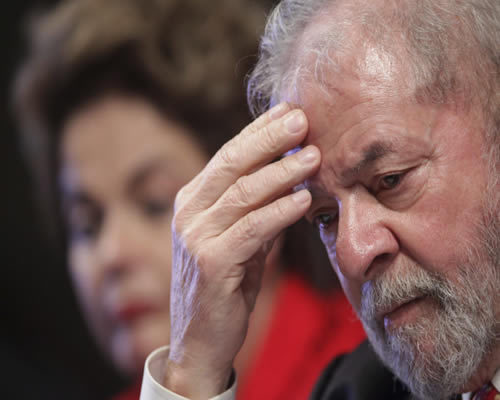
 The Presidency has asked the minister of Finance, Kemi Adeosun, to release the sum of N1.6 billion to 15 states of Nigeria that were ravaged by floods.



