Home Blog Page 1536

Of Budget Padding, Executive Revulsion And Legislative Arrogance, By Sufuyan Ojeifo

Saraki Buhari dogara

At their respective plenary on Thursday, June 15, 2017, the Senate and the House of Representatives played the devil’s advocates with respect to the extent they could go in considering, scrutinising and altering the provisions of appropriation bill presented to them for approval by the president.  They superciliously defended their repugnant act of budget padding and, almost, succeeded in trivialising the serious matter.

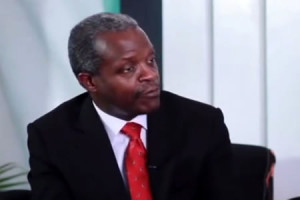
Deputy Majority Leader, Senator Bala Ibn-Na’Alla (APC, Kebbi), and Hon. Lawal Abubakar (APC, Adamawa), in their motions on the floors of the Senate and the House of Representatives, called attention to a statement allegedly credited to the acting President, Professor Yemi Osinbajo, to the effect that the National Assembly has no powers to introduce new projects in the budget before passing it.

Osinbajo was quoted to have said while signing the 2017 budget on Monday, June 12: “The first report is about who can do what. When you present a budget to the National Assembly, it is presented as a bill, an appropriation bill. And, secondly, do not introduce entirely new projects and all of that or modify projects. This is something that we experienced last year and this year again. It now leaves the question about who is supposed to do what.”

I presume that this may be the true position and correct interpretation of the constitutional provisions regarding the limits of legislative power and control over public funds or appropriation.  Doubtless, Osinbajo’s concern centres on responsibility, liability and due process.  The budget is the fiscal policy document of the Federal Government but bears the evidential imprimatur of the executive branch, which has the responsibility to implement it in line with set objectives.

If the executive branch fails to implement the budget as proposed, it would receive the flaks. That is liability.  Interestingly, the executive has, over the years, been receiving the flaks for failure to implement, 100 percent, the budgets as always, but rather unfortunately, altered by the National Assembly.  The blame should have been placed at the doorsteps of both arms of government. This is the reason it matters a great deal for proposers of budget to be different from their approvers.

The Constitution is clear about the responsibilities and powers of the three arms of government.  And because of the possibility of acting ultra vires, there is the provision for checks and balances in the exercise of the separate and disparate powers of the trinity of the executive, the legislature and the judiciary.

When an arm of government continues to appropriate to itself the powers that are not expressly vested in it by the Constitution, steps should be taken to seek judicial intercession to find out if the extra powers are implied and/or discretionary. After 18 years of this controversy, this is what Osinbajo should now do, beyond frowning at the characteristic insertions by the National Assembly of new projects into the appropriation bills presented to it by the executive.

Assuming, arguedo, that the acting president did not even make that observation; that does not detract from the fact of alterations to which the legislature has always subjected the national budget submitted to it by the president.  True, nothing prevents a dispassionate contemplation of the issue by well-meaning Nigerians who crave the passage of a well-considered budget that is aimed at stimulating the nation’s socio-economic and political growth.

As a layman, I hold the view that Osinbajo’s position cannot, therefore, be said to be erroneous within the ordinary understanding of the provisions that are amply referenced in section 59 under “mode of exercising federal legislative power money bills” and sections 80-83 of the 1999 Constitution (as amended) 2011 under the powers and control over public funds.

It is very clear that the power vested in the legislature, according to the explanatory note of section 81, is that of “Authorisation of Expenditure” and not the usual power to prepare, make or alter the proposals of the executive as contained in the appropriation bill.  Much as the approval issue is moot, it has historically and largely accounted for the perennial frosty relationship between the executive and the legislature since 1999.

The legislature has always altered the provisions of the budget and inserted projects, which were originally not captured by the executive. But to be sure, the legislature is not the executive. Therefore, the intervention of the judiciary by way of judicial interpretation of the relevant constitutional provisions will help to properly define whether appropriation, being a special bill, should be placed, strictu sensus, in the context of authorisation/approval or the full process of law-making such as to warrant the insertion of about 4,000 new projects as happened to the 2017 budget.

On the other hand, the executive is not the legislature; and, it is, consequently, constitutionally circumscribed from approving its own proposed budget estimates; otherwise, it would not need to submit the same to the National Assembly.  The approving body is the legislature, which should ideally never contemplate the introduction of new projects into the budget, except it had lobbied for and harmonised such projects with the executive during the budget-making process.

It is against the backdrop of the above that the action of the legislature to insert entirely new projects in the budget derogates from its constitutional power of authorisation/approval and represents the usurpation of the power of proposal exercisable by the executive.  This does not, in my views, limit the relevance of the legislature in the budgetary process. Rather, it gives the legislature the opportunity to effectively scrutinise the bill, and be in a better stead for oversight during the implementation phase.

The intendment of the framers of the Constitution was not to turn the legislature into a rubber-stamping body. The primary purpose is to ensure that the budget proposals reflect a national outlook, connect promises to actions and stimulate real economic growth which is underpinned by equality and justice in the distribution of infrastructure development projects and creation of income and wealth.

In doing that, the legislature works within the policy framework of the budget presented to it.  The budget figures are not padded or distorted.   But it can query allocated funds on the projects proposed by the executive and get the buy-in of the executive to either increase or decrease budget figures.  Indeed, new projects are not to be introduced into the budget in the misconstruction of its power of approval, which does not include the freedom to insert entirely new projects without recourse to the executive.

What should be done in the circumstance in which the legislature is interested in the inclusion of some projects in the budget is to activate pre-budgeting consultations in order to synergise with the executive through the Budget Office before the appropriation bill is presented by the president to the joint sitting of the legislature for consideration and approval.

The responsibilities of the executive include making proposals and implementing the budget. It is not for nothing that the legislature is empowered to authorise or approve and this is an important power which it can never ever delegate. But the legislature cannot usurp the executive function of proposing projects in the budget and, at the same time, is the one to approve it and conduct oversights on the same budget.

I believe that the intendment of the framers of the constitution ab-initio was not to create the seeming mischief. But since the controversy has assumed a life of its own and lingered for far too long, the judiciary should be invited to cure the mischief by giving a clear interpretation of the laws in this respect. The acting President is urged to pursue this course of action.


Femi Adesina Celebrates Fathers Day With His Pilot Son

adesina and son

The special adviser to the President Muhammadu Buhari on Media and Publicity, Femi Adesina on Monday, June 19, 2017, celebrated fathers day in arrears with his pilot son, Oluwatobi Adesina. 

Adesina revealed his pilot son picture through his Facebook wall captioned: “FATHER AND SON IN THE COCKPIT.” 

He opined “On Monday, June 19, 2017, a day after Fathers Day, I had the privilege of being flown for the first time from Lagos to Abuja by my son, Oluwatobi Adesina, who is a pilot with Arik Airline. It was truly an extension of Fathers Day, as I had the privilege of sitting in the cockpit.”

“Did I see anything as the Boeing 737 cruised through the azure sky? Not the foggiest thing. The wonders of our God, and of technology. To Him be all the glory.” [myad]


JAMB 2017: Matters Arising, By Reuben Abati

Reuben Abati
Reuben Abati

I attended a meeting recently at the headquarters of the Joint Admissions and Matriculation Board in Bwari, Abuja: the post-2017 Unified Tertiary Matriculation Examination review meeting chaired by the JAMB registrar, Professor Ish-aq Oloyede. Participants included Professor Oloyede and his technical team, field officers and other staff, all the Chief External Examiners who supervised the 2017 UTME, across Nigeria, mostly Vice-Chancellors of universities, and provosts/rectors of polytechnics and colleges of education, in addition to major stakeholders from civil society.

The JAMB Registrar presented a detailed report on the conduct of the 2017 UTME, matters arising were identified and the meeting took certain decisions about the way forward, the details of which have since been published.  The 2017 UTME was conducted throughout Nigeria between Saturday 13th and Saturday 20th May 2017, at 140 examination centres, 642 Computer-Based Test Centres, with 7,000 invigilators and monitors and 1, 722, 236 candidates.

It was the first examination to be conducted under Professor Oloyede’s watch as JAMB Registrar.  He was full of appreciation for the efforts and contributions of everyone, including the civil society and security agencies who helped to ensure the success of the examination. The meeting noted that Oloyede and his team had also done an excellent job in organizing a commendable Computer-Based Examination across the country. In recent years, JAMB has insisted on computerizing its examinations, and under Oloyede, there has been not only an emphasis on this but also on the integrity and credibility of the examination. The Report presented by the JAMB Registrar was comprehensive, confident and informative.

In 2017, JAMB examined the highest number of candidates in its forty years of existence: 1.7million, with the highest number of participating external officials and monitors. The first point the meeting noted however, was that the figure of 1.7 m does not actually reflect the true number of candidates who sat for the examination. More than 300, 000 of the candidates engaged in double or triple registration, and where it could be established that any candidate sat for the examination more than once, such a candidate was automatically disqualified. A total of 666 cases were reported in this regard.

For planning purposes, the figure of 1.7 m was misleading, a fact that was worsened by the fact that more than 50% of the candidates do not even have the pre-requisite qualifications, and in reality, more than 70% of all candidates applied for courses in the Arts and Social Sciences, whereas for national manpower development purposes, the expectation is that the Sciences should produce up to 70%.

The message here is clear:  higher education admission processes ought to reflect the country’s manpower needs, and there is no doubting the fact that at the moment, there is a mismatch between our country’s manpower production processes and the job market, and this is perhaps in a way responsible for the country’s unemployment crisis. As it were, Nigeria’s higher education system produces graduates that do not fit into the demands of the job market.

Oloyede was more agitated about matters of integrity, credibility, accountability and transparency. He asked the meeting to take a close look at cases of examination irregularities and malpractice and take a decision. We were informed that a total of 1, 386 candidates all properly identified and documented were guilty of the following offences: impersonation, possession of prepared answer scripts, smuggling of foreign materials into the examination venue, possession of electronic gadgets including telephone, copying and spying from foreign materials, unruly behaviour, violent conduct, collusion, multiple registration and examinations.  We were all shocked when Oloyede asked his staff to present to the meeting, concrete evidence of examination malpractice. We were shown shirts, with presumed answers written out in the inner lining, slippers, belts, handkerchiefs, and all kinds of strange devices that candidates across the country smuggled into examination centres.

It turned out that a criminal gang had developed around the UTME, involving persons who deceived candidates into believing that they had access to examination questions.  Such questions with prepared answers were sold to candidates ahead of the examination. But according to JAMB, this was meaningless, because the examination questions were sent electronically to the centres only on the day of the examination, and JAMB did not use the same set of questions, at any time, either in the morning or the afternoon.

The bigger problem came from the operators of the Computer-Based Test Centres, who colluded with candidates and parents to compromise the examination. Many of these CBT centres collected gate fees, ranging from N2, 000 to N20, 000 and higher, they recruited thugs, they deliberately created technical problems to assist candidates to cheat (in some cases, the CCTVs installed by JAMB were either switched off or covered up); some centres also ran parallel communication cables to secret rooms where ghost candidates who had done what is called 8 x 2 fingerprinting, involving a candidate and a substitute, ghost-wrote the examination. Oloyede reported that JAMB did its best to track down all the fraudulent centres, across the country, 25 centres were involved in centre-induced malpractice, with 57, 646 candidates.  Some other centres had technical issues, and in total, JAMB proposed that 72 centres in 18 states of the Federation should either be delisted or suspended.

We considered the report on every affected centre on a case-by-case basis, with each Chief Examiner responding to further enquiries, and at the end, the meeting resolved that 48 centres involved in extortion and malpratices should be delisted, while 24 centres should be suspended for a year. The statistics on 2017 UTME malpractice is noteworthy. Most of the affected states are from the South East and South South as follows: Abia (381 cases), Imo (193), Anambra (152), Enugu (114), Cross River (78), Ebonyi (48), Akwa Ibom (44) while the states with the lowest number of cases are from the North viz: Kebbi (1), Kaduna (16), Kano (29), Katsina (2), Kogi (7) Sokoto (25), Taraba (4), Zamfara (1). Yobe and Jigawa states had no reported case of examination malpractice, only 2 cases of multiple registration from the latter. Could it be then that students and CBT operators in the North are more honest than their Southern counterparts, or perhaps less computer savvy? Does the 2017 UTME say anything about national character?

Our deliberations did not cover this particular detail, but the meeting became more exciting when the involvement of parents, particularly mothers, was reported.  In one centre, a mother was said to have approached the Chief Examiner to ask him to assist her daughter to pass the examination. The Chief Examiner reportedly told her to leave the examination venue, but she insisted that if the Chief Examiner was ready to help, as requested, she was prepared to pay in kind. The alarmed Professor and Examiner told her it was not part of his function to do what she wanted.  The UTME, he said is a merit-based examination.

The woman, not giving up, asked for the hotel where the Professor was staying. She offered to join him in the hotel later in the day! In another state, an invigilator lured a young lady to the control room with the promise that if she would co-operate with him, he would help her to pass the UTME. Other invigilators caught the two of them and promptly reported the matter. When the young lady’s mother was informed about what had happened, her response was most unusual. She was not willing to press charges, or talk about the scandal. She was in fact not bothered at all. She would rather talk about something else. What did she want? She wanted JAMB to compensate her daughter with additional 10 marks or more, to make up for the sexual harassment. We were all alarmed.  Strange things really happen.

Someone then remarked that JAMB should take a decision and ban mothers from following their children to examination centres and all husbands should be advised to keep an eye on wives who will go to any length to mislead their children. Again, the meeting did not concentrate on this delicate subject. But someone made a point: “You see this thing called corruption. It starts from the home.  Many parents are setting very bad examples for their children. There is too much desperation in our country. The anti-corruption campaign should start with parents.”

Nonetheless, the meeting resolved that JAMB should introduce the use of electronic jammers at examination centres as part of measures to discourage centre-induced malpractice, the results of 1,386 candidates found guilty of examination malpractice should be cancelled, 57,646 centre-induced malpractice results should also be cancelled, while a supplementary examination should be held on July 1, for candidates who lost time due to the malfunctioning of servers, technical and log out issues, Biometric Verification related issues, late registration due to no fault of theirs, incomplete results and candidates of centres with mass malpractice but who are deemed innocent.

The JAMB Registrar further informed us that the examination body was ready to go to court where necessary to prosecute persons involved in examination malpractice, and that should any manager of a CBT centre find it necessary to challenge JAMB in court, he and his team would be glad to meet such persons in court. I like Oloyede’s spirit and the enthusiasm of his freshly energized team. The larger question is why examination, something considered a serious routine in other countries, is such a nightmare in Nigeria. Students cheat, parents collude with agents to help their children to cheat, examination consultants are worse, the kind of reports we receive daily about examinations in Nigeria sound fictional but they are worrisome because they are real. It is tragic that our public examinations are no better than Nigerian elections!

Just before the meeting ended, the representative from Akwa Ibom stood up and said he had a letter for the JAMB Registrar – one of the JAMB officials who served as a Proctor in Akwa Ibom state would need to assist the police with investigations into a case of examination malpractice and give evidence in court.

“I heard about that case. I have directed that the lady should leave for Akwa Ibom and stay there until you are through with the investigations. Who is her direct supervisor?’, Oloyede asked.

One of the directors raised his hand.

“Ha. Doctor. That lady is excused from work until further notice. She should relocate to Akwa Ibom and assist with investigations. We will pay her DTA and provide whatever support she needs. Wherever there is any reported case, we must follow it up to prove that we will not tolerate any form of corruption or malpractice where our examinations are involved. The examiner from Akwa Ibom, you can keep her for as long as you want until you get to the root of the matter. Mee-ting! Approved?”

“App-ro-ved!”, we all chorused.   [myad]

Space Agency Says New Moon’ll Be Sighted On June 25 To End Ramadan Fasting

Moon Crest

The National Space Research and Development Agency (NASRDA) has said that the appearance of the first astronomical lunar crescent for June 2017 will be recorded in Nigeria on Saturday, June 25, 2017, between 6: 29 p.m and 8:40 p.m. Once the crescent is sighted, this year’s Ramadan fast will come to an end, the agency said.

The report quoted NASRDA’s Head of Media and Corporate Communications, Felix Ale, as saying in a statement that the “first appearance of the moon can only be sighted with the eyes given a very cloudless sky without any atmospheric disturbance, while the first lunar crescent can be best sighted with the aid of charged couple device imaging, astronomical telescope or any optical astronomy instrument.”

He explained that the proper sighting of the crescent with the eyes will bring to an end to the ongoing Ramadan fast as would be officially announced by the Sultan of Sokoto to all Muslim faithfuls in line with Islamic tradition, the newspaper said.

The report further quoted the space agency as explaining that “the first astronomical lunar crescent on the 25th June 2017 between 6:29 pm and 8:40 pm will have Port Harcourt, Adamawa, Maiduguri, Taraba, and Damaturu as first to witness the appearance of the first young lunar crescent at about 6:29 pm concurrently to 7:20 pm; while the Lunar Crescent will be sighted lastly in Sokoto state between 7:49 pm – 8:40 pm.

“All other states of the federation will experience the lunar crescent between the estimated time of 6:29 pm and 8:40 pm on 25th June 2017.”

According to the report, the results released by NASRDA indicated precise dates, appearance time of the first crescent, sunset as well as moon set time for all the states capital of the 36 states of the federation and the Federal Capital Territory.

The Ramadan fast commenced on May 27 and would be in its 29th day on June 25.

Muslims fast obligatorily for 29 or 30 days every year in fulfillment of their religious obligation.

The end of the exercise is usually determined by the sighting of a new moon. If it is not sighted on the 29th day, the fast will last for 30 days. [myad]

Those Wishing Buhari Dead May Die Before Him – Pastor Tunde Bakare

Tunde Bakare

The General Overseer of the Latter Rain Assembly, Pastor Tunde Bakare has warned those who are wishing President Muhammadu Buhari, who has been on medical bacation in Lodon, to desist as they may die before him.

Pastor Bakare, who gave a hint that the President is recovering well from the sickness that has kept him out of office, said that no one knows who would die first.

“Between the man in the intensive care unit and the doctor treating him or wishing him dead, you don’t know who will die first.

“If God sent Isaiah back to go and tell Hezekiah that He was adding 15 years to his life, He is the only one who can do what He wills to do. Nobody should wish another person dead. We should just pray, because you would put Nigeria in disaster.”

The pastor, who was running mate to Buhari in the 2011 Presidential election, said that whenever leaders served with diminishing energy, a leadership vacuum would be created. [myad]

Oneness Of Nigeria Is None Negotiable, Osinbajo Insists

Yemi Oinbajo

Against the background of the divisive ranting between the agitators for the Republic of Biafra and the Northern youths that asked the Igbos to leave their land, Acting President Yemi Osinbajo has made it clear that the oneness of this country is not negotiable.

The Acting President, who apparently was responding to an open letter from the Northern youths advising him to allow the Igbos to form their Biafran Republic, said: “all of us have agreed that our nation must remain one.

“When we spoke yesterday with traditional rulers from the South-East; despite the issues that were raised here and there, I think that there is clarity as to that one thing, that our country ought to remain, must remain a united country.”

Osinbajo, who held an Iftar dinner for traditional rulers from the North at the Aso Rock Presidential Villa, today, Monday, said that Nigeria requires the kind of maturity and leadership that the traditional rulers have displayed “and I want to thank you for that leadership and for that maturity.

“In particular, I want to thank the Sultan for always being there, for always being ready to offer advice and in many times to offer an alternative view to what might appear to be the popular view and I am extremely grateful  to you for all of that support.

The Acting President recalled that a lot of blood has been shed on account of the unity of Nigeria and that the lives of those who have made the supreme sacrifice to this country, demands that Nigerians do everything on their part to keep the country together.

“And in any event, the greatest nations in the world are those nations who have the size as well as the human resources in particular to make the best of that size, and I think our nation has that and the mere fact that we have such a large nation and so well-endowed, in terms of human resources.

“I think that we are in the best position not only to be truly great but to ensure that all of our people benefit from the greatness of our country.

So, I want to thank you again for your kindness and for doing us this honour of attending this Iftar and for sharing the love of the season.

“I pray that the almighty God will bless you and keep your kingdoms safe and also extend your own lives so that you will rule your kingdoms for long and you will rule your kingdoms in good health.” [myad]

Chief Judge Of Nigeria Angry With Judges Using Technicalities To Obstruct Justice

Onnoghen

The Chief Justice of Nigeria (CJN), Justice Walter Onnoghen is obviously angry with some judges who are using technicalities to obstruct justice in the country, insisting that judges must not allow technicalities to stand in the way of justice in order to sustain public confidence in the judiciary.

Justice Onnoghen who spoke today, Monday, when he declared open the 2017 National Energy Workshop for Judges in Abuja,  said that the use of Alternative Dispute Resolution (ADR) would engender timely disposition of cases and encourage the judges to adopt it.

The CJN noted that the theme of the workshop: “Law and the Changing Face of Petroleum and Power Sectors in Nigeria,” is relevant in the light of the developments in the international energy market, adding that the workshop would enlighten the judges on global best practices in confronting the challenges that might arise in the power and petroleum sectors.

“Some of the notable challenges faced are in the areas of taxes, rebates, royalties, demand for corporate social responsibility and environmental disputes which require the courts to adjudicate.”

Justice Onnoghen, said however that  conflicting judgments were a necessary part of the judiciary as they helped to strengthen the system.

“Conflicting decisions, unfortunately, are necessary because when you approach a court in Lagos, your facts are stated and the facts of that case are also different in a court in Port Harcourt.

“So, the judge takes a decision based on the facts before him and the law and that is why we have the Court of Appeal who will look at the law and decide.”

He expressed confidence that the workshop would aid the justices and judges in the adjudication and resolution of lingering disputes

In a keynote address, the Acting President, Professor Yemi Osinbajo, called for measures to speed the “crawling” judicial process in the country.

Osinbajo, who was represented by the Minister of Petroleum Resources, Mr. Ibe Kachikwu, described the slow judicial process in the country as “nightmare for investors.”

“We need to evolve measures that will speed up the judicial decisions. We also need these decisions not to be too complicated for investors to easily understand,” he said.

The acting president expressed the need to align the decisions of various courts with some level of credibility to avoid complicated decisions from unnecessary “forum shopping.”

“We need to ensure sanctity of international arbitration and judges should be trained in petroleum and energy sectors so that they will be fully equipped to handle the emerging trends in the sector.”

According to him, petroleum and the power sectors provide 80 per cent of Nigeria’s revenue and over 80 per cent of foreign direct investment. [myad]

Igbo Groups Nominate Patience Jonathan, 11 Others For 2019 Presidential Election

Wife of the former President, Dame Patience Jonathan

Igbo groups have come up with the names of the Dame Patience Jonathan, wife of the former President Goodluck Jonathan and eleven other prominent Igbo political leaders for the Presidential election in 2019.

The groups said that more persons will pass through screening by the Igbo Presidency Project Committee, adding that they will align with the position of the Ohanaeze Youth Council Worldwide to begin an aggressive campaign for Igbo presidency.

In a statement, the groups said that funds will be mobilised across the world for their campaign for Igbo Presidency in 2019.

The shortlisted prominent Igbo politicians are:

  1. Deputy Senate president, Chief Ike Ekweremadu
  2. Former Anambra governor, Peter Obi
  3. Imo State governor, Rochas Okorocha
  4. Former Abia Governor, Orji Uzor Kalu
  5. immediate past first lady, Dame Patience‎ Jonathan
  6. Air Comodore Ebitu Ukiwe, (rtd.)
  7. Lt. Gen. Azubuike Ihejirika (rtd.)
  8. Oby Ezekwesili
  9. Prof. Pat Utomi
  10. Prof. Onyebuchi Chukwu
  11. Senator Anyim Pius Anyim
  12. Senator Hope Uzodinma

The groups declared that the Igbo leaders who recently had a meeting with acting president, Yemi Osinbajo do not represent Ndigbo in any form but their personal interests.

The groups made their position known through a communiqué signed by Dr. Ugwu Francis, Deputy President General, WIYC, Comrade Francis Njoku and Glory Izuora, President and secretary, respectively of ISA, and Dr. Mrs. Nkem Nwuzor and Dr. Mrs. Helen Dike-Orji on behalf of the SWP.

The communiqué reads in part: “We are outraged over the recent self-serving visit of some Igbo leaders to the Aso Villa Abuja. While we respect their right as Nigerians to visit any place of their choice, we are against the use of such trips for the pursuant of personal glory and goals. “We observed with dismay that rather than present basic issues affecting the Igbo nation, they merely went there singing songs of ‘Nigeria unity.’

“It is a common knowledge that Ndigbo are grossly marginalised in every sphere of the nation, including the position of presidency.

“These cries of marginalisation have consistently fuelled Biafra agitation and the only way to end these agitations is to demonstrate, not just in words, but in practical terms that Ndigbo are part owners of the Nigeria project. “Consequently, we declare that those hosted by Osinbajo did not represent Ndigbo in any form but their personal interests.

The groups are the World Igbo Youth Congress (WIYC), the Igbo Students’ Association (ISA) and the South-East Women Professionals (SWP). [myad]

Cross River Govt Threatens To Apply No-Work-No-Pay On Workers That Go On Strike

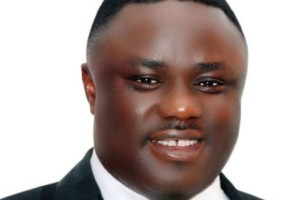
Cross River Gov Ben Ayade

The government of Cross River State has threatened to apply the policy of no-work-no-pay on workers who go on strike as demanded by the Nigeria Labour Congress (NLC) and the Trade Union Congress (TUC).

The two labour uninos are said to have concluded plans to embark on industrial action from Monday, June 19th over demands on several promises that have not been fulfilled by the Governor Ben Ayade-led government.

In a statement by the Special Adviser in the Governor’s office, Mark B. Obi, the government reminded the civil servants of labour law that says no work no pay and warned them to
rescind their decision on the planned strike action.

“The organized Labour should carefully note that relevant section of the Nigeria Labour Acts which provides for No Work No Pay. The Cross River State government uses this medium to appeal to the organized labour in the interest of state development to shelve the

proposed industrial action and allow government the needed atmosphere to implement the agreement as reached.”

“All civil servants are pleased advised to take note and be at their respective duty post to discharge their function as required on Monday 19th June 2017.” [myad]

Police Boss Promotes 32 Officers That Arrested Kidnapping Kingpin, Evans

IGP Ibrahim Idris

The Inspector General of Police, Ibrahim Idris, has approved the special promotion of policemen who participated in the arrest of Lagos most wanted kidnapper, Duneme Onwuamadike otherwise known as Evans.

It was gathered that 35 operatives from the IRT, 11 from the Technical Intelligence Unit (TIU) and one person from the IGP monitoring section, were involved in the elevation.

In a memo signed by the Commissioner of Police in charge of welfare, Posi Ajunwa, 29 sergeants were promoted to rank of Inspector, while three Corporals were promoted to the rank of Sergeant with effect from June 16, 2017.

Evans, who is believed to be the richest kidnaper in Nigeria was arrested in Lagos on Saturday June 10 by policemen while he prepared to travel out of the country by the Intelligence Response Team (IRT), lead by ACP Abba Kyari. [myad]

Advertisement ADVERTORIAL
WP2Social Auto Publish Powered By : XYZScripts.com