A member of the Federal House of Representatives, representing Edu /Moro/Pategi Federal Constituency of Kwara, Aliyu Ahman Pategi, has been remanded in prison custody by a Lagos Magistrate’s Court sitting in Igbosere for standing surety and entered a bail bond of N650 million for former Minister of State for the Federal Capital Territory (FCT), Ms. Jumoke Akinjide, who was detained on August 9, 2016 by the Economic and Financial Crimes Commission (EFCC) for alleged involvement in conspiracy and money laundering.
Rotimi Oyedepo, counsel to the EFCC, told the court that since being released from detention on bail on 10 August 2016, Ms. Akinjide has refused to report to EFCC, which repeatedly demanded her from Aliyu Pategi.
Oyedepo asked the court for an order directing Aliyu Pategi to show cause why the recognizance he entered into for Ms. Akinjide and the bail bond of N650million should not be forfeited. Counsel to Aliyu Pategi, Adenrele Adegborioye, informed the court that he had filed a motion for bail. Mr. Oyedepo, however, said he had just been served with the said motion for bail in the open court and would need time to adequately respond to it. As a result, Mr. Adegborioye made an oral application for bail, but the court said it preferred a formal bail application.
After listening to both parties, Magistrate Afolashade Botoku, rejected the oral application for Aliyu Pategi’s bail, which his counsel sought, citing his client’s personality as a current Federal House of Representatives member. Rotimi Oyedepo opposed the oral application, saying Mr. Pategi stood surety for Mrs. Akinjide and entered a bail bond of N650million being the sum of money she collected from former Minister of Petroleum Resources, Mrs. Deizani Alison-Madueke in March 2015.
The said sum was alleged to be gratification received by Mrs. Alison-Madueke from various oil marketers such as Northern Belt Oil and Gas company, Actus Integrated Investment Limited, Midwestern Oil and Gas company Limited and Adesanya Leno Olaitab. The money was said to have been kept in Fidelity Bank.
In a 16-paragraph affidavit deposed to by Mr. Danladi Daniel, the EFCC said: “An intelligence report was received sometimes in 2016 that Oloye Jumoke Akinjide and others benefitted from the total sum of N650 million gratification received by Mrs. Alison-Madueke from various oil marketers such as Northern Belt Oil and Gas Company, Actus Integrated Investment Limited, Midwestern Oil and Gas Company Limited and Adesanya Leno Olaitan, which money was kept with Fidelity Bank.”
Danladi stated further that upon discovery of her involvement in the alleged crime, Mrs. Akinjide was invited to the EFCC office in Lagos on 9 August 2016 and wrote a statement after which Mr. Pategi entered a bail bond of N650million to be forfeited should Ms. Akinjide jump administrative bail.
The EFCC counsel said a 24-count charge bordering on money laundering and conspiracy was brought against her before Justice Ayo Emmanuel of the Federal High Court, Ibadan, in Suit No. FHC/IB/26C/2017. However, Ms. Akinjide refused to turn up in court after more than three proceedings despite the service of the charges on her, a situation that prompted the court to threaten to dismiss the charges if the prosecution fails to produce her at the next adjourned date.
Magistrate Botoku adjourned the case to 20 June for the hearing of the bail application. [myad]
Nigeria is in recession. Workers are unpaid. There is hunger in the land. Poverty is everywhere. It makes no economic sense to ignore these maladies and subsidise religious pilgrimages. I believe the reward of feeding hungry citizens is higher than that of subsiding the Hajj.
From Oxford Street to Shepherd’s Bush in London, Souk al Baddu to Khan al Atareen in Saudi Arabia, naira was conveniently spent in the 70s and early 80s, as it was a convertible international trading currency in many countries.
While the naira was hovering high over the dollar and riyals in the bygone years, the currency is hardly recognised today in Maradi or Agadez market in Niger Republic. Even within Nigeria, perhaps because of the level of worthlessness of our lower denominations, the N1 coin, N5 and N10 notes are slowly becoming endangered species.
There have been hues and cries since the announcement of this year’s Hajj package for 21 State Muslim Pilgrims Welfare Boards, the Federal Capital Territory and the Armed Forces by the National Hajj Commission of Nigeria (NAHCON).
While stakeholders explained that about 98 percent of Hajj services rendered by NAHCON in Saudi Arabia are determined in US dollars, those oblivious to the reality that exchange rate is everything to an unproductive economy like ours raised questions.
When we were lamenting the free fall of the naira sometime last year, some Nigerians had quickly began catcalling in a queer rhetorical turn: Da tashin bam gara tashin dala (the rise of the dollar is better than rise in bomb attacks). Isn’t a weak economy concomitant with the rise in vices and prices?
Intending pilgrims are rightly complaining as they have to augment their deposits to be able to go on Hajj. But why should Nigerian pilgrims pay more when pilgrims from other countries pay less?
Despite criticism upon criticism, explanation upon explanation, no one seemed able to explain this year’s increase in Hajj package better than the chairman of Med-View Airline, Alhaji Muneer Bankole. This stakeholder, who has been in the system for over 30 years, succinctly cited issues that led to this year’s increase in the Hajj travel package.
Alhaji Bankole said the rate of foreign exchange in relation to the naira is principally the major cause of this increase in prices. He also explained that airlift of Hajj pilgrims is done on a charter and not schedule basis. According to him, when an aircraft carries pilgrims from Nigeria to Saudi Arabia, it carries no single passenger on its return leg, i.e. when the airlift is completed, the aircrafts used are not allowed to remain in the kingdom, in which case they have to return empty and go back again empty to airlift pilgrims back home.
And again, on each trip, airlines have to pay $6,000 charges for flying over Chad and Sudan to Saudi Arabia.
While others wondered why pilgrims from countries like Pakistan pay less than Nigerian pilgrims for the Hajj trip, an official quipped that Pakistan enjoys some overfly waivers from Gulf Cooperation Council (GCC) member countries. Again, why do international pilgrims pay less than the regular pilgrims? The explanation given sounds cogent to me: While the former spend 17 days, the latter spend 40 days and enjoy certain privileges.
Last year, when the exchange rate was officially N197 to $1, the pilgrims paid less, but government had to cough out N68 billion to subsidise the pilgrimage.
In this year’s budget, the exchange rate is pegged at N305 to $1. So when you multiply it by $4,805, which is the total cost per pilgrim, you will arrive about N1.5 million.
But what a lot of people are unaware of is that the federal government is, in a way, still subsidising this year’s hajj. A top government official told me last week that on each pilgrim, the Nigerian government will have to pay N302,4000 to make up for the prevailing dollar rate. If you multiply this amount by 75,000 pilgrims, you will arrive at over N22 billion.
Nigeria is in recession. Workers are unpaid. There is hunger in the land. Poverty is everywhere. It makes no economic sense to ignore these maladies and subsidise religious pilgrimages. I believe the reward of feeding hungry citizens is higher than that of subsiding the Hajj.
It baffles me how a government that cannot subsidise fuel, garri and rice for the common man will go about subsidising the Hajj pilgrimage for the rich; and it is even more baffling to see a person struggling to put food on the table supporting subsidy for the Hajj.
In his commentary on Quran 3:97, which says, “And, pilgrimage to the House is duty on mankind to Allah for those who can find a way there”, Bilal Philips wrote:
“Similar statements of the Prophet (peace be upon him) define ability as being sufficient provisions and transportation. Hence, a Muslim has to be economically able to make the trip. If he has to borrow the money to make the journey, Hajj is not compulsory on him…”
Jaafar, a public affairs analyst and media practitioner, writes from Abuja. [myad]
A former vice president of Nigeria, Alhaji Atiku Abubakar, has been a subject of all variants of deconstruction in the media. That is the way of politics in Nigeria as it is elsewhere in the world. Political rivalry is a common feature that feeds on the tendency to de-market and outwit one another. So, politics is not a turf for the lily-livered. To surmount pernicious rivalry in politics requires a great deal of wisdom.
Atiku has witnessed a surfeit of rivalry and treachery in government and has, so far, been able to survive the nation’s cloak-and-dagger politics. A robustly rugged and toughened politician, he has, even so, experienced both high and low times in the enduring game that, at once, easily launches a player to prominence and, at once, effortlessly plunges him into the dungeon.
His experience, as vice president to Olusegun Obasanjo, was a mixed-bag of the good, the bad and the ugly. At a point, he was the most powerful vice president Nigeria had ever produced, calling the shots and coordinating the political wing of the administration while Obasanjo concerned himself with global diplomatic shuttles to open up our pariah nation to the world for renewed bilateral relations.
Along the line, Atiku was insinuated into a political risk that turned awry. He was accused of a subtle plot to supplant his boss as president in 2003. The unconfirmed plot was to goad Obasanjo to embrace the Mandela option of a term in office. But Obasanjo was not ready for the nonsense. He was not only aiming at two terms in office but was also plotting a third term, which Atiku and other democratic forces worked against in 2006.
Rewind to 2002 at the Peoples Democratic Party (PDP) presidential primary. Atiku, with the support of 20 PDP governors, was set to upset the applecart of Obasanjo’s re-election bid. But through bully tactics, brinkmanship and pleading, Obasanjo was able to clinch the ticket with a calculative Atiku on the ticket contrary to his (Obasanjo’s) original plan.
Although, the ticket won re-election, a wide gulf had been created between the first and second citizens. The next four years that ended in 2007 would remain indelible in the memories of the two leaders as well as in the annals of presidential politics in Nigeria.
In order to deal with an “over-ambitious” Atiku, Obasanjo unleashed the might of his office against him. He sidelined the Waziri Adamawa and deliberately took steps to whittle down his influence. His fixation was to portray Atiku as corrupt so that the electorate would be at great pains to cast their votes for him in any election.
Atiku put up a rare resistance. He sustained his political machinery with which he charted a trajectory out of the PDP into the Action Congress (AC) and still retained his position as vice president via a legal battle up to the Supreme Court. He put his life on the line by engaging in bare-knuckle fight against a ruthless incumbent president with the full complement of state machinery.
Atiku remains politically relevant despite conspiratorial alliances. The last time he jostled for the APC presidential ticket, he was the real issue. He was poised to sweep to victory in the primary, but it took a combination of forces in the party to stop his emergence. Typical of him, he has refused to surrender. He has kept his eyes on the ball of the presidency in 2019.
With seemingly limitless capacity to oil his political machinery, the strategist and tactician consistently exudes an electrifying aura that sustains political followership across the country, a testimony to his cosmopolitan deportment. Indeed, despite all manner of negative deconstruction to which he has been insidiously subjected, Atiku remains a veritable issue ahead of 2019 presidential election.
He recently upped his ante when he advocated restructuring of the nation. One of his lines of argument was that the nation must find creative ways to make financially unviable states to be viable in a changed federal system sans federal allocations. He further argued that more powers and resources must devolve from the federal government, and that federal allocations, as a source of sustenance of states, must be de-emphasised.
His contention is that the federal government in our current federal structure possesses too much power and resources, a development which constricts the federating units and incapacitates them from providing social services to the populace. He had suggested, for instance, that health, agriculture, sports and education should not be part of the preoccupation of the federal government.
Atiku’s position on restructuring has placed him poles ahead of other politicians seeking the high office of president in 2019. On that score, he is a beautiful bride to the Yoruba, Igbo, and minorities in the south-south and north central zones who crave restructuring to correct the nation’s structural imbalances and the lopsidedness in power configuration as well as to ensure the practice of true fiscal federalism.
This is the agitation that runs through a vast section of the polity. Atiku has wisely, strategically and tactically positioned himself in the frontline. For being a perceptive politician, Atiku deserves a reconstruction of his essential persona, which he has been able to distinguish from the morass of corruption into which Obasanjo tried to pigeonhole him.
Whereas, Nigerians are wise enough to know who the grandmasters of corruption are. The blame for public finance mismanagement and other maladministration is placed at the doorstep of the president who, by virtue of constitutional powers vested in him in our clime, is next to God. Looking back, I chuckle at the attempt by Obasanjo to demonise Atiku. True, Atiku is ambitious. It is the nature of politicians to be so disposed.
I consider even the charge of disloyalty against him laughable. Rather than compromise to allow the evil of third term to thrive, he chose to be loyal to the Constitution of Nigeria. History will not forget his contribution, at that intersection, to the triumph of constitutional democracy in the country.
He plans to put his political relevance to test in the courtyard of the Nigerian electorate. He has been involved in a series of quiet consultations with critical stakeholders across the country. Unlike some presidential aspirants who are provincial leaders, Atiku’s approach, this time round, appears to be issues-based and ventilatory. He has, understandably, started shooting from the hip.
I have noticed attempts in the media to put Atiku down on the issue of restructuring. Those attempts have come too late to detract from the political capital he has garnered from his advocacy. His commitment to restructuring Nigeria is salutary to his ambition. I understand that he may also be committing himself to a four-year term in office after which he will guide presidential power to the southeast. This proposition should be, somewhat, attractive.
In reconstructing Atiku within the context of his promised restructuring of Nigeria, if voted into power (on whichever platform), I surmise that the best and the last chance for him to be president is 2019. He must throw his hat in the ring, anyhow.
The Indigenous People of Biafra (IPOB), under the leadership of Nnamdi Kanu, has condemned the meeting between the Acting President, Yemi Osinbajo and some Igbo leaders of thought at the Aso Rock Presidential Villa in Abuja, describing such leaders as political jobbers.
In a statement today, Thursday, the leadership of IPOB said that those who attended the peace meeting with Acting President Yemi Osinbajo have no mandate to speak for the people of the South East
The statement which was signed by the spokesman, the IPOB accused the Acting President of allegedly using “scarce” resources that could have been channelled for useful purposes to host Igbo leaders, adding that the said meeting was an “insult to the sensibilities of Biafrans all over the world.”
The statement reads: “we the Indigenous People of Biafra (IPOB) under the supreme leadership of Mazi Nnamdi Kanu wish to place on record our unequivocal condemnation of the wholesomely senseless and futile gathering of a few compromised political jobbers from core Igbo states of Biafraland in Abuja yesterday.
“This meeting we understand, was convened at the instigation of the Nigerian Acting President Professor Yemi Osinbajo following the political fallout from the hugely successful IPOB sit at home order of 30th of May 2017.
“With one or two exceptions and with the greatest respect to the attendees to this Nigeria sponsored gathering in Abuja, the so-called South East delegation is in no way representative of the views of the leadership of IPOB worldwide, neither can they claim with any degree of sincerity to be speaking for the masses.
“Therefore all Professor Osinbajo has succeeded in achieving with this meeting is to waste scarce resources that could have been channelled towards more useful purposes. None of those that attended this meeting with Osinbajo gave the order for people to sit at home on May 30th. So we are at a loss to understand the justification for their invitation to the meeting to discuss something they know nothing about.
“IPOB viewed the meeting with certain Igbo politicians who are sympathetic to APC as an insult to the sensibilities of Biafrans all over the world, especially the memory of the dead and injured.
The group affirmed the stance of its leader that any discussion with the Nigerian government must include a date for referendum or such discussion is an “exercise in futility.”
The statement added, “Our leader Mazi Nnamdi Kanu has made it abundantly clear that any discussion or dialogue with Nigerian government that doesn’t include an agreement on a referendum date to determine the issue of Biafra once and for all time, is an exercise in futility.
“In this regard, we wish to inform the government of Nigeria that the gathering and deliberations they thought they had yesterday is a complete waste of time and will continue to be until the Federal Government does the needful.
“We note and respect the presence of Chief Nnia Nwodo the Ohaneze Leader and two others at that very meeting, however the rest are nothing to write home about. We do not think that presiding over the distribution of monthly allocation from Abuja qualifies any political office holder to discuss issues pertaining to IPOB and Biafra restoration when the leadership can be directly contacted.
“Since August 2015 that Nigerian Government and her security operatives, especially the Army, Navy, DSS and Police, have been killing and abducting innocent and peaceful IPOB members, none of the governors that attended this meeting in Abuja rose to condemn the brutal and barbaric repression of IPOB peaceful agitation for an independent homeland for Biafrans.
“None of them offered any comment in condemnation of the well documented atrocities despite the existence of overwhelming evidence to substantiate the facts alluded to in the widely received Amnesty Report on the senseless slaughter of IPOB members.
“How can such persons now go to Abuja to discuss issues bothering on the activities of IPOB when they know nothing about the modus operandi of the organisation. Only IPOB can and will discuss issues pertaining to her activities, not compromised politicians.
“From time, we firmly resolved that nobody among the governors or politicians can set an agenda for IPOB except our leader Mazi Nnamdi Kanu. The sooner Nigerian Government understands this, the better. Therefore, any meeting without the consent of our leader or those nominated by him in a representative capacity, is a complete waste and unacceptable to IPOB.” [myad]
The Joint Admissions and Matriculation Board (JAMB) has announced that it had concluded arrangements for the conduct of the supplementary 2017 Unified Tertiary Matriculation Examination (UTME) on July 1st.
The board’s Head, Media and Information, Dr. Fabian Benjamin said that the examination would give candidates with issues of late registration and others opportunity to write the Computer-Based Test.
The results of the examination which earlier took place from May 13 to May 20 have since been released.
JAMB, on Wednesday, June 14, also announced the cancellation of results of no fewer than 50,000 candidates over examination malpractice and other alleged infractions.
Dr. Benjamin urged candidates for the supplementary examination not to panic, but remain focused and confident.
“The board is using the opportunity to charge affected candidates for the rescheduled examination not to panic, as text messages will be sent to their telephones, with which they used in registering for the examination, to the effect of their qualification.
“There is really nothing to be afraid of or worried about. To this effect, therefore, they should be expecting such notification before 12 midnight of Thursday, June 15.
“Messages will also be sent to their e-mail addresses. Their profile will also contain the information as it had been updated.
“In the same vein, all candidates whose results had been cancelled outrightly following their involvement in examination irregularities will also be notified through their e-mails, text messages as well as their profiles.
“This set of candidates is not eligible for the supplementary examination.”
Dr. Benjamin said that candidates for the rescheduled examination will also be notified of the date and venue on or before Monday, June 19.
He said that candidates could check their result status to avoid being extorted by fraudsters who might want to seize the opportunity to exploit them.
Dr. Benjamin said that the examination body is taking extra steps to contact all rescheduled candidates for the examination to prevent them from falling prey to fraudulent persons.
“Sequel to this, therefore, the board is calling on members of the public, especially candidates, to avail themselves of the open door and inclusive policy of the board to seek clarification where the need arises, from any of our offices nationwide.
“This rescheduled examination became necessary to ensure that no innocent candidate is unjustly punished.”
The government of Nigeria – federal, state and local – has failed Nigerians. For a country that should be in a hurry to exit the Destitution Avenue, this is simply unacceptable. It is another instance of failure of governance. Failure of governance is when government fails to serve the people. Nigerians should be worried about the way the budgetary process runs in this country.
These are the views of the Catholic Bishop emeritus and former President of the Christian Association of Nigeria (CAN), Anthony Cardinal Okogie, in a statement titled: “Deprivation and Agitation: A Reflection on Nigeria’s Late 2017 Budget.”
Cardinal Okogie, who was also the Catholic Archbishop of Lagos, lamented that the 2017 budget was presented to the legislature in the twilight of the 2016 and was just passed on May 14, 2017, which was “more than five months into the year and close to six months after it was presented.”
“In the period when the budget has yet to be passed, how is government carrying out its functions? Who is accountable to who when it comes to how money is spent?
“Does this reflect a country that really wishes to put an end to corruption? But while there was delay in passing the budget, there is an early bird approach to the politics of 2019. The budget was not passed but politicians were positioning themselves for the 2019 presidential elections.
“Now, deprivation has turned into agitation. In the absence of a budget, the economic conditions in which we live continue to bite. Nigerians are hungry and angry. In their anger, they turn against each other on the social media, using unprintable language, threats and violence to sort out their differences. Young Igbo insult the Yoruba, young Yoruba insult the Igbo, the North and the South have suddenly realised that they cannot live together.
“In all this, instead of facing their common enemy – politicians who abuse their offices and steal the wealth of the land, thus depriving us of decent living – young Nigerians tear each other apart in a society where civil discourse has become an unwanted alien.
“We have said it before that we live in clear and present danger. We said it when herdsmen went on the rampage and arms were being brought into Nigeria by ‘ghost importers.’ Now, we should ask ourselves: is there a correlation between illegal importation of arms into Nigeria and the drumbeats and dance steps of war we are currently witnessing?” [myad]
In its latest move launch battle with inflation, the Central Bank of Nigeria (CBN) has planned to mop up a total of N200.322 billion from the Nigerian banking system through a special Open Market Operation (OMO) at the rate of 16 per cent per annum.
Rising from a meeting of the Bankers’ Committee in Lagos today, Thursday, the CBN said that its decision to mop up liquidity was in reaction to the maturity of N206 billion on Thursday, June 15.
Speaking to news men, the Bank’s Acting Director in charge of Corporate Communications, Isaac Okorafor, explained that the apex Bank decided on the rate of 16% per annum due to the falling rate of inflation, which he said will continue to fall.
It will be recalled that the Bank on Monday, June 12, released its Treasury Bills Issue Programme for the third quarter of 2017 in which it disclosed that the maturity dates for the various tenors will be June 15, June 22, July 6, July 20, August 3, August 17 and August 31, 2017, respectively. [myad]
The United Nations Children Education Fund (UNICEF) has announced a partnership with Federal Ministry of Education and State Universal Basic Education Boards in Bauchi, Niger, Katsina, Sokoto and Zamfara states, to launch the Girls for Girls (G4G) initiative. The UNICEF explained that the G4G would empower girls with information and knowledge to help build their capacity to stand up for themselves.
The concept is also aimed at creating equal opportunities for girls to access education.
In a statement today as Africa celebrates the Day of the African Child, UNICEF said: “with today’s commemoration of the Day of the African Child focusing on empowerment and equal opportunity for the African child, the launch is timely especially for the girl child whose fortunes are not nearly as bright as for boys.
“The primary goal of G4G is to empower girls with knowledge, skills and confidence needed to enroll and remain in school, completing the full course of education so they can be role model to other girls in their communities.”
The statement said that girls, working with members of the Mothers Association as mentors, will initiate and lead a range of activities to identify barriers to the education of girls in their communities and work to remove such barriers so girls will enroll and remain in school.
The statement quoted UNICEF’s Mohamed Fall as saying: “the G4G initiative is a commitment to improve the quality of girls’ and ultimately women’s lives by empowering girls through education.
“By educating girls, practices such as early marriage will be uprooted and girls will be empowered to contribute to the development of their communities, states and Nigeria.”
The G4G initiative is a component of the Girls’ Education Project Phase 3 being implemented in northern Nigeria through a collaboration between UNICEF Nigeria and the Federal Government of Nigeria with funding from the United Kingdom (UK) Department of International Development (DFID).
This phase of the Girls Education Project seeks to help put 1 million girls in school, support them to remain in school and improve their learning achievement. The focus states have the highest number of girls who do not attend school in Nigeria.
Despite important education gains in recent decades, Nigeria, still has the largest number of girls not in school. When girls enter school, a vast majority of them do not complete primary school education. The average girl stays in school only through age nine. Less than one-third of girls in Nigeria enroll in the lower secondary school, and, in northern Nigeria, less than one in 10 girls generally complete secondary education.
G4G groups will be established in more than 8,000 Primary and Qur’anic schools by 2019. [myad]
The Buhari Media Support Group (BMSG) has accused Sahara Reporters an online publication of peddling rumour and blatant lies about the recent visit of Aisha’s visit to her husband, President Muhammadu Buhari who has been in London on medical vacation.
The group said that the Sahara Reporters’ story titled: “Aisha Buhari Did Not See The President During Her London Visit” published on June 13, 2017, was a tissue of lies aimed at ridiculing the President, his office, wife and officials working with him.
In a statement by the chairman, Hon. Austin Braimoh Chairman and secretary, Chief Cassidy Madueke, the group said that the publication was mischievous, malicious and wicked just as it was capable of bringing the office of the President to disrepute.
“it is shocking that Sahara Reporters could descend so low to the point of being a harbinger of fake news.
“For the avoidance of doubt, President Buhari met and spoke with the 81 released Chibok girls before embarking on the second medical mission to London and it is evident that he spoke at the airport with officials of State before taking off. Both events were televised nationwide.
“It is therefore most uncharitable for Sahara Reporters to claim that the President lost his memory before travelling out of the country and could adduce any fact to its claim.”
The group said that the claim by Sahara Reporters that the President’s wife did not see him during her visit to London is another blatant falsehood.
“Sahara Reporters is now getting too personal and this is very unfortunate and dangerous because the visit of the wife of the President was a pure family affair.
“One wonders the sources that gave them this information when it is obvious the wife of the President met and spoke with her husband and even came home with the cheering news that the President’s health has improved and that Nigerians should keep praying for his full recovery.”
The group recalled that before returning from the first medical trip, Sahara Reporters put out stories which indicated that the President was a write-off on grounds that his health had degenerated such that he would not be able to function.
“But few days after the doomsday publication, the President returned to Nigeria and stayed for 57 days before returning for the second lap of his treatment, which he (the President) had given advance notice of.
“It is unfortunate that Sahara Reporters relied on the information gathered from its so-called sources and did not speak with image makers of the President before embarking on the its campaign.
“Embarking on high level fabrications should not be the hallmark of Sahara Reporters. The Presidency remains one as evidenced by the free hand given to the Acting President to run the country while the President is away.
“The claim that a cabal or a few officials working for Buhari is holding the Presidency to ransom is far from the truth.
The group urged Sahara Reporters to stick to the ethics of journalism practice in order to eschew malicious and tendentious reports that are capable of putting Nigeria on the edge, especially, now that the nation is making steady, but significant progress on all spheres of development. [myad]
I am not going to parody Ibsen’s The Master Builder or Carlo Goldoni’s The Servant of Two Masters, rather I am going to do a straight talk; present the subject matter as it is. Our Acting President Professor Yemi Osinbajo is a Master Painter. He probably is the greatest painter in the world. And this should not surprise anyone who is familiar with Osinbajo’s intimidating curriculum vitae.
Right from youth Yemi Osinbajo had been a whiz kid, a child prodigy at the primary school, and at Igbobi College where his brilliance showed like the Northern Star he was easily extra-ordinary and outstanding. His academic record at the University was equally dazzling and before anyone could say Zik, he had got himself a proud academic Chair before he turned 33. An incredible feat in his day.
He is a lawyer, a Professor to boot, he is an editor of serious academic journals; he is a researcher of note; and he has earned for himself a great reputation in many other fields outside the confines of Law. One may then begin to wonder when he learnt the trade of painting and how without announcement or fanfare he rose to the status of the Maser Painter.
Acting President Osinbajo did not start off as a painter as this narrative goes and if he has ever had anything to do with construction and civil engineering in metaphorical sense; he has proven himself to be a superb architect, structural engineer, quantity surveyor, bricklayer, carpenter, electrician, plumber, painter and interior decorator. Not given to bits and pieces Osinbajo has been a whole man, a complete doer, a finisher of projects. He has produced complete buildings of solid foundations.
The business of house painting did not happen until Jagaban Ahmed Tinubu dragged him to national prominence and lately to world stage first as Vice President and Acting President of the Unitary Fiefdom of Nigeria.
In his new but intermittent assignment as Acting President he found himself superintending over a dilapidated building. The building’s roof is partially gone with leaks all over the place. The walls have fallen in several places while most of the doors and windows have been removed or vandalized. Most of the furniture in the house had been plundered and the few that remain are in very poor and bad shape. Movements from one room to another or from the parlour to the kitchen are hardly possible. All the internal decorations have disappeared. Unfortunately and here is the tragedy, the building houses some of the best brains in the world. Underneath the building are rich minerals of stupendous value.
Osinbajo took it upon himself to present the building in a way that would make it attractive to outsiders so that investors might come to make something out of the dilapidated nonsense before them. Osinbajo is imbued with remarkable oratorical skills and good humour which he has combined to make a painter’s brush. He needs paint. He has deployed symposia, workshops, photo-ops and convincing marketing tools as paint.
Recently he added visits and visitations. He has gone to places where even devils were afraid to tread. He has been in the midst of fierce and vicious bomb-making-bomb-throwing Niger Delta self determination groups, he has been to the brutish and brutal Boko Haram enclaves, he has been to virtually all the nooks and crannies of the broken Fiefdom; the near-collapsed building.
To complete the cycle, Osinbajo went to the popular market in Abuja to see for himself where the shoe pinches. Osinbajo the painter has become hugely popular with the residents of the building about to collapse on their heads.
The hard part of the master Painter’s job is how to paint a building that is virtually torn apart. Where and how does he begin his delicate job? How does he make the building attractive to those who may risk putting the building together again and make it erect?
There is a dilemma. Is it not better, wiser and more cost effective to pull down the dilapidated building and start another one from the scratch? What is the sense of painting a sepulcher? This building before our eyes is virtually and practically gone. And to make matters worse there are cabals with diggers and bulldozers knocking down parts of the building any time attempts are made at reconstruction.
The Master painter is undaunted. He has successfully painted the doors that have fallen apart. We must add though that the doors still need to be fixed to the frames, and the frames already perforated by ants also need fixing!
The Master Painter is set to paint the North Eastern wing of the building. This is the portion that is worst hit by the political recklessness of the occupants of the building. He has brought his paints and his handy brush is about to be put to service. But there so many thieves occupying that wing. How will his painting be effected without hindrance?
I am told he will be moving to the South-South wing of the building but he has to mind the mines and booby traps planted in his path. He is undaunted as I am told because he is also a prayer warrior. That is a bit I left out at the beginning of this narrative. Osinbajo is a prayer warrior and his wife, an Awolowo, is also a super prayer warrior. Osinbajo was set to be a successor in the Lord’s vineyard where I understand he has perfected the art and science of speaking in tongues before the lot of Vice presidency fell on his lap. Perhaps this is one of the enabling factors that have strengthened the resolve of Osinbajo to take on this painting job.
It is hoped that Osinbajo will succeed in this thankless painting job. And if my assessment of Osinbajo is anything to go by, the intellectual giant is likely to reconstruct the entire building, make it solid and enduring before quitting the stage.
There is a note of warning though. However much the building is painted and possibly reconstructed to stand, as long as it remains in the hands of the bulldozer-wielding cabal of wheelers and dealers, it will no sooner than later revert to its status as raped Fiefdom and the title of Unitary Fiefdom will stick before the eventual TOTAL and irretrievable COLLAPSE when all the components scatter.
Hearty Congratulations and Three Hearty Cheers to our serious minded but ever smiling and highly focused extraordinary Intellectual giant for a painting job that has caught headlines nationally and internationally.
We use cookies on our website to give you the most relevant experience by remembering your preferences and repeat visits. By clicking “Accept”, you consent to the use of ALL the cookies.
This website uses cookies to improve your experience while you navigate through the website. Out of these, the cookies that are categorized as necessary are stored on your browser as they are essential for the working of basic functionalities of the website. We also use third-party cookies that help us analyze and understand how you use this website. These cookies will be stored in your browser only with your consent. You also have the option to opt-out of these cookies. But opting out of some of these cookies may affect your browsing experience.
Necessary cookies are absolutely essential for the website to function properly. This category only includes cookies that ensures basic functionalities and security features of the website. These cookies do not store any personal information.
Any cookies that may not be particularly necessary for the website to function and is used specifically to collect user personal data via analytics, ads, other embedded contents are termed as non-necessary cookies. It is mandatory to procure user consent prior to running these cookies on your website.






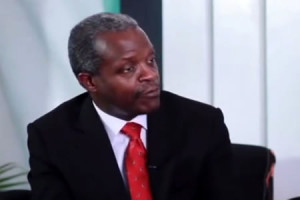


Reconstructing Atiku Abubakar, By Sufuyan Ojeifo
A former vice president of Nigeria, Alhaji Atiku Abubakar, has been a subject of all variants of deconstruction in the media. That is the way of politics in Nigeria as it is elsewhere in the world. Political rivalry is a common feature that feeds on the tendency to de-market and outwit one another. So, politics is not a turf for the lily-livered. To surmount pernicious rivalry in politics requires a great deal of wisdom.
Atiku has witnessed a surfeit of rivalry and treachery in government and has, so far, been able to survive the nation’s cloak-and-dagger politics. A robustly rugged and toughened politician, he has, even so, experienced both high and low times in the enduring game that, at once, easily launches a player to prominence and, at once, effortlessly plunges him into the dungeon.
His experience, as vice president to Olusegun Obasanjo, was a mixed-bag of the good, the bad and the ugly. At a point, he was the most powerful vice president Nigeria had ever produced, calling the shots and coordinating the political wing of the administration while Obasanjo concerned himself with global diplomatic shuttles to open up our pariah nation to the world for renewed bilateral relations.
Along the line, Atiku was insinuated into a political risk that turned awry. He was accused of a subtle plot to supplant his boss as president in 2003. The unconfirmed plot was to goad Obasanjo to embrace the Mandela option of a term in office. But Obasanjo was not ready for the nonsense. He was not only aiming at two terms in office but was also plotting a third term, which Atiku and other democratic forces worked against in 2006.
Rewind to 2002 at the Peoples Democratic Party (PDP) presidential primary. Atiku, with the support of 20 PDP governors, was set to upset the applecart of Obasanjo’s re-election bid. But through bully tactics, brinkmanship and pleading, Obasanjo was able to clinch the ticket with a calculative Atiku on the ticket contrary to his (Obasanjo’s) original plan.
Although, the ticket won re-election, a wide gulf had been created between the first and second citizens. The next four years that ended in 2007 would remain indelible in the memories of the two leaders as well as in the annals of presidential politics in Nigeria.
In order to deal with an “over-ambitious” Atiku, Obasanjo unleashed the might of his office against him. He sidelined the Waziri Adamawa and deliberately took steps to whittle down his influence. His fixation was to portray Atiku as corrupt so that the electorate would be at great pains to cast their votes for him in any election.
Atiku put up a rare resistance. He sustained his political machinery with which he charted a trajectory out of the PDP into the Action Congress (AC) and still retained his position as vice president via a legal battle up to the Supreme Court. He put his life on the line by engaging in bare-knuckle fight against a ruthless incumbent president with the full complement of state machinery.
Atiku remains politically relevant despite conspiratorial alliances. The last time he jostled for the APC presidential ticket, he was the real issue. He was poised to sweep to victory in the primary, but it took a combination of forces in the party to stop his emergence. Typical of him, he has refused to surrender. He has kept his eyes on the ball of the presidency in 2019.
With seemingly limitless capacity to oil his political machinery, the strategist and tactician consistently exudes an electrifying aura that sustains political followership across the country, a testimony to his cosmopolitan deportment. Indeed, despite all manner of negative deconstruction to which he has been insidiously subjected, Atiku remains a veritable issue ahead of 2019 presidential election.
He recently upped his ante when he advocated restructuring of the nation. One of his lines of argument was that the nation must find creative ways to make financially unviable states to be viable in a changed federal system sans federal allocations. He further argued that more powers and resources must devolve from the federal government, and that federal allocations, as a source of sustenance of states, must be de-emphasised.
His contention is that the federal government in our current federal structure possesses too much power and resources, a development which constricts the federating units and incapacitates them from providing social services to the populace. He had suggested, for instance, that health, agriculture, sports and education should not be part of the preoccupation of the federal government.
Atiku’s position on restructuring has placed him poles ahead of other politicians seeking the high office of president in 2019. On that score, he is a beautiful bride to the Yoruba, Igbo, and minorities in the south-south and north central zones who crave restructuring to correct the nation’s structural imbalances and the lopsidedness in power configuration as well as to ensure the practice of true fiscal federalism.
This is the agitation that runs through a vast section of the polity. Atiku has wisely, strategically and tactically positioned himself in the frontline. For being a perceptive politician, Atiku deserves a reconstruction of his essential persona, which he has been able to distinguish from the morass of corruption into which Obasanjo tried to pigeonhole him.
Whereas, Nigerians are wise enough to know who the grandmasters of corruption are. The blame for public finance mismanagement and other maladministration is placed at the doorstep of the president who, by virtue of constitutional powers vested in him in our clime, is next to God. Looking back, I chuckle at the attempt by Obasanjo to demonise Atiku. True, Atiku is ambitious. It is the nature of politicians to be so disposed.
I consider even the charge of disloyalty against him laughable. Rather than compromise to allow the evil of third term to thrive, he chose to be loyal to the Constitution of Nigeria. History will not forget his contribution, at that intersection, to the triumph of constitutional democracy in the country.
He plans to put his political relevance to test in the courtyard of the Nigerian electorate. He has been involved in a series of quiet consultations with critical stakeholders across the country. Unlike some presidential aspirants who are provincial leaders, Atiku’s approach, this time round, appears to be issues-based and ventilatory. He has, understandably, started shooting from the hip.
I have noticed attempts in the media to put Atiku down on the issue of restructuring. Those attempts have come too late to detract from the political capital he has garnered from his advocacy. His commitment to restructuring Nigeria is salutary to his ambition. I understand that he may also be committing himself to a four-year term in office after which he will guide presidential power to the southeast. This proposition should be, somewhat, attractive.
In reconstructing Atiku within the context of his promised restructuring of Nigeria, if voted into power (on whichever platform), I surmise that the best and the last chance for him to be president is 2019. He must throw his hat in the ring, anyhow.
* Mr Ojeifo contributed this piece from Abuja via ojwonderngr@yahoo.com. [myad]