Ondo State House of Assembly has impeached its speaker, Rt. Hon. Jumoke Akindele over alleged N15million naira fraud. The Assembly also sent the Deputy speaker, the majority leader and other leaders packing.
Information reaching Greenbarge Reporters however indicated that the Speaker and other leaders were suspended even as legislature quickly appointed their replacements.
Those who were picked in their places today, Friday, immediately after dispensing with the former leaders are
Fourteen out of the twenty-six Ondo State House of Assembly lawmakers on Friday evening sacked their speaker, Malachi Coker, from Ilaje constituency II as acting Speaker, while Hon. Ayodele Arowole from Owo state constituency I was picked as his deputy. Also, Hon. Olamide George from Akure north State constituency was appointed as the Majority leader.
The suspension of the principal leaders of the Assembly followed an incident, where the house paymaster was allegedly caught by members of the assembly with the sum of N15million at the premises of the Assembly.
When confronted, the paymaster said he was acting on the instruction of the suspended speaker, Princess Jumoke Akindele, who ordered him to bring the money to her residence.
The House which eventually sat at about 5pm moved that the leadership under Akindele had failed, as the lawmakers were not aware of the approval of the said sum.
It was gathered however that the removal of Akindele as the speaker was beyond the issue of fraud as majority of the lawmakers were said to be preparing the ground for the incoming governor, Oluwarotimi Akeredolu to be sworn-in on February 24.
The sacking of the speaker was said also to have been carried out by the lawmakers who felt that she had not been protecting their interest despite her closeness with Governor Olusegun Mimiko.
Recently, the lawmakers rejected 38 bills sent to the Assembly by Mimiko on the ground that the governor must pay them their allowances before they could act on them. [myad]
Spokesman of the Central Bank of Nigeria, Isaac Okorafor, has said that one of the reasons why the apex bank would not allow the Naira to float as being agitated for by some Nigerians is to address the current economic recession. Okorafor, who was reacting to a group of Nigerians who embarked on failed protest aimed at pressurizing the CBN to allow the Naira to float and to abolish the list of 41 items not eligible for foreign exchange through the inter-bank foreign exchange market, dismissed such demands, saying that they are unpatriotic and self-serving.
“Rather than joining the CBN and other agencies of government to take out the country out of the current situation, they are busy sponsoring gullible groups to protest.” He warned that allowing the Naira to float would severely hurt the welfare of ordinary Nigerians, adding that abolishing the list of the 41 items would also mean destroying the livelihood of millions of Nigerian farmers and genuine manufacturers who have made huge investments in the cultivation and local manufacturing of those importable items. Okorafor expressed happiness with Nigerians who have since realized the antics of those he called selfish individuals whose sole aim is to fulfill their ulterior motives. He said that these are the same set of people who had canvassed for floating of the foreign exchange market in 2016 on the ground that investors would funds and asked: “how much of foreign exchange have they brought into the country since June 2016 when the Naira was allowed to float to its current range.” He appealed to Nigerians to persevere and show understanding of the country’s economic challenges. Earlier today, Friday, the protest march against CBN, convened by one Deji Adeyanju flopped as people he expected to join him at the proposed take-off point at about 8.30am with about 17 placard carrying young men and women failed to turn up. Speaking on the failed protest, Adeyanju still blamed the apex Bank for the current situation in the country. He said that his mission was to seek explanation from the authorities from the apex Bank on the economic challenges confronting the country presently. The group demanded complete floating of the Naira in the foreign exchange market so that the currency will find its true value and to scrap off the 41 items excluded from the interbank foreign exchange window. [myad]
Nigeria’s acting President Restoring Yemi Osinbajo has admitted that restoration of normalcy to the Internally Displaced Persons (IDPs) in the Northeast is a tough challenge but that the government is committed to that task. “So many people are in need, it’s a tough challenge, but we are committed.” Professor Osinbajo, who received in audience today, Friday, the Executive Director of the United Nations World Food Programme (WFP), Ms. Ertharin Cousin at the Presidential Villa, Abuja, said: “we are working on how people can get back to their normal lives.” The Vice President stressed that the federal government is working on how to help the children, especially regarding education and housing. Professor Osinbajo expressed appreciation on the collaboration of international agencies like the United Nations to the effort at IDPs rehabilitation. He assured that the federal government will continue to secure the places where the peace had been restored, stressing that dealing with the security challenges is an ongoing task for the government. He appreciated the visit of the World Food Programme Executive Director and her delegation Earlier, the World Food Programme Director, Ms Cousin delivered the goodwill message from the Secretary General of the UN. The Executive Director said that since the establishment of a inter-ministerial committee which the Vice President coordinated, there has been a significant improvement in the implementation of the UN agency’s work providing assistance in the Northeast. [myad]
Former governor of Jigawa state, Alhaji Sule Lamido, has served notice of his intention to throw his hat in the ring for the position of Nigeria’s president in 2019. It is his right to do so. He has the requisite backing of the constitution of the Federal Republic of Nigeria and the concurrence of the constitution of his political party, the Peoples Democratic Party (PDP), to make certain his bid.
Nevertheless, he needs more than the rights conferred on him by these constitutions to win the election. As a presidential aspirant, he has to appeal to the sensibilities of the vast majority of his party men and women, more especially the delegates who will vote at the primary, with his reform agenda. This is the surest way to clinch his party’s ticket.
The battle, within the PDP for the ticket, is not going to be a tea party. It is going to be fiercely fought because the party is shorn of the overwhelming superintendence of a sitting president. What this encourages is a free course for many presidential aspirants to tread.
Lamido is lucky to have a head-start. He is the only one who has, so far, rolled out the drums to herald his own coming. He is not hiding behind a finger. But that is how far luck can take him. He should, therefore, brace up for challenge within the party from other presidential hopefuls.
This is where choices based on comparative advantages and selfish political interests will weigh in. The capacity of the individual aspirants to address the nation’s economic problems as well as their acumen, political ideals and ideological inclinations will largely define who clinches the ticket.
The path to the presidency anywhere in the world is, unarguably, long, tortuous and challenging. Lamido is conversant with this cosmopolitan reality. He is politically prudent to know there is a great deal of heat in the kitchen. Having, therefore, headed for the kitchen in spite of the shenanigans that have been constructed around him, he must stay on.
Perhaps to intimidate him from going into the race, the Economic and Financial Crimes Commission (EFCC), as early as last year, charged him with corruption and money laundering offences, along with his son. That pre-emptive move by the EFCC finds explanations in a very recent history of presidential politicking.
Ahead of the 2015 presidential election, some powerful forces in the PDP had been opposed to Goodluck Jonathan seeking a second term in office. One of the power centres, coordinated by former president, Chief Olusegun Obasanjo, rooted for a Sule Lamido candidacy.
The argument then was that in 2010, in order to get the widespread support that saw him become the candidate of the party and president, Jonathan had agreed to a term of four years in office, after which power would revert to the north of the country. But that proposition, fuelled by revulsion and antagonism rather than consensus, could not be pushed through.
It is irrelevant whether Jonathan fought back or the people around him did. His candidature was eventually foisted on the party. As has been explained by Lamido in some of his newspaper interviews, he and, perhaps, those promoting his candidature, had to reconsider their strategy in the face of the universal fact that it is always difficult to defeat a sitting president in the primary of his or her party.
Jonathan was allowed to exercise the right of first refusal. What happened, thereafter, is fresh on our minds. He lost the presidential election to Muhammadu Buhari who, as it were, is the potential presidential candidate of the APC as far as the 2019 presidential election is concerned except he or existential happenstance decides otherwise.
Back to Lamido, because of the abandoned mid-stream project sponsored by Obasanjo and his clique on their failed voyage to stop Jonathan from being the PDP standard bearer, he has not found it difficult to revisit his desire to be president. The agent of the state-the EFCC- did not also find it difficult to move against him to stymie his presidential ambition.
Those who are arrayed against Lamido, perhaps, know that he is strong-willed and tenacious. Maybe, they also know that he is capable of enjoying cult following in the north. Therefore, they presuppose that tarring him with the brush of corruption should be enough to discourage him from entering into the presidential race. But, unfortunately, they are wrong.
The current economic difficulties confronting the nation under Buhari’s presidency have made a Lamido presidency an attractive option. Other aspirants will, certainly, excite the Nigerian people who are desirous of a change of “the change” they foisted on themselves in 2015 when they expressed their preference for Buhari instead of Jonathan.
This is where the aspirants will have to prove their individual mettle, regardless of who the APC is presenting for the presidential poll. But the odds are against the ruling party for presiding over a shambolic political economy. There is growing hunger in the land. The purchasing power of Nigerians has continued to ebb away due to runaway inflation, nay stagflation.
Arresting the economic drift, together with saving the nation’s economy from recession, is one of the critical issues that will determine the shape and texture of the 2019 presidential poll. Nigerians need a Lee Kwan Yew who can take the country out of the aggravating economic quagmire. It is one thing for Lamido to take up the gauntlet to run for the presidency; it is another thing for him to have what it takes to restructure and redirect our economy on the path of recovery and sustainable growth.
This is not an unconscionable attempt to de-market Lamido. It is, rather, a patriotic service to interrogate his capabilities. Once beaten, they say, twice shy. Nigerians will, this time round, shun bandwagon effects produced by mindless propaganda. Not again will Nigerians be satisfied with stupidly sentimental defences of any candidate. We will not accept “NEPA bill” instead of real certificates evidencing educational qualifications.
Lamido should throw everything at his disposal into the race if he has the capacity, education, intellectualism, temperament, clear-headedness and antecedent in government to coordinate a resurgence of our poorly managed economy.
There is no doubt Lamido is politically astute. He has an intimidating pedigree in politics. The fact is our nation is not in short supply of realpolitikers. However, I want to safely assume that Nigerians are tired of governance at the centre through the prisms of realpolitik, primordial sentiments and ethnic prejudice that conspire to starve economic pragmatism.
What we need urgently in our nation is economic renaissance by the hands of an intensely knowledgeable pragmatist who knows what to do and how to get personnel to assist him in propping up our prostrate economy.
We no longer need the ongoing joke of a nation with five or thereabouts foreign exchange rates that do not promote investment or inspire investors’ confidence in our economy. Sadly, everybody, from the uneducated to the intelligentsia, is talking about how the foreign exchange regime has been mismanaged such that soaring prices of even farm produce are attributed to naira exchange rate to the dollar, which is doing the yo-yo.
This, along with the inability to diversify our economic base to stimulate domestic production and accretion of revenue to bolster the nation’s earnings, is the scenario confronting us as a nation. Therefore, the choice of our next president will not be based on sundry sentiments or political shrewdness alone. Sound knowledge of the economy is obligatory criterion. Nigeria and Nigerians need a man who is imbued with the savvy to rescue the economy. Sule Lamido? I need to be convinced.
Ojeifo is a journalist and publisher based in Abuja, and can be reached via ojwonderngr@yahoo.com. [myad]
Chairman of the Presidential Advisory Committee Against Corruption (PACAC), Professor Itse Sagay (SAN), has said that the Senator representing Kaduna Central, Shehu Sani has failed, this time, on the issue of the acting chairman of the Economic and Financial Crime Commission (EFCC), Ibrahim Magu over the return of his name to the Senate for confirmation.
“I know the case of Magu thoroughly. And the allegations (of corrupt practices against him) are spurious. There is no reality in them. The whole thing was distorted to give a wrong impression about Magu.
“I expected Senator Sani as a human rights person, as far as I know, a person from the civil society that he should have stood up for the truth. He should have known that Magu was victimized deliberately. He should have stood against that.
“He should have stood for the oppressed person who has been doing a marvelous work in the fight against corruption. But this time he stood on the wrong side.”
In a statement in Abuja, Sagay accused Shehu Sani of fighting everybody, including his state governor, Nasiru el-Rufai of Kaduna state, the federal government and his own political party, the All Progressives Congress (APC), even as he asked Journalists to conduct their own investigations on the Magu’s case.
“You as a journalist, I know you people investigate. You know a lot. The allegations are all false. He did not rent a flat by himself; he was put in a house by government. So what is his business if government paid more than it should have paid?
“It’s all just cooked up to prevent him from being appointed. So I don’t see why a senator should attack the presidency for returning Magu’s nomination to the Senate.
“Maybe the Senate has its own interest which is contrary to the interest of the country. And he (Shehu Sani) is standing with the Senate in that regard. So, that’s his business.”
Sagay confessed however that he did not know much about the alleged corruption against the Secretary to the Government of the Federation (SGF), Babachir David Lawal, insisting however that Senator Shehu Sani is only just fighting his own political “battles” which influenced his views on the SGF.
“With regards to the SGF, I don’t really know much about that. My own view is that they should give him a hearing and if at the end of it, they consider that he’s liable,then they should come to the conclusion and condemn him if they want. But they should give him a hearing. That’s all.
“I don’t really know the basis of that comment he made. I think it’s a political statement. It’s not factual. He’s a political antagonist of his own party. He doesn’t get on well with the governor of his state, and he doesn’t get on with the Federal Government. So it is his political battle that is colouring his statement. It’s not factual.” [myad]
Nigeria’s Post-Master General, has attributed the mass failure in English Language, at both local and international examinations, to the advent of mobile communication systems which he said had dulled the brains of the students.
“It is worrisome that students cannot spell words correctly; they are more used to short codes and symbols they use in sending Short Message Service (SMS) on their mobile phones,” Adegbuyi said in Jos, today, Thursday. He spoke at the presentation of awards to the winners of the 2016 Letter Writing Competitions, organized in Plateau,
“The students send messages through social media platforms like the WhatsApp, BBM, and SMS using short-codes and symbols; when they are faced with spelling the full word, they find it very difficult,” he said.
The Post-Master General, who was represented by his assistant, Mr. Omo Emmanuel, said that the trend could be checked through grammar competitions as organized by the Plateau government.
He advised managements of schools to inculcate the culture of letter writing and its rudiments like enveloping, addressing and stamping.
This was even as the Plateau Deputy Governor, Professor Sonni Tyoden, pledged government’s support toward sustaining the letter writing competition.
“We expect the competitions to augment government’s efforts at transforming the minds of the children in critical thinking and creative writing,” he said.
Earlier in his remarks, the Area Postal Manager in charge of Plateau, Abubakar Usman, said that the objective of the competition was to revive the dying culture of letter writing among school children.
The competition, which received 6,849 entries from 477 schools across Plateau, was won by Aaron Mang, who scored 82 per cent. Thomas Ripji came second with 78, while Esther Phillip came third with a score of 72.
A London court has ruled that one of the largest companies in the world, Royal Dutch Shell, did not pollute precious water and farmland in Niger Delta, in a lawsuit that accused the company of polluting farmland for decades.
Two communities in the West African nation brought the suit against a Nigerian subsidiary of oil supermajor Royal Dutch Shell, claiming that years of oil spills in the Niger Delta have contaminated valuable life-sustaining resources there.
The case was taken before the High Court in London because the plaintiffs, fishermen and farmers in the communities of Ogale and Bille believe they cannot receive a fair trial in their home country.
The court, however, ruled in favour of the subsidiary today, Thursday, by remanding the case to a lower court in Nigeria.
A spokesman for the Shell Petroleum Development Company of Nigeria said that Thursday’s decision was a “common sense” ruling and dismissed the notion that the villagers could not receive a fair trial in Nigeria.
“It’s about claims by Nigerians about the operations of a Nigerian company in Nigeria and I think the Nigerian court is the best place to handle that,” SPDCN spokesman Igo Weli said.
Weli added that the company believes that the pollution outlined in the lawsuit is the result of criminal activity and not negligence on the part of Shell.
“It’s about incidents related to sabotage, illegal refining and crude thefts,” he said. “Bille and Ogale are two communities that have been severely impacted by those activities, which is a major source of pollution in the Niger Delta.”
Plaintiffs, who said they are disappointed by the court ruling, argue that the SPDCN operates under the ownership of Royal Dutch Shell, which is partly headquartered in London and that the case should be heard in the British capital.
“We are confident that, as in the Netherlands, the court of appeal will see things differently,” Ogale’s leader, King Emere Godwin Bebe Okpabi, said. “Royal Dutch Shell makes billions of dollars of profit each year from Nigerian oil, but our communities which host its infrastructure have been left environmentally devastated.”
The pollution in the Niger Delta affects about 45,000 people who live there.
Netherlands-based Shell is the world’s sixth-largest oil company by revenue, behind three Chinese companies, a Saudi conglomerate and U.S.-based ExxonMobil and is one of the world’s largest companies of any kind. It reported $265 billion in revenue last year. [myad]
Nigeria police high command has narrated how it organized and rescued five students and three staff members of Tulip International College in Ogun state, who were kidnapped last week and arrested notorious kidnappers. A statement by the Force Public Relations Officer, Force Headquarters, Abuja, Don N. Awunah, said that the Intelligence Response Team (IRT) of the Inspector General of Police (IGP), working in synergy with the Tactical Intelligence Unit (TIU) of the Nigeria Police Force in a joint operation supervised by AIG Kayode Aderanti, AIG Zone 2, Lagos successfully smashed the kidnap gang. The statement said that during the operation four vicious kidnappers who are active members of the gang responsible for the kidnap for ransom of five Turkish School Children and three members of staff of the School in Ogun State on 13th January, 2017 were arrested. “In the course of investigation into the dastardly crime, three suspects namely: Are Philip Joel Kakadu, aka “General Kakadu” a militant leader; Romeo Council aka “Raw” and Totki Okoda who lives in the fishermen’s community behind the school and provided information about the victims to his gang, were trailed and arrested at different locations in Delta, Ogun and Lagos States respectively, for the criminal roles they played in the commission of the crime. “Further investigation and sustained pursuit of the matter by the Intelligence Response Team, led to the arrest of Bekewei Agbojule aka “Prince Yellow,” a principal suspect and one of the key members of the gang on the 25th January, 2017, at about 0700hrs in the morning. “The suspect who is an Ijaw from Arogbo town in Ondo State was arrested after he came out of the creeks to enjoy his loot. “One million two hundred thousand naira (#1,200,000) his share of the ransom money was recovered from him. The four suspects confessed to the crime, volunteered useful statements to the investigators and are cooperating with the Police. Concerted efforts are being made to arrest the remaining suspects who are at large. All the suspects will be arraigned in court on completion of investigation.” The statement said that the Inspector General of Police, Ibrahim K. Idris, has assured every Nigerian that the Nigeria Police Force would continue to work assiduously to prevent crime and eliminate the fear of crime, so as to guarantee adequate security and safety of lives and properties across the country. It stressed that the Police would also ensure that those crimes that cannot be prevented are promptly detected and perpetrators prosecuted to serve as deterrent to prospective criminals. The IGP was quoted as asking the citizenry to be law abiding and continue to support the personnel of the Force deployed in their various localities. [myad]
Minister of Foreign Affairs of the Republic of Botswana, Dr. Pelonomi Venson-Moitoi, has highlighted five major reforms she would introduce if elected as the Chairperson of the African Union Commission (AUC). She spoke today ahead of the AUC election in which she is a front-line candidate. The election is slated to take place next week. Dr. Venson-Moitoi named the reforms to include making the role of the New Partnership for Africa’s Development (NEPAD), as the development arm of the AUC, more prominent, distinct and better defined along-side the roles of the various Commissions. Of equal importance is how consultation is improved on issues with member states through the Permanent Representatives Committee (PRC). Others are to forge stronger integration between AUC and regional bodies to ensure regular information sharing and conducting activities in a more efficient and cost effective manner, re-introduce activity reports at annual summits to brief members on the work of the AUC on the period preceding that summit and ensure attendance of regional summits and visits by the AUC as a matter of regular occurrence. The pledged also to follow up on implementation of the Kigali summit on funding to speed up process as well as assess other mechanisms available to the Commission to generate income for the Union including discussions with the private sector. Dr. Venson-Moitoi said: “the African Union is uniquely positioned to contribute to laying the foundations for realising Africa’s bright future and to achieve the Vision 2063 goals. This is not an easy task, though. It will require stewardship and drive; energy and perseverance; pan-African activism, action-orientation and diplomacy as well as ability to reach consensus.” Dr. Pelonomi Venson-Moitoi is currently the 8th Minister of Foreign Affairs and International Cooperation of the Republic of Botswana. Her areas of specialty lie in Public Service Management and Administrative Systems Analysis and Design. Dr. Venson-Moitoi is passionate about working to drive sustainable development across the African continent, moving the people of Africa forward through collaboration with the leading minds and captains of Africa’s industries. “As Chairperson of the AUC, I will commit to promoting practices that seek to enhance Africa’s quest for democratic development. I will galvanise the support of all Member States of the AUC to ensure that, together, we champion democratic governance,” concluded Dr. Venson-Moitoi. [myad]
The Central Bank of Nigeria (CBN) has expressed great concern over the continued and attack on its policies by a group of Nigerians, whose real interests, it said, are anything near altruistic but rather self-serving and unpatriotic. The bank said that it respected the rights of every Nigerian or stakeholder to their respective views, but that “we find it curious that certain interests have remained persistent in their move to misinform the larger public, with the intention of discrediting genuine efforts at managing the economy, thereby creating public distrust and panic within the financial system.” A statement by the CBN acting Director of Corporate Communications, Mr. Isaac Okorafor, said that the self-centred individuals, “who have failed to assail our patriotic position, have resorted to the sponsorship of serial propaganda to misinform and mislead the public on the objectives of our policies. “Intelligence reports at the disposal of the Bank reveal the involvement of some unpatriotic elements funding the push to have the CBN and the Federal Government reverse its FOREX policy, which is aimed at conserving foreign exchange, stimulating agriculture and manufacturing and also promoting exports.” The CBN stressed that the present economic challenges have been worsened by the past practice of frittering away huge earnings made from oil sales, over the years. “As we have explained severally, our decisions on FOREX management are prompted by the challenge posed by the level of depletion of the country’s reserves, arising from issues such as a drastic reduction in oil earnings, speculative attacks and round tripping. “It is pertinent to note that pressures on the country’s foreign reserves have persisted due to a huge fall in the monthly foreign earnings, which fell from over US $3.2 billion sometime in 2013 to below $500 million per month sometime in 2016, when the demand for the US dollar, particularly by importers, continued to rise considerably. “In spite of the challenges and the basic economic fact that countries earn dollars from international trade, we have ensured we meet the genuine demand of importers to pay for eligible imports and other transactions within available resources. “Furthermore, the Bank has continued to ensure that there is liquidity and transparency in the FOREX market. “For the avoidance of doubt, the Central Bank of Nigeria (CBN) continues to: i. Ensure that inflation remains within manageable limits; ii. Intervene in critical sectors of the economy, through injection of much-needed capital to promote growth and employment; iii. Promote export-driven industrialisation; iv. Provide access to credit to farmers and small scale entrepreneurs at single digit rates, to create wealth; v. Protect the interest of Bank customers in Nigeria; and above all,
Ensure that the masses of our country’s low income earners are protected from the vagaries of high naira depreciation. Despite our positive efforts, some persons and groups have chosen to play to the gallery by focusing on negativity that does the country no good.” The CBN said that in line with its mandate and working with the fiscal authorities, it would continue to ensure monetary and price stability as well as maintain external reserves to safeguard the international value of the Naira. It said that while leaving its doors open for genuine partnership with all its stakeholders, it would only take economic decisions that would impact positively on the lives of all Nigerians. “We therefore urge all concerned to be more patriotic and contribute to the soundness of the Nigerian economy; rather than engage in acts capable of undermining the efforts being made at moving the country out of the current economic situation.” [myad]
We use cookies on our website to give you the most relevant experience by remembering your preferences and repeat visits. By clicking “Accept”, you consent to the use of ALL the cookies.
This website uses cookies to improve your experience while you navigate through the website. Out of these, the cookies that are categorized as necessary are stored on your browser as they are essential for the working of basic functionalities of the website. We also use third-party cookies that help us analyze and understand how you use this website. These cookies will be stored in your browser only with your consent. You also have the option to opt-out of these cookies. But opting out of some of these cookies may affect your browsing experience.
Necessary cookies are absolutely essential for the website to function properly. This category only includes cookies that ensures basic functionalities and security features of the website. These cookies do not store any personal information.
Any cookies that may not be particularly necessary for the website to function and is used specifically to collect user personal data via analytics, ads, other embedded contents are termed as non-necessary cookies. It is mandatory to procure user consent prior to running these cookies on your website.



 Nigeria’s acting President Restoring Yemi Osinbajo has admitted that restoration of normalcy to the Internally Displaced Persons (IDPs) in the Northeast is a tough challenge but that the government is committed to that task.
 Nigeria police high command has narrated how it organized and rescued five students and three staff members of Tulip International College in Ogun state, who were kidnapped last week and arrested notorious kidnappers.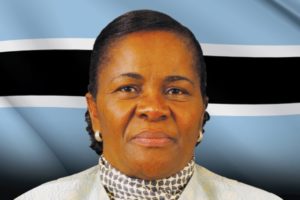
 The Central Bank of Nigeria (CBN) has expressed great concern over the continued and attack on its policies by a group of Nigerians, whose real interests, it said, are anything near altruistic but rather self-serving and unpatriotic.

Run, Sule Lamido, Run! By Sufuyan Ojeifo
Former governor of Jigawa state, Alhaji Sule Lamido, has served notice of his intention to throw his hat in the ring for the position of Nigeria’s president in 2019. It is his right to do so. He has the requisite backing of the constitution of the Federal Republic of Nigeria and the concurrence of the constitution of his political party, the Peoples Democratic Party (PDP), to make certain his bid.
Nevertheless, he needs more than the rights conferred on him by these constitutions to win the election. As a presidential aspirant, he has to appeal to the sensibilities of the vast majority of his party men and women, more especially the delegates who will vote at the primary, with his reform agenda. This is the surest way to clinch his party’s ticket.
The battle, within the PDP for the ticket, is not going to be a tea party. It is going to be fiercely fought because the party is shorn of the overwhelming superintendence of a sitting president. What this encourages is a free course for many presidential aspirants to tread.
Lamido is lucky to have a head-start. He is the only one who has, so far, rolled out the drums to herald his own coming. He is not hiding behind a finger. But that is how far luck can take him. He should, therefore, brace up for challenge within the party from other presidential hopefuls.
This is where choices based on comparative advantages and selfish political interests will weigh in. The capacity of the individual aspirants to address the nation’s economic problems as well as their acumen, political ideals and ideological inclinations will largely define who clinches the ticket.
The path to the presidency anywhere in the world is, unarguably, long, tortuous and challenging. Lamido is conversant with this cosmopolitan reality. He is politically prudent to know there is a great deal of heat in the kitchen. Having, therefore, headed for the kitchen in spite of the shenanigans that have been constructed around him, he must stay on.
Perhaps to intimidate him from going into the race, the Economic and Financial Crimes Commission (EFCC), as early as last year, charged him with corruption and money laundering offences, along with his son. That pre-emptive move by the EFCC finds explanations in a very recent history of presidential politicking.
Ahead of the 2015 presidential election, some powerful forces in the PDP had been opposed to Goodluck Jonathan seeking a second term in office. One of the power centres, coordinated by former president, Chief Olusegun Obasanjo, rooted for a Sule Lamido candidacy.
The argument then was that in 2010, in order to get the widespread support that saw him become the candidate of the party and president, Jonathan had agreed to a term of four years in office, after which power would revert to the north of the country. But that proposition, fuelled by revulsion and antagonism rather than consensus, could not be pushed through.
It is irrelevant whether Jonathan fought back or the people around him did. His candidature was eventually foisted on the party. As has been explained by Lamido in some of his newspaper interviews, he and, perhaps, those promoting his candidature, had to reconsider their strategy in the face of the universal fact that it is always difficult to defeat a sitting president in the primary of his or her party.
Jonathan was allowed to exercise the right of first refusal. What happened, thereafter, is fresh on our minds. He lost the presidential election to Muhammadu Buhari who, as it were, is the potential presidential candidate of the APC as far as the 2019 presidential election is concerned except he or existential happenstance decides otherwise.
Back to Lamido, because of the abandoned mid-stream project sponsored by Obasanjo and his clique on their failed voyage to stop Jonathan from being the PDP standard bearer, he has not found it difficult to revisit his desire to be president. The agent of the state-the EFCC- did not also find it difficult to move against him to stymie his presidential ambition.
Those who are arrayed against Lamido, perhaps, know that he is strong-willed and tenacious. Maybe, they also know that he is capable of enjoying cult following in the north. Therefore, they presuppose that tarring him with the brush of corruption should be enough to discourage him from entering into the presidential race. But, unfortunately, they are wrong.
The current economic difficulties confronting the nation under Buhari’s presidency have made a Lamido presidency an attractive option. Other aspirants will, certainly, excite the Nigerian people who are desirous of a change of “the change” they foisted on themselves in 2015 when they expressed their preference for Buhari instead of Jonathan.
This is where the aspirants will have to prove their individual mettle, regardless of who the APC is presenting for the presidential poll. But the odds are against the ruling party for presiding over a shambolic political economy. There is growing hunger in the land. The purchasing power of Nigerians has continued to ebb away due to runaway inflation, nay stagflation.
Arresting the economic drift, together with saving the nation’s economy from recession, is one of the critical issues that will determine the shape and texture of the 2019 presidential poll. Nigerians need a Lee Kwan Yew who can take the country out of the aggravating economic quagmire. It is one thing for Lamido to take up the gauntlet to run for the presidency; it is another thing for him to have what it takes to restructure and redirect our economy on the path of recovery and sustainable growth.
This is not an unconscionable attempt to de-market Lamido. It is, rather, a patriotic service to interrogate his capabilities. Once beaten, they say, twice shy. Nigerians will, this time round, shun bandwagon effects produced by mindless propaganda. Not again will Nigerians be satisfied with stupidly sentimental defences of any candidate. We will not accept “NEPA bill” instead of real certificates evidencing educational qualifications.
Lamido should throw everything at his disposal into the race if he has the capacity, education, intellectualism, temperament, clear-headedness and antecedent in government to coordinate a resurgence of our poorly managed economy.
There is no doubt Lamido is politically astute. He has an intimidating pedigree in politics. The fact is our nation is not in short supply of realpolitikers. However, I want to safely assume that Nigerians are tired of governance at the centre through the prisms of realpolitik, primordial sentiments and ethnic prejudice that conspire to starve economic pragmatism.
What we need urgently in our nation is economic renaissance by the hands of an intensely knowledgeable pragmatist who knows what to do and how to get personnel to assist him in propping up our prostrate economy.
We no longer need the ongoing joke of a nation with five or thereabouts foreign exchange rates that do not promote investment or inspire investors’ confidence in our economy. Sadly, everybody, from the uneducated to the intelligentsia, is talking about how the foreign exchange regime has been mismanaged such that soaring prices of even farm produce are attributed to naira exchange rate to the dollar, which is doing the yo-yo.
This, along with the inability to diversify our economic base to stimulate domestic production and accretion of revenue to bolster the nation’s earnings, is the scenario confronting us as a nation. Therefore, the choice of our next president will not be based on sundry sentiments or political shrewdness alone. Sound knowledge of the economy is obligatory criterion. Nigeria and Nigerians need a man who is imbued with the savvy to rescue the economy. Sule Lamido? I need to be convinced.