There are indications that the embattled former President of The Gambia, Yahya Jammeh has agreed to relinquish power, even as his request to remain in the country after leaving office was denied by the Economic Community Of West African State (ECOWAS).
Writing on Twitter on Friday, the new President who was sworn in at the neighbouring country, Senegal yesterday, Adama Barrow said that Jammeh, who ruled the country for 22 years and refused for weeks to step down after losing the recent election, has finally “agreed to leave.”
“I would like to inform you that Yahya Jammeh has agreed to step down. He is scheduled to depart Gambia today. #NewGambia,” he tweeted.
This was even as Jammeh who was said to have started negotiations with ECOWAS on Thursday, demanding an amnesty for any crimes that he may have committed during his 22 years in power should be forgiven. He also demanded that he should be permitted to stay in Gambia, at his home village of Kanilai.
But, according to the head of ECOWAS, Marcel Alain de Souza, those demands were not acceptable, saying that Jammeh’s continued presence in Gambia would “create disturbances to public order and terrorist movements.”
Meanwhile, The Gambia’s chief of defence forces, Ousmane Badjie has pledged his allegiance to the new president.
Barrow, a real estate agent turned politician, had flown into Senegal on January 15 to seek shelter after weeks of rising tension over Jammeh’s stance.
West African troops had entered the country to bolster new President Barrow, but military operations were suspended in favour of a final diplomatic push to convince Jammeh to exit peacefully.
In his first media interview with Al Jazeera, Barrow said that he hoped the 15-nation Economic Community of West African States (ECOWAS) could find him a safe haven. [myad]
Melania Trump will be the first lady in more than 200 years not to move into the White House on Inauguration Day. Her decision will cause her husband’s budding administration headaches that could be easily avoided by following tradition, including dealing with public outrage over the high cost of maintaining a full-time residence in Manhattan and increased security risks.
By continuing her life as usual, Mrs. Trump will also deny the administration certain advantages, such as the feel–good media coverage that results from having a new family in the White House — no small thing for a president–elect with historically low approval ratings.
But as far as we can tell, Melania Trump doesn’t care. And that is actually a step forward for presidential wives.
It is precisely this construction of women’s identity that Betty Friedan critiqued in “The Feminine Mystique.” It is also one reason social scientists have shied away from studying first ladies, directing their attention instead to women in elected office, and consequently, exacerbating the irresponsible double stereotype of first ladies as powerless political bystanders and unworthy topics of serious academic consideration.
Despite receiving no compensation inside or outside the White House, first ladies shoulder a disproportionate amount of the communications responsibility delegated to presidential surrogates due to their unique status and unmatched favorability, as my research shows. First ladies have made more public remarks than vice presidents across the past three administrations, and almost 30 percent of Laura Bush’s and Michelle Obama’s public speeches were delivered in a campaign setting, aimed to further the electoral prospects of their husbands or their husbands’ political allies.
Melania Trump represented a sharp divergence from this level of activity throughout the Trump campaign, rarely appearing on the trail except for a few high-profile speeches and interviews. But the content of these were, admittedly, very gendered. She often talked about her private sphere roles as a wife and a mother, and spent much of her time on the news circuit defending her husband in light of his misogynistic remarks and against allegations of sexual assault. It is understandable, for these reasons that she has not emerged from the 2016 campaign season narrative as a champion of women’s equality.
Yet for those of us who came of age during the emergence of a boundless and empowering third-wave feminism that is supposed to acknowledge the diverse experiences and preferences of all women, it should not seem outrageous or be difficult to consider her a victim of sexism rather than a contributor to it, or to praise her dissident actions instead of condemning her conformist ones.
To reject the exercise entirely would be an embarrassing manifestation of the very problem that today’s feminist gatekeepers purportedly seek to remedy: prejudice against women who don’t share certain priorities or perspectives.
Not only have women’s groups been reluctant to defend Melania Trump, but prominent feminists have lambasted her. Throughout the election season, Melania Trump was slut-shamed for posing nude, referred to as a “trophy spouse,” accused of working as an escort and mocked for her appearance and accent. Again diverging from the typical presidential campaign playbook, which calls for spouses to actively enhance the positive image of the candidates, rather than distracting from it or causing controversy, she responded rather aggressively to these attacks, threatening to sue several news publications for defamation.
It was surely not the best strategic move for her husband’s campaign, which was already struggling to garner favor with the media. But Melania Trump was defending herself, not the Trump campaign.
And instead of making excuses for her modeling career in an effort to court social conservatives during the Republican primary, she responded bravely and unapologetically. “I’m very proud I did those pictures,” she said in a CNN interview. “I’m not ashamed of my body … and it was done as art and as a celebration of the female body.”
Melania Trump may be the least popular presidential spouse since Hillary Clinton, and she has shirked most opportunities to build up her favorability and relatability — or her husband’s — by making targeted public appearances that would the benefit the Trump administration.
However, in her apparent refusal to adhere to a path first ladies have followed for decades, she may lessen the burden placed on future presidential spouses, allowing them respite from some of the duties feminists have long lamented. Melania Trump is doing Melania Trump, and in the era of the permanent campaign, that is something worthy of recognition.
Lauren A. Wright is author of “On Behalf of the President” and a board member of the White House Transition Project. [myad]
I was going to title this article “What do Anglophone Cameroonians want?” To avoid any confusion of identity with those who simplify being Anglophone in Cameroon as being able to speak English, I want to be clear that the revendications in Cameroon centre around a people who originate from a specific geographical region.
This region was known as British Southern Cameroons. In this article, any further mention of Anglophone should be related to people from the then British Southern Cameroons or from West Cameroon, as opposed to anyone from the Republic of Cameroon who can express himself or herself in English. The identity issue is foremost in this struggle. Identity is far more than language. With Identity come language, values, governance, culture and a way of life. In these aspects, the two peoples in today’s Republic of Cameroon (British Southern Cameroons and the Republic of Cameroun) have fundamental differences. The struggle in Cameroon by the people of Southern Cameroons is not only because the other side is not recognizing her system and abiding by the cohabitation principles laid out in 1961, but the fact that the Republic of Cameroun is completely annexing the British Southern Cameroons, wiping away any signs of its heritage and forcing its people to become the people of the Republic of Cameroun.
2017 offers us a ray of hope, beckoning in the horizon. Our people now have another golden opportunity to decide to divorce from the Republic of Cameroun or to stay in this marriage of convenience and keep complaining. Insanity is doing the same thing and expecting different results. If we do today what our leaders did in 1961 and 1972 then our children, grand children and great-grand children will most likely get in 2083 and 2100 what we have now. The opportunity of this critical juncture cannot be missed!
The world is silent as the time-bomb in Cameroon is ticking to the point of explosion. Even people in neighbouring Nigeria do not seem to know what is happening next door. Hardly does one turn on the TV or the pages of the Nigerian newspapers and hear or read anything about Cameroon, in spite of the over 1500km land-border that the two countries share. Nigeria has an embassy and two Consular officesin Cameroon (Yaoundé, Douala and Buea). Similarly, Cameroon has an embassy in Abuja, a consular office in Lagos and another in Calabar.
Estimates put the number of Nigerians living in Cameroon at around 2 million. What happens in Nigeria has a direct or indirect impact in Cameroon and vice versa. The case of BH is glaring for all to see. For many people in the world, Cameroon is a country in peace. We should note that peace is not the absence of war. Behind the seeming peace in Cameroon, is a growing Anglophone problem; discrimination, marginalization and almost outright enslavement. This is happening while the world watches in silence. Unfortunately, such problems only come to the limelight when there are strikes, riots and killings.
Today Monday, 9th of January 2017, the situation in the English speaking part of Cameroon (British Southern Cameroons) can only be described as totally dead. The entire Anglophone Cameroon is like a ghost-town. Reports reaching us, say that from Ekok and Otu at the southern border with Nigeria, to Afab, Ewelle, Kembong, Mamfe, Batchuo, Bakebe, Tinto, Sumbe, Kumba, Ekondo-titi, Mundemba, Muyuka, Buea, Limbe (Victoria), Tiko, Bamenda, Bali, Wum, Ndop, Kumbo, Nkambe and Menchum,everything is at a standstill. There is no movement of people, bikes or vehicles. This is in complete obedience to a sit-instrike called by the Teachers’ Trade Union andthe Common-Law Lawyers, following an impasse at the close of last year. This response is even more significant considering that the government of Cameroon over the weekend deployed ministers and senior administrators to the region, to meet with chiefs and other stakeholders to lobby for the strike not to be adhered to.
In their “quiet” action, the Anglophones have spoken clearly and loudly to the authorities in Yaoundé. There is an Anglophone problem in Cameroon. It should be looked into very carefully and profound solutions sought or the people are left with no alternative than to go their own way. If a marriage cannot work, then divorce becomes the only solution.
Today in Cameroon, we have a situation where teachers of French origin and expression are transferred to the English-speaking part of the country to teach subjects like Biology, Chemistry, Geography, History and Physics. When I was a kid, the only French teachers we had taught us French as a language, which we reluctantly learned.Today, students who study technical education at the secondary schools are taught a curriculum that is fundamentally French in nature. As if this is not bad enough, when they complete their studies and have to write the final exams, they write an exam which is set in French. After complaining for many years, the government decided to translate the exams into English and we have ended up now with a situation where a student of Mechanics could see a question set in French as “Quel est le rôle de la bougie dans une voiture?” translated as “what is the role of a candle in a car?” While this translation is verbatim-correct, it is nonsensical in context because of the wrong use of the word “candle” as a translation of “bougie”. The correct translation would have had “spark-plug” instead of “candle”. Little wonder then that the Anglophone student will fail the exam even before he/she leaves the hall because the right questions were never asked.
The French Law system (Civil Law) is fundamentally different from the British (Common Law). The educational system in Cameroon today is such that students who go to university to study Law can either end up with a degree in Civil Law or in Common Law. However, there is only one school in Cameroon that trains Magistrates and the curriculum of that school is based on the French Civil Law system. What this means is that all the Magistrates in Cameroon have been prepared through the French Civil Law system and are expected to go to the English-speaking parts of the nation and adjudicate cases of the British Common Law order.
There is no Anglophone in any key position in the Supreme Court of the nation. Of the 38 ministers with portfolio in Cameroon, only one (1) is Anglophone. Today, there is no airport in Anglophone Cameroon, but there were three airstrips in this region in 1982. The natural deep-seaport in Cameroon is in Victoria in the Anglophone region. It has literally been abandoned in preference to one in Douala, in the Francophone part, which has to be dredged continuously. The only oil refinery in Cameroon is located in the Anglophone part but its taxes are paid to a region in the Francophone part. Over 90% of the workers at the oil refinery, from the guards at the gate to the General Manager are Francophones. After a lot of pressure from the Anglophones, the government has been reluctantly creating tertiary education centres in the Anglophone region,but fills them with students of Francophone origin. The latest was the admission into the School of Sports of the University of Bamenda, in the Anglophone part, to which less than 5% of the students are Anglophones. In a class of about 250 students in the Faculty of Engineering at the University of Buea, less than 50 are Anglophones. The situation in the Faculty of Health Sciences at this university is even worse.
To better understand what the Anglophone Cameroonians want, let us take a walk down memory lane and see where they are coming from, whythey are here andwhere they are going to. This unfortunate situation of Cameroon started in 1919 at the end of WW1. Before 1919, Kamerun, as it was known was a German territory. After the war in which the French, British and Belgian forces defeated the Germans, the spoils of war were sharedbetween France and Britain. This was ratified in the treaty of Versailles. In that agreement, Eastern Cameroon was given to France and Western Cameroon was given to Britain, as Trust territories. The British government took their part, known as the British Cameroons, and added it to the Republic of Nigeria. Before being attached to Nigeria, Western Cameroon was further divided for administrative convenience into two; Northern British Cameroons and Southern British Cameroons. The Northern British Cameroons was administered as part of Northern Nigeria and the Southern British Cameroons as part of Southern Nigeria.
In 1954, Southern British Cameroons became a self-governing territory, following her declaration of benevolent neutrality in the Nigerian Eastern House of Assembly. It had a governance structure with a Legislature, Judiciary, House of Chiefs and an executivebranch headed by a Prime Minister. They built the Prime Minster’s lodge which still stands tall to this day in Buea. They set up democratic institutions in the region and the people there participated actively in a democratic political system.In 1959 multiparty elections were held in the Southern British Cameroons and the opposition party candidate, John Ngu Foncha won and became Prime Minister, replacing Dr EML Endeley. A peaceful democratic transfer of power happened in Africa in 1959!!! Where did we go wrong?
The unasked options that led to a very unhealthy Marriage
On the 1st of January 1960, French Cameroun got its independence from France and named itself the Republic of Cameroun. On the 1st of October 1960, ten months after the Republic of Cameroun, Nigeria got its independence from Britain and became the Federal Republic of Nigeria. In February 1961, a plebiscite was organisedin which the people of British Cameroons (both South and North) were asked to choose whether they wanted to achieve independence by joining the already independent Republic of Cameroun or join the Federal Republic of Nigeria. The people of Northern British Cameroons (part of Northeast Nigeria today) voted overwhelmingly to remain part of Nigeria while the majority of the people of Southern British Cameroons (today’s Northwest and Southwest regions of Cameroon) voted to join the Republic of Cameroun in a loose confederation. The unasked option is “whether any of the British Cameroons wanted to be an independent nation”. This option would have been in order, considering that the British Southern Cameroons have a land size of about 43,000 km², slightly larger that the 41,543 km² of the Netherlands,with a population of about 8million, more than that of Paraguay.
From July 17th to 21st1961, the first president of the Republic of Cameroon, Ahmadou Ahidjo, organized a conference in Foumban to draw up a charter for a Two-State system within a federal political arrangement. After the Foumban conference, on the 30th of September 1961, President Ahidjo proclaimed into being the Federal Republic of Cameroon and the two states celebrated unification on the 1st of October 1961. From thence, Southern Cameroons was named West Cameroon and the Republic of Cameroun named East Cameroun.
On the 20th May 1972, in another master stroke, President Ahidjo outmanoeuvred the people of Southern Cameroons in a stage-managed referendum and created the United Republic of Cameroon. In doing so, he changed the Southern Cameroons organization that was before then divided into six regions (Mamfe, Kumba, Victoria, Bamenda, Wum and Nkambe) into two Provinces of his United Republic; the “South West” and the “North West” Provinces. He divided East Cameroon into five provinces (Northern, Western, Littoral, Central South and Eastern).
How long? Too long!
President Ahidjo ruled the United Republic of Cameroon until November 1982, when it is believed that his French doctor tricked him about his health, then he resigned and handed over power to his long-time associate and Prime Minister, Paul Biya. He remained as the President of the only political party at the time, the Cameroun National Union (CNU). It is also widely believed that in 1983 the two powerful men had a feud that led to the former President going into exile to France. In an earlier twist, in June of 1983, there was a coup attempt that was foiled. Ahidjo went into exile in July, and in August he announced that he was no longer the head of the CNU. In February 1984, Ahidjo was sentenced to death in absentia for his alleged participation in the failed coup. In April 1984 another violent coup was foiled and many believed that the former President had his hands in it. Ahidjo denied any involvement in any coup. The death sentence on President Ahidjo was later commuted to life-imprisonment by President Biya. Later on Ahidjo moved to Senegal where, on the 30th of November 1989 he died of a heart attack in Dakar. In one of my trips to Senegal, I was truly sorry when I visited and stood beside the tombstone of the man who always coughed before his radio addresses and every Cameroonian stood still. I read the inscription on his tomb which translates to “here lies the remains of Ahmadou Ahidjo, the former President of Cameroon”. How and where the mighty fall!
President Paul Biya has been ruling Cameroon since November 1982. Yes, 18 years before the 21st century, 17 years since and still counting… In 1984 he changed the name of the country from the “United Republic of Cameroon” back to the “Republic of Cameroon”. In the same stroke, he fractured the Northern province into three (Adamawa, North, and Far North). He met a single party in the country and reluctantly accepted multiparty democracy in the early ‘90s, in which he won elections by just over 52%. In the last election in 2011, he won by 78%. When he took over power the Presidential term of office was without limit. He changed it to two terms of five years each, not counting all the years he had ruled before that date. He changed it again to two terms of seven years and in 2008 in another constitutional amendment, he eliminated the term limits altogether, making himself realistically President for life.
Over the years,most of the people that the presidents of the Republic of Cameroon have placed in key positions in the world’s greatest organizations are Francophones. These include those appointed tothe United Nations and key countries, as Ambassadors and High Commissioners.In this research, until 2008 all the Cameroonian Ambassadors to the UN, USA, UK, Nigeria, France and Germany were Francophones. Till date only one Ambassador to these countries, the Cameroon High Commissioner to the UK, is Anglophone.
Cameroon Ambassadors / High Commissioners to Nigeria (All French-Speaking Cameroon):-
M Haman Dicko – 1960 – 1966
Hamadou Alim – 1966 – 1975
Mohaman Yerime Lamine – 1075 – 1984
Souaibou Hayatou – 1984 – 1988
Samuel Libock – 1988 – 1994
Salaheddine Abbas Ibrahima – 2008 to date
Cameroon Ambassadors to the United Nations (All French-Speaking Cameroon): –
Ferdinand Oyono – 1974 to 1982
Martin Belinga Eboutou – 1998
Anatole Marie Nkou – 2007
Michel Tommo Monthé – 2008
Cameroon Ambassadors to the United States of America (All French-Speaking Cameroon): –
Jacques Kuoh-Moukouri
Joseph Owono – from 1970s
Paul Pondi – from 1982 to 1993
Joseph Bienvenu Charles Foe-Atangana
E. Étoundi Essomba—current ambassador
Cameroon High Commissioners to the united Kingdom:-
Paul Pondi 1977
Dr Gibering Bol-alima
Nkwelle Ekaney – 2008 (English Speaking) won the 2014 Best African Diplomat Award in the UK
Cameroon Ambassadors to France (All French-Speaking Cameroon): –
Ferdinand Oyono – from 1965 to 1968
Jacques-Roger Booh-Booh – from 1983
Lejeune Mbella Mbella – over twenty years
Samuel Mvondo Ayolo – from October 2015
Cameroon Ambassadors to Germany (All French-Speaking Cameroon): –
Jean-Baptiste Beleoken – 1970’s
HE Holger Mahnicke
The Anglophone problem is real and must be addressed as a matter of urgency.
The Federal Capital Territory Minister, Malam Muhammad Musa Bello, has proposed a round-table meeting with stakeholders and experts to brainstorm on the possibility of redesigning Abuja Master Plan to meet the present and future standards of ideal capital city. The minister, who received in audience today, Friday, members of the Nigeria Mining and Geo Sciences Society, led by its President, Professor Gbenga Okunlola, said that the experts and stakeholders would be expected after the round-table, to reach a consensus on how Abuja should be in the next 20 years from now. Muhammad Bello said that the present FCT Administration is jealously guarding the implementation of the Abuja Master Plan, explaining that some wrongs perpetuated in the in the past are being corrected. “Since we came on board, we have always insisted on going back to the basis to safeguard for instance, green areas for tourists attractions for the present and future generations.” He said that plots of land previously allocated on rock formations or near rock formations in the Federal capital city have been put on hold to be preserved. “It is our duty to protect and preserve such areas like rock formations, green areas and others that can be of immense attraction to tourists in the Federal Capital Territory.” He assured the visitors that they would be part of the experts and stakeholders to brainstorm on the Abuja Master Plan and the future of Abuja. Earlier, Professor Gbenga Okunlola had said that they were in Abuja in preparation for the 53rd conference of the society coming up on 23rd March 2017, adding that the society, established in 1961, is one of the oldest professional bodies in Nigeria. He commended the present FCT Administration for the high level of security in the city as well as its efforts in completing the abandoned road projects. “The level of adherence to the Abuja Master Plan is also commendable.” He asked the minister to engage the services of the Society in the plan to embark on the geological maps upgrade and review of the Abuja Master Plan. According to Professor Okunlola, Abuja has six different kind of rocks, saying that building failures are mostly due to geological factors. [myad]
George W. Bush won the 2004 election. He won it by more than the pundits expected. He won it by enough to keep Republicans in control of the House and the Senate. He won it by enough to say, with real reason, “I earned capital in this campaign, political capital, and now I intend to spend it.” He began his second term with a 57 percent approval rating.
Two years later, Republicans lost the House and Senate. Four years later, they lost the presidency. Bush left office with a 34 percent approval rating. The aftershocks of his administration would rip through the Republican Party and lead, in different ways, to both Barack Obama and Donald Trump.
Winning an election is the beginning of the story, not the end of it.
Bush did not become a worse politician between 2004 and 2008. He did not lose his folksy charisma or fire the architects of his political operation. He was done in, rather, by the results of his policies — the Iraq War, the financial crisis, the broad rejection of Social Security privatization. Even the most talented politician can’t out-communicate reality.
This is a lesson both Trump and congressional Republicans would be wise to heed.
Former President George W. Bush waves goodbye to the Obama family as he departs the Capitol after President Obama was sworn in on January 20, 2009. Charles Ommanney/Getty Images
In conversations in recent weeks, I’ve found that both Democrats and Republicans believe Donald Trump has suspended the rules of politics. He wasn’t supposed to win, and he did win, so who’s to say what hurts him and what doesn’t?
There’s something to be said for that view. Trump’s political successes have certainly defied my expectations. But the idea of Teflon Trump is belied by the evidence. Trump is a historically unpopular figure who received fewer votes than his opponent. He takes office with the lowest approval ratings of any president-elect on record. The surprise of his victory has overwhelmed the strangeness of its circumstances and the weak foundation upon which it rests.
And Trump’s job is about to get much harder. His great advantage as a candidate was that he had no real record in politics. He had no votes to defend or results to explain away. In that environment, you might expect Trump’s comments to be taken more seriously, but the opposite happened. Trump’s evident ignorance of policy topics, and his tendency to frequently contradict himself, raised questions about whether he believed, or even understood, what he was saying. As Vox’s Dave Roberts once wrote, evaluating Trump’s policy comments could seem a category error, like “critiquing the color choices of someone who is colorblind.”
The results were voters, like the ones Vox’s Sarah Kliff met in Kentucky, who heard what Trump was saying and simply didn’t believe it. “I just think all politicians promise you everything and then we’ll see,” said Kathy Oller, an Obamacare enrollment counselor who voted for Trump and felt comfortable dismissing his promise to repeal the law.
But that ends now. The presidency is a job of specifics. Specific legislation that you either sign or veto. Specific executive orders that lay out their intentions in clear language. Specific nominees whose backgrounds and actions reflect back on their boss. And specific results that voters hold you accountable for.
Trump begins a nearly impossible job in a historically weak position. He is about to develop a record that he cannot escape and cannot deny. It matters greatly whether he and congressional Republicans do a good job. And it is not obvious, at least to me, that they realize it.
A Cabinet at war with itself
On Thursday, the day before Trump’s inauguration, Rick Perry, the former governor of Texas, appeared before the Senate Committee on Energy and Resources. Perry was there to win confirmation as Trump’s first secretary of energy, and he came with an agenda in mind.
“I’m a big believer that we have role to play in applied R&D and technology commercialization,” Perry said. He touted the government’s history helping to develop the technology that kicked off the hydraulic fracking boom. He said he wanted to increase research into advanced supercomputing. He boasted of his own work in Texas investing in solar energy research.
But shortly before Perry’s hearing began, the Hill report that Trump’s transition team was prepping the administration’s first budget — and including massive cuts to the Department of Energy. It quickly became clear that no one had briefed Perry on the administration’s plans. What happened next, as Vox’s Brad Plumer recounts, was excruciating:
Sen. Debbie Stabenow (D-MI) asked Perry whether he’d go along with eliminating the Office of Energy Efficiency and Renewable Energy (which focuses on research around wind, solar efficiency) or the Office of Fossil Energy (which is crucial for developing capture technology for coal). He tried to shrug it off, saying, “Just because you see something on the internet doesn’t mean it’s true.”
When she pressed, Perry meekly added that he’d try to advocate for these agencies, “but I may not be 1,000 percent successful.”
A few minutes later, Sen. Mazie Hirono (D-HI) brought up the cuts again, saying, “It’s hard to see how we can pursue an ‘all-of-the-above’ [energy] strategy if so much of the department’s capabilities are eliminated. Do you support these cuts, yes or no?”
Perry made another awkward joke without really answering: “Well, Senator, maybe they’ll have the same experience I had and forget that they said that.”
Two days before Perry’s embarrassing hearing, Betsy DeVos, Trump’s nominee for secretary of education, appeared before the Senate’s Health, Education, Labor, and Pensions Committee. The hearing was a fiasco.
DeVos — who has made her name in conservative politics as a billionaire donor, not a policy expert or successful public official — has few qualifications for the role, and evinced little knowledge of key debates in education. Asked an obvious question by Sen. Al Franken about whether she thought schools should be measured on the progress their students made or the absolute amount they knew, she appeared completely unfamiliar with the debate, and wasn’t able even to parse the question. At another point, she suggested guns might be needed in schools to defend against bears.
Senate Republicans seemed forewarned that DeVos was unprepared for the hearing. They scheduled the discussion, unusually, for 5 pm, and limited each senator to a single question. This perhaps protected DeVos from further embarrassment, but as Matt Yglesias wrote, it is hard to see how that actually helps the Trump administration:
At the end of the day, there is going to be an education secretary, and that person is going to be a member of Trump’s administration. It’s in the Republican Party’s interest, more than anyone else, that that person be an effective member of the team. Shielding DeVos’s flaws from public scrutiny by scheduling an unusually brief hearing with limited questions at an odd time works well if your goal is to spare her embarrassment. … But the GOP is only sabotaging itself by allowing Trump to draft this C-list roster. The president can’t be everywhere simultaneously — an effective Cabinet is how he extends his reach, influences more people, and gets more done.
Over the weekend, Trump gave an interview to two of Europe’s biggest newspapers in which he called NATO “obsolete,” predicted the European Union would fall apart and said the United States would be perfectly happy to see it happen, and threatened a trade war with Germany over BMW locating a plant in Mexico. Meanwhile, he struck a conciliatory note on Russia, suggesting he’d be happy to lift sanctions “if we can strike a few good deals with Russia.”
As Zack Beauchamp wrote, “Trump’s stated policy ideas, if implemented, would have the effect of accomplishing much of what Putin has dreamed of but that the Russian leader may have never have thought possible.”
This is, to put it lightly, not the foreign policy that Trump’s various Cabinet nominees have outlined. His defense secretary, Gen. James Mattis, aced his hearing by throwing Trump under the bus.
“The most important thing is that we recognize the reality of what we deal with Mr. Putin, and we recognize that he is trying to break the North Atlantic Treaty Organization,” Mattis said. He went on to call NATO “the most successful alliance in modern history, and maybe ever.” He contradicted Trump on the Iran nuclear deal, which he supports leaving in place, and on moving Israel’s capital to Jerusalem.
The story was similar with other nominees. Nikki Haley, Trump’s proposed United Nations ambassador, took a hard line on Russia, and criticized Trump for his attacks on German Chancellor Angela Merkel. Trump’s candidate for secretary of state, Rex Tillerson, tried to sidestep the whole situation by claiming he and Trump had never even talked about Russia.
And this is only counting the parts of Trump’s administration that are being staffed. The New York Times notes that Trump has named only 29 of the 660 executive branch appointment he needs to make, “a pace far slower than recent predecessors.”
It’s healthy and appropriate for administrations to contain differing opinions. But the Trump administration looks, at its inception, like an administration at war with itself, and with its boss. It doesn’t appear to be properly vetting its candidates for senior posts, preparing them for hearings, or briefing them on key plans. It is moving slowly to identify candidates, and will take office badly understaffed given the scale of Trump’s ambitions. No one knows who Trump will listen to, what he will tweet, or even what he really believes. This is a recipe for paralysis at best and disaster at worst.
A president who believes what he wants to believe
Most of Donald Trump’s tweets deserve much less attention than they get. But there was one he sent out this week that should have been taken much more seriously than it was.
It came in response to Trump’s poll numbers, which are miserable and getting even worse. Gallup finds Trump will take office with a 40 percent approval rating. Quinnipiac pegs it at 37 percent. At this point in their pre-presidencies, Obama’s approval rating was 78 percent, Bush’s approval rating was 62 percent, and Clinton’s approval rating was 66 percent. The numbers are stark enough that Trump felt compelled to respond.
“The same people who did the phony election polls, and were so wrong, are now doing approval rating polls,” he tweeted. “They are rigged just like before.”
There is so much Trump has claimed to be rigged — the media, the election, the Emmys, the Electoral College, chemistry tests — that it’s easy to ignore this kind of rhetoric. But there is little reason to doubt Trump believes it. If you had just won the election in defiance of all polls, wouldn’t you?
There is little reason to believe the polls are wrong, however. First, the national polls were not far off in the election — they predicted Hillary Clinton would win the popular vote, and she did, albeit by a few percentage points less than projected. But more to the point, what threw off the election polls was an incorrect model of who would actually turn out to vote — those polls, after all, have to distinguish people who will cast a ballot from those who won’t. Favorability polls don’t. They just ask anyone who is an adult, or anyone who is a registered voter, what they think.
But this fits Trump’s tendency to believe what he wants to believe — a characteristic that often leads him into stranger territory than doubting opinion polls. Trump is an enthusiastic conspiracy theorist who will believe almost anything so long as it flatters his view of the world. Obama was born in Kenya. Muslims in New Jersey cheered the fall of the Twin Towers. Climate change is a hoax invented by the Chinese. Vaccines cause autism. The Clintons perhaps murdered Vince Foster. Obama is a secret of Muslim. Antonin Scalia was assassinated. And on and on and on.
One of the dangers of the presidency is that it’s easy for anyone who controls nuclear weapons to insulate himself from hard truths and unpleasant critiques. But good decisions require good information. Presidents often have to hear things they don’t want to hear — that an idea isn’t good, that a plan has become unworkable, that a policy doesn’t add up, that a trusted subordinate is underperforming, that a strategy won’t survive public or judicial scrutiny. Trump, by contrast, hears what he wants to hear.
This is why his disregard of polling is so unnerving. Republicans control the House, the Senate, the Supreme Court, and most governorships. The only real check on Trump’s behavior is public opinion. But if he adopts the viewpoint that polls showing him unpopular must, by definition, be wrong, it’s hard to see how he’ll be able to check his own instincts. As Dylan Matthews wrote:
If Trump does dismiss these numbers, that means he’s ignoring one of the only things that can hold him back. Instead of taking polls as indicators — imperfect indicators, but still — that something is going wrong and he might want to pivot for his own good, he might not consider them at all. If he abuses the pardon power and his favorability plummets, he won’t notice. If he repeals Obamacare without replacing it and the country rebels, he won’t believe that Americans view that as a mistake.
Successful presidencies are not built atop self-delusion. Successful policies are not designed by ignoring inconvenient facts. And if nothing else, Trump will learn it is hard to hold Congress in line once you’ve become politically toxic.
The difference between Trump and Reagan
The optimistic view of Trump is that he is the second coming of Ronald Reagan — another politician derided as a celebrity ideologue but who remade American politics for a generation.
But Reagan was the two-term governor of California when he was elected president. He had spent years marinating in conservative ideas and learning how to put them into practice. He understood the institutions he needed to work through and the politicians he needed to partner with. He was a voracious reader who took what he read seriously, and routinely compromised with reality. He entered office with a 58 percent approval rating, and cultivated an optimistic, friendly political tone meant to allay fears of his presidency.
This is not to whitewash Reagan’s record, or even to dismiss the difficulty of the job he undertook. Two years after being elected, Reagan’s approval rating had dipped into the low 40s and Democrats saw massive wins in the midterm elections. The late Washington Post columnist David Broder declared Reaganism “a one-year phenomenon” and complimented the men “working together to fill the vacuum of leadership that Reagan’s phaseout has left.” Two years after that, Reagan was reelected in a landslide.
Elections are the beginning of stories, not the end of them. The hope and change Barack Obama’s supporters felt in 2008 was much diminished by 2012, and had curdled into something grimmer and more ironic by 2016. The uncertainty George W. Bush’s backers felt after the 2000 election had become elation by 2004 and devastation by 2008.
What drives the story, once a new president takes office, is reality. What changed for Reagan between 1982 and 1984 was the state of the economy. What changed for Bush between 2004 and 2006 was the grinding disaster of the Iraq War. What changed for Obama between 2008 and 2010 was that the high hopes of his election gave way to the reality of 10 percent unemployment and bitter polarization, and what changed between 2010 and 2012 was the beginning of economic recovery.
In a way few appreciated, Trump had the right experience for the job of presidential candidate. He was a reality television star at a time when cable networks and social media had turned elections into a reality television show. He knew how to hold the cameras, play the media, and thrill the crowd. He understood how to make people laugh and how to make them hate. He realized it was better to have some people love you than a lot of people merely like you.
But the job of president is different from the job of candidate — and in some ways, it is the opposite of the way Trump ran his candidacy. Trump ran on grand promises. Toward the end of the campaign, he took to telling rallies that voting for him was their last chance to “to make every dream you ever dreamed for your country come true.” Now he needs to deliver.
This next chapter is going to ask much more of Trump. It is going to require him to run a smooth, scandal-free administration, to choose wisely between the different policy and political options he’s offered, to win over politicians and voters deeply skeptical of his intentions, to keep a fractious Cabinet from collapsing into leaks and infighting, to respond to foreign crises with calm and consideration, to prioritize issues and tasks he finds unrewarding.
In 2016, Trump ran for president promising to make America great again. In 2020, he will need to persuade the country he succeeded.
I hope he succeeds. A failed presidency is much worse on the people it fails than on the president who retires to the speaking circuit. The way Trump has managed his transition has not filled me with optimism. But the office he is about to assume has a way of changing people. Perhaps he will rise to the occasion. [myad]
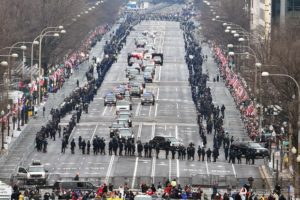
No fewer than 58 United States of America lawmakers boycotted the swearing in of the Donald John Trump today as the 45th President of that country. Trump was sworn in by Justice John G. Robert.
In his acceptance address, President Trump attacked the Washignton establishment and described his swearing in as a transfer of power from Washington to the people.
He said that today, Janurary 20th 2017 mark the day forgotten people will become rulers.
“From this day forward a new vision will govern our land: America first; America will start winning again.
Trump ended his inaugural address with his campaign slogan: “We will make America great again.”
Here is the text of the full speech:
Chief Justice Roberts, President Carter, President Clinton, President Bush, President Obama, fellow Americans and people of the world, thank you. We, the citizens of America, are now joined in a great national effort to rebuild our country and restore its promise for all of our people. Together, we will determine the course of America and the world for many, many years to come. We will face challenges, we will confront hardships, but we will get the job done.
Every four years, we gather on these steps to carry out the orderly and peaceful transfer of power, and we are grateful to President Obama and First Lady Michelle Obama for their gracious aid throughout this transition. They have been magnificent. Thank you. Today’s ceremony, however, has very special meaning because today, we are not merely transferring power from one administration to another or from one party to another, but we are transferring power from Washington, D.C. and giving it back to you, the people. For too long, a small group in our nation’s capital has reaped the rewards of government while the people have borne the cost. Washington flourished, but the people did not share in its wealth. Politicians prospered, but the jobs left and the factories closed. The establishment protected itself, but not the citizens of our country. Their victories have not been your victories. Their triumphs have not been your triumphs. And while they celebrated in our nation’s capital, there was little to celebrate for struggling families all across our land. That all changes starting right here and right now because this moment is your moment, it belongs to you.
It belongs to everyone gathered here today and everyone watching all across America. This is your day. This is your celebration. And this, the United States of America, is your country. What truly matters is not which party controls our government, but whether our government is controlled by the people. January 20th, 2017 will be remembered as the day the people became the rulers of this nation again. The forgotten men and women of our country will be forgotten no longer. Everyone is listening to you now. You came by the tens of millions to become part of a historic movement, the likes of which the world has never seen before.
At the centre of this movement is a crucial conviction, that a nation exists to serve its citizens. Americans want great schools for their children, safe neighbourhoods for their families, and good jobs for themselves. These are just and reasonable demands of righteous people and a righteous public.
But for too many of our citizens, a different reality exists: mothers and children trapped in poverty in our inner cities; rusted out factories scattered like tombstones across the landscape of our nation; an education system flush with cash, but which leaves our young and beautiful students deprived of all knowledge; and the crime and the gangs and the drugs that have stolen too many lives and robbed our country of so much unrealized potential.
This American carnage stops right here and stops right now. We are one nation and their pain is our pain. Their dreams are our dreams. And their success will be our success. We share one heart, one home, and one glorious destiny. The oath of office I take today is an oath of allegiance to all Americans. For many decades, we’ve enriched foreign industry at the expense of American industry; subsidized the armies of other countries, while allowing for the very sad depletion of our military. We’ve defended other nations’ borders while refusing to defend our own. And spent trillions and trillions of dollars overseas while America’s infrastructure has fallen into disrepair and decay. We’ve made other countries rich, while the wealth, strength and confidence of our country has dissipated over the horizon. One by one, the factories shuttered and left our shores, with not even a thought about the millions and millions of American workers that were left behind. The wealth of our middle class has been ripped from their homes and then redistributed all across the world. But that is the past. And now, we are looking only to the future.
We assembled here today are issuing a new decree to be heard in every city, in every foreign capital, and in every hall of power. From this day forward, a new vision will govern our land. From this day forward, it’s going to be only America first, America first. Every decision on trade, on taxes, on immigration, on foreign affairs will be made to benefit American workers and American families. We must protect our borders from the ravages of other countries making our products, stealing our companies and destroying our jobs. Protection will lead to great prosperity and strength. I will fight for you with every breath in my body and I will never ever let you down. America will start winning again, winning like never before.
We will bring back our jobs. We will bring back our borders. We will bring back our wealth. And we will bring back our dreams. We will build new roads and highways and bridges and airports and tunnels and railways all across our wonderful nation. We will get our people off of welfare and back to work, rebuilding our country with American hands and American labour. We will follow two simple rules; buy American and hire American.
We will seek friendship and goodwill with the nations of the world, but we do so with the understanding that it is the right of all nations to put their own interests first. We do not seek to impose our way of life on anyone, but rather to let it shine as an example. We will shine for everyone to follow. We will reinforce old alliances and form new ones and unite the civilized world against radical Islamic terrorism, which we will eradicate from the face of the Earth.
At the bedrock of our politics will be a total allegiance to the United States of America, and through our loyalty to our country, we will rediscover our loyalty to each other. When you open your heart to patriotism, there is no room for prejudice. The bible tells us how good and pleasant it is when God’s people live together in unity. We must speak our minds openly, debate our disagreements honestly, but always pursue solidarity. When America is united, America is totally unstoppable. There should be no fear. We are protected and we will always be protected. We will be protected by the great men and women of our military and law enforcement. And most importantly, we will be protected by God.
Finally, we must think big and dream even bigger. In America, we understand that a nation is only living as long as it is striving. We will no longer accept politicians who are all talk and no action, constantly complaining, but never doing anything about it. The time for empty talk is over. Now arrives the hour of action. Do not allow anyone to tell you that it cannot be done. No challenge can match the heart and fight and spirit of America. We will not fail. Our country will thrive and prosper again.
We stand at the birth of a new millennium, ready to unlock the mysteries of space, to free the earth from the miseries of disease, and to harness the energies, industries and technologies of tomorrow. A new national pride will stir ourselves, lift our sights and heal our divisions. It’s time to remember that old wisdom our soldiers will never forget, that whether we are black or brown or white, we all bleed the same red blood of patriots.
We all enjoy the same glorious freedoms and we all salute the same great American flag. And whether a child is born in the urban sprawl of Detroit or the wind-swept plains of Nebraska, they look up at the same night sky, they will their heart with the same dreams, and they are infused with the breath of life by the same almighty creator. So to all Americans in every city near and far, small and large, from mountain to mountain, from ocean to ocean, hear these words. You will never be ignored again. Your voice, your hopes, and your dreams will define our American destiny. And your courage and goodness and love will forever guide us along the way. Together, we will make America strong again. We will make America wealthy again. We will make America proud again. We will make America safe again. And yes, together we will make America great again. Thank you. God bless you. And God bless America. Thank you. God bless America. [myad]
Plain-cloth police men, today, Thursday, stormed the premises of Premium Times, an online medium operating from the nation’s capital, Abuja, arrested the Publisher, Dapo Olorunyomi and reporter, Evelyn Okakwu.
This was even as Global rights watchdog, Amnesty International has cried foul, insisting that the publisher and his reporter should be released immediately.
In a series of tweets from its handle @AmnestyNigeria, the rights group said: that it “will investigate the circumstances of this raid and the arrests of the journalists.”
The group called on government to ensure that the journalists have access to their lawyers and families even as it advised the security agencies to charge them to court if they have anything against them.
During the raid of the premises of the medium, the police said that they were acting based on a petition issued by the Chief of Army Staff (COAS), Lt. General Tukur Yusuf Buratai.
Findings show that the arrest of the journalists was not unconnected to three reports the medium published which related to the Army. They are about the COAS Buratai and his case at the Code of Conduct Tribunal (CCT), a Pastor that was murdered by the Army in Rivers State and the missing soldiers who was presumed to have been cornered and killed by Boko Haram terrorists. [myad]
Gambia’s President, Adama Barrow has taken the oath of office in neighbouring Senegal, while the country’s defeated longtime ruler, Yahya Jammeh also remains as President back in The Gambia. Barrow, who won the December 1 presidential election, was inaugurated tof\day, Thursday in a hastily-arranged ceremony at Gambia’s embassy in the Senegalese capital, Dakar. “This is a day no Gambian will ever forget in a lifetime,” Barrow said in a speech immediately after being sworn in. In Dakar, the small embassy room held about 40 people, including Senegal’s prime minister and the head of Gambia’s electoral commission. Also at the event were officials from ECOWAS, West Africa’s regional bloc, which is threatening a military intervention to force Jammeh to leave office. In his inauguration speech, Barrow called ECOWAS, the African Union and United Nations to “support the government and people of the Gambia in enforcing their will”. He also ordered Gambia’s armed forces to remain in their barracks and called for “allegiance to the motherland.” Meanwhile, hundreds of West African soldiers have deployed to the Gambian border to back Barrow in a showdown with Jammeh. The UN Security Council was set to vote later on Thursday on a draft resolution endorsing a military intervention by ECOWAS members to remove Jammeh. Senegal’s army had said on Wednesday it would be ready to cross into its smaller neighbour, which it surrounds, from midnight. “A military operation [is under way] with troops also from Ghana, Nigeria, Togo, Mali – they are all at the Senegale border and presenting a united front,” Al Jazeera’s Nicolas Haque, reporting from Dakar, said. A senior Nigerian military source told Reuters news agency that regional forces would only act once Barrow had been sworn in. Sources said: “eight cabinet members have resigned saying they no longer stand with Jammeh. But despite all these defections, Jammeh is still not willing to concede defeat.” Jammeh, whose mandate expired at midnight, had initially conceded defeat but a week later contested the December 1 poll’s results stating irregularities. A former coup leader who has ruled the small West African country since 1994, Jammeh has resisted strong international pressure for him to step down. But African nations began stepping away from him, with Botswana announcing on Thursday it no longer recognised him as Gambia’s president. Jammeh’s refusal to hand over power “undermines the ongoing efforts to consolidate democracy and good governance” in Gambia and Africa in general, it said. Earlier this month, the African Union announced that it would no longer recognise Jammeh once his mandate expired. At least 26,000 people have fled Gambia for Senegal since the start of the crisis fearing unrest, the UN’s refugee agency UNHCR said on Wednesday, citing Senegalese government figures.
The Director General of the Nigerian Maritime Administration and Safety Agency (NIMASA), Dr. Dakuku Peterside has asked the Management of Bond FM Radio in Lagos to use the medium to enlighten Nigerians on the benefits of a virile maritime industry to the nation. Peterside, who received the management, led by Engineer Bamidele Dada on a courtesy visit to the stressed the vital role the media can play in the quest for the nation’s growth and economic development. “Lately, we are working on the possibility of rebranding NIMASA and part of the findings is that very few Nigerians understand the role we play as a regulatory Agency. So, we enjoin you to use your medium to educate Nigerians about the things we do in NIMASA. “By the little things we do, we contribute so much to the growth of the maritime industry and by extension, the economy of Nigeria where we are major players. “Every day we are looking for avenues to ensure that more Nigerians get involved in the maritime industry.” Dr. Peterside pledged support for the media, even as he appealed to practitioners to always engage in constructive reportage of the maritime sector. “The media shapes peoples understanding of events; let’s not use the media for negative influence on the masses, let’s use the media to serve as the facilitator of economic re-engineering in our country.” Earlier, Engineer Bamidele Dada had lauded the rebranding initiatives of the Agency in repositioning the maritime industry for greater efficiency. He promised that Bond FM would partner with the Agency on a major enlightenment campaign on maritime activities to make Nigeria a hub in Africa’s maritime industry. [myad]
Aisha Buhari, wife of President Muhammadu Buhari has vowed to continue to mobilise resources to improve the lives of women and children in Nigeria. Aisha Buhari who played host to the Co-chair of Bill and Melinda Gates Foundation, Mrs. Melinda French Gates, at the Aso Rock Presidential Villa, Abuja today, Thursday, commended the activities of the Bill and Melinda Gates Foundation. Such activities, she said, includind the Foundation’s global interventions towards improving the well-being of the poorest people in the world. Aisha Buhari stressed the need to have stronger support from the Foundation as well as more productive and enduring partnerships with relevant bodies in Nigeria to implement Reproductive, Maternal, New-Born, Child and Adolescent Health (RMNCAH). Responding, Mrs. Melinda Gates expressed satisfaction with Mrs. Buhari’s Future Assured programme and that it is touching the lives of the poor and vulnerable in the society. She noted that such efforts make great positive differences in the individual lives. She stressed the need for role models in the society, like Aisha Buhari, saying: “it is girls that grow up to become mothers and these girls need role models to emulate”. She also commended the wives of state governors who she said, are doing everything possible to reduce negative health situation in their states. Earlier, the minister of Health, Professor Isaac Adewolehad commended the progress of the Future Assured Programme and the leadership provided by Aisha Buhari, especially in the area of malnutrition, through her direct support and advocacy. He called on the Mrs. Gates to leverage on the platform provided by the wives of the governors in order to achieve the targets of the foundation. Chairman, Senate Committee on Health, Senator Lanre Tejuosho, in his goodwill message promised that the Senate will continue to provide necessary legislation for effective health service delivery in the country. Wives of the state governors, and other relevant stakeholders were also there. [myad]
We use cookies on our website to give you the most relevant experience by remembering your preferences and repeat visits. By clicking “Accept”, you consent to the use of ALL the cookies.
This website uses cookies to improve your experience while you navigate through the website. Out of these, the cookies that are categorized as necessary are stored on your browser as they are essential for the working of basic functionalities of the website. We also use third-party cookies that help us analyze and understand how you use this website. These cookies will be stored in your browser only with your consent. You also have the option to opt-out of these cookies. But opting out of some of these cookies may affect your browsing experience.
Necessary cookies are absolutely essential for the website to function properly. This category only includes cookies that ensures basic functionalities and security features of the website. These cookies do not store any personal information.
Any cookies that may not be particularly necessary for the website to function and is used specifically to collect user personal data via analytics, ads, other embedded contents are termed as non-necessary cookies. It is mandatory to procure user consent prior to running these cookies on your website.



 The Federal Capital Territory Minister, Malam Muhammad Musa Bello, has proposed a round-table meeting with stakeholders and experts to brainstorm on the possibility of redesigning Abuja Master Plan to meet the present and future standards of ideal capital city.

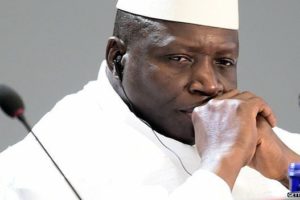
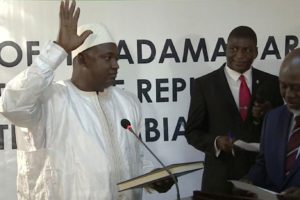 Gambia’s President, Adama Barrow has taken the oath of office in neighbouring Senegal, while the country’s defeated longtime ruler, Yahya Jammeh also remains as President back in The Gambia.
 Aisha Buhari, wife of President Muhammadu Buhari has vowed to continue to mobilise resources to improve the lives of women and children in Nigeria.

What Do People Of Southern Cameroons Want? By Julius AyukTabe
I was going to title this article “What do Anglophone Cameroonians want?” To avoid any confusion of identity with those who simplify being Anglophone in Cameroon as being able to speak English, I want to be clear that the revendications in Cameroon centre around a people who originate from a specific geographical region.
This region was known as British Southern Cameroons. In this article, any further mention of Anglophone should be related to people from the then British Southern Cameroons or from West Cameroon, as opposed to anyone from the Republic of Cameroon who can express himself or herself in English. The identity issue is foremost in this struggle. Identity is far more than language. With Identity come language, values, governance, culture and a way of life. In these aspects, the two peoples in today’s Republic of Cameroon (British Southern Cameroons and the Republic of Cameroun) have fundamental differences. The struggle in Cameroon by the people of Southern Cameroons is not only because the other side is not recognizing her system and abiding by the cohabitation principles laid out in 1961, but the fact that the Republic of Cameroun is completely annexing the British Southern Cameroons, wiping away any signs of its heritage and forcing its people to become the people of the Republic of Cameroun.
2017 offers us a ray of hope, beckoning in the horizon. Our people now have another golden opportunity to decide to divorce from the Republic of Cameroun or to stay in this marriage of convenience and keep complaining. Insanity is doing the same thing and expecting different results. If we do today what our leaders did in 1961 and 1972 then our children, grand children and great-grand children will most likely get in 2083 and 2100 what we have now. The opportunity of this critical juncture cannot be missed!
The world is silent as the time-bomb in Cameroon is ticking to the point of explosion. Even people in neighbouring Nigeria do not seem to know what is happening next door. Hardly does one turn on the TV or the pages of the Nigerian newspapers and hear or read anything about Cameroon, in spite of the over 1500km land-border that the two countries share. Nigeria has an embassy and two Consular officesin Cameroon (Yaoundé, Douala and Buea). Similarly, Cameroon has an embassy in Abuja, a consular office in Lagos and another in Calabar.
Estimates put the number of Nigerians living in Cameroon at around 2 million. What happens in Nigeria has a direct or indirect impact in Cameroon and vice versa. The case of BH is glaring for all to see. For many people in the world, Cameroon is a country in peace. We should note that peace is not the absence of war. Behind the seeming peace in Cameroon, is a growing Anglophone problem; discrimination, marginalization and almost outright enslavement. This is happening while the world watches in silence. Unfortunately, such problems only come to the limelight when there are strikes, riots and killings.
Today Monday, 9th of January 2017, the situation in the English speaking part of Cameroon (British Southern Cameroons) can only be described as totally dead. The entire Anglophone Cameroon is like a ghost-town. Reports reaching us, say that from Ekok and Otu at the southern border with Nigeria, to Afab, Ewelle, Kembong, Mamfe, Batchuo, Bakebe, Tinto, Sumbe, Kumba, Ekondo-titi, Mundemba, Muyuka, Buea, Limbe (Victoria), Tiko, Bamenda, Bali, Wum, Ndop, Kumbo, Nkambe and Menchum,everything is at a standstill. There is no movement of people, bikes or vehicles. This is in complete obedience to a sit-instrike called by the Teachers’ Trade Union andthe Common-Law Lawyers, following an impasse at the close of last year. This response is even more significant considering that the government of Cameroon over the weekend deployed ministers and senior administrators to the region, to meet with chiefs and other stakeholders to lobby for the strike not to be adhered to.
In their “quiet” action, the Anglophones have spoken clearly and loudly to the authorities in Yaoundé. There is an Anglophone problem in Cameroon. It should be looked into very carefully and profound solutions sought or the people are left with no alternative than to go their own way. If a marriage cannot work, then divorce becomes the only solution.
Today in Cameroon, we have a situation where teachers of French origin and expression are transferred to the English-speaking part of the country to teach subjects like Biology, Chemistry, Geography, History and Physics. When I was a kid, the only French teachers we had taught us French as a language, which we reluctantly learned.Today, students who study technical education at the secondary schools are taught a curriculum that is fundamentally French in nature. As if this is not bad enough, when they complete their studies and have to write the final exams, they write an exam which is set in French. After complaining for many years, the government decided to translate the exams into English and we have ended up now with a situation where a student of Mechanics could see a question set in French as “Quel est le rôle de la bougie dans une voiture?” translated as “what is the role of a candle in a car?” While this translation is verbatim-correct, it is nonsensical in context because of the wrong use of the word “candle” as a translation of “bougie”. The correct translation would have had “spark-plug” instead of “candle”. Little wonder then that the Anglophone student will fail the exam even before he/she leaves the hall because the right questions were never asked.
The French Law system (Civil Law) is fundamentally different from the British (Common Law). The educational system in Cameroon today is such that students who go to university to study Law can either end up with a degree in Civil Law or in Common Law. However, there is only one school in Cameroon that trains Magistrates and the curriculum of that school is based on the French Civil Law system. What this means is that all the Magistrates in Cameroon have been prepared through the French Civil Law system and are expected to go to the English-speaking parts of the nation and adjudicate cases of the British Common Law order.
There is no Anglophone in any key position in the Supreme Court of the nation. Of the 38 ministers with portfolio in Cameroon, only one (1) is Anglophone. Today, there is no airport in Anglophone Cameroon, but there were three airstrips in this region in 1982. The natural deep-seaport in Cameroon is in Victoria in the Anglophone region. It has literally been abandoned in preference to one in Douala, in the Francophone part, which has to be dredged continuously. The only oil refinery in Cameroon is located in the Anglophone part but its taxes are paid to a region in the Francophone part. Over 90% of the workers at the oil refinery, from the guards at the gate to the General Manager are Francophones. After a lot of pressure from the Anglophones, the government has been reluctantly creating tertiary education centres in the Anglophone region,but fills them with students of Francophone origin. The latest was the admission into the School of Sports of the University of Bamenda, in the Anglophone part, to which less than 5% of the students are Anglophones. In a class of about 250 students in the Faculty of Engineering at the University of Buea, less than 50 are Anglophones. The situation in the Faculty of Health Sciences at this university is even worse.
To better understand what the Anglophone Cameroonians want, let us take a walk down memory lane and see where they are coming from, whythey are here andwhere they are going to. This unfortunate situation of Cameroon started in 1919 at the end of WW1. Before 1919, Kamerun, as it was known was a German territory. After the war in which the French, British and Belgian forces defeated the Germans, the spoils of war were sharedbetween France and Britain. This was ratified in the treaty of Versailles. In that agreement, Eastern Cameroon was given to France and Western Cameroon was given to Britain, as Trust territories. The British government took their part, known as the British Cameroons, and added it to the Republic of Nigeria. Before being attached to Nigeria, Western Cameroon was further divided for administrative convenience into two; Northern British Cameroons and Southern British Cameroons. The Northern British Cameroons was administered as part of Northern Nigeria and the Southern British Cameroons as part of Southern Nigeria.
In 1954, Southern British Cameroons became a self-governing territory, following her declaration of benevolent neutrality in the Nigerian Eastern House of Assembly. It had a governance structure with a Legislature, Judiciary, House of Chiefs and an executivebranch headed by a Prime Minister. They built the Prime Minster’s lodge which still stands tall to this day in Buea. They set up democratic institutions in the region and the people there participated actively in a democratic political system.In 1959 multiparty elections were held in the Southern British Cameroons and the opposition party candidate, John Ngu Foncha won and became Prime Minister, replacing Dr EML Endeley. A peaceful democratic transfer of power happened in Africa in 1959!!! Where did we go wrong?
The unasked options that led to a very unhealthy Marriage
On the 1st of January 1960, French Cameroun got its independence from France and named itself the Republic of Cameroun. On the 1st of October 1960, ten months after the Republic of Cameroun, Nigeria got its independence from Britain and became the Federal Republic of Nigeria. In February 1961, a plebiscite was organisedin which the people of British Cameroons (both South and North) were asked to choose whether they wanted to achieve independence by joining the already independent Republic of Cameroun or join the Federal Republic of Nigeria. The people of Northern British Cameroons (part of Northeast Nigeria today) voted overwhelmingly to remain part of Nigeria while the majority of the people of Southern British Cameroons (today’s Northwest and Southwest regions of Cameroon) voted to join the Republic of Cameroun in a loose confederation. The unasked option is “whether any of the British Cameroons wanted to be an independent nation”. This option would have been in order, considering that the British Southern Cameroons have a land size of about 43,000 km², slightly larger that the 41,543 km² of the Netherlands,with a population of about 8million, more than that of Paraguay.
From July 17th to 21st1961, the first president of the Republic of Cameroon, Ahmadou Ahidjo, organized a conference in Foumban to draw up a charter for a Two-State system within a federal political arrangement. After the Foumban conference, on the 30th of September 1961, President Ahidjo proclaimed into being the Federal Republic of Cameroon and the two states celebrated unification on the 1st of October 1961. From thence, Southern Cameroons was named West Cameroon and the Republic of Cameroun named East Cameroun.
On the 20th May 1972, in another master stroke, President Ahidjo outmanoeuvred the people of Southern Cameroons in a stage-managed referendum and created the United Republic of Cameroon. In doing so, he changed the Southern Cameroons organization that was before then divided into six regions (Mamfe, Kumba, Victoria, Bamenda, Wum and Nkambe) into two Provinces of his United Republic; the “South West” and the “North West” Provinces. He divided East Cameroon into five provinces (Northern, Western, Littoral, Central South and Eastern).
How long? Too long!
President Ahidjo ruled the United Republic of Cameroon until November 1982, when it is believed that his French doctor tricked him about his health, then he resigned and handed over power to his long-time associate and Prime Minister, Paul Biya. He remained as the President of the only political party at the time, the Cameroun National Union (CNU). It is also widely believed that in 1983 the two powerful men had a feud that led to the former President going into exile to France. In an earlier twist, in June of 1983, there was a coup attempt that was foiled. Ahidjo went into exile in July, and in August he announced that he was no longer the head of the CNU. In February 1984, Ahidjo was sentenced to death in absentia for his alleged participation in the failed coup. In April 1984 another violent coup was foiled and many believed that the former President had his hands in it. Ahidjo denied any involvement in any coup. The death sentence on President Ahidjo was later commuted to life-imprisonment by President Biya. Later on Ahidjo moved to Senegal where, on the 30th of November 1989 he died of a heart attack in Dakar. In one of my trips to Senegal, I was truly sorry when I visited and stood beside the tombstone of the man who always coughed before his radio addresses and every Cameroonian stood still. I read the inscription on his tomb which translates to “here lies the remains of Ahmadou Ahidjo, the former President of Cameroon”. How and where the mighty fall!
President Paul Biya has been ruling Cameroon since November 1982. Yes, 18 years before the 21st century, 17 years since and still counting… In 1984 he changed the name of the country from the “United Republic of Cameroon” back to the “Republic of Cameroon”. In the same stroke, he fractured the Northern province into three (Adamawa, North, and Far North). He met a single party in the country and reluctantly accepted multiparty democracy in the early ‘90s, in which he won elections by just over 52%. In the last election in 2011, he won by 78%. When he took over power the Presidential term of office was without limit. He changed it to two terms of five years each, not counting all the years he had ruled before that date. He changed it again to two terms of seven years and in 2008 in another constitutional amendment, he eliminated the term limits altogether, making himself realistically President for life.
Over the years,most of the people that the presidents of the Republic of Cameroon have placed in key positions in the world’s greatest organizations are Francophones. These include those appointed tothe United Nations and key countries, as Ambassadors and High Commissioners.In this research, until 2008 all the Cameroonian Ambassadors to the UN, USA, UK, Nigeria, France and Germany were Francophones. Till date only one Ambassador to these countries, the Cameroon High Commissioner to the UK, is Anglophone.
Cameroon Ambassadors / High Commissioners to Nigeria (All French-Speaking Cameroon):-
Cameroon Ambassadors to the United Nations (All French-Speaking Cameroon): –
Cameroon Ambassadors to the United States of America (All French-Speaking Cameroon): –
Cameroon High Commissioners to the united Kingdom:-
Cameroon Ambassadors to France (All French-Speaking Cameroon): –
Cameroon Ambassadors to Germany (All French-Speaking Cameroon): –
The Anglophone problem is real and must be addressed as a matter of urgency.
By Julius AyukTabe. [myad]