Nigeria’s Presidency has made none sense of the Senate refusal today, Thursday, to officially confirm the Chairman of the hard-knocking Economic and Financial Crime Commission (EFCC), Ibrahim Magu, saying that Magu will continue to remain in acting position to run the anti-corruption body. The Senate, on whose leadership the anti-corruption chairman had focused, threw out the request sent to it a couple of weeks ago by President Muhammadu Buhari to confirm him. The senate said that Magu was not confirmed because of what it called ‘security matter’ which it did not make public.
The Senate merely said that the damaging security report on Magu was provided by the Nigerian secret police, the Directorate of State Security (DSS).
This was even as the Chairman of the Presidential Advisory Committee on Corruption, Professor Itse Sagay, said that Ibrahim Magu’s appointment will be renewed whether he is confirmed or not. In a wide-ranging interview published in the current edition of The Interview, Sagay said: “Whether they like it or not, he (Magu) will be there. His chairmanship will keep on being renewed. “Since Nuhu Ribadu left, we have not had a man with such sterling qualities as Ibrahim Magu and whether they like it or not, Magu will be there until he completes his term under the law.” The EFCC chairman has a four-year tenure. From the EFCC Act, non-confirmation does not impair his duties. A statement by the MD/Editor-In-Chief of The Interview, Azu Ishiekwene, described the edition as “arguably the best kept secret in the anti-corruption war.” In the interview conducted before Thursday’s confirmation hearing, Professor Sagay said that Magu’s delayed confirmation was “corruption fighting back.” [myad]
President Muhammadu Buhari has expressed confidence that the Nigerian Navy is fully ready to play a critical role in upcoming continental programmes, such as the development of sustainable blue economy for Africa which was adopted and signed by the African Union in October 2016.
The President, who did not say where and when the programme would be held, spoke today in Lagos at the commissioning ceremony of the Nigerian Navy ships, known as Unity, Karaduwa and Tugboat Commander Edwin Ugwu at the Naval Dockyard, Victoria Island.
He said that it is most fulfilling to note that the Nigerian Navy engineers and the Naval Shipyard, Port Harcourt are wholly responsible for the building of the Seaward Defence Boat, Nigerian Navy Ship KARADUWA and the Tugboat COMMANDER EDWIN UGWU, respectively.
“It is also worth noting that NNS UNITY, which is Nigeria’s newest warship, is the second of such acquisitions from the Peoples’ Republic of China and is a product of Nigeria’s growing relationship with China. “I take this opportunity to pay tribute to this friendship, especially in acknowledgement of the mutually helpful military cooperation, of which the Nigerian Navy has been a major beneficiary. I recall with profound appreciation the gesture of the Chinese Government in donating an offshore patrol boat to the Navy at the time of taking delivery of the sister ship of Nigerian Navy Unity last year.” President Buhari commended the business dependability of China Shipbuilding & Offshore International Company Limited, the builders of these Offshore Patrol Vessels for seeing to a conclusive and successful execution of the contracts. In the same vein, I enjoin their local partners to share in this commendation for their efforts at local facilitation. He said that the Nigerian Navy has shown great foresight in nurturing the vision for this ship and her sister ship. It is even more heartwarming that you have not confined your efforts to having recourse to foreign sources alone, but have braced up to take your destiny in your own hands by embarking on aggressive local complement provision to assemble your fleet. The Federal Government expects no less from you as looking inwards is the way to go amidst a uniquely challenging mix of recession and rising acute security concerns. “The prevailing situation is not new given the intimate connections between economic prosperity and security. For a littoral state with huge dependence on her offshore resources, maritime security is vital to the nation’s well-being. Today you are afforded increased defence capacity. This empowerment also enhances your role as instruments of diplomacy and leadership in the region and credible standing on the global stage. The Navy’s impressive strides in the area of continued fight against maritime security threats like piracy, oil theft, illegal bunkering and pipeline vandalism are well known. “As a truly national service, I commend your involvement and contribution in the on-going fight against insurgency in the North East. The commissioning of these platforms is to embolden you to sustain and expand your capacity and remit.” Buhari gave assurance that the Federal Government will continue to provide their requirements within the limits of the nation’s resources, adding that his administration is unwavering in prioritizing the commitment, readiness and willingness towards strengthening the Navy through improved training, provision of modern equipment, infrastructure and attention to welfare.
He reminded them that Nigeria is at a critical period when it faces dwindling revenues and that such situation calls for prudent resource management and patriotic re-dedication even as he said that he was encouraged by the steps they have taken so far. “The entrenchment of new policy directives codified in such functional documents as the 2011 – 2020 Transformation Plan, Five Year Quick Impact Strategic Plan and the Total Spectrum Strategy are credible guidelines for improved efficiency. I urge you to keep it up.” [myad]
The Federal Government, represented by Vice President Yemi Osinbajo and state governments, represented by their governors, today, held a meeting to look for ways of identifying revenue sources to plug fiscal deficit and boost reserves in the 2017 budgets. The two sides also jointly resolved to implement bold structural reforms in power, road, railways, public service and others to boost the economy in the coming year. The governors and Vice President, who met today, Thursday, under the umbrella of the National Economic Council (NEC), at the Presidential Villa, Abuja, planned and projected a GDP growth and recovery to 6-7% by 2020. The Council took a look at the successes and failures of various policy actions so far taken by the governments and identified the lessons to take forward. This was as it set the tone for next year’s activities, programmes and interventions, and to promote a shared understanding of policy priorities for the coming year and the roles & responsibilities of the Federal and States governments in their adoption. The economic blue-print presented to the Council by the minister of Budget and National Planning, Udoma Udo Udoma reviewed the context for Nigeria’s Economic Recovery and Growth Plan and how to share the plan structure and discuss potential “Must Win” initiatives. It looked at what will be required to ensure full implementation of Nigeria’s ERGP and that at a short term option, ERGP document should seek Nigeria to take bold home-grown actions as follows: “Identify revenue sources to plug fiscal deficit and boost reserves. “Implement bold structural reforms (e.g. power, road, railways, public service reform and competitiveness) Plan and project a GDP growth & recovery to 6-7% by 2020 The ERGP is being developed, building on the Strategic Implementation Plan of the 2016 Budget and its key actions will be articulated based on the SIP and other national reports. States are encouraged to produce corresponding State Economic Recovery and Growth Plans. “The ERGPs three strategic objectives are: Restore Growth, Invest in people and Build a competitive economy.” Other highlights of the Council meeting goes thus: A. SPECIFIC OBJECTIVES OF THE END-OF-YEAR REVIEW MEETING To provide an overview of the key policy actions undertaken by the States and FG to address the economic challenges facing the nation, including the 71st NEC Retreat Resolutions agreed in March 2016. To determine the extent to which Federal and State Governments machineries have been deployed towards achieving the objectives set forth based on resolutions of Council and NEC Retreat. To facilitate open, constructive discourse amongst NEC members on successes and failures of various policy actions and to identify lessons to take forward To set the tone for next year activities, programmes and interventions, and promote a shared understanding of policy priorities for the coming year and the roles & responsibilities of the Federal and States governments in their adoption. B. PRESENTATION ON ECONOMIC RECOVERY PLAN BY THE HONOURABLE MINISTER FOR BUDGET AND NATIONAL PLANNING Objectives of the Economic Recovery and Growth Plan (ERGP) are as follows: Review the context for Nigeria’s Economic Recovery and Growth Plan. Share the plan structure and discuss potential “Must Win” initiatives. Begin the discussion of what will be required to ensure full implementation of Nigeria’s ERGP. As a short term option, ERGP document seeks Nigeria to take bold home-grown actions as follows: Identify revenue sources to plug fiscal deficit and boost reserves. Implement bold structural reforms (e.g. power, road, railways, public service reform and competitiveness) Plan and project a GDP growth & recovery to 6-7% by 2020 The ERGP is being developed, building on the Strategic Implementation Plan of the 2016 Budget and its key actions will be articulated based on the SIP and other national reports. States are encouraged to produce corresponding State Economic Recovery and Growth Plans. The ERGPs three strategic objectives are: Restore Growth, Invest in people and Build a competitive economy C. PRESENTATION ON FISCAL ROADMAP 2017 BY HONOURABLE MINISTER OF FINANCE The aim of the plan is to set out fiscal policies and actions required to support the reset of the Nigeria economy, transforming it from its historic consumption based model to an investment driven model. It is expected that when this is done, irrespective of global oil prices, the economy will be resilient and robust based on the nation’s pool of resources and endowments and providing inclusive growths to its citizens. It will enhance revenue generation, control costs and provide effective debt management Encourage investments and partnership with the private sector. Ensure that Government’s expansionary fiscal program is complemented by an accommodative monetary policy regime including a predictable foreign exchange management practices. PRESENTATION BY GOVERNORS: KADUNA GOVERNOR A. DOING MORE WITH LESS: BY KADUNA STATE GOVERNOR The paper discussed tested, politically viable means to prevent wastage and leakages for more efficient governance. The paper also reviewed successes achieved in increasing the efficiency of public expenditure, as well as identify further efficiency gains that can be achieved and how to effect them. Successful policy options are: Adoption of Treasury Single Account adoption and many states did the same Reform in budget preparation and execution – Zero Based Budgeting adopted at Federal level and some States have followed suit. Strengthening of Public Finance Management – including strict cash management practices. Establishment of an efficiency unit at the Federal Ministry of Finance aimed at controlling recurrent expenditure by streamlining cost and improving efficiency of public service delivery. Enhanced accountability and transparency by plugging leakages and dealing with corruption. Cost reduction options: Reducing overhead costs by massive cuts and recurrent expenditures – some States have cut down on number of MDAs through rationalisation and merging of some entities. Full implementation of IPPIS, IPSAS, SIFMIS so as to better manage the payroll and weed out ghost workers. B. GROWTH ENABLING MONETARY AND FISCAL POLICIES AND EFFECTIVE DEBT MANAGEMENT STRATEGIES BY LAGOS STATE GOVERNOR, DELIVERED BY LAGOS STATE DEPUTY GOVERNOR Presentation noted Nigeria as having only one economy, as diverse as it is with 36 States and FCT. The economy is mediated largely by monetary and fiscal policies, controlled by the CBN and the States anticipate and react to those monetary policies direction as they unfold. The paper noted that both the Federal and State Governments have the freedom to use various fiscal measures to address economic structures at the National and State levels. Lagos State is currently looking and considering avenues to generate more foreign exchange to reduce over dependence on CBN forex allocation. Contract with foreign components were renegotiated to leave little or no room for variation which may come from adverse movement of forex. State has a strong commitment in addressing issues on ease of doing business by ensuing the automation of issuance of building permits and electronic certificate of occupation (e-cof-o) Launching of multi-channel e-payment system such as poS, M-Pay among others. Capturing of revenues targeted at the new frontier end emerging industries, particularly for e-commerce business. Further development of tourism potentials, expansion of the tax net through enumeration and systematic restructuring of the informal sector to improve tax yield. ANAMBRA GOVERNOR A. ADDRESSING INCLUSION THROUGH EMPLOYMENT AND POVERTY REDUCTION BY ANAMBRA STATE GOVERNOR, DELIVERED BY ANAMBRA STATE DEPUTY GOVERNOR The paper listed out various intervention programmes to create jobs and reduce poverty adopted by the States as follows: Tax Relief/Reduction Programme to ease current hardship experienced by enterprises. Funding Programs for SME and MSMEs and large enterprises to create jobs and the introduction of N500 million Micro Credit Lending Scheme. Adoption of the FGN’s Social Intervention Projects for low income Households and children, such as Homegrown School Feeding Programme Conditional Cash Transfer Programme N-Power Programme Implementation of Anambra State’s N20 million choose-your-project Community Programme Strategic intervention in infrastructure for Jobs Programme by implementation of high impact project, innovative funding for intervention in education sector and enhancement of PPP drive via investment. B. GROWTH IN THE MIDST OF SCARCITY BY GOVERNOR OF KEBBI STATE The paper noted that Economic Diversification is essential and the mono economy is no longer sustainable. Need to spend on critical sectors to stimulate: Agricultural Production for Food Sufficiency and Security. Manufacturing and Processing and for Job Creation It also noted that Nigeria’s past growth has not been inclusive, hence high level of poverty subsists – as such needs to be diversified. Strategies for Growth Stimulation have been outline and requires multi-dimensional approach as follows: Efficient allocation of scarce resources by Government to focus on areas with greatest multipliers effect, high employment, more output and incomes. Agriculture, SMEs Solid Minerals, Agro Processing, Services and construction More private sector participation to carry the burden of productive enterprises with Government as enabler to develop sustainable policies and investment in critical infrastructure. Anchor Borrowers’ Pogramme (ABP) launched by Mr. President in November 2015 – States should key into it. A RECAP OF OTHER DECISIONS There is greater need for collaboration between the Federal Government and States going forward. Governors expressed concern on the Niger Delta situation as it affects oil production and Federal & States’ revenue, offering to play a more active role in the resolution. The Vice President responded that the Federal Government is willing and will work with the Governors Forum to ensure that this is done on the platform of NEC. Council expressed condolence and sympathies with the government of Akwa Ibom, over the building collapse tragedy, and the states of Adamawa and Borno on the recent terrorist attacks, all incidents occasioning loss of lives in the three states. [myad]
The American University of Nigeria has scheduled a scholarships examination to be conducted nationwide for the newly accepted students on Saturday, December 17. A statement from the department of communications and public relations said that the scholarships are for new students joining the university for the 2016/2017 academic session to start classes on January 18, 2017 this Spring semester. The statement, signed by the executive director in the department, Mr. Daniel Okereke said that a total of 49 scholarships will be offered for winning in three categories. it said that one scholarship covering 100 percent of all the university costs will be awarded to the overall national winner. “36 Scholarships covering 50% of the tuition fees for Spring 2017 will be awarded to winners from all the 36 states – 1 from each state, while the remaining 12 scholarships also covering 50% of the tuition fees for Spring 2017 will be awarded to winners form all the geo-political regions of Nigeria – 2 from each region. Candidates may win in multiple categories. “Winners in each category will be selected based purely on a combination of their scores on the 2016 Joint Admissions and Matriculation Board (JAMB) UTME examination and their performance on the AUN Spring 2017 scholarships examination. “ALL 2016 UTME candidates newly accepted into the university for the Spring 2017 Semester are eligible and invited to sit for the scholarships examination. Candidates transferring from local and foreign universities as well as Direct Entry candidates are ineligible for the scholarships examination. “The centers where the examination will be held and their contact information are as follows: “Intels Integrated Logistics Services, Km 16 Aba Expressway, Port Harcourt, (contact: 08075493243); “Federal Government College, Isi-Uzo Street, Independence Layout, Enugu, (contact: 08056200091); “Our Place Events Centre, No. 7 Olufunmilola Okikiolu Street, Off Toyin Street Ikeja Lagos, (contact: 08159692478 ); “Shehu Musa Yar’Adua Centre, 1 Memorial Drive, Abuja, (contact: 08052000703 & 08077400585); “Arewa House, 1 Rabah Road, Kaduna, (contact: 08075493251) and “Robert Pastor E-Library, AUN, Lamido Zubairu Way, Yola, (contact: 08055026923). “All eligible candidates must bring with them their Acceptance Letter into AUN for the Spring 2017 semester and either an International passport, National ID Card, or Voter’s Registration Card containing their photograph. Candidates freshly seeking admission and those who have applied, but are yet to be notified of their admission into AUN, and their guardians can phone the test centers to receive permission to take the special scholarship examinations. Those freshly seeking admission into AUN will need to complete an AUN admission application form at the venue of the examination before being allowed into the testing hall.” The statement made it clear that there is no fee attached to this scholarship examination. [myad]
President Muhammadu Buhari has given directive to the Federal Ministry of Sports to immediately pay all the outstanding entitlements of the Super Falcons who had the cause earlier in the day, Wednesday, to march to the National Assembly to protest the delay in the payment of their entitlements, amounting to $24,000.
Members of the team, who also marched to the Presidential Villa to register their grievance where received by the Chief of Staff to the President, Abba Kyari.
Addressing State House Correspondents after interacting with the team, Kyari said the Falcons have done the nation proud and deserve to earn all their allowances.
Kyari said: “The problem has been resolved. They have done us proud and we congratulated them.
“The Ministries of Sports and Finance have been directed to pay tomorrow. I don’t know the details of the arrears but they have been directed to pay.” [myad]
The Senate President, Dr. Abubakar Bukola Saraki, has reminded President Muhammadu Buhari and leaders at the National Assembly that Nigerians don’t want excuses for failure to address the ailing economy and put food on their tables.
“They don’t want to know what political parties we belong, what language we speak or how we worship God. They have trusted their fate into our hands, and they need us now more than ever, to justify the trust that they have reposed on us.
“The people of Nigeria will pardon us if we do some things wrong. But they will not forgive us if we do nothing. And that is why, Mr. President, the two chambers have taken a position that whatever may be our differences, or opinions on issues of the economy, we will all work with one common purpose for this reason.”
Senator Saraki, who spoke as he delivered his welcome address during the formal presentation of the 2017 Appropriation Bill before a Joint Session of the National Assembly by President Muhammadu Buhari, said that there is no hiding the fact that Nigerians are presently experiencing economic hardship.
“Our people must see that the singular pre-occupation of government is the search for solution to the current economic hardship; and the commitment to ease their burden.”
Saraki said that when the National Bureau of Statistics confirmed that the nation’s economy has slumped into a recession, “the National Assembly rose with one voice.
“Through a joint resolution, we recommended that you make a ‘state of the nation’ address on the plan of government to get us out of recession and have 20 important Executive actions that in our view needed to be taken to get the economy back on track.
“The National Assembly on its part listed and prioritized 11 economic reform bills for passage. We intend to get these bills ready alongside the 2017 Appropriation bill. We believe that the core elements of these bills will aid the Executive in mobilizing the required private capital into the general economy, but especially the infrastructure market.”
The Senate President said the harsh economic realities confronting the nation calls for greater collaboration by all arms of government to find urgent and sustainable solutions.
“It is in times like this, when we are challenged from all sides that we need to develop new relationships and cultivate more friends. No one can clap with one hand and expect to be heard. This is the time when compromise, engagement is the tool necessary for successful collaboration and cooperation.
“This is why I encouraged the Executive to continue with its engagement plans across all sections and stakeholders in the country particularly with our brothers in the Niger Delta and all parts of the country where instability is impacting on our collective economic and security aspirations.”
Senator Saraki said that the overarching purpose of the 2017 Budget should essentially be to ease the economic pressure “on our people in general and the poor most especially”.
“The 2017 budget assumes even a greater significance, particularly in this time of recession. Mr. President, the feedback we get from visits to our various constituencies is that there is hardship in the land.
“We can see it and we can feel it. This situation therefore commands all of us as government to a greater sense of urgency. We cannot work magic, but we must continue to work the clock.”
Saraki noted that the only way to cut down on the nation’s foreign exchange needs, create jobs and stimulate entrepreneurship in the country is to promote local manufacturing and investments.
“This is why the National Assembly injected the Made-in-Nigeria amendment into the Public Procurement Act. We are expectant that with your leadership, Mr. President, we will achieve even much more in this area. It is the hope of the National Assembly that the 2017 budget will continue to proactively pursue this policy objective.
“Though we are confident that we are receiving from you a very well-articulated budget proposal, it is worthy to point out that the best produced budget from the executive at all times still remains a proposal according to our constitution which the National Assembly will work assiduously on.”
He commended the improvement in the time of presenting the 2017 Budget compared to that of 2016, and pledged the commitment of the National Assembly to work on the budget in view of the current economic recession.
“I wish to note that the National Assembly recognizes however that the problem with our budget and budgeting process goes far deeper than the relative progress we have made.
“This is why in August this year, I inaugurated a joint Executive/Legislative committee and a technical committee to review our budget systems and identify ways we can make them more transparent, more participatory, more result-oriented and therefore, more effective.
“The committee has since submitted its report and the National Assembly has already started the process of implementing the recommendations. Already, we have tried to bring the key highlights of the report into effect within the 2017 framework. These include: pre-budget consultation and engagement, greater information sharing and recording, Public hearing on the budget bill; Drafting of an Organic Budget Bill and Amendment of the Public Procurement Act.”
The Senate President assured that the legislature would not waste a single minute in the course of getting the budget approved. [myad]
The Speaker of the House of Representatives, Yakubu Dogara, has called on President Muhammadu Buhari to see to it that the contents of the 2016 budget are fully implemented up to May next year.
Dogara who spoke today, Wednesday while delivering a vote of thanks after President Muhammadu Buhari presented the 2017 Appropriation Bill of N7.3 trillion to the Joint Session of the National Assembly, regretted that low implementation of budgets in the past had led to high rate of project abandonment across the country.
The Speaker said that Appropriation Act must be allowed to run for an uninterrupted 12 months for the Executive to have enough time to execute it.
“This means that both Mr. President and the National Assembly must find a way to continue the execution of the 2016 Budget, especially the capital component till May 6, 2017.
“It is crystal clear that the capital component of 2016 Budget cannot realistically be implemented for only six months. This is so considering the time required for procurement processes and raising of the revenue; including loans by government.
“Except something is done, this will result in yet another failed budget.
“We must therefore put on our thinking caps and ensure that the change promised Nigerians is reflected in our budget process.
“We cannot really make appreciable progress as a nation without significant implementation of the capital component of the Budget.
“The real challenge before us is to make our annual budgets work for all our citizens, especially the poor and the vulnerable.”
The Speaker regretted how frustrating it had been for the nation to go through the annual budget cycle without unlocking the full potential of our citizens, saying: “this is because implementation and execution of the agreed budget is always a major challenge year in year out.
“Sometimes, implementation rate is as low as 30 per cent; most times, it is never higher than 50 per cent at the best of times. This has led to unacceptably high rate of abandonment of projects and distortions in Nigeria’s economic planning.” [myad]
The Federal Government has recovered the sum of N793 million from three Federal Government Agencies by the Recovery Committee set up two weeks ago by the Minister of Finance, Mrs. Kemi Adeosun.
The recovery which it said was made possible by intensified efforts to recover unremitted operating surpluses by Agencies and increase Independent Revenue is a follow up to the N450 Million earlier recovered.
The Director of Information, Ministry of Finance, Salisu Dambatta who disclosed these in a statement on Wednesday, said that the Committee was tasked to recover unremitted N450 billion operating surpluses from Federal revenue-generating Ministries, Departments and Agencies (MDAs), adding that the surpluses are legally classified as a Federal Treasury Revenue.
He said that the recoveries totaling N793 million were made from the Raw Materials Research and Development Council (RMRDC), N278 million; Nigeria Shippers Council, N407 million and Nigeria Export Promotion Council,N108 million.
“The Committee immediately swung into action by issuing demand notices to 17 of the initial 33 affected Agencies, out of which it met with 10, namely National Shippers Council, Nigeria Export Promotion Council, National Health Insurance Scheme, Nigeria Civil Aviation Authority and the Nigeria Communication Commission.
“The rest were Nigeria Postal Service, National Pension Commission, Nigeria Bulk Electricity Trading Company, Raw Materials Research and Development Council and the Federal Radio Corporation of Nigeria” he said.
He said that the cumulative total amount recovered so far is N1.44 billion given the earlier recovery of N650 million from the Nigeria Shippers Council, adding that several other Agencies were in the process of submitting repayment plan for approval.
He said that the Central Bank of Nigeria (CBN),National Pensions Commission (PENCOM), Nigeria Television Authority (NTA) and the National Information Technology Development Agency (NITDA) have rescheduled to appear before the Recovery Committee.
It would be recalled that the Minister of Finance announced on December 1, 2016 that many revenue generating Federal Government Agencies have not remitted the operating surpluses from the revenues they generated totaling N450 billion from 2010. [myad]
A high-level meeting by the leadership of the Economic Community Of West African States (ECOWAS), African Union (UN) and the United Nations (UN) with the embattled Zambian President, Yahya Jammeh for a peaceful solution to the political challenges, was deadlocked yesterday in Banjul. This was even as a member of the coalition of seven political parties that produced Adama Barrow, President-elect of The Gambia, in the person of Hamad Bah, begged President Muhammadu Buhari of Nigeria, one of the ECOWAS leaders at the meeting, to use his experience to personally resolve the political logjam. Hamad Bah said: “we need the experience of President Muhammadu Buhari of Nigeria in many ways. Like President Jammeh, he is a former military officer, so he knows how the military thinks, and would be able to talk to him appropriately. “Again, President Buhari was in the opposition in Nigeria for about 12 years, before he won election in 2015. So, he also knows how the opposition thinks. He can feel what we feel. We are quite glad that President Buhari is here, it gives us a lot of hope.” The high-level team, in series of meetings that lasted the whole of Tuesday, met with President Yahya Jammeh, twice, conferred with Barrow, consulted with security chiefs, members of the diplomatic community, leadership of the electoral commission, and many other interest groups. The consensus was that President Jammeh needed to respect the result of the December 1 election, which he had earlier accepted, congratulated the winner, only to recant a week later, calling for fresh polls “to be conducted by a God-fearing electoral commission.” The Joint ECOWAS-AU-UN team, made of Buhari, President Ellen Johnson-Sirleaf of Liberia (current Chairperson of ECOWAS), President Ernest Bai Koroma of Sierra Leone, outgoing President John Mahama of Ghana, and Dr Mohammed Ibn Chambas, (UN Special Representative for West Africa), encouraged Jammeh to reconsider his rejection of the election results citing “tallying errors” and his call for new elections. Jammeh was also advised to hand over power “within constitutional deadlines, and in accordance with electoral laws of The Gambia.” President Johnson-Sirleaf said discussions on The Gambian impasse would continue, as ECOWAS leaders meet in Abuja this Saturday. [myad]
The senate has asked the Secretary to the Government of the Federation (SGF), David Babachir Lawal to resign for allegedly awarding N200 million contract to his personal company.
The Senate passed resolution for the removal of SGF after the consideration of Interim Report of its Adhoc Committee on Humanitarian Crisses in the North East.
When the Senate President, Bukola Saraki asked the Senators to vote as to whether to indict Babachir for the allegation, the Ayes have it that SGF Babachir Lawal resign.
The Senate said that humanitarian funds, as much as $417 million, has been sent to the North East and yet no sign of such funds.
The call was made by Senator Dino Melaye in plenary today, Wednesday, during the consideration of the report of the Ad Hoc Committee on Humanitarian Crisis in the North East laid by Senator Shehu Sani.
Senator Sani, who moved for the consideration of the report, spoke on the pitiable plight of a projected 5.1 million IDPs in the North East.
Sani said that NGOs are doing most of the humanitarian work as well as UNICEF, Doctors Without Borders and the Dangote Group.
He noted that while the Federal Ministry of Health was nowhere to be found, the Nigerian Air Force, NEMA and Borno SEMA were visible.
He pointed out that the PINE took an undue advantage of the emergency situation to overinflate contracts.
Senator Sani said that contract awards by the Presidential Initiative for the North East (PINE) contravened several parts of the public procurement acts.
He noted also that the new Initiative on the North East should coordinate all the efforts to support the IDPs.
Senator Sani concludes that the Federal Ministry of Health should immediately move its personnel to the IDP Camps in N/East Nigeria.
Senator Dino Melaye, commenting on the report of the Ad Hoc Committee on the mounting humanitarian crisis in the North East, referred to Global Vision Ltd, saying: “the Company is owned by SGF Babachir Lawal to which he resigned as a director in Sept. 2016 but still a signatory to the company’s account.”
The contract was for the clearing of ‘invasive plant species’ in Yobe State.
The report revealed that Global Vision Ltd is owned by Babachir and was indicted in the interim report for allegedly benefiting from inflated and phantom contracts – or ones not executed at all – awarded by the PINE.
According to the report, Babachir Lawal’s directorship of the Global Vision while being a public official – Secretary General of the Federation – contravened Nigeria’s code of conduct for public officials as enshrined in the 1999 Constitution.
Senator Dino Melaye said that the action of SGF Babachir Lawal is an embarrassment to the All progressives Congress (APC) and totally an Anti-Buhari tendency.
Senator Dino Melaye says the Secretary to the Govt. of the Federation, David Babachir Lawal should immediately resign and be prosecuted.
Senator Yayi Adeola said: “the actions of the Federal Government in recent times is nothing to write home about,” adding that Engr David Babachir Lawal should immediately resign his appointment as SGF and be prosecuted accordingly.
Senate then approved that contracts for the IDPs must pass through the Bureau for Public Enterprises (BPE) for proper valuation.
Senate also approved the recommendation that the new Presidential Committee on North-east Interventions (PCNI) coordinate relief activities for the IDPs in the North East.
It also approves the recommendation that personnel of the Federal Ministry of housing (FMOH) Nigeria move to the IDP Camps in the North East.
Senate recommended that any Government Official found culpable of sharp practices be suspended and prosecuted.
The Senate Leader, Ali Ndume said that humanitarian funds, as much as $417 million, has been sent to the North East yet no sign of such funds.
Senate President, Bukola Saraki commended the Ad Hoc Committee, led by Senator Shehu Sani for the courage on the report on North East humanitarian crisis.
He said that the need for medical personnel from FMOH will be followed up as well as the need for food items.
Saraki said that the Ad Hoc Committee has only but reported some infractions while noting that Nigeria cannot continue with business as usual. [myad]
We use cookies on our website to give you the most relevant experience by remembering your preferences and repeat visits. By clicking “Accept”, you consent to the use of ALL the cookies.
This website uses cookies to improve your experience while you navigate through the website. Out of these, the cookies that are categorized as necessary are stored on your browser as they are essential for the working of basic functionalities of the website. We also use third-party cookies that help us analyze and understand how you use this website. These cookies will be stored in your browser only with your consent. You also have the option to opt-out of these cookies. But opting out of some of these cookies may affect your browsing experience.
Necessary cookies are absolutely essential for the website to function properly. This category only includes cookies that ensures basic functionalities and security features of the website. These cookies do not store any personal information.
Any cookies that may not be particularly necessary for the website to function and is used specifically to collect user personal data via analytics, ads, other embedded contents are termed as non-necessary cookies. It is mandatory to procure user consent prior to running these cookies on your website.


 Nigeria’s Presidency has made none sense of the Senate refusal today, Thursday, to officially confirm the Chairman of the hard-knocking Economic and Financial Crime Commission (EFCC), Ibrahim Magu, saying that Magu will continue to remain in acting position to run the anti-corruption body.
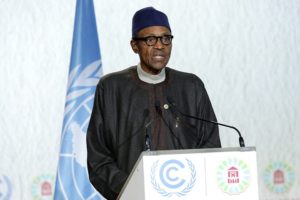 President Muhammadu Buhari has expressed confidence that the Nigerian Navy is fully ready to play a critical role in upcoming continental programmes, such as the development of sustainable blue economy for Africa which was adopted and signed by the African Union in October 2016.
 The Federal Government, represented by Vice President Yemi Osinbajo and state governments, represented by their governors, today, held a meeting to look for ways of identifying revenue sources to plug fiscal deficit and boost reserves in the 2017 budgets.
 The American University of Nigeria has scheduled a scholarships examination to be conducted nationwide for the newly accepted students on Saturday, December 17.


 A high-level meeting by the leadership of the Economic Community Of West African States (ECOWAS), African Union (UN) and the United Nations (UN) with the embattled Zambian President, Yahya Jammeh for a peaceful solution to the political challenges, was deadlocked yesterday in Banjul.

